2025-06-09 05:38
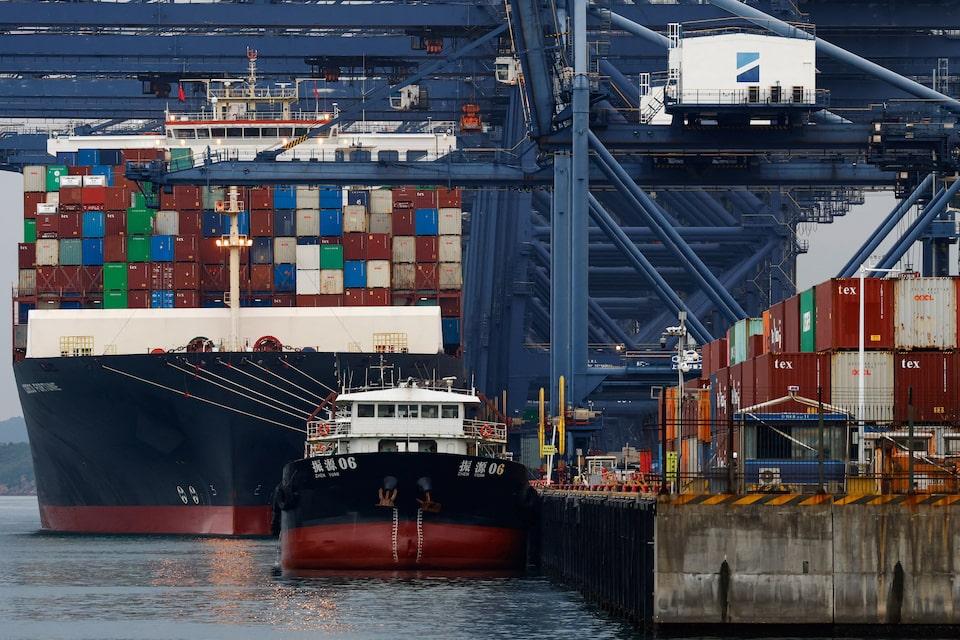
LAUNCESTON, Australia, June 9 (Reuters) - China's imports of major commodities lost momentum in May, with crude oil, coal, iron ore and copper all recording declines amid concerns about growth in the world's second-biggest economy. Only imports of natural gas showed any improvement, with May's 10.11 million metric tons slightly ahead of the 9.67 million in April, although they were still down 11% from a year earlier, according to customs data released on Tuesday. Sign up here. Crude oil arrivals dropped to 10.97 million barrels per day (bpd) in May, down 6.2% from April's 11.69 million bpd and also below the 12.1 million bpd recorded for March, which was the strongest month since August 2023. Iron ore imports slipped to 98.13 million tons in May from 103.14 million tons in April, and were also weaker than the 102.03 million from May last year. Imports of all grades of coal were 36.04 million tons in May, down 4.7% from April's 37.83 million tons and 17.8% weaker than the 42.82 million tons in May 2024. Unwrought copper imports were 427,000 tons in May, down 2.5% from the 438,000 tons in April and also below the 514,000 tons from the same month a year earlier. On the surface the decline in imports of major commodities looks ominous for China as the world's biggest buyer of natural resources faces an ongoing trade war with the United States and still sluggish growth at home, especially in the key residential construction sector. But there is always a risk of reading too much into monthly numbers, which can be quite volatile and are also often driven by price moves during the period when cargoes were arranged. Crude oil is a good example of this. China's imports were weak in January and February, with cargoes delivered in these two months having been bought against a backdrop of rising prices, with benchmark Brent futures rallying from early December to a peak of $82.63 a barrel on Jan. 15. But oil prices started sliding thereafter, with Brent dropping to a low of $58.40 a barrel by April 9. Therefore, the rebound in China's crude imports in March and April came amid a declining price trend when the cargoes would have been bought. However, May cargoes would have been arranged when prices were once again trending higher. It's also worth noting that China's imports of Russian and Iranian crude have also been volatile in recent months, dropping as new U.S. sanctions on vessels were imposed and then recovering as traders worked out ways around the measures. This pattern seems likely to have continued, with commodity analysts Kpler estimating China's imports of Iranian oil at 743,500 bpd in May, but also forecasting a sharp rise to 1.48 million bpd in June. PRICE MOVES Iron ore imports may also have been impacted by price moves, with the price rising modestly over April, the time when most May-arriving cargoes would have been booked. The Singapore Exchange contract reached a recent high of $101.80 a ton on May 14, and has since moderated to end at $96.26 on June 6. While the price moves are modest, the small decline may encourage some buying by China's steel mills, especially given the prevailing view that Beijing will launch new stimulus efforts in coming weeks to boost the economy. Copper imports are also likely reflecting dynamics on global markets rather than the domestic situation in China. China's imports have trended weaker and are now down 6.7% for the first five months of 2025 compared to the same period last year. But physical copper has been shifting to the United States as market players expect President Donald Trump to impose a tariff on imports of the industrial metal. U.S. demand has bolstered the premium of copper for delivery to the United States, and drawn metal away from China. While the London price has been volatile and driven by news reports on what Trump may or may not do, the trend has been to higher prices, with an increase from an April 9 low of $8,105 a ton to $9,701 in early Asian trade on Monday. Coal is the major commodity where China's domestic prices and supply have driven weakness in imports, with strong production and soft local prices cutting the need for imports. Seaborne thermal coal prices have dropped to four-year lows in response, and there are some early signs that demand is picking up, but it will likely take further declines to spark any meaningful interest in boosting imports. Enjoying this column? Check out Reuters Open Interest (ROI), your essential new source for global financial commentary. ROI delivers thought-provoking, data-driven analysis of everything from swap rates to soybeans. Markets are moving faster than ever. ROI can help you keep up. Follow ROI on LinkedIn , opens new tab and X , opens new tab. The views expressed here are those of the author, a columnist for Reuters. https://www.reuters.com/markets/commodities/chinas-imports-major-commodities-hiccup-may-2025-06-09/
2025-06-09 05:23
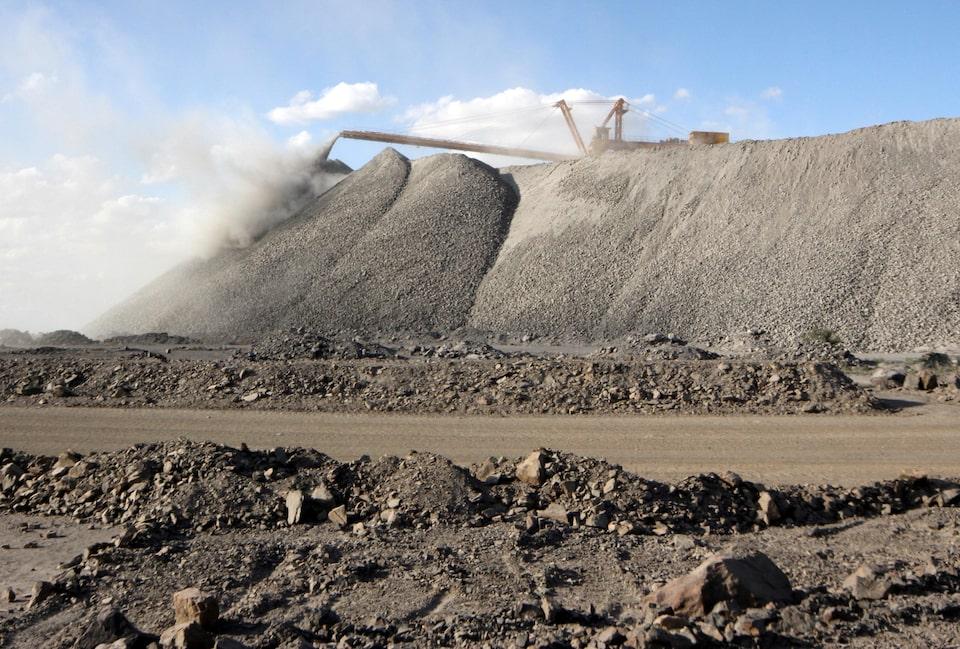
BEIJING, June 9 (Reuters) - China's outbound shipments of rare earths in May jumped 23% on the month to their highest in a year, though Beijing's export curbs on some of the critical minerals halted some overseas sales, with shortages rippling through global manufacturing. China's April export curbs on several types of rare earths and rare earth magnets shut parts of the global auto industry and figured heavily in a rare telephone call last week between the leaders of the United States and China. Sign up here. Rare earth exports of all kinds from the world's largest producer were up 23% in May versus April to stand at 5,864.60 tons, the highest monthly figure in a year. The curbs do not cover all the many types of rare earth products that China exports. Monday's data does not distinguish among them, so a full picture of the curbs' impact will only be provided in a more detailed data release due on June 20. Data released last month showed magnet exports fell by half in April. Several European auto parts plants were forced to stop production last week while semiconductor firms on the continent warned they were weeks away from also doing so. In the first five months of 2025, exports of the group of 17 minerals rose marginally to 24,827 tons from 24,266.5 tons a year earlier, customs data showed. https://www.reuters.com/world/china/chinas-rare-earth-exports-jump-23-may-despite-export-curbs-2025-06-09/
2025-06-09 05:08
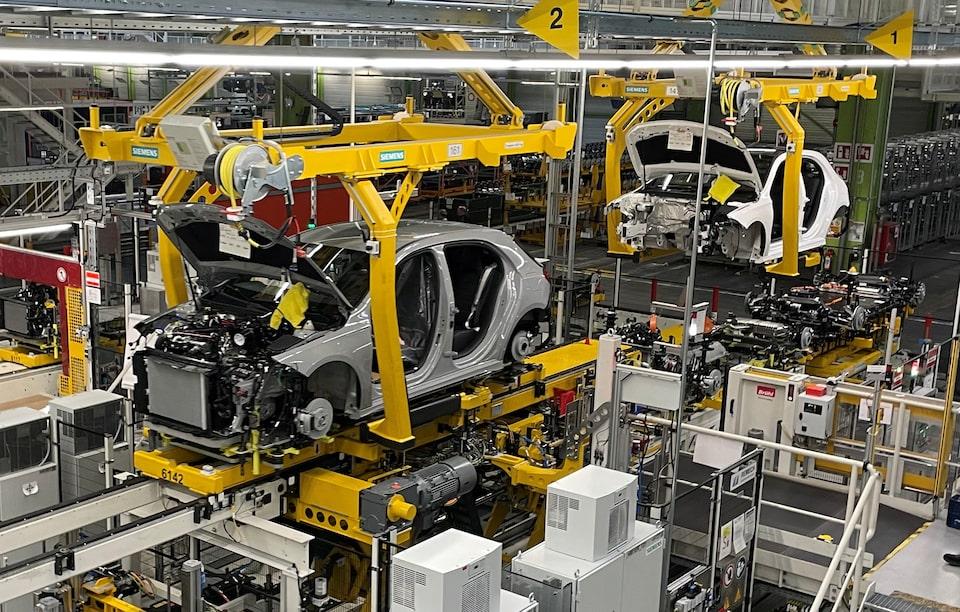
Global automakers worry China's rare-earths curb is next global supply crisis Auto industry efforts to find alternative magnet supplies have floundered Bottleneck has auto companies stockpiling, considering workarounds BERLIN/LONDON/DETROIT, June 9 (Reuters) - Frank Eckard, CEO of a German magnet maker, has been fielding a flood of calls in recent weeks. Exasperated automakers and parts suppliers have been desperate to find alternative sources of magnets, which are in short supply due to Chinese export curbs. Some told Eckard their factories could be idled by mid-July without backup magnet supplies. "The whole car industry is in full panic," said Eckard, CEO of Magnosphere, based in Troisdorf, Germany. "They are willing to pay any price." Sign up here. Car executives have once again been driven into their war rooms, concerned that China's tight export controls on rare-earth magnets – crucially needed to make cars – could cripple production. U.S. President Donald Trump said Friday that Chinese President Xi Jinping agreed to let rare earths minerals and magnets flow to the United States. A U.S. trade team is scheduled to meet Chinese counterparts for talks in London on Monday. The industry worries that the rare-earths situation could cascade into the third massive supply chain shock in five years. A semiconductor shortage wiped away millions of cars from automakers' production plans, from roughly 2021 to 2023. Before that, the coronavirus pandemic in 2020 shut factories for weeks. Those crises prompted the industry to fortify supply chain strategies. Executives have prioritized backup supplies for key components and reexamined the use of just-in-time inventories, which save money but can leave them without stockpiles when a crisis unfurls. Judging from Eckard's inbound calls, though, "nobody has learned from the past," he said. This time, as the rare-earths bottleneck tightens, the industry has few good options, given the extent to which China dominates the market. The fate of automakers' assembly lines has been left to a small team of Chinese bureaucrats as it reviews hundreds of applications for export permits. Several European auto-supplier plants have already shut down, with more outages coming, said the region's auto supplier association, CLEPA. "Sooner or later, this will confront everyone," said CLEPA Secretary-General Benjamin Krieger. Cars today use rare-earths-based motors in dozens of components – side mirrors, stereo speakers, oil pumps, windshield wipers, and sensors for fuel leakage and braking sensors. China controls up to 70% of global rare-earths mining, 85% of refining capacity and about 90% of rare-earths metal alloy and magnet production, consultancy AlixPartners said. The average electric vehicle uses about .5 kg (just over 1 pound) of rare earths elements, and a fossil-fuel car uses just half that, according to the International Energy Agency. China has clamped down before, including in a 2010 dispute with Japan, during which it curbed rare-earths exports. Japan had to find alternative suppliers, and by 2018, China accounted for only 58% of its rare earth imports. "China has had a rare-earth card to play whenever they wanted to," said Mark Smith, CEO of mining company NioCorp (NB.O) , opens new tab, which is developing a rare-earth project in Nebraska scheduled to start production within three years. Across the industry, automakers have been trying to wean off China for rare-earth magnets, or even develop magnets that do not need those elements. But most efforts are years away from the scale needed. "It's really about identifying ... and finding alternative solutions" outside China, Joseph Palmieri, head of supply chain management at supplier Aptiv , said at a conference in Detroit last week. Automakers including General Motors (GM.N) , opens new tab and BMW (BMWG.DE) , opens new tab and major suppliers such as ZF [RIC:RIC:ZFF.UL] and BorgWarner (BWA.N) , opens new tab are working on motors with low-to-zero rare-earth content, but few have managed to scale production enough to cut costs. The EU has launched initiatives including the Critical Raw Materials Act to boost European rare-earth sources. But it has not moved fast enough, said Noah Barkin, a senior advisor at Rhodium Group, a China-focused U.S. think tank. Even players that have developed marketable products struggle to compete with Chinese producers on price. David Bender, co-head of German metal specialist Heraeus' magnet recycling business, said it is only operating at 1% capacity and will have to close next year if sales do not increase. Minneapolis-based Niron has developed rare-earth free magnets and has raised more than $250 million from investors including GM, Stellantis and auto supplier Magna (MG.TO) , opens new tab. "We've seen a step change in interest from investors and customers" since China's export controls took effect, CEO Jonathan Rowntree said. It is planning a $1 billion plant scheduled to start production in 2029. England-based Warwick Acoustics has developed rare-earth-free speakers expected to appear in a luxury car later this year. CEO Mike Grant said the company has been in talks with another dozen automakers, although the speakers are not expected to be available in mainstream models for about five years. As auto companies scout longer-term solutions, they are left scrambling to avert imminent factory shutdowns. Automakers must figure out which of their suppliers – and smaller ones a few links up the supply chain – need export permits. Mercedes-Benz (MBGn.DE) , opens new tab, for example, is talking to suppliers about building rare-earth stockpiles. Analysts said the constraints could force automakers to make cars without certain parts and park them until they become available, as GM and others did during the semiconductor crisis. Automakers' reliance on China does not end with rare earth elements. A 2024 European Commission report said China controls more than 50% of global supply of 19 key raw materials, including manganese, graphite and aluminum. Andy Leyland, co-founder of supply chain specialist SC Insights, said any of those elements could be used as leverage by China. "This just is a warning shot," he said. https://www.reuters.com/business/autos-transportation/auto-companies-in-full-panic-over-rare-earths-bottleneck-2025-06-09/
2025-06-09 04:48
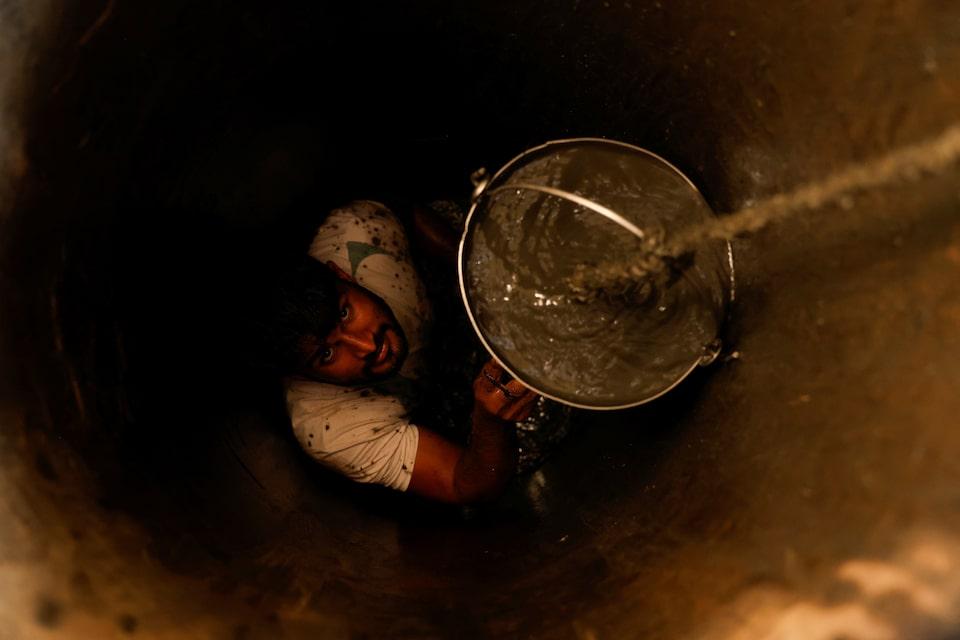
India plans roughly $80 bln in new coal-power projects by 2031 Many shortlisted projects located in water-stressed areas Thermal plant operators like areas with easy land availability, with water access an afterthought Expansion likely to fuel further conflict between residents and industry CHANDRAPUR/SOLAPUR, India, June 9 (Reuters) - April marks the start of the cruelest months for residents of Solapur, a hot and dry district in western India. As temperatures soar, water availability dwindles. In peak summer, the wait for taps to flow can stretch to a week or more. Just a decade ago, water flowed every other day, according to the local government and residents of Solapur, some 400 km inland from Mumbai. Sign up here. Then in 2017, a 1,320-megawatt coal-fired power plant run by state-controlled NTPC (NTPC.NS) , opens new tab began operations. It provided the district with energy - and competed with residents and businesses for water from a reservoir that serves the area. Solapur illustrates the Catch-22 facing India, which has 17% of the planet’s population but access to only 4% of its water resources. The world's most populous country plans to spend nearly $80 billion on water-hungry coal plants by 2031 to power growing industries like data center operations. The vast majority of these new projects are planned for India's driest areas, according to a power ministry document reviewed by Reuters, which is not public and was created for officials to track progress. Many of the 20 people interviewed by Reuters for this story, which included power company executives, energy officials and industry analysts, said the thermal expansion likely portended future conflict between industry and residents over limited water resources. Thirty-seven of the 44 new projects named in the undated power ministry shortlist of future operations are located in areas that the government classifies as either suffering from water scarcity or stress. NTPC, which says it draws 98.5% of its water from water-stressed areas, is involved in nine of them. NTPC said in response to Reuters' questions that it is "continuously striving towards conservation of water with best of our efforts in Solapur," including using methods like treating and reusing water. It did not answer queries about potential expansion plans. India's power ministry has told lawmakers in parliament, most recently in 2017, that the locations of coal-fired power plants are determined by factors including access to land and water and that state governments are responsible for allocating water to them. Access to land is the dominant consideration, two federal groundwater board officials and two water researchers told Reuters. India's complex and arcane land laws have delayed many commercial and infrastructure projects for years, so power operators under pressure to meet burgeoning demand pick areas where they are likely to face little resistance, said Rudrodip Majumdar, an energy and environment professor at the National Institute of Advanced Studies in Bengaluru. "They look for areas with easy land availability - minimum resistance for maximum land - even if water is available only far away," he said. The federal power ministry, as well as energy and water authorities in Maharashtra state, where Solapur is located, did not respond to queries. Delhi attempted to reduce its reliance on coal before reversing track after the COVID pandemic. It has invested heavily in renewable energy sources like solar and hydro, but thirsty thermal power will still be dominant for the coming decades. India's former top energy bureaucrat Ram Vinay Shahi said ready access to power was strategically important for the country, whose per-capita power consumption is far lower than its regional rival China. "The only energy resource we have in the country is coal," he said. "Between water and coal, preference is given to coal." 'NOTHING' IN SOLAPUR? Solapur resident Rajani Thoke plans her life around water in high summer. On days with supply, "I do not focus on anything other than storing water, washing clothes and such work," said the mother of two, who strictly polices her family’s water use. Sushilkumar Shinde, the federal power minister who approved the Solapur plant in 2008, when the area had already been classified "water scarce," told Reuters he helped NTPC procure the land by negotiating payments to locals. The member of the opposition Congress party, who won election to retain Solapur's parliamentary seat a year after the plant's approval, defended the operation on grounds of NTPC's sizable investment. The $1.34 billion plant generated thousands of jobs during its construction and now provides part-time employment to about 2,500 locals. "I made sure farmers got good money for the land NTPC acquired," he said, adding that mismanagement by local authorities was to blame for water shortages. Solapur municipal official Sachin Ombase acknowledged that water distribution infrastructure had not kept up with population growth, but said that authorities were trying to address the problem. Shinde said "there was nothing" in Solapur in 2008 and that residents who received land payments had no reason to oppose the plant. Researcher Shripad Dharmadhikary, who founded environment advocacy group Manthan Adhyayan Kendra, said local politicians often supported splashy infrastructure projects to boost their popularity. Any "problems come up much later," he said. Even before the Solapur plant started operating, there were signs of the trouble to come. The first of its two units was supposed to start generating power by the middle of 2016, but it was delayed by more than 12 months because of years of severe water shortages, according to a 2020 regulatory filing. The absence of nearby water resources meant the station ended up drawing on water from a reservoir about 120 km away. Such distances can sharply increase costs and the risk of water theft, said Dharmadhikary and two plant sources. As of May 2023, the station is among India's least water-efficient, according to the latest available federal records. It also has among the lowest capacity utilization rates of coal-fired plants, according to data from government think-tank NITI Aayog. NTPC said its data indicates the Solapur plant has an efficiency ratio in line with the country's norms. Indian stations typically consume twice as much water as their global counterparts, according to the Delhi-based Centre for Science and Environment think-tank. Solapur plant officials told reporters in March that capacity utilization will improve with increasing demand, indicating that water consumption could surge in the future. A forthcoming survey on water use in Solapur led by state groundwater authorities and reviewed by Reuters showed that irrigation demand in the district outstrips supply by a third. Dharmes Waghmore owns farmland a few miles from the plant and said that developing it would provide more financial security than his current casual work. But he said borrowing money to develop the land by drilling a bore well is too risky: "What if there's no water?" Kuladeep Jangam, a top local official, said authorities were struggling to draw businesses to Solapur. The lack of "water neutralizes all other pull factors," he said. THIRST FOR WATER Since 2014, India has lost 60.33 billion units of coal-power generation across the country - equivalent to 19 days of coal-power supply at June 2025 levels - because water shortages force plants to suspend generation, according to federal data. Among the facilities that have struggled with shortages is the 2,920 MW Chandrapur Super Thermal Power Station, one of India's largest. Located about 500 km northeast of Solapur but also in a water-stressed area, the plant shuts several of its units for months at a time when the monsoon delivers less rain than usual, according to NITI Aayog data. Despite the challenges, the plant is considering adding 800 MW of new capacity, according to the power ministry list seen by Reuters and half a dozen sources at Mahagenco, which operates the station. The document indicates the plant hasn't identified a water source for the expansion, though it has already sourced its coal. State-owned Mahagenco did not respond to Reuters' questions. The plant's thirst for water has previously led to tensions with residents of nearby Chandrapur city. Locals protested the station during a 2017 drought, prompting officials such as local lawmaker Sudhir Mungantiwar to order it to divert water to homes. Mungantiwar, however, says he supports the expansion of the plant, which he hopes will lead to it retiring water-inefficient older units. But the station has already delayed a plan to decommission two polluting and water-guzzling power units with a capacity of 420 MW by about seven years, citing instructions from the federal government, the company sources said. The Indian government asked power companies not to retire old thermal plants until the end of the decade due to a surge in demand following the pandemic, Reuters has reported. Chandrapur resident Anjali, who goes by one name, said she is resigned to visiting a tap installed by the station near one of its gates for drinking water. "We’re poor, we make do with whatever we can get," she said. https://www.reuters.com/sustainability/boards-policy-regulation/indias-80-bln-coal-power-boom-is-running-short-water-2025-06-09/
2025-06-09 04:41
A look at the day ahead in European and global markets from Rocky Swift Optimism abounds in the markets that the United States and China will reach a rapprochement in London today, after a phone call last week between leaders of the world's two largest economies turned down the heat on their protracted rift over trade. Sign up here. Both sides have strong incentives to ratchet down the rhetoric and find agreement as their economies remain tightly linked, although U.S. President Donald Trump has shown interest in decoupling them. The market reacted favourably on Friday to U.S. jobs data that showed less of a slowdown than feared, temporarily easing concerns about the trade war's fallout. But that was counterbalanced today when China's dour producer price data added to evidence that the spat is taking its toll. Asian shares rebounded sharply on Monday, reacting to Friday's exuberance on Wall Street. Equity futures pointed to a slightly lower open in Europe , while U.S. stock futures, the S&P 500 e-minis , slid 0.2%. On the trade front, representatives from the U.S. and China, due to meet at a still undisclosed location in London, will attempt to revive a preliminary trade agreement reached in Geneva last month. Trump is threatening to impose triple-digit tariffs on Chinese goods, while Beijing's key leverage is its near stranglehold on rare earth minerals that are critical to many high-tech sectors. Perhaps persistence is the key. Japan's chief trade negotiator Ryosei Akazawa is planning a sixth round of talks in Washington this week, Kyodo News reported. The economic and earnings slate is practically empty today. The next major figures to watch out of the U.S. will be inflation data on Wednesday, followed later in the week by producer price figures, weekly jobless claims and the University of Michigan report on consumer sentiment. The Fed is in a blackout period ahead of its June 18 policy decision. The markets were also keeping an eye on events in Los Angeles, where National Guard troops are facing down protesters demonstrating over Trump's immigration policies. Videos showed part of a major freeway in the city blocked by activists. California on its own is the world's fourth-largest economy , opens new tab, exceeding Japan's gross domestic product, and Trump deployed guardsmen to its biggest city to counteract what the White House described as "chaos, violence and lawlessness". Governor Gavin Newsom called Trump's reaction "the acts of a dictator". Key developments that could influence markets on Monday: - U.S. wholesale inventory data for April. - Mexico reports inflation and producer price data for May. Trying to keep up with the latest tariff news? Our new daily news digest offers a rundown of the top market-moving headlines impacting global trade. Sign up for Tariff Watch here. https://www.reuters.com/world/europe/global-markets-view-europe-2025-06-09/

2025-06-09 04:06
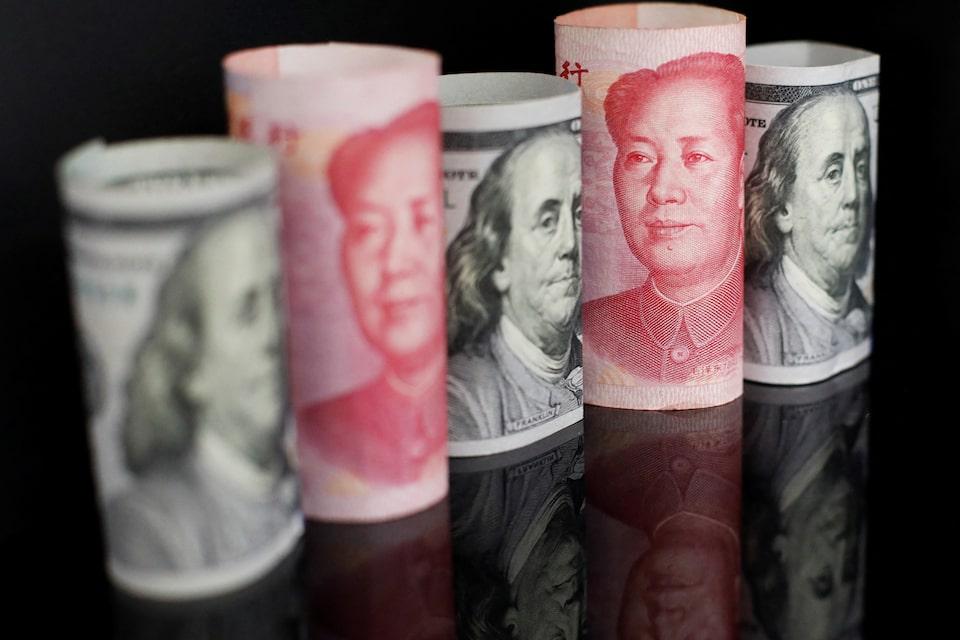
June 9 (Reuters) - Hong Kong will maintain its currency peg to the U.S. dollar, the financial hub's leader said in an interview published on Monday, despite escalating geopolitical tensions and some calls to shift to a Chinese yuan peg. The Hong Kong dollar has experienced sharp volatility over the past two months, strengthening to hit the strong end of the trading band and prompting the city's de-facto central bank to forcefully step up intervention, before the currency softened to near the weaker limit in recent sessions. Sign up here. "Hong Kong's link with the U.S. dollar has proven to be one of the fundamental success factors," John Lee told the South China Morning Post, noting the peg had always come under pressure, especially in uncertain times. In order to defend the currency's peg to move within 7.75 and 7.85 per U.S. dollar range, the Hong Kong Monetary Authority injected HK$129.4 billion into the market to purchase $16.7 billion worth of U.S. dollars in multiple interventions last month. Some market watchers have called for switching Hong Kong's U.S. dollar peg to the yuan at a time when trade tensions between the world's two largest economies have created uncertainty. Lee said his administration would strengthen the city's role as the global offshore yuan hub, while continuing to defend the U.S. dollar peg. "We will do more (offshore yuan) product diversification, so that it will generate more trade," he told the newspaper, noting that about 80% of the offshore yuan payments were processed in Hong Kong. https://www.reuters.com/world/asia-pacific/hong-kongs-leader-says-maintain-us-dollar-peg-despite-geopolitical-tensions-2025-06-09/