2025-06-06 13:15
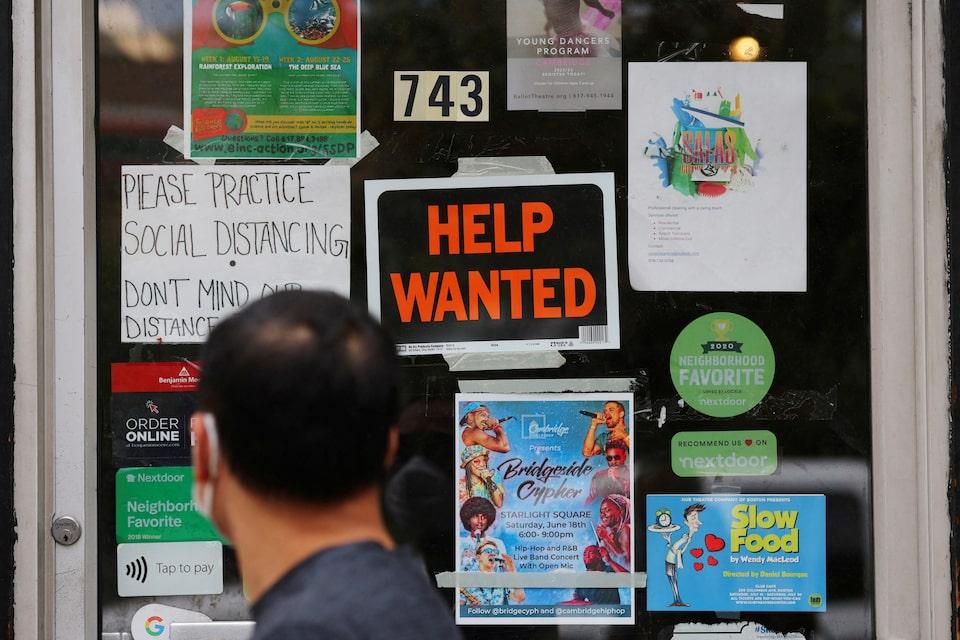
NEW YORK, June 5 (Reuters) - U.S. job growth slowed in May, while the unemployment rate held steady, potentially giving the Federal Reserve a buffer to delay the resumption of interest rate cuts. Nonfarm payrolls increased by 139,000 jobs last month after rising by a downwardly revised 147,000 in April, the Labor Department said on Friday. Sign up here. Economists polled by Reuters had forecast 130,000 jobs added last month after a previously reported 177,000 advance in April. The unemployment rate held steady at 4.2% and matched expectations. MARKET REACTION: STOCKS: S&P 500 E-minis added to gains and were up 51.25 points, or 0.86% BONDS: The yield on benchmark U.S. 10-year notes rose 6.5 basis points to 4.46%, the two-year note yield climbed 6.9 basis points to 3.993% FOREX: The dollar index extended gains a loss and was up 0.49% to 99.17, while the euro was down 0.44% at $1.1394 COMMENTS: JOSH JAMNER, INVESTMENT STRATEGY ANALYST, CLEARBRIDGE INVESTMENTS, NEW YORK “May's jobs report showed continued resilience for the labor market as the bite from tariffs began to impact the U.S. economy. Solid job gains along with a pickup in wages mean that aggregate incomes are continuing to grow 5% (year-over-year), which provides a solid foundation for continued consumption. "The Fed is likely to continue to have little urgency to change course in light of today’s steady jobs report, with scant evidence that the labor market is in imminent need of policy support. Fed Fund futures priced out one-quarter (percent) of a rate cut at September FOMC meeting following the jobs report, which is pushing up rates along the yield curve. The move higher at the long end could curb the upside for equities, but overall today’s report should be supportive for risk assets and embedded earnings expectations near term.” GARY SCHLOSSBERG, GLOBAL STRATEGIST, WELLS FARGO INVESTMENT INSTITUTE, SAN FRANCISCO, CA "The report itself is a positive report overall, in line with expectations, with the employment number a little bit stronger than expected. It shows the labor market is still intact." "There's one blemish there that stands out. The household-based employment number that's used in the calculation of the unemployment rate was down sharply. There was a big increase in both the household-based employment number and in the supply of Labor in April. We just reversed both by a large amount in such a way that the unemployment rate remains steady. We were afraid it would be going higher and the fact that it held steady is an encouraging sign." "The market is taking the jobs report as a sign the economy is still holding up well. It's not that we're powering ahead. Its moderate growth but there's little sign we're losing momentum from the jobs report mid-way through the second quarter." MALCOLM POLLEY, CHIEF MARKET STRATEGIST, STRATOS INVESTMENT MANAGEMENT, BEACHWOOD, OHIO “If you look at the trend, it looks like job growth actually bottomed mid/late next year, so the trend looks to be higher. As interesting as today’s numbers were, the more interesting data were yesterday’s – the unit labor costs and productivity. Productivity was lower and labor costs higher. That ultimately translates into higher inflation. "As long as job growth holds up, the employment data is positive. The other piece of this, in my mind, if you already have had more job openings than candidates, does it make sense to post another job? We cannot find qualified people, I keep hearing. The bottom line, is that the Fed is likely to stay on hold.” ART HOGAN, CHIEF MARKET STRATEGIST AT B RILEY WEALTH "Things are slowing, but they're not collapsing and that's the good news. We're not seeing a serious degradation of the jobs market." WILL COMPERNOLLE, MACRO STRATEGIST, FHN FINANCIAL, CHICAGO “The sell-off (in Treasuries) really reflects this idea that growth sentiment is heading in a bullish direction. We have yet another month of hard data resilience. There is positive progress on tariffs moderating, even if there's nothing final yet. And a lot of the doomsday scenarios people thought were always one month away - it just seems to be a less likelihood that it's coming. "There's relief, or bearish for bonds, that there are no signs of significant deterioration that people were expecting.” BRIAN JACOBSEN, CHIEF ECONOMIST, ANNEX WEALTH MANAGEMENT, MENOMONEE FALLS, WISCONSIN "The rise in payrolls was better than expected, but the previous months were revised significantly lower, taking some sheen off this report. The diffusion index for manufacturing was abysmally low, showing that payroll gains are concentrated while losses are widespread. On its face, this shows an economy that’s holding up under the weight of a trade war, but the details show plenty of cracks forming." PETER CARDILLO, CHIEF MARKET ECONOMIST, SPARTAN CAPITAL SECURITIES, NEW YORK “Payrolls came in a little higher than consensus and more than I was looking for, but basically with the exception of hourly wages, the report really doesn't indicate that the Fed would be ready to do anything to help out the labor market. “In fact, the rise in hourly wages by 0.4% - I don't want to say significant, but it's noticeable. And so that you know just means that the Fed stays on hold and the labor market, although there are definitely signs that it's cooling and obviously that's attributed to the trade war because many people are not hiring due to the uncertainties. “Bottom line, it’s a report that's not going to move the markets very much and I would, I would classify this as a mediocre report.” JAMIE COX MANAGING PARTNER, HARRIS FINANCIAL GROUP, RICHMOND VIRGINIA "The labor market is strong, but cooling. I expect this report, with all its revisions to bring the Fed back into cutting mode in July. Wages are stable, for now, but that is likely to change in the coming months. "One of the biggest factors with labor is housing - the housing market is showing early signs of trouble, and a cooling labor market will make that worse." https://www.reuters.com/business/view-us-payrolls-growth-slows-may-unemployment-rate-steady-2025-06-06/
2025-06-06 12:45
BUDAPEST, June 6 (Reuters) - Hungary has successfully contained an outbreak of foot-and-mouth disease, leading to the lifting of European Union restrictions, the country's farm minister Istvan Nagy told local news site Index.hu in an interview published on Friday. Hungary reported its first case of foot-and-mouth disease for over 50 years in March, leading to infections in five farms near its border with Slovakia and Austria and triggering border closures and the mass slaughter of cattle. Sign up here. "There hasn’t been a single new outbreak on the farms for over a month and a half. Disinfection work is ongoing, cleaning is happening at full speed, we’re preparing for repopulation at all the sites ... the virus is gone," Nagy said. The farm minister also said that the European Union was lifting restrictions introduced after the outbreak. The disease, which poses no danger to humans, mostly affects cattle and other cloven-hoofed animals like swine, sheep and goats, causing fever and mouth blisters. Outbreaks often lead to trade restrictions and livestock culls. Authorities were still investigating the origins of the outbreak and testing several theories, Nagy said. He reiterated that terrorism had not been ruled out. Prime Minister Viktor Orban's chief of staff in May suggested a "biological attack" as a possible source of the outbreak, without giving further details. Restrictions have also been eased in Slovakia since May as the country has not seen any fresh outbreaks in recent months. In the Czech Republic, where no cases were reported, remaining measures to prevent the spread across its borders were due to end on Friday. https://www.reuters.com/business/healthcare-pharmaceuticals/foot-and-mouth-disease-contained-hungary-farm-minister-says-2025-06-06/

2025-06-06 12:34
EU ends wartime quota exemption for Ukraine agri products Pre-war tariffs apply from Friday as temporary fix New deal could be reached by summer, EU agri chief says BRUSSELS, June 6 (Reuters) - The European Union reimposed duties and quotas on Ukrainian agricultural products from Friday, and hopes to clinch a deal on new quotas that will be smaller than imports during the last three years after Russia's invasion, the EU's agriculture commissioner told Reuters. The EU temporarily waived duties and quotas on agricultural products in June 2022 after Russia's full-scale invasion to help Ukraine compensate for the higher costs of its exports, after Russia threatened its traditional Black Sea shipping lanes. Sign up here. Those tariff suspensions expired on Thursday. The EU and Ukraine reverted to the pre-war regime of trade quotas on Friday, while the two sides negotiate a new longer-term deal. Brussels is seeking to strike a balance between supporting Ukraine in its war with Russia, and heeding European farmers' concerns about cheaper Ukrainian imports. "What will be negotiated will be something in between the quotas under the existing DCFTA and the autonomous trade measures, the volumes that have been exported there," EU agriculture commissioner Christophe Hansen said in an interview with Reuters on Thursday. The DCFTA refers to Ukraine and the EU's pre-war trade deal. The EU's "autonomous trade measures" temporarily suspended quotas on Ukrainian imports from 2022. Ukraine's farm minister Vitaliy Koval told Reuters this week that Kyiv was pushing for an agreement on higher quotas than it had before the war. EU farmers have complained that large shipments of cheaper Ukrainian sugar imports under the wartime tariff exemptions have undercut local supplies. The EU triggered "emergency brakes" to re-impose quotas on products including sugar and eggs in the past year, in response to surging imports. The EU's Ukrainian sugar imports soared to 400,000 tons in the 2022/23 season and over 500,000 tons in 2023/24, far exceeding the pre-war quota of 20,000 tons. Hansen said the new quotas on sugar would be "significantly higher" than those under the pre-war arrangements. "I think we can absorb a certain amount of those products," he said, while noting sensitivities among European farmers concerned about higher imports of sugar, poultry and eggs. Negotiations on the new EU-Ukraine deal started on June 2. Hansen said it was feasible a deal could be reached by summer. "It depends now on both sides, I think technically that could be feasible," he said. Agricultural goods accounted for about 60% of Ukraine's total exports last year, with the EU buying around 60% of those goods, worth about $15 billion. A senior Ukrainian lawmaker said last month the loss of tariff-free access to the EU market could cost the country 3.5 billion euros ($3.99 billion) in annual revenue. "Our solidarity with Ukraine is as firm as ever, and therefore we are very committed to deliver this agreement as quickly as possible," Hansen said. The pre-war quota regime, which applies as of Friday, also includes lighter rules on import licenses for some goods like poultry and eggs, where instead of requiring licenses, quotas will be allocated on a first-come, first-served basis. ($1 = 0.8763 euros) https://www.reuters.com/world/europe/new-eu-ukraine-agri-trade-quotas-be-in-between-current-deal-wartime-exemptions-2025-06-06/

2025-06-06 12:34
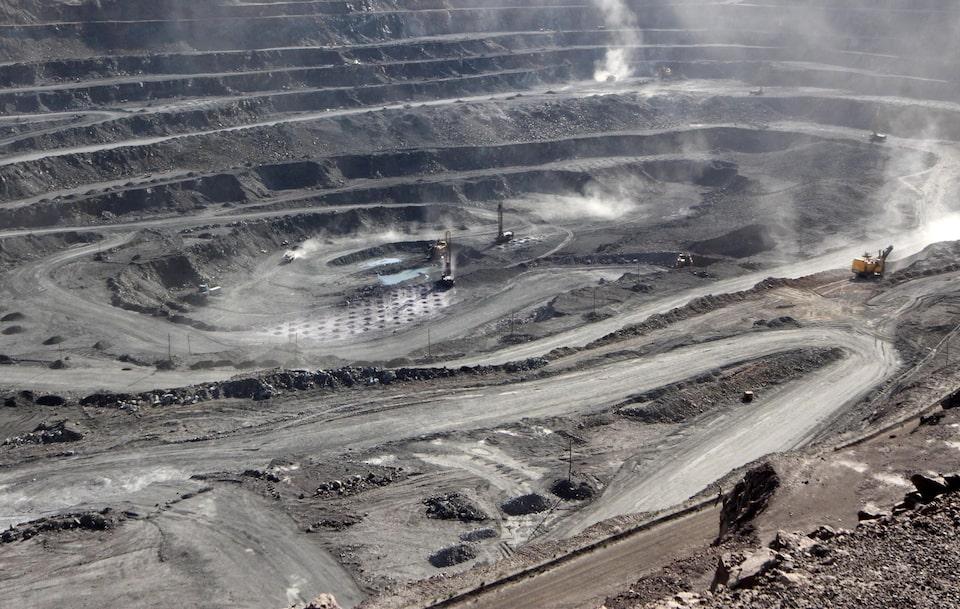
China's expanding sanctions regime modelled on the U.S. Export licence system key for global supply chain surveillance Impossible to know what share of requests get approved BEIJING, June 6 (Reuters) - China has signalled for more than 15 years that it was looking to weaponise areas of the global supply chain, a strategy modelled on longstanding American export controls Beijing views as aimed at stalling its rise. The scramble in recent weeks to secure export licences for rare earths, capped by Thursday's telephone call between U.S. and Chinese leaders Donald Trump and Xi Jinping, shows China has devised a better, more precisely targeted weapon for trade war. Sign up here. Industry executives and analysts say while China is showing signs of approving more exports of the key elements, it will not dismantle its new system. Modelled on the United States' own, Beijing's export licence system gives it unprecedented insight into supplier chokepoints in areas ranging from motors for electric vehicles to flight-control systems for guided missiles. "China originally took inspiration for these export control methods from the comprehensive U.S. sanctions regime," said Zhu Junwei, a scholar at the Grandview Institution, a Beijing-based think tank focused on international relations. "China has been trying to build its own export control systems since then, to be used as a last resort." After Thursday's call, Trump said both leaders had been "straightening out some of the points, having to do mostly with rare earth magnets and some other things". He did not say whether China committed to speeding up licences for exports of rare earth magnets, after Washington curbed exports of chip design software and jet engines to Beijing in response to its perceived slow-rolling on licences. China holds a near-monopoly on rare earth magnets, a crucial component in EV motors. In April it added some of the most sophisticated types to an export control list in its trade war with the United States, forcing all exporters to apply to Beijing for licences. That put a once-obscure department of China's commerce ministry, with a staff of about 60, in charge of a chokepoint for global manufacturing. The ministry did not immediately respond to Reuters' questions sent by fax. Several European auto suppliers shut down production lines this week after running out of supplies. While China's April curbs coincided with a broader package of retaliation against Washington's tariffs, the measures apply globally. "Beijing has a degree of plausible deniability – no one can prove China is doing this on purpose," said Noah Barkin, senior adviser at Rhodium Group, a China-focused U.S. thinktank. "But the rate of approvals is a pretty clear signal that China is sending a message, exerting pressure to prevent trade negotiations with the U.S. leading to additional technology control." China mines about 70% of the world's rare earths but has a virtual monopoly on refining and processing. Even if the pace of export approvals quickens as Trump suggested, the new system gives Beijing unprecedented glimpses of how companies in a supply chain deploy the rare earths it processes, European and U.S. executives have warned. Other governments are denied that insight because of the complexity of supply chain operations. For example, hundreds of Japanese suppliers are believed to need China to approve export licences for rare earth magnets in coming weeks to avert production disruptions, said a person who has lobbied on their behalf with Beijing. "It's sharpening China's scalpel," said a U.S.-based executive at a company seeking to piece together an alternative supply chain who sought anonymity. "It's not a way to oversee the export of magnets, but a way to gain influence and advantage over America." DECADES IN THE MAKING Fears that China could weaponise its global supply chain strength first emerged after its temporary ban of rare earth exports to Japan in 2010, following a territorial dispute. As early as 1992, former Chinese leader Deng Xiaoping was quoted as saying, "The Middle East has oil, China has rare earths." Beijing's landmark 2020 Export Control Law broadened curbs to cover any items affecting national security, from critical goods and materials to technology and data. China has since built its own sanctions power while pouring the equivalent of billions of dollars into developing workarounds in response to U.S. policies. In 2022, the United States put sweeping curbs on sales of advanced semiconductor chips and tools to China over concerns the technology could advance Beijing's military power. But the move failed to halt China's development of advanced chips and artificial intelligence, analysts have said. Beijing punched back a year later by introducing export licenses for gallium and germanium, and some graphite products. Exports to the United States of the two critical minerals, along with germanium, were banned last December. In February China restricted exports of five more metals key to the defence and clean energy industries. Analysts face a hard task in tracking the pace of China's approvals following the Trump-Xi call. "It's virtually impossible to know what percentage of requests for non-military end users get approved because the data is not public and companies don't want to publicly confirm either way," said Cory Combs, a critical minerals analyst with Trivium, a policy consultancy focused on China. https://www.reuters.com/world/china/chinas-rare-earth-weapon-changes-contours-trade-war-battlefield-2025-06-06/
2025-06-06 12:22
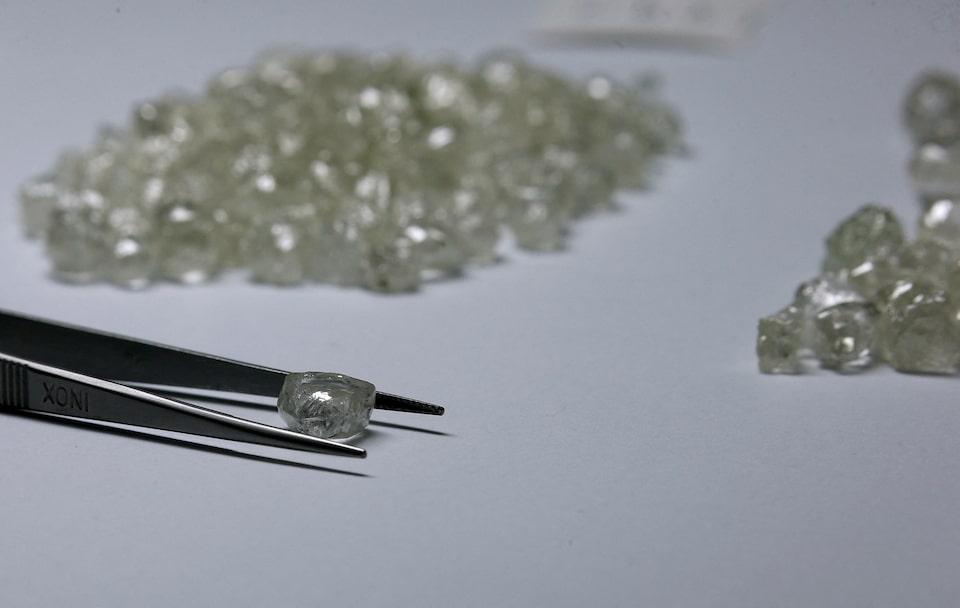
Debswana cuts output by 16% to 15 million carats in 2025 Three-month production pauses at Jwaneng Cut 9 and Orapa mines Debswana says Jwaneng underground project continues GABORONE, June 6 (Reuters) - Botswana's Debswana Diamond Company is temporarily pausing production at some of its mines, cutting output in response to prolonged weakness in the global diamond market, it said on Friday. The global diamond market has experienced a downturn since the second half of 2023, which caused Debswana to cut production by 27% to 17.93 million carats in 2024. Debswana, which accounts for about 90% of Botswana's diamond sales, reported a 46% drop in sales revenues last year. Sign up here. The company, a 50-50 joint venture between Botswana's government and global giant De Beers, now plans to reduce output to 15 million carats in 2025, it said in a statement. "Debswana Diamond Company continues to prudently navigate the challenging market conditions, including sustained low demand across the diamond pipeline and emerging pressures such as U.S.-imposed tariffs," it said. Debswana is temporarily pausing production at Jwaneng Cut 9 and Orapa mines, after suspending operations at its Letlhakane tailing plant and Jwaneng Modular plant in April. The temporary stoppages are expected to deliver significant cost savings across fuel, electricity, and other production consumables, Debswana added. Long-term initiatives such as the Jwaneng underground project, to convert Debswana's flagship open pit mine to an underground operation, will continue, but selected capital projects will be slowed down to save costs. No job involuntary cuts are planned, although the company continues to offer voluntary separation, it added. Botswana gets 30% of its revenue and 75% of its foreign currency earnings from diamonds and the current market downturn resulted in the economy contracting by 3% in 2024. The International Monetary Fund has forecast a further 0.4% contraction this year. https://www.reuters.com/world/africa/botswanas-debswana-curbs-diamond-production-weak-demand-persists-2025-06-06/
2025-06-06 12:18
GM, Stellantis have paid significant fuel economy penalties in recent years Senators say proposal would save automakers $200 million Proposal is latest move in Washington to make it easier to sell gas-guzzlers WASHINGTON, June 6 (Reuters) - The Transportation Department paved the way for looser U.S fuel economy standards on Friday by declaring that former President Joe Biden's administration exceeded its authority by assuming high uptake of electric vehicles in calculating rules. The department made the declaration as it published a final "Resetting the Corporate Average Fuel Economy Program" (CAFE) rule. A future separate rule from the administration of President Donald Trump will revise the fuel economy requirements. Sign up here. "We are making vehicles more affordable and easier to manufacture in the United States. The previous administration illegally used CAFE standards as an electric vehicle mandate," said Transportation Secretary Sean Duffy in a statement. The department's National Highway Traffic Safety Administration (NHTSA), in writing its rule last year under Biden, had "assumed significant numbers of EVs would continue to be produced regardless of the standards set by the agency, in turn increasing the level of standards that could be considered maximum feasible," it said Friday. Duffy in January signed an order directing NHTSA to rescind fuel economy standards issued under Biden for the 2022-2031 model years that had aimed to drastically reduce fuel use for cars and trucks. Late Thursday, Senate Republicans led by Commerce Committee chair Ted Cruz proposed eliminating fines for failures to meet CAFE rules as part of a wide-ranging tax bill - the latest move aimed at making it easier for automakers to build gas-powered vehicles. Last year, Chrysler-parent Stellantis (STLAM.MI) , opens new tab paid $190.7 million in civil penalties for failing to meet U.S. fuel economy requirements for 2019 and 2020 after paying nearly $400 million for penalties from 2016 through 2019. GM (GM.N) , opens new tab previously paid $128.2 million in penalties for 2016 and 2017. Stellantis said it supported the Senate Republican proposal "to provide relief while DOT develops its proposal to reset the CAFE standards... The standards are out of sync with the current market reality and immediate relief is necessary to preserve affordability and freedom of choice." GM referred questions to a trade group representing the Detroit Three automakers, which said "the current CAFE rules are challenging to achieve for automakers and real regulatory relief is needed," and praised the Senate Republican proposal. NHTSA in June 2024 under Biden said it would hike CAFE requirements to about 50.4 miles per gallon (4.67 liters per 100 km) by 2031, from 39.1 mpg currently, for light-duty vehicles. The agency last year said the rule for passenger cars and trucks would reduce gasoline consumption by 64 billion gallons and cut emissions by 659 million metric tons, cutting fuel costs with net benefits it estimated at $35.2 billion. https://www.reuters.com/business/energy/us-declares-biden-fuel-economy-rules-exceeded-legal-authority-2025-06-06/