2025-06-06 10:08
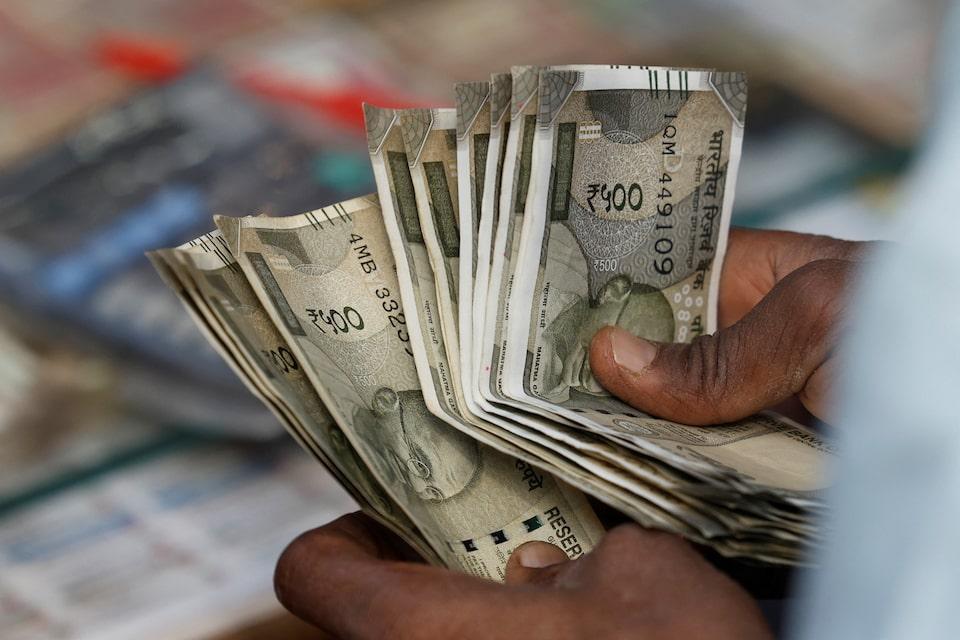
MUMBAI, June 6 (Reuters) - The Indian rupee strengthened modestly on Friday as the Reserve Bank of India's steepest rate cut in five years boosted local equities, helping the South Asian currency eke out a gain even as the dollar firmed against major peers. The rupee closed at 85.6250 against the U.S. dollar, up from its close at 85.79 in the previous session. The rupee declined 0.2% on the week. Sign up here. The Reserve Bank of India (RBI) cut its key repo rate by 50 basis points on Friday and slashed the cash reserve ratio (CRR) for banks as low inflation gave policymakers room to focus on supporting growth. India's benchmark equity indexes, the BSE Sensex (.BSESN) , opens new tab and Nifty 50 (.NSEI) , opens new tab, about 1% each on Friday, posting their best one-day gain in two weeks as the rate cut fuelled domestic growth expectations. India's benchmark 10-year bond whipsawed between gains and losses as traders digested the central bank's policy moves, including a shift in stance from 'accommodative' to 'neutral.' The yield on the benchmark paper was last quoted a tad higher at 6.2237%. Meanwhile, dollar-rupee forward premiums fell in reaction to the rate cut with the 1-year implied yield dropping 10 basis points to 1.81%. The Indian central bank's "larger-than-expected 50 bps rate cut and 100 bps cut in the cash reserve ratio should support INR," DBS said in a Friday note. "We will consider lowering USD/INR’s forecast if the US Federal Reserve pivots towards a rate cut later this year and sets the stage for more USD weakness," the noted added. On the day, the dollar index was up 0.3% at 98.9 in the run-up to release of closely watched U.S. non-farm payrolls data which will offer cues on how the world's largest economy is faring in the face of trade policy spurred uncertainty. https://www.reuters.com/world/india/rupee-ends-higher-rate-cut-boost-equities-blunts-dollar-strength-2025-06-06/
2025-06-06 10:08
CPI report for May due on Wednesday Fiscal bill in focus amid Trump-Musk rift S&P 500 just over 2% from February record high NEW YORK, June 6 (Reuters) - The U.S. stock rebound has driven key indexes to the cusp of record levels, with fresh economic data and trade and fiscal policy developments set to test whether equities will get an extra push higher in the near term. A monthly U.S. inflation report headlines the events for markets in the coming week. Sign up here. Equities have bounced back from a steep fall in April, sparked by concerns about the economic fallout from President Donald Trump's tariff plans. Stocks ended the week on a high note, with the S&P 500 (.SPX) , opens new tab closing on Friday above 6,000 for the first time since late February, buoyed by a monthly U.S. jobs report that calmed worries about the economy. The benchmark S&P 500 ended on Friday 2.3% off its record closing high from February. "I'd still say it's a cautious tone" in the market, said Jim Baird, chief investment officer with Plante Moran Financial Advisors. Despite a "recovery off the lows, I still think it's a market that is looking for greater clarity." Some uncertainty stems from how the U.S. economy is weathering the shifting trade backdrop. Trump has eased back on some of the harshest tariffs since his April 2 "Liberation Day" announcement sent stocks tumbling, but investors are waiting to see how other levies may be rippling through the economy. The consumer price index report for May, due on Wednesday, could give insight into the tariff impact at a time investors are wary of any flare-ups in inflation. "Consumers are feeling the impact of higher prices and if there are indications that near-term inflation could re-accelerate, that is going to put further pressure on discretionary spending and ultimately could lead to a more pronounced slowdown in growth," Baird said. The CPI report will be one of the last key pieces of data before the Federal Reserve's June 17-18 meeting. The U.S. central bank is widely expected to hold interest rates steady at that meeting, but traders are pricing in nearly two 25-basis point cuts by the end of the year. "If we see inflationary data that defies what people are concerned about based on this tariff talk and it comes in cooler, then that could also be a catalyst to at least test those old highs," said Jay Woods, chief global strategist at Freedom Capital Markets. For the year, the S&P 500 is up 2%. But the index has stormed back over 20% since April 8, at the depth of the stock market's plunge on concerns over the tariff fallout. Investors also are grappling with uncertainty over a sweeping tax-cut and spending bill under review in the U.S. Senate. Wall Street is monitoring how much the legislation could stimulate economic growth, but also inflate the country's debt burden as widening fiscal deficits have become a central concern for markets in recent weeks. "As debt increases, it has a greater negative impact on growth," said Kristina Hooper, chief market strategist at Man Group. The legislation also appeared to be the source of a severe rift between Trump and Tesla (TSLA.O) , opens new tab chief Elon Musk, which weighed on stock indexes. Former Trump ally Musk called the bill at the heart of Trump's agenda a "disgusting abomination," while Trump said he was "disappointed" by the billionaire's public opposition. Trade talks also remain at the forefront of markets, with a 90-day pause on a wide array of Trump's tariffs set to end on July 8. Trump said on Friday three of his cabinet officials will meet with representatives of China in London on Monday to discuss a trade deal. "When it comes to policy from Washington, D.C., there are still big question marks," said Bob Doll, chief investment office at Crossmark Global Investments. https://www.reuters.com/business/wall-st-week-ahead-us-stocks-edge-toward-records-with-inflation-data-policy-2025-06-06/
2025-06-06 09:12
WARSAW, June 6 (Reuters) - Poland's Monetary Policy Council could return to discussions about rate cuts in July or September, central banker Przemyslaw Litwiniuk told TOK FM on Friday, adding that there may still be a total of 100-125 basis points of cuts this year. However, he said that due to certain risks regarding the path of disinflation the MPC needs to be cautious. Sign up here. The central bank left its main interest rate unchanged at 5.25% on Wednesday, as expected, saying that the current level was conducive to achieving its inflation target. "A different decision could suggest that we are in a cycle of cuts. However, due to certain risks that accompanied the formation of the disinflation path, we should approach this issue with caution," Litwiniuk said. "This does not mean that the Council will not return in July or September to the decision to lower interest rates." Among the uncertainty factors, Litwiniuk mentioned wage dynamics, which remain high and pose a "significant risk" to price stability. He also mentioned the development of energy prices at the end of this year and the risks associated with the government's loose fiscal policy. "I believe that the scenario of cutting interest rates in 2025 by a total of 100-125 basis points remains valid, but its hasty implementation could create risks at the end of the impact horizon, i.e. next year, when we would like to see inflation at the (inflation) target," the MPC member said. In May, the National Bank of Poland cut its benchmark rate by 50 basis points, in its first monetary easing since October 2023. Inflation slowed down to 4.1% in May, but remained outside of the central bank's inflation target range between 1.5% and 3.5%. The Governor of the National Bank of Poland (NBP) Adam Glapinski said on Thursday that the bank will not commit to a future path for interest rates for now because of economic uncertainty. Ludwik Kotecki, another member of the Monetary Policy Council, told Bloomberg that he still supports cutting rates in July or September and that a total of 50 basis points of additional easing this year would be "optimal". However, he added that he was not sure whether the MPC would find a majority to support such a scenario, and that central bankers were more cautious due to growing political instability and concern over a bloated budget. https://www.reuters.com/markets/europe/polish-cbanker-litwiniuk-total-100-125-bps-cuts-possible-this-year-2025-06-06/
2025-06-06 08:53
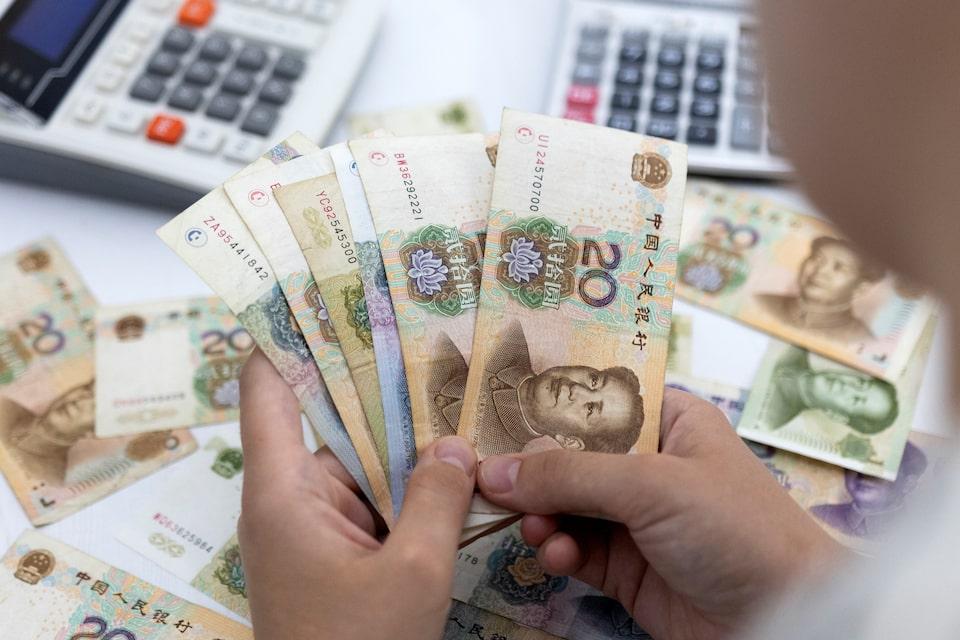
Trump and Xi hold call but leave key issues unresolved Investors remain skeptical of a Sino-US trade deal, analyst says Yuan eases as sentiment fails to be lifted, trader says Yuan's value against its trading partners falls to a near 2-year low Market attention switches to key economic data releases next week SHANGHAI, June 6 (Reuters) - China's yuan slipped against the dollar while falling to a near two-year low versus its major trading partners on Friday, as U.S. President Donald Trump and Chinese leader Xi Jinping held a much-anticipated call but left key issues that have stoked tensions between the world's two largest economies unresolved. During the more than one-hour-long call, Xi told Trump to back down from trade measures that have roiled the global economy and warned him against threatening steps on Taiwan, according to a Chinese government summary. Sign up here. "Although the likelihood of a U.S.-China deal increases with more high-level dialogues, investors remain skeptical that both sides are merely buying time to address some pressing issues," said Gary Ng, senior economist at Natixis. Trump said on social media that the talks focused primarily on trade led to "a very positive conclusion," announcing further lower-level U.S.-China discussions and that "there should no longer be any questions respecting the complexity of Rare Earth products." "The call does not offer much comfort in cutting tariffs, but only touching on access of critical materials and tech export control," Ng said. "Therefore, there is no certainty of what kind of deal will be made, and it may only be a partial one given the wide range of issues between the U.S. and China." As of 0830 GMT, the onshore yuan ended its domestic trading session at 7.1847 per dollar, down 0.08% from the previous night. Its offshore counterpart traded at 7.1852 around 0830 GMT. "The talk itself should lift market sentiment, but Trump's erratic policies make it hard to convince investors," said a trader at a foreign bank. Wang Zhuo, partner at Zhuozhu Investment in Shanghai, said "Trump's fickleness has made such talks less and less meaningful to the market", but added that direct communications were helpful for removing some misunderstandings. Trade talks between Washington and Beijing had stalled after a meeting in Geneva last month, where both sides agreed to temporarily roll back most of the tariffs imposed on each other's goods since April. Trump has accused China of violating the bilateral deal. Prior to the market opening, the People's Bank of China (PBOC) set the midpoint rate at 7.1845 per dollar, its strongest since May 26 and 90 pips firmer than a Reuters' estimate of 7.1935. The spot yuan is allowed to trade 2% either side of the fixed midpoint each day. Based on Friday's official guidance fix, the CFETS yuan index (.CFSCNYI) , opens new tab, a gauge that measures the yuan's weighted value versus 25 currencies of trading partners, fell to 95.58 and is down 5.8% year-to-date, according to Reuters calculations based on official data. The spot yuan has, however, strengthened 1.6% versus the dollar during the same period. While Beijing has said it does not deliberately seek a weaker currency, the currency's passive decline versus its peers comes at a time of heightened Sino-U.S. tensions for an economy struggling with deflationary pressures and weak domestic demand. Investors will shift their attention to a string of Chinese economic data releases next week, including inflation and trade data on Monday, as investors are keen to gauge the health of the broader economy under Trump's tariffs. https://www.reuters.com/business/finance/chinas-yuan-slips-2-year-low-versus-peers-after-trump-xi-call-leaves-issues-2025-06-06/
2025-06-06 07:53
June 6 (Reuters) - Indian auto dealers expect demand to remain cautious in June as high inventory levels, tighter financing and concerns around rare earth shortages weigh on the industry. While above-normal monsoons are expected to support tractor and two-wheeler sales in semi-urban and rural markets, shortages of rare earths - critical to EV production - could sap demand, the Federation of Automobile Dealers Associations of India said. Sign up here. Only a third of the industry body's members expect growth in June, while around 55% expect flat sales. Automakers and dealers have been counting on new EV launches to drive growth this year and soften the blow of slowing sales of combustion engine cars in urban areas. "...global supply-chain headwinds — from rare-earth constraints in EV components to ongoing geopolitical tensions —may keep urban consumer sentiment in check," FADA said. To be sure, while sales of EVs in India have been growing at a faster pace than their gasoline counterparts, they still accounted for just 2.5% of the 4.3 million cars sold last fiscal year. China's suspension of exports of a wide range of rare earths and related magnets has upended supply chains crucial to automakers, aerospace manufacturers, semiconductor companies and military contractors. Global automakers have warned of production halts due to the export restrictions. While Indian carmakers are yet to publicly disclose the impact of the curbs, an auto industry body privately told the government last month it expects production "to come to a grinding halt" as early as the end of May or early June. India's top e-scooter maker Bajaj Auto (BAJA.NS) , opens new tab last week said any delays in lifting the export curbs would hurt the production of its electric scooters from July. TVS Motor (TVSM.NS) , opens new tab, too, has warned of an impact by June or July. The FADA also said high inventories of cars and commercial vehicles remain an overhang for dealers. Inventories for cars stood at 52-53 days in May, above FADA's recommended level of 21 days. https://www.reuters.com/world/china/india-auto-dealers-cautious-june-sales-amid-rare-earth-curbs-high-inventory-2025-06-06/

2025-06-06 07:12
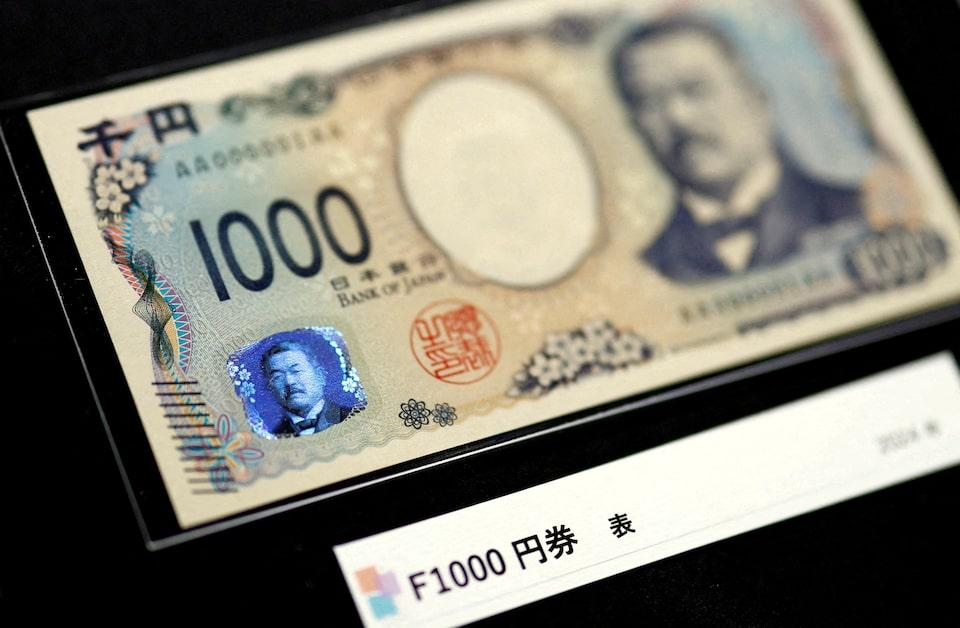
Diverging Fed, BOJ policy paths to prop up yen vs dollar BOJ may hike rates again this year if trade uncertainty recedes Japan's US Treasury holdings may not serve as bargaining tool TOKYO, June 6 (Reuters) - A narrowing U.S.-Japan interest rate gap, rather than any effort by President Donald Trump to weaken the dollar, will likely lift the yen to around 135-140 against the U.S. unit by year-end, Japan's former top currency diplomat said on Friday. Markets are rife with speculation that Trump - who in the past accused Japan and China of currency manipulation - will pressure Tokyo to help weaken the dollar against the yen to give U.S. exports a trade advantage. Sign up here. Mitsuhiro Furusawa, a former currency diplomat who retains close ties with Japanese and overseas incumbent policymakers, said it was unclear whether the Trump administration was explicitly taking a weak-dollar policy. "It's not easy for policymakers to intentionally weaken the dollar," Furusawa said in an interview. "Having made clear that tariffs are the main tools (for negotiation), I don't think Washington needs to rely much on currencies to achieve its goals," said Furusawa, who also served as the International Monetary Fund's deputy managing director until 2021. Still, the U.S. likely wants to avoid further dollar rises from hurting exports, Furusawa said. Japan, for its part, wants to prevent a weak yen from pushing up inflation, he said. "As such, they are eye-to-eye on this front. That means the yen will likely rise gradually," said Furusawa. The diverging monetary policy direction between Japan and the U.S. will also prop up the yen with the Federal Reserve's next move seen as an interest rate cut, while the Bank of Japan (BOJ) eyes further rate hikes, Furusawa said. BOJ Governor Kazuo Ueda has said the bank will continue raising rates if economic improvements keep inflation on course to durably hit its 2% target, though he has signaled a pause until there is more clarity on the fallout from Trump's tariffs. "If Japan succeeds in reaching a broad trade agreement with the U.S. possibly at this month's G7 summit, that will reduce uncertainty," Furusawa said. Real wages will also rise and underpin consumption once food inflation dissipates, he said. "If we see such positive developments, the BOJ could hike rates again in the latter half of this year," Furusawa said, adding the yen "will likely strengthen to around 135-140 to the dollar by year-end." The yen stood around 143.90 to the dollar in Asia on Friday. The BOJ probably wants to eventually raise its short-term policy rate target - currently at 0.5% - above 1%, though there is uncertainty on whether it would succeed, said Furusawa, who is currently president of Sumitomo Mitsui Banking Corp's Institute for Global Financial Affairs. Japan is continuing trade talks with the U.S. with a focus on gaining concessions on automobile tariffs. Domestic media has reported the two sides may seek to clinch a deal in time for the G7 summit on June 15-16. Finance Minister Katsunobu Kato caused a stir last month when he said Japan could use its $1 trillion-plus holdings of U.S. Treasuries as a card in trade talks with Washington. He later said Tokyo had no plan to threaten selling U.S. Treasuries. Furusawa said it was natural for Japan, as a negotiating tactic, to say all options were on the table. But whether Japan can actually use it as a bargaining tool was questionable, partly as threatening to sell U.S. Treasuries could backfire by angering Trump and derailing trade negotiations. https://www.reuters.com/business/japans-ex-top-fx-diplomat-expects-yen-rise-near-140-by-year-end-2025-06-06/