2025-06-06 10:37
June 6 (Reuters) - HSBC expects OPEC+ to accelerate supply hikes in August and September, which is likely to raise downside risks to the bank's $65 per barrel Brent forecast from the fourth quarter of 2025, it said in a research note on Friday. The bank expects OPEC+ to implement two substantial production increases in August and September of 411,000 bpd and 274,000 bpd, respectively, compressing five increases into two months, it said. Sign up here. "Our new scenario assumes regular hikes from October to December and leaves the 2.2mbd of voluntary cuts fully unwound by the end of 2025," it added. The world’s largest group of oil producers, OPEC+, stuck to its guns last week with another big increase of 411,000 barrels per day (bpd) for July, as it looks to wrestle back market share and punish over-producers. After years of curbing production by over 5 million barrels per day — about 5% of global demand — eight OPEC+ countries made a modest output increase in April before tripling it for May, June and now July. According to HSBC's latest supply and demand model, the oil market is expected to show surpluses of 0.3 million barrels per day (mbpd) and 0.9 mbpd for 2026, up from previous forecasts of 0.2 mbpd and 0.7 mbpd, driven by higher OPEC+ output. HSBC notes that the oil market appears balanced in the second and third quarters, as oil demand rises in summer and peaks in July and August, matching supply increases from OPEC+. However, the bank expects accelerated OPEC+ hikes would tip the market into a bigger surplus in the fourth quarter of 2025 than previously forecast. "Deteriorating fundamentals after summer raise downside risks to oil prices and our $65/b assumption from 4Q onwards," the bank said. Earlier this week, Goldman Sachs said that it anticipates OPEC+ will implement a final 0.41 million barrels per day production increase in August. Brent crude futures were trading at $65.17 a barrel by 1006 GMT, while U.S. West Texas Intermediate crude was at $63.15 barrel. https://www.reuters.com/business/energy/hsbc-flags-downside-risks-brent-price-outlook-due-opec-supply-hikes-2025-06-06/
2025-06-06 10:30
MADRID, June 6 (Reuters) - Spain didn't import crude oil from Venezuela in April, ahead of a key sanctions deadline set by U.S. President Donald Trump's administration. Spain's largest oil company Repsol (REP.MC) , opens new tab is among foreign firms operating in Venezuela whose permits to export oil from the country were revoked by the United States. Repsol was given a May 27 deadline to wind down its operations there. Sign up here. Under that permit, Repsol received oil from state oil company PDVSA as payment for debt. The lack of imports in April followed sharp increases in 2024 and earlier this year, according to data released on Friday by Cores, an arm of Spain's energy and environment ministry. Repsol has held talks with U.S. authorities seeking ways to keep operating in Venezuela. Earlier this week, Chief Executive Josu Jon Imaz met with U.S. Energy Secretary Chris Wright. The cancellations of licences came after Trump issued an executive order in March, declaring that any country buying oil or gas from Venezuela would pay a 25% tariff on trades with the United States. Venezuelan President Nicolas Maduro and his government have rejected sanctions by the United States and others, saying they are illegitimate measures that amount to an "economic war" designed to cripple the country. https://www.reuters.com/sustainability/boards-policy-regulation/spains-imports-venezuelan-oil-dry-up-ahead-us-sanctions-deadline-2025-06-06/

2025-06-06 10:29
Rising speculation that Swiss rates may turn negative Other big central banks unlikely to follow, analysts say Non-US central banks battling FX strength US puts Switzerland on watchlist for unfair currency practices LONDON, June 6 (Reuters) - Switzerland could be the first big economy to return to negative interest rates to fight a surging currency and falling prices, highlighting how quickly central bankers may be running out of conventional policy tools as a global trade war rages on. Data this week showing Swiss consumer prices fell in May prompted traders to prepare for the Swiss National Bank to cut its 0.25% benchmark rate to below zero, as it struggles to cool the red-hot franc , . Sign up here. In 2022, Europe's central banks left behind a decade of below-zero rates that hurt banks and savers alike. Introduced to stimulate lending, negative rates turned money orthodoxy on its head by charging banks to park deposits with their central bank rather than paying them interest for doing so. Many policymakers have since concluded they didn't work as well as hoped, weighing on bank profits at a time when they needed to invest and pushing investors into riskier assets. As Switzerland tries to stimulate its economy it is under scrutiny by the U.S. administration for how it deals with its currency, traditionally seen as a safe-haven in unstable times. U.S. President Donald Trump's trade war has raised the risk of inflationary pressures and slower growth - a nightmare combination for central bankers, politicians, businesses and households. Complicating matters for non-U.S. policymakers is an across-the-board appreciation in tariff-sensitive currencies, from the euro and pound to the Korean won and Taiwan dollar, which hurts their respective exports and economies. The Swiss franc has gained nearly 11% against the dollar in 2025, marking its best performance at this point in the year since 2011. The problem the SNB and its peers face is that traditional policy tools, such as talking their currencies down or tinkering with short-term lending rates, are ineffectual in this environment. "Drivers of inflation which lie out of the control of any central bank always cause them to get into a bad equilibrium or a policy error," James Athey, fixed income manager at Marlborough, said. The SNB "are bullied by the FX market into going to negative rates," he said. The SNB declined to comment on that notion, but separately on Friday said it would intervene in currency markets where necessary to keep inflation on track after Switzerland was added to a U.S. list of countries monitored for unfair currency and trade practices. While other central banks are also dealing with the fallout of a weaker dollar, Switzerland has the lowest rates among big developed economies, followed by Japan, at 0.5%. Japan too is fighting to anchor inflation and the yen has gained 9% year-to-date. DON'T BE NEGATIVE Japan and euro zone governments plan huge spending packages that could stimulate growth and keep negative rates off the menu. The European Central Bank on Thursday cut rates to 2% and traders expect just one more quarter-point cut this year . The Bank of Japan is still in tightening mode, even as it too has been stymied by uncertainty over tariffs . "There are fairly good reasons to think that negative rates are not impossible over the next few years ... but I just don't think at the moment, unless there's a big shift in the economic narrative, that we're going to get even close to a point of negative interest rates anywhere apart from the SNB," George Moran, European economist at RBC, said. Trump has berated Federal Reserve Chair Jerome Powell for being too slow to loosen U.S. monetary policy, while other central banks cut rates. Exchange rates are another bugbear: he has repeatedly called out China for keeping the yuan artificially low to keep exports cheap. Other countries that use currency intervention as a tool, such as Japan and Switzerland, also risk drawing Trump's ire, exactly when they are racing to seal trade deals with him. The U.S. Treasury Department on Thursday in its semi-annual currency report did not label Switzerland a currency manipulator, but it did add it to its "monitoring list" that includes China, Japan and Taiwan, among others. The SNB on Friday said it did not engage in manipulation of the franc. "It's going to be difficult for them (Switzerland) to be overly aggressive on the currency, but they have been in the past," Toby Gibb, head of investment solutions at UK fund manager Artemis, said. "While the obvious thing these countries will want to do is devalue, that's going to put them in the firing line," he said. Marlborough's Athey said the rapid shifts taking place in the global economy is raising the risk of mis-steps. "All that has to increase the chances that we don't know, that we're wrong. That's all of us. Investors, central banks, everyone," he said. "We're more likely to be wrong about where we are, where we're headed and what the outcomes for economies, inflation and currencies will be." https://www.reuters.com/business/finance/why-switzerlands-strong-franc-could-lead-it-back-negative-interest-rates-2025-06-06/
2025-06-06 10:17
Congress expected to pass stablecoin-related legislation Bill would require tokens to be backed by liquid assets Tether, Circle hold combined $166 billion in US Treasuries June 6 (Reuters) - As stablecoins take a step toward becoming mainstream, some segments of the U.S. Treasury market, notably securities with short-term maturities, could be vulnerable to volatility as they become more closely tied to the world of cryptocurrency. Congress is poised to pass legislation establishing a regulatory framework for stablecoins, expected to help legitimize the dollar-pegged cryptocurrencies which are commonly used by crypto traders to move funds between tokens. Sign up here. Proponents of the bill argue that clear rules will spur further stablecoin activity, and support a growing sector of buyers of short-term U.S. government debt, or T-bills, that are typically considered cash-equivalent securities. But others worry a larger footprint for a relatively new and more volatile industry could in turn spur volatility in the bills market. "In the event of a sudden loss of confidence, regulatory pressure, or market rumors, this could trigger large-scale liquidations, potentially depressing Treasury prices and disrupting fixed-income markets," said Cristiano Ventricelli, vice president and senior analyst of digital assets at Moody’s Ratings. "A problem in the stablecoin sector could spill over into broader financial markets, affecting institutions holding similar assets or (that) rely on stablecoin liquidity," he added. If signed into law, the stablecoin bill would require tokens to be backed by liquid assets - like U.S. dollars and short-term Treasury bills - and monthly disclosures from issuers on the composition of their reserves. That means if stablecoins are expected to grow, issuers will have to purchase more T-bills to back their assets. The bill could be passed by the Senate as early as next week and could eventually increase the amount of U.S. Treasuries held by stablecoin issuers such as Tether and Circle, the latter of which debuted on the NYSE on Thursday. They together hold $166 billion in U.S. Treasuries, according to a report by Bain & Company's financial services practice. The stablecoin market, currently about $247 billion according to crypto data provider CoinGecko, could grow to $2 trillion by 2028 if legislation were to pass, Standard Chartered estimated. U.S. Treasury Secretary Scott Bessent encouraged lawmakers to pass legislation to codify federal rules for stablecoins, arguing that it could lead to a surge in demand for U.S. government debt. Currently, there are about $29 trillion in Treasury securities outstanding, of which $6 trillion are bills. RED FLAGS In an April research note, JP Morgan analysts estimated that stablecoin issuers could become the third-largest buyer of Treasury bills in the coming years. That raises red flags for some, who worry that would lead to closer ties between the crypto ecosystem and the traditional financial world. The Treasury Borrowing Advisory Committee, a group of banks and investors that advise the government on its funding, said in a study in April that growth of the stablecoin market at the expense of bank deposits could reduce banks’ demand for U.S. Treasuries, as well as have an impact on credit growth. "If (stablecoin issuers) have to move those Treasuries quickly, or the market demands that, it could create some credit crunches there," said Mark Hays, associate director for cryptocurrency and financial technology at Americans for Financial Reform. Hays said this assumes that stablecoins become more widely used after legislation passes. Money market funds, which invest in short-term debt, could be impacted. Money market expert Pete Crane, president of Crane Data, said money funds are watching stablecoin closely but the size of the market would have to become significantly bigger to create concerns over financial stability. "Treasury bills are normally so short (in maturity) that people don't concern themselves with price movements, but of course in case of a rapid liquidation the price is going to go down," he said. Issues with stablecoins have not so far been large enough to cause systemic problems but the calculus could shift if federal legislation were to spur widespread adoption. In 2022, a meltdown in the crypto markets sent Tether's stablecoin below its dollar peg, which caused no impact on the Treasury market. At the time, then-U.S. Treasury Secretary Janet Yellen said stablecoins like Tether didn't pose a systemic risk to the financial system because they were too small in scale. In 2023, Circle's USD Coin also lost its dollar peg after the company revealed it held a portion of its reserves at failed Silicon Valley Bank. Circle and Tether declined comment. POTENTIAL UPLIFT TO MARKET Still, some argue that there could be benefits from increasing demand for government debt. "If we pass stablecoin legislation, dollars will be exported around the world, which will extend the strength of the dollar as the world's reserve currency," said Matt Hougan, chief investment officer at Bitwise Asset Management, a crypto asset manager. Roger Hallam, global head of rates at Vanguard, said higher demand for short-term government debt instruments could incentivize the Treasury Department to increase T-bill issuance, rather than long-dated debt, to cover its deficit funding need. Yields of long-dated U.S. debt have been rising recently, partly due to concerns over the country’s fiscal health. "You could choose to issue more bills to meet that demand, which would relieve some of the tensions we currently see in the market ... around the scale of future issues and who's going to buy all these bonds," Hallam said. https://www.reuters.com/business/finance/stablecoins-step-toward-mainstream-could-shake-up-parts-us-treasury-market-2025-06-06/
2025-06-06 10:08
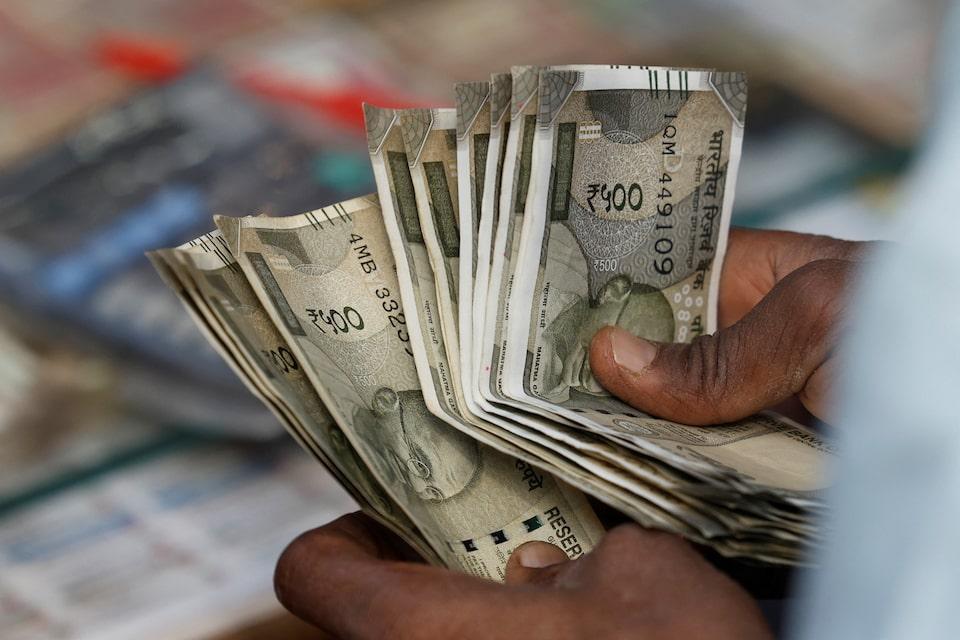
MUMBAI, June 6 (Reuters) - The Indian rupee strengthened modestly on Friday as the Reserve Bank of India's steepest rate cut in five years boosted local equities, helping the South Asian currency eke out a gain even as the dollar firmed against major peers. The rupee closed at 85.6250 against the U.S. dollar, up from its close at 85.79 in the previous session. The rupee declined 0.2% on the week. Sign up here. The Reserve Bank of India (RBI) cut its key repo rate by 50 basis points on Friday and slashed the cash reserve ratio (CRR) for banks as low inflation gave policymakers room to focus on supporting growth. India's benchmark equity indexes, the BSE Sensex (.BSESN) , opens new tab and Nifty 50 (.NSEI) , opens new tab, about 1% each on Friday, posting their best one-day gain in two weeks as the rate cut fuelled domestic growth expectations. India's benchmark 10-year bond whipsawed between gains and losses as traders digested the central bank's policy moves, including a shift in stance from 'accommodative' to 'neutral.' The yield on the benchmark paper was last quoted a tad higher at 6.2237%. Meanwhile, dollar-rupee forward premiums fell in reaction to the rate cut with the 1-year implied yield dropping 10 basis points to 1.81%. The Indian central bank's "larger-than-expected 50 bps rate cut and 100 bps cut in the cash reserve ratio should support INR," DBS said in a Friday note. "We will consider lowering USD/INR’s forecast if the US Federal Reserve pivots towards a rate cut later this year and sets the stage for more USD weakness," the noted added. On the day, the dollar index was up 0.3% at 98.9 in the run-up to release of closely watched U.S. non-farm payrolls data which will offer cues on how the world's largest economy is faring in the face of trade policy spurred uncertainty. https://www.reuters.com/world/india/rupee-ends-higher-rate-cut-boost-equities-blunts-dollar-strength-2025-06-06/
2025-06-06 10:08
CPI report for May due on Wednesday Fiscal bill in focus amid Trump-Musk rift S&P 500 just over 2% from February record high NEW YORK, June 6 (Reuters) - The U.S. stock rebound has driven key indexes to the cusp of record levels, with fresh economic data and trade and fiscal policy developments set to test whether equities will get an extra push higher in the near term. A monthly U.S. inflation report headlines the events for markets in the coming week. Sign up here. Equities have bounced back from a steep fall in April, sparked by concerns about the economic fallout from President Donald Trump's tariff plans. Stocks ended the week on a high note, with the S&P 500 (.SPX) , opens new tab closing on Friday above 6,000 for the first time since late February, buoyed by a monthly U.S. jobs report that calmed worries about the economy. The benchmark S&P 500 ended on Friday 2.3% off its record closing high from February. "I'd still say it's a cautious tone" in the market, said Jim Baird, chief investment officer with Plante Moran Financial Advisors. Despite a "recovery off the lows, I still think it's a market that is looking for greater clarity." Some uncertainty stems from how the U.S. economy is weathering the shifting trade backdrop. Trump has eased back on some of the harshest tariffs since his April 2 "Liberation Day" announcement sent stocks tumbling, but investors are waiting to see how other levies may be rippling through the economy. The consumer price index report for May, due on Wednesday, could give insight into the tariff impact at a time investors are wary of any flare-ups in inflation. "Consumers are feeling the impact of higher prices and if there are indications that near-term inflation could re-accelerate, that is going to put further pressure on discretionary spending and ultimately could lead to a more pronounced slowdown in growth," Baird said. The CPI report will be one of the last key pieces of data before the Federal Reserve's June 17-18 meeting. The U.S. central bank is widely expected to hold interest rates steady at that meeting, but traders are pricing in nearly two 25-basis point cuts by the end of the year. "If we see inflationary data that defies what people are concerned about based on this tariff talk and it comes in cooler, then that could also be a catalyst to at least test those old highs," said Jay Woods, chief global strategist at Freedom Capital Markets. For the year, the S&P 500 is up 2%. But the index has stormed back over 20% since April 8, at the depth of the stock market's plunge on concerns over the tariff fallout. Investors also are grappling with uncertainty over a sweeping tax-cut and spending bill under review in the U.S. Senate. Wall Street is monitoring how much the legislation could stimulate economic growth, but also inflate the country's debt burden as widening fiscal deficits have become a central concern for markets in recent weeks. "As debt increases, it has a greater negative impact on growth," said Kristina Hooper, chief market strategist at Man Group. The legislation also appeared to be the source of a severe rift between Trump and Tesla (TSLA.O) , opens new tab chief Elon Musk, which weighed on stock indexes. Former Trump ally Musk called the bill at the heart of Trump's agenda a "disgusting abomination," while Trump said he was "disappointed" by the billionaire's public opposition. Trade talks also remain at the forefront of markets, with a 90-day pause on a wide array of Trump's tariffs set to end on July 8. Trump said on Friday three of his cabinet officials will meet with representatives of China in London on Monday to discuss a trade deal. "When it comes to policy from Washington, D.C., there are still big question marks," said Bob Doll, chief investment office at Crossmark Global Investments. https://www.reuters.com/business/wall-st-week-ahead-us-stocks-edge-toward-records-with-inflation-data-policy-2025-06-06/