2025-06-06 06:42
ZURICH, June 6 (Reuters) - The Swiss National Bank said on Friday it would intervene in foreign currency markets where necessary to keep inflation on track after the United States added Switzerland to a list of countries being monitored for unfair currency and trade practices. The SNB denied being a currency manipulator after the publication of the U.S. Treasury Report on Thursday, but said it would continue to act in Switzerland's interests as the strong franc helped push inflation into negative terrain last month. Sign up here. "The SNB does not engage in any manipulation of the Swiss franc," it said. "It does not seek to prevent adjustments in the balance of trade or to gain unfair competitive advantages for the Swiss economy." The SNB said it was in contact with U.S. authorities to explain Switzerland's economic situation and monetary policy, and would continue to use interest rates and forex market interventions if necessary to pursue its inflation target of 0-2%. Swiss inflation hit a four-year low in May, with prices falling by 0.1%. The SNB declined to say whether further talks with the United States were planned, but said its monetary policy was "geared towards the needs of Switzerland." Switzerland met two of the U.S. Treasury's concerns regarding trade flows and its current account, but not on foreign currency interventions. SNB forex exchange purchases in 2024 were "minimal," Treasury said. In 2024, the SNB bought only $1 billion in foreign currencies, equivalent to only 0.1% of Swiss GDP, well below the Treasury's threshold of 2% of economic output. EFG Bank economist GianLuigi Mandruzzato said the SNB would be mindful of the Treasury report, but still pursue its mandate. "My feeling is that there should be little reason for concern from a Swiss perspective," he said. "However, with the Trump administration, anything can happen." https://www.reuters.com/business/finance/swiss-national-bank-denies-currency-manipulation-after-being-put-us-watch-list-2025-06-06/

2025-06-06 06:38
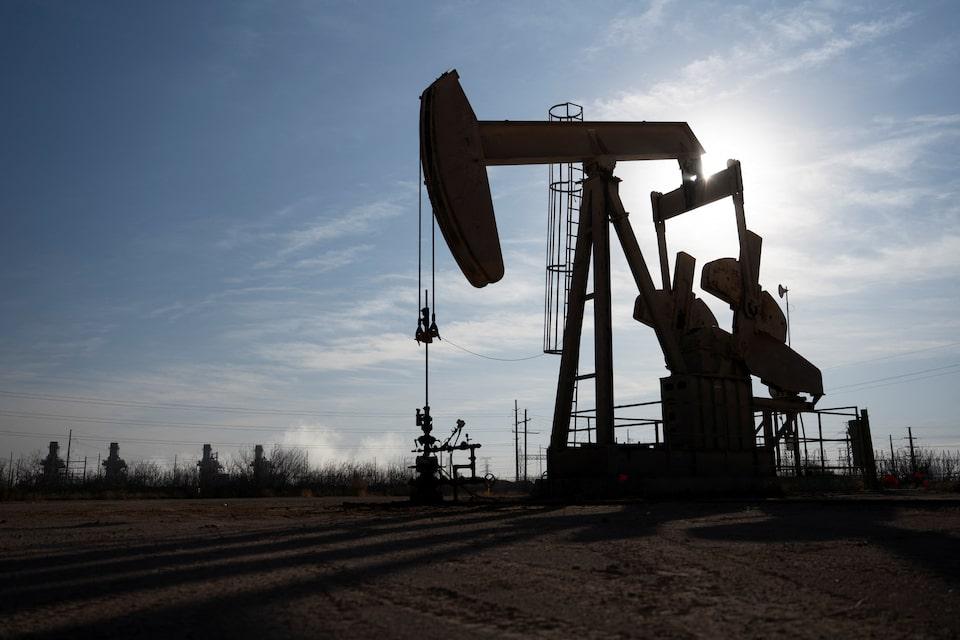
Brent, WTI poised to finish the week higher U.S. jobs report shows unemployment steady at 4.2% Trade negotiations continue with China U.S. oil, gas rigs hit lowest level since November 2021 HOUSTON, June 6 (Reuters) - Crude rose more than $1 a barrel on Friday, posting its first weekly gain in three weeks after a favorable U.S. jobs report and resumed trade talks between the U.S. and China, raising hopes for growth in the world's two largest economies. Brent crude futures settled at $66.47 a barrel, up $1.13, or 1.73%. U.S. West Texas Intermediate crude finished at $64.58, up $1.21 or 1.91%. Sign up here. Both benchmarks settled with weekly gains after declining for two straight weeks. Brent has advanced 2.75% this week, while WTI is trading 4.9% higher. "I think the jobs report was Goldilocks," said Phil Flynn, senior analyst with the Price Futures Group. "It was not too hot, not too cold but just right to increase the chances for an interest rate cut by the Federal Reserve." The U.S. Labor Department's monthly employment report showed the unemployment rate held steady at 4.2% last month. Employers added 139,000 jobs, which combined with downward revisions to prior months' estimates showed a cooling in labor demand but nothing abrupt; by comparison, monthly job gains averaged 160,000 last year. A rate cut by the U.S. central bank, much desired by President Donald Trump, could boost economic growth and demand for petroleum. "This market had priced in a lot of bad options," said John Kilduff, partner with Again Capital. "None of it has come to pass. OPEC+ held the line. There have been talks between China and the U.S., though the details are sketchy, at least they didn't fly apart like Elon (Musk) and Donald (Trump)." China's official Xinhua news agency said trade talks between Xi and Trump took place at Washington's request on Thursday. Trump said the call had led to a "very positive conclusion", adding the U.S. was "in very good shape with China and the trade deal". The oil market continued to swing with news on tariff negotiations and data showing how trade uncertainty and the impact of the U.S. levies are flowing through into the global economy. On Saturday, OPEC+, the Organization of the Petroleum Exporting Countries and allies including Russia, agreed to ramp up output by a previously announced 411,000 barrels per day (bpd) in July. The group rejected a Saudi recommendation for a bigger output hike, part of a broader strategy to win back market share for OPEC+. "The market looks balanced in 2Q/3Q on our estimates as oil demand rises in summer and peaks in July-August, matching supply increases from OPEC+," HSBC said in a note. The U.S. oil and gas rig count, an early indicator of future output, fell by four to 559 in the week to June 6, the lowest since November 2021, energy services firm Baker Hughes said on Friday. Oil rigs fell by nine to 442 this week, while gas rigs rose by five to 114, Baker Hughes said. https://www.reuters.com/business/energy/oil-prices-track-solid-weekly-gains-china-us-resume-trade-talks-2025-06-06/
2025-06-06 06:18
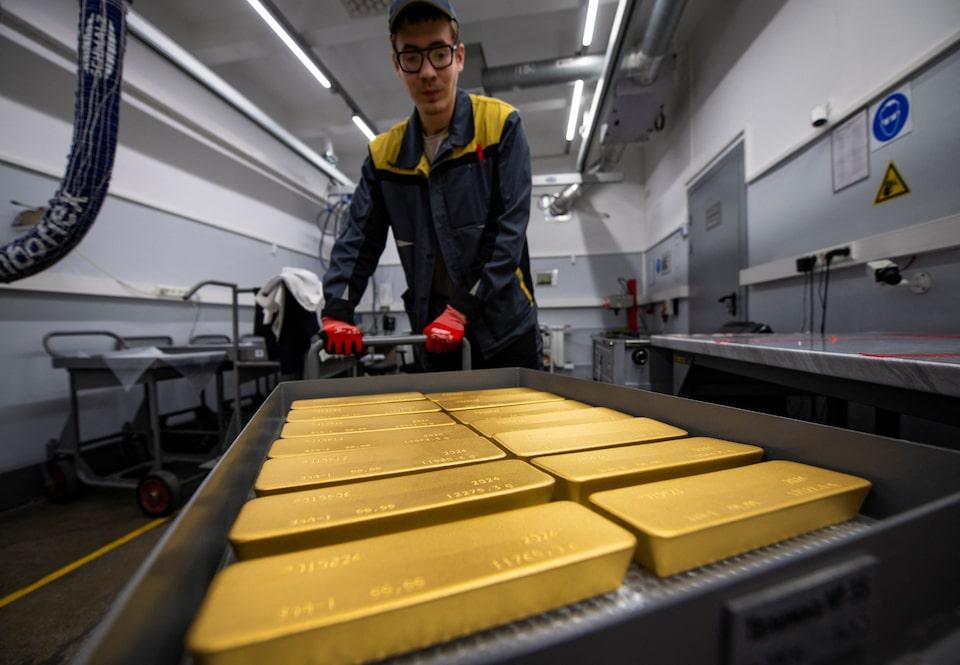
Trump and Xi agree to more talks as trade disputes brew US non-farm payroll data due at 1230 GMT Silver hits over 13-year high June 6 (Reuters) - Gold firmed on Friday and was poised for a weekly rise after U.S. data this week boosted hopes of interest rate cuts by the Federal Reserve, while silver hit a more than 13-year high. Spot gold was up 0.2% at $3,359.26 an ounce, as of 1151 GMT. Bullion has gained 2.1% for the week so far. Sign up here. U.S. gold futures climbed 0.2% to $3,382.70. "The disappointing jobless claims data, indicating potential labour market weakness, has had a more substantial impact on gold prices than the optimism stemming from President Trump's call with President Xi," said Alexander Zumpfe, a precious metals trader at Heraeus Metals Germany. U.S. President Donald Trump and Chinese leader Xi Jinping held a rare call on Thursday amid trade tensions and a dispute over critical minerals. The number of Americans filing new applications for unemployment benefits increased to a seven-month high last week, the Labor Department showed Thursday. Markets are now eyeing the upcoming U.S. non-farm payroll report, due at 1230 GMT, after a series of data releases this week signalled softness in the labour market. Economists polled by Reuters forecast non-farm payrolls increased by 130,000 jobs in May, while the unemployment rate is expected to remain steady at 4.2%. "A softening U.S. labour market would likely increase pressure on the Fed to ease monetary policy, especially if payrolls disappoint," Zumpfe added. Gold, traditionally considered a safe-haven asset during political and economic uncertainty, tends to thrive in a low-rate environment. Meanwhile, spot silver fell 0.1% to $36.11 per ounce, after hitting a more than 13-year high earlier in the session, propelled by robust industrial demand and ongoing supply deficits. Platinum rose 2.4% to $1,157.11, its highest level since March 2022, while palladium was up 1.5% at $1,020.75. Gold is struggling really to break higher in the short term, driving investors toward undervalued silver and platinum, said Ole Hansen, head of commodity strategy at Saxo Bank. https://www.reuters.com/world/china/gold-rises-weak-us-data-offsets-optimism-trump-xi-call-2025-06-06/
2025-06-06 06:13
US payrolls data tops forecasts Dollar up against peers Tesla claws back ground after Musk-Trump feud Crude prices register weekly advance amid renewed U.S.-China trade talks NEW YORK, June 6 (Reuters) - U.S. stocks closed sharply higher on Friday and U.S. Treasury yields jumped as a generally upbeat employment report and bounce-back in Tesla (TSLA.O) , opens new tab shares helped the indexes notch weekly advances. All three major U.S. stock indexes surged, while bitcoin jumped and crude prices settled at their highest level since mid-April. Sign up here. "Stocks bounced back nicely today," said Ryan Detrick, chief market strategist at Carson Group in Omaha. "It's a recent theme we've been seeing; the day after a red day has been pretty strong. That's another clue that the bulls are in charge." The U.S. economy added 139,000 jobs in May, topping analysts' expectations, while the unemployment rate held firm at 4.2%, the Labor Department said. The report also showed hotter-than-anticipated wage growth, which is unlikely to convince the U.S. Federal Reserve to cut its key policy rate in the near term. "The headline number was solid, but clearly there is some deterioration and slowing when you peel back the onion," Detrick added. "The reality, though, is the labor market is still growing and the overall economy is still on fairly firm footing. That led to the relief rally to close out a solid week." Tesla stock (TSLA.O) , opens new tab rebounded 3.8% a day after a very public spat between U.S. President Donald Trump and his top advisor, billionaire Elon Musk, sent shares of Musk-helmed Tesla tumbling, which helped drag the indexes decisively lower. The falling out between the erstwhile allies revived concerns over Trump's "Big Beautiful Bill" of tax and spending plans and its effect on the growing deficit. Tariff negotiations between the U.S. and its trading partners remain fluid, with the European Union and India working toward ironing out deals, and further U.S.-China talks promised after Trump's phone call on Thursday with Chinese President Xi Jinping. China has granted temporary export licenses to rare-earth suppliers of the top three U.S. automakers amid emerging supply chain snags due to Beijing's export curbs on the materials. On the flip side, the United States has suspended licenses for nuclear equipment suppliers to sell to Chinese power plants, according to people familiar with the matter. The Dow Jones Industrial Average (.DJI) , opens new tab rose 443.13 points, or 1.05%, to 42,762.87. The S&P 500 (.SPX) , opens new tab climbed 61.06 points, or 1.03%, to 6,000.36 and the Nasdaq Composite (.IXIC) , opens new tab advanced 231.50 points, or 1.20%, to 19,529.95. European shares followed their U.S. counterparts higher after the jobs report, notching their second consecutive weekly gains, buoyed by upbeat U.S. employment data and waning worries over trade disputes. MSCI's gauge of stocks across the globe (.MIWD00000PUS) , opens new tab rose 5.27 points, or 0.59%, to 892.10. The pan-European STOXX 600 (.STOXX) , opens new tab index rose 0.32%, while Europe's broad FTSEurofirst 300 index (.FTEU3) , opens new tab rose 7.10 points, or 0.32%. Emerging market stocks (.MSCIEF) , opens new tab rose 0.12 points, or 0.01%, to 1,182.80. MSCI's broadest index of Asia-Pacific shares outside Japan (.MIAPJ0000PUS) , opens new tab closed lower by 0.1%, to 622.63, while Japan's Nikkei (.N225) , opens new tab rose 187.12 points, or 0.50%, to 37,741.61. The dollar rose against major currencies in the wake of the better-than-expected employment data. The dollar index , which measures the greenback against a basket of currencies including the yen and the euro, rose 0.51% to 99.18, with the euro down 0.42% at $1.1396. Against the Japanese yen , the dollar strengthened 0.87% to 144.77. The report also prompted a rally in cryptocurrencies. Bitcoin gained 3.80% to $104,334.11. Ethereum rose 3.7% to $2,487.77. U.S. Treasury yields also rode the wave of the upbeat jobs data. The benchmark U.S. 10-year note yield rose 11.1 basis points to 4.506% from 4.395% late on Thursday. The 30-year bond yield rose 8.2 basis points to 4.9655% from 4.884% late on Thursday. The 2-year note yield, which typically moves in step with interest rate expectations for the Federal Reserve, rose 11.7 basis points to 4.041%, from 3.924% late on Thursday. U.S. crude rose 1.91% to settle at $64.58 per barrel, while Brent settled at $66.47 per barrel, up 1.73% on the day. Gold prices dipped in opposition to the strengthening greenback, as the jobs report clouded the outlook for rate cuts from the Federal Reserve. Spot gold fell 1.27% to $3,310.58 an ounce. U.S. gold futures fell 1.23% to $3,309.50 an ounce. https://www.reuters.com/world/china/global-markets-wrapup-1-2025-06-06/
2025-06-06 06:13
India's gasoline, diesel demand keeps growing, while China has peaked Reliance, Nayara diesel market share doubled over past two years Cheap Russian crude helps Reliance, Nayara in pump price war Competition spawns gyms, dorms, haircuts at new fuel stations NEW DELHI, June 6 (Reuters) - India's two major private-sector refiners, which have long prioritised exports, are turning to local sales, grabbing share in the country's fast-growing $150 billion fuel retail market as weaker global demand squeezes profit margins offshore. Reliance Industries (RELI.NS) , opens new tab and Nayara Energy are stepping up sales at home as fuel demand growth slows in developed markets and China, the world's second biggest oil consumer, with the transition to electric vehicles. Sign up here. The lower demand offshore combined with supply competition from new refiners, such as Dangote in Nigeria, and rising exports from China's underutilised processors have compressed global refining margins and have made the Indian market, where suppliers save on freight and taxes, more attractive. As a result, "private refiners are increasingly looking to supply to the domestic market, which is still growing at a healthy pace," said Prashant Vasisht, senior vice president at credit rating firm ICRA. The International Energy Agency expects India will become the largest source , opens new tab of global oil demand growth out to 2030, in contrast with China, where fuel demand may have already peaked. FGE analyst Dylan Sim said Indian gasoline consumption and diesel demand are on track to grow around 4% and 2% per year, respectively, over the next decade or so. "Couple that with the market volatility and uncertainties seen in recent years, it makes sense for these private companies to try and diversify their businesses," Sim said. PRIVATE PLANTS HOLD CRUDE ADVANTAGE Offering discounts and growing their networks of big, modern stations featuring expansive retail offerings, private sector operators expanded their share of diesel sales to 11.5% and gasoline sales to 9.2% in the fiscal year that ended in March 2025, up from 5.2% and 6.7% respectively two years earlier, government data showed. Reliance, controlled by billionaire Mukesh Ambani, and Nayara have a key advantage that allows them to undercut the dominant state-owned refiners at the pump. They can run cheaper crudes through their plants than their bigger rivals, which have simpler, aging refineries. The two are the country's biggest buyers of discounted Russian crude, available since 2022. While the private refiners do not publish their refining margins, analysts at Jefferies expect Reliance's margin to hold around $2 a barrel stronger than the benchmark Singapore refining margin due to its blending of cheaper Russian and Canadian crudes. Reliance sells fuels through Jio-BP, its retailing tie-up with UK major BP (BP.L) , opens new tab which has 1,916 outlets in India. Its domestic sales volumes of diesel rose by 35% and gasoline by 24% in the quarter ended in March from a year ago, Reliance told analysts in May, without specifying volumes. Jio-BP plans to invest about 10 billion rupees ($117 million) annually to expand its local footprint in coming years as it sees a "long pathway" and growth in diesel demand in India through at least 2040, Vinod Tahiliani, chief financial officer at Reliance BP Mobility, told Reuters. Jio-BP offers discounts of 1 rupee ($0.01) per litre of diesel and petrol off the price charged by state-owned retailers at its service stations. Nayara, whose biggest shareholder is Russia's Rosneft, in April reintroduced discounts of 2-3 rupees per litre on gasoline and 1 rupee per litre on diesel. Selling through more than 6,500 fuel stations, it aims to add 400 this year, according to its website. Nayara did not reply to a request for comment. State players Indian Oil Corp (IOC.NS) , opens new tab, Hindustan Petroleum Corp (HPCL.NS) , opens new tab and Bharat Petroleum Corp (BPCL.NS) , opens new tab, which operate more than 90% of India's roughly 97,000 filling stations, have not cut pump prices as they seek to recoup losses on sales of cooking gas at government-fixed below-market rates, company sources say. The three did not respond to Reuters' requests for comment. SERVICE STATIONS GET CREATIVE India, meanwhile, is expanding its highway network and auctioning large roadside plots for building fuel stations featuring a host of amenities for motorists. Sukhmal Jain, who recently retired as head of marketing at BPCL, said state refiners are rapidly building their networks, including bidding for highway-side plots, and looking to offer services such as eateries, recreational areas and gym facilities in order to compete and boost sales. The state retailers are also opening stores under a common brand name Apna Ghar, which means "Own House", with amenities such as dormitories, barbers, self-cooking facilities, laundry, and doctors on call for truckers who are on the road for more than 20-25 days a month, Jain said. India's oil ministry said recently that Apna Ghar operates at 350 locations with 4,431 beds. S.P. Singh, who manages a fleet of about 800 trucks and 150 trailers for New Delhi-based Chaudhary Transport, said his drivers are drawn to the amenities and cheaper fuel at private operators. "They have convenience stores and cafes. Their staff is more responsive to customers and their toilets are clean," he said. ($1 = 85.7900 Indian rupees) https://www.reuters.com/business/energy/private-refiners-tap-indias-drivers-export-markets-tighten-2025-06-06/

2025-06-06 06:03
ECB 'may well' pause in July - Kazaks Sees value in keeping 'policy space' Inflation seen below 2% for some time FRANKFURT, June 6 (Reuters) - The European Central Bank should stop cutting interest rates at every meeting and instead keep its powder dry given an uncertain economic outlook, ECB policymaker Martins Kazaks told Reuters. The ECB cut rates for the seventh time in a row on Thursday to prop up a euro zone economy that was struggling even before erratic U.S. economic and trade policies dealt it further blows. Sign up here. Kazaks called time on that year-long easing cycle, saying the ECB should keep "policy space" to cut rates again at a later date if needed. "I don’t think the market should expect the trajectory of cutting rates at every meeting to continue," he said in a phone interview. "There is no need and there is value in maintaining policy space." Most ECB policymakers back keeping interest rates, now at 2%, on hold at their next gathering in July, or possibly longer, depending in part on the prospects for trade with the United States, sources told Reuters. Kazaks also supported a possible pause but warned against making any firm commitment - of "forward guidance" in central bank parlance - given an ever-changing political landscape. "We don’t get much data between now and the July meeting so it may well be the case that we pause," Kazaks said. "But uncertainty remains very high, the political situation may change every day. So forward guidance isn’t your friend in these circumstances." Even if the ECB were to cut rates further, this would amount to small, "fine-tuning" moves for as long as inflation was projected to stay at 2% over the medium term, Kazaks said. "In terms of the rate cutting, we’ve done a lot," he said. "If there are further cuts, they will be fine-tuning, unless we shift out of the baseline scenario." The ECB published new projections on Thursday that see inflation at 2% this year, 1.6% in 2026 and 2% in 2027. Kazaks welcomed the new forecasts but warned the dip next year, which the ECB chalked up to a stronger euro and cheaper fuel, called for vigilance. "We are in a good place, we have delivered inflation at 2%, but it’s important to maintain it at around 2%," he said. "The staff forecast expects inflation to remain below 2% for some time so we have to remain vigilant and see what happens in the economy." https://www.reuters.com/business/finance/ecbs-kazaks-calls-time-rate-cut-streak-2025-06-06/


