2025-06-05 21:37
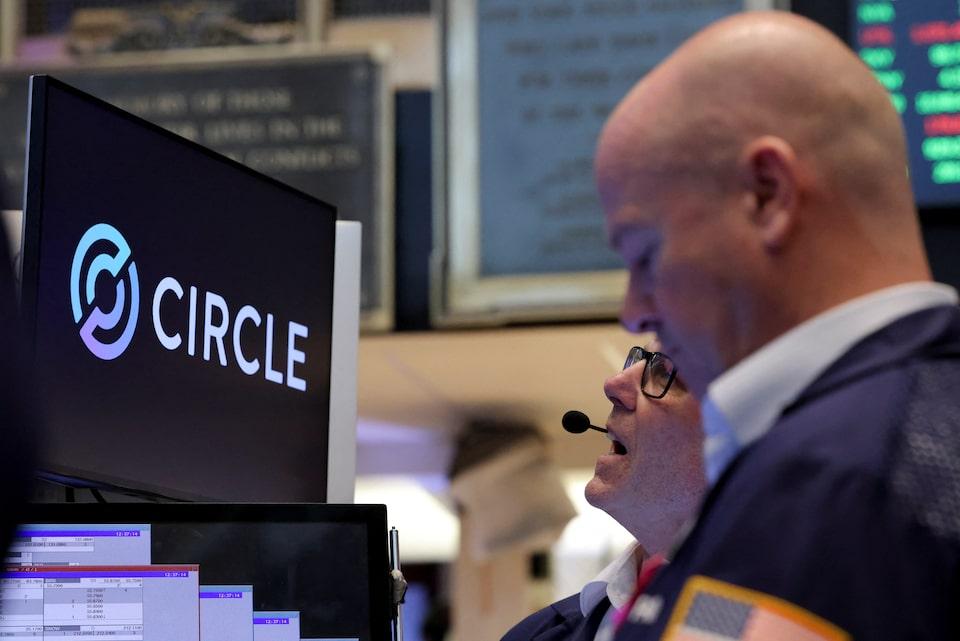
Shares in Circle surge in NYSE debut Analysts say Circle is a bellwether for crypto IPOs Congress poised to pass stablecoin bill this year June 5 (Reuters) - Stablecoin issuer Circle's $1.05 billion initial public offering on Thursday could spur other large crypto players to follow suit as the industry benefits from U.S. President Donald Trump's embrace of the sector, according to experts and analysts. Circle priced its shares at $31 on Wednesday. In a sign of investor demand, they opened on the New York Stock Exchange on Thursday at $69 apiece and closed at $83.23. Sign up here. That trajectory is likely to encourage other crypto companies eyeing stock market debuts. Circle is the first major crypto company to go public since crypto exchange Coinbase (COIN.O) , opens new tab listed on Nasdaq in 2021. Analysts have pointed to crypto exchanges Kraken and Gemini as other potential IPO candidates in the digital asset sector. Neither company immediately responded to a request for comment. “It would not be surprising if other crypto companies follow suit," said Jacob Zuller, an analyst at Third Bridge. "Public markets have accepted that crypto is not going away." Circle issues stablecoin USDC, a cryptocurrency pegged to the U.S. dollar and designed to maintain a constant value. Crypto traders use stablecoins to move funds between tokens and proponents say they could be used to send and receive payments instantly. "We've had a deep conviction from the inception of the company that we could build a new infrastructure for money, built on the internet, that could radically reshape the utility of money," Circle CEO Jeremy Allaire said in an interview with Reuters. Circle's IPO success demonstrates that there is pent-up demand in the public markets for crypto and other financial technology companies, said Dan Dolev, senior analyst at Mizuho. "If IPOs go wild, it's a good bellwether," he said. NYSE Group President Lynn Martin went a step further, calling Circle's IPO a positive sign not just for crypto listings, but for IPOs in general. "I see the Circle IPO as a bellwether for the IPO markets this year, not just for crypto listings," she said. Fintech companies have been warmly received in recent months. Shares in retail brokerage eToro surged 34% in their Nasdaq debut in May. Digital banking startup Chime is seeking a more than $11 billion valuation when it launches next week. Investment interest in digital assets “is coming from all corners,” said Sui Chung, CEO of crypto index provider CF Benchmarks. “There’s a plethora of high tech and blockchain-focused investment funds, and these vehicles have been starved of new issues for a long time," said Chung. After crypto exchange FTX collapsed in 2022, many institutional investors shunned the digital asset market. Crypto prices eventually recovered, and the industry got a major boost when Trump professed support on the campaign trail, pledging to be a "crypto president." In his first week in office, Trump created a cryptocurrency working group to propose digital asset regulations. In March, he hosted crypto executives at the White House. Congress is also widely expected to pass legislation this year creating a federal regulatory framework for stablecoins that experts say could pave the way for their widespread use. https://www.reuters.com/business/circles-blockbuster-ipo-paves-way-other-crypto-public-listings-2025-06-05/
2025-06-05 21:06
ORLANDO, Florida, June 5 (Reuters) - There was plenty of meaty news for investors to get their teeth into on Thursday - U.S. President Donald Trump and Chinese Premier Xi Jinping's long-awaited phone call, a rate cut and guidance from the European Central Bank, and more soft U.S. labor market data. But the biggest market-mover of all? The public 'bromance' break up between Trump and Tesla CEO Elon Musk. In my column today I look at Wall Street's remarkable recovery from the post-'Liberation Day' depths of despair. The headwinds haven't gone away, but the 'hopium' rally could still have room to run. More on that below, but first, a roundup of the main market moves. Sign up here. If you have more time to read, here are a few articles I recommend to help you make sense of what happened in markets today. Today's Key Market Moves Trump-Musk feud sinks stocks So, the Trump-Xi call to defuse trade tensions finally took place. The cynical view would be that it yielded nothing concrete other than an agreement to keep talking, suggesting China is standing firm and Trump may be forced into another major climbdown. The more optimistic take, which investors initially adopted, is that the talks were constructive and cordial, evidenced by the tone of Trump's social media post and the fact that the two invited each other to visit. But that's pretty thin gruel, and it wasn't enough to support Wall Street's initial gains. After hitting a record high for a second day, the MSCI All Country index ended the session flat. Investor sentiment was soured by the latest weekly jobless claims figures, the second warning from the labor market in 24 hours after Wednesday's ADP private sector employment report. If these trends are reflected in May's nonfarm payrolls on Friday, markets could be in for a rocky ride. Some of the U.S. economic gloom was offset by the U.S. trade deficit narrowing in April at the fastest pace ever, thanks to a collapse in imports as the front-running of purchasing goods from overseas ahead of tariffs ebbed. This bodes well for second quarter GDP growth, and the Atlanta Fed's GDPNow model estimate for second quarter growth was revised up a touch to an annualized 3.8%. Like the first quarter GDP contraction, however, the expected rebound in Q2 is completely driven by pre-tariff distortions in the trade data. Meanwhile, the European Central Bank cut interest rates for the eighth time since last June, by a quarter point to 2.00%. President Christine Lagarde signaled a pause in the easing cycle, telling reporters the bank is in a "good position" on monetary policy right now. But more cuts are likely to come, just a bit later this year than many economists had expected. Rates traders still see 50 bps of easing this year, with 25 bps cuts in September and December. Lastly, but by no means least, the 'bromance' between the world's most powerful man and its richest erupted into a rancorous public fight, as Trump threatened to cut off government contracts with companies owned by Musk. The 14% slump in Tesla shares dragged Wall Street into the red, casting a shadow over world markets going into the final trading day of the week. Wall Street's 'hopium' high not exhausted yet By any measure, the recent resilience of U.S. stocks is remarkable, with Wall Street powering through numerous headwinds to erase all its tariff-fueled losses and move into positive territory for the year. And although these headwinds haven't gone away, the rally may still have some juice left in it. Since the April 7 lows plumbed after U.S. President Donald Trump's 'Liberation Day' tariff debacle, the S&P 500 and Nasdaq are up 23% and 32%, respectively. 'Big Tech' has led the way, with the Roundhill 'Magnificent Seven' ETF gaining more than 35%. On the face of it, this is remarkable given that many of the concerns that sparked the crash – elevated U.S. import tariffs, tensions between the world's two largest economies, and chaotic and unorthodox policy out of Washington – remain in place today. Equity bulls are essentially betting that many things will go right in the coming months: the Federal Reserve will cut rates; no economic downturn; inflation won't spike despite the tariffs; U.S. tech companies will continue generating strong results; fiscal concerns in Washington will moderate; and perhaps most importantly, Trump will continue to back down on his most aggressive tariff threats – or to use the acronym de jour, investors are assuming the 'TACO' (Trump Always Chickens Out) trade will hold. That's a lot of stars aligning. Some of the biggest names in finance are skeptical, particularly regarding the U.S. fiscal outlook. Bridgewater founder Ray Dalio and JPMorgan CEO Jamie Dimon, both long-time deficit hawks, this week repeated their warnings that the U.S. debt is unsustainable. But these calls have fallen on deaf ears, or equity investors simply think any fiscal fallout will take years to materialize. SHORT-LIVED DIPS On the one hand, investors – especially the retail crowd believed to be driving this rally – appear to be overly optimistic. But looked at another way, U.S. equity investors may not be ignoring today's underlying risks, but simply viewing them less apocalyptically than they did a few months ago. Indeed, the overwhelmingly negative sentiment from earlier this year paved the way for the recent rebound. Sentiment among institutional investors reached extreme levels of bearishness in the wake of 'Liberation Day', and recession fears ballooned to historically high levels as well, Bank of America's April fund manager survey showed. Meanwhile, May's survey showed fund managers holding the biggest underweight position in U.S. equities in two years. When sentiment and positioning are that stretched, it doesn't take much for prices to snap back in the opposite direction. If the latest American Association of Individual Investors (AAII) Sentiment Survey is any guide, the snap back in equities still has room to run. Pessimism over the short-term outlook for U.S. stocks increased to an "unusually high" 41.9% last week, above its historical average of 31.0% for the 26th time in 28 weeks. As HSBC's multi-asset strategy team noted this week, it is precisely because these sentiment and positioning indicators are being kept "thoroughly in check" that market dips now are short-lived. It's also good to remember that even though Wall Street has erased its early losses and valuations are rising back towards their recent highs, U.S. stocks are still laggards this year. The S&P 500 is up only 1.5% in 2025 thus far, while the MSCI All Country World Index has jumped around 6%, hitting an all-time high on Wednesday. This suggests there may be room for U.S. outperformance on a relative basis in the coming weeks and months, though, of course, relative value metrics might still favor non-U.S. markets. This doesn't mean we should expect capital to start flooding back into the U.S. again. International institutional investors may continue to rethink their allocation to U.S. assets, creating a long-term risk to U.S. stocks. But for now, domestic U.S. investors are picking up the slack. What could move markets tomorrow? Opinions expressed are those of the author. They do not reflect the views of Reuters News, which, under the Trust Principles , opens new tab, is committed to integrity, independence, and freedom from bias. https://www.reuters.com/business/autos-transportation/global-markets-trading-day-graphic-pix-2025-06-05/
2025-06-05 20:33
Dow -0.25%, S&P 500 -0.53%, Nasdaq -0.83% Tesla slumps on growing Trump-Musk public feud Initial jobless claims rose for second straight week Trump, Xi talks in focus NEW YORK, June 5 (Reuters) - Wall Street's stock indexes ended lower on Thursday in choppy trade as a slump in Tesla shares offset news of progress in tariff talks between U.S. President Donald Trump and Chinese leader Xi Jinping. Shares of electric car-maker Tesla (TSLA.O) , opens new tab dropped more than 14% in heavy trading as the public feud between CEO Elon Musk and Trump intensified. The stock has fallen four out of the last five sessions. The company lost about $150 billion in value after Trump and Musk began their verbal war. Sign up here. Musk has stepped up criticism of the president's massive tax legislation in recent days, while Trump alleged Musk was upset , opens new tab because the bill takes away tax benefits for electric vehicle purchases. "The fallout for Tesla stock is self-evident," said Mark Spiegel, portfolio manager at Stanphyl Capital. "I see no meaningful fallout from this for the rest of the market, other than its slight effect on the indexes and index funds. The overall stock market has plenty of problems, but Tesla isn't one of them." Investors focused earlier on news that Trump and the Chinese leader had invited each other to their respective countries for visits as shown in U.S. and Chinese summaries of their phone call on Thursday. A recent dispute over critical minerals had threatened to tear up a fragile trade truce between the two biggest economies. "Recent market moves are further indication that with economic policy shifts, and higher geopolitical and headline sensitivity, equity markets will be characterized by greater volatility and velocity than in the previous cycle," said Katherine Bordlemay, co-head of Americas client portfolio management for fundamental equities at GSAM. The Dow Jones Industrial Average (.DJI) , opens new tab fell 108.00 points, or 0.25%, to end at 42,319.74. The S&P 500 (.SPX) , opens new tab lost 31.51 points, or 0.53%, at 5,939.30 and the Nasdaq Composite (.IXIC) , opens new tab dropped 162.04 points, or 0.83%, to 19,298.45. Weaker-than-expected U.S. private payrolls and services sector data on Wednesday raised concerns about an economic slowdown caused by trade uncertainties, with investors focusing squarely on Friday's nonfarm payrolls report. Initial jobless claims data on Thursday showed Americans filing new applications for unemployment benefits last week rose for a second straight week. Kansas City Federal Reserve Bank President Jeff Schmid on Thursday expressed concern that tariffs could rekindle inflation, saying upward price pressure could be apparent in coming months but not fully known for much longer. The comments show Schmid is likely inclined to hold the Fed policy rate steady at its June 17-18 meeting as is widely expected, but also beyond that. Despite calls from Trump to slash rates, Fed Chair Jerome Powell has opted to stand pat so far, awaiting further data to guide the policy decision as tariff volatility prevails. U.S. equities rallied sharply in May, with the S&P 500 index (.SPX) , opens new tab and the tech-heavy Nasdaq (.IXIC) , opens new tab scoring their biggest monthly percentage gains since November 2023, thanks to a softening of Trump's harsh trade stance and upbeat earnings reports. Brown-Forman (BFb.N) , opens new tab fell almost 18% after the Jack Daniel's maker forecast a decline in annual revenue and profit. Procter & Gamble (PG.N) , opens new tab said it will cut 7,000 jobs, or about 6% of its workforce, over the next two years in a restructuring. Shares of the consumer goods bellwether fell 1.9%. Volume on U.S. exchanges was relatively light, with 17.3 billion shares traded, compared to an average of 17.9 billion shares over the previous 20 sessions. Declining issues outnumbered advancers by a 1.11-to-1 ratio on the NYSE. There were 253 new highs and 49 new lows on the NYSE. On the Nasdaq, declining issues outnumbered advancers by a 1.48-to-1 ratio. The S&P 500 posted 16 new 52-week highs and three new lows while the Nasdaq Composite recorded 63 new highs and 42 new lows. https://www.reuters.com/business/wall-street-futures-edge-up-investors-await-key-jobs-data-2025-06-05/
2025-06-05 20:32
Petrobras eyes Africa and India for oil exploration amid Brazil permit delays Petrobras to resume fertilizer plant operations in Sergipe and Bahia by year-end Petrobras seeks more control over Braskem, unhappy with current management RIO DE JANEIRO, June 5 (Reuters) - Petrobras (PETR4.SA) , opens new tab aims to make Africa its main region of development outside Brazil, the state-run oil giant's CEO told Reuters on Thursday during a wide-ranging interview about the company's strategy. Ivory Coast has extended the "red carpet" for Petrobras to explore deep and ultra-deep waters off its coast, when it gave the company preference in buying nine offshore exploratory blocks on Wednesday, said Petrobras CEO Magda Chambriard. Sign up here. She added that Nigeria, Angola, and Namibia have also expressed interest in working with the Brazilian giant. "We are experts in the eastern margin of Brazil," said Chambriard, citing geological similarities between the region and Africa. "The correlation between Brazil and Africa is unequivocal, so we need to go to Africa." In recent years, Petrobras has shown an interest in buying stakes in oil assets abroad, especially in Africa, as it looks to boost reserves while it faces delays in obtaining environmental permits to drill for new oil off the coast of the Amazon rainforest. Petrobras is also seeking to explore India's coast, taking part in an upcoming oil block auction scheduled for July, Chambriard said. Petrobras' plans mark a return to the African continent after the company divested assets in the region under previous governments, as part of a broad plan that made the company focus on high-productivity areas in Brazil's pre-salt fields. The plans to explore new oil fields are part of Chambriard's strategy to handle the critical task of balancing President Luiz Inacio Lula's ambitions to use Petrobras to boost the economy with delivering profits to its investors, all while contending with the global challenge of lower oil prices. Petrobras, a cornerstone of Brazil's economy, is also at the center of high-stakes tension within Lula's administration, which aims to leverage oil revenues for economic growth while showcasing Brazil, the host of the upcoming COP30 climate summit, as a champion in the global fight against climate change. The company's plans to drill for oil off the coast of the Amazon rainforest, in the Foz do Amazonas region, have faced delays in obtaining environmental permits. But Chambriard told Reuters she believes the company will clear the last step to getting a permit to drill in the region in the second half of July. Meanwhile, the company's plans in Africa have already started being implemented. In 2023, it bought a stake in an offshore oil field in South Africa and in early 2024 it purchased an interest in fields in the island nation of Sao Tome and Principe, where it hopes to drill a well this year, Chambriard said. Despite the recent efforts, Chambriard said the firm was outbid by France's TotalEnergies (TTEF.PA) , opens new tab for a share in Galp Energia's offshore discovery in Mopane field, in Namibia. "We hope to be invited" to develop Mopane, Chambriard added, without giving further details. LOCAL INVESTMENT PLANS Lower Brent oil crude prices have pushed the company to cut costs and simplify projects in Petrobras' upcoming strategic plan for the 2026-2030 period, Chambriard said. During the firm's first-quarter earnings call with analysts last month, Chambriard had already signaled a move towards austerity, pleasing investors. But Chambriard did not clarify whether cost-cutting efforts would impact the company's investment plans. If confirmed, a retreat from investment plans could mark a stark reversal for the Brazilian oil giant since Lula took office in 2023 and pushed the company to invest more to boost Brazil's economy. The firm is set to finally widen its role in Brazil's fertilizer production, as it expects to resume operation on two plants in the states of Sergipe and Bahia by the end of the year, Chambriard said. The CEO also confirmed a Reuters report that the firm is unhappy with the current level of control it has over petrochemical firm Braskem (BRKM5.SA) , opens new tab, and is looking for changes to a shareholders agreement that could give the oil company more power in Braskem's decision-making process. Petrobras has a 47% voting stake in Braskem but has appointed four of its 11 board members and one director out of seven, representation it considers insufficient, Reuters reported last week. Petrobras has no interest in having majority control over the firm, but it wants more power over it to "guarantee synergies," Chambriard said, without providing further details. Braskem is a "very important asset," Chambriard said. But, she added, "from our current point of view, Braskem's management is not what we want." https://www.reuters.com/business/energy/petrobras-aims-make-africa-its-main-exploratory-region-outside-brazil-2025-06-05/
2025-06-05 20:23
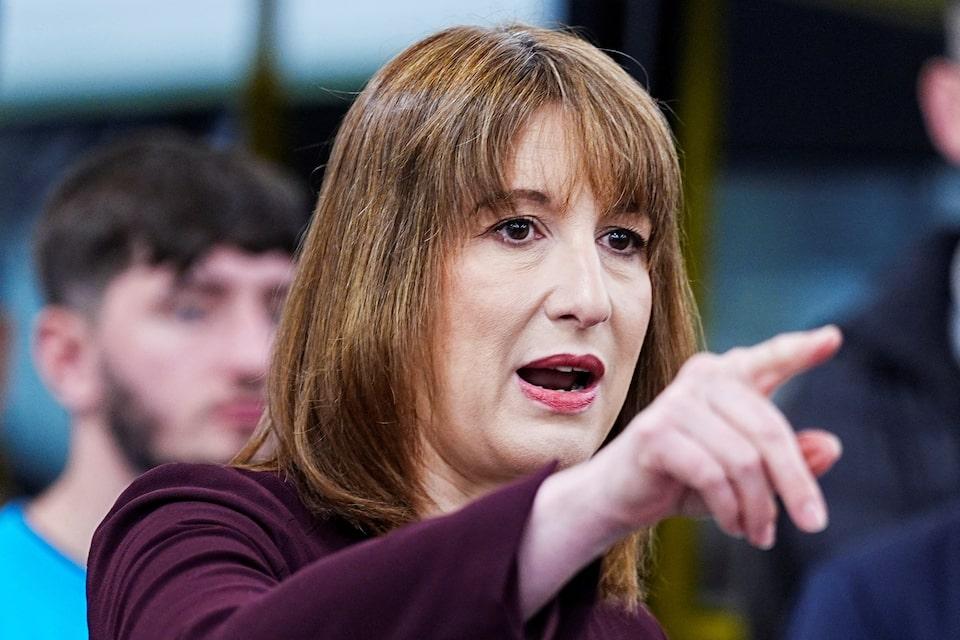
LONDON, June 5 (Reuters) - More upbeat business surveys and strong first-quarter GDP show the British economy is recovering from a weak end to 2024, but the public remain restless about slow improvements to living standards, finance minister Rachel Reeves said on Thursday. "The most recent GDP (gross domestic product) numbers, 0.7% growth in the first quarter, the strongest in the G7, and recent business surveys ... are very positive," she said at a dinner hosted by the Confederation of British Industry (CBI). "That is good news and does show we are beginning to turn the corner." Sign up here. Purchasing managers' indexes released this week have shown a recovery in activity after a sharp fall in April due to the shock of U.S. President Donald Trump's tariffs. However, Reeves said there was a general sense of unease at a recent meeting of finance ministers from the Group of Seven rich nations in Canada. "None of our countries are growing at the rate that we used to or the rate that we want to. All of us are struggling with living standards not improving and our citizens are becoming restless," she said. Reeves is due to announce spending plans on Wednesday which will set government departments' budgets up to 2029, covering most of the remainder of her Labour Party's term in office. At the dinner, she pledged to tackle high energy costs that hurt businesses and consumers and said the spending review would include more public investment in energy infrastructure. Reeves repeated a promise not to raise taxes at a future budget by as much as at her first budget in October last year but declined to make more specific commitments on business taxation when asked by CBI chair Rupert Soames. "I'm not going to be able to write four more years of budgets here this evening. But we're never going to repeat anything like that (2024 budget) again," she said. ($1 = 0.7357 pounds) https://www.reuters.com/world/uk/uks-reeves-says-economy-is-turning-corner-eyes-energy-investment-2025-06-05/
2025-06-05 20:05
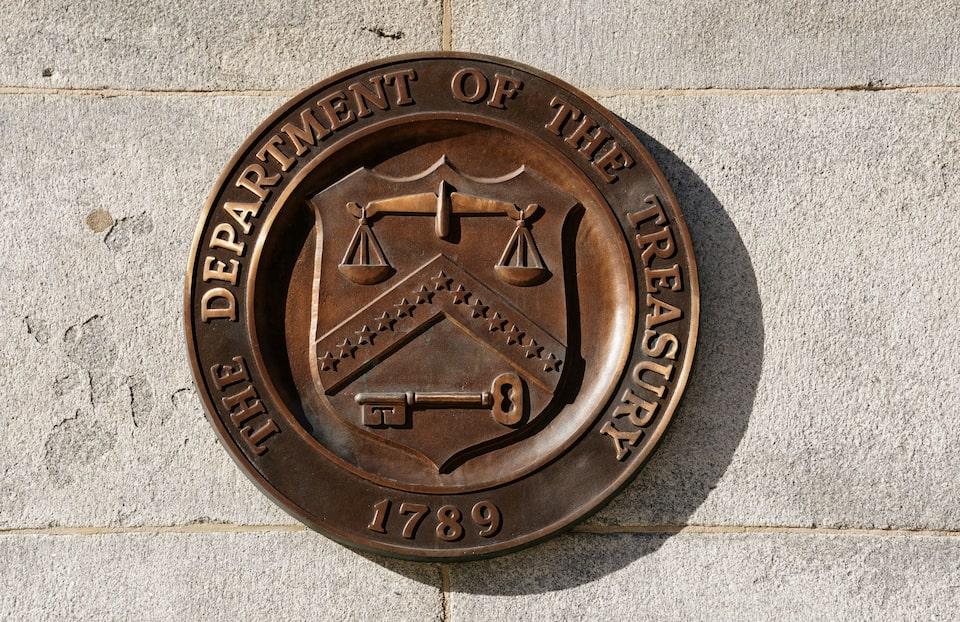
Ireland, Switzerland join seven others on global monitoring list China not a manipulator but 'stands out' for lack of transparency Dollar dynamics have changed in 2025, making it more tempting for countries to try to weaken their currencies June 6 (Reuters) - No major U.S. trading partner manipulated its currency in 2024, the Treasury Department said on Thursday in the first semi-annual currency report of President Donald Trump's new administration, although its "monitoring list" of countries warranting close attention grew to nine with the addition of Ireland and Switzerland. While it did not label China a currency manipulator for now despite "depreciation pressure" facing its currency, the yuan, Treasury issued a stern warning to China, saying it "stands out among our major trading partners in its lack of transparency around its exchange rate policies and practices." Sign up here. "This lack of transparency will not preclude Treasury from designating China if available evidence suggests that it is intervening through formal or informal channels to resist (yuan) appreciation in the future," Treasury said in a statement. Treasury said China, Japan, South Korea, Taiwan, Singapore, Vietnam, Germany, Ireland and Switzerland were on its monitoring list for extra foreign exchange scrutiny. Countries that meet two of the criteria - a trade surplus with the U.S. of at least $15 billion, a global account surplus above 3% of GDP and persistent, one-way net foreign exchange purchases - are automatically added to the list. Ireland and Switzerland were added due to their large trade and current account surpluses with the U.S. The Swiss National Bank on Friday denied being a currency manipulator, but said it would continue to act in Switzerland's interests as the strong Swiss franc helped push inflation into negative terrain last month. "The SNB does not engage in any manipulation of the Swiss franc," it said. "It does not seek to prevent adjustments in the balance of trade or to gain unfair competitive advantages for the Swiss economy." Trump in his first term labeled China a manipulator in August 2019, a move made then - as now - amid heightened U.S.-China trade tensions. The Treasury Department dropped the designation in January 2020 as Chinese officials arrived in Washington to sign a trade deal with the U.S. Thursday's report was released hours after Trump spoke with China's leader Xi Jinping for the first time since returning to the White House amid an even more tense trade standoff between the world's two largest economies, and more recently a battle over critical minerals. The countries struck a 90-day deal on May 12 to roll back some of the triple-digit, tit-for-tat tariffs they had placed on each other since Trump's January inauguration. The latest report covers the final full year of the administration of Trump's predecessor, Democrat Joe Biden, who over his four-year term never labeled any trading partner a currency manipulator but raised similar concerns over China's behavior and lack of transparency. Last year was marked generally by broad-based dollar strengthening, with the greenback gaining 7% in 2024 against a basket of major trading partners' currencies. That dynamic made it less likely that Treasury would find evidence of consistent one-way actions by countries to weaken their currencies for competitive advantage, since most currencies were broadly weakening anyway, Treasury officials said. That could change over the course of this year, with the dollar already down by roughly 9% since Trump returned to the White House and launched a trade war that has global investors rethinking their commitments to U.S. assets. In the current environment, it might be more tempting for countries to step in to try to prevent or reverse the continued strengthening of their currencies, and Treasury officials said they would be watching closely for such behavior. In the case of China more specifically, Treasury officials said they were looking at broadening their surveillance to include monitoring of the activities of sovereign wealth and state pension funds for any indication these entities were acting on Beijing's behest in the foreign exchange market. They said there was no current evidence of that but it had been a tactic used by others in the past. https://www.reuters.com/world/china/us-finds-no-currency-manipulation-2024-ireland-switzerland-added-monitoring-list-2025-06-05/