2025-06-05 19:59
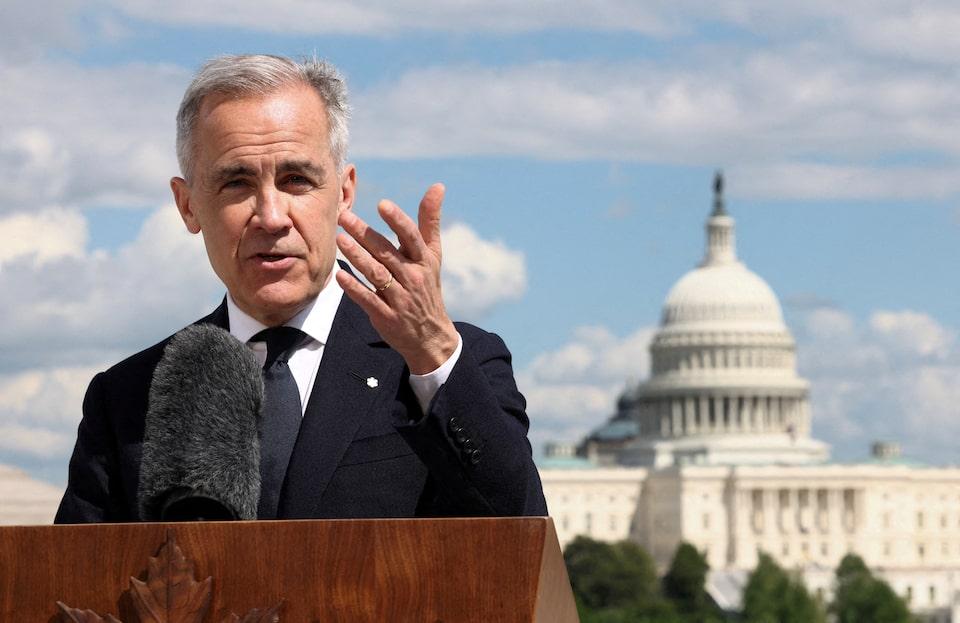
OTTAWA, June 5 (Reuters) - Canadian Prime Minister Mark Carney and U.S. President Donald Trump are in direct communication as part of Ottawa's bid to persuade Washington to lift tariffs, Industry Minister Melanie Joly said on Thursday. "We are in a trade war and it's normal that at the same time that the trade war is taking place, there are also diplomatic negotiations, and that therefore, Prime Minister Carney and President Trump talk to each other," she told reporters. Sign up here. The Globe and Mail newspaper earlier quoted the U.S. envoy to Canada as saying the two leaders were secretly holding direct talks to work out a framework for a trade and security deal. Trump this week doubled the tariffs on imports of steel and aluminum to 50% from 25%. The move has the potential to hurt Canada, which is the largest seller of the metals to the U.S. Carney said on Wednesday that the countries were in intense negotiations over the tariffs and that Canada was "preparing reprisals if those negotiations do not succeed". Pete Hoekstra, the U.S. ambassador to Canada, told the Globe the two sides were "laying out the perimeters" of a deal that could involve boosting U.S. content in autos, improving U.S. access to Canadian critical minerals and ensuring Canada played a much bigger role in the Arctic. The talks also include increased defense spending, energy, border security, steel and aluminum as well as stopping the smuggling of fentanyl, the paper cited him as saying. Carney's office declined to comment. In an email, an official at the U.S. embassy in Ottawa said "both the President and Prime Minister, or members of their teams, have publicly acknowledged that there are ongoing conversations". Unifor, the country's largest private sector union, on Wednesday called on Carney to retaliate immediately. https://www.reuters.com/business/retail-consumer/trump-carney-are-direct-contact-over-tariffs-says-canadian-minister-2025-06-05/
2025-06-05 19:37
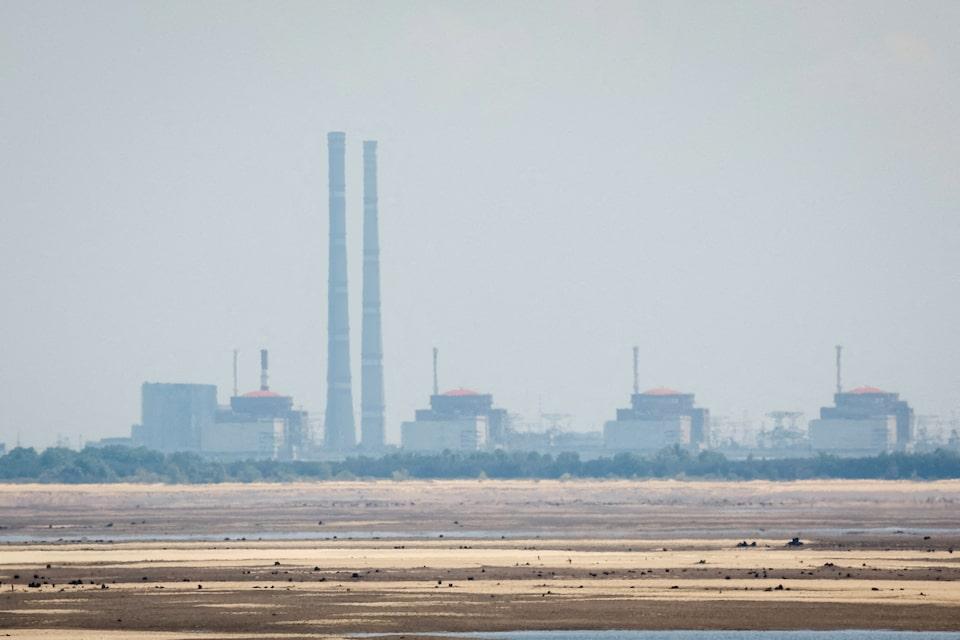
June 5 (Reuters) - International monitors at the Russian-held Zaporizhzhia nuclear power plant in Ukraine heard repeated rounds of gunfire that appeared to be aimed at drones reportedly attacking the site's training centre, the U.N.'s nuclear watchdog said on Thursday. Russian forces seized the Zaporizhzhia plant, Europe's largest nuclear facility with six reactors, in the early weeks of Moscow's 2022 invasion of Ukraine. Each side has since routinely accused the other of attacking the plant and posing a threat to nuclear safety. Sign up here. Monitors from the International Atomic Energy Agency reported hearing at least five explosions between 11:30 a.m. and 13:45 p.m. local time, each preceded by gunfire, an IAEA statement said. The statement gave no indication of the origin of the drones and said there were no reports of any damage to the centre. "Drones flying close to nuclear power plants could threaten their safety and security, with potentially serious consequences," IAEA Director General Rafael Grossi said. "As I have stated repeatedly during the war, such incidents must stop immediately." The statement said it was the fourth time this year that the training centre, located just outside the site perimeter, was reportedly targeted by drones. The plant's Russian management had earlier said Ukrainian drones had landed on the roof of the training center in "yet another attack" on the facility. It said there had been no casualties or damage. The Zaporizhzhia station, with all its reactors in shut down mode, produces no electricity. Before the war, it generated one-fifth of Ukraine's electricity. Grossi last week told Reuters that while Russia had "never hidden the fact" that it wanted to restart the plant, this could not be done soon as it lacked water for cooling and a stable power supply. https://www.reuters.com/world/europe/iaea-team-ukraines-zaporizhzhia-says-it-heard-repeated-rounds-gunfire-2025-06-05/
2025-06-05 19:30
GENEVA, June 5 (Reuters) - Indirect carbon emissions from the operations of four of the leading AI-focused tech companies rose on average by 150% from 2020-2023, due to the demands of power-hungry data centres, a United Nations report , opens new tab said on Thursday. The use of artificial intelligence by Amazon (AMZN.O) , opens new tab, Microsoft (MSFT.O) , opens new tab, Alphabet (GOOGL.O) , opens new tab and Meta (META.O) , opens new tab drove up their global indirect emissions because of the vast amounts of energy required to power data centres, the report by the International Telecommunication Union (ITU), the U.N. agency for digital technologies, said. Sign up here. Indirect emissions include those generated by purchased electricity, steam, heating and cooling consumed by a company. Amazon's operational carbon emissions grew the most at 182% in 2023 compared to three years before, followed by Microsoft at 155%, Meta at 145% and Alphabet at 138%, according to the report. The ITU tracked the greenhouse gas emissions of 200 leading digital companies between 2020 and 2023. Meta, which owns Facebook and WhatsApp, pointed Reuters to its sustainability report that said it is working to reduce emissions, energy and water used to power its data centres. Amazon said it is committed to powering its operations more sustainably by investing in new carbon-free energy projects, including nuclear and renewable energy. Microsoft highlighted its sustainability report, which says it had doubled its rate of power savings last year and is transitioning towards chip-level liquid cooling designs, instead of traditional cooling systems, to reduce energy at its data centres. The other companies did not respond immediately to requests for comment. As investment in AI increases, carbon emissions from the top-emitting AI systems are predicted to reach up to 102.6 million tons of carbon dioxide equivalent per year, the report stated. The data centres that are needed for AI development could also put pressure on existing energy infrastructure. "The rapid growth of artificial intelligence is driving a sharp rise in global electricity demand, with electricity use by data centres increasing four times faster than the overall rise in electricity consumption," the report found. It also highlighted that although a growing number of digital companies had set emissions targets, those ambitions had not yet fully translated into actual reductions of emissions. https://www.reuters.com/sustainability/climate-energy/tech-giants-indirect-emissions-rose-150-three-years-ai-expands-un-agency-says-2025-06-05/

2025-06-05 19:16
BRASILIA, June 5 (Reuters) - Brazil's poultry exports fell in both value and volume in May from a year earlier, government data showed on Thursday, as trade restrictions following a bird flu case weighed on the sector. Herlon Brandao, director of Statistics and Foreign Trade Studies at the Ministry of Development, Industry, Trade and Services, said at a press conference that poultry exports had been on the rise before the outbreak, the first on a commercial farm in Brazil. Sign up here. In May, poultry exports fell 12.9% to $655 million, while volumes declined 14.4% to about 363,100 metric tons. https://www.reuters.com/business/healthcare-pharmaceuticals/brazils-poultry-exports-fell-may-hit-by-bird-flu-case-2025-06-05/

2025-06-05 18:54
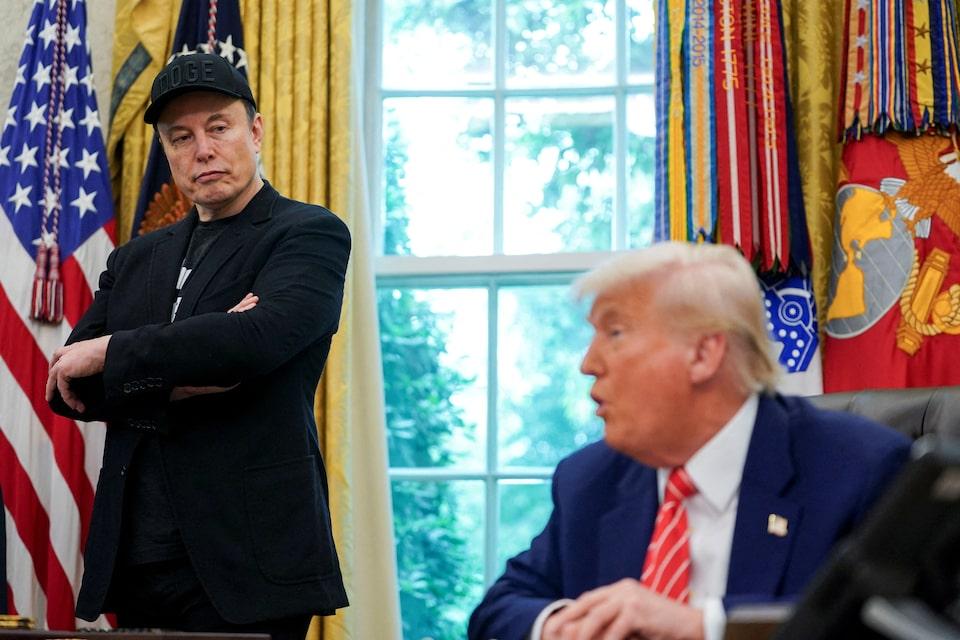
WASHINGTON, June 5 (Reuters) - U.S. President Donald Trump suggested on Thursday that he may terminate U.S. government contracts and subsidies given to Elon Musk's companies, as the public feud between the two men escalates over a tax and spending bill. "The easiest way to save money in our Budget, Billions and Billions of Dollars, is to terminate Elon’s Governmental Subsidies and Contracts," Trump said in a Truth Social post. Sign up here. https://www.reuters.com/world/us/trump-suggests-terminating-musks-us-government-contracts-subsidies-2025-06-05/
2025-06-05 18:18
BRASILIA, June 5 (Reuters) - Brazil posted a smaller-than-expected trade surplus in May, government data showed on Thursday, as imports continued to show strong momentum. The monthly surplus fell 12.8% from a year earlier to $7.2 billion, missing the $8.3 billion forecast in a Reuters poll of economists. Sign up here. Amid resilient economic activity in Latin America's largest economy, imports rose 4.7% to $22.9 billion, driven by higher volumes which offset lower prices. Exports, meanwhile, ticked down 0.1% year-over-year to $30.2 billion, according to data from the Ministry of Development, Industry, Trade and Services. A drop in commodity prices weighed on Brazil's main export products, including soybeans, oil and iron ore, undermining gains in shipped volumes. Year-to-date, Brazil's trade surplus has plunged 30.6% from the same period in 2024 to $24.4 billion, reflecting a growing import trend and a slight decline in exports. https://www.reuters.com/world/americas/brazils-may-trade-surplus-lands-below-expectations-import-growth-persists-2025-06-05/