2025-06-05 16:00
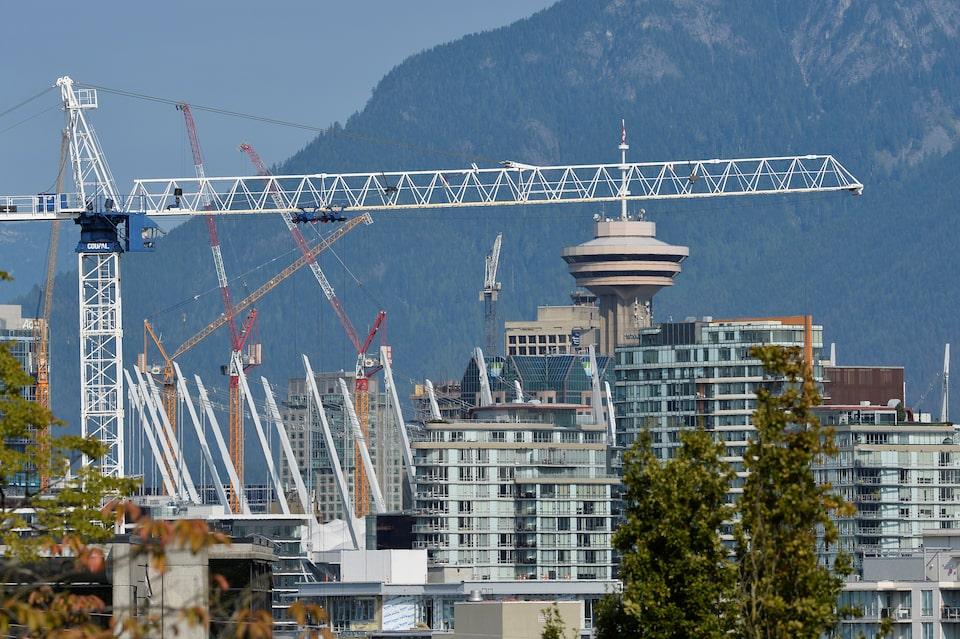
TORONTO, June 5 (Reuters) - Canadian economic activity contracted for a second straight month in May even as a measure of employment increased, Ivey Purchasing Managers Index (PMI) data showed on Thursday. The seasonally adjusted index edged up to 48.9 last month from 47.9 in April. A reading below 50 indicates a decrease in activity. Sign up here. The Ivey PMI measures the month to month variation in economic activity as indicated by a panel of purchasing managers from across Canada. The gauge of employment rose to an adjusted 51.1 from 48.0 in April, while the prices index was at 66.9, down from 70.0. The unadjusted PMI rose to 53.8 from 52.3. https://www.reuters.com/world/americas/canadas-ivey-pmi-shows-activity-contracting-second-straight-month-may-2025-06-05/
2025-06-05 14:10
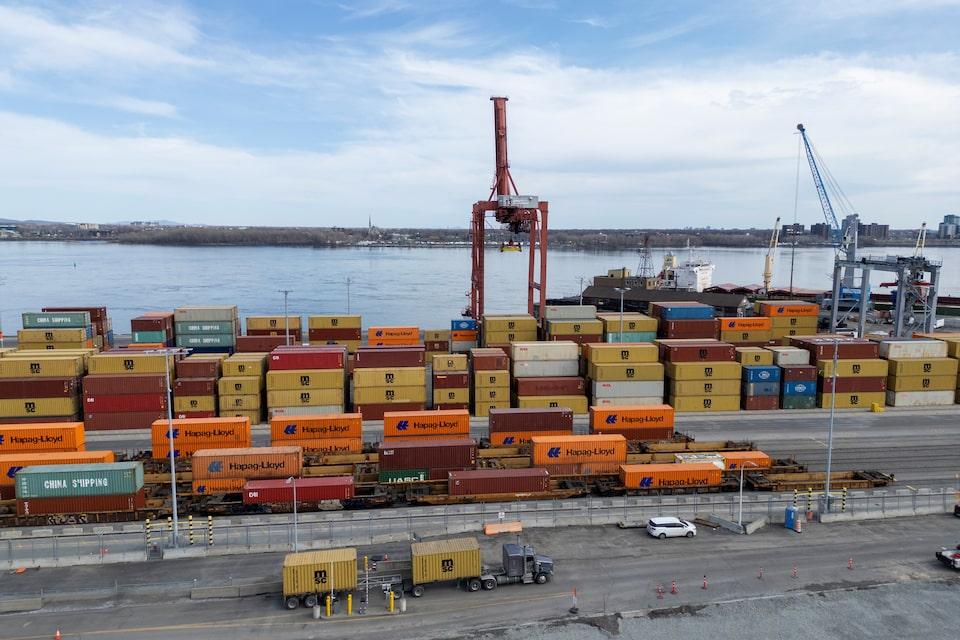
April trade deficit at C$7.1 billion as exports drop 10.8% Record deficit driven by plunge in U.S. exports U.S. exports drop 15.7%, third monthly decline in a row Exports to the rest of the world, barring U.S., up 2.9% OTTAWA, June 5 (Reuters) - Canada's trade deficit in April widened to an all-time high of a whopping C$7.1 billion ($5.2 billion), data showed on Thursday, as tariffs imposed by President Donald Trump sucked out demand for Canadian goods from the United States. Canada's exports to the rest of the world rose, but could not compensate for the drop in exports to the U.S., data from Statistics Canada showed. Sign up here. Exports to the U.S. shrank by 15.7%, a third consecutive monthly decline, Statscan said, adding that exports south of the border have fallen by over 26% since the peak seen in January. Analysts polled by Reuters had expected the trade deficit to widen to C$1.5 billion in April. Statistics Canada also made a big revision to the trade deficit recorded in March to C$2.3 billion from C$506 million. Canada shipped 76% of its total exports to the U.S. last year and trade between the two countries exceeded a trillion Canadian dollars for a third consecutive year in 2024. But a barrage of tariffs from Trump on Canada and its C$90 billion worth of retaliatory tariffs on U.S. imports have started disrupting cross-border trade. Total exports in April plunged by 10.8% to C$60.4 billion, the lowest level seen in almost two years, Statscan said, and the strongest percentage decrease in five years. While exports to the U.S. led the drop, lower crude oil prices and a stronger Canadian dollar also contributed. "The 11% fall in exports in a single month across almost every single sector signals the critical challenge that Canadian exporters are facing," said Ross Prusakowski, Deputy Chief Economist, Export Development Canada, adding that this would likely persist as tariffs have been implemented now. The Canadian dollar was trading up 0.17% to 1.3651 to the U.S. dollar, or 73.25 U.S. cents. Yields on the two-year government bonds were down 0.4 basis points to 2.613%. Exports to the rest of the world were up 2.9% and in volume terms total exports registered a big decline of 9.1% in April. Prusakowski from EDC called Canada's trade with the rest of the world "a small silver lining" as exporters pursue other global markets. The biggest drop in exports came from motor vehicles and parts which lost 17.4% of trade in April from March and was almost entirely attributable to exports of passenger cars and light trucks, which fell 22.9% in April, Statscan said. Imports were down 3.5% in April to C$67.58 billion, but were partly offset by imports of unwrought gold. Due to the sharp decline in exports to the U.S., Canada's merchandise trade surplus with the United States narrowed to C$3.6 billion, the smallest surplus since December 2020, the statistics agency said. The deficit with rest of the world marginally increased to C$10.7 billion in April from C$9 billion in March. https://www.reuters.com/world/americas/canadas-april-trade-deficit-widens-historic-high-tariffs-cripple-exports-2025-06-05/
2025-06-05 13:32
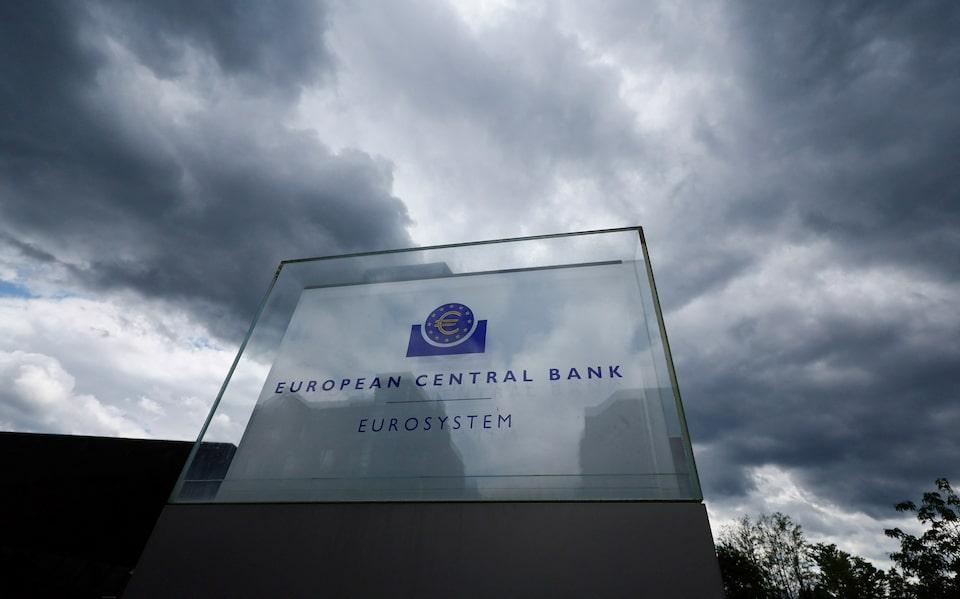
ECB cuts, Canada keeps rates steady US Fed shifts focus to inflation, unemployment risks Switzerland closer to negative rates Japan's Ueda refuses to commit on timing of next hike LONDON, June 5 (Reuters) - Unpredictable White House tariff rhetoric and its impact on currency markets, oil prices and the inflation outlook have put central banks across the world in a tight spot. The European Central Bank cut interest rates on Thursday and looks set to pause, Switzerland appears to be moving back towards negative rates, Japan's resolve to drop ultra-easy monetary policy is wobbling, and baffling U.S. data could keep the Federal Reserve in wait-and-see mode. Sign up here. Here's a look at where 10 developed-market central banks stand. 1/ SWITZERLAND The Swiss National Bank next meets on June 19, and traders see a one in three chance that it will pull rates back into negative territory from 0.25% currently after consumer prices fell for the first time in four years. The safe-haven Swiss franc has gained 10% against the dollar so far this year on geopolitical and market volatility. That's challenging Switzerland's export-heavy economy and cheapened imports, giving the SNB reasons to be wary about deflation. 2/ CANADA The Bank of Canada held rates at 2.75% on Wednesday and said another cut might be necessary if the economy weakened in the face of tariffs. The BoC has held rates for a second time in a row after an aggressive cutting cycle which shrunk rates by 225 basis points over nine months. Markets price in a roughly 85% chance of another quarter-point cut by September. 3/ NEW ZEALAND Money markets expect the Reserve Bank of New Zealand to hold steady on July 9 after a 25 bps rate cut to 3.25% in May to protect the China-focused economy. The RBNZ also warned that global trade uncertainties made future moves unclear. 4/ SWEDEN Sweden's central bank left its key rate unchanged at 2.25% in May but with on-again-off-again U.S. tariffs now having contributed to an economic contraction in the first quarter, the Riksbank has signaled more easing ahead. Its next rate decision is on June 18. 5/ EURO ZONE The ECB cut rates as expected on Thursday and kept all options on the table , opens new tab for its next meetings even as the case grows for a summer pause in its year-long easing cycle. It has lowered rates eight times in the last year, and markets price in one more rate cut by year-end. 6/ UNITED STATES The Fed, under consistent fire from President Donald Trump for resisting rate cuts, is expected to hold steady at its next June 18 meeting as tariff uncertainty makes wait-and-see its best option for now. With businesses spooked by Trump's aggressive trade talk, have increased, manufacturing orders have slumped and factory gate prices have surged, indicating stagflation risks that could moderate if the White House softens its stance. The Fed has held rates in the 4.25%-4.5% range since December, following 100 bps of cuts last year. Money markets price roughly 50 bps of further easing by year-end. 7/ BRITAIN The Bank of England, which has lowered borrowing costs slowly to accommodate bumpy inflation trends, cut rates by 25 bps to 4.25% last month and revealed an unexpected three-way split among its policymakers that signaled uncertainty ahead. Governor Andrew Bailey says the BoE was staying cautious amid unpredictable global trends. Traders expect no move in June and a 60% chance of a cut by August. 8/ AUSTRALIA Weak growth data and fears of Aussie commodities producers and miners taking big blows from a U.S.-China trade war means the Reserve Bank of Australia stands ready to ride to the rescue with rapid rate cuts. The RBA cut rates by 25 bps to 3.85% in May and traders see borrowing costs dropping to about 3% by year-end. 9/ NORWAY Norway's central bank has ditched plans to ease monetary policy as its oil-linked currency weakens amid global trade uncertainty, posing a fresh inflationary threat. The Norges Bank kept rates on hold at a 17-year high of 4.50% in May, and markets anticipate no change at the June 19 meeting. 10/ JAPAN The Bank of Japan, long expected to pursue rate hikes, faces a challenging mix of economic trends if tariffs hurt exports but inflation keeps rising. After the BoJ held borrowing costs steady at 0.5% in May, Governor Kazuo Ueda steadfastly refused to comment on the possible timing of the next increase. https://www.reuters.com/business/finance/global-markets-central-banks-graphic-2025-06-05/

2025-06-05 12:49
LONDON, June 5 (Reuters) - The European Central Bank cut interest rates for the eighth time in a year on Thursday, acknowledging inflation was under control and turning more pessimistic about economic prospects amid risks of a trade war with the United States. The ECB's key rate was lowered from 2.25% to 2.0%, the middle of the range that the central bank sees as "neutral" - neither curbing nor boosting the economy. Sign up here. Market focus turned to the post-meeting news conference as traders try to assess whether the ECB will pause in July before cutting rates again by year-end. The euro was little changed around $1.1426 , while government bond yields dipped. Germany's 2-year bond yield was last down 2 basis points (basis points) to 1.77% . The STOXX 600 index (.STOXX) , opens new tab was last 0.3%, while banking stocks (.SX7P) , opens new tab trimmed earlier falls. COMMENTS: KALLUM PICKERING, CHIEF ECONOMIST, PEEL HUNT: "Policymakers have concluded that the net impact of the U.S.-driven shock to global trade will be disinflationary for the euro zone – this reveals an important detail about the ECB’s reaction function in the event that downside risks to growth begin to materialise. The ECB would feel safe easing more aggressively. The near-total absence of any hint of upside risks to inflation suggests policymakers have grown in confidence that they will manage to achieve the 2% inflation target sustainably – which implies the ECB can bring rates at least to neutral, and perhaps below. But where is neutral? Perhaps that’s a question for Lagarde at the press conference." SIMON DANGOOR, HEAD OF FIXED INCOME MACRO STRATEGIES, GOLDMAN SACHS ASSET MANAGEMENT: “In line with expectations, the ECB cut rates by 0.25% to bring the deposit rate to 2.0%. As trade uncertainty continues to pose risk to euro area economic growth and underlying disinflation is likely to remain persistent, we expect two more rate cuts, potentially bringing the rate down to 1.5% this year. We are keeping a close watch on fiscal developments and pension fund flows, which could open opportunities for Fixed Income investors.” FRANCESCO PESOLE, FX STRATEGIST, ING: "So far, a moderately dovish undertone, as inflation projections were revised lower by 0.3pp for both 2025 and 2026. This places the 2026 inflation forecast well below target at 1.6%. Partly offsetting the dovish signal is the lack of core inflation downward revisions. The euro would have probably weakened in other circumstances, but the lower-than-expected inflation data earlier this week had set the mood quite dovish." IRENE LAURO, EUROZONE ECONOMIST, SCHRODERS: "While the ECB delivered a widely expected rate cut today, we would not count on a follow-up next month. Inflation was lower than expected in May, with services inflation falling sharply. Yet, with no signs trade tariffs are weakening growth, we expect the ECB is likely to pause from today. Labour markets remain tight, domestic demand is gaining traction, lending is picking up, and fiscal tailwinds are building." "With rates now at the midpoint of their estimated neutral range, the bar for further cuts has risen. Having already eased by 1.75% in this cycle, the ECB can afford to shift from urgency to patience." MARCHEL ALEXANDROVICH, ECONOMIST, SALTMARSH ECONOMICS: "The ECB delivers another 25-bp cut, and nudges rates to the middle of its 1.5% to 2.5% neutral range. Alongside, the updated quarterly economic forecasts show a slightly weaker GDP growth profile and lower headline inflation in 2025 and 2026." "In light of these projections, the Governing Council should be in a position to cut rates again at the next meeting on 24 July. Although, of course, its response will partly depend on what happens after Trump’s 90-day tariffs pause comes to an end in early July." NATASHA MAY, GLOBAL MARKET ANALYST, J.P. MORGAN ASSET MANAGEMENT: "Huge uncertainty about the future of global trade might make the ECB’s ever-more data dependent approach look prudent. Today, the Governing Council stuck to its usual script, with a 25-bps rate cut accompanied by little to no guidance about the future policy path. But in our view, this strategy pays too little attention to the downside risks to inflation." "Trade tensions look set to weigh more on euro zone activity – and therefore medium-term inflation – than they will directly boost prices. With inflationary pressures receding fast and growth headwinds picking up, the ECB is underestimating the risk of undershooting its target. While some Governing Council members are advocating for a July pause, the case for another rate cut is crystal-clear." HUSSAIN MEHDI, DIRECTOR, INVESTMENT STRATEGY, HSBC ASSET MANAGEMENT: "The ECB looks to be in an enviable position. Underlying inflation is back at pre-Russia/Ukraine levels and disinflation looks set to continue amid a stronger euro and lower oil and gas prices. Tariffs may also help keep prices in check, given they weigh on demand, and could result in more Chinese goods being diverted from the U.S. to Europe." "Market pricing now shows a big gap between ECB and Fed rate cut expectations for 2025. Put simply, the Fed remains hamstrung by inflation amid the supply shock that is higher tariffs, and the impact of a weaker dollar. We think this keeps U.S. yields sticky, and the U.S. sto ack market volatile." "European assets, on the other hand, look to benefit from a proactive ECB, just as Germany is unleashing a once-in-a-generation shift in its fiscal policy stance that we believe is likely to boost structural growth. We think these “policy puts” can provide a powerful catalyst to unlock value in many European stock markets on a longer-term basis. German Bunds also look like an attractive option for multi-asset investors looking to protect their portfolios against downside risks, just as the safe-haven attributes of U.S. Treasuries are increasingly under question." DAVID ZAHN, HEAD OF EUROPEAN FIXED INCOME, FRANKLIN TEMPLETON: "The ECB cut rates by 25 bps to 2%, as inflation eased to 1.9%, below target for the first time in over a year. Slowing price pressures and softer growth supported the move, though the policy stance remains cautious. A pause over summer is very likely as the ECB assesses trade risks and domestic resilience. Longer-term, fiscal rebalancing and external headwinds will shape the policy outlook to a more neutral policy stance.” https://www.reuters.com/world/europe/view-ecb-delivers-another-rate-cut-2025-06-05/
2025-06-05 12:21
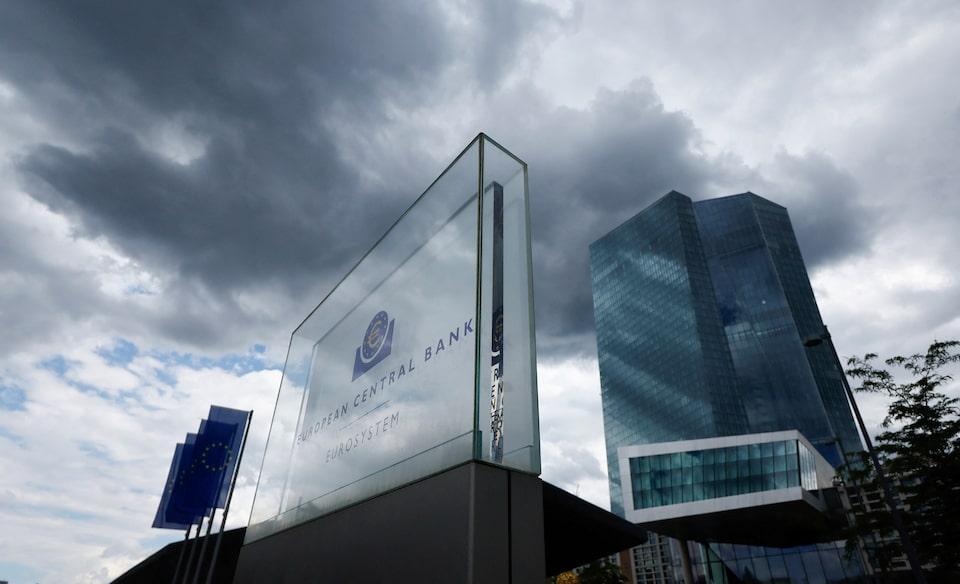
FRANKFURT, June 5 (Reuters) - The European Central Bank cut interest rates for the eighth time in a year on Thursday, acknowledging inflation was under control and turning more pessimistic about the euro zone's economic prospects amid risks of a trade war with the United States. Thursday's cut lowers the rate that the ECB pays on bank deposits from 2.25% to 2.0%, the middle of the range that the central bank sees as "neutral" - neither curbing nor boosting the economy. Sign up here. The ECB kept all options open for its subsequent meetings, although some policymakers and many investors expect a pause in rate cuts at its next meeting in July. "Especially in current conditions of exceptional uncertainty, (the ECB) will follow a data-dependent and meeting-by-meeting approach," it said. Euro zone inflation has fallen back to the ECB's 2% target after a torrid three years and even previously stubborn price growth in the services sector has slowed. This is allowing the central bank to shift its focus to the euro zone's sluggish growth outlook, which has been made worse by U.S. President Donald Trump's tariff threats. The ECB, however, also acknowledged the prospect greater government spending. "While the uncertainty surrounding trade policies is expected to weigh on business investment and exports, especially in the short term, rising government investment in defence and infrastructure will increasingly support growth over the medium term," the ECB said. With Thursday's decision, the ECB also cut the interest rate at which banks can borrow at its weekly auctions - to 2.15% from 2.40% - and overnight, to 2.40% from 2.65%. Attention will now turn to ECB President Christine Lagarde's press conference at 1245 GMT. https://www.reuters.com/business/finance/ecb-cuts-rates-eighth-time-amid-trade-war-risk-2025-06-05/
2025-06-05 12:17
KYIV, June 5 (Reuters) - Ukraine's central bank on Thursday kept its benchmark interest rate unchanged at 15.5% for the second consecutive meeting, citing above-forecast inflation in May in its statement. Consumer prices climbed 15.1% in April year-on-year, and May inflation data is due to be released next week. Sign up here. The central bank expects price growth to start slowing in the summer months as the next harvest begins and an improved outlook in the energy sector this year compared with last year also helps reduce price growth. Central Bank Governor Andriy Pyshnyi said Thursday's decision would help keep the foreign exchange market stable and inflation expectations in check, in turn helping bring consumer price growth back towards the bank's 5% target. "Inflation is likely to have reached its local maximum in May," Pyshnyi told a news briefing. "In the summer, price growth will start to slow for a wide range of goods and services, and will gradually move toward the target of 5%." The decision was as expected - Kyiv-based investment house ICU said in a market poll ahead of the decision that more than 80% of those surveyed expected no change in rates. Pyshnyi also suggested that if inflation pressures persist, the central bank is ready to keep its main policy rate on hold for longer than indicated in its latest macroeconomic forecast, which pointed to no change until September at the earliest. Pyshnyi said that the war against Russia, now in its fourth year, remained one of the key risks for Ukraine's economy. He also said that this year, lower harvests due to cold spring weather pose another significant risk for inflation and economic development. Agriculture is a crucial sector for the Ukrainian economy. Agriculture Minister Vitaliy Koval told Reuters this week that the country's grain harvest may fall by 10% to around 51 million metric tons compared with 56.7 million tons in 2024. Ukraine is a global producer of grains and oilseeds, but the harvest is highly dependent on favourable weather conditions during both the autumn sowing and spring months. https://www.reuters.com/markets/europe/ukraines-central-bank-keeps-benchmark-rate-hold-citing-high-may-inflation-2025-06-05/