2025-06-05 11:14
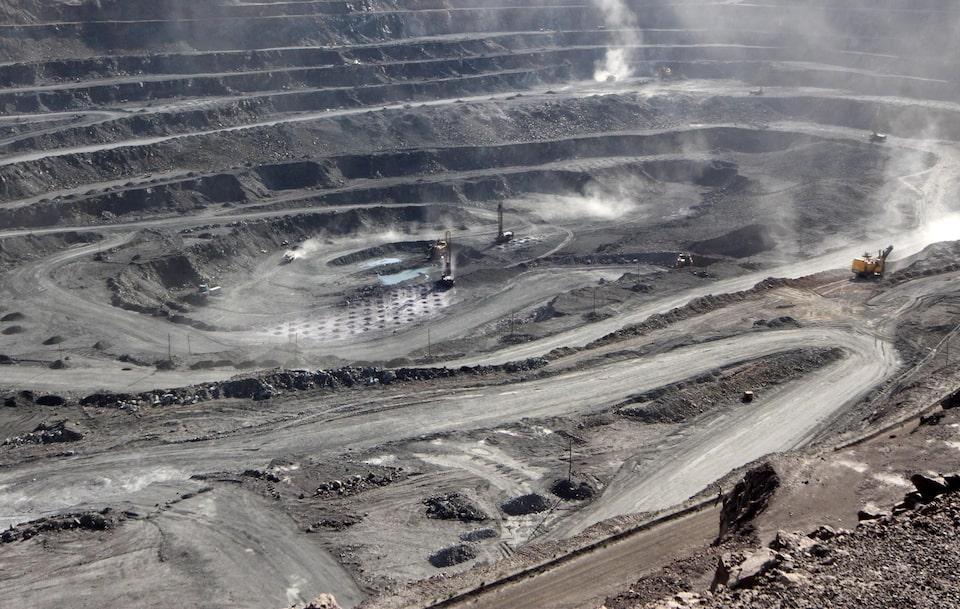
WASHINGTON, June 4 (Reuters) - A group representing auto suppliers in the United States called on Wednesday for immediate action to address China's restricted exports of rare earths, minerals and magnets, warning the issue could quickly disrupt auto parts production. China, which controls over 90% of global processing capacity for rare earths used in everything from automobiles and fighter jets to home appliances, imposed restrictions in early April requiring exporters to obtain licenses from Beijing. The tighter restrictions followed the opening of a trade war between the U.S. and China after President Donald Trump imposed tariffs on Chinese imports. Sign up here. In a statement to Reuters, MEMA, the Vehicle Suppliers Association said parts companies are facing "serious, real-time risks" to their supply chains. "The situation remains unresolved and the level of concern remains very high," the group said. "Immediate and decisive action is needed to prevent widespread disruption and economic fallout across the vehicle supplier sector." The White House did not immediately comment. On May 9, the supplier group raised urgent concerns about the Chinese restrictions in a joint letter with the trade group representing General Motors (GM.N) , opens new tab, Toyota (7203.T) , opens new tab, Volkswagen (VOWG.DE) , opens new tab, Hyundai (005380.KS) , opens new tab and other major automakers. "Without reliable access to these elements and magnets, automotive suppliers will be unable to produce critical automotive components, including automatic transmissions, throttle bodies, alternators, various motors, sensors, seat belts, speakers, lights, motors, power steering, and cameras," MEMA and the Alliance for Automotive Innovation wrote to the Trump administration in the letter, which was first reported by Reuters. Rare-earth magnet exports from China halved in April as companies grappled with an opaque application process for permits that sometimes require hundreds of pages of documents. In a social media post last Friday, Trump accused China of violating terms of a deal reached in May to temporarily dial back the tariffs both sides imposed on each other and other trade restrictions. U.S. auto companies are already feeling the impact of the restrictions. Ford (F.N) , opens new tab shut down production of its Explorer SUV at its Chicago plant for a week in May because of a rare-earth shortage, the company said. https://www.reuters.com/business/autos-transportation/us-auto-suppliers-say-immediate-action-needed-china-rare-earths-restrictions-2025-06-05/
2025-06-05 11:03
LONDON, June 5 (Reuters) - British Energy owner Centrica (CNA.L) , opens new tab has signed a 10-year deal worth more than 20 billion pounds ($27.07 billion) to receive gas from Norwegian producer Equinor (EQNR.OL) , opens new tab, the companies said on Thursday. Britain is seeking to cut its reliance on gas to help meet climate targets but around 70% of its homes are heated using the fossil fuel while gas-fired power plants account for around a quarter of the country's electricity supply. Sign up here. "This landmark agreement underscores the vital role that natural gas plays as a transition fuel as we navigate towards a low carbon energy future," Centrica CEO Chris O’Shea said in a press release. Equinor will supply five billion cubic meters (bcm) of gas a year until 2035, equivalent to around 8% of Britain’s gas demand. The contract also allows for natural gas sales to be replaced with hydrogen in the future. Britain’s North Sea fossil fuel production has declined sharply since its peak in the late 1990s and the Labour government has said it will not issue any new oil and gas licences as part of its efforts to meet climate goals. Britain imported almost two-thirds of its gas demand last year, with half of the imports coming from Norway. Centrica last signed a deal with Equinor in June 2022 for the firm to deliver additional gas for the following three winters as countries across Europe grappled with supply concerns following Russia’s invasion of Ukraine and a huge reduction in Russian gas flows to Europe. Centrica also has liquefied natural gas deals with U.S. firms Coterra Energy and Delfin Midstream, and Brazil’s Petrobras. ($1 = 0.7389 pounds) https://www.reuters.com/sustainability/climate-energy/britains-centrica-signs-27-billion-deal-gas-norways-equinor-2025-06-05/
2025-06-05 10:59
LONDON, June 5 (Reuters) - What matters in U.S. and global markets today It was the bond market's turn to rally over the past 24 hours, with a stream of soft U.S. economic readings lifting hopes for Federal Reserve easing just as the European Central Bank is teed up for another rate cut on Thursday. Sign up here. I'll discuss this and all of the market news below, and then in today's column, I explore Switzerland's deflation dilemma and explain why all investors should care what happens with the Swiss franc. Today's Market Minute * U.S. President Donald Trump signed a proclamation on Wednesday banning the citizens of 12 countries from entering the United States, saying the move was needed to protect against "foreign terrorists" and other security threats. * Hardline conservative Republicans in the U.S. Senate and billionaire Elon Musk showed no sign of softening opposition to President Donald Trump's tax-cut and spending bill on Wednesday, as they pushed for deeper reductions in government outlays. * The euro steadied near six-week highs against the dollar ahead of an expected interest rate cut from the European Central Bank on Thursday, while the U.S. currency recovered modestly from a dip after data renewed fears of slow growth and high inflation. * Investors, consumers and policymakers may justifiably fear the specter of tariff-fueled inflation later this year and beyond, but Reuters columnist Jamie McGeever says it's powerful global disinflationary forces that are weighing most heavily right now. * The Trump administration's latest efforts to curb U.S. petrochemical exports to China could end up hurting the U.S. energy sector just as much, or more, than the Chinese economy, argues Reuters columnist Ron Bousso. ECB to cut, Fed hopes up The ECB is widely expected to cut its main interest rate to 2% later today, effectively bringing inflation-adjusted rates back to zero for the first time in almost two years as May headline inflation has already returned to target. The big question now is whether the ECB will signal that it will pause during the summer while the murky global trade picture clears up - much as the Bank of Canada did on Wednesday. Aside from questions about ECB boss Christine Lagarde seeing out her full term as president, the focus of the press conference will likely be on possible ECB plans for coping with potentially outsize euro strength ahead. There will also be close attention paid to the ECB's signalling regarding its balance sheet runoff. European stocks (.STOXXE) , opens new tab pushed higher on Thursday. The euro held above $1.14 ahead of the ECB decision, after the dollar skidded lower again Wednesday. The move in the greenback was largely driven by a series of weak readings on U.S. private sector jobs and service sector activity for May. Wall Street stocks (.SPX) , opens new tab ended Wednesday's session unchanged, and futures stalled ahead of today's open. The latest economic news also dragged 10-year Treasury yields back down to their lowest levels in a month. The futures market is now pricing in some 56 basis points of Fed easing for the rest of the year, with a quarter point cut by September almost fully baked in. President Donald Trump lost little time before pressuring Fed boss Jerome Powell to lower borrowing costs. "ADP number out. 'Too Late' Powell must now lower the rate. He is unbelievable. Europe has lowered nine times," Trump said in a Truth Social post, referring to Wednesday's jobs data and - mistakenly - the seven ECB cuts so far in the current cycle. The tariff picture remained unclear, meanwhile. There is still no specific date or time set for this week's hotly anticipated call between Trump and China's President Xi Jinping, but Paris talks between U.S. Trade Representative Jamieson Greer and European Union counterpart Maros Sefcovic appeared to go well despite the doubling of steel tariffs this week. Trump's deadline for countries to present their improved trade negotiations passed without any concrete developments. Germany's new chancellor Friedrich Merz will hold his first face-to-face talks with Trump on Thursday in a high-stakes meeting in the Oval Office. Meanwhile, the fate of Trump's 'big, beautiful' fiscal bill in the Senate also remained in the balance. Hardline conservative Republicans and billionaire Elon Musk stepped up opposition to the tax cut and spending bill on Wednesday, pushing for deeper cuts, with Musk bemoaning "the fast lane to debt slavery." The nonpartisan Congressional Budget Office estimated the bill - which would extend Trump's 2017 tax cuts and step up spending for the military and border security - will add about $2.4 trillion to the country's $36.2 trillion debt pile. Elsewhere, MSCI's all-country stock index hovered just below Wednesday's new all-time high, with stocks in China and Europe advancing and South Korea's Kospi index (.KS11) , opens new tab adding another 1% on top of Wednesday's 2% gains after the presidential election there this week. Japan's Nikkei (.N225) , opens new tab bucked the trend after another poor government bond auction there, despite reports yesterday that the Bank of Japan may consider slowing its balance sheet rundown. And now for today's deep dive, I discuss Switzerland's return to deflation due to the supercharged Swiss franc and consider the wider implications for global investors. Chart of the day U.S. economic activity has declined and higher tariff rates have put upward pressure on costs and prices in the weeks since Federal Reserve policymakers last met to set interest rates, the Fed's latest "Beige Book" , opens new tab said on Wednesday. "On balance, the outlook remains slightly pessimistic and uncertain", concluded the report. "There were widespread reports of contacts expecting costs and prices to rise at a faster rate going forward." Today's events to watch * European Central Bank policy decision (8:15 AM EDT), economic projections and press conference from President Christine Lagarde * U.S. April international trade balance (8:30 AM EDT), weekly jobless claims (8:30 AM EDT), Q1 revisions on unit labor costs and productivity (1:30 PM EDT); Canada April trade balance (8:30 AM EDT) * Federal Reserve Board Governor Adriana Kugler, Kansas City Fed President Jeffrey Schmid, Philadelphia Fed chief Patrick Harker all speak. Bank of England policymaker Megan Greene speaks * German Chancellor Friedrich Merz meets U.S. President Donald Trump in Washington * U.S. corporate earnings: Broadcom, Lululemon, Brown-Forman Opinions expressed are those of the author. They do not reflect the views of Reuters News, which, under the Trust Principles , opens new tab, is committed to integrity, independence, and freedom from bias. https://www.reuters.com/business/finance/global-markets-view-usa-2025-06-05/
2025-06-05 10:56
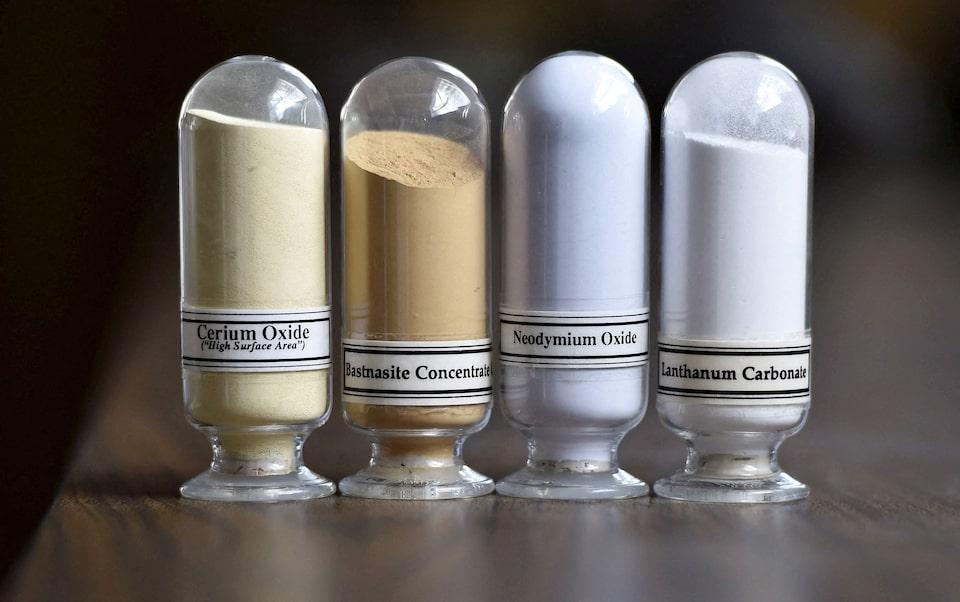
India wants to wean itself off dependence on China Plans to build sustainable, secure magnet stocks -sources To offer fiscal benefits for domestic production -source India has world's third-largest reserves of rare earths NEW DELHI, June 5 (Reuters) - India is holding talks with companies to establish long-term stockpiles of rare earth magnets by offering fiscal incentives for domestic production, people familiar with the matter said. Building such a supply chain could take years, but would reduce India's dependence on shipments from China, which sent shockwaves across global industries, particularly autos, with its April 4 move to curb exports of rare earth materials. Sign up here. China controls 90% of the processing of such magnets, also used in industries such as clean energy and defence. Now Prime Minister Narendra Modi's government wants to develop domestic manufacturing capabilities and is considering offering production-based fiscal incentives to companies, said two sources who sought anonymity as the talks are private. The scheme, being drafted by the ministry of heavy industries, also envisions partly funding the difference between the final price of the made-in-India magnet and the cost of the Chinese imports, the first source said. This would help achieve cost parity and boost local demand, the source said, adding that funding for the scheme has yet to be decided, with the government likely to meet industry officials next week to finalise the details. The heavy industries ministry did not respond to Reuters' queries. Although a state-run firm, IREL, has been mining rare earth materials for years, these are mainly used by the atomic energy and defence units, with most supplies for other uses still imported from China. India's move comes as auto companies the world over flag risks that they could face supply disruptions within days. In Japan, Suzuki Motor (7269.T) , opens new tab, has suspended production of its Swift car because of China's curbs. In India, auto industry body SIAM has privately told the government it expects production "to come to a grinding halt" within a timeframe starting from the end of May or early June. The heavy industries ministry also plans to send a delegation of auto industry executives to meet officials in Beijing to push for faster approvals, with two industry officials warning that was the only near-term solution. "The short-term solution has to be to get Chinese authorities to clear things," said one of the executives, who fears shortages at his company. "A radical shift in supply chain is not possible in the short term." Some auto companies and their suppliers will be able to stretch operations until the end of June, after which the situation will turn "really scary", said the second executive, adding it would affect not just electric cars but all vehicles. India has the world's third-largest reserves of rare earths of 6.9 million tons, the U.S. Geological Survey says, but only mines a fraction because private companies make limited investments. A government campaign launched in April, the National Critical Mineral Mission, aims to attain self-reliance in the sector. In recent years, it has begun exploration for neodymium, a rare earth widely used in magnets for the auto industry. India also exports neodymium to Japan for lack of domestic processing capability, two of the sources said. Commercially available export data showed India exported nearly $7 million worth of the rare earth material to Toyota Tsusho (8015.T) , opens new tab between January and April. This week, Modi's office discussed the impact of the magnet crisis on the small but fast-growing EV sector, to which investors have committed billions of dollars, a person familiar with the talks said. It also weighed the possibility of tariff exemptions for imports of machines required by domestic manufacturers, the source said, adding, "The government is looking into it critically. They are serious." https://www.reuters.com/world/india/india-plans-rare-earth-magnet-incentives-supply-threat-mounts-sources-say-2025-06-05/
2025-06-05 10:04
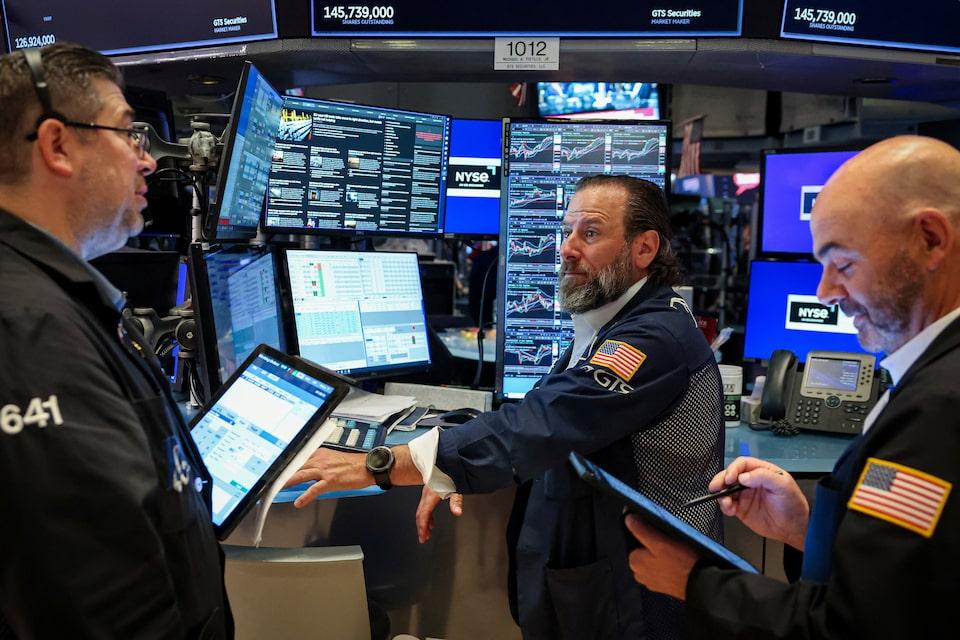
S&P 500 now up 1.5% for 2025, closing in on February record high Cboe volatility index recedes, around long-term median Investors still wary of tariff-tied volatility, with valuations elevated NEW YORK, June 5 (Reuters) - After months of Wall Street gyrations to the twists and turns of U.S. trade policy, signs suggest stock investors are becoming more resilient to developments and cautiously defaulting to optimism that they have weathered the worst of the tariff-related shocks. U.S. equities have edged higher over the past two weeks as they digest a sharp rally that has brought the benchmark S&P 500 (.SPX) , opens new tab within 3% of its February record high, fueled in part by easing fears about the economic fallout from tariffs. Sign up here. A case in point: stocks ended Monday's session higher even as markets had grappled with President Donald Trump's announcement of doubling steel tariffs to 50%. Trump's stunning "Liberation Day" tariff announcement on April 2 sent stocks plunging and set off some of the most extreme market swings since the onset of the COVID-19 pandemic five years ago. Since then, volatility measures have moderated considerably, and, with the market's rebound, there are signs that technical damage from the slide has healed. Still, investors are mindful that markets remain susceptible to daily swings stemming from negotiations between the U.S. and trading partners as key deadlines near in coming weeks, with elevated valuations making stocks more vulnerable to disappointments. "What has allowed this almost full recovery in the stock market hinges on the negotiations that are now under way," said Angelo Kourkafas, senior investment strategist at Edward Jones. "Markets, consumers and businesses have vested interest that we get clarity sooner than later," Kourkafas said. "So potentially it's going to be a critical summer that is going to test the market's momentum." After falling to the brink of confirming a bear market on April 8, the S&P 500 has surged back nearly 20% and erased its losses for the year. Near the halfway mark of 2025, the index is now up 1.5%. While Trump's tariffs remain a risk, the market no longer is perceiving them as "this big outlier event," said Keith Lerner, co-chief investment officer at Truist Advisory Services. "We went through a period where the only thing that mattered for the markets was tariffs," Lerner said. "And now we are in a period where tariffs still matter, but they are not the only thing that matters." Truist is among the firms becoming more upbeat on the outlook for equities, with RBC Capital Markets and Barclays this week lifting their year-end targets for the S&P 500. Deutsche Bank strategists this week boosted their year-end target to 6,550, about 10% above current levels, as they cited a less severe expected tariffs hit to corporate profits. The strategists noted they expect the rally to be "punctuated by sharp pullbacks on repeated cycles of escalation and de-escalation on trade policy." Several investors and strategists pointed to a "base case" on Wall Street emerging for Trump's tariffs - 10% broadly, 30% on China along with some specific sectoral levies. The market "started saying the worst is behind us in terms of this whole tariff discussion," said King Lip, chief strategist at BakerAvenue Wealth Management. "The U.S. and China still have a lot of things to work out, but likely the worst is behind us." MODERATING VOLATILITY Volatility measures indicate calming fears about trade. The Cboe Volatility Index (.VIX) , opens new tab, an options-based measure of investor anxiety, reached 52.33 in early April, its highest closing level in five years, but has steadily receded and hovered at 17.6 on Wednesday, around its long-term median. In another sign, the average daily range of the S&P 500 has fallen to about 75 points, on a 10-session basis, about one-third the size from April during the height of post-Liberation Day volatility. Meanwhile, the S&P 500 has traded above its 200-day moving average - a closely watched trend-line - for about three weeks. The percentage of S&P 500 stocks trading in some form of an uptrend has jumped from 29.4% at the April 8 low to 60% as of last week, said Adam Turnquist, chief technical strategist for LPL Financial. "There is a growing list of technical evidence that suggests this recovery is real," Turnquist said in a note this week. Options data also suggests growing bullishness. Over the last month, on average about 0.84 S&P 500 call options traded daily against every put contract traded, the most this measure of sentiment has favored call contracts in at least the last four years, according to a Reuters analysis of data from options analytics firm Trade Alert. Calls confer the right to buy stocks at a specific price and future date, while puts grant the right to sell shares. To be sure, some investors warn the threat of tariff disruptions is not going away anytime soon and are wary of market complacency. "There is still just so much uncertainty," said Matthew Miskin, co-chief investment strategist at John Hancock Investment Management. Indeed, talk of the acronym "TACO" - Trump Always Chickens Out - has spread on Wall Street as a rationale for why markets should not fear harsh tariffs because many believe they will likely be walked back. But some investors are worried about a backlash from the president. BCA Research strategists said they were wary of "relying on a TACO backstop." "Trade tensions may have peaked, but we are unwilling to assume they won’t sporadically rise from current levels," BCA said in a note this week. Stock valuations also continue to swell, with the S&P 500's forward price-to-earnings ratio reaching 21.7, its highest level since late February and well above its long-term average of 15.8, according to LSEG Datastream. Stocks are at "a more vulnerable level," said Chuck Carlson, chief executive officer at Horizon Investment Services. "The market is probably going to be a little bit more sensitive to what it perceives as negative news." https://www.reuters.com/business/us-stocks-heal-tariff-pain-trade-news-keep-markets-edgy-2025-06-05/
2025-06-05 09:49
Company to cut back discounts in Americas and EMEA Forecasts profit growth in fiscal 2026 2025 profit beats analysts' estimates Shares up 17% June 5 (Reuters) - British bootmaker Dr Martens (DOCS.L) , opens new tab forecast a return to profit growth in the current financial year on Thursday, backed by its new CEO's plan to put more emphasis on shoes, sandals, and bags, as well as the boots it is best-known for. Shares in Dr Martens jumped 17% as the market welcomed profit for its full financial year ended March 30 that beat expectations, and CEO Ije Nwokorie's strategy shift. Sign up here. The company also plans to scale back discounting in its key markets including the U.S. "We're shifting our strategy now to broaden our focus and give people more reasons to buy Dr Martens," Nwokorie told Reuters. "The strategy that the business had... broke growth in boots, built awareness around the world - but the market shifted away from boots," he added. Online sales of shoes, mules, and sandals grew and at Dr Martens' stores in the 2025 financial year, while sales of boots, which sell for $110 and up, declined. The company makes most of its lace-up chunky boots in Vietnam but said despite U.S. tariffs it would not hike prices of its spring/summer collection in the United States as the products were already in the country. Dr Martens has shifted its supply chain away from China, where it used to make 50% of its products, and now expects to produce 62% of its autumn/winter collection in Vietnam and 31% in Laos. Ahead of the possible return of a 46% U.S. tariff on Vietnam, Dr Martens said most of its autumn/winter collection will be in transit or in the U.S. by the start of July. "We've looked at different scenarios, but we're dealing with the reality in front of us and we feel confident about our ability to ride these waves," said Nwokorie. Since its initial public offering in January 2021, Dr Martens shares have lost more than 80% of their value. As part of his turnaround push, Nwokorie announced a new Americas president and new chief brand officer last week. The company said adjusted pre-tax profit for its 2026 financial year would be within the range of analysts' expectations, between 54 million pounds and 74 million pounds. For its year ended March 30, Dr Martens reported adjusted pre-tax profit of 34.1 million pounds ($46 million), above analysts' consensus forecast of 30.6 million pounds. Revenue from the Americas fell 11% during the year. https://www.reuters.com/business/bootmaker-dr-martens-cut-discounts-americas-emea-2025-06-05/