2025-06-05 06:36
TOKYO, June 5 (Reuters) - Suzuki Motor (7269.T) , opens new tab had suspended production of its Swift car due to China's rare earth restrictions, two sources familiar with the matter said, becoming the first Japanese automaker to be affected by the export curbs. It had announced the planned production stoppage of the Swift subcompact, excluding the Swift Sport model, from May 26 through June 6, citing a shortage of components. Sign up here. It did not elaborate beyond that and a spokesperson said the company had no comment on the reason for the suspension, which was first reported by the Nikkei business daily. Suzuki would partially restart production of the Swift cars at its Sagara plant on June 13, resuming fully after June 16, as the "prospect of parts supply is clearer" now, it said in a later statement on Thursday. China's decision in April to suspend exports of a wide range of rare earths and related magnets has upended the supply chains central to automakers, aerospace manufacturers, semiconductor companies and military contractors around the world. Some European auto parts plants have also suspended output and Mercedes-Benz (MBGn.DE) , opens new tab is considering ways to protect against shortages of rare earths. https://www.reuters.com/markets/commodities/suzuki-motor-halted-swift-car-production-due-chinas-rare-earth-curb-nikkei-says-2025-06-05/

2025-06-05 06:26
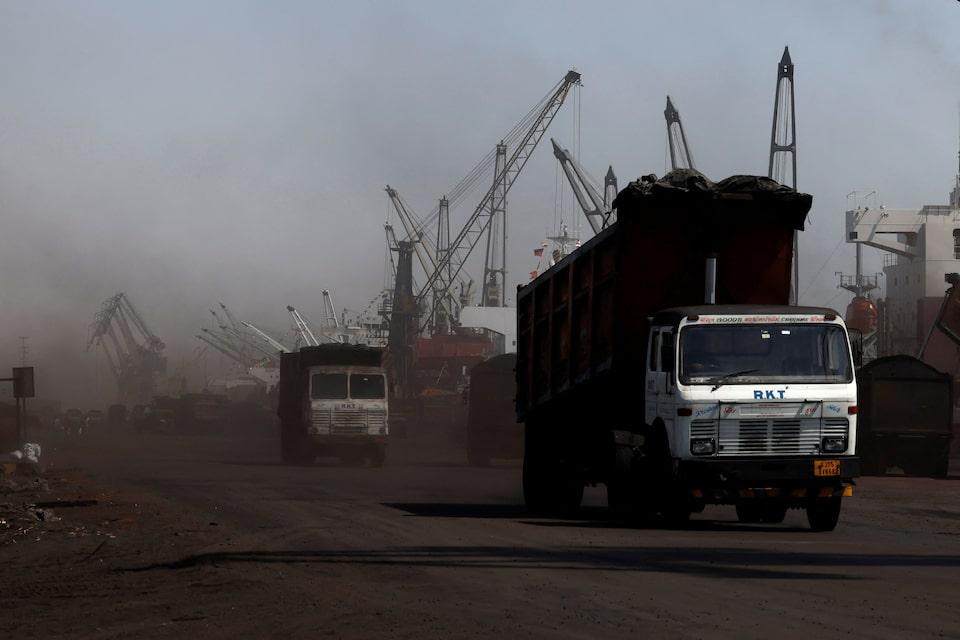
SINGAPORE, June 5 (Reuters) - India's coal-fired electricity generation in May fell at the fastest pace in five years, as overall power demand declined for the first time since August and renewable energy generation rose to a record high, a Reuters analysis of government data showed. Increased generation from less polluting power sources including hydro and nuclear also led to a decline in natural gas-fired power output, which fell at the steepest rate in nearly three years, a review of data from the federal power grid regulator Grid India showed. Sign up here. The decline in demand for fossil fuels for electricity generation in India - the second largest importer of coal and the fourth biggest buyer of liquefied natural gas (LNG) - comes at a time when benchmark prices of the fuels are under pressure. "Demand from the power sector - typically strong during peak season - remained limited. Additionally, economic headwinds have weighed on non-power industries," Indian coal trader I-Energy said in a note this week. Asian spot LNG prices have declined more than 15% this year, while benchmark prices of thermal coal have plunged to more than 4-year lows due to weak demand from China and India - the top coal importing countries. India's coal-fired power generation fell 9.5% in May on an annual basis to 113.3 billion kilowatt-hours (kWh), a review of data from the federal power grid regulator Grid India showed, marking the sharpest year-on-year decline since June 2020, when the COVID-19 pandemic led to a nationwide lockdown. A sustained slowdown in demand for fossil fuels for power generation could help the world's third largest emitter of greenhouse gases slash emissions after it previously boosted its reliance on coal to power a post-pandemic economic recovery. India has repeatedly cited lower per capita emissions compared with richer nations to defend its high coal use. Utilities in China and India have cut dependence on coal and LNG imports this year also due to record coal stocks and slower growth in power demand. India had forced gas-based power plants to operate last year to meet high power demand as temperatures soared. As power demand is lower and prices are high for gas-fired power to be competitive with other sources such as solar this year, utilities will buy fewer volumes, said Prashant Vashisth, vice president at Moody's affiliate ICRA. Total electricity generation in May fell 5.3% year-on-year to 160.4 billion kWh, the data showed, with the highest peak demand about 8% lower on-year at 231 GW, mainly due to milder temperatures, government officials said. Peak demand - a measure of the maximum electricity requirement over any given time - reached 250 GW during a heatwave in May 2024. Meanwhile, renewable energy output surged to a record high of 24.7 billion kWh in May, up 17.2% from a year earlier, with its share in the overall power mix rising to 15.4% - the highest since records began in 2018. The share of coal in India's power mix dropped to 70.7% in May, down from 74.0% a year earlier and the lowest level since June 2022, according to the Grid India data. Hydropower generation jumped 8.3% to 14.5 billion kWh, accounting for 9.0% of total generation compared to 7.9% in May 2024, the data showed. Natural gas-fired power generation fell 46.5% annually to 2.78 billion kWh in May, the steepest decline since October 2022. https://www.reuters.com/sustainability/boards-policy-regulation/india-coal-fired-power-output-falls-fastest-pace-five-years-may-2025-06-05/
2025-06-05 06:18
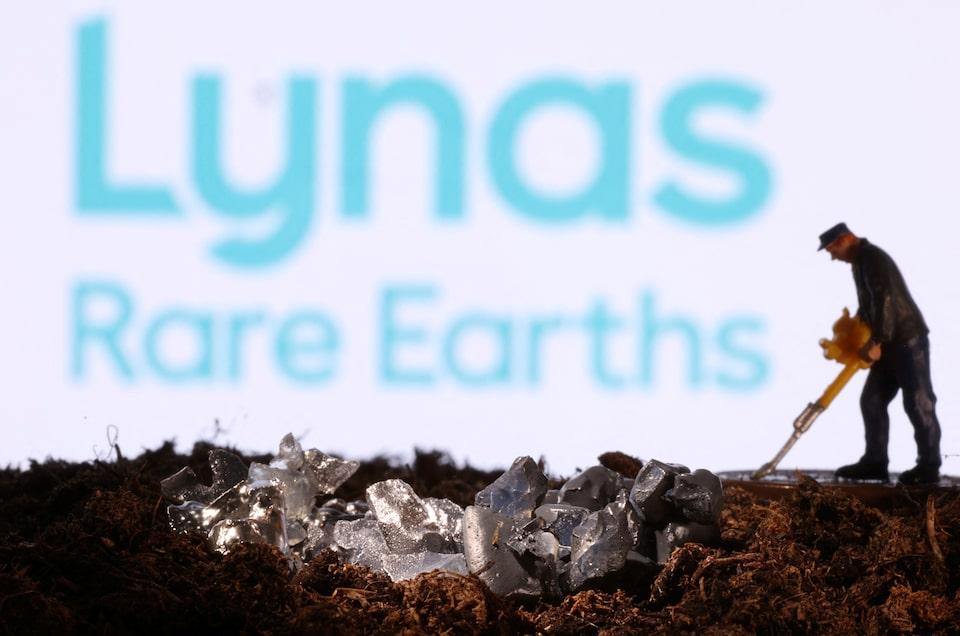
June 5 (Reuters) - Shares of Australia's Lynas Rare Earths (LYC.AX) , opens new tab climbed on Thursday to their highest point in more than two years, after global automakers warned that China's export restrictions on rare-earth materials could lead to production delays. As the world's largest rare-earth producer outside China, Lynas is expected to benefit from concerns over global supply stability. Analysts suggest the situation could create favorable conditions for the Australia-listed company amid rising geopolitical tension and demand for critical minerals. Sign up here. Lynas' stock jumped as much as 11.8% to A$9.2, touching its highest level since February 8, 2023. The move also marked the stock's biggest intraday percentage gain since October 24, 2023. "Lynas' rally ... is a powerful reflection of the dual drivers at play today: escalating geopolitical tensions and surging demand for green technology," said Hebe Chen, market analyst at Vantage Markets. "As China tightens rare-earth export controls, markets are pricing in supply risks — positioning Lynas ... as a strategic hedge." China, which accounts for about 90% of global rare-earth production, imposed export restrictions in April on the strategic minerals in response to tariffs introduced by U.S. President Donald Trump. The move raised alarms across industries reliant on the 17 rare-earth elements, which are critical for defense systems, electric vehicles, clean energy, and advanced electronics. This week, German automakers added urgency to those concerns, warning that China's export restrictions on rare-earth materials pose a significant threat to their production lines and local economies. Europe's auto supplier association CLEPA said several production lines have shut down after running out of supplies, while Mercedes-Benz (MBGn.DE) , opens new tab said they were talking to top suppliers about building "buffers" such as stockpiles to protect against potential threats to supply. Although rare-earth elements are relatively common in the earth's crust, China dominates the global supply chain by mastering the complex and environmentally challenging refining process. The U.S. has only one operational rare-earth mine, but the bulk of its output is still shipped to China for processing, underscoring the strategic importance of non-Chinese producers such as Lynas. https://www.reuters.com/world/china/australias-lynas-surges-automakers-flag-risks-chinas-rare-earth-export-curbs-2025-06-05/
2025-06-05 06:15
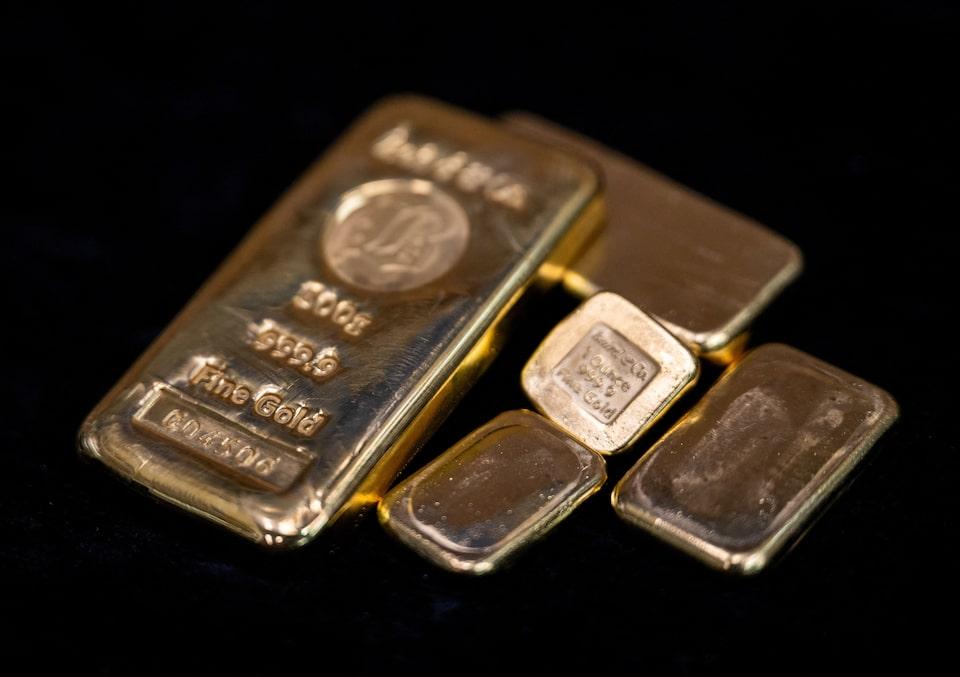
US non-farm payroll data due on Friday Trump says Fed chief must lower interest rate Silver hits highest level in more than 13 years June 5 (Reuters) - Gold held its ground on Thursday as investors looked forward to U.S. non-farm payrolls data due later this week to assess the U.S. interest rate path, while silver prices rose above the key $35 per ounce level for the first time since October 2012. Spot gold was up 0.6% at $3,395.29 an ounce, as of 1147 GMT. U.S. gold futures rose 0.6% to $3,419.70. Sign up here. "I would say that the path of least resistance remains to the upside, despite today's sort of flat mode for gold trading. But I think this is more due to traders being in wait-and-see mode ahead of non-farm payrolls," said Ricardo Evangelista, senior analyst at brokerage firm ActivTrades. Wednesday's ADP National Employment Report revealed U.S. private payrolls increased far less than expected in May. U.S. President Donald Trump on Wednesday called for Fed Chair Jerome Powell to lower interest rates. "I think that a weakening in the U.S. labor market will increase bets on a dovish Fed, so on the Fed cutting interest rates, (which) would be positive for gold," Evangelista added. Gold, a safe-haven asset during times of political and economic uncertainty, tends to thrive in a low-interest-rate environment. Meanwhile, spot silver jumped 2.5% to $35.83 per ounce, its highest level since February 2012. Silver's "recent underperformance against gold because of economic concerns, given that 70% of silver usage is industrial, it looks that there could be some ratio trading going on now that it has dipped below the 100 level," StoneX analyst Rhona O'Connell said. The gold-silver ratio, denoting how many ounces of silver one ounce of gold can buy, is used by the market to gauge future trends as it indicates silver's current performance against its historical correlation with gold. Platinum rose 3.6% to $1,123.88, its highest level since March 2022, and palladium was up 1.8% at $1,018.38. "Tangible assets with limited supply such as gold, silver, platinum and copper should be part of a broad portfolio in order to mitigate any economic fallout from geopolitical events, government mismanagement of debt and rising inflation threat" said Ole Hansen, head of commodity strategy at Saxo Bank. Trump on Wednesday said the nation's debt ceiling should be eliminated, saying he agreed with Democratic Senator Elizabeth Warren's view on the subject. https://www.reuters.com/world/china/gold-holds-firm-markets-await-us-payroll-data-direction-2025-06-05/
2025-06-05 06:08
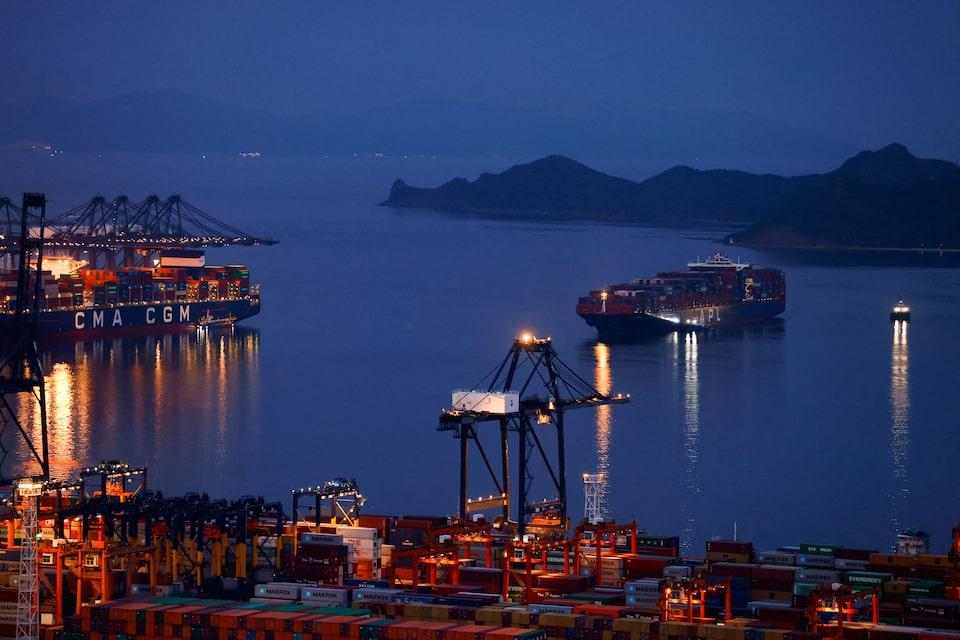
Trump administration seeks licence for ethane exports to China China accounts for 46% of US ethane exports Ethane is used to produce plastics LONDON, June 5 - The Trump administration's latest efforts to curb U.S. petrochemical exports to China could end up hurting the U.S. energy sector just as much, or more, than the Chinese economy. The booming plastics feedstock trade between the world's two largest economies is a prime example of the benefits of a dynamic, open, global trading system. As U.S. ethane production exploded in recent years, the excess production was largely met by a parallel expansion in appetite in the overseas petrochemical sector, particularly from China. Sign up here. Trump exempted energy products from his sweeping "Liberation Day" import tariffs on April 2, an apparent sign of his administration's sensitivity to the impact that energy levies could have on consumer prices. But Enterprise Products Partners, one of the top U.S. operators of marine export terminals of natural gas liquids, on May 29 said that it had been notified by an agency of the Department of Commerce that the company will now require a licence to export ethane and butane to China due to the "unacceptable risk" that China could use these products for military purposes. Around 40% of the roughly 213,000 barrels per day of ethane loaded last year from Enterprise’s main export terminal was shipped to China. The company said it could not determine if it could obtain a licence. The U.S. decision was the latest step in Washington's high-stakes trade war with Beijing, which seemed to cool somewhat after the sides held bilateral talks in Geneva last month and agreed on a 90-day truce to dial back triple-digit tariffs. These export curbs, particularly on ethane, a byproduct of natural gas that is used to produce the building blocks for plastics, speak to the slapdash nature of this trade war salvos. First, there is little evidence to suggest that ethane or butane exports are used significantly by China's military beyond the obvious dual-purpose uses of plastics, heating fuel or refrigerant. What's more, the export licence notice did not include the material ethane is used to make, polyethylene. There is no doubt that the loss of U.S. ethane will hurt China's petrochemical producers. China in April reportedly exempted ethane from its reciprocal 125% tariff on U.S. imports to ease pressure on its petrochemical sector. But the curbs cut both ways. SELF-INFLICTED WOUND Ethane production in the United States rose to a record 2.83 million bpd in 2024, nearly tripling from 2014, according to Energy Information Administration data. This was driven by the surge in natural gas production from onshore U.S. shale basins. The U.S. is currently the only major exporter of ethane, as exports rose 13-fold in the decade to 2024 to 492,000 bpd, 46% of which went to China, according to the EIA. On the flip side, the United States accounted for practically all of China's ethane imports of 261,000 bpd last year, according to analytics firm Kpler. China remains the only country able to absorb growing U.S. ethane exports at a large scale. China's ethylene production capacity is forecast to grow to around 80 million tons per year by 2028 from 55 million tons in 2024, representing 50% of new global capacity, according to the Oxford Institute of Energy Studies. Other markets for U.S. ethane exports are expected to open up, including India and Thailand, but the shift will not happen quickly. While the United States is expanding its ethane export terminal capacity, importing countries, particularly in Asia, will require years to build import terminals and ethane carriers. For China, losing the U.S. ethane feedstock will certainly erode petrochemical manufacturers' profit margins, as they will need to rely more on naphtha, a pricier feedstock, or source ethane from smaller exporters. In certain circumstances, this could lead to temporary plant closures. But it is unlikely to severely impact the trajectory of the sector's growth in China. That’s mainly because around 70% of China's total ethylene production capacity already uses naphtha, with ethane and other liquid petroleum gas products accounting for only 8% of feedstock, according to Sinopec's Economics and Development Research Institute 2024 annual report. But a halt on ethane exports to China could create a severe domino effect in the United States whereby domestic inventories build up, forcing producers to lower ethane processing at shale basins. This in turn could impact the profitability of oil and gas drilling operations. It could lead to excessive quantity of ethane in natural gas, increasing costs for producers of liquefied natural gas, a major U.S. industry. The Trump administration’s ethane exports restrictions could meet its intended objective of hurting China’s petrochemical industry, but that would come at a high cost for the country’s oil and gas industry. Want to receive my column in your inbox every Thursday, along with additional energy insights and trending stories? Sign up for my Power Up newsletter here. https://www.reuters.com/markets/commodities/trumps-china-ethane-export-curbs-are-another-exercise-self-harm-bousso-2025-06-05/
2025-06-05 06:07
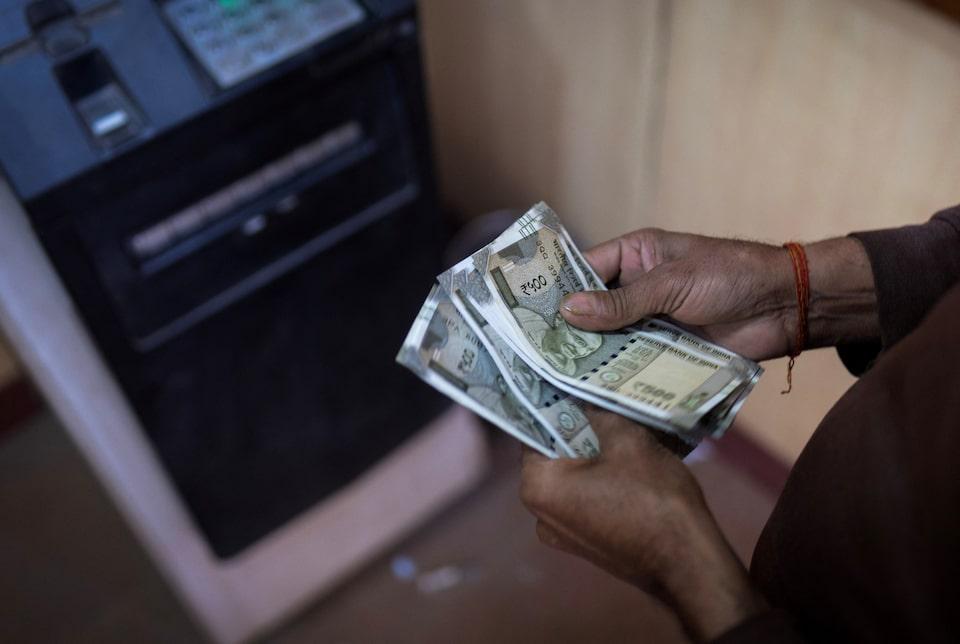
MUMBAI, June 5 (Reuters) - The Indian rupee was little changed on Thursday as corporate dollar bids, including from local oil companies, blunted positive cues from a rise in most of its Asian peers. The rupee was at 85.8525 against the U.S. dollar as of 11:30 a.m. IST, nearly unchanged from its close at 85.90 in the previous session. Sign up here. Asian currencies were mostly higher. The dollar index firmed slightly to 98.8 after dropping 0.5% on Thursday after weaker-than-expected U.S. economic data boosted hopes of rate cuts by the Federal Reserve later this year. The odds of a rate cut in September have ticked up to 75%, per CME's FedWatch tool. Interest rate futures are pricing in muted odds of Fed cuts in June and July. Weak U.S. economic data alongside persistent uncertainty about tariff policies has continued to weigh on the dollar, which has declined nearly 9% against major peers this year so far. A 90-day pause on U.S. reciprocal tariffs is set to elapse in early July but legal back-and-forth on the viability of the broad-based levies may continue to keep uncertainty elevated. "While no deals and resumption of reciprocal tariffs could yet be negative for Asia FX, a stable CNY alongside implicit FX commitments could see some currencies, especially North Asia, outperform," BofA Global Research said in a note. Meanwhile, India's benchmark equity indexes the BSE Sensex and the Nifty 50 (.NSEI) , opens new tab rose about 0.3% each, supported by lower U.S. Treasury yields and a weaker dollar. India's 10-year benchmark bond yield dipped slightly to 6.1970% with traders keeping their focus on the Reserve Bank of India's upcoming monetary policy decision due on Friday. The central bank is widely expected to deliver a third consecutive rate cut as muted inflation provides ample space to focus on boosting economic growth further. https://www.reuters.com/world/india/rupee-nearly-flat-wedged-between-uptick-asia-fx-corporate-dollar-bids-2025-06-05/