2025-06-04 21:41
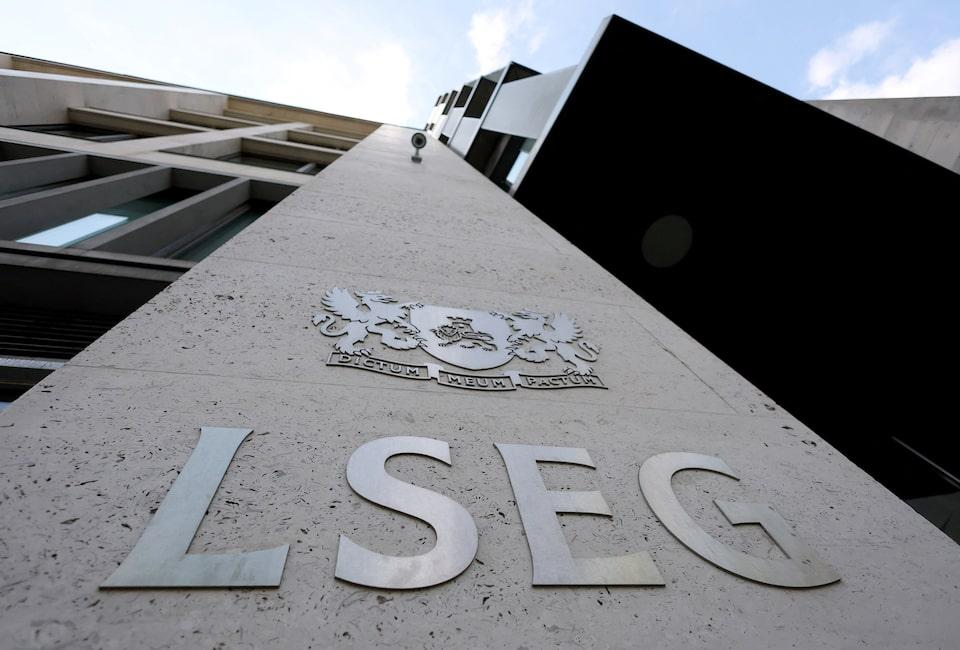
Cobalt does not specify reason for dropping IPO plans IPO was priced at $2.6 a share last week Glencore had agreed to be an investor in IPO June 4 (Reuters) - Metals investor Cobalt Holdings said on Wednesday it would not proceed with its planned initial public offering on the London Stock Exchange, ending hopes for what could have been the largest listing in the UK capital since early 2024. The company declined to specify the reasons for dropping its plans days after the listing was priced at $2.56 per share. Sign up here. However, one person with knowledge of the process said the process was halted as a result of lack of investor demand. Management continues to believe in the business model and the market for cobalt, a second person with knowledge of the situation said, adding that the company is planning to explore options including funding the business privately. The market debut, valued at around $230 million, would have been London's largest since Air Astana's (AIRA.KZ) , opens new tab listing in February 2024. London has struggled to attract new listings, prompting reforms last year to make it more competitive with New York and the European Union after Brexit. Several London-listed firms in recent years have also moved their primary listing to New York or picked Europe for IPOs, where they believe they can fetch better valuations. Last month, Reuters reported that fast-fashion retailer Shein was working toward a listing in Hong Kong after its proposed London IPO stalled. Unilever (ULVR.L) , opens new tab chose Amsterdam as the primary listing for its ice cream business Ben & Jerry's in February. Glencore (GLEN.L) , opens new tab and affiliates of investment firm Anchorage Structured Commodities Advisor had agreed to buy about 20.5% of the shares to be offered in Cobalt's IPO when it was first announced in early May. Cobalt, which holds physical cobalt and has a contract to buy from Glencore, had plans to use the majority of the IPO proceeds to buy an initial 6,000 metric tons of the key battery metal, worth around $200 million, from the global miner. https://www.reuters.com/markets/europe/metals-investor-cobalt-holdings-scraps-london-ipo-plans-2025-06-04/
2025-06-04 21:28
LIMA, June 4 (Reuters) - Peru's government has restored formal mining operations in northern parts of the country that were affected by violence, Defense Minister Walter Astudillo said on Wednesday. Last month, President Dina Boluarte suspended local mining operations after 13 gold mine workers in the northern district of Pataz were kidnapped and killed by illegal miners. Sign up here. Peru is the world's third-largest copper producer and most of its deposits of the key red metal are located in southern parts of the Andean nation, while gold and silver are mined further to the north. Astudillo said the decision to resume operations followed discussions with formal mining companies and Pataz authorities, noting the sector's importance to the local economy. "There was a clamor from the population for mining activities to be carried out," he said at a press conference following a cabinet meeting. The minister also said the government had extended the state of emergency in Pataz for another 60 days, allowing the armed forces to take control of the area. Mining operations will resume for companies and artisanal or small-scale miners with valid permits under the REINFO program, which allows temporary activity while operations are formalized. Activities will be permitted from 5 a.m. to 10 p.m. local time, he added. https://www.reuters.com/world/americas/peru-orders-mining-operations-restart-violence-hit-north-2025-06-04/

2025-06-04 21:17
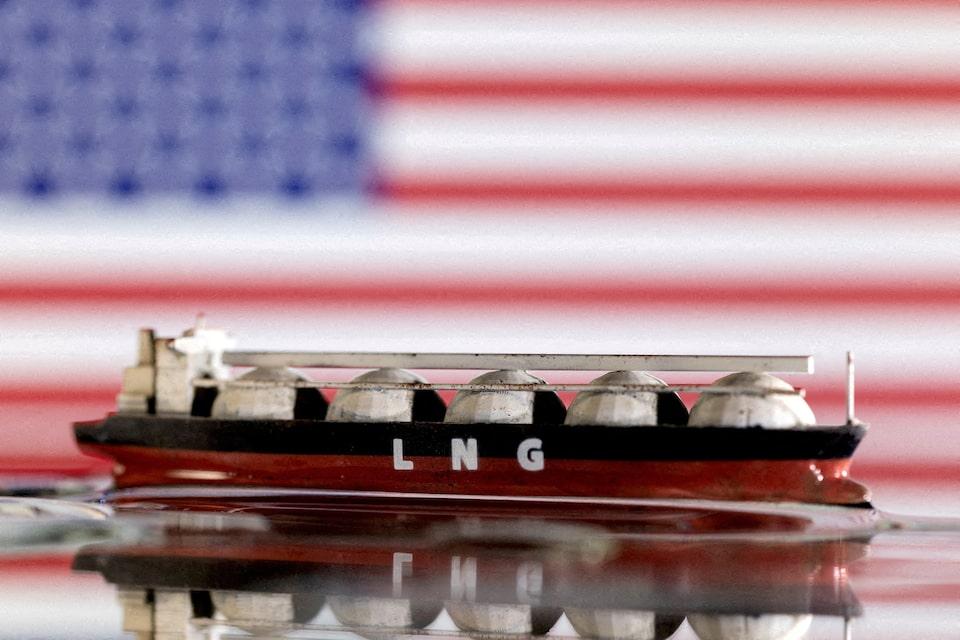
Penn America revives project with Trump's return CEO had meeting at White House on Tuesday Uphill battle, analysts say about project near Philadelphia WASHINGTON, June 4 (Reuters) - The CEO of a company seeking to build a liquefied natural gas terminal near Philadelphia told Reuters on Wednesday he met officials at the White House this week to "provide intelligence" about the project in the works for years despite local opposition. Penn America Energy Holdings wants to export 7.2 million tons a year of LNG from a site near Philadelphia to markets in Europe and Asia. Franc James, the CEO, said he had a meeting at the White House on Tuesday and that the company is considering several locations other than the original site in Chester, Pennsylvania. Sign up here. A source close to the talks also said James met with White House personnel. The White House said it does not confirm private meetings. The Philadelphia region, once an oil refining center, has seen plants shutter in recent decades as the industry concentrated along the Gulf Coast. Local and state officials for years have sought to leverage the abundance of natural gas in western Pennsylvania, but building new infrastructure in the densely populated eastern part has been met with local opposition. Trump has vowed to open new gas pipelines and boost the LNG industry. His support for the project could also pitch a fight in a battleground state with Democratic Governor Josh Shapiro, up for reelection next year. James said he had worked with Trump during his first term when the project was "in the fetal stages" but the company put the plans on hold when former President Joe Biden paused approvals of LNG exports in early 2024 to study economic and environmental impacts of the booming business. "Developing a project in the Northeast is quite different than the Gulf Coast, Louisiana and Texas, so it requires a great deal of support, not only politically in the state, but also with communities ... in terms of pipeline transmission as well as ... along the Delaware River." Nearby sites in Trainer, Marcus Hook and Eddystone are also being considered, James said. The project has support from U.S. Senator Dave McCormick, a Republican from Pennsylvania. It has been opposed by Senator John Fetterman, a Democrat. It would need federal, state and local permits. Analysts said it has an uphill battle, especially to get LNG on the water by 2030, which James said is a target. Alex Munton, director of global gas and LNG research at consulting firm Rapidan Energy Group, said the proposal has faced significant objections from local opponents. "It requires a lot of time and money, and therefore political support alone is not enough," Munton said. Ira Joseph, an LNG market expert and senior researcher at Columbia University, agreed. "When you compare it to the opportunities out there for other LNG projects it's not high on the list in terms of probability." https://www.reuters.com/business/energy/ceo-seeking-build-pennsylvania-lng-terminal-meets-with-white-house-2025-06-04/
2025-06-04 21:05
ORLANDO, Florida, June 4 (Reuters) - Markets again lacked a unifying theme on Wednesday, as world stocks hit record highs, Wall Street ended mixed and Treasury yields tumbled, all against a backdrop of patchy U.S. economic data and a lack of clarity on global trade talks. In my column today I look at how, despite justifiable fears of tariff-fueled price rises later this year and beyond, the global forces of disinflation are stronger right now than the forces of inflation. More on that below, but first, a roundup of the main market moves. Sign up here. If you have more time to read, here are a few articles I recommend to help you make sense of what happened in markets today. Today's Key Market Moves Teflon stocks glide higher Financial market moves can usually be traced to, or at least reasonably explained by, a narrative or new development that changes investors' view of the value of the asset in question. But some days, they are difficult to rationalize. Wednesday was one of those days, at least in equities. Wall Street rose for a third session, the Nasdaq climbed back into the green for the year, and global stocks rose to their highest level on record. Yet the newsflow was hardly bullish, although the nonpartisan U.S. Congressional Budget Office did lower its estimate of how much President Donald Trump's tax-cut and spending bill will add to the national debt by $1.4 trillion. On the trade front, the Trump administration doubled steel and aluminum tariffs, and it became clear that trade talks with Europe and China are proving difficult. The deadline for countries to show their "best offers" to avoid other punitive import levies taking effect next month passed on Wednesday too. China's decision in April to suspend exports of a wide range of rare earths continues to wreak havoc across crucial supply chains around the world, especially in the auto industry. Some European auto parts plants have suspended production. On the economic data front, the U.S. 'stagflation' alarm bells could not have rung louder on Wednesday. Figures showed U.S. private sector employment growth in May was the slowest in more than two years, perhaps an ominous signal for Friday's non-farm payroll report. Meanwhile, the services sector contracted in May for the first time in nearly a year and input prices paid by businesses leaped to their highest in two and a half years. If gold prices took their cue from the 'flation' side of those numbers, the bond market took its cue from the 'stag' side of the equation. Treasuries prices rallied strongly, and the 10-year yield posted its biggest fall since mid-April. Trump used the weak economic data to take to social media and repeat his call for Fed Chair Jerome 'Too Late' Powell to lower interest rates, complaining that "Europe" has already cut rates nine times. If he's referring to the European Central Bank, that's not quite accurate. The ECB has cut rates seven times since June last year, but is widely expected to make that eight on Thursday. The Bank of Canada took a leaf out of the Fed's book on Wednesday, deciding against cutting interest rates and choosing to wait and see what the effects of U.S. trade policy are. It said another rate cut might be needed, however, if the economy slows sufficiently. Aside from the ECB, the biggest market-moving event on Thursday could be China's 'unofficial' services sector PMI report for May. Signs of renewed weakness might be the cue for a 'risk-off' tone to world markets on Thursday, although the evidence of Wednesday shows that's no guarantee. Disinflation is a greater force right now than inflation Investors, consumers and policymakers may justifiably fear the specter of tariff-fueled inflation later this year and beyond, but it's powerful global disinflationary forces that are weighing most heavily right now. The OECD said on Tuesday it expects collective annual headline inflation in G20 economies to moderate to 3.6% this year from 6.2% last year, cooling further in 2026 to 3.2%. But the United States is an "important exception," the OECD argues, and it sees inflation there rising to just under 4% later this year and remaining above target in 2026. While annual PCE consumer inflation in the U.S. cooled to 2.1% in April, the slowest rate in four years and virtually at the Fed's 2% target, consumer inflation expectations are the loftiest in decades. The Fed has paused its easing cycle as a result, and U.S. bond yields are higher than most of their G10 peers. Economists at Goldman Sachs share the OECD's view that U.S. inflation will pick up to near 4% this year, with tariffs accounting for around half of that. Many others also agree that the U.S. appears to be the exception, not the rule. The world's next two largest economies, China and the euro zone, find themselves trying to stave off disinflation. Deepening trade and financial ties between the two may only intensify these forces, keeping a lid on price increases. SPECTER OF DEFLATION Annual inflation in the euro zone cooled to 1.9% in May, below the European Central Bank's 2% target, essentially setting the seal on another quarter-point rate cut later this week. More easing appears to be in the cards. As economists at Nomura point out, inflation swaps are priced for inflation undershooting the ECB's target for at least the next two years. This, combined with weakening growth due to U.S. tariffs and disinflationary pressure from China, could force the ECB to cut rates another 50 basis points to 1.5% by September. China's war on deflation is, of course, well-known to investors, but it has appeared to slip off their collective radar given how protracted it has become. The last time annual inflation in China eclipsed 1% was more than two years ago, and it has remained near zero, on average, ever since. China's 10-year bond yield remains anchored near January's record low below 1.60%, reflecting investors' skepticism that price pressures will accelerate any time soon. They have reason to be doubtful. Deflation and record-low bond yields continue to stalk the economy despite Beijing's fiscal and monetary stimulus efforts since September. And punitive tariffs on exports to the U.S., one of its largest export markets, are generating massive uncertainty about the country's economic outlook moving forward. REER-VIEW MIRROR This is where the exchange rate becomes important. On the face of it, Beijing appears to have resisted mounting pressure on the yuan thus far, with the onshore and offshore yuan last week trading near their strongest levels against the dollar since November. But when considering the yuan's broad real effective exchange rate (REER), an inflation-adjusted measure of its value against a basket of currencies, the Chinese currency is the weakest since 2012. Robin Brooks at The Brookings Institution reckons it may be undervalued by more than 10%. With China's goods so cheap in the global marketplace, China is essentially exporting deflation. And the yuan's relative weakness could put pressure on other Asian countries to weaken their currencies to keep them competitive, even as the Trump administration potentially encourages these governments to do the exact opposite. Countries in Asia and around the world, especially in the euro zone, may also be nervous that China could dump goods previously bound for the U.S. on their markets. If anyone wants confirmation that the "tariffs equal inflation" view is too simplistic, they got it this week from Switzerland, where deflation is back and potential negative interest rates may not be far behind. True, Trump's threatened tariffs could throw everything up in the air. But the Swiss example is a warning to markets and policymakers that global disinflationary forces may be spreading. What could move markets tomorrow? Opinions expressed are those of the author. They do not reflect the views of Reuters News, which, under the Trust Principles , opens new tab, is committed to integrity, independence, and freedom from bias. https://www.reuters.com/world/china/global-markets-trading-day-graphic-pix-2025-06-04/
2025-06-04 20:59
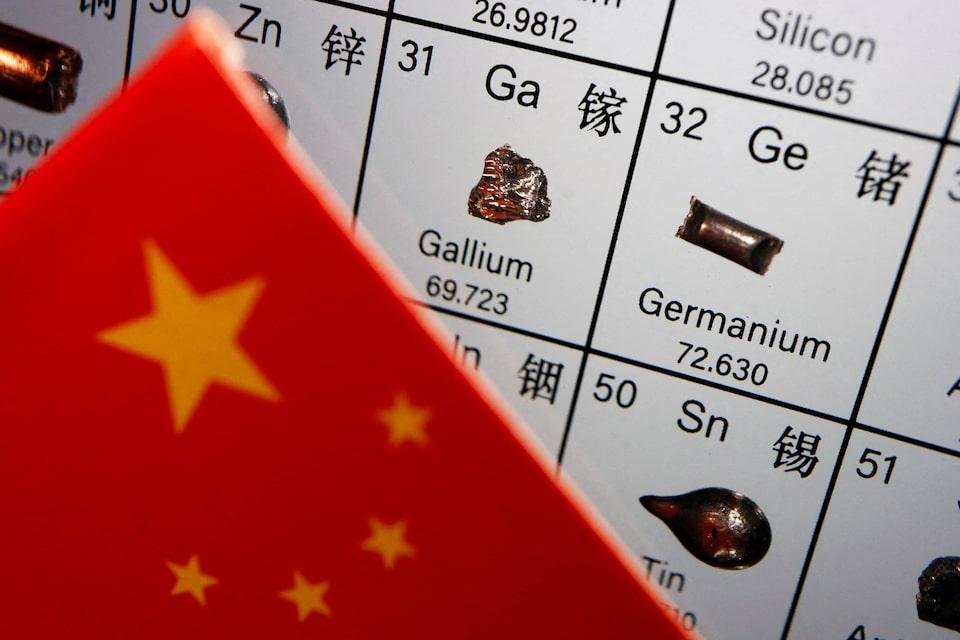
BEIJING, June 4 (Reuters) - China has introduced a tracking system for its rare earth magnet sector, three sources said, as its export restrictions on them begin to cut off customers around the world. The national tracking system, which went into effect last week, requires producers to submit extra information online including trading volumes and client names, said two sources familiar with the matter and another briefed by those involved. Sign up here. The world's largest rare earth magnet supplier and exporter, China in early April imposed export restrictions on seven medium to heavy rare earth elements and several magnets, requiring exporters to obtain licences. Delays getting approvals have upended supply chains for automakers, semiconductor companies and others, with global automakers already beginning to stop some production lines as reserves run out. Beijing unveiled high-level plans to establish an information tracing system for rare earth products last June, but there had been no mention of it again until last week, according to the source briefed on the matter. The added level of scrutiny suggests that China's export controls on rare earths and the associated magnets - where it has a near-monopoly on production - could become a permanent feature for the products. There have been hopes in the U.S. and elsewhere that this would be removed as part of a trade truce agreed in Geneva last month. In previous cases where China has imposed export curbs on metals, exports have tended to slowly rebound after the imposition of restrictions as exporters apply and receive licences. "Our current hypothesis is that China would continue its export control mechanism on rare earths, as its an ace card for China to hold," said Tim Zhang, founder of Singapore-based Edge Research. Beijing's long-term target is to track the whole rare earth production chain, not just magnets, strengthen its control over the sector, and crackdown on smuggling, illegal mining and tax evasion, according to a fourth source who was also briefed on the matter. https://www.reuters.com/world/china/china-increases-scrutiny-over-rare-earth-magnets-with-new-tracking-system-2025-06-04/
2025-06-04 20:56
TORONTO, June 4 (Reuters) - A Canadian border-security bill introduced by the Liberal government earlier this week may deny some asylum-seekers a refugee hearing and make it easier for the government to revoke migrants' status. The bill comes as the government seeks to address U.S. concerns about its border security and reduce the number of migrants in the country. In addition to denying some refugee hearings and allowing the suspension, cancellation or variance of immigration documents, the bill facilitates sharing people's information and makes it easier to read people's mail, among other measures. Sign up here. President Donald Trump has said Canada had failed to do enough to stem the flow of illicit fentanyl into the U.S., using that as justification for some of his tariffs. This week Trump doubled the tariffs in place on steel and aluminum, prompting calls for Canada to boost retaliatory measures of its own. Late last year Canada pledged C$1.3 billion to beef up its border. As Canada reduces the number of new permanent and temporary residents, its refugee system faces a historic backlog of more than 280,000 cases. This week's bill follows through on some of those border promises as well as on suggestions from some top ministers that Canada would fast-track refusals for some refugee claims. If the bill passes, asylum-seekers who have been in Canada more than one year would not be eligible for refugee hearings. Instead, they would have access to a pre-removal risk assessment, meant to determine whether they would be in danger in their country of origin. According to data published by Canada's Immigration, Refugees and Citizenship Department, 30% of pre-removal risk assessments in 2019 for people deemed ineligible for refugee hearings were approved; by contrast, according to Immigration and Refugee Board data, that year 60% of finalized refugee hearings were approved. Asylum-seekers who wait two weeks to file claims after crossing from the U.S. to avoid being turned back under a bilateral agreement would also not get hearings. The bill, which needs to go through multiple readings before the House of Commons votes on it and sends it to the Senate, would also allow the government to "cancel, suspend or vary" immigration documents if deemed in the public interest. Migrant and refugee advocates worry the changes could leave vulnerable people deported to dangerous situations in their home countries without adequate due process. A spokesperson for Canada's Immigration Minister Lena Metlege Diab said on Wednesday that the government recognizes the conditions in people's home countries may change, but the pre-removal risk assessment will prevent them from being returned to persecution or torture. "The asylum ineligibilities introduced yesterday seek to maintain protection for those fleeing danger while discouraging misuse that bypasses the asylum system's function – which is to protect the vulnerable," the spokesperson wrote in an email. "Canada is reneging on its basic human rights obligations to do individual arbitration," said Migrant Rights Network spokesperson Syed Hussan. "This is teeing up a deportation machine." https://www.reuters.com/world/americas/canadian-bill-seeks-deny-hearings-some-asylum-seekers-2025-06-04/