2025-06-04 20:46
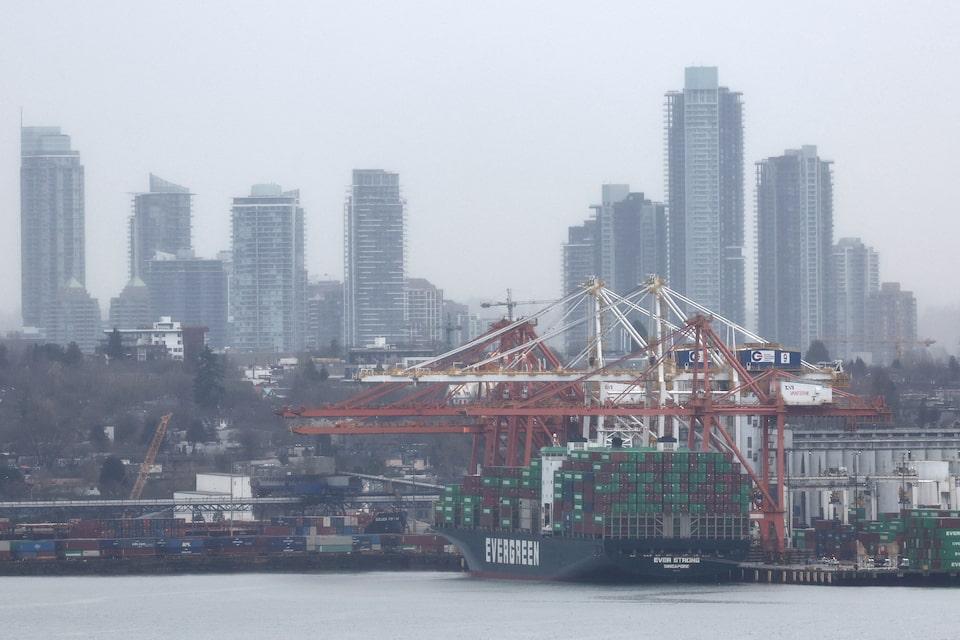
US tariffs on steel and aluminum increased to 50% Unifor warns of quick impact on Canadian steel industry Canada prepares reprisals if tariff talks with US fail TORONTO, June 4 (Reuters) - Canadian companies and a major union said on Wednesday higher U.S. tariffs on steel and aluminum could result in more job losses and lost sales, as Prime Minister Mark Carney said Canada is preparing reprisals. The U.S. tariff hike on the two metals to 50% from the 25% rate introduced in March took effect at 12:01 a.m. (0401 GMT) on Wednesday. Sign up here. Canada is the largest seller of the metals to the U.S., exporting to its southern neighbor roughly twice as much aluminum as the rest of the top 10 exporters' volumes combined. "So this is going to have a very quick impact, I will say to you, on steel industry," said Lana Payne, president of Unifor, which is Canada's private sector union. The Aluminium Association of Canada, which counts Rio Tinto (RIO.L) , opens new tab among its members, said 50% tariffs could result in its members diversifying to Europe. Tim Houtsma, CEO of Nova Scotia-based Marid Industries, a medium-scale steel fabricator, told Reuters that the tariffs make it impossible to sell to the United States. "We are going to tighten our belt and we are going to need to watch our cost because we are going to be shut out of the U.S. market for some period of time," Houtsma said. Canada is prepared to strike back against the United States if talks with Washington to remove tariffs do not succeed, Prime Minister Mark Carney said on Wednesday. "We are in intensive negotiations with the Americans, and, in parallel, preparing reprisals if those negotiations do not succeed," he told the House of Commons. Unifor called on Carney to retaliate immediately and urged Canada to pause exports of critical minerals to the United States. Hundreds of Canadian steel workers have lost their jobs since initial tariffs took effect. Unifor warned layoffs in the auto and aerospace industries could also occur. In March, Canada imposed 25% tariffs on C$29.8 billion , opens new tab ($21.79 billion) worth of imports from the U.S. Carney has said previously there is a limit to how far Canada can go in imposing tit-for-tat tariffs. Jeremy Flack, CEO of Flack Global Metals, a U.S.-based steel trader and manufacturer, said the tariffs have led to a pause of orders and reduced demand for steel. "We are not getting any orders. Volumes starting from February have begun to decline," Flack said. ($1 = 1.3674 Canadian dollars) (This story has been refiled to correct the name of Marid industries in paragraph 6) https://www.reuters.com/markets/commodities/canada-labour-union-unifor-calls-retaliatory-tariffs-us-steel-aluminium-2025-06-04/
2025-06-04 20:14
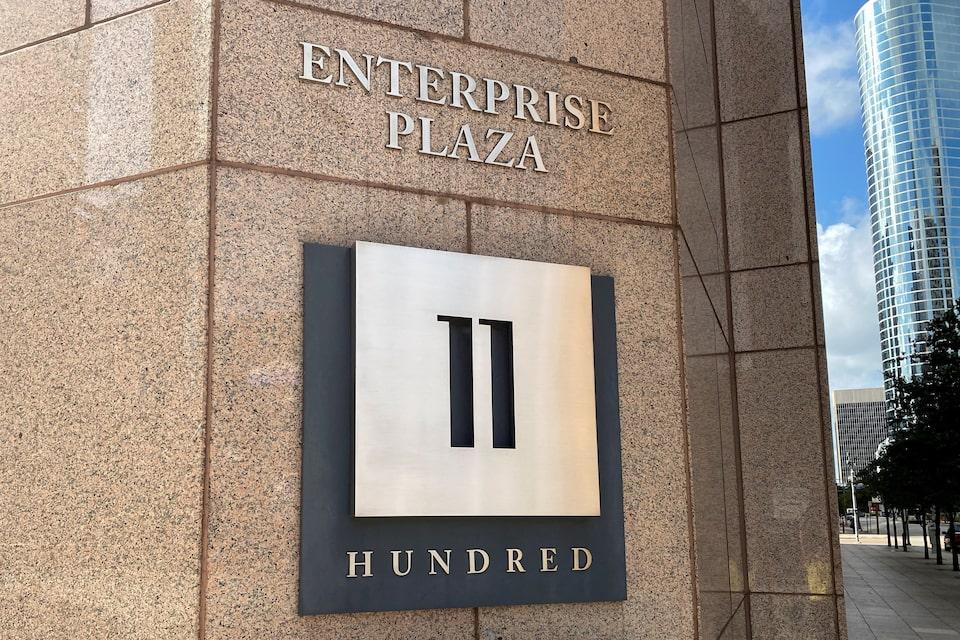
Energy Transfer to apply for emergency authorization, license Enterprise Products says US set to deny emergency authorization for three ethane cargoes to China BIS cites Chinese military end-use risk for export denial Short positions in ethane increase, affecting market prices HOUSTON, June 4 (Reuters) - Energy Transfer (ET.N) , opens new tab said on Wednesday it received a letter from the U.S. government requiring a license to export ethane to China, adding that the U.S. export terminal operator will file for an emergency authorization to continue exporting. The move, which comes amid a broader trade fight between the U.S. and China including over Beijing's curbs on rare earths exports, adds pressure to U.S. ethane exports. Sign up here. It forces producers of the natural gas byproduct to seek alternate buyers and raises costs for Chinese petrochemical firms, which rely almost exclusively on U.S. producers for ethane imports that are used to make plastics and chemicals and also for heating and cooking. Another U.S. ethane exporter, Enterprise Products Partners (EPD.N) , opens new tab said it received notice on Wednesday that the U.S. Commerce Department intends to deny its emergency requests to export three proposed cargoes of ethane totaling around 2.2 million barrels to China. Enterprise had filed the emergency authorization requests after it received a letter requiring license authorization on May 23. Energy Transfer said it got its letter on June 3. Enterprise shares were down 1.2% in after-market trading, while Energy Transfer's shares were down 2%. The letters from the Bureau of Industry and Security, an agency of the Commerce Department, said exports of ethane pose an unacceptable risk of military end-use in China, according to both companies' filings. The BIS did not immediately respond to requests for comment on both companies. The denial of Enterprise's emergency requests calls into question whether this is just a short-term disruption, said Samantha Hartke, Vortexa’s head of Americas analysis. "Near-term cargo reshuffles or resales could be necessary, as would a greater dependence on domestic storage," she said, adding that short positions in ethane were piling up on Wednesday. TRADE WAR The U.S. and China are locked in an ongoing trade war after U.S. President Donald Trump imposed sweeping tariffs in early April. The Commerce Department said last week it was reviewing exports of strategic significance to China, while noting "in some cases, Commerce has suspended existing export licenses or imposed additional license requirements while the review is pending." China's foreign ministry said last week that such U.S. practices disrupted the stability of global supply chains and that Washington was weaponizing tech and trade issues to shut out and persecute China. Energy Transfer said it intends to apply for the license, while Enterprise has not commented on its plans for a license. The companies are among the top exporters of ethane from the U.S. Exports of ethane to China account for about half of the total U.S. exports of the shale gas. Chinese petrochemical firms use ethane as a feedstock because it is a cheaper alternative than naphtha, while U.S. oil and gas producers need China to buy their natural gas liquids as domestic supply exceeds demand. Energy Transfer, which owns and operates marine export terminals that handle natural gas liquids such as ethane, said it was evaluating the scope of deals involving products that are subject to the license requirement and its exports could be impacted if the company is unable to obtain authorizations or licenses. The company added it was not able to ascertain whether these potential restrictions will have any material effect on the company's financial position, results of operations and cash flows. Enterprise said last week that its ethane and butane exports could be hurt by the license requirement, adding that it was evaluating its procedures and internal controls. The restrictions on butane have since been removed. Enterprise said on Wednesday it has up to 20 days to respond to the notice about the denied emergency authorizations for export cargoes with any comments or rebuttals. Unless the company is advised otherwise by the government by the 45th day after the original notification, the denials will become final. https://www.reuters.com/business/energy/enterprise-products-says-us-set-deny-export-three-ethane-cargoes-china-2025-06-04/
2025-06-04 20:11
LIMA, June 4 (Reuters) - Peru's government has significantly reduced the protected area around its famed Nazca Lines, a move critics and archaeologists fear could leave the ancient geoglyphs vulnerable to hundreds of nearby informal mining operations. Peru's Culture Ministry last week slashed the protected zone from 5,600 to 3,200 square kilometers, attributing the move to topographical and archaeological studies that more precisely demarcated areas with "real patrimonial value." Sign up here. The Nazca Lines, located about 400 km (250 miles) south of Lima, are over 800 giant desert etchings of animals, plants and geometric figures created more than 1,500 years ago. UNESCO declared them a World Heritage site in 1994.minist According to data from the Energy and Mines ministry, 362 small-scale gold miners operate in the Nazca district as part of a program to regularize their status. Authorities have previously conducted operations against illegal mining in the area. "The main threats to the Nazca Lines are informal mining operations in the surroundings and even within the protected area," Pieter Van Dalen, head of Peru's archaeologists' association, told Reuters. He called the reduction "very regrettable," challenging the justification that the original area was too large to control. With gold prices near record highs, police and industry sources allege that the government program to regularize small-scale mining, known as REINFO, is rife with irregularities and is often exploited by illegal miners, sometimes in collusion with criminal gangs. The REINFO program is set to expire at the end of this year, with Congress and the administration scrambling to work on a replacement scheme which closes operating loopholes. Small-scale miners had previously protested ahead of an earlier deadline, arguing they would have little time to regularize their activities. The government estimates illegal mining in Peru generates more than $3 billion annually, surpassing drug trafficking revenue. Energy and Mines Minister Jorge Montero acknowledged on Tuesday that small-scale miners operate in Nazca. He said the government is "evaluating how this (reduction) impacts the status of small-scale and artisanal mining working in the zone that was formerly part of Nazca's (protected area) and now is not." Peru's gold exports amounted to $15.5 billion in 2024, up from $11 billion the prior year. Around 40% of Peru's gold exports are estimated to come from illegal sources, according to industry data and Peru's financial regulator. https://www.reuters.com/business/environment/perus-nazca-lines-face-mining-threat-after-protected-area-slashed-2025-06-04/

2025-06-04 19:57
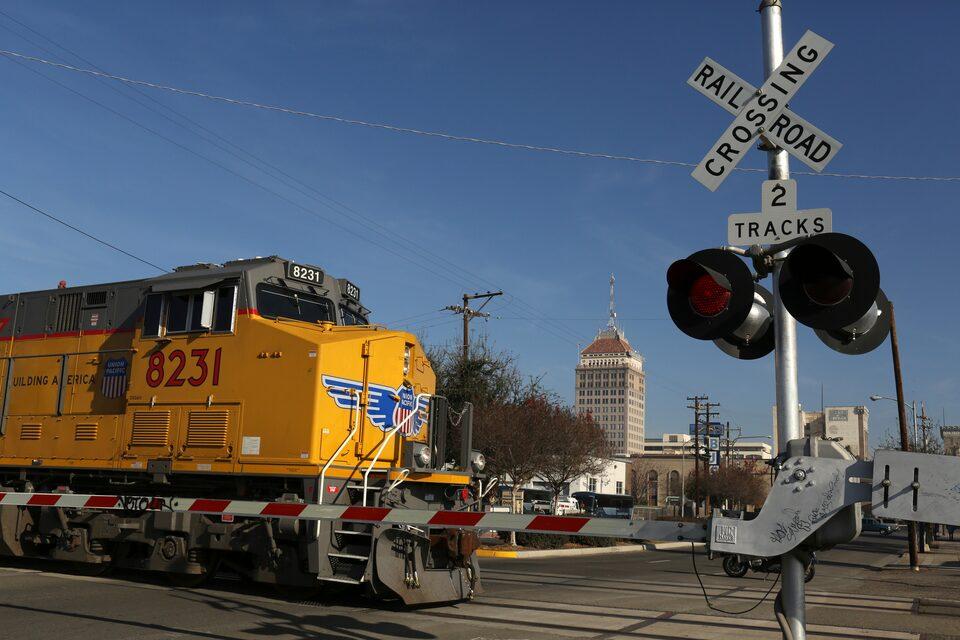
WASHINGTON, June 4 (Reuters) - The Trump administration said Wednesday there is no viable path forward for California's High-Speed Rail project and warned it may rescind $4 billion in government funding in the coming weeks. The U.S. Transportation Department released a 315-page report from the Federal Railroad Administration that cited missed deadlines, budget shortfalls and questionable ridership projections. One key issue cited is that California has not identified $7 billion in additional funding needed to build an initial 171-mile segment between Merced and Bakersfield, California. Sign up here. USDOT gave California until mid-July to respond and then the administration could terminate the grants. Trump said last month the U.S. government would not pay for the project. The FRA report Wednesday said California had "conned the taxpayer out of its $4 billion investment, with no viable plan to deliver even that partial segment on time." The California High-Speed Rail System is a planned two-phase 800-mile system with speeds of up to 220 miles per hour that aims to connect San Francisco to Los Angeles/Anaheim and in the second phase extend north to Sacramento and south to San Diego. The California High-Speed Rail Authority said it strongly disagrees with the administration's conclusions "which are misguided and do not reflect the substantial progress made to deliver high-speed rail in California." It noted California, Governor Gavin Newsom's budget proposal before the legislature extends at least $1 billion per year in funding for the next 20 years "providing the necessary resources to complete the project’s initial operating segment." The authority noted in May there is active civil construction along 119 miles in the state's Central Valley. Voters approved $10 billion for the project in 2008 but the costs have risen sharply. The Transportation Department under former President Joe Biden awarded the project about $4 billion. The entire San Francisco-to-Los Angeles project was initially supposed to be completed by 2020 for $33 billion but has now jumped from $89 billion to $128 billion. In 2021, Biden restored a $929 million grant for California's high-speed rail that Trump had revoked in 2019 after the Republican president called the project a "disaster." https://www.reuters.com/world/us/us-sees-no-viable-path-california-high-speed-rail-project-may-rescind-4-billion-2025-06-04/
2025-06-04 17:43
June 4 (Reuters) - Brazil's wildly popular instant payment system Pix is poised for another leap with the launch of a new recurring payments feature this month, central bank officials said on Wednesday. Since its launch in late 2020, Pix has rapidly become the leading payment method in Latin America's largest economy, surpassing cash as well as debit and credit cards. Last year it handled more than 26 trillion reais ($4.61 trillion) in transactions. Sign up here. Initially slated for launch last October, the new feature will go live on June 16, allowing users to authorize recurring charges with a single consent, according to the central bank, which developed and operates Pix. That will allow for automatic payments of utilities, phone bills, school tuition, gym memberships, and digital or streaming services via the new "Pix Automatico" tool. "'Boleto' will be overtaken by Pix Automatico when it comes to automatic payments," said Renato Gomes, the central bank's financial system organization director. Boleto is the traditional slip method, which moved 6.2 trillion reais last year, according to banking federation Febraban. Speaking at a central bank event in Sao Paulo to present the feature, Gomes added that existing automatic debit services via banks are also likely to be disrupted by the new tool. Companies must sign bank agreements to offer automatic debit, a process central bank regulation director Gilneu Vivan described as burdensome for small businesses. Pix Automatico will simplify the process, allowing small merchants to receive recurring payments with ease. Vivan also noted that nearly 60 million Brazilians do not own a credit card, a group that will now be able to access subscription-based services previously limited to cardholders. A study by payments platform EBANX estimates that Pix Automatico could handle at least $30 billion in e-commerce transactions within its first two years of operation. ($1 = 5.6418 reais) https://www.reuters.com/world/americas/brazils-pix-set-next-leap-with-launch-recurring-payments-2025-06-04/

2025-06-04 16:59
BOGOTA, June 4 (Reuters) - Colombia's consumer price increases likely slowed slightly in May thanks to reduced pressure on food costs and the appreciation of the peso currency, a Reuters survey showed on Wednesday, though inflation expectations for 2025 overall grew. According to the median estimate of the 19 analysts surveyed, inflation likely rose 0.4% in May, below the 0.66% rise in April. Sign up here. Projections ranged between 0.15% and 0.54%. "During May there were pressures on services associated with the continued indexation of rents, also of regulated goods, especially public services," said Carlos Alberto Velasquez, head of economic investigations at Alianza brokerage. "However, pressures on food and goods were kept contained in response to the favorable behavior of the exchange rate," he added, referring to the 2.86% appreciation of the peso against the dollar. If analysts' median prediction is met, 12-month inflation through May will have reached 5.12%, well above the central bank's long-term target of 3%. Inflation expectations for the close of this year were up in the poll to 4.8%, from 4.55% in the previous survey, which would mark the fifth consecutive year of annual inflation being above the target. Expectations for the close of 2026 were also up in the poll, to 3.75%, from 3.61% in the previous survey. Inflation was a top factor in the April decision by Colombia's central bank board to cut the benchmark interest rate by 25 basis points to 9.25%, surprising the market. Inflation figures for May will be published on June 9. https://www.reuters.com/world/americas/colombia-inflation-likely-slowed-may-up-full-year-2025-2025-06-04/