2025-06-04 16:46
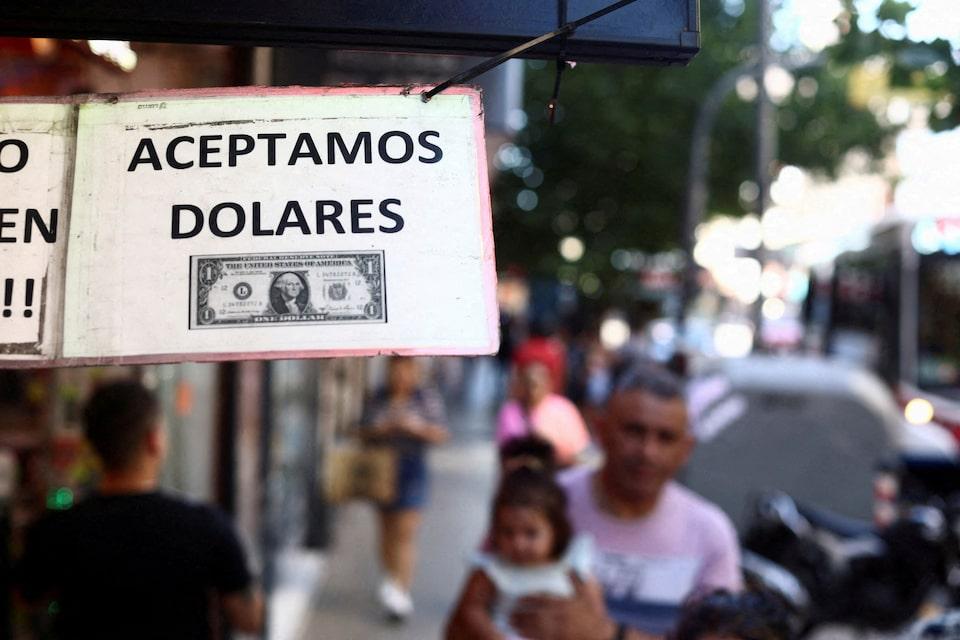
June 4 (Reuters) - Companies in Argentina are set to face challenges related to politics, the economy and a surge of competitors over the next three years, a poll by consultancy EY showed on Wednesday. WHY IT'S IMPORTANT The Trump administration has focused on international relations through changes in its tariff policy, which adds additional complexity and uncertainty to global conditions, according to the report. Sign up here. KEY QUOTES "Generally, Argentina has found itself, until now, less impacted than other regions such as Asia or Europe," the report said. "Argentine businesses prioritize operational improvements, productivity and costs, growth in market share, technology and digital transformation, strategy, and business transformation and innovation," the EY report said. BY THE NUMBERS Changes in demand, consumer preference and behavior were named as challenges by 27% of respondents, while 26% named business risks and 21% named global economic conditions as significant challenges in the coming years. Around 49% of executives said they expected relations with the U.S. to be good or very good, while 51% expect relations to range from neutral to very bad. Respondents consisted of over 1,700 top executives and directors from 18 countries, while 150 were Argentine. CONTEXT The influx of competitors comes as another study recently showed investment in Latin American startups growing significantly, including in Argentina. https://www.reuters.com/world/americas/economy-politics-fresh-competitors-pose-challenges-argentine-businesses-2025-06-04/
2025-06-04 15:29
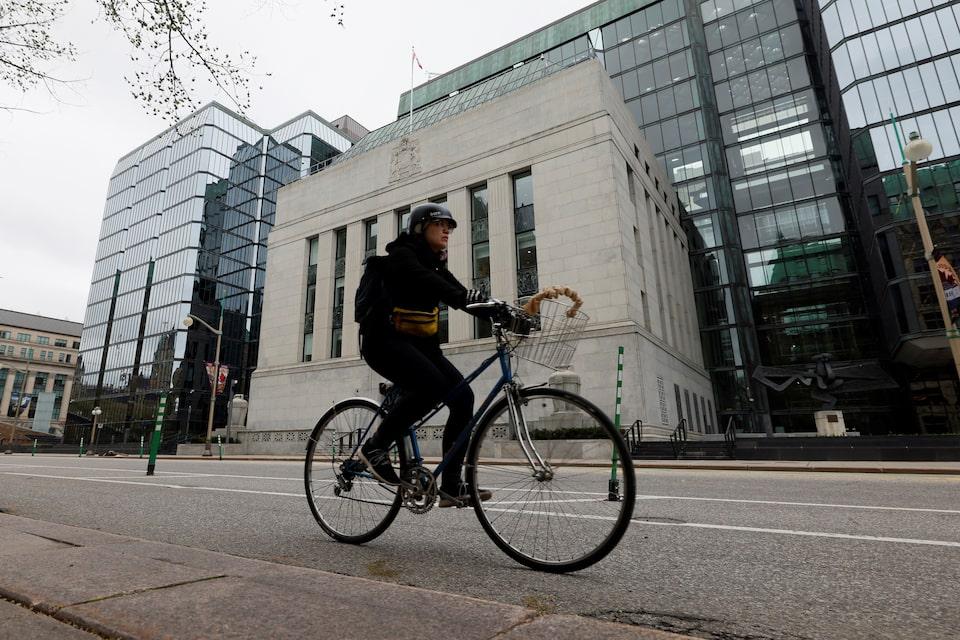
BoC holds rate due to U.S. trade policy uncertainty Macklem cites U.S. tariffs as major economic headwind Canadian dollar rises, inflation concerns persist Higher goods prices linked to trade disruption, Macklem notes OTTAWA, June 4 (Reuters) - The Bank of Canada on Wednesday held its key benchmark rate at 2.75%, citing the need to probe the effects of U.S. trade policy, but said another cut might be necessary if the economy weakened in the face of tariffs. The decision marks the second time in a row that the central bank has remained on the sidelines after an aggressive cutting cycle which shrunk rates by 225 basis points over nine months. Sign up here. "The trade conflict initiated by the United States remains the biggest headwind facing the Canadian economy," Governor Tiff Macklem told a news conference, describing U.S. trade policy as highly unpredictable. "There was a clear consensus to hold policy unchanged as we gain more information," he said. U.S. President Donald Trump on Wednesday doubled the tariff on imports of Canadian steel and aluminum to 50%. The bank says it is weighing upward pressure on inflation from higher prices and downward pressure from sluggish growth. Before the next BoC decision in July, there will be two more months' of inflation data and one GDP data. "On balance, members thought there could be a need for a reduction in the policy rate if the economy weakens in the face of continued U.S. tariffs and uncertainty, and cost pressures on inflation are contained," he said, in his opening remarks. Economists are expecting there could be between two and three more cuts this year and the final rate by the end year would likely end around 2%. "July looks more promising for a quarter point ease if, as we expect, the jobless rate continues to move higher, and inflation in items not subject to tariff pressures eases off a bit," said Avery Shenfeld, managing director and chief economist at CIBC in a note. Currency swap markets bets showed that the odds of another hold on July 30 were around 55%. The July decision will also be accompanied by the bank's monetary policy report. The Canadian dollar firmed further and was trading up 0.14% to 1.3698 to the U.S. dollar or 73 U.S. cents. Canada's annual inflation rate fell to 1.7% in April due to a drop in energy prices, but closely tracked core measures of inflation rose above the bank's target range of 1% to 3% in the same month. "Higher core inflation can be partly attributed to higher goods prices, including food, and may reflect the effects of trade disruption," Macklem said. Macklem said recent surveys showed consumers were bracing for higher prices and many businesses say they intend to pass on tariff costs. Lingering uncertainty on the impact of tariffs, the outcome of trade negotiations and new trade actions means the bank will be less forward looking, Macklem said, repeating his comments from April. In April, the bank had provided two scenarios for economic growth under tariffs where the second assumed a global trade war and recession. Macklem said since the scenarios were issued, the concerns of the economy tilting towards second has reduced to some extent. First-quarter growth was better than expected but the business investment and domestic spending were largely subdued. Economists predict this trend is likely to continue, and Macklem said second quarter growth would be substantially weaker. https://www.reuters.com/world/americas/bank-canada-holds-key-rate-steady-says-future-cut-is-possible-2025-06-04/
2025-06-04 14:48
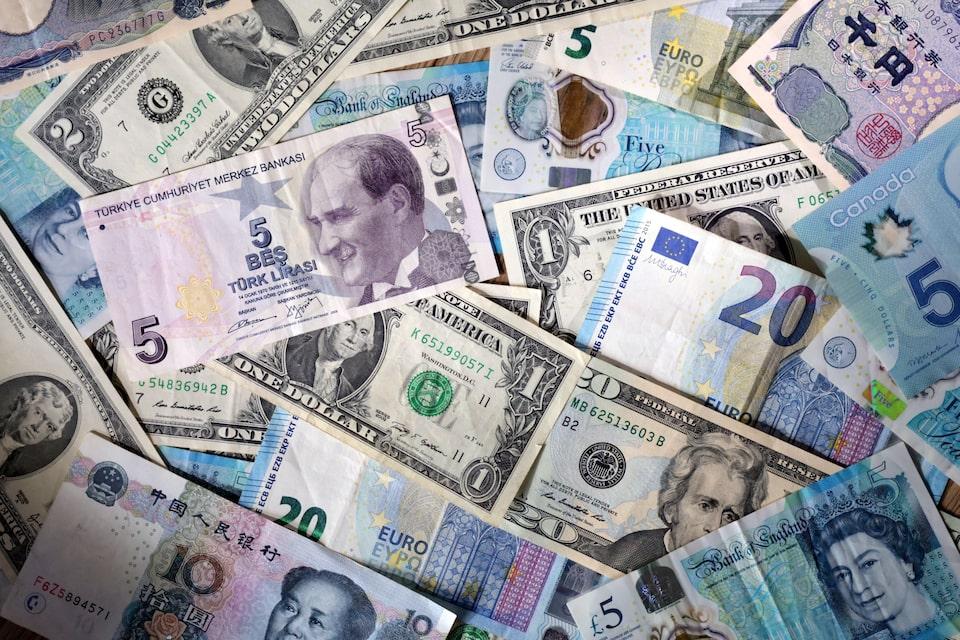
BENGALURU/JOHANNESBURG, June 4 (Reuters) - Most emerging market currencies will hold the gains they have made this year or extend them against a retreating dollar in the next six months as traders ditch the U.S. exceptionalism trade that fuelled the greenback's dream run, a Reuters poll of FX strategists found. At the start of the year, emerging market currencies looked set for a rough ride on expectations of U.S. economic strength and delayed Federal Reserve interest rate cuts as well as trade tensions. Sign up here. But they have since defied expectations as U.S. President Donald Trump's broader-than-expected but erratically implemented tariff together with a deteriorating fiscal outlook have sparked a flight from the dollar and U.S. assets. That is expected to continue, with more than half the currencies polled forecast to trade in tight ranges or gain, while the rest were expected to give back only a small portion of this year's strong gains, according to a May 30–June 4 poll of more than 50 foreign exchange strategists. "The path of least resistance is a mildly weaker dollar at the moment," said Christopher Turner, head of FX strategy at ING. "We think (the decline) will be sort of modest and gradual and that should keep the mindset for investors to buy EM currencies on dips and that's kind of what we're seeing at the moment." Separately, the dollar has become a preferred funding currency as Trump's trade war fuels recession fears and outflows from U.S. assets. The EM carry trade - borrowing in low-yielding currencies to invest in higher-yielding EM ones - has long attracted investors chasing returns. High-yielders like the South African rand and Brazilian real are up around 6.0% and 10.0% respectively this year. The real was predicted to lose only about 2.0%, while the rand is likely to trade in a tight range over the next six months. "I think the trend for emerging market currency outperformance can continue in the second half of this year, but there are downside risks to be wary of as well," said Lee Hardman, senior currency economist at MUFG, referring to trade disruption and the potential hit to global growth. The Turkish lira, the weakest-performing emerging market currency so far this year, is projected to soften by another 8.0% from 39 per dollar to 42.8/dollar over the next six months. In Asia, the heavily managed Chinese yuan is expected to stay rangebound despite widespread concerns about weak demand in its economy, and a standoff with Washington over tariff policy and export controls. The Indian rupee , Korean won and Thai baht are all expected to gain just less than 1% by the end of November, pointing to steady but modest appreciation. "The big risk we see short-term for emerging market currencies is the risk of a turnaround in dollar sentiment," said Nick Rees, head of Macro Research at Monex Europe. "We do expect longer-term depreciation, but by the same token, we think the dollar looks too cheap on a fundamentals basis right now," added Rees. (Other stories from the June Reuters foreign exchange poll) https://www.reuters.com/world/china/most-emerging-market-currencies-set-hold-gains-2025-06-04/
2025-06-04 14:04
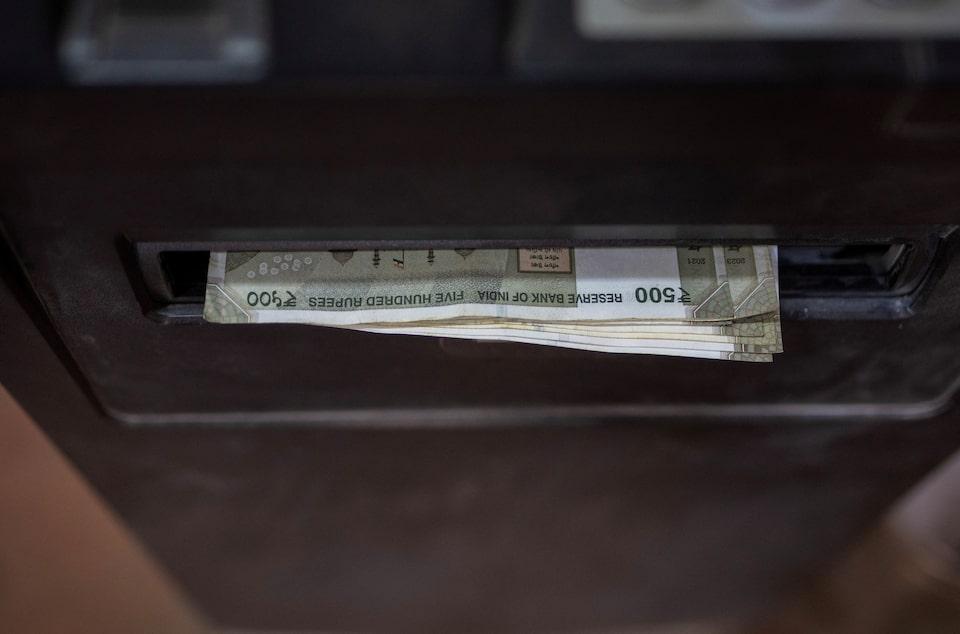
BENGALURU, June 4 (Reuters) - The Indian rupee will eke out very modest gains this year, trailing most of its Asian peers as the U.S. dollar retreats, according to a Reuters poll of foreign exchange strategists. A partially convertible currency, the rupee has barely made any advances against the greenback this year, placing it among the worst performers in Asia. It has not received much support from news of unexpectedly strong growth in the last quarter, either. Sign up here. The U.S. dollar has been knocked off its perch over concerns about U.S. President Donald Trump's erratic tariff policy and more recently because of a ballooning fiscal deficit after the House of Representatives passed a sweeping tax cut and spending bill. Most strategists in the May 30–June 4 Reuters poll did not expect the rupee to make any substantial gains from here, despite widespread expectations for a greenback decline over the coming months due to falling demand for dollar-denominated assets. Over the next three months, the rupee was forecast to gain about 0.8%, trading at 85.25 per dollar by end-August, and then trade at 85.10 in six months and 85.25 in a year, the poll of 41 FX strategists showed. As of Wednesday, the rupee was down roughly 0.3% for the year against the greenback, while regional peers such as the Korean won, Thai baht, Malaysian ringgit and Philippine peso all gained over 4%. That tepid outlook comes even as Asia's third-largest economy posted robust 7.4% growth in the January–March quarter, far exceeding forecasts and marking the fastest rise since early 2024. "The rupee is on somewhat stable footing right now and is likely to hold steady, especially in a weak dollar environment," said Dhiraj Nim, FX strategist at ANZ. "Q1 GDP came in much stronger than expected, adding upside risk to India's growth story. But in any global risk-off scenario, capital tends to seek safety. And I don't think India is where global capital can find safety." The Reserve Bank of India (RBI) is expected to cut interest rates by 25 basis points to 5.75% on Friday and by another quarter point to 5.50% later in the year. But the cumulative 100 basis points of cuts expected is one of the shallowest campaigns in over a decade. ANZ's Nim also said the RBI is likely intervening intermittently in the currency market to keep rupee volatility in check. Having already committed to selling billions of dollars through derivatives contracts in the future, the RBI is expected to buy back substantial amounts of U.S. dollars to maintain its foreign exchange reserves, currently around $693 billion. These dollar purchases are expected to put additional pressure on the rupee, which has fallen over 2% since its near seven-month high on May 2, limiting its ability to strengthen further. "We expect the rupee to underperform peers even as the dollar remains under pressure," wrote Mitul Kotecha, head of FX and EM macro strategy Asia at Barclays. "Following the end of Shaktikanta Das' term as RBI governor, we had noted a regime change for the INR, as the currency transitions to a more flexible trading range, while resuming its long-term depreciation trend. We believe the recent bout of INR strength...is unlikely to be sustained." (Other stories from the June Reuters foreign exchange poll) https://www.reuters.com/markets/currencies/rupee-gain-modestly-lag-most-asian-peers-despite-strong-gdp-growth-2025-06-04/
2025-06-04 13:35
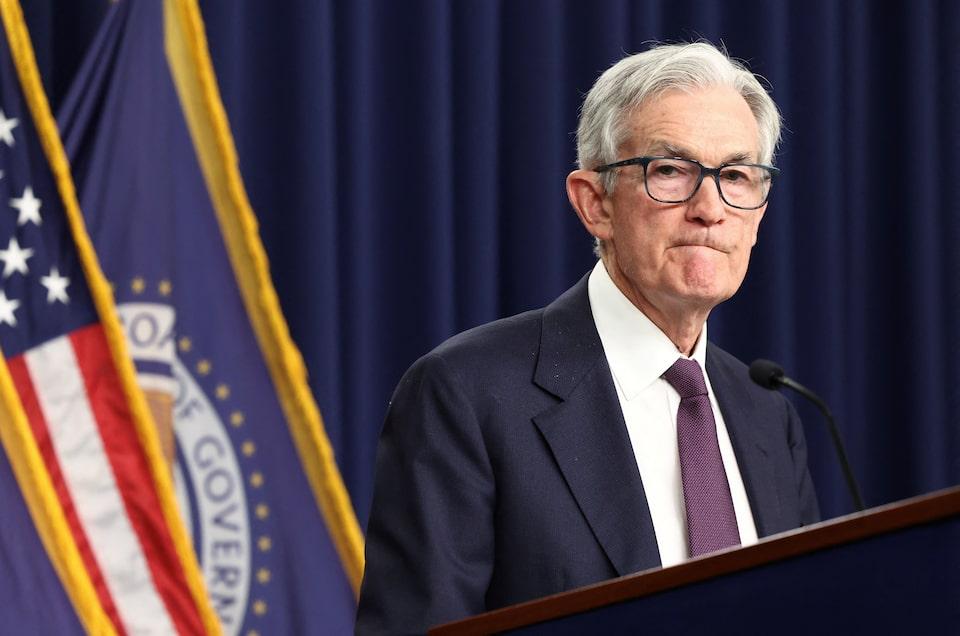
June 4 (Reuters) - U.S. President Donald Trump on Wednesday redoubled his calls for Federal Reserve Chair Jerome Powell to lower interest rates, noting that payroll processing firm ADP reported that job creation slowed in May. "ADP number out. 'Too Late' Powell must now lower the rate. He is unbelievable. Europe has lowered nine times," Trump said in a Truth Social post. Sign up here. ADP reported on Wednesday that U.S. private payrolls increased far less than expected in May, increasing by only 37,000 jobs last month after a 60,000 rise in April that was revised downward. Economists polled by Reuters had forecast private employment increasing 110,000 following a previously reported gain of 62,000 in April. Wednesday's ADP data came ahead of a more comprehensive employment report that will be released on Friday by the Labor Department's Bureau of Labor Statistics. Trump, a Republican, has hammered Powell for months in often personal attacks, with his calls for the Fed chair's resignation weighing on U.S. stocks and financial markets. Trump's repeated attacks have raised questions about the continued independence of the U.S. central bank under the Trump administration, although the U.S. president last month said he would not remove the Fed chair before his term ends in May 2026. https://www.reuters.com/world/us/trump-says-feds-powell-must-lower-interest-rate-truth-social-post-2025-06-04/
2025-06-04 13:10
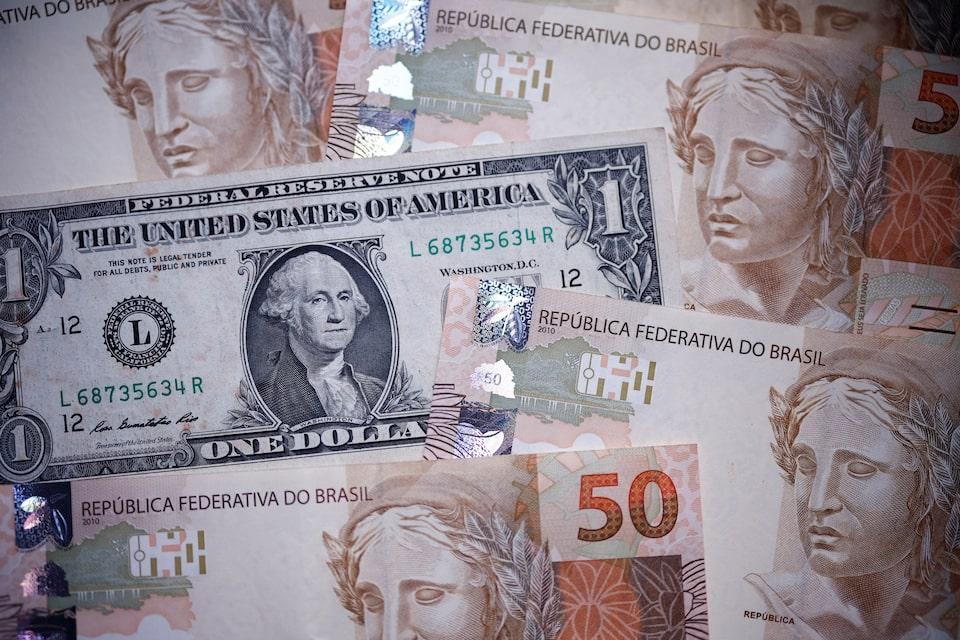
BUENOS AIRES, June 4 (Reuters) - Brazil's real currency is expected to trade relatively steady in coming months, restrained by concerns over a deterioration in the country's external accounts, a Reuters poll showed. The real , is approaching the mid-year mark in better shape than expected at the start of 2025, with support from higher local interest rates and a weaker U.S. dollar globally. Sign up here. But investor doubts over the ability of Latin America's largest economy to keep funding its current account gap have added recently to concerns about the fiscal deficit and how to fix it. In 12 months, the local currency is forecast to change hands near its value on Tuesday of 5.64 per dollar, losing only 1.9% to 5.75, according to the median estimate of 27 foreign exchange analysts polled May 30 to June 3. The latest consensus projection for the end of June at 5.70 per dollar is 4.7% stronger than the 5.97 rate forecast in a January poll, when the currency was still recovering from a bad spell at the end of 2024. Itau Unibanco analysts cited Brazil's favorable interest rate spread and hopes of progress in trade talks between the United States and China as factors underpinning the real. "However, a (potential) trade agreement between the U.S. and other countries increases the chance of keeping the so-called American exceptionalism in place", the bank's economists added. "This, combined with domestic fiscal uncertainties and unfavorable external accounts dynamics, limits more positive scenarios for the currency." Challenges for Brazil's exporters include a decrease in poultry shipments broadly due to an avian influenza outbreak as well as lower Chinese soybean imports. Of 16 respondents to an extra question on risks to estimates for the real in the coming year, six tilted towards a stronger currency, five expected it to weaken and another five expressed neutral views. For the Mexican peso , five of 12 respondents expected it to strengthen, four saw risks of weakening, and three were neutral. According to the poll, the peso is set to depreciate 6% in 12 months to 20.46 per U.S. dollar from 19.23 on Tuesday. In Argentina, the peso is expected to trade at 1,440 per dollar in 12 months, just below the expected upper limit of its official adjustable trading band, set in April at 1,400 plus a 1% monthly increase. So far this year, the real has gained 9.6%, the Mexican peso is up 8.3% and Argentina's currency has lost 13% - much less than some feared after the country loosened its capital controls. (Other stories from the June Reuters foreign exchange poll) https://www.reuters.com/world/americas/brazil-currency-seen-flat-near-term-restrained-by-trade-worries-2025-06-04/