2025-06-04 11:31
BRUSSELS, June 4 (Reuters) - The European Commission and the European Central Bank gave Bulgaria the go-ahead on Wednesday to adopt the euro currency from the start of 2026, making Bulgaria the 21st country to join the single currency area. In a "convergence report" describing how Bulgaria's economy dovetails with the rest of the euro zone, the Commission said Bulgaria met the formal criteria needed to adopt the currency now used by 347 million Europeans in 20 countries. Sign up here. "Today, the European Commission concluded that Bulgaria is ready to adopt the euro as of 1 January 2026 – a key milestone that would make it the twenty-first Member State to join the euro area," the Commission said in a statement. The Commission also looked at whether Bulgaria's economy and markets are integrated with the rest of the EU, as well as the trends in the country's balance of payments. In a separate report, the ECB also said Bulgaria was ready. "I wish to congratulate Bulgaria on its tremendous dedication to making the adjustments needed," ECB Executive Board Member Philip Lane said in a statement. Bulgaria has been striving to switch its lev currency to the euro ever since it joined the European Union in 2007. But after such a long wait, many Bulgarians have lost the initial enthusiasm with 50% now sceptical about the euro, according to a Eurobarometer poll in May. Some Bulgarians fear the currency switch will drive up prices. "Ensuring price transparency and combating abusive price increases will require a special effort," EU Economic Commissioner Valdis Dombrovskis told a news conference. "Previous practices and data from other euro area countries demonstrate that this is perfectly achievable, with price increases resulting from previous changeovers having been minimal," he said. Becoming a member of the euro zone, apart from using euro notes and coins, also means a seat at the European Central Bank's rate-setting Governing Council. The positive recommendation from the EU executive arm means that EU leaders will have to endorse it later in June. EU finance ministers will then fix the conversion exchange rate for the Bulgarian lev into the euro in July, leaving the rest of the year for the country to technically prepare for the transition. MEETING THE CRITERIA To get the positive recommendation, Bulgaria had to meet the inflation criterion, which says that the euro-candidate cannot have consumer inflation higher than 1.5 percentage points above the three best EU performers. In April, the best performers were France with 0.9%, Cyprus with 1.4% and Denmark with 1.5%, which put Bulgaria with its 2.8% just within the limit. The euro candidate country also cannot be under the EU's disciplinary budget procedure for running a deficit in excess of 3% of GDP. Bulgaria meets this criterion with a budget deficit of 3.0% in 2024 and 2.8% expected in 2025. The country's public debt of 24.1% of GDP in 2024 and 25.1% expected in 2025 is well below the maximum level of 60%, and its long-term interest rate on bonds is well within the 2 percentage point margin above the rate at which the three best inflation performers borrow. Finally, Bulgaria had to prove it had a stable exchange rate by staying within a 15% margin on either side of a central parity rate in the Exchange Rate Mechanism II. This was easily done because Bulgaria has been running a currency board that fixed the lev to the euro at 1.95583 since the start of the euro currency in 1999. Bulgaria's euro adoption will come three years after the last euro zone expansion, when Croatia joined the single currency grouping at the start of 2023. The accession of Bulgaria into the euro zone will leave only six of the 27 EU countries outside the single currency area: Sweden, Poland, Czech Republic, Hungary, Romania and Denmark. None of them have any immediate plans to adopt the euro either for political or because they do not meet the required economic criteria. https://www.reuters.com/markets/currencies/eu-gives-bulgaria-green-light-adopt-euro-start-2026-2025-06-04/

2025-06-04 11:22
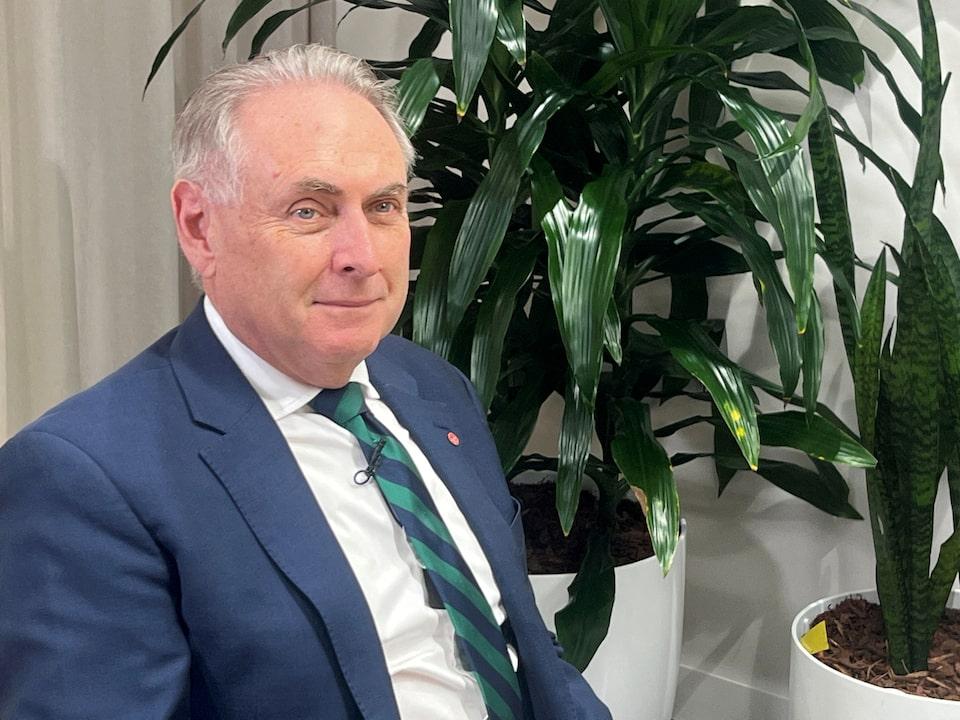
SYDNEY, June 4 (Reuters) - Australia and the European Union have revived talks for a sweeping free trade agreement, after Australia's trade minister Don Farrell met with the European Commissioner for Trade Maroš Šefčovič in Paris on Wednesday. The meeting on the sidelines of the OECD Ministerial Council Meeting comes amid a Wednesday deadline by the United States for countries to send their best offer in trade negotiations. Sign up here. Farrell met the U.S. Trade Representative Jamieson Greer in Paris on Tuesday, after Australia criticized U.S. President Donald Trump's move to double steel tariffs to 50% from 25% and called for the removal of a 10% tariff on all its exports. "Both Australia and the EU recognize that now is the time to strengthen our economic partnership, and we’re working through the remaining issues to try and finalize the deal," Farrell told Reuters in a statement. A pact with the region was "about building economic resilience in a rapidly changing global environment," said Farrell. Agriculture topped a list of outstanding issues for an EU deal that officials will work on, although Australian officials could not say when the pact would be agreed. Australia has previously offered to put the removal of its luxury car tax on the table but wants greater access for lamb and beef exports to Europe. The advantages of an EU deal include increased investment, stronger supply chain links, education ties and export opportunities, said Farrell. https://www.reuters.com/markets/commodities/australia-eu-determined-seal-trade-deal-talks-revived-farrell-says-2025-06-04/
2025-06-04 11:01
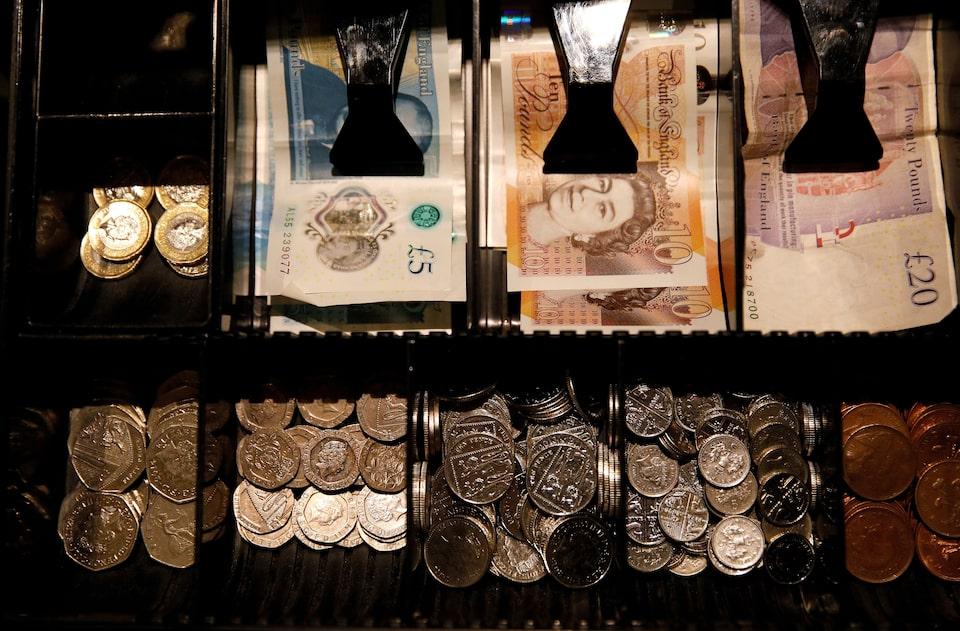
June 4 (Reuters) - Sterling firmed against the dollar on Wednesday, as investors were relieved the United Kingdom was not in the crosshairs of U.S. President Donald Trump's latest tariff escalation, while upbeat economic data also buoyed sentiment. The U.S. doubled duties on steel and aluminium imports to 50% but exempted the UK. Analysts were sceptical, however, about what room there might be to do away with the existing 25% duties through the agreement signed last month. Sign up here. "UK steel exports were supposed to incur no tariff, so Trump's abrupt change may cause UK negotiators to question the value of 'agreements' made," said Paul Donovan, chief economist at UBS Global Wealth Management. The mood among global investors was one of caution ahead of an anticipated call between Trump and his Chinese counterpart which could determine where the world's two largest economies stand with regard to trade relations. Wednesday is also the deadline the Trump administration has given its trade partners to offer their best deals to avoid steep levies on goods imported into the U.S.. The pound firmed 0.12% and was last at $1.353, while against the euro it was last flat and bought 84.11 pence by 0947 GMT. Sterling has outperformed the greenback alongside its developed market peers, including the euro and Swiss franc , as Trump's erratic policies have encouraged investors to look outside the U.S. for opportunities and the UK is perceived to be better insulated from trade uncertainty. Tuesday's gilt auctions also indicated strong investor demand for the country's longer-dated bonds, a stark contrast to similar sales in the U.S. and Japan last month. Still, investors will closely monitor how Finance Minister Rachel Reeves goes about funding the government's proposed infrastructure plans. Yields on 30-year and 40-year gilts were up about 2 basis points each on Wednesday. Meanwhile, a survey showed Britain's services sector returned to tepid growth last month, with the Bank of England expecting deteriorating business confidence as a consequence of global uncertainty to weigh on growth in the coming months. Traders are pricing in that the central bank will lower borrowing costs by about 37 basis points by the end of this year, according to data compiled by LSEG. https://www.reuters.com/world/uk/sterling-edges-up-uk-avoids-higher-us-metals-tariffs-2025-06-04/
2025-06-04 10:54
LONDON, June 4 (Reuters) - What matters in U.S. and global markets today Despite all the trade and geopolitical tensions, markets have a spring in their step today, due to hopes that U.S. bilateral tariff deals will soon emerge, expectations that interest rates will fall in Europe, and signs of economic resilience and tech demand in the U.S. Sign up here. I discuss all this and the rest of today's market news below. Plus, check out today's column, where I explain why the euro's potential growth in reserve holdings could generate significant capital flows, even if it doesn't dethrone the dollar as the dominant global currency. Today's Market Minute * The U.S. tariff rate on most imported steel and aluminum doubled on Wednesday as President Donald Trump ratchets up a global trade war on the same day he expects trading partners to deliver their "best offer" in bids to avoid punishing import tax rates on other goods from taking effect in early July. * Billionaire Elon Musk plunged on Tuesday into the congressional debate over Trump's sweeping tax and spending bill, calling it a "disgusting abomination" that will increase the federal deficit. * Trump is set to use emergency powers and slash legal requirements relating to the Defense Production Act to lift U.S. production of critical minerals and weapons, according to a document seen by Reuters. * It is widely believed that investors around the world have a disproportionately high exposure to U.S. assets, an imbalance that could roil U.S. markets if corrected. But Reuters columnist Jamie McGeever explains why those fears may be overblown. * If 'American exceptionalism' truly is coming to an end, the key question for many investors is where capital may flow now. While Europe may be the obvious destination, Manishi Raychaudhuri, CEO of Emmer Capital Partners, argues that relative value metrics may favour emerging Asia. Global stocks hit record highs MSCI's all-country equity index (.MIWD0000PUS) , opens new tab hit a record high on Wednesday, a whopping 23% surge from the intraday trough of April 7 hit after the initial U.S. tariff sweep. The world index is now almost 6% higher for the year. Wall Street continues to lag, but the S&P 500 (.SPX) , opens new tab is positive again for the year and the Nasdaq is within a whisker of breaking even in 2025. Stock index futures are up again ahead of today's bell, with stocks in Europe and Asia also rising smartly. By contrast, U.S. Treasuries and the dollar (.DXY) , opens new tab both fell back, with the long bond yield now back near 5% and the euro briefly re-capturing $1.14 against the greenback. But is the coast really that clear for stocks? Part of the week's seeming optimism hinges on hopes that the fast approaching deadline on the 90-day pause in U.S. 'reciprocal' tariffs will focus minds and deliver deals. Despite the hoopla over a UK agreement last month, no deals have been signed and sealed so far. Central to hopes of some trade detente is the planned phone call between President Donald Trump and China's President Xi Jinping. The White House claims it's happening this week, though it's unclear exactly when. And Trump posted on Wednesday that Xi was "very tough and extremely hard to make a deal with." Washington officially doubled its tariffs on steel and aluminum imports on Wednesday, exempting Britain for now. The Trump administration also expects negotiating countries to make "best offers" by today to avoid additional import levies kicking back in next month. Maros Sefcovic, the trade negotiator for the European Union, met U.S. Trade Representative Jamieson Greer in Paris on Wednesday, with the 27-nation bloc set to make its case for cutting or eliminating threatened tariffs on European imports. But concern about auto sector disruption from the U.S.-China trade standoff has also risen by several notches. Global automakers joined U.S. counterparts to complain that restrictions by China on exports of rare earth alloys, mixtures and magnets could cause production delays and factory outages without a quick solution. Trump, meantime, is set to use emergency powers and slash legal requirements relating to a law aimed at lifting U.S. production of critical minerals and weapons, according to a document seen by Reuters. But despite the very real disruption in manufacturing, there were other signs that the wider U.S. economy is weathering the storm reasonably well, with job openings unexpectedly increasing in April as a week of labor market updates unfolds. That helped Wall Street stocks move higher on Tuesday, but the rally is mostly being driven by Big Tech once again. Information technology stocks (.SPLRCT) , opens new tab rose 1.5%, boosted by 2.9% gains by Nvidia (NVDA.O) , opens new tab, which is back to being the world's most valuable firm. Chipmaker Broadcom (AVGO.O) , opens new tab hit a fresh record high after the company said it has begun to ship its latest networking chip. Service sector survey readouts for May are due later, and European equivalents out earlier showed upward revisions to earlier flash readings. European stocks and the euro were higher ahead of the expected European Central Bank rate cut on Thursday, now seen as a done deal as euro zone inflation fell back below target in May. Markets reckon there's a 50-50 chance the Bank of Canada also cuts rates later today. The Canadian dollar held firm ahead of the decision. Elsewhere, South Korea's stocks jumped almost 3% and the won rallied 1% after the victory of liberal candidate Lee Jae-myung in the presidential election there. In today's column, I consider how a global reserve holdings shift in favor of the euro could generate massive amounts of additional investment in euro assets, even if the euro doesn't supplant the dollar. Chart of the day Switzerland is flirting with deflation yet again as a supercharged Swiss franc feeds off rising global tensions and depresses import prices. Swiss consumer prices fell 0.1% on an annual basis in May, the first negative print for more than four years. The Swiss National Bank is now widely expected to cut its main interest rate back to zero later this month, with markets pricing a one-in-three chance of policy rates returning to negative territory, where they languished for eight years until 2022. The SNB refuses to rule out a return to negative rates and may also have to resume heavy currency intervention to cap the franc to boot. The franc's nominal effective exchange rate index is up 5% since February and has appreciated by almost 30% over the past six years. Today's events to watch * Bank of Canada policy decision (9:45 AM EDT) * U.S. May private sector payrolls from ADP (1:15 PM EDT), May service sector business survey from ISM (10:00 AM EDT) * Federal Reserve publishes Beige Book on economic conditions. Atlanta Fed President Raphael Bostic speaks * NATO Secretary General Rutte convenes NATO Defence Ministers meeting in Brussels * European Commission President Ursula von der Leyen speaks in Brussels * U.S. corporate earnings: Dollar Tree Opinions expressed are those of the author. They do not reflect the views of Reuters News, which, under the Trust Principles , opens new tab, is committed to integrity, independence, and freedom from bias. https://www.reuters.com/business/finance/global-markets-view-usa-2025-06-04/
2025-06-04 10:17
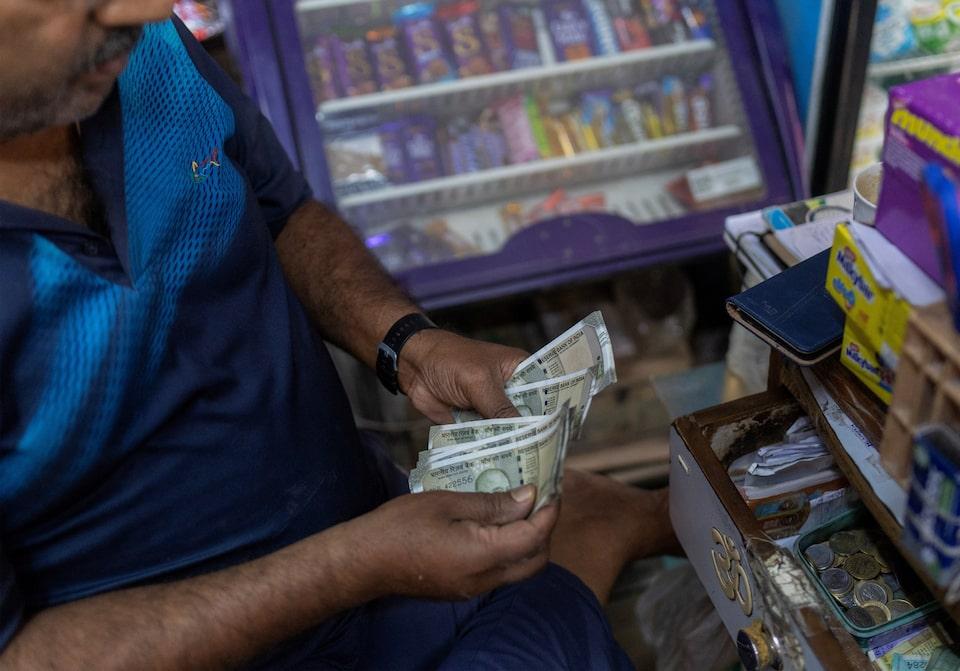
MUMBAI, June 4 (Reuters) - The Indian rupee declined for the sixth time in seven sessions on Wednesday, slipping briefly past 86 to the U.S. dollar, as traders unwound bullish positions amid persistent demand for the greenback. The rupee weakened to 86.0225 on Thursday before recovering marginally to end the day 0.4% lower at 85.90. Sign up here. The Indian currency has declined nearly 1.5% from a high of 84.78 it touched last Monday, making it one of the worst-performing Asian currencies over this period. "There is no real let-up in dollar demand from corporates and it would seem that dollar/rupee shorts are done for now, both in onshore spot and in the non-deliverable forward market," a currency trader at a bank said. Speculators are no more inclined to sell the dollar/rupee pair on rallies, unless "things improve" for the rupee, he said. The rupee has been underperforming regardless of what the dollar index or Asian peers are doing. "Frankly, most of us didn’t expect this," the trader said, forecasting more losses for the rupee in the coming days. Forex advisors are urging clients with near-term dollar payables to exercise caution. The risk-reward favours "proactive cover" rather than waiting for dips on dollar/rupee, Kunal Kurani, vice president at Mecklai Financial said. The dollar index was marginally higher on Wednesday. Market focus is on the May U.S. non-farm payrolls report on Friday, which could influence expectations around the Federal Reserve’s policy path. Asian currencies were mostly weaker awaiting updates on U.S. trade deals. President Donald Trump’s administration has set a Wednesday deadline for revised trade proposals from key partners. A call between Trump and Chinese President Xi Jinping is reportedly in the works amid mutual accusations of backtracking on tariff rollback commitments. https://www.reuters.com/world/india/rupee-buckles-under-position-unwinding-dollar-demand-builds-2025-06-04/
2025-06-04 09:32
A PM must be nominated to tackle EU's largest budget deficit President focuses on spending cuts vs tax hikes to curb deficit Failure to trim gap risks EU funds block, ratings downgrade Far-right party leads opinion surveys by wide margin BUCHAREST, June 4 (Reuters) - Romania must present a credible plan to lower the EU's highest budget deficit by the end of June, President Nicusor Dan said on Wednesday, as many state spending cuts being discussed would need at least six months to be enacted. Centrist Dan, who won a divisive presidential vote last month at the expense of the hard right, must nominate a prime minister who would be able to reduce the deficit from last year's whopping 9.3% of output to avoid a ratings downgrade to below investment level. Sign up here. Dan and the four pro-European parties who are engaged in talks to form a ruling majority are reluctant to enforce unpopular tax hikes that may boost the hard right, which controls around a third of parliament, focusing instead on cuts to state spending. But the EU and NATO member state is racing against the clock to announce credible measures to lower the deficit below the EU's 3% of output limit over seven years, or risk having access to EU funds blocked and its already high borrowing costs spiral following a downgrade. "The problem is that we need at least six months to enact many of these technical issues (spending cuts)," Dan told a news conference. "But a package of laws that gives the financial sector the guarantee that we are serious about lowering the deficit must come by June 30." "We have been paying for a medium pizza but eating a large pizza for years, someone must pay for the difference." While his comments opened the way for the tax hikes analysts and ratings agencies say are needed, Dan remained resistant to imposing a higher value-added tax, seen as the quickest fix to boost budget revenue. A London source with knowledge of talks between Romania, the European Commission and ratings agencies, said the fiscal correction must be three percentage points, with 2.5 percentage points coming from higher tax revenue and 0.5 point from spending cuts. Dan, who said he saw a new government formed in two weeks, said he expected a first draft of measures agreed by parties to come by Monday. Romania's growth has steadily slowed since a post-pandemic surge in 2021, and Brussels forecasts a budget deficit of 8.6% this year and 8.4% next year, well above the 7% target for 2025 outlined in a seven-year plan approved by the Commission. Romania is rated on the lowest investment rung by S&P, Fitch and Moody's, with a "negative" outlook. An opinion survey released this week by pollster INSCOP Research showed the hard right opposition Alliance for Uniting Romanians (AUR) would win 38% of votes in an election, whereas the Social Democrats, currently the largest party in parliament, would get 17%. https://www.reuters.com/markets/europe/romania-must-approve-credible-plan-lower-deficit-by-end-june-president-says-2025-06-04/