2025-06-04 06:40
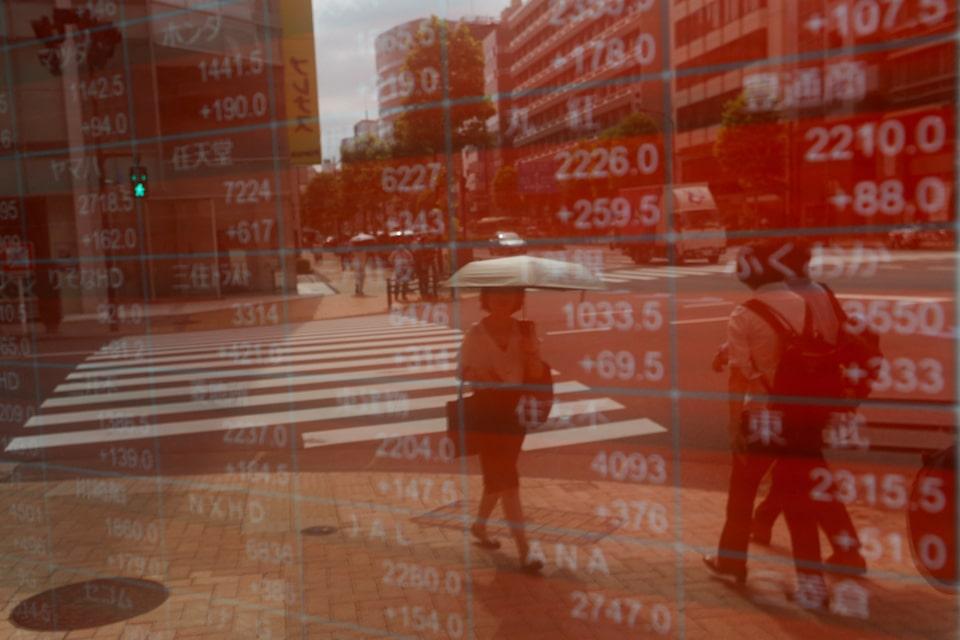
June 4 (Reuters) - Barclays raised its year-end price target for the S&P 500 (.SPX) , opens new tab index to 6,050 from 5,900 on Wednesday, citing easing trade uncertainty and expectations of normalized earnings growth in 2026. This follows forecast increases by Goldman Sachs and UBS Global Wealth Management in May, and a similar move by RBC Capital Markets and Deutsche Bank this week. Sign up here. The new target is an upside of about 1.32% to the index's last close of 5,970.37 points. In May, the S&P 500 logged its best monthly performance since November 2023, rising 6.2%, after U.S. President Donald Trump moderated his stance on tariffs, robust corporate earnings, and data showing inflation cooling which helped markets bounce back from April's downturn. The British brokerage also introduced its 2026 earnings per share forecast at $285 and 2026 year-end target of 6,700 for the benchmark index. "After tariff headwinds are absorbed throughout the remaining quarters of FY25, we expect that 2026 will return to a more normalized pace of earnings growth," Barclays strategists led by Venu Krishna said in a note. Tariffs next year are expected to have no additional direct impact compared to this year, though secondary effects on growth and inflation may extend into 2026, the brokerage added. Barclays maintained its 2025 earnings per share forecast at $262, despite ongoing tariff pressures. https://www.reuters.com/business/barclays-lifts-sp-500-year-end-target-6050-2025-06-04/
2025-06-04 06:39
2024/25 organic operating profit -30.5% vs forecast -31.7% 2025/26 profit could fall by high-teens percentage in worst case Joins rivals in scrapping longer term targets PARIS/LONDON, June 4 (Reuters) - French spirits group Remy Cointreau (RCOP.PA) , opens new tab on Wednesday abandoned its 2030 sales growth ambitions, saying tariffs, persistently slow U.S. sales and high levels of uncertainty could derail its plans for this financial year and beyond. The maker of Remy Martin cognac and Cointreau liqueur, which has been grappling with tariffs and sliding sales in its key U.S. and Chinese markets, also reported a smaller than expected 30.5% drop in annual organic operating profit. Sign up here. In a statement, Remy said its 2030 goals were no longer realistic amid uncertainty, a lack of recovery in sluggish U.S. sales and tariffs affecting its cognac in both China and the United States, which could reduce its 2025/26 operating profit by a high-teens percentage in a "worst-case scenario". "Remy Cointreau believes the conditions required to maintain its 2029-2030 targets are no longer in place," it said. Incoming CEO, luxury goods veteran Franck Marilly, would establish his own strategic roadmap, the company continued. Its shares fell almost 3% in early trade. Remy joins peers Diageo (DGE.L) , opens new tab and Pernod Ricard (PERP.PA) , opens new tab in withdrawing sales targets that had become widely seen as overly ambitious as the entire sector endures a sharp slowdown from previous boom years for pricey liquors. But the French company, which makes 70% of its sales from cognac, mostly in the U.S. and China, has suffered more than peers as drinkers in both nations ditch the brandy and both governments have levied tariffs. The withdrawal of targets should come as no surprise, but the extent of the tariff hit outlined by Remy had not been baked in by the market, Jefferies analyst Edward Mundy said. Remy said potential increases in duties could deal a 65 million euro ($74 million) blow to operating profit after mitigation measures. As things currently stand, it expects organic growth in operating profit in the year ended March 2026. Sales would also return to mid-single digit growth this financial year, but in large part thanks to an easier base of comparison versus steep declines in 2024/25, it forecast. Group operating profit for the year ended March 2025 fell 30.5%, versus a 31.7% drop expected by analysts. This was partially offset by 85 million euros of cost cuts. ($1 = 0.8794 euros) https://www.reuters.com/world/china/remy-cointreau-withdraws-its-mid-term-goals-posts-lower-annual-profits-2025-06-04/

2025-06-04 06:20
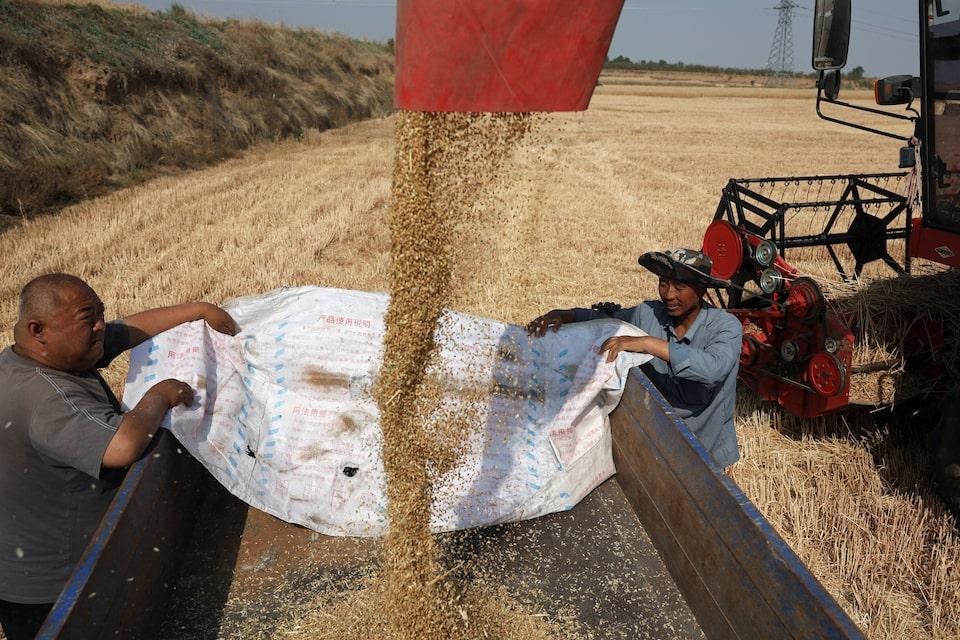
Parts of wheat belt in Shaanxi, Henan hit hard by hot, dry weather Some farmers report harvest at half usual levels Farmers with irrigation systems say yields steady Impact of drought on Chinese wheat imports not yet clear XIANYANG, China, June 4 (Reuters) - About an hour by road northwest of the famed Terracotta Warriors, combine harvesters send out clouds of dust as they work their way through the parched wheat fields of Maqiao village in China's northwestern Shaanxi province. But local farmers like Zhou Yaping say there is little to celebrate. Sign up here. Some of her crop is still tinged with green in a sign it hasn't fully ripened, and she expects she'll get only half the 1,000 kg of wheat her two-thirds of an acre plot usually yields. "I've been growing wheat for over 20 years, and I've never seen a drought this bad," said Zhou, 50, during a late May visit. Parts of China's wheat belt in Shaanxi and Henan provinces have been hit hard by hot, dry weather, with the sun baking the soil into cracked slabs and scorching the wheat before it could ripen. Last month, Shaanxi recorded its highest average temperatures since records began in 1961. While official figures are still some six weeks away, more than a dozen farmers in the area and those they hire to harvest the crop told Reuters of losses and small harvests, down as much as half for some. In some parts of the province, the drought was so bad farmers brought the harvest forward by a week. And while rain finally arrived in recent days, bringing some relief, it has also threatened to disrupt the harvest for those who waited. It is too early to know whether the drought could prompt China to import more wheat, although that would be good news for growers in places including Australia, which expects high end-of-season wheat stocks, partly due to a drop in Chinese imports. Ample wheat stocks and tepid demand have also curbed China's import appetite, traders said. "The drought has had a significant impact on wheat yields in areas with poor irrigation infrastructure, but the overall reduction in output is not expected to be substantial," Rosa Wang at Shanghai agro-consultancy JCI told Reuters. As of May 30, about 60% of the wheat crop in Henan and more than 20% in Shaanxi had been harvested, according to state news agency Xinhua. Conditions vary across the vast agricultural belt. In Henan province, often called China's granary, a farmer surnamed Ma who runs a 50-acre (20.23 hectares) farm in Xinxiang said his output held steady because of irrigation. But damage was clear elsewhere in the province. In Zhumadian, another farmer, named Zhang, said he harvested 1.65 acres of wheat on May 23, more than a week earlier than usual due to the heat. Zhang, who spoke over the phone, said his yield was down 40%, similar to 2023 when floods led to sprouting and blight. "After covering the costs of seeds, harvesting, and ploughing, we just break even with little to no profit," he said. Ma and Zhang declined to share their full names for reasons of privacy. https://www.reuters.com/business/environment/drought-bakes-chinas-wheat-belt-slashing-harvests-some-2025-06-04/
2025-06-04 06:16
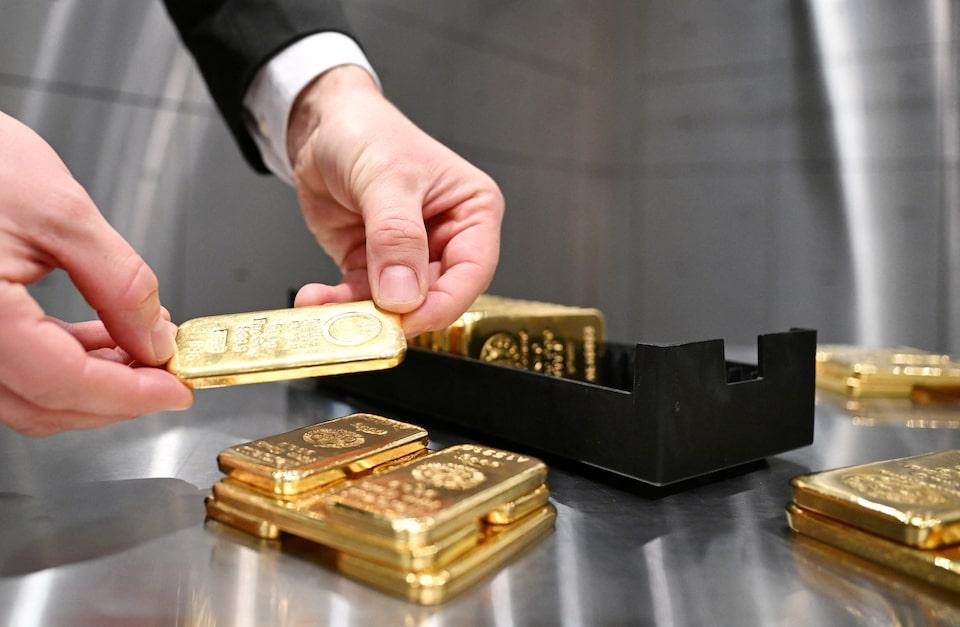
OECD warns of global economic slowdown due to trade war China tells US to get ties back on "right track" Fed officials cautious on policy outlook amid trade uncertainty June 4 (Reuters) - Gold prices steadied on Wednesday as a somewhat strong U.S. jobs data for April offset the lingering uncertainty over U.S.-China trade relations and global economic concerns. Spot gold was stable at $3,351.49 an ounce as of 0609 GMT. U.S. gold futures also held steady at $3,375. Sign up here. "We potentially see dip-buyers coming back into the picture and... things are still uncertain, especially surrounding the trade relationship between China and U.S. and even in EU and U.S. as well," said Kelvin Wong, a senior market analyst, Asia Pacific at OANDA. However, "the JOLTS job data helped sooth some concerns about the potential economic hit on the U.S. economy from tariffs, which is keeping demand for safety assets for gold in check," said Tim Waterer, chief market analyst at KCM Trade. The White House signaled that President Donald Trump and Chinese President Xi Jinping might engage in talks later this week to address the trade disagreements. The U.S. should create the necessary conditions for bilateral relations to get back onto "the right track," China's Foreign Minister Wang Yi told the U.S. ambassador to Beijing. Job openings in the United States rose in April, though layoffs surged to their highest level in nine months, economic data showed, hinting at softening labor market conditions. Global economic concerns deepened after the Organisation for Economic Cooperation and Development (OECD) warned of sharper-than-expected economic slowdown, as the Trump administration's trade policies weigh heavily on the U.S. economy. "(The OECD report) for sure will be another supporting factor to see safe demand being heated up as well from a medium-term perspective," Wong said. Federal Reserve officials reiterated their cautious policy stance, citing risks from trade tensions and economic uncertainty. Gold tends to perform well during economic uncertainty. Elsewhere, spot silver fell 0.3% at $34.40 an ounce, platinum rose 0.3% to $1,076.86 and palladium lost 0.9% to $1,001.42. https://www.reuters.com/world/china/gold-rises-amid-us-china-trade-uncertainty-softer-dollar-2025-06-04/
2025-06-04 06:10
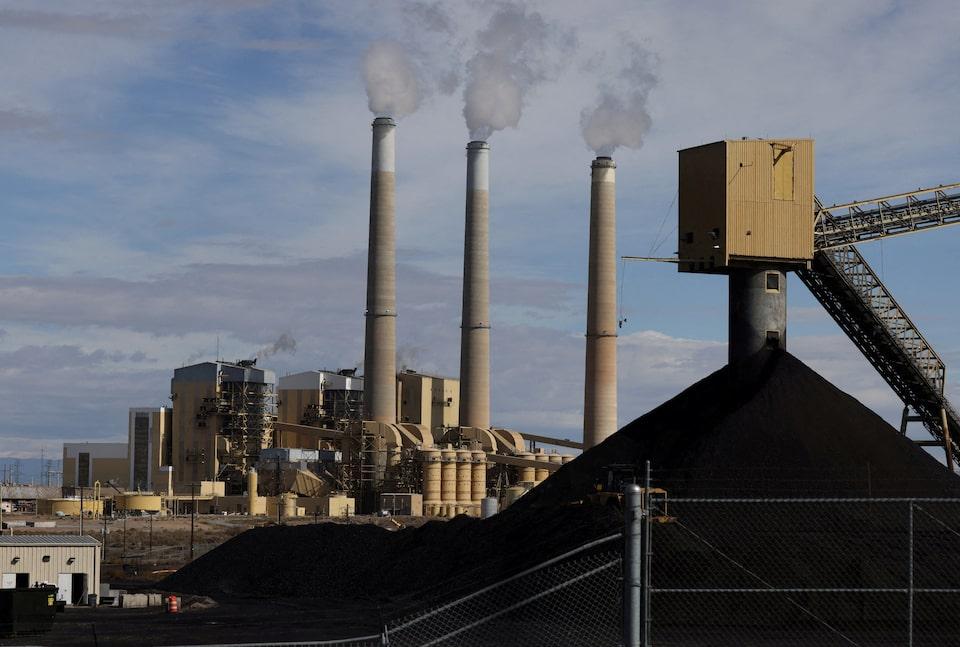
LITTLETON, Colorado, June 4 (Reuters) - U.S. power producers have lifted output from both fossil fuels and clean energy sources to new highs so far in 2025, on the back of steadily rising energy demand from data centers, businesses and households. Average retail electricity prices have risen in tow, and are hovering near record highs in a majority of U.S. states. Sign up here. Below are five charts on U.S. power generation and electricity prices to help keep track of these key trends. POWERING UP Over the first five months of 2025, U.S. power producers lifted total output by 2% from the same months in 2024 to a new record of 69.3 million megawatt hours (MWh), according to data from LSEG. Generation from both clean and fossil fuel energy sources has scaled new highs so far this year, with clean power output rising by 3% and fossil fuel output by 2% from the same months a year ago. The slightly faster growth pace of clean power production has lifted the clean power share of the U.S. generation mix to a new high of 45%, up from 44% for the same months last year. Natural gas remains the primary power source within the U.S. system, and accounted for around 37% of total power production so far this year. However, a sharp jump in gas prices to two-year highs during the opening months of the year spurred generators to cut back on gas use in some areas, leaving overall gas output roughly 4% lower so far this year. To offset lower gas-powered supplies, power firms cranked coal-fired production 18% higher from the January to May 2024 period to the highest in three years. On the clean energy side, output from solar firms jumped by 34% from the same period in 2024 while wind output climbed 2%. Output from both hydro dams and nuclear plants was roughly 1% lower, LSEG data shows. Electricity production trends from January through April broadly matched those of power generation, although clean electricity output outpaced clean power production thanks to a large swell in utility solar generation. Coal and hydro-powered electricity output have also posted strong year-over-year increases so far in 2025, data from Ember shows. PRICE PULL Average commercial retail electricity prices climbed to new highs across several parts of the country during the opening quarter of the year. Of all U.S. states, Hawaii posted the highest average commercial retail electricity price during January to March, according to the U.S. Energy Information Administration. Hawaii's average of 37.6 cents per kilowatt hour (KWh) during the opening quarter of 2025 was actually 9% less than during the same months of 2024 due to lower crude oil prices, but was still more than twice the national average. The lowest electricity prices this year were recorded in North Dakota, which averaged 7.3 cents/KWh during January to March. The U.S. average commercial retail electricity price during the first quarter of 2025 was around 13 cents/KWh, which was around 4% more than in the same quarter in 2024. The state with the largest year-over-year rise in retail electricity costs was Rhode Island (+24% to 25.3 cents/KWh), followed by Connecticut (+22% to 25.15 cents/KWh). RISING TIDE Climbing electricity costs are not just a recent phenomenon, as average U.S. retail prices have posted increases every year since 2021. However, the extent of cost increases varies widely across the country. California, which has ambitious climate policies and faces a sprawling generation network exposed to floods, wildfires and desert conditions, has seen the steepest climb in electricity costs among all states since 2019. Average electricity costs in California during the first quarter of this year were 62% more than during the opening quarter of 2019, EIA data shows. However, several other major U.S. states have also recorded double-digit electricity price hikes over the same period, including New York (+56%), Pennsylvania (+36%) and Florida (+23%), which all have very different power generation markets. And nearly all U.S. states can expect to see further increases in average retail electricity costs in the months ahead, as electricity prices and demand both tend to hit their annual peaks during the summer air conditioning season. Many states may see a minor retreat in electricity prices again once the summer is over. But with most U.S. utilities on the hook to upgrade transmission networks and boost power generation to keep up with rising energy demand, electricity consumers across the country can expect further increases in their power bills going forward. The opinions expressed here are those of the author, a columnist for Reuters. https://www.reuters.com/markets/commodities/five-charts-key-us-electricity-power-generation-trends-maguire-2025-06-04/
2025-06-04 05:39
US-Europe trade talks progress amid tariff tensions US private sector job growth below expectations European stocks rise, Germany's index hits record high NEW YORK, June 4 (Reuters) - Wall Street wavered and U.S. Treasury yields dropped on Wednesday as investors monitored U.S. trade negotiations and looked ahead to Friday's critical employment report. Tech pushed the Nasdaq modestly higher, while the S&P 500 ended the session essentially flat and the Dow closed slightly lower. Sign up here. The dollar dipped and gold advanced. "The big move in rates is providing a little bit of reprieve if not for stocks directly, at least for some of the bigger narratives around why rates were moving higher," said Ross Mayfield, investment strategy analyst at Baird in Louisville, Kentucky. "There's a bit of relief from the equity markets that there still seems to be an upper range on where rates will go in this kind of environment." U.S.-European trade talks are progressing, Europe's top negotiator said, noting that the doubling of U.S. metals tariffs, which kicked in on Wednesday, is not helping negotiations. China's curbs on critical mineral exports have distressed global automakers, who said shortages threaten to halt global supply chains. With U.S. President Donald Trump and Chinese President Xi Jinping likely to speak soon, Trump called Xi tough in a social media post and "extremely hard to make a deal with," suggesting a swift resolution of trade differences between the world's two largest economies could prove elusive. "Investors are still confident, or at least as confident as they can be, that the administration is not going to let things get too bad. The low on April 8 is not a place that the administration will return to now," Mayfield added. "I don't necessarily think that the TACO (Trump Always Chickens Out) trade is wrong; obviously it's a joke, but there's enough signage that suggests if the administration reverts back to some of their worst tendencies on trade and tariffs, then the market will react in kind," Mayfield said. On the economic front, payrolls processor ADP reported the U.S. private sector added 37,000 jobs last month, or 69.2% fewer than analysts expect the Labor Department's more comprehensive employment report to show on Friday. Additionally, survey data showed the U.S. services sector slipped into contraction last month, while prices paid - an inflation predictor - hit the highest level since November 2022. The Dow Jones Industrial Average (.DJI) , opens new tab fell 91.90 points, or 0.22%, to 42,427.74, the S&P 500 (.SPX) , opens new tab rose 0.44 points, or 0.01%, to 5,970.81 and the Nasdaq Composite (.IXIC) , opens new tab rose 61.53 points, or 0.32%, to 19,460.49. European stocks advanced and Germany's benchmark index touched a record high after Berlin approved a corporate tax relief package, even as survey data showed euro zone business activity stalling and Germany's services sector posted its sharpest contraction in more than two years. MSCI's gauge of stocks across the globe (.MIWD00000PUS) , opens new tab rose 2.85 points, or 0.32%, to 888.75. The pan-European STOXX 600 (.STOXX) , opens new tab index rose 0.47%, while Europe's broad FTSEurofirst 300 index (.FTEU3) , opens new tab rose 9.84 points, or 0.45% Emerging market stocks (.MSCIEF) , opens new tab rose 14.71 points, or 1.27%, to 1,172.84. MSCI's broadest index of Asia-Pacific shares outside Japan (.MIAPJ0000PUS) , opens new tab closed higher by 1.3% to 618.16, while Japan's Nikkei (.N225) , opens new tab rose 300.64 points, or 0.80%, to 37,747.45. The dollar dipped across the board as downbeat economic data suggested softening labor market conditions and the services sector dipping into contraction. The dollar index , which measures the greenback against a basket of currencies including the yen and the euro, fell 0.29% to 98.87, with the euro up 0.36% at $1.1411. Against the Japanese yen , the dollar weakened 0.78% to142.87. Longer-dated U.S. Treasury yields were lower after the softer-than-expected economic data as investors watched for signs of progress in tariff negotiations and looked ahead to the payrolls report. The yield on benchmark U.S. 10-year notes fell 10.1 basis points to 4.359%, from 4.46% late on Tuesday. The 30-year bond yield fell 10.2 basis points to 4.8806% from 4.983% late on Tuesday. The 2-year note yield, which typically moves in step with interest rate expectations for the Federal Reserve, fell 8.6 basis points to 3.871%, from 3.957% late on Tuesday. Crude prices turned lower as U.S. data showed larger-than-expected inventories, adding to supply concerns amid trade tensions and OPEC+ output increases. U.S. crude dipped 0.88% to settle at $62.85 a barrel, while Brent settled at $64.86 per barrel, down 1.17% on the day. Gold prices gained ground, supported by the soft dollar as investors bided their time for trade deals and employment data. Spot gold rose 0.62% to $3,372.86 an ounce. U.S. gold futures rose 0.64% to $3,371.50 an ounce. https://www.reuters.com/world/china/global-markets-wrapup-1-2025-06-04/