2025-06-04 04:35
A look at the day ahead in European and global markets from Ankur Banerjee Today is the deadline for U.S. trading partners to submit their "best offer" to avoid punishing import tax rates, the same day that U.S. duties on imported steel and aluminium kick in, and investors are more jittery than usual. Sign up here. So far, only Britain has struck a preliminary trade agreement with the U.S. during Trump's 90-day pause on a wider array of tariffs. That pause is set to expire in about five weeks and investors have been worried about the lack of progress in hashing out deals. Adding to the angst, Japanese Chief Cabinet Secretary Yoshimasa Hayashi said Tokyo has not received a letter from Washington asking for its best proposals on trade talks. The on-again-off-again tariff pronouncements from Trump this year have investors fleeing U.S. assets and looking for safe havens and alternatives, including gold. They expect trade uncertainties will take a heavy toll on the global economy. The main question in financial markets has been where the money that usually flowed into U.S. assets will end up going. For years, money managers embraced the fatalistic presumption that "there-is-no-alternative" (TINA ... yes, markets love acronyms) but perhaps there are options now. As Manishi Raychaudhuri, the founder and CEO of Emmer Capital Partners Ltd, puts it: While Europe may be the obvious destination, relative value metrics may favour emerging Asia. The data so far does not give a complete picture. But what it does show is investors are lowering their exposure to U.S. assets, and only time will tell where they end up. Asian markets rose on Wednesday, boosted by tech stocks as traders hope a deal could still be possible if and when U.S. President Donald Trump and Chinese leader Xi Jinping talk this week. The spotlight in Asia was also on South Korean assets. Seoul's benchmark share index (.KS11) , opens new tab surged to 10-month top and the currency firmed as liberal presidential candidate Lee Jae-myung's election victory raised expectations for swift economic stimulus and market reforms. European futures point to a slightly higher open ahead of a series of manufacturing data from the region and as the European Central Bank starts its policy meeting. The ECB is all but certain to cut rates on Thursday and stay on its easing cycle as muted wage growth, a strong euro and lukewarm economic growth all point to easing inflation. Data on Tuesday showed euro zone inflation in May eased below the ECB target of 2%. Key developments that could influence markets on Wednesday: Economic events: May PMI data for UK, euro zone, Germany and France Trying to keep up with the latest tariff news? Our new daily news digest offers a rundown of the top market-moving headlines impacting global trade. Sign up for Tariff Watch here. https://www.reuters.com/world/europe/global-markets-view-europe-2025-06-04/
2025-06-04 04:32
TOKYO, June 4 (Reuters) - Japan currently has no plan to issue a central bank digital currency (CBDC) but must continue innovating its payment and settlement system in an increasingly cash-less society, a senior central bank official said on Wednesday. Although banknote issuance remains high in Japan, usage of notes could fall significantly in the future amid rapid digitalisation, said Bank of Japan (BOJ) Executive Director Kazushige Kamiyama. Sign up here. "As such, Japan must consider what steps it can take now to ensure its retail settlement system is convenient, efficient, accessible universally, while being safe and resilient," he said in a speech. While the BOJ currently has no plan to issue a CBDC, it must keep up efforts to enhance the safety and efficiency of Japan's payment and settlement system, Kamiyama said in a meeting with private firms on a pilot programme for developing a digital yen. The BOJ has said no decision has been made yet on whether Japan will actually issue a CBDC, which must be made by the government and parliament. But the central bank has been conducting experiments and exchanging views with private firms on a digital yen, to be ready in case Japan decides to issue a CBDC. CBDCs are back in the spotlight after U.S. President Donald Trump banned work on a digital dollar in one of his first moves after regaining power in January. https://www.reuters.com/technology/japan-must-pursue-payment-innovation-society-becomes-cash-less-boj-official-says-2025-06-04/

2025-06-04 03:22
Q1 GDP +0.2% q/q versus +0.4% Reuters poll forecast Consumers save despite lower borrowing costs, cooling inflation Government spending largest drag on growth since 2017 Swaps imply an 80% probability of a rate cut in July SYDNEY, June 4 (Reuters) - Australia's economy barely grew in the first quarter as consumers stayed stubbornly frugal and government spending, the engine of activity last year, sputtered to a standstill, underlining the need for more policy stimulus. The Reserve Bank of Australia has already cut interest rates twice since February to 3.85% and the minutes of the May policy meeting showed that it was open to an outsized half-point move as U.S. tariffs darkened the outlook for the global economy. Sign up here. "The main takeaway is that the expected tentative recovery in private demand continues to underwhelm," said Pat Bustamante, a senior economist at Westpac. "Without a material pick-up in private demand, the economy could be set for a period of subdued growth." Real gross domestic product (GDP) rose 0.2% in the March quarter, slowing sharply from the 0.6% gain in the previous quarter, Australian Bureau of Statistics data showed on Wednesday. That was below market forecasts of 0.4%. Annual growth flatlined at 1.3%, when analysts had looked for a pick-up to 1.5%, and remained well short of the 2.5% pace that used to be considered "normal". The subdued result had been partly priced in after the weak partial GDP data on Tuesday, which had analysts revising down their forecasts to as low as 0.1%. The Australian dollar was little changed at $0.6466 and three-year bond futures trimmed earlier gains to be flat at 96.67. Swaps imply an 80% probability of a rate cut in July, with a total easing of almost 100 bps priced in to a bottom of 2.85% by early next year. The ABS said government spending was flat to make the largest drag on growth since 2017. Extreme weather events also affected mining, tourism and shipping and reduced domestic final demand and exports, it added. GDP per capita was back in negative terrain, falling 0.2% in the quarter after a small rise previously. "While there may be a temptation to overlook the adverse impacts of the weather, the lack of acceleration in the annual growth rate reinforces the case for the RBA to continue easing," said Tony Sycamore, analyst at IG "We expect the RBA to cut rates by 25 basis points at its meeting in July, bringing it to 3.60%." ANY GROWTH IS WELCOME Treasurer Jim Chalmers on Wednesday welcomed the still positive growth against the uncertain global economic outlook. "With all the uncertainty in the world, any growth is a decent outcome even modest growth is welcome in these global economic circumstances," Chalmers told a press conference. The report showed the household savings ratio jumped to 5.2%, the highest since third quarter 2022, as consumers chose to save rather than spend. That is partly why household consumption edged up a tepid 0.4% in the quarter, adding just 0.2 percentage points to GDP growth despite lower borrowing costs and cooling inflation. "The households are rebuilding their balance sheets but that's not being converted into spending," said Benjamin Picton, a senior macro strategist at Rabobank, who expects a rate cut in July. "I think if we do see a few more rate cuts start to flow through...that should give consumer confidence a bit of a shot in the arm, we think and maybe we'll start to see a bit of a response in household consumption." Measures of inflation in the report showed a continued moderation with the deflator for domestic demand up 0.5% in the quarter, the slowest pace in four years. Australia's disappointing track record on productivity was proving slow to turn around with output per hour flat in the quarter and down 1% for the year. https://www.reuters.com/world/asia-pacific/australia-economy-barely-grows-q1-government-spending-drags-2025-06-04/

2025-06-04 02:57
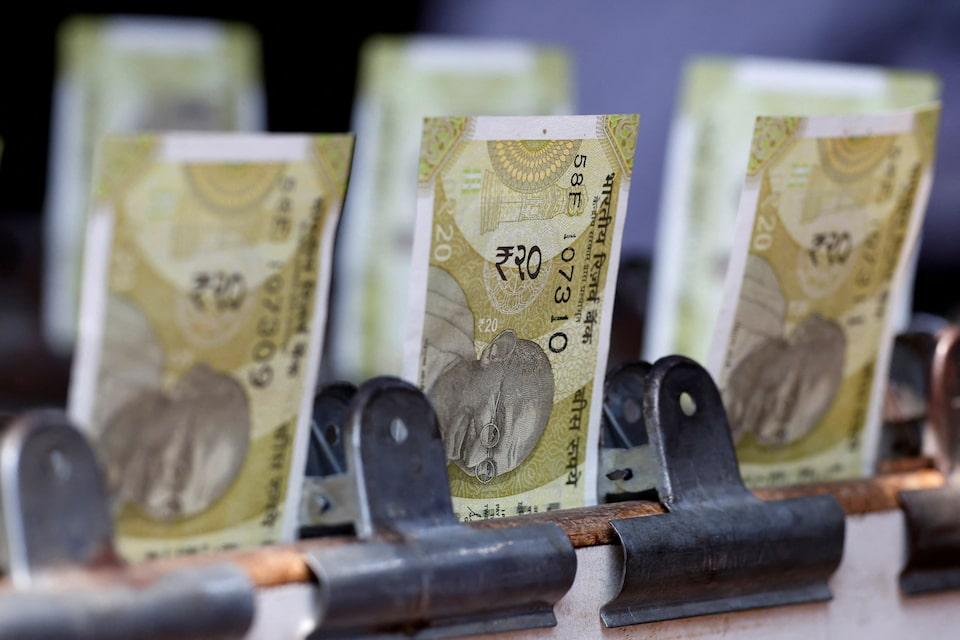
MUMBAI, June 4 (Reuters) - The Indian rupee is likely to open weaker on Wednesday, weighed down by equity outflows and corporate dollar demand for hedging and payment needs. The 1-month non-deliverable forward indicated an open in the 85.66-85.68 range, versus 85.59 in the previous session. Sign up here. The Indian rupee has been mostly on the back foot in recent sessions, with bankers pointing to sustained dollar demand for immediate payments, muted equity flows, and hedging activity during dollar dips. Foreign investors pulled over $300 million from Indian equities on Tuesday, according to preliminary data, adding to the more than $1 billion in outflows over the prior three sessions. "The price action hasn't been too encouraging lately (for the rupee)," a currency trader at a bank said. "Two things stand out — the rupee appears to be charting its own course, rather than following the broader Asia trend, and the underlying dollar demand remains heavy." Near-term support for the rupee is seen in the 85.60–85.70 range, an area that has attracted buyers in recent days. "The next key level to watch is 86 — a break above could prompt another wave of dollar buying," a treasury official at a bank said. ASIA FX MIXED Asian currencies were mixed on Wednesday, mirroring the previous session's tone. The dollar index was slightly lower after Tuesday's advance, with markets focused on the upcoming U.S. jobs report for May and developments in President Donald Trump’s tariff negotiations with major trading partners, including China. The question marks around whether Trump and China President Xi Jinping will pick up the phone and have a conversation are an important driver of markets, MUFG Bank said in a note. That said, the market's sensitivity to tariff headlines appears to have waned. Intraday volatility in Asian currencies has come off. KEY INDICATORS: ** One-month non-deliverable rupee forward at 85.76; onshore one-month forward premium at 11.75 paisa ** Dollar index up at 99.22 ** Brent crude futures down 0.3% at $65.5 per barrel ** Ten-year U.S. note yield at 4.45% ** As per NSDL data, foreign investors sold a net $246.4mln worth of Indian shares on June 2 ** NSDL data shows foreign investors bought a net $53.2mln worth of Indian bonds on June 2 https://www.reuters.com/world/india/rupee-drop-potential-equity-outflows-test-key-support-2025-06-04/
2025-06-04 01:00
LONDON, June 3 (Reuters) - It's a tough time to be a lithium producer as the light metal sinks under the weight of excess supply. Lithium hydroxide prices have collapsed by 90% from their 2022 peak and show no signs of recovery. Sign up here. Multiple producers are now operating at zero or negative margins, according to consultancy Wood Mackenzie. Even giants like Albemarle (ALB.N) , opens new tab, the world's largest producer of the battery metal, have been cutting costs and deferring new projects to weather the supply storm. Rio Tinto (RIO.L) , opens new tab, however, is undaunted. The global mining house remains "consistent in its belief in the long-term outlook for lithium". The company is putting its money where its mouth is, snapping up U.S.-based producer Arcadium for $6.7 billion and partnering with Chilean state entities on two projects. It's a big call, given the current despondency in the market, but Rio believes demand will be strong enough both to absorb the current excess and pull the market into deficit around the turn of the decade. It's a bet that lithium will remain the dominant battery metal in a fast-changing landscape. LOW PRICE, HIGH DEMAND The weakness in the lithium price results from too much new supply hitting the market at the same time. Global lithium production grew by over 35% year-on-year in 2024, according to the International Energy Agency (IEA). New mines are still ramping up and Chinese players show little appetite for cutting production. The supply tsunami, however, masks the strength of lithium demand. The IEA estimates global usage grew by 30% last year, the increase being equivalent to the size of the entire global market in 2018. The electric vehicle (EV) sector, the biggest user of lithium-ion batteries, is in robust health. Sales of new energy vehicles rose by 25% last year and were up by 29% in the first quarter of this year, according to consultancy Rho Motion. Lithium use in energy storage systems is growing even faster as global power systems pivot towards cleaner but intermittent energy sources such as solar and wind. Rio Tinto said it expects demand to grow at a compound annual rate of over 10% through 2040. DOMINANT METAL The main threat to that scenario would be a shift in battery chemistry as manufacturers compete to produce ever cheaper, more efficient batteries. There has already been a big shift away from more expensive battery metals such as cobalt and nickel but to date lithium has maintained its status as the dominant ingredient in the chemistry mix. The amount of nickel and cobalt deployed in new energy vehicles was up by just 12% and 2% year-on-year respectively in March, according to Adamas Intelligence. But lithium deployment was up by 30%, matching the overall EV sales growth rate. The battery materials battle, however, is far from over. Chinese giant CATL (300750.SZ) , opens new tab has been pioneering the development of sodium-ion batteries. The latest iteration, Naxtra, will almost match in efficiency the lithium iron phosphate (LFP) batteries that are displacing nickel-manganese-cobalt (NCM) chemistries. CATL's billionaire founder Robin Zeng sees sodium-ion batteries potentially replacing up to half the market for LFP batteries. The IEA is less sure, noting that sodium-ion batteries are most competitive in a high lithium price environment, which the current one is certainly not. Lithium's low price may be its best defence in fighting off challenges from other materials. It is also causing battery prices to fall, making new energy vehicles cheaper. MARKET ACCELERATOR Average battery pack prices fell by 20% to a record low of $115 per kilowatt-hour in 2024, the largest annual drop since 2017, according to the IEA. The share of cathode raw materials in the battery pack price fell to 10% in 2024 from over 20% in 2023 thanks to bombed-out prices across the battery metals spectrum. The shift to LFP batteries in the Chinese market has also played a significant role in reducing costs since they are 30% cheaper than the NCM batteries popular in Western markets. European auto companies have taken note. Volkswagen (VOWG.DE) , opens new tab is adopting LFP technology , opens new tab as it aims for a 20,000-euro entry-level electric car for the European market. Price has been one of the major deterrents for consumers to go electric but the gap with conventional vehicles is narrowing. In terms of EV sales, market forces are a powerful offset to the headwinds from tariffs and U.S. President Donald Trump's scrapping of his predecessor's green energy agenda. SAFE BET Lithium's battery metal crown looks safe for now. Even assuming sodium-ion batteries start taking market share in China, the impact on lithium will be mitigated by an acceleration in the global EV revolution and growing demand for grid storage solutions. Moreover, the IEA points out that despite the interest in novel chemistries, the primary driver of battery innovation remains existing, conventional chemistries based on lithium. Incremental improvements are being made all the time both to NCM and LFP technologies. Lithium demand is already growing phenomenally fast and every indication suggests it will continue to do so in the next few years. But how long before demand strength translates into a market deficit and higher prices will depend on how long the current supply surge lasts. Don't hold your breath. It could take a while. The opinions expressed here are those of the author, a columnist for Reuters. https://www.reuters.com/markets/commodities/rio-tinto-bets-lithium-will-retain-its-battery-metal-crown-andy-home-2025-06-03/

2025-06-04 00:58
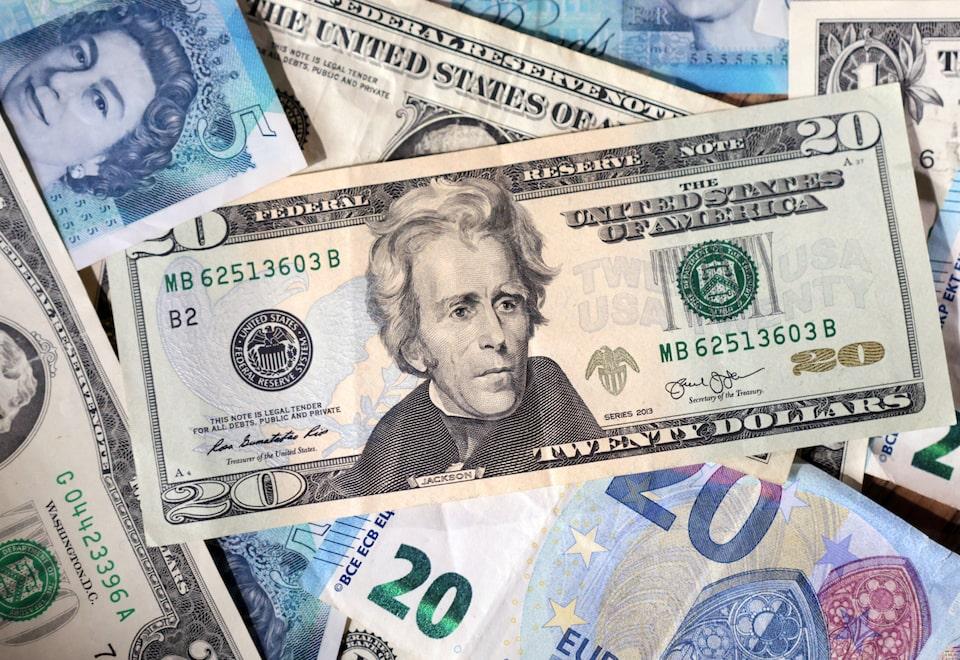
US private payrolls post smallest gain in over two years in May US service sector unexpectedly contracts in May; inflation heats up Trump says Fed's Powell must lower interest rate Trump to speak this week with China's Xi amid clash over tariff truce NEW YORK, June 4 (Reuters) - The dollar fell across the board on Wednesday after weaker-than-expected U.S. private payrolls numbers highlighted continued easing in the labor market and data showed the U.S. services sector contracted for the first time in about a year in May. U.S. private payrolls rose by only 37,000 jobs in May, far less than expected, after a downwardly revised 60,000 rise in April, the ADP National Employment Report showed on Wednesday. Sign up here. Economists polled by Reuters had forecast private employment increasing 110,000 following a previously reported gain of 62,000 in April. U.S. President Donald Trump reiterated his calls for Federal Reserve Chair Jerome Powell to lower interest rates following the data. "It's a major gap between expectation and actual," Juan Perez, director of trading at Monex USA in Washington. "This idea that labor has not been hurt and that the post-pandemic recovery was good enough that people are enjoying good opportunities ... that narrative is changing and that's absolutely very negative for the U.S. dollar," he said. Separately, data showed the U.S. services sector contracted for the first time in nearly a year in May while businesses paid higher prices for inputs, a reminder that the economy remained in danger of a period of very slow growth and high inflation. "The Fed will take notice of slower job growth, but this won't be enough to convince them to cut interest rates near term," Bill Adams, chief economist for Comerica Bank, said in a note. The dollar fell 0.7% to 142.89 Japanese yen. The euro rose 0.4% to $1.1414, ahead of the European Central Bank's decision on interest rates expected on Thursday. , Investors are awaiting Friday's monthly payrolls figures to gauge the state of the labor market, and remain focused on trade negotiations. The Trump administration has given a Wednesday deadline for countries to submit their best offers on trade, the same day duties on imported steel and aluminium doubled. Trump is also tipped by the White House to have a call this week with Chinese President Xi Jinping, after the two sides accused each other of violating the terms of an agreement last month to roll back some tariffs. Trump posted on his social media platform on Wednesday that Xi was "tough" and "hard to make a deal with." The dollar index , which measures the greenback against six major currencies, was 0.3% lower on the day at 98.838, not far from its late-April low of 97.923. The Hong Kong dollar was at 7.847 per U.S. dollar, the closest it has been to 7.85 - the weak end of its trading band against the U.S. dollar - since August 2023, according to LSEG data. Sterling was 0.2% higher at $1.35515. The UK and its metal exports are exempt from the increased U.S. duties, given Britain has a trade deal in place. Traders were also monitoring developments in Japanese markets after sources told Reuters the Bank of Japan is considering slowing down the tapering in its bond purchases from next fiscal year onward. The Canadian dollar was about 0.4% higher versus its U.S. peer after the Bank of Canada on Wednesday held its key benchmark rate at 2.75%, citing the need to probe the effects of U.S. trade policy. Canada is prepared to strike back if talks with Washington to remove Trump's tariffs did not succeed, Prime Minister Mark Carney said on Wednesday. Bitcoin, the world's largest cryptocurrency by market capitalization, was 0.7% lower at $105,064. https://www.reuters.com/world/middle-east/dollar-edges-down-trade-tensions-simmer-ahead-jobs-data-2025-06-04/