2025-11-24 20:08
CHICAGO, Nov 24 (Reuters) - Two cargo vessels were headed for grain port terminals near New Orleans on Monday to load with the first U.S. soybean shipments to China since May, according to a shipping schedule seen by Reuters. A third vessel was en route to a Texas Gulf Coast grain terminal to be loaded with China-bound U.S. sorghum in the coming days in what will be the first American shipment of the feed grain to China since mid-March, the shipping schedule showed. Sign up here. U.S. farmers and grain traders have been awaiting shipments to China to resume after Beijing shunned U.S. crops for months due to a trade war with Washington, costing U.S. farmers billions on lost trade. China has booked nearly 2 million metric tons of U.S. soybeans and a smaller volume of wheat since a meeting between presidents Donald Trump and Xi Jinping in South Korea in late October, when the White House said Beijing agreed to buy 12 million tons of soybeans by the end of the year. China has not confirmed the deal and questions about the agreement or when any sales would ship have fueled uncertainty in grain markets. U.S. Agriculture Secretary Brooke Rollins said Monday that the Trump Administration expects to sign a deal within two weeks. The vessel Ocean Harvest is due to arrive at Cargill's Reserve, Louisiana, terminal and the vessel Tokugawa is scheduled to arrive at a Convent, Louisiana, terminal owned by Zen-Noh Grain this week, both to be loaded with U.S. soybeans, the shipping schedule showed. A third vessel, Bungo Queen, is due to arrive for loading with U.S. sorghum at the Archer-Daniels-Midland terminal in Corpus Christi, Texas, in the next week. Cargill, ADM and Zen-Noh did not immediately respond to requests for comment. https://www.reuters.com/world/china/three-vessels-bound-us-gulf-coast-terminals-load-soybeans-sorghum-china-2025-11-24/

2025-11-24 19:42
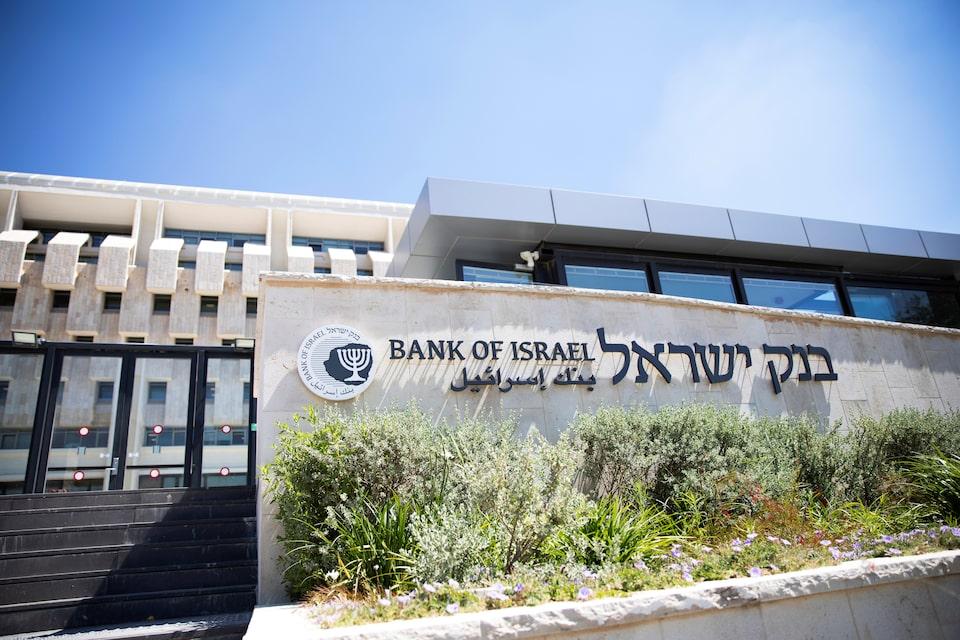
Benchmark rate cut to 4.25% from 4.5% Rate cut follows global trend and U.S.-brokered Gaza ceasefire Inflation steady at 2.5%, within target range Governor: Future cuts will be very gradual due to economic risks JERUSALEM, Nov 24 (Reuters) - The Bank of Israel cut interest rates by a quarter-point on Monday, its first reduction in nearly two years, citing a moderation in inflation leading up to the ceasefire in Gaza and said cuts will be very gradual over the next year. The cut in the benchmark rate (ILINR=ECI) , opens new tab to 4.25% from 4.5%, widely expected by analysts and financial markets, came after other global central banks had already begun to ease monetary policy and last month's U.S.-brokered truce between Israel and Palestinian militant group Hamas took hold. Sign up here. Bank of Israel Governor Amir Yaron told Reuters that economic conditions - mainly improved inflation data - had allowed for a rate reduction but cautioned that geopolitical risks remained, the labour market is tight, wages are rising and consumer demand is strong. Israel, and the world as a whole, is not going back to a zero rates environment, he said, pointing to the central bank's own forecast that the key rate would reach 3.75% by September 2026. "That is a still reasonable rate environment for the way we are seeing ... the ability of the economy right now to operate," Yaron said, adding that moving gradually would give policymakers the ability to monitor demand "in a way that won't require us to change course." He said that historically, countries face high inflation during wartime, hence the need to be cautious. The committee lowered the key rate by a quarter-point in January 2024 at the outset of the Gaza war but has taken a conservative stance since then, opting for caution during the two-year conflict while price pressures rose, largely due to supply constraints. But Israel's inflation rate has eased, and held steady at 2.5% in October to stay within an official 1-3% annual target range. The central bank acknowledged inflation has moderated in the past two months but that "forecasters project that there will be some increase in inflation at the end of the year, and that it will then decline and stabilize around the midpoint of the target range." At the same time, the Bank of Israel pointed to a sharp rebound in economic activity in the third quarter, gaining an annualised 12.4%, but that "its level remains lower than its long-term trend." Since the prior rates decision in late September, the shekel also has appreciated versus the dollar, euro and other trading partners, it said. "The data from recent months have... created a clear need for a cut," said Ron Tomer, president of the Manufacturers' Association. "The Bank of Israel’s decision to lower the interest rate is a responsible step that helps curb the appreciation and restore competitiveness to the economy," said Tomer, who called for a cut again before its next meeting in early January. The October 10 ceasefire in the two-year Gaza war has eased the conflict and, although looking increasingly fragile, has for now reduced geopolitical risk and eased price pressures. "Today’s interest rate cut joins a series of steps and clear signs — Israel is on the path to tremendous economic growth," said Finance Minister Bezalel Smotrich. https://www.reuters.com/world/middle-east/bank-israel-cuts-key-rate-by-25-bps-after-gaza-ceasefire-2025-11-24/
2025-11-24 19:14
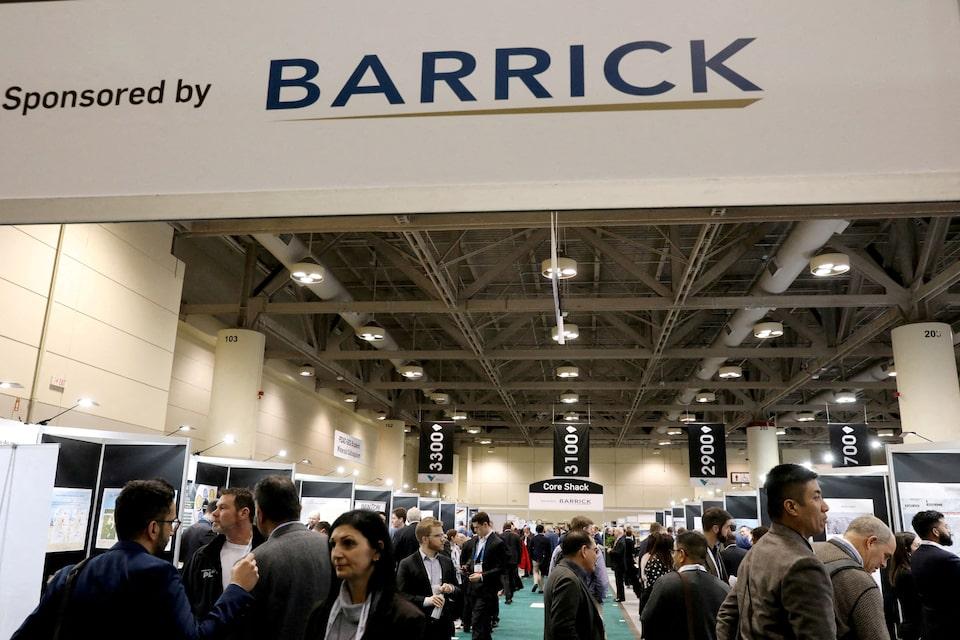
Barrick shares surge 8.5% to end at record high Barrick agreed to drop World Bank arbitration, Mali to release jailed employees Barrick's Loulo-Gounkoto mine generated $900 million in 2024 Nov 24 (Reuters) - Barrick Mining (ABX.TO) , opens new tab said on Monday it had reached an agreement with Mali's government to resolve all their disputes over the Loulo-Gounkoto gold mining complex after two years of negotiations, sending shares in the Toronto-listed company to a record high. Reuters reported on Friday that the parties had an agreement in principle. Sign up here. The Canadian miner said in a statement it will drop the arbitration case against Mali at the World Bank dispute tribunal, and in return, Mali will drop all charges against Barrick and its affiliates, release four employees from jail, and give operational control back to Barrick. Mali has also agreed to extend Barrick's mine permit for an additional 10 years, and Barrick has agreed to sign the 2023 mining code, according to two people aware of the development. Barrick is aiming to restart operations by January 1, said Mamadou Samake, Barrick's director of West Africa, in a video interview distributed by the government. Mali and Barrick began a fresh round of talks after the miner's interim CEO Mark Hill wrote a letter to the government seeking a resolution, according to a person aware of the development. Mali's Mining Ministry said in a statement Barrick would soon be allowed to resume normal operations at Loulo-Gounkoto. Shares of Barrick jumped 8.5% to close at an all-time high of C$55.93 in Toronto. The two sides had been in a standoff for two years over the implementation of the West African country's new mining code that gives Mali a bigger share of revenue from gold miners as gold prices surged to a record high. "The logical thing after this for Barrick would be to get out (of Mali)," said Martin Pradier, an analyst covering Barrick for Veritas Investment Research. This will be the likely outcome, he said, since the new mining code is no better than the previous one, and a company like Barrick cannot operate in a place with "flimsy regulations." Mali's military-led government seized 3 metric tons of gold from Barrick's mine earlier this year and appointed a provisional administrator to take charge of the mine. This led Barrick to write off $1 billion in revenue from the mine and also saw the departure of its former CEO Mark Bristow. Loulo-Gounkoto was one of Barrick's most profitable mines when it was under its control, generating almost $900 million in revenue in 2024. https://www.reuters.com/sustainability/sustainable-finance-reporting/barrick-mali-government-agree-resolve-gold-mine-dispute-2025-11-24/
2025-11-24 17:07
BRASILIA, Nov 24 (Reuters) - Brazil's central bank remains dissatisfied with progress toward bringing inflation back to its target, its governor said on Monday, stressing that policymakers will maintain a data-dependent approach. Speaking at an event hosted by banking lobby Febraban, Gabriel Galipolo said the bank is "clearly moving in the desired direction to fulfill our mandate" of returning inflation to target, but emphasized that there is still work to be done. Sign up here. "We are still dissatisfied because we are not yet where we would like to be, which is why interest rates remain at a restrictive level," he said. "The central bank made it very clear that it will do whatever is necessary to fulfill its mandate," he added. Earlier in November, the central bank held interest rates steady for the third consecutive meeting at 15%, the highest level in nearly 20 years, and signaled it is now confident that keeping them unchanged for a prolonged period is enough to guide inflation back to the 3% official goal. BANCO MASTER LIQUIDATION Galipolo also said on Monday the institution "followed the rulebook" and acted strictly in line with its legal mandate on financial stability following the recent liquidation of Banco Master. The central bank tied the move to a "severe liquidity crisis" at the Master conglomerate, a "sharp deterioration" in its finances, and "serious violations" of financial-system rules. Galipolo praised the central bank's technical staff and "the diligence of the whole team," especially the supervision department led by director Ailton Aquino. Master, which had grown rapidly through an aggressive strategy built on high-yield debt sold through investment platforms, had struggled in recent months with mounting liquidity pressures. https://www.reuters.com/world/americas/brazil-central-bank-still-uneasy-inflation-outlook-governor-says-2025-11-24/

2025-11-24 16:42
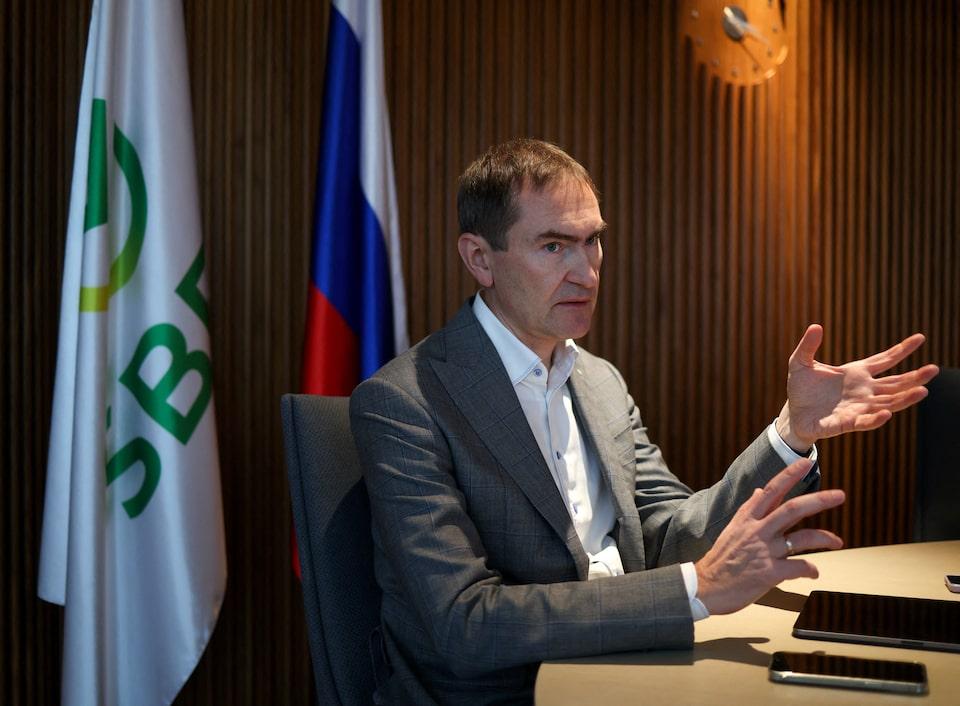
MOSCOW, Nov 24 (Reuters) - Russia's economy is seeing "continued cooling" with growth likely to remain at around 1% next year and business activity remaining weak for four to five quarters, a senior executive at Sberbank, the country’s largest lender, told Reuters. "In reality, we are seeing a continued cooling of the economy, quite a noticeable one," Sberbank First Deputy CEO Alexander Vedyakhin said. Sign up here. The economy slowed sharply this year after robust growth of 4.3% in 2024, mainly due to high interest rates set by the central bank to curb inflation and cool activity. The central bank sees GDP growth at between 0.5% and 1.5% in 2026. Vedyakhin said that at its December board meeting, the central bank will decide whether to keep the key rate at the current 16.5% or cut it by 50 basis points — a move he said would not be enough to spur growth. He noted that some loan growth in October and November was driven by companies raising funds for operational expenses rather than investment. "Investments will not revive until the key interest rate reaches 12–14%," he said, adding that even resource exporters, the most prosperous companies, are under pressure from high rates, an overvalued rouble, and Western sanctions. "Until the rate reaches this level, the period of managed cooling will continue," Vedyakhin said. Sberbank now expects the rouble to weaken to 85 per U.S. dollar by year-end from the current 78.6, and to 95 in 2026. In June, Sberbank CEO German Gref said that 100 roubles per dollar was a fair exchange rate. "A slight weakening of the rouble is possible — there are factors for that. But in any case, it's no longer 100 roubles per dollar, rather somewhere around 90 and above," Vedyakhin said. He added that reduced foreign currency sales from the National Wealth Fund, expected next year, along with shrinking imports and high interest rates, will support the rouble in 2026. Vedyakhin also pointed out that Russia’s currency market has become thin and volatile as demand for foreign currency falls, meaning even relatively small transactions can move the exchange rate. "Right now, if a large ticket of $100 million appears, it can sometimes make the market shake. Even $10 million can already influence the exchange rate,” he said. https://www.reuters.com/business/finance/russias-largest-lender-sees-economy-cooling-another-year-2025-11-24/
2025-11-24 15:53
Tech debt issuance could change profile of US debt debt market Investment firm DoubleLine cautious about adding AI-related debt exposure AI data center bonds may reach $1.5 trillion in five years, JPMorgan estimated NEW YORK, Nov 24 (Reuters) - A rush of bond sales by major tech firms to fund artificial intelligence expansion is creating a high-stakes bet for the $9 trillion U.S. corporate bond market, prompting caution from prominent investors like DoubleLine over the sector's growing debt load. Over the past two months, four major cloud and AI "hyperscalers" have sold nearly $90 billion in public bonds. Google owner Alphabet (GOOGL.O) , opens new tab sold $25 billion in bonds, Meta (META.O) , opens new tab $30 billion, Oracle (ORCL.N) , opens new tab $18 billion and Amazon (AMZN.O) , opens new tab, the most recent, $15 billion. Sign up here. Several analysts forecast higher amounts of hyperscaler debt issuance next year as big tech firms race to finance AI-ready data centers. High-grade bond markets may need to absorb $1.5 trillion of AI data center bond sales over the next five years, with that type of debt potentially representing over 20% of the investment-grade bond market by 2030, J.P. Morgan analysts estimated recently. "The potential for this data center capacity spend to come to the investment-grade market means you could have a significant re-levering in a new sector, and it could become a material risk to the high-grade market," said Robert Cohen, director of global developed credit at DoubleLine, a bond-focused investment firm managing $90 billion in assets. "You've got a large new sector that's clearly unproven, and that would change the risk profile of investment-grade credit quite substantially from where it is today, that's my concern," he said in an interview. Rising debt at tech companies has added a new layer of concern to broader financial markets that, despite being fueled by the promise of high AI returns, remain wary that the technology has yet to deliver the profits needed to justify such large capital spending. Meanwhile, although U.S. investment-grade credit spreads remain near historic lows, they have edged wider in recent weeks, reflecting growing unease over the surge of new bond supply coming to market. Spreads widened to 86 basis points on Friday, their widest since the end of June, the ICE BofA US Corporate Index showed. The U.S. investment-grade bond market is worth about $9.2 trillion, according to the ICE BofA US Corporate Index. Cohen said the corporate bond market remained in good shape due to several factors including a strong economy, healthy corporate balance sheets, lower interest rates than over the past few years, and expectations of an accommodative Federal Reserve going forward. But, while not an imminent risk, he said he was "on alert" about bond issues from tech companies flooding the market and cautious about adding exposure to their debt. "They are building capacity to provide support for, ultimately, a product where the end use is not super clear," he said. https://www.reuters.com/business/retail-consumer/doubleline-wary-ai-funding-wave-that-could-alter-us-high-grade-debt-market-2025-11-24/