2025-06-03 12:36
June 3 (Reuters) - Both crude units at BP's (BP.L) , opens new tab Rotterdam oil refinery are offline following a shutdown at one 200,000 barrels per day (bpd) unit in the morning of June 3, energy consultancy Wood Mackenzie said on Tuesday. Wood Mackenzie expects the 200,000 bpd crude unit, which shut down on June 3, to restart imminently as it is likely an unplanned outage, the consultancy said. Sign up here. Another 200,000 bpd crude unit at the refinery shut down on May 1, while planned works at the unit were expected to start in April, Wood Mackenzie added. On April 16, BP had also shut a 32,000 bpd catalytic reformer unit that produces gasoline blending components, according to Wood Mackenzie. BP did not immediately respond to an emailed request for comment on Tuesday. The refinery, one of the biggest in Europe, has a total crude processing capacity of 400,000 bpd. https://www.reuters.com/business/energy/both-crude-units-bp-rotterdam-oil-refinery-are-offline-woodmac-says-2025-06-03/
2025-06-03 12:23
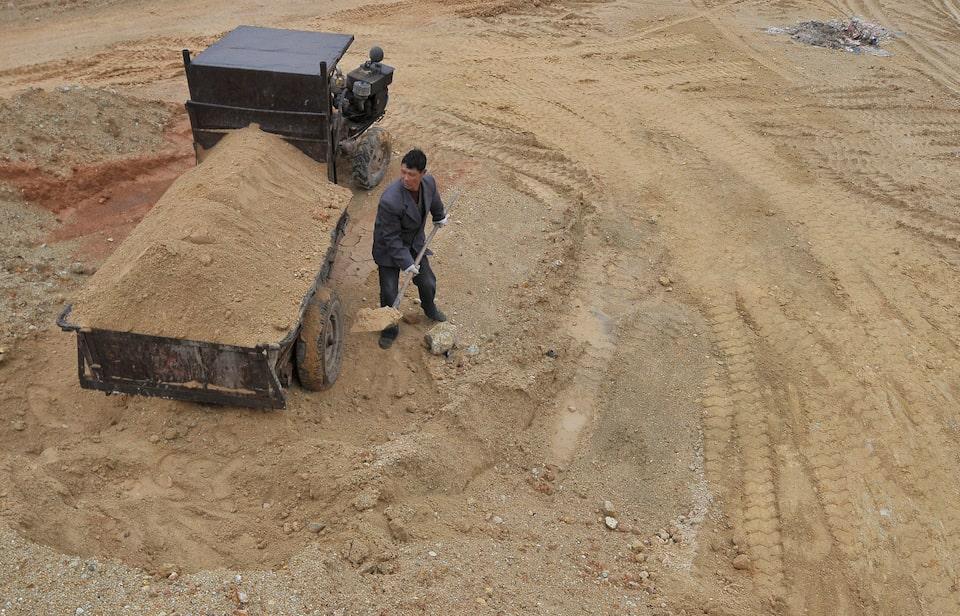
China export curbs threaten world auto, electronics production EU aides seek talks to speed Beijing license approvals - source Japanese delegation visits in June for similar purpose - source BEIJING/NEW DELHI, June 3 (Reuters) - Diplomats, automakers and other executives from India, Japan and Europe were urgently seeking meetings with Beijing officials to push for faster approval of rare earth magnet exports, sources said, as shortages threatened to halt global supply chains. A business delegation from Japan will visit Beijing in early June to meet the Ministry of Commerce over the curbs, according to a source familiar with the visit. European diplomats from countries with big auto industries have also sought "emergency" meetings with MOFCOM in recent weeks, a European official said. Sign up here. India, where automakers warned last week they were close to shutting down, is organising a trip for auto executives in the next two to three weeks. "This is an extremely urgent and critical time for the auto and electronics industry," Adam Dunnett, secretary general of the European Chamber of Commerce in China, told Reuters, saying some firms could stop production as soon as this week. The European Union and Japanese missions in Beijing did not immediately respond to requests for comment. The possibility of widespread shutdowns across the global auto industry demonstrates the enormous leverage Beijing has built over its decades-long rise to dominance in the rare earth industry. China - which controls over 90% of global processing capacity for the magnets, used in everything from automobiles and fighter jets to home appliances - imposed export restrictions on seven rare earth elements and several magnets on April 4, requiring exporters to obtain licenses from Beijing. The controls are widely viewed as a key source of diplomatic leverage because there are almost no alternatives outside China. Beijing agreed to suspend or remove non-tariff countermeasures imposed on Washington since April 2 as part of the Geneva truce. But there has only been a slow trickle of approvals since then and Chinese government officials have declined to address the issue publicly. U.S. Trade Representative Jamieson Greer last week accused Beijing of "slow-rolling" the removal of non-tariff countermeasures. South Korea's industry ministry has asked China to issue more export licenses, an official told Reuters, as only a handful of companies had received licenses. China's foreign ministry on Tuesday did not respond to a question on whether Beijing would speed up processing of export license applications. The Ministry of Commerce did not immediately reply to queries sent after business hours. European firms alone have thousands of applications waiting for approval, said a source familiar with the matter. State media reported last week that China was considering relaxing some of the curbs for European semiconductor firms and the Ministry of Foreign Affairs said last week it would strengthen cooperation with other countries over its controls. However, rare-earth magnet exports from China halved in April due to a long and opaque application process for export permits. "China won't blink but it will slowly and strategically provide exemptions," said a U.S. business figure briefed on the matter, who declined to be named for sensitivity reasons. "It's a painful stress test of an already fragile relationship." https://www.reuters.com/business/autos-transportation/diplomats-automakers-push-beijing-loosen-rare-earth-magnet-export-restrictions-2025-06-03/
2025-06-03 12:17
FRANKFURT, June 3 (Reuters) - Euro zone inflation eased below the European Central Bank's target last month on surprisingly benign services costs, underpinning expectations for further policy easing even as global trade tensions fuel longer-term price pressures. Consumer price inflation in the 20 countries sharing the euro slowed to 1.9% in May from 2.2% a month earlier, below expectations for 2.0% on a fall in energy prices and a sharp decline in services inflation. Sign up here. A more closely watched reading on underlying inflation, or prices excluding volatile fuel and food prices, meanwhile slowed to 2.3% from 2.7%, driven by a slowdown in services price growth to 3.2% from 4.0%, Eurostat, the EU's statistics agency said. The ECB has cut interest rates seven times since last June and another move on Thursday is almost fully priced in given muted wage growth, easing energy prices, a strong euro and lukewarm economic growth, factors which all point in the direction of easing inflation. "Given the clear disinflationary outlook, especially for services, the ECB cutting rates this Thursday seems an easy bet, and more easing should follow later in the year," Riccardo Marcelli Fabiani at Oxford Economics said. Price pressures are so weak that some economists even expect inflation to keep sinking below the ECB's 2% target this year and not rebound until sometime in 2026. "A strong drop in core inflation in May to 2.3% and headline to 1.9% serves as a clear sign that undershooting the inflation target is still a possibility for the ECB," ING economist Bert Colijn said. OPPOSING TRENDS This raises a dilemma for the ECB because the short and the longer-term outlooks for prices differ greatly since inflation could come under upward pressure from a host of factors further out. This is why investors think the ECB will pause with rate cuts after easing to 2% in June and only make one more cut this year, possibly in the autumn. However, investors also see a roughly 30% chance of one more cut thereafter, which would then take the deposit rate to 1.5%. Interest rates are also firmly in 'neutral' territory now, where they neither slow economic growth nor stimulate it, an argument for some to take a step back and see how erratic U.S. trade policy will impact growth and prices. Policy hawks have also warned that inflation could go back up soon, given unusually high geopolitical tensions. A trade war, increased tariffs, deglobalisation and the realignment of corporate value chains are all expected to increase prices. In addition, the continued decline of the working age population and investments related to defence and climate change could also raise price pressures. How these opposing trends will impact ECB policy is unclear for now but the ECB generally looks through short-term price volatility since it targets inflation in the medium term, a loosely defined concept that normally means one to two years out. Policymakers, however, could be forced to intervene if they think that a dip in prices is also pulling down or 'de-anchoring' longer-term expectations. https://www.reuters.com/world/europe/euro-zone-inflation-eases-below-ecb-target-supporting-rate-cut-bets-2025-06-03/

2025-06-03 11:43
DUBAI, June 3 (Reuters) - Qatar recorded a budget deficit of 0.5 billion riyals ($133.31 million) in the first quarter of 2025, which was covered through debt instruments, the finance ministry said on Tuesday. Total revenue in the quarter stood at 49.4 billion riyals, down 7.5% from the same quarter last year. Non-oil revenue accounted for 6.9 billion riyals of total revenue. Sign up here. Government spending fell around 2.8% year-on-year to 49.94 billion riyals. Qatar, which is among the world's biggest exporters of liquefied natural gas (LNG), has stepped up efforts to diversify its economy away from hydrocarbons but remains reliant on gas revenue for the majority of government income. ($1 = 3.7506 riyals) https://www.reuters.com/world/middle-east/qatar-records-budget-deficit-133-million-first-quarter-2025-06-03/

2025-06-03 11:43
June 3 (Reuters) - Meta Platforms (META.O) , opens new tab on Tuesday said it has struck an agreement with Constellation Energy (CEG.O) , opens new tab to keep one of the utility's reactors in Illinois operating for 20 years, in the Big Tech company's first such deal with a nuclear power plant. WHY IT'S IMPORTANT Big Tech companies are looking to secure electricity as U.S. power demand rises for the first time in two decades on demand from artificial intelligence and data centers. Sign up here. The deal will help keep open Constellation's Clinton Clean Energy Center which may have been forced to shut after the expiry in 2027 of an Illinois ratepayer-funded zero emissions credit program that awards benefits for generation of power virtually free of carbon emissions. It depends on the U.S. Nuclear Regulatory Commission renewing the plant's license, after Constellation last year applied to renew it through 2047. Meta's power purchase will replace the Illinois support and help with re-licensing and operations. The deal could serve as a model for Big Tech companies to support existing nuclear plants while they also plan to power data centers with new nuclear and other energy sources. SHARE REACTION Constellation Energy shares rose 5.7% to $330.93 in morning trading. BY THE NUMBERS Financial details of the deal were not revealed, but such lengthy power purchase agreements tend to run to multi-billion dollars. The deal also allows Constellation to expand Clinton, which has a capacity of 1,121 megawatts, by 30 MW. The plant powers the equivalent of about 800,000 U.S. homes. KEY QUOTES Urvi Parekh, head of global energy at Meta, said: "One of the things that we hear very acutely from utilities is they want to have certainty that power plants operating today will continue to operate." Joe Dominguez, CEO of Constellation, said, "We're definitely having conversations with other clients, not just in Illinois, but really across the country, to step in and do what Meta has done, which is essentially give us a backstop so that we could make the investments needed to re-license these assets and keep them operating." Bobby Wendell, an official at a unit of the International Brotherhood of Electrical Workers, said the agreement will deliver a "stable work environment" for workers at the plant. Evercore ISI analyst Nicholas Amicucci viewed the deal as "first of many" following President Donald Trump's recent executive orders aimed to boost U.S. nuclear capacity. BIG TECH POWER DEALS Independent power producers like Constellation have announced some of the biggest power deals in U.S. history in the last year, as AI data centers are expected to drive U.S. electricity consumption to record highs in 2025 and 2026. Last year, Constellation announced it had struck an agreement to restart a reactor at the Three Mile Island nuclear plant to serve Microsoft (MSFT.O) , opens new tab data centers. The reactor, which is being prepped for a restart, requires various approvals. Vistra Corp (VST.N) , opens new tab and NRG Energy (NRG.N) , opens new tab have also announced major planned acquisitions in recent months. https://www.reuters.com/sustainability/climate-energy/meta-signs-power-agreement-with-constellation-nuclear-plant-2025-06-03/

2025-06-03 11:29
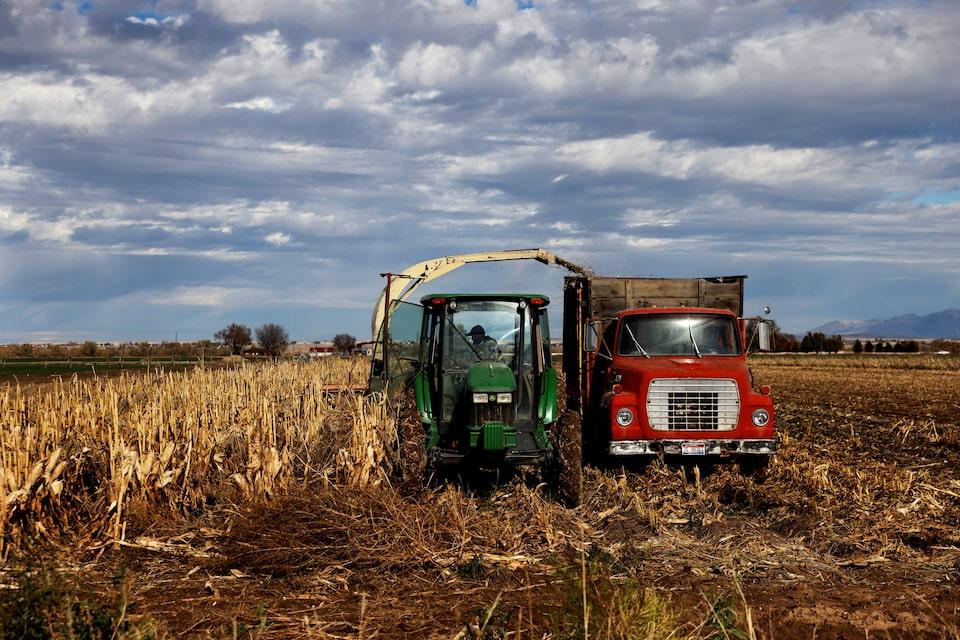
NAPERVILLE, Illinois, June 2 (Reuters) - Although not all fields have emerged, U.S. Crop Watch soybean conditions are starting out on their worst note in at least five years, similar to the corn ratings a week ago. Only eight of the 11 Crop Watch soybean fields are available for rating this week, and the unweighted average condition score comes in at 3.56. That compares with a range of 3.75 to 3.91 for the same eight fields at this point in the past three seasons, and a 4.34 in 2021. Sign up here. The Crop Watch producers each week assign condition scores to their corn and soybean fields using a scale of 1 to 5. The ratings are similar to the U.S. Department of Agriculture’s system where 1 is very poor, 3 is average and 5 is excellent. However, the Crop Watch condition scores are mostly visual in nature and do not incorporate yield assumptions. No bean scores are available this week in Kansas and North Dakota given the very recent planting dates. The Ohio beans are expected to be sown this week, and the producer has no concerns over this later timing. Crop Watch conditions are in the 2-range for soy fields in southeastern Illinois and South Dakota, the latter of which was replanted on Sunday. Although the eastern Iowa beans currently score a 4, the producer notes a lot of replanting in the area with very thin plants. CHANCE FOR IMPROVEMENT? USDA on Monday afternoon will issue its first U.S. soybean conditions of the season, and the Crop Watch results could suggest that upside is limited. This happened last week with USDA’s corn ratings, which were the lowest initial conditions since 2019. This week, the 11-field, average Crop Watch corn condition score rose to 3.68 from 3.57 last week, which had been the lowest start for Crop Watch corn ratings in at least five years. Corn health improved notably in South Dakota and slightly in both Nebraska and western Iowa. Corn in all three locations had been battered by wind, hail, frost, rains and heat in the latter part of May. The past week started unseasonably cool for most of the Corn Belt except for North Dakota. Nebraska, Kansas and Ohio were the only locations that had notable rainfall last week out of the 11 Crop Watch areas. Warmth arrived for some of the fields over the weekend, though the Crop Watch producers were mixed when asked if last week’s weather helped the crops or held them back. Most producers still want some heat for both corn and beans, but the week ahead will mostly feature milder temperatures. This could still allow for some improvement in crop conditions if the accompanying rainfall is not excessive, though the forecast suggests larger totals are possible in the central Corn Belt. U.S. spring wheat conditions came in shockingly low last week, though the North Dakota producer says that wheat in his east-central location improved over the last week with the dryness and warmth. Analysts expect U.S. spring wheat conditions on Monday afternoon to rise to 47% good-to-excellent (GE) from 45% last week. Corn is seen improving to 69% GE from 68% last week. U.S. soybean conditions are predicted to come in at 68% GE, equivalent to the five-year average for initial bean ratings. Those initial scores ranged from 62% to 72%, leaving some leeway for this year’s number. Karen Braun is a market analyst for Reuters. Views expressed above are her own. https://www.reuters.com/markets/commodities/crop-watch-corn-improves-soy-health-is-lacking-2025-06-02/