2025-06-03 11:21
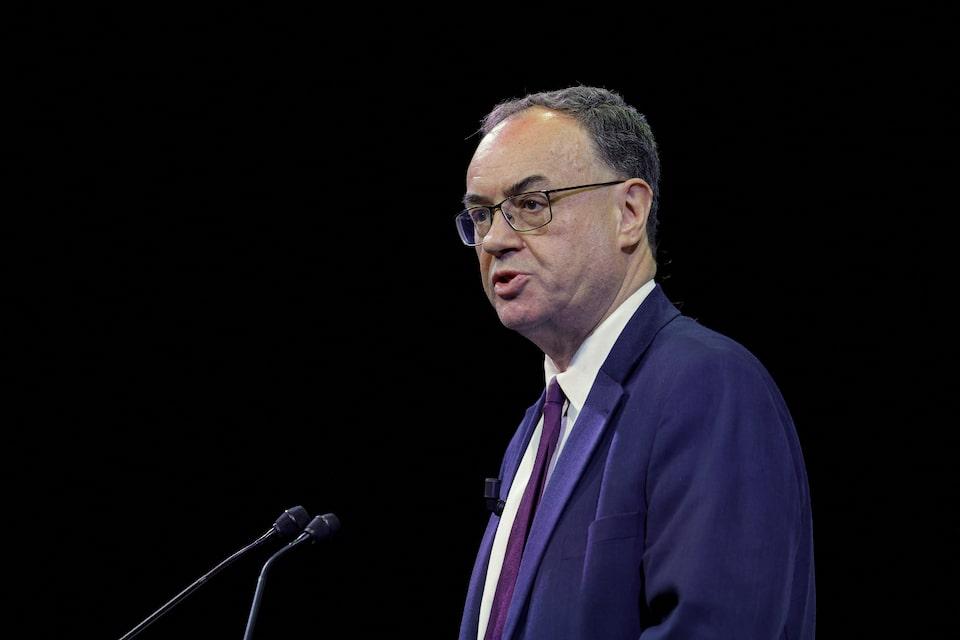
BoE's Bailey says greater uncertainty requires gradual approach Breeden says Trump tariffs not key for her May vote to cut rates Dhingra says supply chain points to medium-term inflation fall Bailey says Mann right to consider QT in view of changed markets LONDON, June 3 (Reuters) - Bank of England Governor Andrew Bailey said on Tuesday he was sticking with a "gradual and careful" approach to cutting interest rates as global trade policy turmoil increasingly clouds the outlook. The BoE cut interest rates last month to 4.25% in a three-way split vote. It cited "heightened unpredictability" with markets buffeted by U.S. President Donald Trump's rapidly shifting trade policy. Sign up here. "I think the path (for interest rates) remains downwards, but how far and how quickly is now shrouded in a lot more uncertainty," Bailey told parliament's Treasury Committee. While economists polled by Reuters last month expected the BoE to keep cutting rates by a quarter point every three months, financial markets now have only one rate cut fully priced in by the end of this year and just two over the next 12 months. Bailey said he had not been surprised by recent data on inflation which jumped to 3.5% in April from 2.6% the previous month, and he added that the labour market had loosened. Cooling pay growth would be a "crucial" requirement for further interest rate cuts, he told lawmakers. "Gradual and careful remain my ... guiding line," Bailey said of his thinking on future rate cuts, adding that he would not be drawn on his intentions for the June Monetary Policy Committee (MPC) meeting. Deputy Governor Sarah Breeden, a centrist on the MPC, told lawmakers that she thought there was a case for cutting interest rates last month even without the global trade ructions. Breeden was one of the majority of five to vote for a quarter-point interest rate cut last month, with the governor. But Bailey said he was more undecided than Breeden ahead of the May interest rates decision. "You should think of the majority as having a broad church within it," Breeden said. WEAKENING GROWTH OUTLOOK Official data showed Britain's economy expanded strongly in the first quarter of the year - at odds with downbeat business survey data. Bailey said this pointed to a "disjoint" in data sources that added to the uncertainty faced by policymakers. "The surveys are probably, on average, a better predictor of the future than the immediately previous GDP number," Bailey said. The BoE said last month it expected the strong growth in the January-to-March period would prove temporary with output likely to expand by 1% this year, speeding up only slightly to 1.5% growth in 2027. External MPC member Swati Dhingra, who voted for a half-point rate cut last month, told the committee that evidence from supply chains pointed clearly to inflation cooling over the medium term - unlike in 2022 when inflation spiked to 11%. Catherine Mann, an external member of the MPC who voted against cutting rates last month, said she thought that the labour market was cooling less than she had expected in February when she voted for a half-point cut. She also said the BoE should consider reviewing the pace at which it unwinds past asset purchases rather than relying on extra rate cuts to try to offset upward pressure on long-term bond yields. Bailey said it would be "important" to assess this quantitative tightening in light of changed market conditions since the last annual decision on its pace in September 2024, including a big rise in long-term government borrowing costs to the highest since 1998. "I don't think the cause of the curve movement is quantitative tightening in its own right. But how it interacts with other causes - what's coming out of the U.S. for instance - will be something we will have to go over in the next month or two," he said. https://www.reuters.com/world/uk/boes-bailey-sticks-with-gradual-careful-rate-cut-view-2025-06-03/
2025-06-03 11:17
TSX ends up 0.1% at 26,426.64 Eclipses Monday's record closing high Energy adds 1.5% as oil settles 1.4% higher Uranium stocks rally, with Energy Fuels up 14.4% June 3 (Reuters) - Canada's main stock index edged up to a new record high on Tuesday, led by gains for the energy sector, as oil prices climbed and uranium producers notched gains. The Toronto Stock Exchange's S&P/TSX composite index (.GSPTSE) , opens new tab ended up 37.68 points, or 0.1%, at 26,426.64, eclipsing Monday's record closing high. Sign up here. U.S. stock indexes also closed higher as investors awaited possible negotiations between the United States and its trading partners for more clarity on Washington's tariff plans. "The TSX is a very attractive market right now for investors," said Philip Petursson, chief investment strategist at IG Wealth Management. "If you want to hedge some of the risks that you see in the United States on the political side, the TSX is well-positoned for that." The Toronto market has benefited in recent months from safe-haven demand for gold. The materials group, which includes gold mining shares, accounts for 13% of the TSX's weighting, while energy accounts for an even larger share, at 17%. Energy added 1.5% on Tuesday as the price of oil settled 1.4% higher at $63.41. Persistent geopolitical tensions looked set to keep sanctions on both OPEC+ members Russia and Iran in place for longer. "Any time oil prices are up that's a significant positive for the TSX," Petursson said. Wildfires burning in Canada's oil-producing province of Alberta have affected more than 344,000 barrels per day of oil sands production, or about 7% of the country's overall crude oil output, according to Reuters calculations. Uranium stocks rose after social media platform operator Meta Platforms (META.O) , opens new tab struck an agreement with Constellation Energy (CEG.O) , opens new tab to keep one of the utility's reactors in Illinois operating for 20 years. Shares of Energy Fuels Inc jumped 14.4%. The utilities group also notched gains, rising 1.1%, with Algonquin Power & Utilities Corp (AQN.TO) , opens new tab up 16%. Consumer staples was a drag, falling 1.2%. https://www.reuters.com/world/americas/tsx-futures-slip-trade-tensions-rise-uncertainty-lingers-2025-06-03/

2025-06-03 11:17
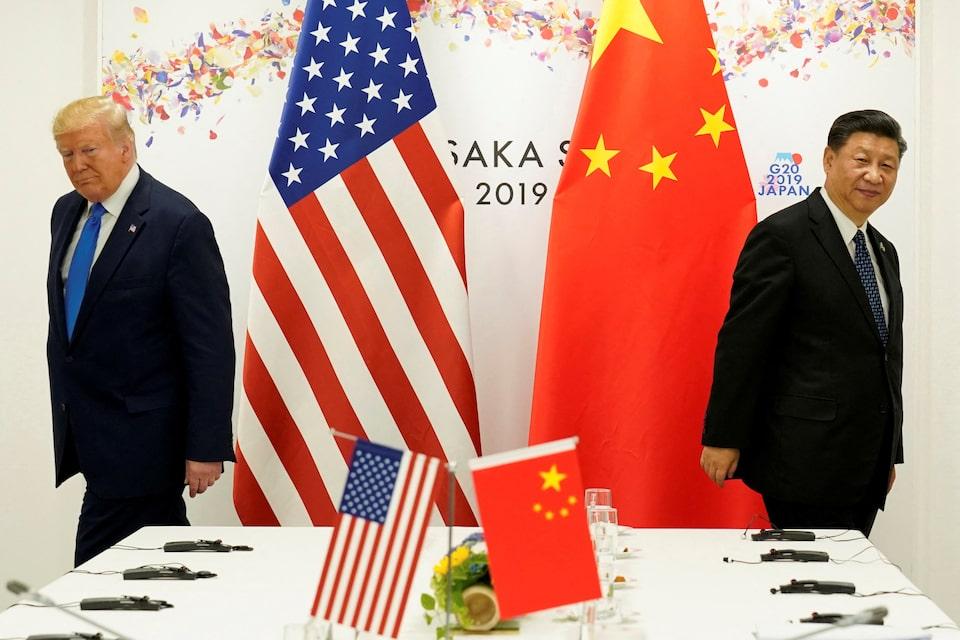
LONDON, June 3 (Reuters) - What matters in U.S. and global markets today The dollar and U.S. Treasuries found their footing on Tuesday after a rough start to the week, but stocks remained edgy due to a mix of trade war concerns and spluttering factory activity. Sign up here. I'll discuss this and all of today's market news below. And for today's deep dive, I'll explain why market fears are growing that the 'new cold war' could be turning hot. Today's Market Minute * Dutch far-right leader Geert Wilders' PVV party left the governing coalition on Tuesday, in a move that is set to topple the right wing government and will likely lead to new elections. * Saudi Arabia and Russia had to reach a difficult compromise on OPEC+ policies on Saturday as Riyadh pushed to accelerate oil output increases while Moscow argued for a pause, four OPEC+ sources with knowledge of the talks said. * Surging government debt levels are becoming a pressure point for big economies and bond investors have their sights on those not doing enough to improve their finances. * BP has jumped from crisis to crisis in recent years, severely eroding its stature as one of the world's leading oil companies. The British firm may finally need to accept that it is no longer a true oil major and can’t keep managing cash like one. Read the latest from Reuters columnist Ron Bousso. * Headwinds from tariffs, bond yields and 'stagflation' are gathering force, but corporate America could not be in better shape to face the economic storm that may be building. Read the latest from Reuters columnist Jamie McGeever. Trump and Xi's big chat The weekend saw testy bilateral exchanges between Washington and Beijing, as well as a doubling of U.S. steel tariffs to 50%. But hopes for some easing in Sino-U.S. tensions were stoked by news that President Donald Trump and Chinese leader Xi Jinping were scheduled to hold a call as soon as this week. If they jump on the phone this Thursday, they could rope in German Chancellor Friedrich Merz - who will be meeting Trump that day in Washington - for a trilateral discussion among the world's three biggest economies. There's clearly some urgency in Washington to get bilateral talks on track with time running out on its 90-day pause of reciprocal tariffs imposed on April 2. A draft letter sent to negotiating partners showed the Trump administration wants countries to provide their best offer on trade negotiations by Wednesday as officials seek to accelerate talks with multiple partners. Perhaps pointedly, European Union sources said they had not received the letter. Meanwhile, the tariff war's negative impact on global manufacturing is starting to show. U.S. factory activity contracted for a third straight month in May, and suppliers took the longest time in nearly three years to deliver inputs, potentially signalling looming shortages of some goods. The reading was the lowest in six months and missed expectations. Additionally, China's factory activity in May shrank for the first time in eight months, a private-sector survey showed on Tuesday, indicating U.S. tariffs are now starting to directly hurt the manufacturing superpower. The Organisation for Economic Cooperation and Development's latest global outlook, meantime, now expects world growth to slow more than the group expected only a few months ago, as the fallout from the trade war takes a toll on the U.S. economy. The slowing economic pulse helped keep a lid on Treasury yields, with 30-year bonds falling below 5% again. And the greenback (.DXY) , opens new tab perked up from Monday's six-week lows. Helping to drive both those moves were surprisingly soft euro zone inflation numbers for May, which increased the likelihood of another European Central Bank interest rate cut this week - and possibly more ahead. Headline euro zone inflation fell below the ECB's 2% target last month, slowing to 1.9% from 2.2% in April. That was below forecasts, amid falling oil prices and service sector inflation as well as the strong euro . Core rates dropped sharply to as low as 2.3%. Next up is this week's sweep of U.S. labor market reports. April job openings due out later on Tuesday are expected to slip further from last month. Ahead of the open, U.S. stock futures were back in the red after the S&P 500's late session recovery on Monday, led in part by big tech and oil stocks. Crude oil prices sustained the bulk of Monday's gains after the OPEC+ meeting this weekend resulted in less significant output hikes than feared. Taiwan's TSMC (2330.TW) , opens new tab, meantime, said on Tuesday that even though U.S. tariffs were having some impact on the company, it is continuing to benefit from the strong demand for artificial intelligence tools. Be sure to check out today's column, where I look into the increasingly bellicose political rhetoric around the world, as countries engage in a new arms race and multiple conflicts escalate. Today's events to watch * U.S. April factory goods orders (10:00 AM EDT) U.S. April JOLTS job openings (1000EDT) * Federal Reserve Board Governor Lisa Cook, Dallas Fed President Lorie Logan and Chicago Fed President Austan Goolsbee speak; * U.S. corporate earnings: Crowdstrike, Hewlett Packard, Dollar General * OECD Ministerial Council Meeting 2025 in Paris * Italy's Prime Minister Giorgia Meloni meets French President Emmanuel Macron in Rome Opinions expressed are those of the author. They do not reflect the views of Reuters News, which, under the Trust Principles , opens new tab, is committed to integrity, independence, and freedom from bias. ($1 = 0.8738 euros) https://www.reuters.com/world/china/global-markets-view-usa-2025-06-03/
2025-06-03 11:13
Farmers say half a million antelopes crossed from Kazakhstan Many have drowned, contaminating rivers Threat to major grain-producing region MOSCOW, June 3 (Reuters) - Farmers in Russia's Saratov region have appealed to President Vladimir Putin for help in dealing with an invasion of saiga antelopes that have migrated from Kazakhstan and devastated their fields. The appeal, posted on several popular farmers' channels on Telegram, said that the saiga population has grown uncontrollably in recent years, reaching up to one million in Russia alone. Sign up here. Saratov, located along the Volga River, is the country's sixth-largest grain-producing region, with an annual harvest of about 4 million metric tons, accounting for 3.5% of Russia's total grain harvest. Farmers reported that about 500,000 saigas crossed into Russia from Kazakhstan at the end of May. They said that thousands had drowned in local rivers, contaminating the water supply. "We hope for your understanding and assistance in resolving this situation, which threatens the very existence of agriculture in our region," the farmers said in their appeal. Culling or hunting saigas, which were nearly extinct in the 1990s, is prohibited in Russia. A separate letter to Putin, signed by heads of the region's leading farms and obtained by Reuters, said that crop losses from saigas are not covered by insurance because the animal is not yet listed as an agricultural pest. The Saratov regional Ministry of Agriculture said on Tuesday that it has set up damage assessment commissions and is developing a mechanism to support farmers. The surge in the population of saigas, easily recognised by their trunk-like nose that filters sand particles from the desert air, is considered a global conservation success story. Evgeny Karabanov from Kazakhstan's Grain Union lobby group told Reuters that an estimated 4.0-4.5 million antelopes are currently roaming in the Central Asian country, compared to only 25,000 in the 1990s. "Their migration area has significantly expanded... No one is asking them for passports," Karabanov said. https://www.reuters.com/business/environment/russian-farmers-appeal-putin-help-against-antelope-invasion-2025-06-03/

2025-06-03 11:12
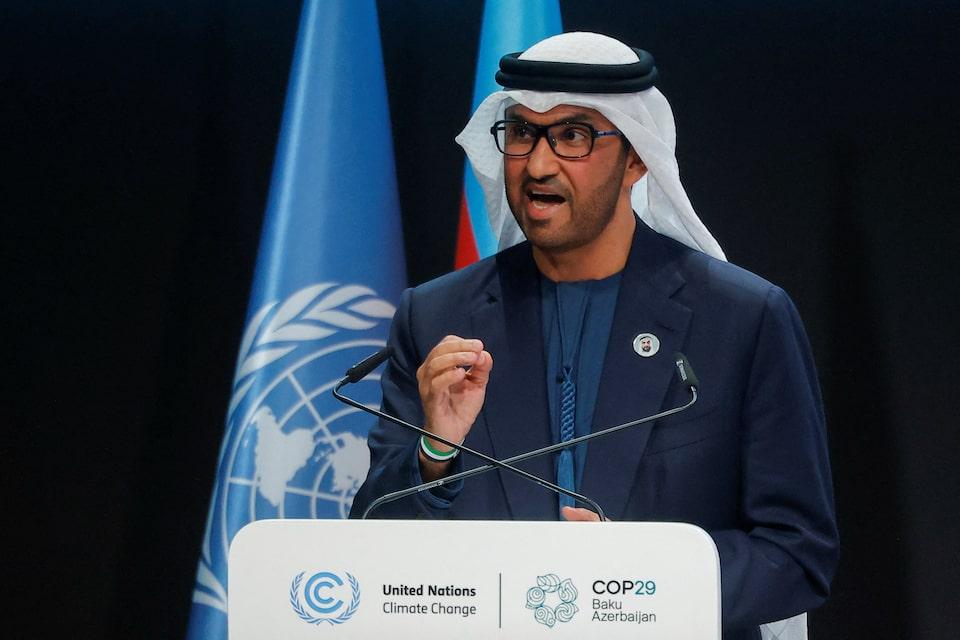
DUBAI, June 3 (Reuters) - XRG, the international investment arm of Abu Dhabi National Oil Company, said on Tuesday it aims to have a gas and LNG business with capacity of between 20 million and 25 million metric tons per annum by 2035. XRG's board, which includes former BP CEO Bernard Looney and Blackstone's Jon Gray, approved a five-year business plan that aims to create an integrated gas and LNG business that included the capacity target, XRG said in a statement. Sign up here. The board also "supported the assessment of potential upstream gas M&A and LNG opportunities to strengthen its North American gas position," XRG said. ADNOC Chief Executive Sultan Al Jaber, who is also XRG's executive chairman, said during U.S. President Donald Trump's visit to Abu Dhabi last month that the enterprise value of ADNOC's energy investments in the U.S. would rise to $440 billion in the next decade from $70 billion. He also said in March that XRG would make a significant investment in U.S. natural gas in coming months. ADNOC had agreed in October to buy German chemicals maker Covestro for 14.7 billion euros including debt. Jaber later said it would sit under XRG. XRG also reached a deal in March with Austria's OMV to merge their petrochemicals businesses Borouge and Borealis to create a firm with an enterprise value of $60 billion. The board on Tuesday "endorsed the company's ambition to create a top three global chemicals platform," XRG said. XRG had said that along with gas and chemicals, low carbon energies would be its other major focus. Its statement on Tuesday, pointing to artificial intelligence-linked demand for power, particularly in the U.S., said the board directed XRG's Energy Solutions platform to "expand its investments across the energy value chain while continuing to develop select opportunities in carbon capture and storage and low-carbon fuels such as biofuels and low-carbon hydrogen that align with attractive return profiles." https://www.reuters.com/business/energy/xrg-targets-gas-lng-capacity-20-25-million-tons-per-year-by-2035-2025-06-03/
2025-06-03 10:59
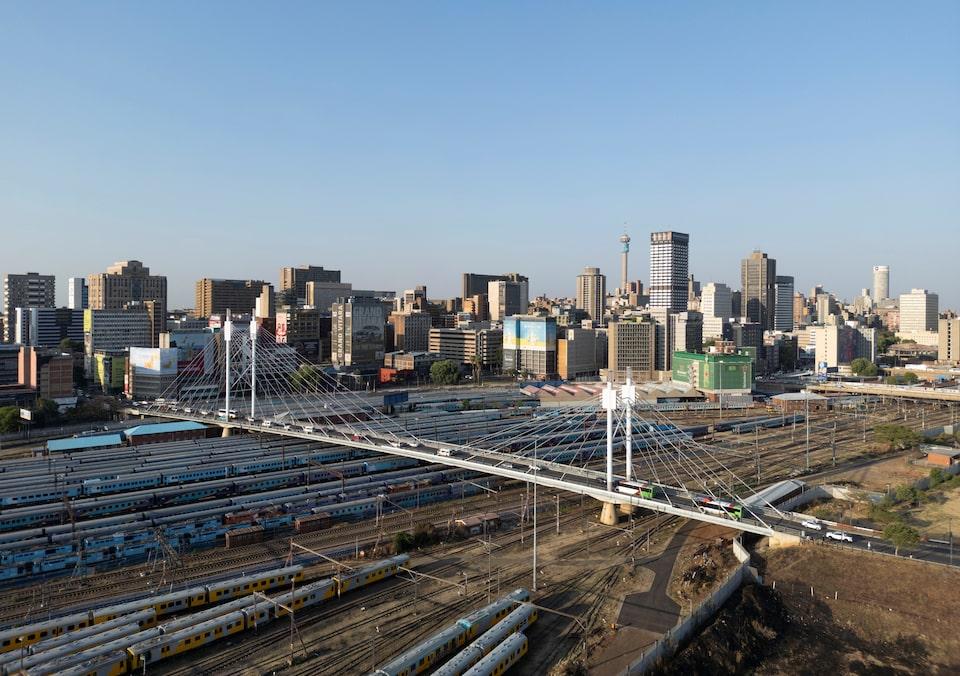
PRETORIA, June 3 (Reuters) - South Africa's economy stagnated in the first quarter, eking out quarter-on-quarter growth of just 0.1%, as contractions in sectors like mining and manufacturing offset a strong performance by agriculture. Africa's biggest economy has struggled to build momentum since the 2008-2009 global financial crisis, with annual growth averaging less than 1% over the past decade. Sign up here. Business and consumer confidence has picked up since the formation of a coalition government last year, but that is yet to translate into higher levels of output. Tuesday's data was marginally better than expected, as economists polled by Reuters had predicted gross domestic product (GDP) would be unchanged from the previous quarter in seasonally adjusted terms (ZAGDPN=ECI) , opens new tab. But analysts and the country's top statistics official said the weak growth was worrying. "Our economy is not growing sufficiently, ... and at this state, it is easy for it to slide into the negative," Statistician-General Risenga Maluleke told a press conference. The agriculture sector grew more than 15% in the first quarter, making the biggest contribution to growth. But mining shrank 4% and manufacturing 2%. Statistics South Africa revised down its estimate of fourth-quarter growth to 0.4% quarter-on-quarter, from an initial estimate of 0.6%. Capital Economics said in a research note that the data showed South Africa's economic recovery was losing momentum, strengthening the case for more interest rate cuts from the central bank. The country's coalition government is trying to lift the growth rate through reforms, but longstanding problems like logistics bottlenecks at the ports and on the freight rail network are only slowly easing. First-quarter GDP increased 0.8% year on year, versus forecasts for 0.7% growth (ZAGDPY=ECI) , opens new tab. Last week, the central bank revised down its 2025 growth forecast to 1.2% from 1.7%. https://www.reuters.com/world/africa/south-africas-first-quarter-gdp-rises-01-qq-2025-06-03/