2025-06-03 04:05
U.S., Japan debt worries at top of list France and UK still a concern but less so than last year Worries over high-debt Italy ebb, for now LONDON, June 3 (Reuters) - Surging government debt levels are becoming a pressure point for big economies and bond investors have their sights on those not doing enough to improve their finances. A Moody's decision to strip the United States of its last triple-A credit rating last month and weak demand for Japanese auctions moves attention to two of the world's biggest economies. Sign up here. A debt crisis may not be the base case, but warning bells are starting to ring. Here's a look at who's in the spotlight for markets and why: 1/ USA The United States has shot to the top of the worry list after a sharp bond sell off in April. Adding to concerns is President Donald Trump's tax and spending bill, which could add roughly $3.3 trillion to debt by 2034, according to nonpartisan think tank the Committee for a Responsible Federal Budget. The Moody's decision is another blow, while JP Morgan CEO Jamie Dimon warns of a "crack in the bond market" partly due to overspending. Its status as the world's No.1. reserve currency offers the U.S. some protection and Treasury Secretary Scott Bessent says the country will never default. And investors reckon authorities will prevent 10-year yields, the benchmark for borrowing costs for companies and consumers, from rising too far above 4.5% . The banking industry is optimistic that U.S. regulators could soon revamp the supplementary leverage ratio, potentially reducing the cash reserves banks must hold and encouraging them to play a larger role in Treasury market intermediation. 2/ Japan For years Japan was the textbook case of how markets could shrug off a mammoth debt pile. Now that's changing. Japan's public debt at more than twice its economy is the biggest among developed economies. Its longer-dated bond yields , hit record highs in May after a 20-year bond sale resulting in the worst auction result since 2012 cast doubt on demand. Thirty-year borrowing costs have jumped 60 basis points (bps) over the last three months, even faster than in the U.S. The culprit: waning demand for longer-dated paper from traditional buyers like life insurers and pension funds at a time when the bond holdings of the Bank of Japan, which holds roughly half the market, fell for the first time in 16 years. Prime Minister Shigeru Ishiba meanwhile faces pressure for big spending and tax cuts. Policymakers are already considering trimming super-long bond sales, temporarily soothing market concerns. Still, another poor auction last week suggests they may be deeper rooted. "The weak Japanese auctions are a symptom that something is happening underneath," said Nordea chief market strategist Jan von Gerich. 3/ UK In Europe, Britain, with debt near 100% of GDP, remains vulnerable to global bond selloffs even as it stresses fiscal discipline. Finance minister Rachel Reeves' multi-year spending review next week could be the next test for the only G7 economy with 30-year borrowing costs above 5% . The government appears prepared to spend more on defense and health, among others, Rabobank strategist Jane Foley said, even as it pledges not to increase taxes and keep spending tight. The IMF urged Reeves to stick to plans for lower public borrowing. An earlier end to active Bank of England bond sales would potentially support the gilt market, said Sam Lynton-Brown, global head of macro strategy at BNP Paribas. 4/ France Pressure in France's bond market, driven last year by concern that political instability would hamper belt tightening efforts, has abated. The risk premium investors demand for holding French debt over Germany's has eased to around 66 bps from 90 bps in November . Furthermore, investors have positioned for a drop in euro area risk premiums, helped by expectations that European countries will step up cohesion on areas such as defense. Still, caution is warranted. Prime Minister Francois Bayrou plans to announce a four-year deficit-cutting roadmap in July, which could set the scene for budgetary warfare in parliament. "France has not had any improvement on the debt side since the COVID crisis," said Carmignac fixed income fund manager Eliezer Ben Zimra. 5/ Italy Italy has moved down the worry list thanks to increased political and economic stability and improved creditworthiness. Its budget deficit dropped to 3.4% of output in 2024 from 7.2% in 2023, and is forecast to fall to 2.9% in 2026, matching projections for Germany, noted Kenneth Broux, head of corporate research FX and rates at Societe Generale. "This was unheard of many years ago." Broux said that while Italy still has challenging long-term debt dynamics, a relatively better performance compared to countries such as France and diversification in favour of European assets supported its bonds. The Italy/German 10-year bonds yield gap is near its narrowest since 2021 at just under 100 bps. https://www.reuters.com/world/china/g7-debt-is-now-pressure-point-anxious-markets-2025-06-03/

2025-06-03 02:59
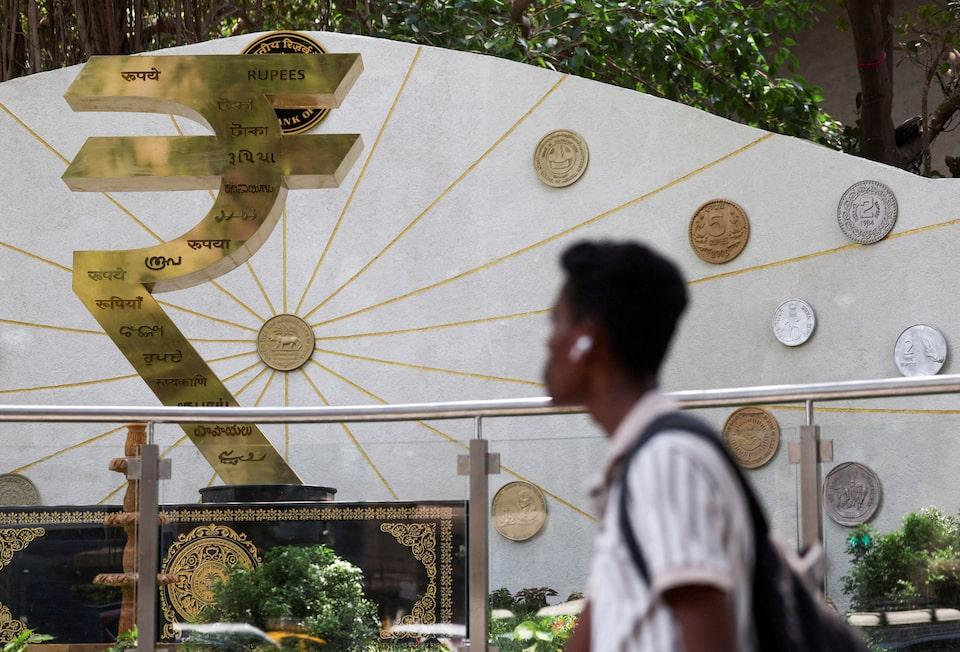
MUMBAI, June 3 (Reuters) - The Indian rupee is likely to open slightly weaker on Tuesday and is expected to hold a narrow range through the day amid a struggling U.S. dollar and the lack of momentum on either side. The 1-month non-deliverable forward indicated an open in the 85.40-85.44 range, versus the close of 85.3825 in the previous session. Sign up here. Non-deliverable forwards suggest the rupee is unlikely to benefit from the up-move in regional peers. The offshore Chinese yuan (CNH=) inched higher past the 7.20 level against the dollar, while the Korean won, Malaysian ringgit, and Indonesian rupiah each rose about 0.3%. "Yesterday, the situation was reverse — the rupee outperformed most Asian peers," said a currency trader at a Mumbai-based bank, adding that overall, the rupee was "simply lacking direction". "We’re in a phase where speculative interest has diminished, leading to largely range-bound sessions. Any meaningful move is likely to come only post the two key events on Friday.” On Friday, the Reserve Bank of India is expected to deliver its third successive interest rate cut - a 25-basis-point cut - on the back of benign inflation data. Later in the day, the release of the U.S. non-farm payrolls report for May will offer fresh insight into the health of the U.S. labour market amid ongoing tariff-related uncertainty. Softer non-farm payrolls data could reinforce expectations of a potential Federal Reserve rate cut, keeping the dollar index under mild downward pressure, HDFC Bank said in a note. The U.S. dollar has been under pressure for much of the year, weighed down by policy uncertainty and, more recently, concerns over the fiscal deficit. The dollar index (=USD) is currently trading just 1% above its year-to-date low. Concerns about tariff-related turbulence has resurfaced, adding to the dollar’s headwinds. U.S. President Donald Trump signalled plans to double tariffs on steel and aluminium, while U.S.-China trade relations remain uncertain. KEY INDICATORS: ** One-month non-deliverable rupee forward at 85.54; onshore one-month forward premium at 14.25 paisa ** Brent crude futures up 0.5% at $65 per barrel ** Ten-year U.S. note yield at 4.45% ** As per NSDL data, foreign investors sold a net $585.4 million worth of Indian shares on May 30 ** NSDL data shows foreign investors sold a net $712.3 million worth of Indian bonds on May 30 https://www.reuters.com/world/india/rupee-caught-between-us-dollar-weakness-lack-directional-bias-2025-06-03/
2025-06-03 01:01
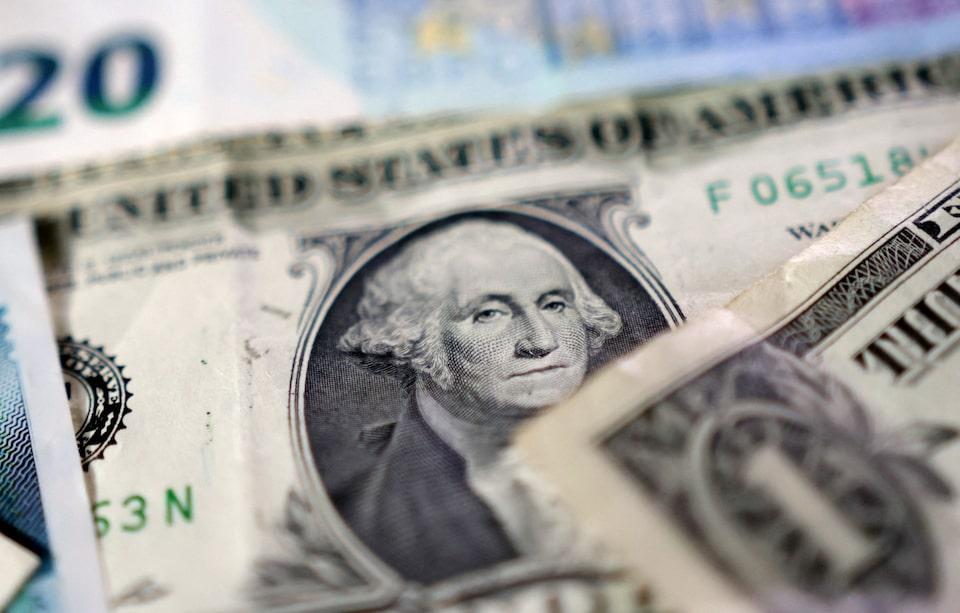
Dollar index briefly hits lowest since late April and recovers US manufacturing contracts for third month Euro dented by slower euro zone inflation US job openings rebound in April; layoffs pick up NEW YORK, June 3 (Reuters) - The U.S. dollar rose on Tuesday, rebounding from a six-week low against the euro, even as investors remained concerned about potential economic damage from the trade war waged by President Donald Trump's administration. "We had a big selloff in the dollar and we have it bouncing back a bit today ... I don't think there has been a lot of fresh news to say the dollar has turned in any kind of meaningful way," said Marc Chandler, chief market strategist at Bannockburn Global Forex LLC. Sign up here. "I'd say the bounce is still fairly constrained, fairly limited," he said. The dollar was up 0.9% against the yen at 144.00. The euro fell 0.6% to $1.1371, having briefly touched a six-week high of $1.1454. Data earlier showed inflation in the euro zone slowed below the European Central Bank's target of 2%, underpinning expectations for a rate cut later this week. For the year, the dollar is down about 9% against the euro. While global equity markets have broadly recovered from an early-April selloff in the wake of the on-again, off-again saga of Trump's tariff threats, the greenback remains pressured. U.S. duties on imported steel and aluminium are set to double to 50% starting on Wednesday, the same day the Trump administration expects countries to submit their best offers in trade negotiations. Trump and Chinese President Xi Jinping were likely to have a call soon to iron out trade differences, Treasury Secretary Scott Bessent said on Sunday, although on Monday there was an from China's Commerce Ministry of U.S. accusations that Beijing violated their trade agreement. "Trade developments remain crucial. Reports suggest China is gaining leverage over the U.S. through its control of chip supply chains and rare earths," ING strategist Francesco Pesole said. "Trump and Xi Jinping are set to speak this week, and past direct talks have sometimes eased tensions. That leaves room for a positive surprise that could help the dollar at some point this week," he said. On Tuesday, data showed U.S. job openings increased in April, but layoffs picked up in a move consistent with a slowing labor market amid a dimming economic outlook because of tariffs. Federal Reserve officials on Tuesday argued again for caution on monetary policy as Trump's trade war continues to inject substantial amounts of uncertainty and the risk of economic weakness into the outlook. Fiscal worries have also given rise to a broad "sell America" theme that has seen dollar assets from stocks to Treasury bonds dropping in recent months. Those concerns come into sharp focus this week as the Senate starts considering the administration's tax cut and spending bill, estimated to add $3.8 trillion to the federal government's $36.2 trillion in debt over the next decade. Still, traders in the foreign exchange options market are positioned for the U.S. currency to weaken further. The British pound was 0.2% lower at $1.3519 on Tuesday, ahead of a raft of Bank of England speakers and an auction of long-dated government bonds that may offer a gauge of investor confidence in Britain's finances. Bitcoin, the world's largest cryptocurrency by market capitalisation, was 1.2% higher on the day at $106,219. https://www.reuters.com/world/africa/dollar-holds-near-six-week-low-trade-war-wears-us-economy-2025-06-03/
2025-06-03 00:44
Iran set to reject US nuclear proposal US dollar weakens on fresh tariff threats OPEC+ to raise output by 411,000 bpd in July US crude inventories likely fell last week LONDON, June 3 (Reuters) - Oil edged up on Tuesday, in the face of rising geopolitical tensions as the war in Ukraine ramped up despite peace talks in Turkey and Iran was set to reject a U.S. nuclear deal proposal that would be key to easing sanctions on the major oil producer. Crude had gained nearly 3% on Monday after the Organization of the Petroleum Exporting Countries and allies, known as OPEC+, kept its July output hike at 411,000 barrels per day, the same as earlier months and less than some in the market had feared. Sign up here. Brent crude futures gained 45 cents, or 0.7%, to $65.08 a barrel by 1154 GMT. U.S. West Texas Intermediate crude was up 31 cents, or 0.5%, to $62.83. "Risk premia have filtered back into the oil price following deep Ukraine strikes on Russia over the weekend," said analyst Harry Tchilinguirian of Onyx Capital Group. "But more importantly for the barrel count, there is the to and fro between the U.S. and Iran regarding uranium enrichment." Ukraine and Russia at the weekend ramped up the war with one of the biggest drone battles of their conflict, a Russian highway bridge blown up over a passenger train and an attack on nuclear-capable bombers deep in Siberia. Iran, meanwhile, was poised to reject a U.S. proposal to end a decades-old nuclear dispute, an Iranian diplomat said on Monday, saying it fails to address Tehran's interests or soften Washington's stance on uranium enrichment. If the nuclear talks fail, it could mean continued sanctions on Iran, which would limit Iranian supply and be supportive of oil prices. Further support came from the weak dollar. The dollar index held near six-week lows as investors weighed the outlook for U.S. President Donald Trump's tariff policy and its potential to hurt growth and stoke inflation. A weaker U.S. currency makes dollar-priced commodities such as oil less expensive for holders of other currencies. "Crude oil prices continue to rise, supported by the weakening dollar," said Priyanka Sachdeva, senior market analyst at Phillip Nova. Adding to supply worries, wildfires burning in Canada's province of Alberta have affected more than 344,000 barrels per day of oil sands production, or about 7% of the country's overall crude output, according to Reuters calculations. Further price support could come if forecasts of a drop in U.S. crude inventories are realised in the latest round of weekly supply reports. https://www.reuters.com/business/energy/oil-rises-iran-russia-canada-supply-concerns-2025-06-03/

2025-06-03 00:06
Aerones' robots halve wind turbine maintenance time, reducing downtime costs Funding led by US investors Activate Capital and S2G Investments Aerones plans further $15-$20 million debt raise LONDON, June 3 (Reuters) - Latvian tech company Aerones, which counts GE and Enel among its customers, has raised $62 million to fund a global roll out of robots and other AI-enabled solutions to protect and maintain thousands of wind turbines in over 30 countries, its CEO told Reuters. Wind power accounts for almost 10% of the world's energy generation and is growing rapidly but the majority of turbines are still maintained by hand, causing days-long blackout periods which cost energy companies and turbine operators huge sums. Sign up here. Aerones' robots can maintain and service vast wind-turbine blades in a minimum of half the time it takes for humans to do so, providing an efficient, safe and cost-effective solution for growth, its co-founder and CEO Dainis Kruze said. "The industry is scaling really fast and maintenance is tough," he said. "The wind turbine downtime costs more than the labour itself and that bottleneck is driving up the cost of renewable energy." "We don't wait until the blade is already on the ground but work out how to prevent that blade from falling to the ground," he said. The equity funding round was led by U.S. investors Activate Capital and S2G Investments. Aerones is also backed by a 4 million euro grant from the EU Innovation Fund and an additional 30 million euro funding round in 2023. Aerones is scaling rapidly in United States so it was important to bring on U.S. partners this time, Kruze said. The firm last year opened an office in Dallas, Texas and is hiring and training local people. The company plans to return to the market to raise around $15 million to $20 million of venture debt later this year, Kruze said. Since 2020, Aerones has enabled nearly 400,000 MWh of additional clean electricity and helped avoid 165,000 tonnes of carbon emissions, the company said in a statement. https://www.reuters.com/sustainability/climate-energy/robotics-firm-raises-60-million-scale-up-wind-turbine-repairs-2025-06-03/

2025-06-02 23:17
BRASILIA, June 2 (Reuters) - Brazil's central bank governor said on Monday that the monetary tightening cycle is still open and that policymakers want to preserve their flexibility to digest incoming data and calibrate the appropriate terminal interest rate. "We are still discussing the hiking cycle," Gabriel Galipolo said at an event in Sao Paulo. "Flexibility means we are open." Sign up here. The bank's monetary policy committee meets later this month for its next rate decision, after raising the benchmark Selic rate by 50 basis points in May to 14.75%, its highest level in nearly two decades. Policymakers last month dropped forward guidance and any mention of the need for a more restrictive rate, instead highlighting the necessity of maintaining a restrictive stance for a prolonged period. The shift was widely interpreted as a signal that the aggressive 425-basis-point tightening cycle may have come to an end. Galipolo said that at this moment, as the central bank calibrates the terminal interest rate, it is "obvious" that the model increasingly weighs how long rates will remain at a contractionary level. Following official data last week showing strong growth in the first quarter for Latin America's largest economy, he emphasized the economy has continued to show surprising resilience, adding that policymakers want to gather more data to be sure activity is on a clear trend. Regarding a controversial hike in the financial transactions tax, Galipolo said it was necessary to wait for the final design of the measure before assessing its impact, an analysis that would be conducted with due caution by the central bank. He reiterated, however, that he does not consider it appropriate to use the regulatory tax as a tool for boosting revenue or supporting monetary policy. His remarks came amid market interpretations that, by making corporate credit operations more expensive, the government's measure could help cool the economy in line with the central bank's goals, potentially reducing the need for further rate hikes. https://www.reuters.com/world/americas/brazil-central-bank-chief-says-tightening-cycle-still-open-2025-06-02/