2025-06-02 21:23
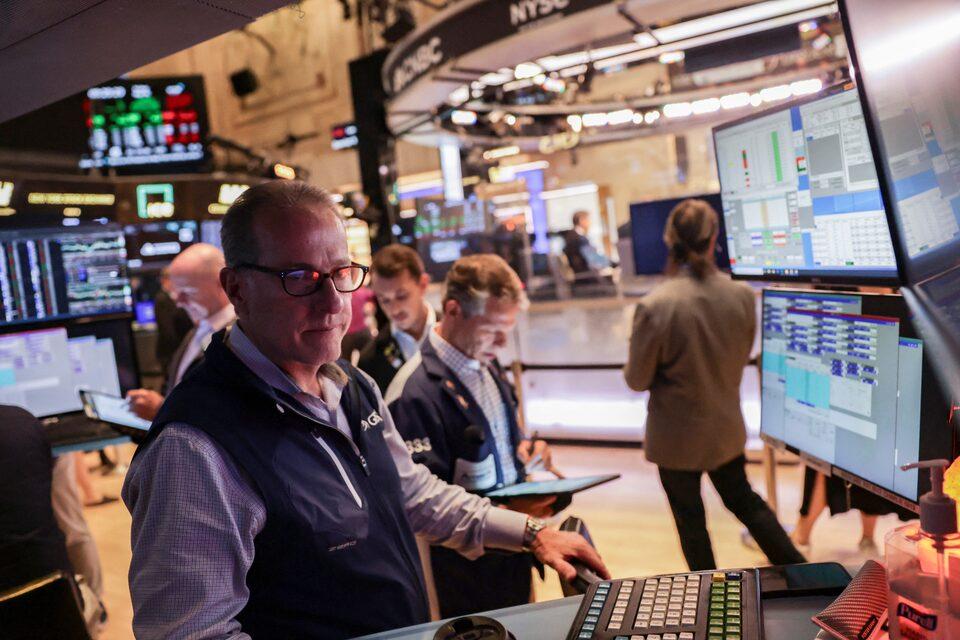
ORLANDO, Florida, June 2 (Reuters) - By Jamie McGeever, Markets Columnist The new trading month got off to a cautious start on Monday, with risk appetite sapped by the U.S.-China trade standoff and bubbling military tensions around the world, although a closely-watched tracking estimate of U.S. growth helped drive a late rally on Wall Street. Sign up here. In my column today I look at how, despite the drop in profits in the first quarter, corporate America is well-prepared to face the economic storm that may be coming its way. Indeed, corporate America has rarely been in better shape. More on that below, but first, a roundup of the main market moves. If you have more time to read, here are a few articles I recommend to help you make sense of what happened in markets today. Today's Key Market Moves Trade tension turns to tentative hope The first trading day of June was sticky for stocks, bad for bonds and downbeat for the dollar, with tariff concerns once again top of investors' minds. Wall Street got off to a tepid start, perhaps understandably given how well it performed the month before. According to Citi's Stuart Kaiser, U.S. stocks outperformed Treasuries in May by the widest margin since October 2022. The S&P 500 rose 6.2% to break its first three-month losing streak in five years while the 10-year Treasury's total return was -1.57%, giving stocks their widest winning margin over bonds for a single month since October 2022. But a sense of cautious optimism emerged as the session progressed, and the main indices rebounded. Two developments were worth noting. First, the Atlanta Fed's GDPNow estimate of annualised GDP growth in the second quarter growth was raised to a punchy 4.6% from 3.8%, which is much higher than current consensus forecasts and would mark a significant recovery from the January-March contraction. Second, the White House said President Donald Trump and China's Xi Jinping will likely speak this week, a sign of possible detente in the trade war between the two countries that's creating so much of the global economic and market uncertainty. Meanwhile, the bond and currency market trends that have been established in recent weeks show no sign of reversing, and the first trading day of the month saw the dollar and Treasuries fall again, and yield curves continue to steepen. Federal Reserve Governor Christopher Waller's remarks on Sunday that U.S. interest rates can still come down later this year were echoed by Chicago Fed President Austan Goolsbee on Monday. This weighed on the dollar and short-dated yields, but tariff and inflation worries lifted long-dated yields, and the 20- and 30-year yields are bumping up against 5.00% again. The dollar's slide, economic uncertainty and heightened geopolitical tensions all put a strong bid under gold, which leaped nearly 3% to a three-week high. April's record peak of $3,500/oz is not too far away. Tuesday's session will likely be dominated by tariff headlines again, while a speech from Bank of Japan Governor Kazuo Ueda and euro zone inflation figures for May are among the other events investors will be watching closely. Corporate America is well prepared for the coming storm Headwinds from tariffs, bond yields and 'stagflation' are gathering force, but corporate America could not be in better shape to face the economic storm that may be building. Data released last week showed that U.S. pre-tax corporate profits fell $118.1 billion, or 2.9%, in the first quarter, the fastest pace since 2020, suggesting companies are feeling the pinch from tariffs even before they've properly started to bite. After-tax profits fell 3.6%. But any sense of alarm should be mitigated by the fact that profits surged $205 billion, or 5.4%, the three months before. The decline in the January-March period was simply normalization on the back of a bumper quarter. And on a year-on-year basis, profits were up more than 5%. True, the next few quarters could get messy. If growth slows or inflation starts to rise, corporate margins could get squeezed, consumers may curb spending and companies could find themselves with limited pricing power. But zoom out, and the bigger picture suggests corporate America has rarely been stronger. Depending on how you slice and dice the figures, corporate profits as a share of national output or income are still extraordinarily high. In some cases, they're close to the highest on record. Consider pre-tax profits with inventory valuation and capital consumption adjustments. These fell slightly to 13.0% of GDP in the first quarter of this year, on a seasonally-adjusted annual basis, but that was from a record 13.5% in the September-December period. After-tax profits dipped to 12% of GDP from 12.2% in the final quarter of last year. Again, that was a small decline, and it leaves after-tax profits still near the all-time peak of 12.8% of GDP recorded in the second quarter of 2021. The average over the past 75 years is less than 7.5% of GDP. To paraphrase former British Prime Minister Harold Macmillan, corporate America has never had it so good. Which is just as well, because headwinds are gathering. DOMESTIC VS 'ROW' One can debate how much any of the number of brewing risks will land on the real economy, but companies could certainly feel some pain if they end up facing the collective punch of tariffs, weakening consumer demand, diminishing pricing power and higher-for-longer interest rates. "An increasingly fragmented environment means diverging trends across economies. It's an environment ... that will constrain profits at home and around the world," says Gregory Daco, chief economist at EY-Parthenon. Tariffs and protectionism will put the squeeze on global supply chains and overall trade. It will be interesting to observe how the divergence between domestically-generated profits and earnings accrued from the rest of the world (RoW) plays out in this environment. Domestic profits account for the majority of total income, of course, but that share has exploded recently. Or looked at the other way, the share of profits from abroad has plunged. If Trump's trade war succeeds in prompting U.S. companies to bring more production back home, the 'RoW' footprint may shrink further. In the fourth quarter of 2019, just before the pandemic, domestically-generated profits were around 75% of the $2.13 trillion total, on a seasonally-adjusted annual basis, and 'RoW' profits accounted for a quarter. In the first three months of this year, domestic profits accounted for 87.5% of the total, and the share of profits from abroad had halved to 12.5%. Corporate profitability is being tested. The aggregate second quarter earnings growth forecast for S&P 500 companies stands at 5.5%, according to LSEG I/B/E/S, down from 10.2% two months ago. The 2025 calendar year earnings growth forecast has shrunk to 8.3% today from 14.0% at the start of the year. The challenges are mounting, but corporate America can face them from a position of strength. What could move markets tomorrow? Opinions expressed are those of the author. They do not reflect the views of Reuters News, which, under the Trust Principles , opens new tab, is committed to integrity, independence, and freedom from bias. https://www.reuters.com/world/china/global-markets-trading-day-graphic-pix-2025-06-02/
2025-06-02 20:56
ZURICH, June 2 (Reuters) - Microsoft (MSFT.O) , opens new tab will invest $400 million in Switzerland, the company said on Monday, with the money going towards developing its cloud computing and artificial intelligence infrastructure. The U.S. tech company announced the investment at a meeting of Swiss Economy Minister Guy Parmelin and its vice chair Brad Smith in Bern. Sign up here. Microsoft, which employs 1,000 people in Switzerland, did not give details on how many jobs the investment would create. The money will be used to expand and upgrade its four data centres near Geneva and Zurich, responding to increased demand for AI and cloud computing services in Switzerland, it said. The expansion will serve existing and new customers and allow data to remain within Swiss borders - an important requirement for sectors like healthcare, finance and government. Microsoft will also expand its partnership work with small and medium-sized companies and step up training efforts to help people use AI and digital tools. "Switzerland has created one of the world's leading innovation ecosystems, blending world-class research with real-world applications," Smith said in a statement. https://www.reuters.com/technology/microsoft-invest-400-million-switzerland-ai-cloud-computing-2025-06-02/

2025-06-02 20:49
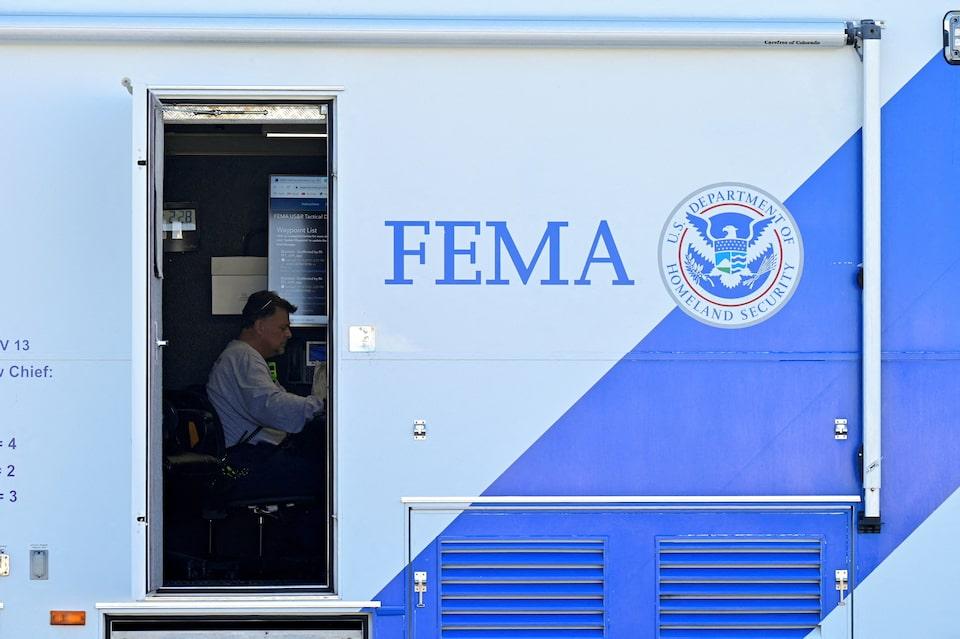
Agency head Richardson made comment on second day of hurricane season Richardson said no changes to agency's disaster plan this year FEMA cuts have raised concern about agency capacity to respond to natural disasters WASHINGTON, June 2 (Reuters) - Staff of the Federal Emergency Management Agency were left baffled on Monday after the head of the U.S. disaster agency said he had not been aware the country has a hurricane season, according to four sources familiar with the situation. The remark was made during a briefing by David Richardson, who has led FEMA since early May. It was not clear to staff whether he meant it literally, as a joke, or in some other context. Sign up here. The U.S. hurricane season officially began on Sunday and lasts through November. The National Oceanic and Atmospheric Administration forecast last week that this year's season is expected to bring as many as 10 hurricanes. A spokesperson for the Department of Homeland Security, FEMA's parent agency, said the comment was a joke and that FEMA is prepared for hurricane season. The spokesperson said under Homeland Security Secretary Kristi Noem and Richardson "FEMA is shifting from bloated, DC-centric dead weight to a lean, deployable disaster force that empowers state actors to provide relief for their citizens." Richardson said during the briefing that there would be no changes to the agency's disaster response plans despite having told staff to expect a new plan in May, the sources told Reuters. Richardson's comments come amid widespread concern that the departures of a raft of top FEMA officials, staff cuts and reductions in hurricane preparations will leave the agency ill-prepared for a storm season forecast to be above normal. Democrats criticized Richardson following the Reuters report. Top Senate Democrat Chuck Schumer posted the Reuters headline about Richardson on X and said he was "unaware of why he hasn't been fired yet." Representative Bennie Thompson, the senior Democrat on the House Homeland Security Committee with oversight of FEMA, issued a statement to Reuters that read: "Suffice to say, disaster response is no joke. If you don’t know what or when hurricane season is, you’re not qualified to run FEMA. Get someone knowledgeable in there.” Hurricanes kill dozens of people and cost hundreds of millions of dollars annually across a swath of U.S. states every year. The storms have become increasingly more destructive and costly due to the effects of climate change. Richardson's comment purporting ignorance about hurricane season spread among agency staff, spurring confusion and reigniting concern about his lack of familiarity with FEMA's operations, said three sources. Richardson, who has no disaster response experience, said during Monday's briefing, a daily all-hands meeting held by phone and videoconference, that he will not be issuing a new disaster plan because he does not want to make changes that might counter the FEMA Review Council, the sources said. President Donald Trump created the council to evaluate FEMA. Its members include DHS head Noem, governors and other officials. In a May 15 staff town hall, Richardson said a disaster plan, including tabletop exercises, would be ready for review by May 23. CONFUSION The back-and-forth on updating the disaster plan and a lack of clear strategic guidance have created confusion for FEMA staff, said one source. Richardson has evoked his military experience as a former Marine artillery officer in conversations with staff. Before joining FEMA, he was assistant secretary at DHS' office for countering weapons of mass destruction, which he has told staff he will continue to lead. Richardson was appointed as the new chief of FEMA last month after his predecessor, Cameron Hamilton, was abruptly fired. Hamilton had publicly broken with Trump over the future of the agency, but sources told Reuters that Trump allies had already been maneuvering to oust him because they were unhappy with what they saw as Hamilton's slow-moving effort to restructure FEMA. Trump has said FEMA should be shrunk or even eliminated, arguing states can take on many of its functions, as part of a wider downsizing of the federal government. About 2,000 full-time FEMA staff, one-third of its total, have been terminated or voluntarily left the agency since the start of the Trump administration in January. Despite Noem's prior comments that she plans to eliminate FEMA, in May she approved Richardson's request to retain more than 2,600 short-term disaster response and recovery employees whose terms were set to expire this year, one of the sources said, confirming an earlier report by NBC News. Those short-term staff make up the highest proportion of FEMA employees, about 40%, and are a pillar of the agency's on-the-ground response efforts. FEMA recently sharply reduced hurricane training and workshops for state and local emergency managers due to travel and speaking restrictions imposed on staff, according to prior Reuters reporting. https://www.reuters.com/world/us/fema-staff-confused-after-head-said-he-was-unaware-us-hurricane-season-sources-2025-06-02/
2025-06-02 20:33
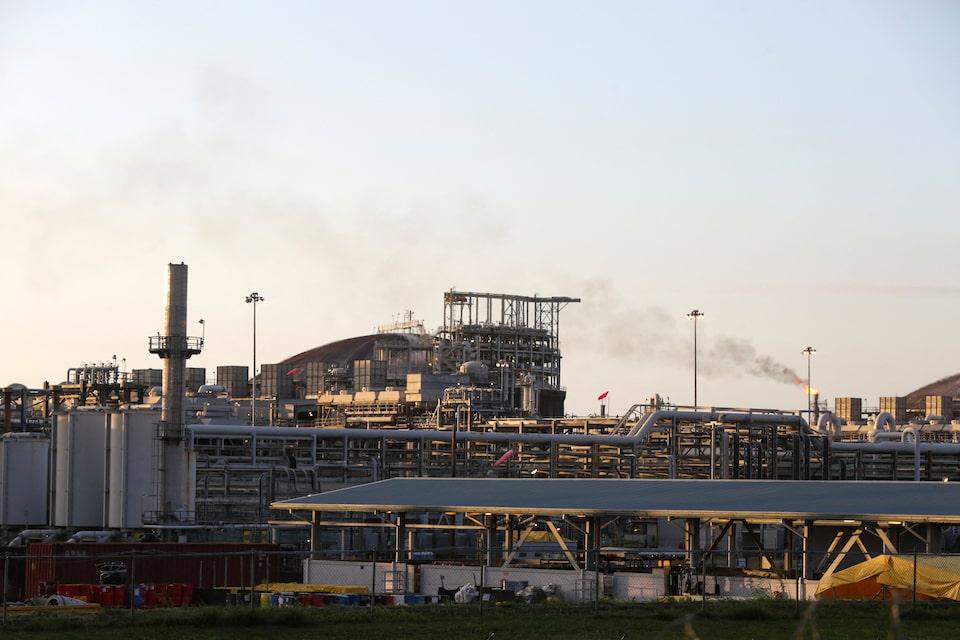
HOUSTON, June 2 (Reuters) - Exports of liquefied natural gas from Trinidad and Tobago's flagship Atlantic LNG export facility increased by 43% in May compared to April, according to LSEG preliminary ship tracking data. Trinidad is Latin America's largest LNG exporter and its flagship plant, Atlantic LNG, is jointly owned by Shell (SHEL.L) , opens new tab and BP (BP.L) , opens new tab with a capacity to produce 12 million metric tons per annum (mtpa) of the superchilled gas. Sign up here. In May Atlantic exported 0.83 mtpa of LNG, up from 0.58 MT in April, LSEG data showed. Similar to the U.S., Europe bought the majority of cargoes sold by Atlantic, while the rest went to Asia and Latin America. BP has made Trinidad and Tobago one of its focus areas for growth of its upstream production and in May announced first gas from its Mento following April's announcement of first gas from its Cypre development, both offshore Trinidad. https://www.reuters.com/business/energy/trinidads-atlantic-lng-increases-production-may-2025-06-02/
2025-06-02 20:33
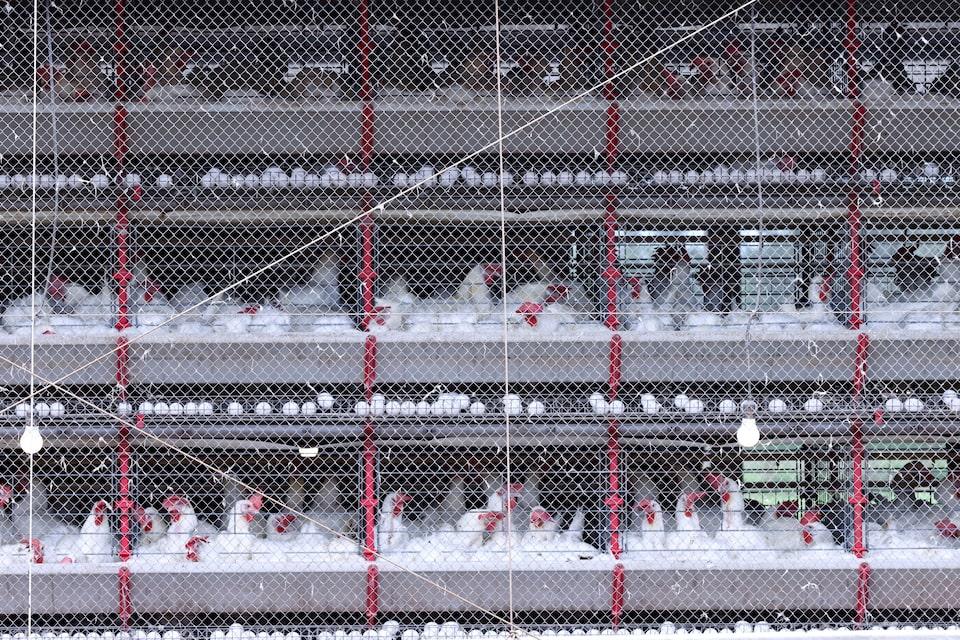
PORTO ALEGRE, Brazil, June 2 (Reuters) - Test results for a suspected bird flu outbreak on a commercial farm in the town of Anta Gorda in Rio Grande do Sul state came back negative, according to an analysis of samples released by the Brazilian Agriculture Ministry on Monday. That was the only potential case currently under investigation on a commercial farm in Brazil, the world's largest chicken meat exporter. Sign up here. The results were negative for both bird flu and Newcastle disease, the document showed. Both these diseases may trigger trade bans. The first case of bird flu on a commercial farm in Brazil was also in Rio Grande do Sul state, on May 16. On May 22, Brazilian authorities declared a 28-day bird flu observation period following the full disinfection of the farm where the first outbreak was detected. In the days following the first case in Brazil, 1.7 million eggs were destroyed in Rio Grande do Sul, according to the state's department of agriculture. Teams that run the farm where bird flu was detected, buried waste that had first been incinerated to prevent the spread of the virus. The virus killed around 15,000 birds and the farm culled an additional 2,000. Brazil hopes that by the end of the observation period the country's chicken farms can be free of bird flu disease, provided no new cases are confirmed. Controlling the outbreak would allow Brazil to resume trade with partners that have suspended chicken imports from the country, such as China and the European Union, after the first and only outbreak was confirmed. https://www.reuters.com/business/healthcare-pharmaceuticals/brazil-rules-out-bird-flu-case-commercial-farm-rio-grande-do-sul-state-2025-06-02/
2025-06-02 20:31
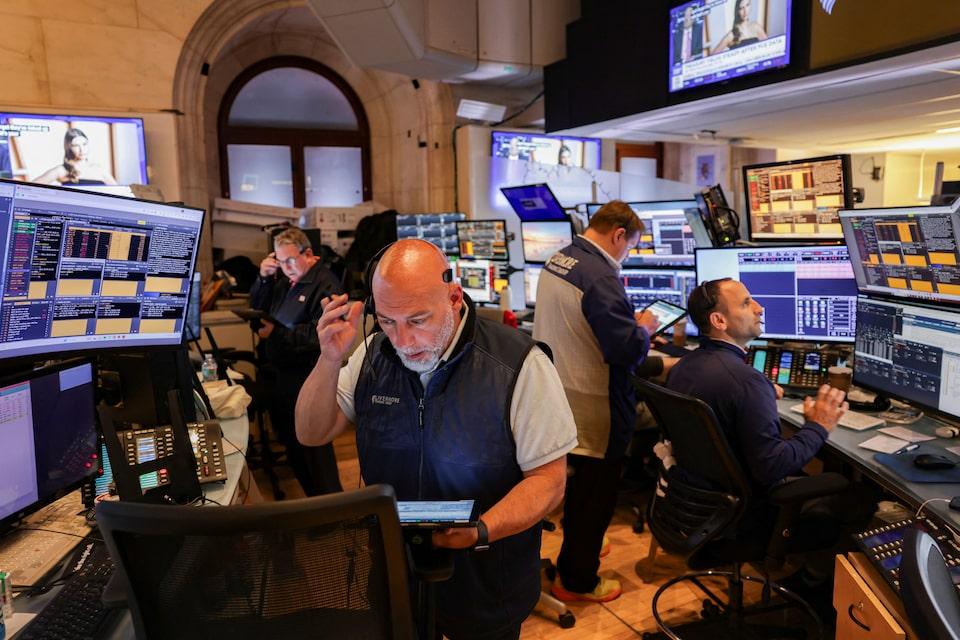
Indexes: Dow flat, S&P 500 up 0.4%, Nasdaq up 0.7% Investors hopeful of trade talks despite Trump's steel threat Tesla falls after reporting lower May sales for some EU nations U.S. ISM manufacturing PMI for May at 48.5 vs 49.3 forecast NEW YORK, June 2 (Reuters) - The S&P 500 index closed higher on Monday as investors were still optimistic over trade talks between the United States and its trading partners despite President Donald Trump's latest salvo to double tariffs on imported steel and aluminum. Trump said late on Friday he planned to increase tariffs on imported steel and aluminum to 50% from 25% starting Wednesday, just hours after he accused China of violating an agreement. Sign up here. China said on Monday that U.S. President Donald Trump's accusations that Beijing had violated the consensus reached in Geneva trade talks were "groundless" and promised to take forceful measures to safeguard its interests. The Trump administration wants countries to provide their best offer on trade negotiations by Wednesday as officials seek to accelerate talks with multiple partners ahead of a U.S.-imposed deadline in just five weeks, according to a draft letter to negotiating partners viewed by Reuters. read more "Markets see the latest round of tariff threats and ramped up rhetoric against China, the EU, and steel as nudges to move negotiations towards the finish line," said Jamie Cox, managing partner at Harris Financial Group. Shares of U.S. steel companies rose, led by Cleveland-Cliffs , which surged 23%. Other steel-makers also rose, including Nucor (NUE.N) , opens new tab and Steel Dynamics (STLD.O) , opens new tab. However, shares of automakers dropped, with Ford (F.N) , opens new tab down almost 3.9% and General Motors (GM.N) , opens new tab also falling by a similar percentage. The increased levies risk deepening Trump's global trade war, and dousing enthusiasm in markets stemming from the U.S. president's softer trade stance that drove a recovery in risky assets last month. A temporary relief on some levies on China and a rollback of steep tariff threats on the European Union, along with strong earnings and an improving economic picture helped the benchmark S&P 500 log its best monthly performance in 18 months in May. The Dow Jones Industrial Average (.DJI) , opens new tab rose 35.41 points, or 0.08%, to 42,305.48, the S&P 500 (.SPX) , opens new tab gained 24.25 points, or 0.41%, to 5,935.94 and the Nasdaq Composite (.IXIC) , opens new tab gained 128.85 points, or 0.67%, to 19,242.61. The S&P in May had tallied its biggest monthly increase since November 2023. U.S.-listed energy stocks advanced after producer group OPEC+ kept output increases in July at the same level as the previous two months. Among technology stocks, Nvidia (NVDA.O) , opens new tab rose 1.7% and Meta (META.O) , opens new tab gained 3.6%. Tesla fell 1.1% after it reported lower monthly sales for Portugal, Denmark and Sweden. The Institute for Supply Management's (ISM) survey showed U.S. manufacturing contracted for a third straight month in May and suppliers took longer to deliver inputs amid tariffs, potentially signaling looming shortages of some goods. Dallas Federal Reserve Bank President Lorie Logan said that with the labor market stable, inflation running somewhat above target and the outlook uncertain, the central bank is keeping a watchful eye on a broad range of data to judge what response might be needed, and when. Traders currently see at least two 25-basis-point cuts by the end of the year, according to data compiled by LSEG. Investors are also looking ahead to a crucial nonfarm-payrolls report on Friday to gauge the U.S. labor market's strength amid tariff volatility. Volume on U.S. exchanges was 15.67 billion shares, compared with the 17.8 billion average for the full session over the last 20 trading days. Advancing issues outnumbered decliners by a 1.06-to-1 ratio on the NYSE. There were 257 new highs and 68 new lows on the NYSE. On the Nasdaq, advancing issues outnumbered decliners by a 1.11-to-1 ratio. The S&P 500 posted 22 new 52-week highs and 4 new lows while the Nasdaq Composite recorded 84 new highs and 80 new lows. https://www.reuters.com/business/wall-street-futures-slip-after-trumps-steel-aluminum-tariff-threats-2025-06-02/