2025-12-10 23:02
SINGAPORE, Dec 11 (Reuters) - The deadly storms that devastated Sri Lanka, Indonesia, Malaysia and Thailand in late November were "supercharged" by higher sea temperatures and made worse by rapid deforestation, scientists said in a study published on Thursday. Tropical Cyclone Senyar devastated large parts of Southeast Asia after forming in the Malacca Strait, killing nearly 1,200, including 969 on the Indonesian island of Sumatra. At least $3 billion in relief funds are required to fix the damage. Sign up here. Sri Lanka was hit by floods and landslides caused by Tropical Cyclone Ditwah, with the death toll exceeding 600 and economic losses estimated at around $7 billion. A team of researchers with the World Weather Attribution group said that during the most intensive five days of rainfall, sea surface temperatures in the North Indian Ocean were 0.2 degrees Celsius higher than the 1991-2020 average, packing the storms with additional heat and energy. Without the 1.3C rise in global mean temperatures since the pre-industrial age, the sea surface in the area would have been around one degree colder in late November, they estimated. Tropical storms are common during the monsoon season, and while scientists say there is no evidence that climate change has made them more frequent, they say higher sea temperatures are making individual events more destructive. "What is not normal is the growing intensity of these storms and how they are affecting millions of people and claiming hundreds of lives," said Sarah Kew, climate researcher at the Royal Netherlands Meteorological Institute and the study's lead author. Though the researchers were unable to determine the precise contribution made to the storms by climate change, they said the increase in extreme rainfall associated with the rise in global temperatures could amount to 9-50% in the Malacca Strait and 28-160% in Sri Lanka. Scientists have also warned that more regions could be at risk from extreme weather as storms form in new areas and follow different trajectories. Senyar's formation in the Malacca Strait was considered particularly unusual, with some scientists saying it was only the second ever to make landfall in Malaysia from the west. https://www.reuters.com/sustainability/cop/deadly-november-asian-storms-supercharged-by-climate-change-researchers-say-2025-12-10/

2025-12-10 22:26
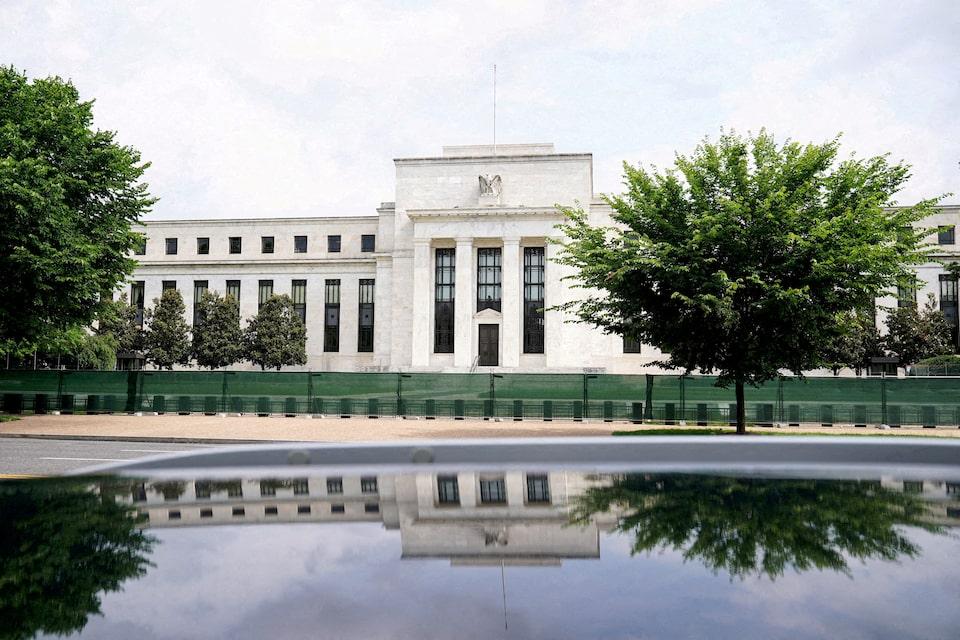
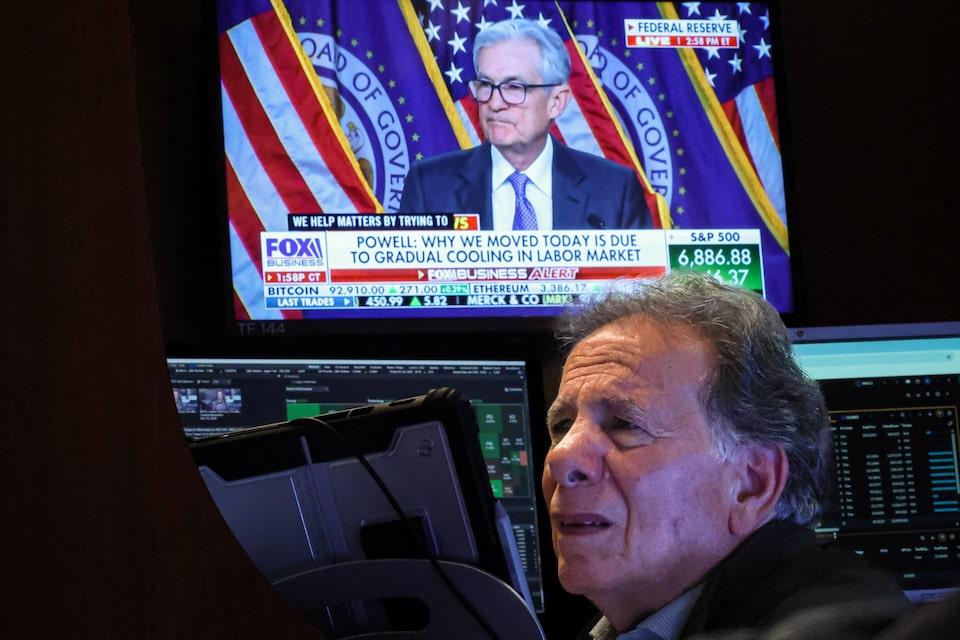
Fed reduces policy rate by a quarter of a percentage point Miran, Goolsbee and Schmid dissent on decision Policymakers see only one rate cut in 2026 WASHINGTON, Dec 10 (Reuters) - A sharply divided Federal Reserve cut interest rates on Wednesday but signaled borrowing costs are unlikely to drop further in the near term as it awaits clarity on the direction of a job market showing signs of softening, inflation that "remains somewhat elevated" and an economy it sees picking up steam next year. New policymaker projections issued after the U.S. central bank's final two-day meeting of 2025 showed a median expectation for a single quarter-percentage-point cut next year, the same as in September. But it was accompanied by a wide range of estimates that starkly illustrated the depth of disagreement about where to take monetary policy in 2026 and beyond in an economy being reshaped by President Donald Trump's policies and an artificial intelligence investment boom. Sign up here. "In considering the extent and timing of additional adjustments to the target range for the federal funds rate, the Committee will carefully assess incoming data," the rate-setting Federal Open Market Committee , opens new tab said in a policy statement that was tweaked to add language that in the past has been used to signal a pause in policy actions - an outlook at odds with market expectations still leaning toward two rate cuts in 2026. Policymakers' refreshed estimates - hindered by incomplete data about the economy after a six-week government shutdown - also showed they expect inflation to slow to around 2.4% by the end of next year even as economic growth accelerates to an above-trend 2.3% and the unemployment rate remains at a moderate 4.4%, an outlook that should dispel worries about potential stagflation that have persisted this year. The wide disagreement on the appropriate policy for such an environment also showed how challenging it could be to build a consensus in a policymaking body about to experience a leadership change, with Trump expected to nominate a successor to Fed Chair Jerome Powell within the next few weeks. THREE POLICYMAKERS DISSENT In a press conference after the meeting, Powell said: "I would note that having reduced our policy rate by 75 basis points since September and 175 basis points since last September, the fed funds rate is now within a broad range of estimates of its neutral value, and we are well positioned to wait to see how the economy evolves." Powell, who repeatedly referenced being in a strong position to wait on the next move, added, though, that Fed officials have made no decision about what to do with rates at their next policy meeting in late January. Major U.S. stock indices closed higher, while the dollar weakened against a basket of currencies and Treasury yields dropped. "The 25-basis-point rate cut was widely expected and the economic projections remain optimistic. I would view this as a semi-dovish, cautious statement," said Peter Cardillo, chief market economist at Spartan Capital Securities. "The markets are applauding this decision." Other analysts pointed to the wide range of policymaker views on the outlook for rates. "It's definitely a hawkish cut, not so much in the fact that we had two dissenters that wanted to stand pat, but if you look at the 'dot plot,' there were six of them that penciled in no rate cut at this meeting," said Art Hogan, chief market strategist at B. Riley Wealth. The dot plot graphic of Fed policymaker rate-path projections showed six "dots" at 3.9%, where the policy rate was before the rate cut on Wednesday. The decision to lower the benchmark policy rate by a quarter of a percentage point to the 3.50%-3.75% range drew three dissents, with Chicago Fed President Austan Goolsbee joining Kansas City Fed President Jeffrey Schmid in arguing the policy rate should be left unchanged, and Fed Governor Stephen Miran again advocating a larger half-percentage-point reduction. How monetary policy evolves from here, heading into a U.S. midterm election year that could revolve around the performance of the economy and with Trump urging sharper rate reductions, will now hinge on data that is still lagging from the impact of the 43-day federal government shutdown in October and November. SOLID 2026 ECONOMIC OUTLOOK The projections are in a sense optimistic: Interest rates may remain higher than anticipated, but the economy is seen growing faster even as inflation falls and the jobless rate also eases lower. But the latest policy statement and projections were crafted without the benefit of recent job and inflation reports, and instead relied on "available indicators," which Fed officials have said include their own internal surveys, community contacts and private data. The most recent official data on unemployment and inflation is for September, and showed the unemployment rate rising to 4.4% from 4.3%, while the Fed's preferred measure of inflation also increased slightly to 2.8% from 2.7%. The Fed has a 2% inflation target, but the pace of price increases has risen steadily from 2.3% in April, a fact at least partly attributable to the pass-through of rising import taxes to consumers and a driving force behind the central bank's policy divide. Job and inflation data for November will be released next week, followed later by a detailed report of economic growth for the third quarter. "Available indicators suggest that economic activity has been expanding at a moderate pace," the Fed's policy statement said. "Job gains have slowed this year, and the unemployment rate has edged up through September," it said, dropping a reference to the jobless rate as "low." The updated projections showed a core of six policymakers preferring no rate cut this year, and seven anticipating no further cuts in 2026. The median projection is for one additional quarter-percentage-point cut in 2027 as well, as inflation continues to subside towards the central bank's 2% target. "Given the lack of consensus on the Committee displayed today, along with the slow release of traditional economic data, and the arrival of a new Fed chair early in 2026, we think the Fed is likely to remain on hold for a while, although continued softness in some of the labor indicators can certainly bring another 25-basis-point cut into the mix for January," said Rick Rieder, chief investment officer for global fixed income at BlackRock and one of the five finalists Trump is considering as a successor to Powell. https://www.reuters.com/business/fed-expected-cut-rates-may-signal-coming-pause-2025-12-10/
2025-12-10 22:03
ORLANDO, Florida, Dec 10 (Reuters) - The dollar sank and Wall Street rallied on Wednesday, with the small-cap Russell 2000 index surging to new highs, after the Fed cut interest rates and Chair Jerome Powell offered a positive outlook on the path for growth and inflation. More on that below. In my column today, I look at how the global interest rate landscape is suddenly looking a lot more hawkish, and therefore potentially more volatile for investors. The global easing cycle is over. Sign up here. If you have more time to read, here are a few articles I recommend to help you make sense of what happened in markets today. Today's Key Market Moves Today's Talking Points * Fed gets to neutral The Fed cut interest rates by 25 basis points on Wednesday, and Powell said policy is now broadly in neutral territory, meaning policymakers are "well-positioned to wait and see how the economy evolves from here." Powell was bullish on growth, productivity, and the Fed's ability to get inflation back down to the 2% target. Markets liked what they heard, with Wall Street rallying and the Russell 2000 zooming to a new record high. * Emerging market inflation signals China and Brazil , opens new tab released their latest inflation figures on Wednesday, and the signals were mixed. China's consumer inflation popped up to a 21-month high but producer deflation remained entrenched, while consumer inflation in Brazil slowed to its lowest in over a year. China's yuan edged to a new 14-month high against the dollar, while Brazil's real was one of the world's worst-performing currencies on Wednesday. Chinese bond yields fell, while Brazil's rose. * You got the silver Silver is cementing its place as one of the world's best-performing assets of 2025, leaping even higher this week to new records above $60 an ounce. It is now up 110% this year, nearly double gold's rise. Can it continue? As investors close their books at year end, profit-taking should kick in. But momentum is strong, technicals are positive, and demand/supply dynamics look bullish - the silver market is a fraction of the $30 trillion gold market, and if investors want more exposure to alternative assets, relative demand looks pretty powerful. Global central bank easing cycle is over The global interest rate landscape is suddenly looking a lot less benign than it did only a few weeks ago, suggesting 2026 could be much more volatile than investors had bargained for. Comments this week from Reserve Bank of Australia Governor Michele Bullock and European Central Bank Board Member Isabel Schnabel, signaling that their next move could be rate hikes, have brought into sharp focus the hawkish drift across major central banks that has emerged recently. Bullock's remarks caught markets off guard, while Schnabel's were less surprising. But together, they underscore a much more challenging monetary policy environment next year - borrowing costs are likely to rise. The common thread is inflation, which remains stubbornly above target in many developed economies, while growth is still mostly solid. The question now is whether Federal Reserve Chair Jerome Powell will send similar signals on Wednesday with a so-called "hawkish cut" – a drop in interest rates coupled with tighter guidance. HAWKISH PIVOT A glance at market rate expectations for G10 central banks shows that only three - the Fed, Bank of England, and Norges Bank - are expected to cut rates next year, with the Fed easing by 75 basis points and the other two by 50. The Bank of Canada and RBA are now expected to raise rates by around 35 and 50 bps next year, respectively. Only a few weeks ago rate cuts in both countries were considered more likely than hikes. What explains the turnaround? Many major central banks are in a highly unusual position, having just conducted the fastest rate-cutting cycle outside a recession in decades. In the case of the Fed, it's since the mid-1980s, while the ECB has never eased policy this aggressively absent a contraction, according to Deutsche Bank analysts. History shows that, unsurprisingly, rapid easing without a recession often leads to a strong re-acceleration of economic activity, especially if the rate cuts are coupled with fiscal largesse, paving the way for a quicker-than-expected return to rate hikes. This may be what we see next year. "Central banks are very much walking a tightrope right now," Deutsche Bank's Jim Reid wrote on Tuesday. Of course, the chances of the Fed raising rates any time soon are low. But given the way the international wind is blowing, it's not something that can be completely taken off the 2026 table, Reid says. UPENDING MARKET COMPLACENCY As investors reassess the global central bank landscape, currencies and bonds could be particularly vulnerable, especially with volatility in these markets so muted at the moment. The "MOVE" index, a measure of implied volatility in the U.S. Treasury market, last week fell to a four-year low, while this week an index of implied volatility across six major currencies against the U.S. dollar hit its lowest since July last year. One likely implication of a hawkish lurch across G10 central banks is renewed selling pressure on the Japanese yen. The consensus market view has long been that the Bank of Japan will hike rates in 2026, but the expectation was that few of its G10 counterparts would follow suit, helping to prop up the flagging currency. A hawkish global pivot would complicate policy for the BOJ significantly and risk sending the yen back to recent historic lows around 162 per dollar, raising the specter of FX market intervention by the Ministry of Finance. It's not far from that level today. Another potential consequence is emerging market currency weakness. That's because, all else being equal, if rates are rising globally, investors will be drawn to the safety and increasingly tempting returns of currencies in developed economies. Meanwhile, many bond markets around the world have begun to get jittery, led, once again, by Japan. Heavy selling in Japanese government bonds (JGBs) has caused long-dated yields to leap to historic highs. But JGBs are not alone. Australia's 10-year yield is up 70 basis points since late October, Germany's 30-year yield hit a 14-year high on Tuesday, and Canada's 10-year yield is up 35 basis points in a little over a week. As this year draws to a close, there's something of a paradox in currency and bond markets. Investors are nervy, but volatility is low. The prospect of a global hiking cycle next year may soon sort that out. What could move markets tomorrow? Want to receive Trading Day in your inbox every weekday morning? Sign up for my newsletter here. Opinions expressed are those of the author. They do not reflect the views of Reuters News, which, under the Trust Principles , opens new tab, is committed to integrity, independence, and freedom from bias. https://www.reuters.com/world/china/global-markets-trading-day-graphic-2025-12-10/
2025-12-10 21:32
HOUSTON, Dec 10 (Reuters) - U.S. pipeline operator Energy Transfer (ET.N) , opens new tab has secured enough agreements to sell liquefied natural gas to make a final investment decision on its Lake Charles LNG project early next year, an executive said on Wednesday at the Reuters Energy Live conference in Houston. Energy Transfer has been developing the LNG export facility in Louisiana, with capacity of 16.5 million metric tons per annum. It said last month that it wanted to sell 80% of the project to equity partners. Sign up here. Marketing has been the most uncertain part of the project, but the work is complete and Energy Transfer has secured enough volume to make the final investment decision early next year, said Amy Chen Davis, vice president of Lake Charles LNG. Davis said she was not hugely concerned about the possibility of a long-term supply glut in LNG because lower prices often lead to higher demand. “We can’t underestimate the power of demand catching up to supply,” she said. https://www.reuters.com/business/energy/energy-transfer-says-lake-charles-lng-investment-nod-expected-early-2026-2025-12-10/

2025-12-10 21:31
NEW YORK, Dec 10 (Reuters) - The Federal Reserve cut interest rates on Wednesday in another divided vote, but signaled it will likely pause further reductions in borrowing costs as officials look for clearer signals about the direction of the job market and inflation that "remains somewhat elevated." New projections issued after the U.S. central bank's two-day meeting showed the median policymaker sees just one quarter-percentage-point cut in 2026, the same outlook as in September, with inflation expected to slow to around 2.4% by the end of next year even as economic growth accelerates to an above-trend 2.3% and the unemployment rate remains at a moderate 4.4%. Sign up here. Fed Chair Jerome Powell, in a press briefing after the rate decision, said the U.S. central bank's next move is unlikely to be a rate hike, given that is not the base case reflected in new projections from policymakers. MARKET REACTION: STOCKS: S&P 500 rose after the Fed rate cut, closed up 0.7% (.SPX) , opens new tab. BONDS: U.S. Treasury yieldsfell, with the 10-year yield last down at 4.15%. FOREX: The dollar index dropped 0.6%. COMMENTS: JAKE DOLLARHIDE, CHIEF EXECUTIVE OFFICER, LONGBOW ASSET MANAGEMENT, TULSA, OKLAHOMA: "Today's rate cut was music to both the bond market and the stock market's ears." "The guidance for possibly one cut in 2026 is better than many dire predictions of no cuts in 2026, so there's a lot of good news to parse through here for investors.” "There were tremendous fears the bond vigilantes were going to hijack this bull market rally." UTO SHINOHARA, SENIOR INVESTMENT STRATEGIST, MESIROW CURRENCY MANAGEMENT, CHICAGO: "Although the market entered the day fully priced for a rate cut, the dollar’s whipsaw reaction following the expected decision underscores the data gaps and shifting narratives driving markets today. While Powell indicated that the Fed is well-positioned to wait, growing labor concerns and a tariff-induced view on inflation brought the dollar under pressure." "The 9-3 vote showed more division than the previous 10-2 split, with two hawkish dissents offering an early look at a potentially less consensus-driven Fed. The dot plot's median for next year held at 3.375%, but the distribution was unusually wide, with seven projections above and eight below, with one as low as 2.125%. Market pricing largely looked through the Fed's projections, maintaining expectations for two cuts in 2026, highlighting the disconnect between market pricing and the dot plot." "With policy decisions a 'close call,' the broader data fog hasn't completely lifted, as more current readings continue to lag following the shutdown. Upcoming NFP and inflation reporting will offer more clarity than what was known heading into today’s meeting." MATTHIAS SCHEIBER, HEAD OF THE MULTI-ASSET TEAM, ALLSPRING GLOBAL INVESTMENTS, LONDON: "The committee, along with market participants, continues to face challenges from the U.S. government shutdown, with various agencies trying to catch up on the data publishing schedule. As a result, it had to make this decision using stale data and balancing risks. The FOMC also commented on balance sheet management, announcing Treasury bill purchases to begin again in 2026, which are expected to maintain ample reserves." "Dispersion among the FOMC on where the terminal rate lies is revealing. As 2026 begins, we believe the makeup of the board's voting members will come into greater focus and that, while the market is relatively optimistic, pricing in two more rate cuts by the end of 2026, we expect cuts will come after June, with the FOMC on pause starting in January." "The paradox remains. With a deteriorating labor market accompanied by better growth, the FOMC must balance its dual mandate and how it communicates its views. Over the long term, we believe the Fed will tolerate inflation above 2% - if growth remains resilient - acknowledging the risks of overly precise inflation targeting, but the labor market is a greater political challenge. Labor markets have experienced a structural shift this year, driven by a combination of demographics and migration. We believe fiscal stimulus would be a more impactful tool to address these challenges." NATE THOOFT, CHIEF INVESTMENT OFFICER FOR EQUITY AND MULTI-ASSET SOLUTIONS, MANULIFE INVESTMENT MANAGEMENT, BOSTON: "There's going to be enough data points and enough narratives for Fed members to use to be able to articulate for lower rates if they so desire while not deviating from the mandate of what the Fed is supposed to be focused on. And so I don't really buy too much into the idea that the Fed is going to come across as overly swayed or influenced by the Trump administration just because the Trump administration is saying 'cut rates more.' But there will likely be more members of the Fed that are comprised or that have a mindset that is similar to the arguments that members of the Trump administration would make. Keep in mind there's only one Fed member right now advocating for greater cuts, and meanwhile there's several that are arguing for no and there's probably a few that were a bit more on edge." “The market, so far seems to be taking it as marginally more dovish and I think that's because there's fewer dissenters than some people expected, including myself. And I do think the likelihood of another cut in January is fairly low unless we get some really bad data in that period of time. But we are still expecting another two or three quarter point cuts next year, of which at least one of those cuts will happen before Powell's exit." CHRIS GRISANTI, CHIEF MARKET STRATEGIST, MAI CAPITAL MANAGEMENT, NEW YORK: "My initial reaction was no surprises, rates were cut as expected, but when you look further down the road there is a lot of uncertainty. And when we move past today’s rate cut and into 2026, the tailwind from rate cuts is a lot less reliable. That could be a problem. "Play this out – with the revised Fed language about ‘the extent and timing’ of future rate cuts being uncertain, the Fed is signaling that the market should not take such cuts for granted. That means, it seems to me, that the only way we get more rate cuts is if the economy slows meaningfully, and if that’s the case, do you really want to be owning stocks?" "I don’t think it’s any accident that healthcare is the second-best performing sector today (Industrials is first). Healthcare sports low valuations and cash flows that can continue in a slowing economy. Now that the Fed has changed out of its superman costume, and won’t support the market going forward, investors are looking for sectors that are reliable and cheap. Healthcare fits both those criteria." "I don’t know if there will be rate cuts in 2026, but I will say, as an equity investor, I hope there aren’t rate cuts in ’26 because that will mean the economy is weakening. I’d rather have a solid economy and no more cuts." "When is a rate cut not a happy event? When it leads to a neutral Fed instead of a dovish Fed." MICHAEL ROSEN, CHIEF INVESTMENT OFFICER, ANGELES INVESTMENTS, SANTA MONICA, CALIFORNIA: "The rate cut was expected, so no surprise there. The 9-3 vote for a 25 basis point cut was also expected, with Schmid and Goolsbee favoring no cut and Miran wanting 50 basis points. Again, no surprise." "The statement emphasized weakness in the labor market as the principal rationale for the 25 basis point cut, and this detail is what the market has picked up on, suggesting the Fed could continue easing policy, even though the expectations for easing in 2026 haven’t changed with one 25 basis point priced in." "The initial reaction was modest rise in stocks and bond prices, modest drops in the U.S. dollar and gold, but these are likely to be reevaluated after Powell's press conference." EUGENE EPSTEIN, HEAD OF TRADING AND STRUCTURED PRODUCTS, MONECORP, NEW JERSEY: "The decision is interesting. It is interesting to see not only a three-person dissent but a dissent among the dissenters because two of them voted for no cut and Stephen Miran voted for a 50-basis point cut. I don't really think that in itself is moving the market substantially because everybody is looking at this as a 'hawkish cut.' Everybody expected there to be some dissent." JP POWERS, CHIEF INVESTMENT OFFICER, RWA WEALTH PARTNERS, BOSTON: "I had two questions coming in - who was going to dissent this time after last time? We had two folks, although Stephen Miran, I mean, he's kind of the Trump's guy on the inside. so you have to take that a little bit with a grain of salt, but I thought we would see some, at least him and probably Schmid again. So it was interesting to get Goolsbee in the mix of having three dissents for the first time since what, maybe 2019, I think. And having them on both sides. But again, Miran, I would probably discount a little bit just because he's going to be gone more than likely after his January term is up. But that was the big one to me." "And then the dot plot, it's such a poor forecasting tool and I've heard (Fed Chair) Powell say the same thing, but it does give you a lot of insight in how they're thinking. And so that's what I was just looking at when you called. So it looks like about seven of them are saying we should hold rates steady for all of 2026 and then eight of them are saying let's cut at least twice next year, so there's no consensus. And that's really interesting because Powell has been all about getting consensus for his entire time in there and at least kind of rounding up the troops before the meeting so that when they get there, they're sort of rubber-stamping a decision that they've made behind the scenes. And that has just not been the case really since the summer here. And I think we're probably headed for more of the same for the first half of next year until Powell is officially on his way out." "I'm interested to see, because the headline is obviously a hawkish cut, but let's see what (Powell) says maybe about that dot plot. If he discounts it and says we're just kind of getting our heads around some of the data, the government's reopening and things could change in a hurry if we see things moving, maybe he'll downplay it a little bit and the market might like that." ART HOGAN, CHIEF MARKET STRATEGIST, B RILEY WEALTH, NEW YORK: "It's definitely a hawkish cut, not so much in the fact that we had two dissenters that wanted to stand pat, but if you look at the dot plot, there were six of them that penciled in no rate cut at this meeting. So the dot plot is even more hawkish than the two dissenters." "I think they just took the bar up a notch for the next meeting for a rate cut." PETER CARDILLO, CHIEF MARKET ECONOMIST, SPARTAN CAPITAL SECURITIES, NEW YORK: "The quarter percent rate cut was in line with expectations. Three dissents were a little bit better than the previous voting." "The 25 basis-point rate cut was widely expected and the economic projections remain optimistic. I would view this as a semi-dovish, cautious statement." "Markets are gaining now. All three indices are on the plus side. The markets are applauding this decision." "(The Fed) is being cautious. Of course, you know, they're still waiting for more economic news to come out and waiting to see how the labor market is shaping up and there's still elevated inflation." BRIAN JACOBSEN, CHIEF ECONOMIST, ANNEX WEALTH MANAGEMENT, MENOMONEE FALLS, WISCONSIN: "The divisions on the FOMC aren't as deep as feared. Cutting 25 bps and doing some end-of-year balance sheet management isn't surprising. What's surprising is that the statement removed 'remained low' in reference to the unemployment rate. Low is the new normal given the demographic and immigration trends, so they have to be more concerned about the changes in the unemployment rate than the level of the unemployment rate now until they figure out what is or isn’t low. The median inflation forecast for 2026 fell to 2.6%. The inflation-effects of tariffs might not be as much as they originally feared." "Although the dot plot indicates there could possibly be one more cut in 2026, it's not like they'll fade into the background quietly." MICHELE RANERI, VICE PRESIDENT AND HEAD OF U.S. RESEARCH AND CONSULTING, TRANSUNION, CHICAGO: (via email) "The Federal Reserve's 25-basis point rate cut signals a measured stance that could encourage renewed credit engagement among some consumers, particularly when considering the cumulative impact of all recent small rate reductions. Consumers who have delayed borrowing may find this environment more favorable. Lower borrowing costs can begin to ease household budgets, providing relief from inflationary pressures and reducing financial stress." "While the decrease is incremental, improved affordability may help stabilize delinquency trends. Lenders should prepare for potential growth while maintaining disciplined underwriting and account management strategies to mitigate risk." https://www.reuters.com/business/view-divided-fed-cuts-rates-expected-sees-only-one-reduction-2026-2025-12-10/
2025-12-10 21:28
With prices low, PDVSA tries to keep export volumes high Venezuela crude's discount below Brent about double year-ago level Low prices press Maduro, who relies on oil revenue for subsidies HOUSTON/SINGAPORE, Dec 10 (Reuters) - Oil buyers in Asia are demanding deep discounts on Venezuelan crude due to a flood of sanctioned oil from Russia and Iran on offer and to heightened risk of loading in the South American country as the U.S. boosts its military presence in the Caribbean, traders and other sources said. President Donald Trump said on Wednesday that American authorities seized a tanker connected to Venezuela oil shipments. Venezuela has managed to increase oil exports this year from 2024 volumes even as Washington has ratcheted up pressure on President Nicolas Maduro. Sign up here. Prior to Wednesday's announcement, the U.S. military had not interrupted oil flows from the country, according to ship monitoring data and documents. The U.S. Navy has struck boats in the Caribbean Sea that were suspected of smuggling drugs, while Trump's administration has threatened to extend military operations to land targets. Growing export volumes reflect state-run PDVSA's effort to avoid a collapse of oil revenue. Low global crude prices have hit Venezuela's heavy crude grades harder due to quality and U.S. sanctions, according to traders and company sources. The state oil company is still struggling to fill the country's pockets. Top Asian buyer China is flooded with rival sanctioned crude. To move product, traders said, PDVSA has been forced to slash prices, with the discount below Brent crude about double year-ago levels. "PDVSA does not have much negotiation power," one of the people said. "It has been forced to agree to reduced prices because shippers involved are taking higher risks to load at Venezuelan ports, close to where the U.S. has military vessels anchored." With abundant Russian and Iranian supplies also sold at deep discounts, buyers in China in recent weeks were barely biting at offers of Venezuela's flagship Merey heavy crude at $14 per barrel below Brent, a trader involved in sales to Chinese independent refiners said. A cargo of the same Venezuelan grade was recently sold for early 2026 delivery at $15 per barrel below Brent, another trader said. Late last year, traders said, they were applying discounts of between $5 and $8 per barrel below Brent for Venezuela's heavy oil for delivery in China. Venezuela's Maduro relies on oil revenue to keep subsidies and government programs running to minimize domestic turmoil and cope with mounting U.S. political pressure after a disputed 2024 election. This year, China has been the destination of between 55% and 90% of Venezuela's oil exports, compared with 40%-60% last year. In November, the OPEC country sent 746,000 barrels per day (bpd) to China, according to ship monitoring data. PDVSA did not reply to a request for comment. Last week, Venezuela's oil minister Delcy Rodriguez said oil output , opens new tab rose to 1.17 million bpd in November, from 1.13 million bpd the previous month. CAUTIOUS WITH PORTS The country's oil exports rose slightly to some 921,000 bpd in November, the third-highest monthly average this year, while fuel imports more than doubled to some 167,000 bpd. Last month, PDVSA's partner Chevron (CVX.N) , opens new tab increased crude exports to the U.S. to some 150,000 bpd from 128,000 bpd in October, and supplied its joint ventures with naphtha to dilute their extra heavy crude output. The country's naphtha imports, including from Russia, have allowed PDVSA to keep diluent stocks high to secure stable exports of crude blends in coming months, the documents showed. Shipping contracts to transport Venezuela crude to all destinations have grown more expensive as vessel owners include "war clauses" to protect them from delays, interruptions or potential seizures by U.S. military ships near Venezuela's shores. A "war clause" in a contract allows ship owners to avoid routes and obligations when facing war risks by permitting safe discharge at alternative ports, the charge of extra freight fees and voyage cancellations in conflict zones. While the clause does not necessarily imply a significant expense for shippers covering short routes to the U.S. or the Caribbean, they can inflate freight costs for longer routes to Asia, forcing PDVSA to increase price discounts to accommodate them, the sources said. https://www.reuters.com/business/energy/venezuela-forced-double-discount-oil-asia-due-flood-sanctioned-crude-2025-12-10/