2025-06-02 19:53
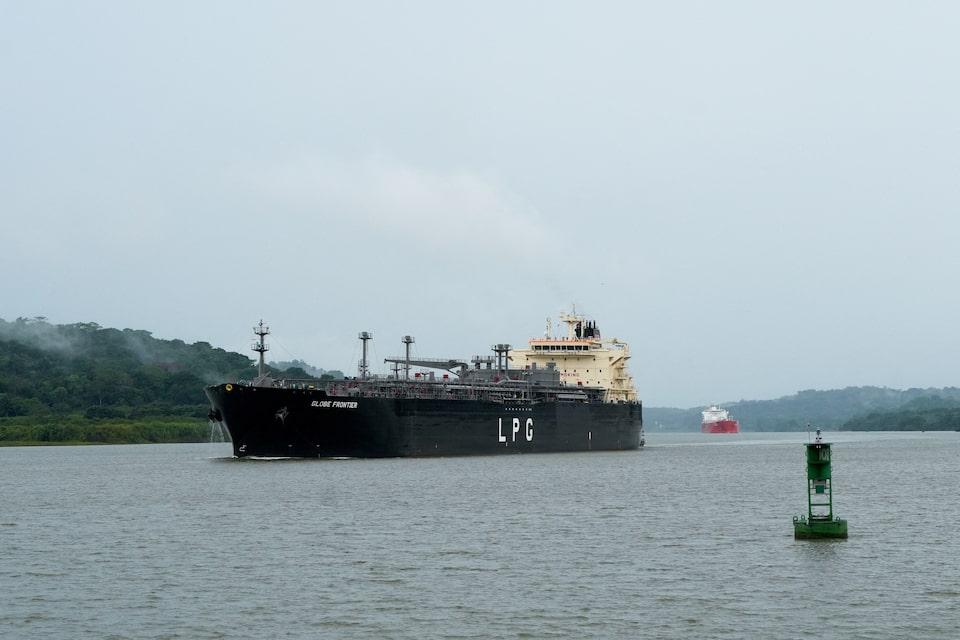
PANAMA CITY, June 2 (Reuters) - Panama's Maritime Authority has removed from its registry more than 650 vessels since 2019 as part of an effort to fulfill U.S. sanctions and enforce stricter rules for the ships it flags, it said on Monday. A total of 214 vessels have been withdrawn from Panama's registry, among the world's largest with more than 8,500 ships, since it began implementing measures last year allowing it to act faster to help enforce sanctions, the authority added. Sign up here. Ships cannot sail under Panama's flag once they are removed from its registry. Panama responded to criticism by non-governmental organization United Against Nuclear Iran (UANI), which last week said Panama had not taken sufficient action against sanction violators and asked it to "immediately cease facilitating Iran's illicit oil trade" and withdraw its flag from all tankers carrying Iranian oil. According to UANI, nearly one in five vessels suspected of transporting Iranian oil sails under Panama's flag. "This is not just a failure of Panama's registry. It's a direct threat to global sanctions compliance and regional and U.S. security," it said. Panama in 2019 signed an agreement with other flag countries including Liberia and Marshall Islands to exchange information about vessels whose registrations were canceled or rejected due to potential sanction violations. It also began implementing measures against ships that deliberately turn off their transponders to avoid tracking. In May, the authority said it would reinforce controls for ship-to-ship operations by Panama-flagged vessels, following an increase in the use of "dark-fleet" tankers to skirt sanctions or evade environmental requirements. The U.S. has increased pressure on countries with large vessel registries to help enforce sanctions. U.S. President Donald Trump has criticized the expansion of a dark fleet of tankers moving sanctioned oil and threatened to take over the Panama Canal. The Central American nation is collaborating with the United States on its registry, the authority said in its press release. https://www.reuters.com/world/americas/panama-removes-over-650-ships-registry-amid-sanctions-stricter-rules-2025-06-02/
2025-06-02 19:49
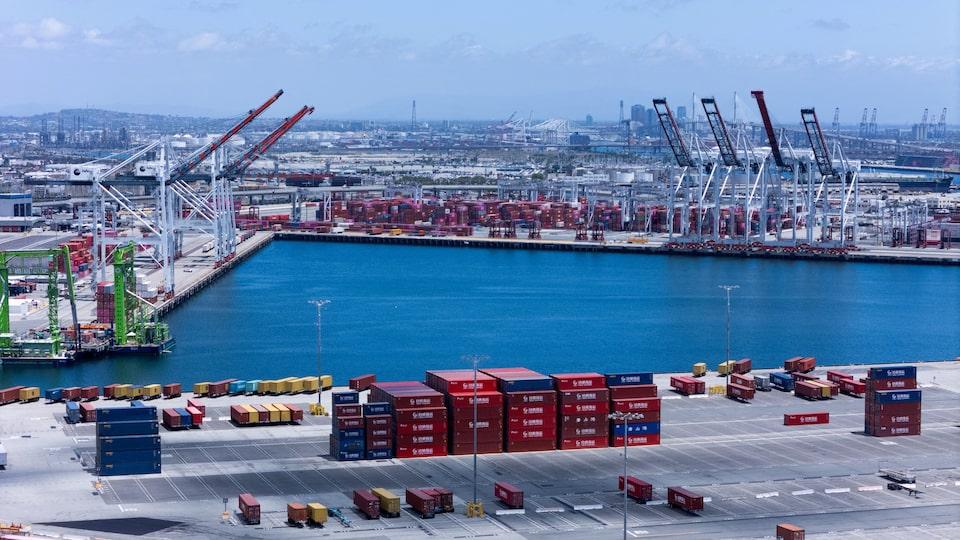
Trump administration wants countries to detail tariff rates, potential US investments Trade group welcomes move to accelerate trade talks USTR draft letter reveals urgency to finalize deals with trading partners Court ruling challenges legality of Trump's sweeping tariff policies June 2 (Reuters) - The Trump administration wants countries to provide their best offer on trade negotiations by Wednesday as officials seek to accelerate talks with multiple partners ahead of a self-imposed deadline in just five weeks, according to a draft letter to negotiating partners seen by Reuters. The draft, from the office of the United States Trade Representative, provides a window into how President Donald Trump plans to bring to a close unwieldy negotiations with dozens of countries that kicked off on April 9 when he paused his "Liberation Day" tariffs for 90 days until July 8 after stock, bond and currency markets revolted over the sweeping nature of the levies. Sign up here. The document suggests an urgency within the administration to complete deals against its own tight deadline. While officials such as White House economic adviser Kevin Hassett have repeatedly promised that several agreements were nearing completion, so far only one agreement has been reached with a major U.S. trading partner: Britain. Even that limited pact was more akin to a framework for ongoing talks than a final deal. In the draft, the U.S. is asking countries to list their best proposals in a number of key areas, including tariff and quota offers for purchase of U.S. industrial and agricultural products and plans to remedy any non-tariff barriers. Other requested items include any commitments on digital trade and economic security, along with country-specific commitments, according to the letter. The U.S. will evaluate the responses within days and offer "a possible landing zone" that could include a reciprocal tariff rate, according to the letter. It was unclear which countries would receive the letter, but it was directed at those with active negotiations that included meetings and exchanges of documents. Washington has been engaged in such talks with the European Union, Japan, Vietnam and India, among others. A USTR official said trade talks were ongoing. “Productive negotiations with many key trading partners continue at a rapid pace. It is in all parties’ interest to take stock of progress and assess any next steps.” 'REGARDLESS OF ONGOING LITIGATION' Tiffany Smith, vice president of global trade policy at the National Foreign Trade Council, welcomed the USTR moves. "We are encouraged that USTR is moving negotiations ahead as quickly as they can," she told Reuters, adding that trade deals that removed barriers for U.S. companies abroad and lowered U.S. tariffs would be "a win-win if they are done in a way that returns predictability and stability to trade relationships." Trump's ambitious - and often frenetic - tariff policy is a pillar of his "America First" economic agenda as he seeks to reshape U.S. trade relationships, reduce trade deficits and protect American industries. Republican lawmakers are also banking on tariffs to add to federal revenue and offset the cost of the tax cut legislation now working its way through Congress. Trump's tariff policies have taken investors on a rollercoaster ride. In May, U.S. stocks held their biggest rally of any month since November 2023, but that was after global indexes had cratered under the barrage of Trump's tariff announcements through February, March and early April. Stocks were little changed on Monday afternoon after Trump announced a surprise doubling of tariffs on steel and aluminum imports on Friday at an event in Pittsburgh. Meanwhile, the legality of the approach used for imposing the most sweeping of his tariffs has been cast into doubt. Last Wednesday, the Court of International Trade ruled that Trump had overstepped his authority with tariffs devised under the International Emergency Economic Powers Act, including the "Liberation Day" levies and earlier ones imposed on goods from Canada, Mexico and China related to Trump's accusations that the three countries have facilitated the flow of fentanyl into the U.S. Less than 24 hours later, an appeals court temporarily paused that decision. The tariffs at the center of the legal dispute are expected to remain in effect as the case plays out. The draft letter to trading partners warns them not to believe the tariffs will be sidelined if the court rules against Trump's use of the IEEPA. "Regardless of ongoing litigation concerning the President’s reciprocal tariff action in U.S. courts, the President intends to continue this tariff program pursuant to other robust legal authorities if necessary, so it is important that we continue our discussions on these matters," the draft says. https://www.reuters.com/business/us-pushes-countries-best-offers-by-wednesday-tariff-deadline-looms-2025-06-02/
2025-06-02 17:55
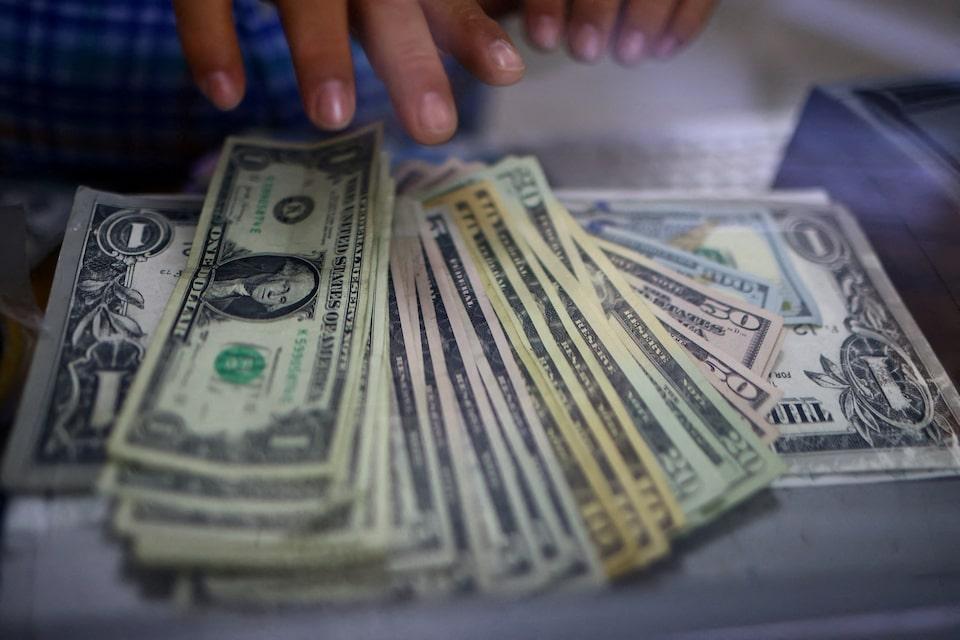
April data marks steepest decline since September 2012 Mexicans abroad sending fewer, smaller transactions Analysts point to fears about US migration crackdown US lawmakers evaluating new tax on remittances MEXICO CITY, June 2 (Reuters) - Remittances sent to Mexico slumped 12.1% in April compared to a year earlier, according to central bank data published on Monday, marking the steepest drop in over a decade as U.S. lawmakers mull a tax on such payments sent abroad. The world's second-largest recipient of remittances, Mexico receives these payments chiefly from migrants working in the neighboring United States. In April, Mexicans abroad sent fewer transactions and smaller payments, totaling $4.76 billion. Sign up here. Analysts said the slump likely resulted from a broad crackdown on migration in the U.S. since President Donald Trump came to power in January, as authorities revoke some Biden-era protections and increase raids across the country. The latest data marks the steepest year-on-year drop since September 2012, according to central bank data. Banco Base economic analysis director Gabriela Siller said April's drop was likely due to a weaker U.S. job market and migrants' fear of losing their jobs or being deported. "The April remittance data is terrible," she said in a post on X, attributing the drop to "the deterioration of the labor market in the U.S. and U.S. migrants' fear of going out to work and sending their remittances, for fear of being deported." Some 12.3 million Mexicans live abroad and 97% of them live in the United States, according to estimates last year from BBVA Research, which said 2024 marked Mexican remittances' 11th straight year of growth. The central bank said April, however, saw 8.1% fewer transactions than a year earlier - down to 12.4 million - while payment amounts were down 4.4% to average $385. U.S. senators are evaluating a bill that includes a proposed 3.5% tax on remittances. Analysts at Banorte predicted short-term disruptions if the measure is passed. "If approved, we anticipate an increase in flows before it goes into effect, with the effect after that still very uncertain," Banorte said in a note. Mexican officials have argued that taxing remittances could violate the countries' treaty to avoid double taxation, as migrants' income is already subject to local taxes. In 2024, Mexicans living abroad sent a record $64.75 billion home in remittances - largely from Texas and California to states in central and western Mexico. Through the first four months of 2025, the central bank recorded remittances of $19.02 billion, down 2.5% from last year. https://www.reuters.com/world/americas/mexico-records-worst-monthly-remittance-decline-since-2012-2025-06-02/
2025-06-02 17:51
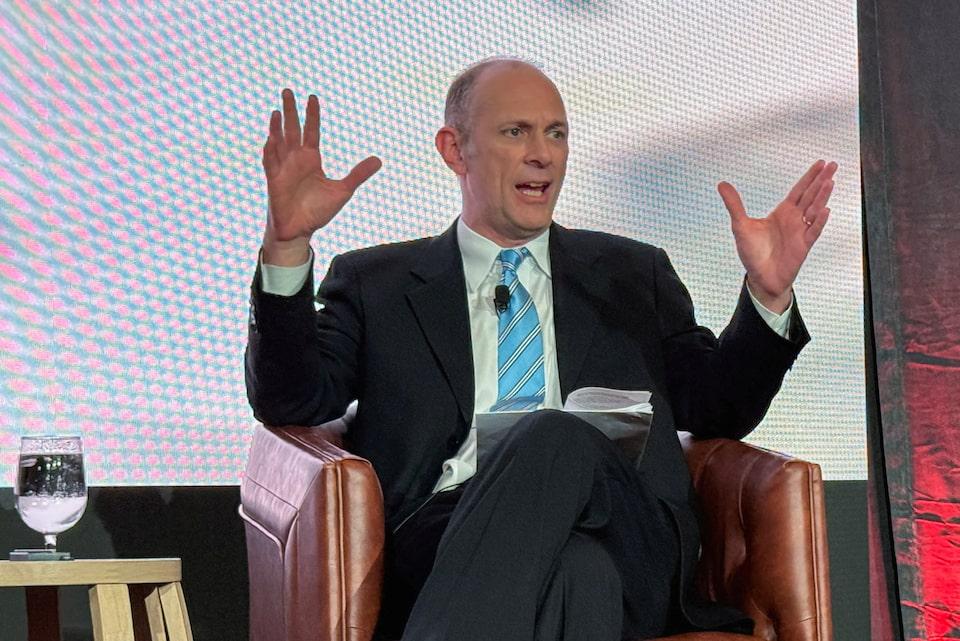
June 2 (Reuters) - Chicago Federal Reserve Bank President Austan Goolsbee said on Monday he continues to think the U.S. central bank will be able to lower short-term borrowing costs after the "dirt in the air" of uncertainty from tariff policies gets cleared up. "If we can get past this bumpy period, the dual mandate looks pretty good," Goolsbee said in a webcast interview with the Quad Cities Regional Business Journal in Davenport, Iowa. The Fed's dual mandate refers to its two goals: full employment and price stability. Goolsbee said he continues to believe that if the economy remains in that state and tariffs don't turn out to be as aggressive as announced on April 2, the Fed's policy rate will probably be a "fair bit" lower within the next 15 months. Sign up here. So far, he said, the labor market looks strong, and recent inflation readings, with the personal consumption expenditure price index rising just 2.1% in April from a year earlier, have been pretty good. But the inflation figures so far probably don't incorporate much impact from the tariffs, Goolsbee added. "Personally, I'm a little gun-shy," he said, about assuming that the impact of those levies will be temporary, given that in the post-pandemic period the Fed turned out to be wrong in forecasting inflation at that time would be short-lived. Instead it soared to 40-year highs, forcing the Fed to raise its policy rate aggressively in response. https://www.reuters.com/business/fed-likely-track-lower-rates-after-bumpy-period-says-goolsbee-2025-06-02/
2025-06-02 17:29
Manufacturing contracts for third straight month Prices for inputs received by factories remain elevated Factories laying off workers; goods being held up at ports WASHINGTON, June 2 (Reuters) - U.S. manufacturing contracted for a third straight month in May and suppliers took the longest time in nearly three years to deliver inputs amid tariffs, potentially signaling looming shortages of some goods. President Donald Trump's aggressive trade policy again dominated commentary from manufacturers in the Institute for Supply Management (ISM) survey published on Monday, and suppliers were passing on the import duties to customers. That challenges the Trump administration's narrative that China and other trade partners paid the tariffs. Sign up here. The on-again and of-again tariffs were described by some transportation equipment manufacturers as having "wreaked havoc on suppliers' ability to react and remain profitable," while makers of computer and electronic products viewed the duties and government spending cuts as "raising hell with businesses." "The outlook for the manufacturing sector looks downbeat, particularly with the initial surge in demand from front-loading now behind us," said Matthew Martin, senior economist at Oxford Economics. "Businesses are contending with higher input costs, supply disruptions, and domestic and foreign customers wary of committing to new orders." The ISM said its manufacturing PMI edged down to a six-month low of 48.5 last month from 48.7 in April. A PMI reading below 50 indicates contraction in the manufacturing sector, which accounts for 10.2% of the economy. The PMI, however, remains above the 42.3 level that the ISM says over time indicates an expansion of the overall economy. Economists polled by Reuters had forecast the PMI rising to 49.3. The survey suggested manufacturing, which is heavily reliant on imported raw materials, had not benefited from the de-escalation in trade tensions between the White House and China. Trump last week said he would double tariffs on steel and aluminum imports to 50%. Seven manufacturing industries including furniture, electrical equipment, appliances and components as well as machinery reported growth. Among the seven reporting a contraction were transportation equipment, chemical products and primary metals. Economists say the chaotic manner in which the import duties are being implemented is making it difficult for businesses to plan ahead, sentiments echoed by manufacturers. Another layer of uncertainty was added by a U.S. trade court last week blocking most of Trump's tariffs from going into effect, ruling that the president overstepped his authority. But the tariffs were temporarily reinstated by a federal appeals court on Thursday. Tariffs helped to weigh on spending on single-family homebuilding in April. A separate report from the Commerce Department's Census Bureau showed construction spending dropped 0.4% after declining 0.8% in March, with outlays on new single-family housing projects declining 1.1%. Stocks on Wall Street were trading lower. The dollar slipped against a basket of currencies. U.S. Treasury yields rose. "FINANCIAL DISTRESS" Some manufacturers of transportation equipment also noted that while "vehicle manufacturers have already rolled price increases into their products to protect their bottom lines," they had "not been as cooperative with their supply bases." They added "this has resulted in a high occurrence of suppliers falling into financial distress." Makers of electrical equipment, appliances and components said "the administration's tariffs alone have created supply chain disruptions rivaling that of COVID-19." Manufacturers of paper products warned the "unresolved trade deal with China will result in empty shelves at retailers for many do-it-yourself and professional goods." Machinery manufacturers worried about China's export restrictions on rare minerals. Makers of fabricated metal products said their "Asia customers are requesting delayed shipments" because of tariffs. Suppliers are passing on the tariffs to customers. Chemical products manufacturers reported that "the position being communicated is that the supplier considers it a tax, and taxes always get passed through to the customer," adding "very few are absorbing any portion of the tariffs." Trump sees the tariffs as a tool to raise revenue to offset his promised tax cuts and to revive a long-declining industrial base, a feat that economists argued was impossible in the short term because of labor shortages and other structural issues. The ISM survey's supplier deliveries index increased to 56.1, the highest since 2022, from 55.2 in April. A reading above 50 indicates slower deliveries. A lengthening in suppliers' delivery times is normally associated with a strong economy. But in this case slower supplier deliveries likely indicated bottlenecks in supply chains related to tariffs. Port operators have reported a decline in cargo volumes. The ISM's imports measure dropped to 39.9, the lowest since early 2009, from 47.1 in April. Exports also were lower. Customer inventories hit a 15-month low. The survey's measure of prices paid by manufacturers for inputs eased to a still-high 69.4 from 69.8 in April. "Pressure on manufacturers to pass on their costs further up the supply chain will mount as inventories dwindle, as they eventually will have to restock at much higher prices," said Oliver Allen, senior U.S. economist at Pantheon Macroeconomics. Production at factories remained subdued, while new orders barely saw an improvement. The ISM survey's forward-looking new orders sub-index inched up to 47.6 from 47.2 in April. Factories continued to shed jobs. The survey's measure of manufacturing employment rose to 46.8 from 46.5 in April. The ISM Business Survey Committee Chair Susan Spence said comments from respondents reflected an acceleration of head-count reductions due to uncertain near- to mid-term demand. "In the context of on-again, off-again tariff policy, most businesses are left sitting on their hands as they await any sign of more-persistent clarity," said Shannon Grein, an economist at Wells Fargo. https://www.reuters.com/world/us/us-manufacturing-remains-subdued-may-delivery-times-lengthening-2025-06-02/

2025-06-02 16:50
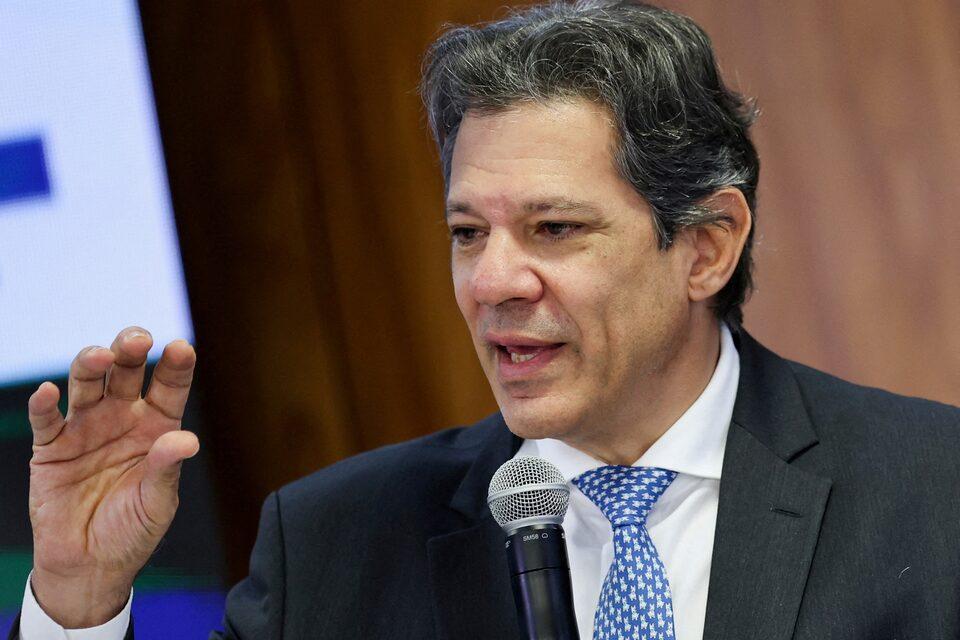
June 2 (Reuters) - Brazil's Finance Minister Fernando Haddad said on Monday that any changes to a recent increase in the tax on financial transactions (IOF) would be tied to broader corrections of what he described as distortions in financial taxation. The government last month hiked the IOF tax on some transactions to meet its fiscal targets, but the measure met with backlash and lawmakers signaled they could overturn it. Haddad suggested that discussion had opened the door to wider reforms. Sign up here. "If there's any adjustment, it will be part of a broader effort to correct existing imbalances in taxes related to finance," he said, without elaborating. "Beyond addressing the 2025 issue, (the aim is) to carry out a structural reform for the coming years," the minister added. Haddad said a government decision, aligned with Congress, would be made by Tuesday, before President Luiz Inacio Lula da Silva departs for an overseas trip. Lula's leftist administration tried last year to increase the social contribution tax on net corporate profits (CSLL) for financial institutions. However, the proposal was never voted on in Congress, and the government ultimately stopped counting on the nearly 15 billion reais ($2.63 billion) in extra revenue this year from the measure. Asked whether the government would propose changes to that tax again, Haddad said only that the measure was not overturned - it simply was never voted on. He later noted that raising that tax would require a 90-day waiting period before taking effect, making it less suitable for this year, which is well under way. Haddad said the heads of both chambers of Congress were involved in discussions about how to better calibrate taxation. "I believe we can provide a much more sustainable outlook, without resorting to stopgap measures that we know are not structural," he said. ($1 = 5.7061 reais) https://www.reuters.com/world/americas/brazils-finance-minister-links-potential-iof-tax-tweak-financial-tax-overhaul-2025-06-02/