2025-06-02 10:39
A look at what matters in U.S. and global markets today from Mike Dolan , opens new tab, Editor-At-Large, Finance and Markets LONDON, June 2 (Reuters) - The U.S. dollar plunged anew (.DXY) , opens new tab to its lowest level in six weeks on Monday as June got underway, with U.S. tariff concerns back on the boil after last week's legal confusion and military tensions rising across the globe. Sign up here. The euro led the charge, undaunted by the prospect of another interest rate cut from the European Central Bank on Thursday. Germany's new chancellor, Friedrich Merz, will travel to Washington to meet U.S. President Donald Trump on Thursday as trade talks between Europe and America are watched closely. With markets still on edge about elements of the U.S. fiscal bill going through the Senate that give the administration the option of taxing companies and investors from countries deemed to have 'unfair foreign taxes', the dollar is vulnerable to worries about foreign capital flight. But the attention on Monday seemed back on the tariff push, with an assumption President Donald Trump will push through levies one way or another despite the legal pushback last week. The greenback was hit after the weekend by Trump's plan to double duties on imported steel and aluminum to 50% from Wednesday and as Beijing hit back against accusations it violated an agreement on critical minerals shipments. It was also a weekend of significant geopolitical tensions and bellicose warnings. Gold crept higher. U.S. Defense Secretary Pete Hegseth warned on Saturday that the threat from China was real and potentially imminent as he pushed allies in the Indo-Pacific to spend more on their own defence needs. The Ukraine-Russia war continued to rage, with Ukrainian drones hitting dozens of Russian bombers deep inside Russian territory. The Gaza conflict shows no sign of ending. Major countries are building armaments at pace. Britain will expand its nuclear-powered attack submarine fleet as part of a defence review, one designed to prepare the country for modern war and counter the Russian threat. Oil prices jumped by about 3% on Monday after producer group OPEC+ kept output increases in July at the same level as the previous two months. In a big week for U.S. labor market data, there was some encouragement on the interest rate front. Federal Reserve Governor Christopher Waller said on Monday that rate cuts remain possible in the second half of the year. Given that a rise in inflation pressures tied to Trump's import tax increases is unlikely to be persistent, "I support looking through any tariff effects on near term-inflation when setting the policy rate," Waller told a gathering in South Korea. Elsewhere, China's manufacturing activity shrank for a second month in May, as expected. Stocks in Poland .WIG20 fell 1.4%, after nationalist opposition candidate Karol Nawrocki won the second round of the country's presidential election. Ahead of Monday's bell, U.S. stock futures were down about half a percent, with stocks in Europe and Japan down too. U.S. Treasury yields nudged back higher. Today's column looks at the week's big monetary decision in Europe, with the European Central Bank widely expected to lower rates for the eighth time in the cycle and the euro rising regardless. ECB FACES SURGING EURO CONUNDRUM While the European Central Bank keeps cutting interest rates, the euro keeps rising, as a transatlantic capital reversal upends relative rate shifts and threatens to force the ECB into further easing. The ECB is widely expected to lower its main borrowing rate on Thursday to 2%, half what it was at its peak a year ago and less than half the Federal Reserve equivalent. It's also back to what the central bank broadly considers a 'neutral' level, meaning it neither spurs nor reins in the economy. Real, or inflation-adjusted, ECB rates will be back to zero for the first time in almost two years. What's remarkable is that after eight consecutive ECB cuts and with the prospect of zero or even negative real rates ahead, the euro has surged more than 10% against the dollar in just four months and 5% against a trade-weighted currency basket of the euro zone's major trading partners. That nominal effective euro index is now at record highs, with the 'real' version at its strongest level in more than 10 years. The currency has surged even though there has been no net change in the gap between two-year government bond yields on either side of the Atlantic - usually a reliable indicator of shifts in the euro/dollar exchange rate. The culprits behind this trend are pretty clear: Donald Trump's tariff wars, fears of capital flight from dollar assets due to a host of concerns about U.S. policies and institutions, and Germany's historic fiscal boost that has transformed the continent's outlook. But if even a fraction of the trillions of dollars of European investment capital in the United States is indeed coming back home as many suspect, the ECB has a curious conundrum ahead. How does it handle both the disinflationary effects of such a rapid currency rise alongside the domestic demand it could catalyse? Lower rates with the prospect of further easing ahead are clearly having little impact on the euro. Most ECB watchers expect one or two more cuts after Thursday while money markets have a 'terminal rate' around 1.75%, the low end of the ECB's estimated range of 'neutral'. Indeed, if much of the capital repatriation from overweight U.S. holdings is in equity investments, then lower ECB rates may even accelerate the outflows from the U.S. by lifting growth prospects for cheaper stocks in Europe. The prospect of higher German and pan-European borrowing should sustain longer-term fixed income returns as well, expanding the pool of 'safe' investments. 'GLOBAL EURO MOMENT' The ECB could revert to protesting about 'excessive' euro gains, although the impact might be limited unless it is prepared to back its words with action, and there is a risk it could backfire for the reasons just mentioned. If anything, the ECB appears to be encouraging the investment shift and the euro's role as a reserve currency - in part to help with the bloc's massive capital needs in retooling its military, digital and energy sectors. In a pointed speech in Berlin last week, ECB chief Christine Lagarde insisted there was an opening for a "global euro moment", where the single currency becomes a viable alternative to the dollar, earning the region immense benefits if governments can strengthen the bloc's financial and security architecture. The scenario may be seen as a nice problem to have, but there will be more than a little disquiet among the region's big exporting nations about a soaring exchange rate in the middle of a trade war. ECB hawks and doves will also have to thrash out whether continued easing to offset disinflationary currency risks only stokes domestic inflation over the longer term - not least with a fiscal lift coming down the road into next year. What seems clear is that the ECB's new economic forecasts due for release on Thursday will have taken into account the 7% euro/dollar gain and near 10% drop in global oil prices since its last set of projections in early March. Morgan Stanley economists reckon that even if the central bank tweaks its core inflation forecasts higher, the new outlook could well show headline inflation undershooting its 2% target from mid-2025 to early 2027 - even while nudging up 2025's GDP growth view. In truth, any forecasts at this point are fingers in the wind with few central banks or major investors having a clue where U.S. tariffs or retaliatory trade war actions will end up. But while global trade and investment nerves abound, the ECB may be relatively powerless to cap the euro. Whether that argues for stasis or even more easing is the big headache it faces. Chart of the day U.S. gross domestic product readings have been bamboozled this year by tariff-related import skews. Again last week, models tracking GDP inputs were jarred by a sharp contraction in the goods trade deficit for April as front-running of imports to beat tariffs in the first quarter faded. With many tariffs in place, imports plunged and helping to compress the goods trade deficit by 46% to $88 billion, according to the Commerce Department's Census Bureau. Imports fell $68 billion to $276 billion while exports rose $6.3 billion to $188.5 billion. The shrinking goods deficit, if sustained, suggests the net trade component of GDP calculations will spur a significant rebound in growth this quarter, much like it sliced a record 4.9 percentage points from Q1 GDP - leading to a headline contraction in the overall economy. Flattered by the trade numbers, the Atlanta Federal Reserve's 'GDPNow' tracker now sees a whopping Q2 real GDP rebound of 3.8%. However, there is caution. Businesses do not appear to be restocking, with wholesale inventories unchanged last month and stocks at retailers down 0.1% and there is concern stockpiles may well drop sharply over the remainder of the quarter. Today's events to watch * US May manufacturing surveys from S&P Global (0930EDT) and ISM (1000EDT), April construction spending (1000EDT) * Federal Reserve Chair Jerome Powell gives opening remarks at Fed event in Washington; Fed Board Governor Christopher Waller, Dallas Fed President Lorie Logan and Chicago Fed President Austan Goolsbee all speak; Bank of England policymaker Catherine Mann speaks * US corporate earnings: Campbell's Opinions expressed are those of the author. They do not reflect the views of Reuters News, which, under the Trust Principles , opens new tab, is committed to integrity, independence, and freedom from bias. https://www.reuters.com/business/finance/global-markets-view-usa-2025-06-02/
2025-06-02 10:26
MUMBAI, June 2 (Reuters) - The Indian rupee strengthened on Monday, supported by weakness in the U.S. dollar and modest dollar inflows that helped the local currency begin the week on a positive note. The rupee closed at 85.3825 against the U.S. dollar, up 0.23% on the day. Sign up here. Inflows related to the rejig of a global equity index helped the rupee move higher in early trading while broad-based dollar weakness was an added tailwind, traders said. The dollar index fell below the 99 level amid concerns of a re-escalation in global trade tensions after U.S. President Donald Trump accused China of violating an agreement with the U.S. to mutually roll back tariffs. Trump has also pledged to double tariffs on imported steel and aluminium starting Wednesday. India estimates a "minor impact" from U.S. President Donald Trump's plan to increase tariffs on steel and aluminium products, per the country's federal steel minister. "A shift to a more confrontational stance on trade between the US and China, plus a focus on a potential US 'revenge tax' on foreign investors, are weighing on the dollar," ING Bank said in a note. Worries about the trade tensions also weighed on Asian stocks on Monday. Indian equities dipped marginally. Meanwhile, Wall Street analysts have cautioned that a tax targeting foreign investors in the U.S. budget bill progressing through the country's legislature could end up weighing on demand for U.S. Treasuries and the dollar. Domestically, the focus this week lies on the Reserve Bank of India's upcoming monetary policy decision due on June 6. The central bank is widely expected to deliver its third 25-basis-point rate cut. https://www.reuters.com/world/india/rupee-ends-higher-boosted-by-fragile-dollar-likely-portfolio-inflows-2025-06-02/
2025-06-02 08:34
Trump's presidency boosts dollar-funded carry trades Goldman Sachs sees carry trades as a major theme Rupee, rupiah and real among top picks for their carry MUMBAI, June 2 (Reuters) - The U.S. dollar's weakness since the start of Donald Trump's presidency has made it the preferred funding currency for popular "carry" trades, fuelling heavy flows into higher-yielding emerging market currencies. Dollar-funded carry trades in the Indonesian rupiah , Indian rupee , Brazilian real , Turkish lira among other currencies, are back in vogue, fund managers said. Sign up here. In a typical currency carry trade, investors use cheap-to-borrow currencies to fund investments in those with better yields. Returns are boosted if the borrowed currency weakens. The dollar, traditionally less favoured than the Japanese yen or Swiss franc for such trades, has become the funding currency of choice as Trump's trade war stokes recession worries and an investor retreat from U.S. Treasuries. Carl Vermassen, a portfolio manager at Zurich-based asset manager Vontobel, has added to carry trades on the rupee and rupiah. "Emerging market local currency was basically shunned for the simple reason: to avoid local currency risk at a time of an almighty dollar," he said. "But, given most investors deem U.S. exceptionalism to have ended, things are changing." Claudia Calich, head of emerging market debt at M&G Investments, also expects dollar weakness to persist and support carry trades. The London-headquartered fund oversees more than 312 billion pounds ($423.5 billion) and favours the rupee and Philippine peso for carry positions within Asia and the Brazilian real and Mexican peso in Latin America. The more investors rush back into dollar carry trades, the deeper the dollar's losses are likely to be, analysts said. The dollar index has fallen 8.5% so far this year, dropping below the critical 100 mark in mid-April for the first time in nearly two years. It was last seen at 99.30. That means investors are finding good carry not just in the likes of the rupee and rupiah, whose yields are above those in the United States, but even those with low interest rates such as the South Korean won . The won has led gains in Asian currencies this year with a 6.7% rally against the dollar. The yield advantage over dollars, or the "carry", measured by the three-month tenure is 2% on the Indian rupee and 1.2% for Indonesia's rupiah. Brazil's real gives a much higher carry at 9% but is far more volatile, meaning the trade could go horribly wrong if the currency depreciates, instead of appreciating. The future expected 3-month volatility, also called implied volatility, for the real is 8.1% compared with 4.7% for the rupee. Goldman Sachs said carry trades were "a big theme" in recent meetings with its New York clients, with interest growing in Latin American and European markets. "If volatility settles some more, we will start to hear more about dollar-funded carry trades," ING Bank said. "This could be a story for this summer." HUGE INFLOWS Since "FX carry trades" typically involve investments in bond or money markets in these destinations, analysts expect to see heavy flows into emerging markets. Data for April shows investors bought bonds worth $8.92 billion, the highest for any month since last August, in South Korea, India, Indonesia, Thailand and Malaysia. While some of those flows could have been straight real-money investments into these markets, analysts say carry trades also boomed. In South Korea, foreign investors bought $7.91 billion in bonds, the most since May 2023. Tom Nakamura, vice-president and head of fixed income & currencies at Canadian fund AGF Investments, finds carry trades in Turkey attractive since the central bank's adoption of more orthodox monetary policy. Turkey's benchmark rates are at 46%(TRINT=ECI) , opens new tab. https://www.reuters.com/world/americas/global-markets-carrytrades-pix-2025-06-02/
2025-06-02 08:02
NEW DELHI, June 2 (Reuters) - Maruti Suzuki (MRTI.NS) , opens new tab, India's top-selling carmaker, said on Monday there is no immediate production impact from China's export curbs on rare earth magnets, a key component, and that it is in talks with the government on the matter. Auto industry manufacturers told government officials last week that production could stall within days due to the curbs, Reuters reported. Sign up here. They are worried by the complexity of a new import process requiring approval from Indian and Chinese officials as well as documents including end-use certificates stating the magnets are not for military purposes. When asked how many weeks of inventory Maruti has before production is impacted, the automaker said it has submitted an import application and that it would be difficult to comment or give "very specific details" until it receives a response. "It is not a restriction. It is an endorsement of end use. In case there is an issue, we will ... inform all our stakeholders, including the stock exchange," Rahul Bharti, senior executive director, corporate affairs, told reporters. China controls over 90% of global processing capacity for the magnets, which are used in fields as varied as automobiles, home appliances and clean energy. It enacted measures in April requiring companies to obtain import permits. In a meeting with commerce ministry officials last month, the Society of Indian Automobile Manufacturers said inventories at parts makers are likely to run out by the end of May. "Starting end May or early June, auto industry production is expected to come to a grinding halt," the body said in the document presented during a May meeting attended by executives including from Maruti. https://www.reuters.com/world/china/indian-carmaker-maruti-suzuki-says-no-immediate-hit-china-curbs-magnet-exports-2025-06-02/

2025-06-02 07:48
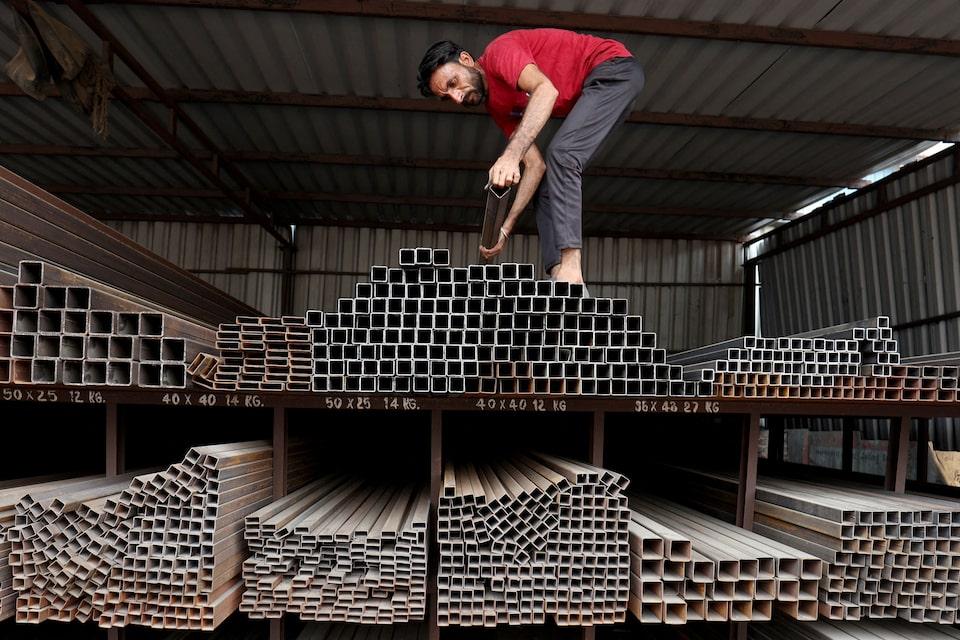
NEW DELHI, June 2 (Reuters) - India estimates a "minor impact" from U.S. President Donald Trump's plan to increase tariffs on steel and aluminium products as the South Asian country exports low volumes to Washington, the federal steel minister said on Monday. Trump said last week he intends to increase tariffs on imported steel and aluminium to 50% from 25% currently, spurring declines on Monday in steelmakers' stocks in South Korea and Vietnam - major Asian exporters to the U.S. Sign up here. Roughly a quarter of all steel used in the U.S. is imported, the bulk of it from neighbours Mexico and Canada or close allies in Asia and Europe such as Japan, South Korea and Germany. India ranks much lower. "Minor impact will be there... We are not exporting (to the U.S.) in a big way," steel minister HD Kumaraswamy told reporters at a press briefing in New Delhi. However, ratings agency Fitch said in March that Indian steelmakers and steel prices could be hit if countries with higher exposure to the U.S. redirect their shipments to New Delhi in search of more lenient markets for the alloy. https://www.reuters.com/world/india/trumps-steel-tariff-plan-have-minor-impact-india-says-minister-2025-06-02/
2025-06-02 07:38
SOCAR to signs oil exploration agreements with Exxon and BP Azerbaijan oil output have been declining for several years Azerbaijan to increase natural gas exports - Aliyev says BAKU, June 2 (Reuters) - Azeri state energy company SOCAR signed new agreements for oil and gas exploration in Azerbaijan with Exxon Mobil (XOM.N) , opens new tab and BP (BP.L) , opens new tab at an energy conference in Baku on Monday. Azerbaijan has proven oil reserves of 7 billion barrels and proven natural gas reserves of 1.7 trillion cubic metres, according to the U.S. Department of Energy. Sign up here. The country's oil output has been declining for several years after the Azeri–Chirag–Gunashli (ACG) complex of oilfields passed its peak of 50 million metric tons, or 1 million barrels per day, in 2010. BP declined to comment. Exxon Mobil did not immediately reply to a request for comment. Under a strategy revamp announced in February, BP is increasing spending on its oil and gas business while cutting spending on its low-carbon units. It is also seeking to sell 50% of its solar unit Lightsource bp to a strategic partner for cash and a commitment of future investments, according to a sales document seen by Reuters. BP is already working on stemming declining output at producing fields in the Caspian Sea and its production chief Gordon Birrell said in March that BP was planning to explore for new oilfields in the Azeri Caspian. BP last year signed a memorandum of understanding with SOCAR on potentially joining the Karabagh oilfield and the Ashrafi-Dan Ulduzu-Aypara exploration area. BP also announced it had taken a final investment decision on its 240 Megawatt Shafag solar plant project it is building via its solar unit Lightsource bp with its joint venture partners Socar and Azerbaijan Business Development Fund in the Jabrayil district of Azerbaijan. Construction will cost $200 million and be completed by mid 2027, BP said. The project will be linked via so-called virtual power transfer arrangements to the Sangachal oil and gas terminal on the Caspian Sea, operated by BP, and use more gas for exports rather than local power production, BP said. Rebuilding Sangachal's electricification will cost around $230 million. Azerbaijan plans to increase natural gas exports by a total of 8 billion cubic metres (bcm) by 2030, President Ilham Aliyev said at Monday's conference. The additional volumes will be produced from five existing and new fields, Aliyev said. Azerbaijan exported 25 bcm of natural gas in 2024. https://www.reuters.com/business/energy/azeri-socar-sign-agreements-with-exxon-mobil-bp-soon-three-sources-tell-reuters-2025-06-02/