2025-06-02 06:17
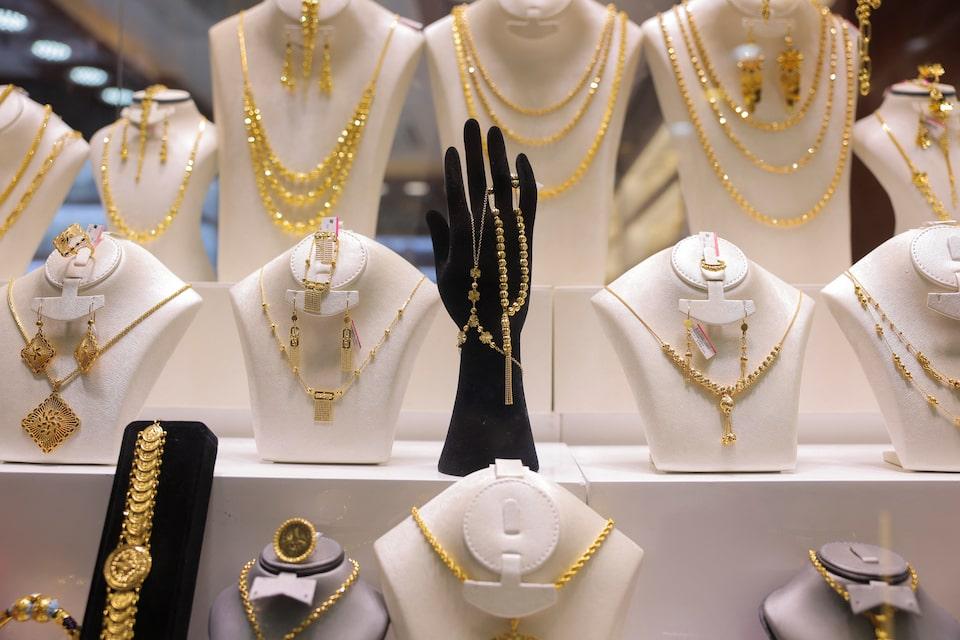
Trump plans to double steel, aluminum tariffs to 50% Dollar down 0.6% against its rivals Russia-Ukraine tensions escalate ahead of peace talks June 2 (Reuters) - Gold prices rose to a more than a one-week high on Monday, driven by safe-haven demand as renewed U.S. tariff threats from President Donald Trump and escalating tensions between Russia and Ukraine heightened global trade and geopolitical fears. Spot gold was up 2% at $3,353.29 an ounce, as of 1128 GMT, after hitting its highest level since May 23, earlier in the session. Sign up here. U.S. gold futures rose 1.9% to $3,378.40. The dollar (.DXY) , opens new tab was down 0.6% against its rivals, after Trump said on Friday that he plans to double duties on imported steel and aluminum to 50%, and as Beijing hit back against accusations that it had violated an agreement on critical minerals shipments. A weaker dollar makes bullion more appealing for other currency holders. On Sunday, Treasury Secretary Scott Bessent said Trump would soon speak with Chinese President Xi Jinping to iron out a dispute over critical minerals. "I guess risk-off (sentiment) with Asian equities lower is one factor, the other is rising geopolitical tensions - including the escalation in tensions between Ukraine and Russia - (is) lifting demand for safe haven assets such as gold," said Giovanni Staunovo, UBS analyst. "Ongoing trade tensions between China and the US are an additional supportive factor for gold." On the geopolitical front, Ukraine and Russia ramped up attacks ahead of their second peace talks in Istanbul, including a major Ukrainian strike and a Russian overnight drone assault. In the U.S., Fed Chair Jerome Powell is set to speak later today, while markets also look forward to speeches from several U.S. Federal Reserve officials this week for signals on the monetary policy outlook. Gold, widely regarded as a safe-haven asset during periods of geopolitical and economic uncertainty, typically performs well in a low-interest-rate environment. "The upside (in gold prices) is unlikely to exceed $3,500/oz unless trade tensions escalate further," said Zain Vawda, analyst at MarketPulse by OANDA. Spot silver rose 1% to $33.29 an ounce, platinum was down 1% at $1,045.25 and palladium rose 0.6% to $976.31. https://www.reuters.com/world/india/gold-prices-climb-tariff-jitters-lift-safe-haven-demand-2025-06-02/
2025-06-02 06:15
LAUNCESTON, Australia, June 2 (Reuters) - The crude oil market devotes considerable energy to what OPEC+ says, but perhaps a little less to what it actually does when it comes to the supply of the world's most important commodity. The eight members of the wider group that had implemented voluntary production cuts met at the weekend and decided to raise output by 411,000 barrels per day (bpd) in July, the third straight month of the same increase. Sign up here. More than half of the lift in output will be split among the big three of the OPEC+ group, namely Saudi Arabia, Russia and the United Arab Emirates. However, there are two questions that need answering. Firstly, will the eight members party to the agreement actually increase output by the agreed volumes, and secondly, if they do will they find buyers for the additional oil? A point worth noting is that OPEC+, and much of the wider market, talk in terms of production, but the more important metric is export volumes, as it's the amount of crude flowing around the globe that sets the price and the supply-demand balance. The group's top producer, Saudi Arabia, actually saw weaker exports in April of 5.75 million bpd, down from March's 5.80 million bpd, according to data complied by commodity analysts Kpler. Saudi Arabia's exports kicked up to 6.0 million bpd in May, the Kpler data showed, and are expected to rise even further in June, suggesting that there is a lag between output agreements and actual exports. Russia's seaborne exports of crude were 5.07 million bpd in March, remained largely flat at 5.12 million bpd in April and then dipped to 4.82 million bpd in May, showing that the agreed increase in output didn't translate into higher shipments. INVENTORIES, DEMAND The question still remains as to whether any additional oil is actually needed, especially in the top-importing region Asia. In the statement after the May 31 meeting, OPEC+ reiterated its view that the global oil market has "healthy" fundamentals "as reflected in low inventories." This is the position they have held since they started easing the 2.2 million bpd of voluntary production cuts in April. However, the Organization of the Petroleum Exporting Countries monthly report for May showed crude inventories in the developed world rose in March by 21.4 million barrels to 1.323 billion barrels, which is 139 million barrels less than the average from 2015-2019. In other words, inventories in the Organisation for Economic Cooperation and Development are slightly below the pre-COVID average, and are were already rising before OPEC+ started raising output. Inventories outside the OECD are less visible, and especially in China, the world's largest crude oil importer. Even though China doesn't disclose commercial and strategic stockpiles, the amount of surplus crude can be estimated by subtracting the volumes processed by refiners from the total available from domestic output and inventories. On this basis, China's surplus oil has surged in recent months, hitting 1.98 million bpd in April, the most since June 2023, and up from 1.74 million bpd in March. China increased oil imports in March and April as it secured discounted cargoes from Iran and Russia. But it appears that China's appetite for crude eased in May, despite the lower global prices. China's seaborne imports are estimated at 9.43 million bpd in May by Kpler, down from 10.46 million bpd in April and 10.45 million bpd in March. ASIA IMPORTS China's weaker appetite in May contributed to a drop in arrivals in Asia, the world's top-importing region, with Kpler estimating 24.2 million bpd, down from 24.85 million bpd in April. For the first five months of the year, Asia's seaborne crude imports are estimated at 24.45 million bpd, down 320,000 bpd from the same period in 2024. This means that despite the near 30% drop in global crude benchmark Brent futures between mid-January and the low so far this year of $58.50 a barrel on May 5, Asia's demand for oil hasn't increased. So far the impact of lower prices has been muted, and while demand may yet rise in coming months in response to cheaper oil, it's also possible that the economic uncertainty unleashed by U.S. President Donald Trump's trade war is crimping fuel consumption. Brent futures gained on Monday by more than $1 to $63.84 a barrel. The gain in prices suggests that the market had been expecting a larger output increase from the OPEC+ group of eight for July. There remains a high degree of uncertainty for the demand outlook, given the distortions being created by the Trump trade war. But there is also uncertainty over the supply outlook and questions as to whether OPEC+'s top producers will increase export volumes and seek market share over prices. The views expressed here are those of the author, a columnist for Reuters. https://www.reuters.com/business/energy/opecs-crude-output-hike-comes-amid-tepid-asian-oil-demand-russell-2025-06-02/
2025-06-02 06:01
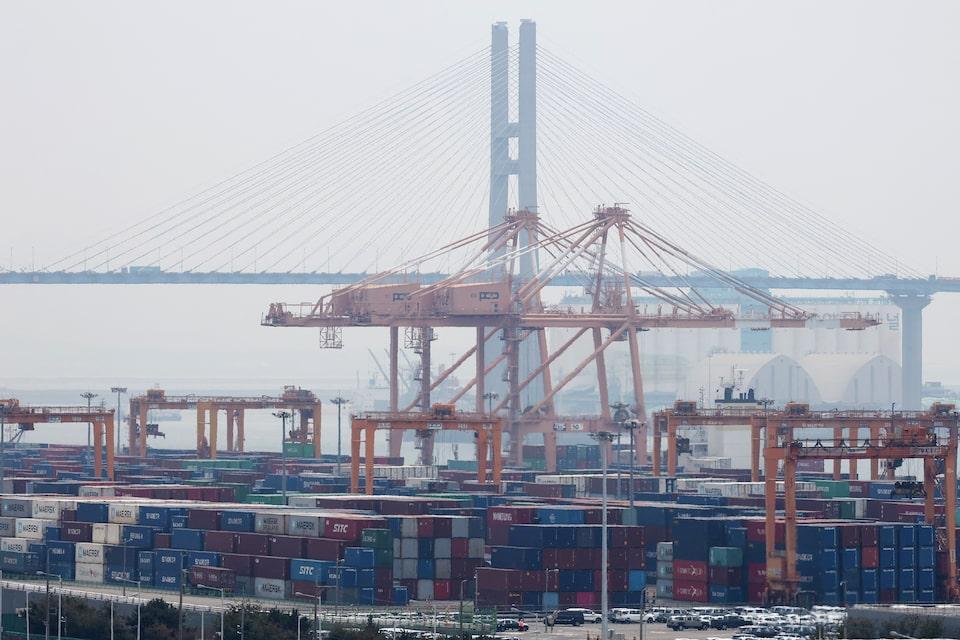
Increased steel and aluminium tariffs take effect on June 4 US prices of steel, aluminium, copper surge Shares of steelmakers in South Korea and Vietnam tumble Some experts anticipate steel tariff rates could go down LONDON/SEOUL/SINGAPORE, June 2 (Reuters) - U.S. prices of steel and aluminium spiked on Monday while shares of foreign steelmakers slumped after U.S. President Donald Trump said he would double tariffs on imports of the two metals to 50%. Trump announced on Friday the new steel and aluminium levies, which take effect on June 4, intensifying a global trade war just hours after he accused China of violating an agreement with the U.S. to mutually roll back tariffs and trade restrictions for critical minerals. Sign up here. The U.S. is the world's largest steel importer, excluding the European Union, with a total of 26.2 million tons of steel imported in 2024, according to the Department of Commerce. While some industry experts questioned whether the tariffs would be implemented as stated, in light of Trump's previous reversals, they said uncertainty and climbing prices of the metals would dampen industrial activity. "Higher prices are also likely to weigh further on U.S. steel demand from the manufacturing sector, which we already expect to contract this year," said analyst Eoin Dinsmore at Goldman Sachs. The premium for consumers buying aluminium on the physical market in the United States < AUPc1> jumped 54%, while U.S. hot rolled coil steel climbed 7.4%. Copper prices also surged as traders bet that Trump would impose hefty duties on the metal used in power and construction. U.S copper touched a near two-month peak, widening its premium over benchmark London prices. Germany's second-biggest steelmaker Salzgitter warned that Washington's tariff policy was dealing a severe blow to European industry. The U.S. accounted for around a fifth of European steel exports outside of the EU, according to Germany's steel association. "The risk for the European market, as well as other regional markets, is that some of the trade flow could reroute," said Bastian Synagowitz at Deutsche Bank. Analysts were sceptical whether the full force of the tariffs as announced on Friday would come into play. "I think the final result will be far lower than initially projected, especially concerning its duration," said Chelsea Ye, senior analyst at metals research firm McCloskey. Meanwhile, the tariff shift was applauded by U.S. producers of aluminium, used in transport, packaging and construction, who said the move would stop a "flood" of imports. “For decades, subsidized foreign producers have hollowed out domestic aluminum manufacturing," said Mark Duffy, president of the American Primary Aluminum Association. Shares of U.S. steelmakers climbed in early Wall Street trading, with Nucor (NUE.N) , opens new tab, Cleveland-Cliffs (CLF.N) , opens new tab and Steel Dynamics (STLD.O) , opens new tab surging between 11% and 24%. ASIAN STEEL SHARES SLIDE Shares of steelmakers fell in South Korea, which was the fourth-biggest exporter of steel to the U.S. last year, behind Canada, Mexico and Brazil, according to American Iron and Steel Institute data. South Korea's Industry Ministry said in a statement that it had held an emergency meeting with officials from the country's major steelmakers, including POSCO (005490.KS) , opens new tab and Hyundai Steel (004020.KS) , opens new tab. Shares of POSCO and Hyundai Steel fell 3%, while those of South Korean peer SeAH Steel Corp (306200.KS) , opens new tab tumbled 8%. In Vietnam, steel companies Hoa Sen Group (HSG.HM) , opens new tab, Nam Kim Steel (NKG.HM) , opens new tab and Vietnam Steel Corp (TVN.HNO) , opens new tab dropped between 2.7% and 3.4%. The 50% tariffs will add to the challenges facing Korean steel exporters, which have refrained from sharply boosting exports to the U.S. to avoid Washington's scrutiny, despite rising U.S. steel prices, an industry executive told Reuters. "It will be a burden to exporting companies if there are no additional steel price increases in the U.S," he told Reuters, asking not to be identified due to the sensitivity of the issue. Steel and aluminium tariffs were among the earliest Trump imposed when he returned to office in January. Tariffs of 25% on most steel and aluminium imported to the U.S. went into effect on March 12. TRADE TALKS South Korea, a major U.S. ally, has called for an exemption from tariffs on steel, autos and others items, during talks with the United States. Seoul agreed in late April to craft a trade package by the end of the 90-day pause on Trump's reciprocal tariffs in July, but it has been difficult for negotiators to make big decisions due to a political leadership vacuum ahead of elections on Tuesday. In late March, Hyundai Steel announced a plan to build a $5.8 billion factory in Louisiana in response to U.S. tariffs, but the factory will not open until 2029. In April, Hyundai Steel's bigger rival POSCO signed a preliminary deal to make an equity investment in the factory project. In India, which relies heavily on the U.S. for aluminium exports, industry experts also warned of a major hit. "This is going to have a detrimental impact," B.K. Bhatia, director-general at the Federation of Indian Mineral Industries, the country's leading mining body, told Reuters. "The U.S. is the biggest market for Indian aluminium. Government has been negotiating so we are hopeful that with talks, the tariffs will come down." https://www.reuters.com/world/asia-pacific/south-korea-minimise-impact-50-tariff-steel-products-ministry-says-2025-06-02/
2025-06-02 05:54
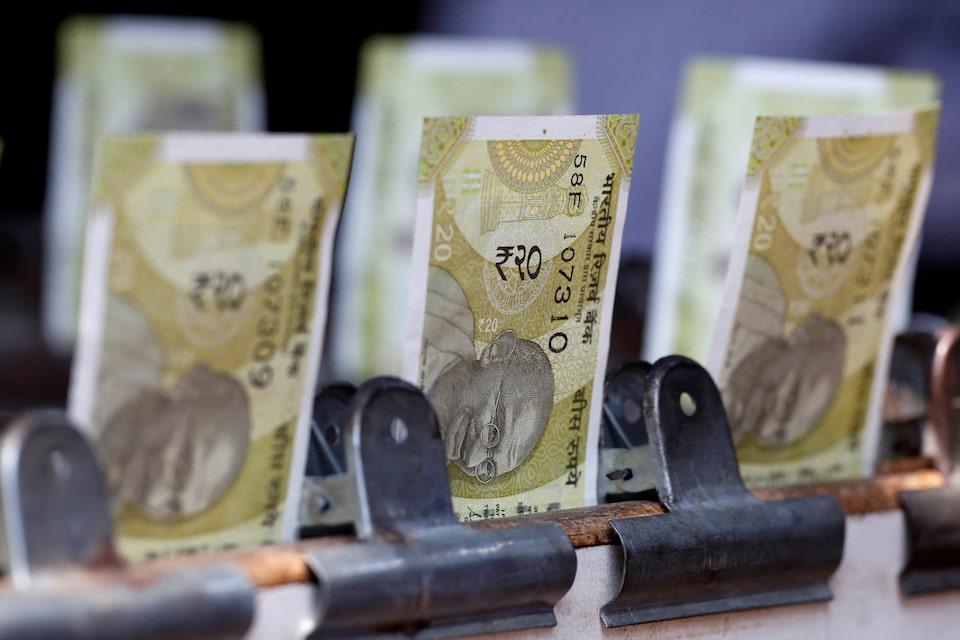
MUMBAI, June 2 (Reuters) - The Indian rupee strengthened on Monday, aided by likely dollar inflows related to the rejig of a global equity index that helped the local currency sidestep a dip in most of its regional peers as U.S.-China trade tensions continued to simmer. The rupee rose to 85.4075 per U.S. dollar as of 11:00 a.m. IST, up 0.2% from its close of 85.5775 in the previous session. Sign up here. Traders said the rupee was supported by dollar sales from at least two large foreign banks on the day, likely related to the rejig of a global equity index. The dollar index, meanwhile, was down 0.1% at 99.2 as uncertainty about U.S. trade policies rebounded after President Donald Trump said late on Friday that he plans to double duties on imported steel and aluminium and accused China of violating a bilateral deal to roll back tariffs. Asian currencies and stocks were mostly lower, with the offshore Chinese yuan down about 0.2% at 7.2163. India's benchmark equity indexes, the BSE Sensex (.BSESN) , opens new tab and Nifty 50 (.NSEI) , opens new tab, declined 0.5% each, tracking their regional peers. The rupee "remains in consolidation mode, with a broad range of 85-86," said Anil Bhansali, head of treasury at Finrex Treasury Advisors. Bhansali recommends that exporters wait for 85.70 to sell dollars, while importers can hedge around 85.25 levels. The focus this week will be on the Reserve Bank of India's monetary policy meeting on Friday, at which a 25-basis-point rate cut is widely expected. "Despite no pressing need for a third successive rate cut on June 6, we expect the MPC (monetary policy committee) to cut - an opportunistic move amid the lower-than-expected inflation outcome and outlook, and retain the stance as 'accommodative'," Barclays said in a note. https://www.reuters.com/world/india/rupee-ticks-up-likely-inflows-related-an-equity-index-rejig-traders-say-2025-06-02/
2025-06-02 05:07
Dollar sentiment fragile after Trump threatens 50% steel duties Beijing hits back over White House accusations it violated deal Senate to start consideration of Trump's tax and spending bill Focus on business activity surveys in Asia, Europe and US Poland's zloty slips vs euro after elections June 2 (Reuters) - The U.S. dollar fell across the board on Monday, giving up the previous week's gains, as markets weighed the outlook for President Donald Trump's tariff policy and its potential to hurt growth and stoke inflation. The U.S. currency slipped after Trump said on Friday he planned to double duties on imported steel and aluminum to 50% starting on Wednesday, and as Beijing hit back against accusations it violated an agreement on critical minerals shipments. Sign up here. China's Commerce Ministry said on Monday the charges were "groundless," and promised to take unspecified forceful measures to safeguard its interests. Treasury Secretary Scott Bessent said on Sunday Trump and Chinese President Xi Jinping were likely to have a call soon, and "this will be ironed out." Michael Brown, market analyst at online broker Pepperstone in London, noted the selling pressure on the dollar was broad-based. "Any time we see a resurgence in tariff concerns, everyone begins to pile back into the 'sell America' trade once more," Brown said. The dollar dropped 0.8% to 142.85 yen , nearly wiping out its gain against the Japanese currency last week. The euro rose 0.8% to $1.14355 - its highest since late April. Later in the week, the focus will be on the European Central Bank's interest rate decision and subsequent outlook. The dollar extended its losses after data showed U.S. manufacturing contracted for a third straight month in May and suppliers took longer to deliver inputs amid tariffs, potentially signalling shortages of some goods. Earlier in the session, data showed European manufacturing took another step towards stabilisation in May, but Asian factory activity declined. The dollar index, which measures its performance against six other major currencies , eased 0.6% and at 98.75 was just shy of the three-year low of 97.923 touched in late April. The U.S. currency has been whipsawed for weeks by Trump's on-again-off-again trade war, and investors have been questioning the currency's safe-haven status as a flare-up in tensions stokes worries of a potential U.S. recession. "We expect USD to continue to weaken (over the next 12 months) thanks to a convergence in both U.S. rates and growth to peers," Morgan Stanley strategists said in a note on Sunday. Last week, the dollar got some respite, rising 0.3% after trade talks with the European Union got back on track and a U.S. trade court blocked the bulk of Trump's tariffs on the grounds that he overstepped his authority. An appeals court reinstated the duties a day later, and Trump's administration said it had other avenues to implement them if it loses in court, but many analysts said it showed there were still checks in place on the president's power. Fiscal worries have also given rise to a broad "sell America" theme that has seen dollar assets from stocks to Treasury bonds dropping in recent months. Those concerns come into sharp focus this week as the Senate starts considering the administration's tax cut and spending bill, estimated to add $3.8 trillion to the federal government's $36.2 trillion in debt over the next decade. The fate of section 899 of the bill could be crucial, according to Barclays analysts. "S899 would give the U.S. free rein to tax companies and investors from countries deemed to have 'unfair foreign taxes' (and) could be seen as a tax on the U.S. capital account at a time when investor nervousness towards U.S. assets has grown," they said in a research report. Elsewhere, the Polish zloty touched a two-week low against the euro after eurosceptic politician Karol Nawrocki won the second round of the presidential election, spurring uncertainty for markets. Bitcoin, the world's largest cryptocurrency by market capitalisation, was 0.7% lower on the day at $104,315. https://www.reuters.com/world/middle-east/us-dollar-declines-traders-assess-tariff-outlook-2025-06-02/
2025-06-02 04:44
MUMBAI, May 30 (Reuters) - India halved the basic import tax on crude edible oils to 10% on Friday, the government said, as the world's biggest vegetable oil importer tries to bring down food prices and help the local refining industry. The customs duty applies to crude palm oil , crude soyoil and crude sunflower oil. Sign up here. It will effectively bring down the total import duty on the three oils to 16.5% from earlier 27.5% as they are also subject to India's Agriculture Infrastructure and Development Cess and Social Welfare Surcharge. "This is a win-win situation for vegetable oil refiners as well as consumers, as local prices will go down due to the duty reduction," said B.V. Mehta, executive director of the Solvent Extractors' Association of India (SEA). The government did not change the import duty on refined palm oil, refined soyoil or refined sunflower oil, which currently attract a 35.75% import tax. The import duty gap between refined and crude edible oils has risen to 19.25%, which will prompt importers to bring in crude edible oils instead of refined oils and boost the local refining industry, Mehta said. India meets more than 70% of its vegetable oil demand through imports. It buys palm oil mainly from Indonesia, Malaysia and Thailand, while it imports soyoil and sunflower oil from Argentina, Brazil, Russia and Ukraine. Sandeep Bajoria, CEO of Sunvin Group, a vegetable oil brokerage, said the cut in the basic duty would bring down edible oil prices and help revive retail demand, which has been subdued in recent months. https://www.reuters.com/world/india/india-cuts-import-tax-crude-edible-oils-govt-order-2025-05-30/