2025-06-02 04:32
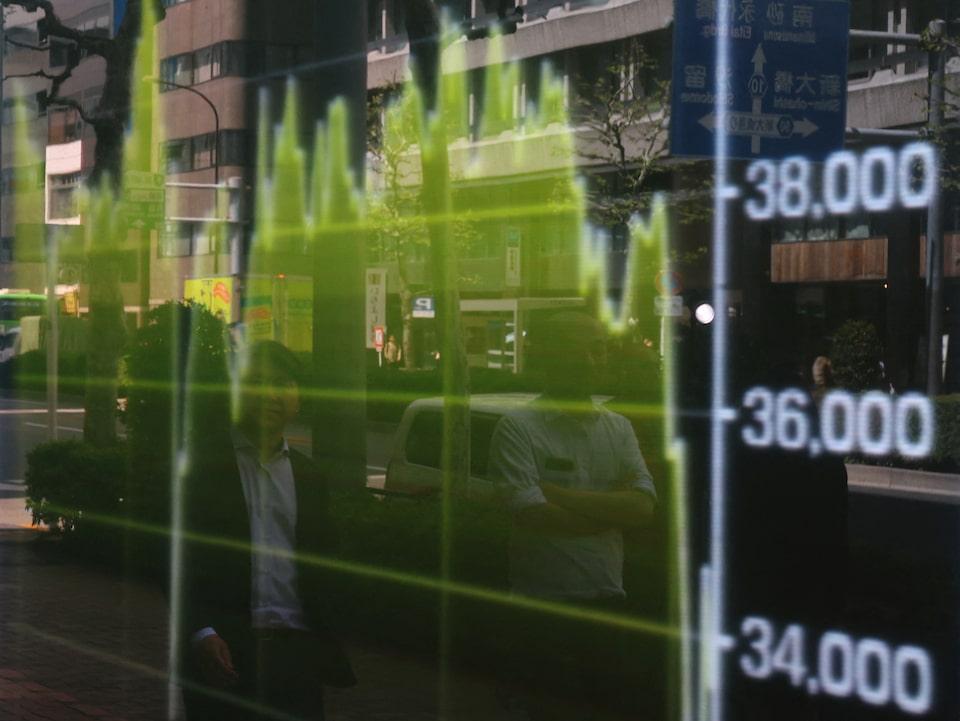
A look at the day ahead in European and global markets from Wayne Cole. Is this the dog that didn't bark? That would be the question from Sherlock Holmes fans given the utter lack of market reaction to U.S. President Donald Trump's threatened doubling of steel and aluminium tariffs to 50%. Sign up here. That policy shift by tweet came late Friday after markets shut, so there was some anticipation of an impact today, maybe a drop in the Canadian dollar given the scale of their steel exports to the U.S. Yet the loonie is actually firmer against a broadly softer greenback, while European share futures are off a shade and Wall St futures only modestly lower. This could be the TACO meme in action as investors assume 'Trump always chickens out', though he's leaving it late with the new higher tariff supposed to go into effect on Wednesday. Then again, last minute cliffhangers work well on reality TV. European Union negotiators weren't pleased with this latest plot twist and threatened retaliation in return, while also letting it be known that the court case decision against the April 2 tariffs gave them added "leverage". Neither does Trump's latest rhetorical attack on China seem to be working, with Beijing sticking to its guns. If Trump is counting on a call from China's President Xi Jinping to sort things out, he might be waiting by the phone for a while. It was also somewhat ironic hearing Treasury Secretary Scott Bessent complaining that China was holding back vital products from the United States, given it was the U.S. that started a trade war with the specific aim of rebuffing Chinese imports. Federal Reserve Governor Christopher Waller speaking in South Korea said tariffs meant there were downside risks to activity and unemployment, and upside risks to inflation. Yet he was still optimistic about the chance of "good news" interest rate cuts later this year, cementing his place as one of the more dovish Fed officials. Fed Chair Jerome Powell will speak later Monday, though limited to opening remarks to an international finance conference. Key developments that could influence markets on Monday: https://www.reuters.com/world/china/global-markets-view-europe-2025-06-02/
2025-06-02 04:01
June rate cut widely expected Market focus on whether ECB will pause from July ECB expected to lower 2026 inflation forecasts LONDON, June 2 (Reuters) - The European Central Bank is tipped to cut interest rates on Thursday, its eighth move this cycle, with traders sensing a pause will then follow as the economy holds up better than anticipated and longer-term inflation worries creep back. U.S. tariff uncertainty, heightened further by a court plot twist, makes the backdrop challenging as the ECB weighs any near-term hit to business activity against implications for inflation further out. Sign up here. "The last thing the ECB wants is to be unnecessarily drawn back to a world with limited policy room," said PIMCO portfolio manager Konstantin Veit. Here are five key questions for markets: 1/ What will the ECB do on Thursday? A rate cut will come as no surprise to markets, which price in a quarter point reduction of the deposit rate to 2% as inflation eases and U.S. tariffs cast a shadow over the euro area. The economy is still just limping along and latest surveys point to only lukewarm optimism among firms as services also appear surprisingly weak. "A rate cut is a done deal," said ING's global head of macro Carsten Brzeski. "Even the hawks have not been very outspoken." 2/ And after June? There's a growing consensus that the ECB will pause in July, with one more rate cut anticipated by year-end. ECB chief Christine Lagarde is unlikely to give traders the confirmation they are looking for, stressing data-dependency. In the near-term, inflation could drop further and even undershoot the bank's 2% target, bolstering the case for another cut. But factors including increased government spending and tariffs could exacerbate price pressures in the longer term. ECB board member and policy hawk Isabel Schnabel already favours a pause, saying that tariffs may be disinflationary near-term but pose upside risks further out. Chief economist Philip Lane says the ECB needs to find a "middle path." Swiss Re's head of macro strategy Patrick Saner said the ECB will probably want to reassess over the summer. "We’re looking at a cautious easing cycle, not a sprint," Saner added. 3/ What does U.S./EU trade tension means for the ECB? Additional uncertainty. The European Union has won a reprieve from U.S. President Donald Trump's threatened 50% tariffs. But it remains unclear how the bloc will square its push for a mutually beneficial trade deal with U.S. demands for steep concessions. "If tariffs end up to 10-20%, as we expect, I don’t think it will be a major issue (for economic growth), and the ECB probably won’t react that much," said David Zahn, head of European fixed income at Franklin Templeton, adding that a strong euro should limit inflationary impact by dampening import prices. PIMCO's Veit added that the picture was less clear if a full-blown confrontation prompts aggressive EU retaliation, creating an "inflationary problem" for the ECB. 4/ What will the latest ECB forecasts show? Small downward revisions to 2026 inflation estimates are anticipated as a stronger euro and weaker oil prices pull down inflation. The trade-weighted euro is up around 3.5% so far this year , oil prices have fallen almost 15% . Economists anticipate small downward revisions to the 2025 growth estimates given near-term growth risks caused by tariff uncertainty. Economists polled by Reuters expect 0.9% growth this year, unchanged from the ECB's previous forecast. Goldman Sachs expects the ECB to reduce 2026 projections for headline and core inflation by 0.2 percentage points each to 1.7% and 1.8% respectively, and marginally lower 2025 growth forecasts. Data on Tuesday is expected to show headline inflation eased to 2% in May. 5/ Is the ECB worried about rising long-term borrowing costs globally? Market watchers suspect so, but say Lagarde is likely to stress the bloc's resilience to market turbulence. Weak demand at recent Japanese and U.S. bond sales and Moody's decision to strip the U.S. of its last triple-A credit rating have returned focus to high government debt, a pressure point for bond markets. "Higher long-term yields add a layer of fragility, particularly for highly indebted countries," said Swiss Re's Saner. "While this is certainly not a key reason for easing policy, it's part of the background music." https://www.reuters.com/business/finance/playing-it-smart-five-questions-ecb-2025-06-02/
2025-06-02 03:01
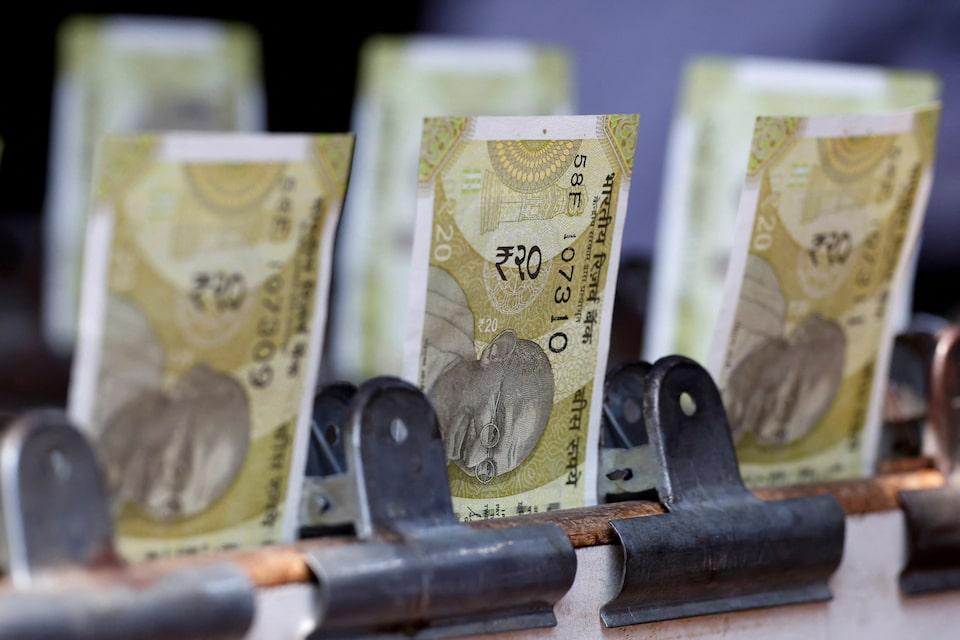
MUMBAI, June 2 (Reuters) - The Indian rupee is expected to be supported at the open on Monday following a decline in the U.S. dollar due to tariff-related developments and fiscal concerns. The 1-month non-deliverable forward indicated an open in the 85.52-85.54 range, versus 85.5775 in the previous session. The dollar index slipped 0.2% while Asian currencies were mixed on the day. Sign up here. "Not much on the Asian front to guide the rupee today, with two-way flows likely to dominate in the 85.50–85.70 band," a currency trader at a Mumbai-based bank said. According to the trader, interbank players are looking to sell dollar/rupee on up ticks, with stops placed around the 86 mark. In recent sessions, the rupee has found support in the 85.60–85.70 zone, with bankers noting broad-based interest in selling dollars at those levels. The dollar kicked off the week on the defensive against its major peers, weighed down by ongoing uncertainty over U.S. tariffs. President Donald Trump announced late Friday his intention to double duties on imported steel and aluminium to 50%, effective Wednesday. This follows a U.S. trade court that initially blocked much of Trump's tariff plan, ruling that he had overstepped his authority. However, an appeals court later reinstated the bulk of those duties, reigniting market caution. The dollar has further been weighed down by fiscal worries in recent weeks. The U.S. Senate will consider Trump's sweeping tax cut and spending bill, which will add an estimated $3.8 trillion to the $36.2 trillion in debt over the next decade. "US growth and interest rates should continue to converge lower than in many other major economies", which should keep the dollar under pressure, ING Bank said. "And there's still a sizeable risk that fiscal credibility issues take their toll on US assets this summer." KEY INDICATORS: ** One-month non-deliverable rupee forward at 85.64; onshore one-month forward premium at 13.25 paisa ** Dollar index down at 99.2 ** Brent crude futures up 2.7% at $64.5 per barrel ** Ten-year U.S. note yield at 4.41% ** As per NSDL data, foreign investors sold a net $205.6mln worth of Indian shares on May 29 ** NSDL data shows foreign investors bought a net $3,412.8mln worth of Indian bonds on May 29 https://www.reuters.com/world/india/rupee-supported-open-by-dollar-dip-us-tariffs-fiscal-concerns-2025-06-02/
2025-06-02 01:33
MUMBAI, June 2 (Reuters) - The Indian rupee is likely to kick off the week on a positive note, boosted by stronger-than-expected economic growth data, and, alongside government bonds, will be influenced by the central bank's monetary policy decision, due on Friday. The rupee closed at 85.5075 against the U.S. dollar last Friday, down 0.4% in a week dominated by choppy price action across forex markets. Sign up here. Data after the market close on Friday showed India's gross domestic product (GDP) grew 7.4% in the January-March quarter, the fastest in a year, and above economists' expectations of 6.7%. The strong growth may lift equities, which should help the rupee both via portfolio inflows and a sentimental boost, a trader at a foreign bank said. Traders expect the rupee to hover in a 84.80-86 range in the near term. Developments surrounding U.S. tariff policies also be in focus this week. U.S. President Donald Trump on Friday accused China of violating a bilateral deal to roll back tariffs and announced a doubling of worldwide steel and aluminum tariffs to 50%. A team of U.S. trade officials, meanwhile, is slated to visit India on June 5-6. The Reserve Bank of India is widely expected to deliver a third straight 25-basis-point rate cut on June 6, lowering the key rate to 5.75%. "The big macro picture for INR and India is that inflation is likely to remain manageable for some time ... with CPI expected to remain below 4% over the next few quarters," MUFG Bank said in a note. India's 10-year benchmark 6.33% 2035 bond yield pared its earlier losses to end flat at 6.2308% on Friday. It fell to 6.1672% in the week. Traders anticipate the yield to move between 6.18% and 6.26% until the RBI decision. The five-year bond yield outperformed the 10-year yield for a third straight month in May. "There has been a bull-steeping in the bond market. The market anticipates the RBI will cut rates and is at extreme bullish positioning," said Vishal Goenka, co-founder of bond trading platform, IndiaBonds.com. Capital Economics expects growth to remain strong over the coming quarters and eyes a further 50 bps of interest rate cuts. KEY EVENTS: India ** May HSBC manufacturing PMI - June 2, Monday (10:30 a.m.) ** May HSBC services PMI - June 4, Wednesday (10:30 a.m.) ** RBI monetary policy decision - June 6, Friday (10 a.m.) U.S. ** May S&P Global Flash manufacturing PMI final - June 2, Monday (7:15 p.m. IST) ** May ISM manufacturing PMI - June 2, Monday (7:30 p.m. IST) ** April factory orders - June 3, Tuesday (7:30 p.m. IST) ** May S&P Global composite PMI final - June 4, Wednesday (7:15 p.m. IST) ** May S&P Global services PMI final - June 4, Wednesday (7:15 p.m. IST) ** May ISM non-manufacturing PMI - June 4, Wednesday (7:30 p.m. IST) ** April international trade - June 5, Thursday (6:00 p.m. IST) ** Initial weekly jobless claims (for week to May 26) - June 5, Thursday (6:00 p.m. IST) ** May non-farm payrolls and unemployment rate - June 6, Friday (6:00 p.m. IST) https://www.reuters.com/world/india/india-rupee-bonds-expected-move-higher-run-up-rbi-policy-decision-2025-06-02/

2025-06-02 00:49
June 2 (Reuters) - Goldman Sachs anticipates the eight country OPEC+ oil group will implement a final 0.41 million barrels per day (mb/d) production increase in August, the bank said in a note dated Sunday. "Relatively tight spot oil fundamentals, beats in hard global activity data, and seasonal summer support to oil demand suggest that the expected demand slowdown is unlikely to be sharp enough to stop raising production when deciding on August production levels on July 6th," Goldman Sachs said in a note. Sign up here. OPEC+, the world’s largest group of oil producers, stuck to its guns on Saturday with another big increase of 411,000 barrels per day for July as it looks to wrestle back market share and punish over-producers. The decision likely reflects relatively tight spot fundamentals, a resilient global economy, and an ongoing shift toward a long-term equilibrium aimed at normalizing spare capacity, supporting internal cohesion, and disciplining U.S. shale production, Goldman Sachs noted. Oil prices rebounded more than $1 a barrel in early Asian trade on Monday after OPEC+ decided to increase output in July by the same amount as it did in each of the prior two months, in line with market expectation. Goldman Sachs expects OPEC+ to maintain flat production levels from September, citing slowing global growth in third quarter and new large-scale non-OPEC projects ramping up. Goldman maintained its cautious oil price forecast, projecting Brent crude to average $60 per barrel and West Texas Intermediate (WTI) $56 per barrel for the remainder of 2025. For 2026, it sees Brent at $56 and WTI at $52 per barrel. The forecast reflects expected supply growth outside of U.S. shale will drive surpluses of 1 mbpd in 2025 and 1.5 mbpd in 2026. The bank mainted its oil price forecast stating a moderate upgrade to demand offsets the increase in OPEC+ supply. Goldman Sachs further cited an upward revision of historical International Energy Agency (IEA) Africa demand estimates, stronger-than-expected European demand data, and a softer electric vehicle (EV) outlook in Western markets as contributing factors. https://www.reuters.com/markets/commodities/goldman-sachs-sees-opec-raising-oil-output-by-041-mbd-august-2025-06-02/
2025-06-02 00:34
Trade tensions between US and China escalate, affecting global markets Trump plans to double tariffs on steel and aluminum, EU vows retaliation Dollar weakens amid unpredictable trade policy, Treasury yields rise slightly Oil bounces on Canada wildfires, output relief from OPEC NEW YORK, June 2 (Reuters) - Wall Street ended a choppy session higher on Monday and the dollar softened as trade tensions between Washington and Beijing heated up and investors showed caution ahead of U.S. employment data and a widely expected policy rate cut from the European Central Bank. The S&P 500 notched a modest advance, while tech (.SPLRCT) , opens new tab boosted the Nasdaq to a more substantial gain. The blue-chip Dow ended the session barely in positive territory. Sign up here. The greenback, under pressure amid revived trade strife, weakened as benchmark U.S. Treasury yields ticked higher. Souring risk appetite boosted gold to more than a three-week high against the weakening greenback. On Sunday, U.S. Treasury Secretary Scott Bessent said President Donald Trump would speak soon with Chinese President Xi Jinping to iron out tensions over a mutually agreed-upon rollback of tariffs on critical minerals after Trump accused Beijing of violating that agreement. Beijing called Trump's accusation "groundless," and vowed to take forceful measures to protect its interests. "Investors and businesses continue to face a lot of uncertainty related to rate tariffs and fiscal policy, and how monetary policy will respond," said Bill Merz, head of capital market research at U.S. Bank Wealth Management, Minneapolis. "Today’s market is about expectations and uncertainties and the degree to which these uncertainties become self-fulfilling," Merz added. "We haven’t seen that yet, but that’s what we need to watch for." A report from the Institute for Supply Management showed the U.S. manufacturing sector contracted at a steeper-than-expected pace in May, while construction expenditures defied consensus by falling in April. The Dow Jones Industrial Average (.DJI) , opens new tab rose 35.41 points, or 0.08%, to 42,305.48, the S&P 500 (.SPX) , opens new tab rose 24.25 points, or 0.41%, to 5,935.94 and the Nasdaq Composite (.IXIC) , opens new tab rose 128.85 points, or 0.67%, to 19,242.61. European stocks closed lower amid rekindled trade tensions after Trump's announcement late on Friday that he intends to double tariffs on imported steel and aluminum to 50%, starting Wednesday. The move drew promises of retaliation from the European Union and sent shares of steel exporters lower. Geopolitical tensions flared as the Ukraine-Russia conflict intensified over the weekend. Polish stocks (.WIG20) , opens new tab fell 0.6% in the wake of nationalist opposition candidate Karol Nawrocki's election victory. MSCI's gauge of stocks across the globe (.MIWD00000PUS) , opens new tab rose 3.38 points, or 0.38%, to 882.88. The pan-European STOXX 600 (.STOXX) , opens new tab index fell 0.14%, while Europe's broad FTSEurofirst 300 index (.FTEU3) , opens new tab fell 3.06 points, or 0.14% Emerging market stocks (.MSCIEF) , opens new tab fell 3.70 points, or 0.32%, to 1,153.64. MSCI's broadest index of Asia-Pacific shares outside Japan (.MIAPJ0000PUS) , opens new tab closed lower by 0.26%, to 607.38, while Japan's Nikkei (.N225) , opens new tab fell 494.43 points, or 1.30%, to 37,470.67. The dollar lost ground against other major currencies, backing down from the previous week's gains as markets assessed the outlook for Trump's unpredictable trade policy and its potential for dampening growth and fuelling inflation. The dollar index , which measures the greenback against a basket of currencies including the yen and the euro, fell 0.69% to 98.67, with the euro up 0.85% at $1.1444. Against the Japanese yen , the dollar weakened 0.93% to142.7. Longer-dated U.S. Treasury yields were mostly higher in the wake of Trump's tariff announcement, but yields slightly pared gains after the manufacturing data. The yield on benchmark U.S. 10-year notes rose 3.2 basis points to 4.45%, from 4.418% late on Friday. The 30-year bond yield rose 4.6 basis points to 4.9779% from 4.932% late on Friday. The 2-year note yield, which typically moves in step with interest rate expectations for the Federal Reserve, rose 2.5 basis points to 3.939%, from 3.914% late on Friday. Crude oil prices surged after OPEC+ held July output increases at the same level as the previous two months, while wildfires in Canada's oil-producing province threatened supply. U.S. crude rose 2.85% to settle at $62.52 per barrel, while Brent settled at $64.63 per barrel, up 2.95% on the day. Gold prices touched a one-week high as elevated caution attracted investors to the safe-haven metal. Spot gold rose 2.77% to $3,380.41 an ounce. U.S. gold futures rose 2.74% to $3,379.00 an ounce. Copper rose 1.23% to $9,615.00 a tonne. Three-month aluminum on the London Metal Exchange rose 1.23% to $2,474.15 a tonne. https://www.reuters.com/markets/global-markets-wrapup-1-2025-06-02/