2025-06-01 23:08
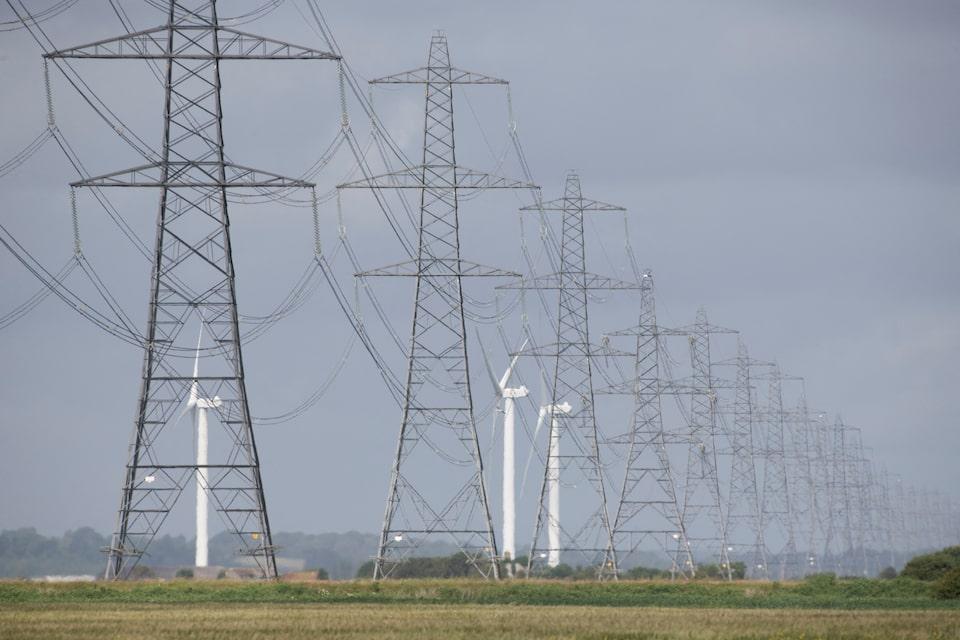
MANCHESTER, England, June 2 (Reuters) - Britain needs to cut industrial energy bills that are the highest among major advanced economies if its aspirations for a healthy manufacturing sector are to succeed, industry body Make UK said on Monday. Prime Minister Keir Starmer's government is working on an industrial strategy to put British manufacturing - hit hard by Brexit, soaring energy costs and global trade wars - on a solid footing for the years ahead. Sign up here. Manufacturing association Make UK said it should cancel climate levies imposed on industrial energy costs and adopt a fixed industrial energy price. Britain had the highest industrial energy prices out of any International Energy Agency member country in 2023, reflecting its dependence on gas and its role in setting electricity prices. "If we do not address the issue of high industrial energy costs in the UK as a priority, we risk the security of our country," Make UK chief executive officer Stephen Phipson said. "We will fail to attract investment in the manufacturing sector and will rapidly enter a phase of renewed de-industrialisation." Britain has de-industrialised - defined as the share of manufacturing in overall economic output - faster than in any other major European country over the last 30 years, according to a Reuters analysis of national accounts data. Manufacturing hit a record low 9% of economic output last year, crowded out by the dominant services sector which now drives the majority of the country's exports - a first among Group of Seven advanced economies. Alan Johnson, a senior executive for manufacturing, supply chain and purchasing at Nissan Motor (7201.T) , opens new tab, said its Sunderland plant in the north east of England had the highest energy costs out of any of its facilities in the world. "The proposals being put forward by Make UK ... would send a strong message to investors that the UK remains committed to creating a more competitive environment for electric vehicle manufacturing," Johnson said. https://www.reuters.com/sustainability/climate-energy/high-energy-costs-threaten-uk-manufacturings-future-industry-warns-2025-06-01/
2025-06-01 22:57
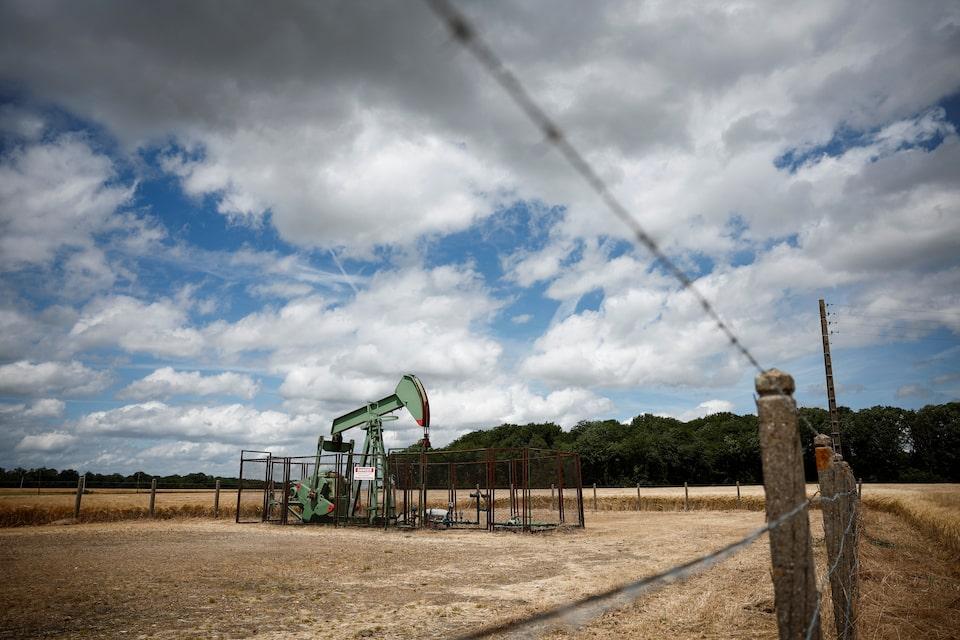
OPEC+ to raise output by 411,000 bpd in July US dollar weakens on fresh tariff threats Canadian thermal oil sands operators shut production due to wildfires NEW YORK, June 2 (Reuters) - Oil prices climbed nearly 3% on Monday on supply concerns as producer group OPEC+ decided not to accelerate plans to hike output and wildfires in Canada's oil-producing province disrupted production. Brent crude futures settled $1.85, or 2.95%, higher at $64.63 a barrel. U.S. West Texas Intermediate crude gained $1.73, or 2.85%, to $62.52. Sign up here. Wildfires burning in Canada's oil-producing province of Alberta have affected about 7% of the country's overall crude oil output as of Monday, according to Reuters calculations. At least two thermal oil sands operators south of the industry hub of Fort McMurray evacuated workers from their sites over the weekend and shut production as a precaution. "The wildfires in Alberta are now starting to seep in," said John Kilduff, partner at Again Capital in New York. Also supporting prices, the U.S. dollar (.DXY) , opens new tab slipped across the board on Monday on worries that Trump's fresh tariff threats might hurt growth and stoke inflation. A weaker U.S. currency makes dollar-priced commodities such as oil less expensive for buyers using other currencies. Prices were also supported by a perception of increased geopolitical risk after Ukrainian drone strikes against Russia over the weekend, said Rystad Energy's Jorge Leon. Meanwhile, mixed signals from Iran-U.S. talks kept market participants on edge. An Iranian diplomat said on Monday Iran was poised to reject a U.S. proposal to end a decades-old nuclear dispute. Delegations from the two countries made some progress after a fifth round of talks in Rome last month. The Organization of the Petroleum Exporting Countries and its allies, known collectively as OPEC+, decided on Saturday to raise output by 411,000 barrels per day in July, the third consecutive monthly increase of that amount, as it looks to wrestle back market share and punish members that have produced more than their quotas. Sources familiar with OPEC+ talks said on Friday that the group could discuss an even larger increase. Oil traders said the 411,000 bpd increase had already been priced into Brent and WTI futures. Phil Flynn, a senior analyst with Price Futures Group, said investors had expected the oil-producing group to increase production by more than it did. "I think they were caught the wrong way." Goldman Sachs analysts expect OPEC+ to implement a final 410,000 bpd production increase in August. "Relatively tight spot oil fundamentals, beats in hard global activity data and seasonal summer support to oil demand suggest that the expected demand slowdown is unlikely to be sharp enough to stop raising production when deciding on August production levels on July 6," the bank said in a note. Morgan Stanley analysts also said they expect 411,000 bpd to be added back each month up to a total of 2.2 million bpd by October. "With this latest announcement, there is little sign that the pace of quota increases is slowing," the bank's analysts said. https://www.reuters.com/markets/commodities/oil-rebounds-after-opec-sticks-same-output-hike-july-vs-june-2025-06-01/
2025-06-01 20:46
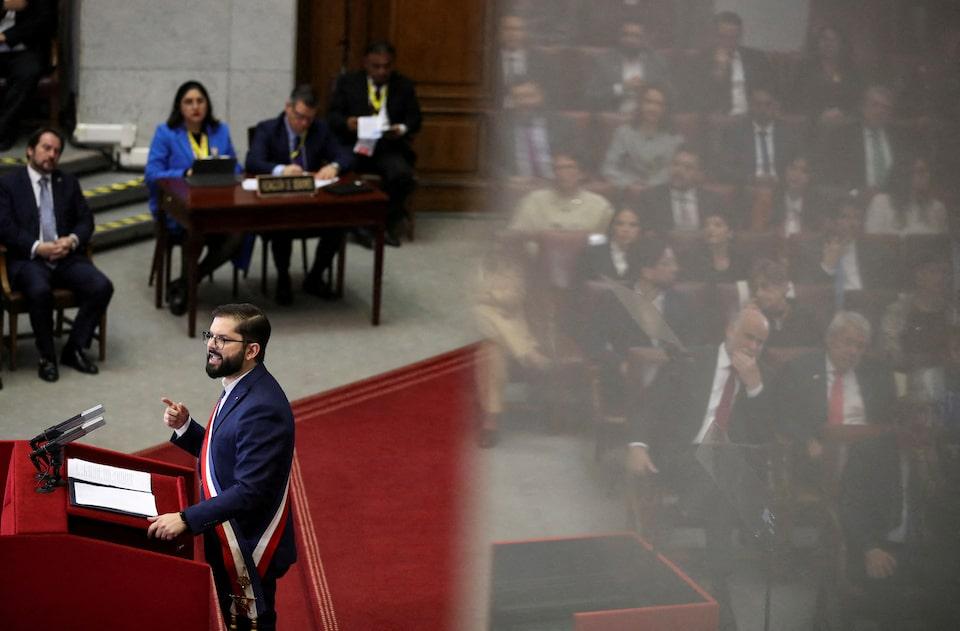
VALPARAISO, Chile, June 1 (Reuters) - Chile's President Gabriel Boric said on Sunday that he will accelerate renewable energy efforts and step up pressure against Israel over its war in Gaza among other initiatives during his government's last nine months in office. In a wide-ranging three-hour speech from Congress in the coastal city of Valparaiso that marked his last annual address, Boric also discussed crime, infrastructure, the economy and abortion rights. Sign up here. In comments that sparked the largest amount of cheers and jeers from opposite sides of Congress, Boric said he will introduce a law to ban imports from what he called "illegally occupied territories" and back efforts by Spain for an arms embargo against Israel. Boric, an outspoken critic of Israel, had recently recalled military personnel from Chile's embassy in the country and summoned the ambassador for questioning. Chile's government will also introduce an "accelerated decarbonization" bill that aims to boost investment in renewable energy sources, help end coal-powered thermoelectric plants and move the country's 2040 goal to decarbonize the electric grid up to 2035. Boric added that a bill to speed up the permitting process for new projects was weeks away from being approved, a long-awaited request by miners, renewable energy companies and other investors. Its goal is to cut permitting times by 30% to 70%, Boric said. "Investment projects won't develop to their full potential if we don't modernize and speed up permitting," Boric said, while also touting his plan to expand lithium mining, led by state copper giant Codelco. Critics have rebuked Boric for not making major reforms he promised as a candidate, and for failing to see through a rewrite of the dictatorship-era constitution that was knocked back twice by voters. Boric appeared to recognize the complaints, while defending his record. "Have we achieved everything we wanted, with the depth we wanted? No, but we have made progress in that direction, with the conditions under which we had to govern," he said. https://www.reuters.com/sustainability/climate-energy/chile-president-ramp-up-decarbonization-pressure-israel-term-winds-down-2025-06-01/
2025-06-01 20:37
NAPERVILLE, Illinois, June 1 (Reuters) - Speculators have made unprecedented moves in Chicago corn so far in 2025 as the combination of geopolitical uncertainties and supply trends sparked heavy selling, turning a strongly bullish market into a bearish one. June officially kicks off the summer growing season for U.S. corn, a timeframe that can have investors rapidly changing gears along with weather forecasts and crop health, regardless of the wider fundamental picture. Sign up here. This puts both bearish and bullish sentiments in play for the near future. CORN SCENARIOS In the week ended May 27, money managers trimmed their net short position in CBOT corn futures and options to 100,760 contracts, down less than 3,000 on the week. While this new position isn’t hugely bearish historically, it follows an impressive selloff. Between late February and mid-May, money managers were net sellers of more than 420,000 corn contracts, equivalent to 2.1 billion bushels and the most ever for an 11-week span. Most-active CBOT corn futures fell 10.5% over that period and new-crop December corn eased more than 6%. December corn settled at $4.38-1/2 per bushel on Friday, a five-year low for the date. Trade fears have been swirling for months, and confusion mounted further last week. U.S. President Donald Trump’s sweeping trade tariffs were deemed unconstitutional by a U.S. trade court, though the ruling was paused a day later. On the fundamental front, traders have been weighing strong U.S. corn demand with the expectation for expanding supplies. The U.S. Department of Agriculture last month predicted 2025-26 U.S. corn ending stocks will rise 27% on the year, larger than the 14% rise that was projected in October. However, the 2025-26 stockpiles themselves are seen 21% lighter than the October forecast suggested, leaving some room for a bull-friendly scenario should corn yields disappoint. As such, speculators are likely to react if there is any such risk to yields. Take 2023 for example, which featured very similar fund movements as 2025, especially on timing. As of June 2023, the 2023-24 U.S. corn carryout was projected to rise 55% on the year. Still, funds dipped into bullish territory twice that summer due to weather scares, even though the U.S. corn crop ended up notching a record yield. Speculators turned bearish in August 2023 and did not flip back over to the bull side again until November 2024, so any upcoming opportunities for bulls could be short-lived if U.S. weather scares don’t persist. QUICK RUNDOWN In the week ended May 27, money managers extended their net long in CBOT soybean futures and options to 36,697 contracts from 12,654 a week earlier. That marked their seventh consecutive week as soybean bulls. Funds trimmed their net long in CBOT soybean oil futures and options to 53,988 contracts from 57,309 a week earlier. They also reduced their net short in soybean meal to 93,785 contracts from the previous week’s record of 107,466. Money managers through May 27 cut their net short in CBOT wheat futures and options to 101,226 contracts from 108,893 a week earlier. They also trimmed their Minneapolis wheat net short to 30,518 contracts from the previous week’s record of 34,140. As of May 27, funds’ net short in Kansas City wheat futures and options stood at 79,361 contracts, close to the all-time record set two weeks earlier. Between Wednesday and Friday, moves in most-active CBOT futures were as follows: corn -3.4%, soybeans -2%, wheat +1%, soyoil -5.4%, and soymeal was unchanged. Traders will be watching this week for any developments on either the tariff or biofuel front, as well as for U.S. weather forecasts and crop conditions. USDA will publish its first condition rating for the U.S. soybean crop on Monday. Karen Braun is a market analyst for Reuters. Views expressed above are her own. https://www.reuters.com/markets/commodities/funds-finally-pause-corn-selloff-focus-turns-us-crop-braun-2025-06-01/

2025-06-01 15:48
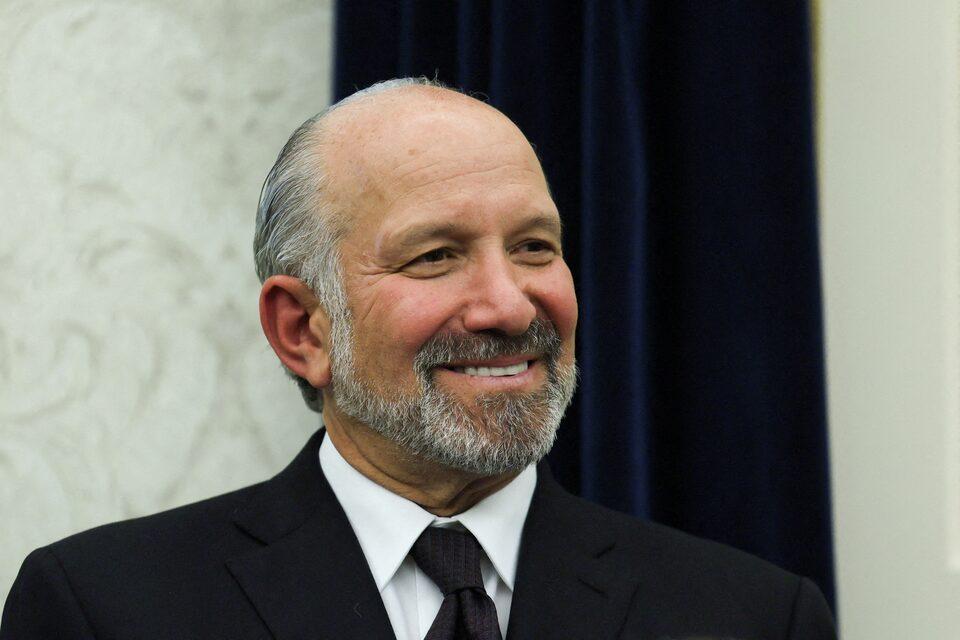
WASHINGTON, June 1 (Reuters) - U.S. Commerce Secretary Howard Lutnick downplayed the impact of legal uncertainty around U.S. tariffs on negotiations with the European Union during an interview on Sunday, saying talks were ongoing. Lutnick, speaking on "Fox News Sunday," was asked about a Reuters report quoting an unnamed EU official close to negotiations who said the legal uncertainty of the tariffs in the U.S. gave the EU "extra leverage." Sign up here. "You can't listen to silly people making silly comments," Lutnick said. "All of the countries that are negotiating with us understand the power of Donald Trump and his ability to protect the American worker." A U.S. trade court blocked most of President Trump's tariffs in a sweeping ruling last week that found he had overstepped his authority by imposing across-the-board duties on imports from U.S. trading partners. A U.S. federal appeals court paused that ruling a day later, allowing the tariffs to go into effect while it considered an appeal by the Trump administration. Lutnick said the ruling "maybe cost us a week, but then everybody came right back to the table." Trump and his advisers said on Friday that many countries had been in touch since the court ruling and talks were moving ahead. The Republican president in late May threatened 50% tariffs on all European goods by June 1, but days later delayed the effective date to July 9 to allow more time to negotiate. Trump also said on Friday that he would increase tariffs on imported steel and aluminum to 50% from 25%, leading the European Commission on Saturday to say it could consider countermeasures. Speaking on ABC News' "This Week," White House economic adviser Kevin Hassett said the U.S. needed to protect its steel industry for national security reasons in light of economic rival China's steel production. "We have to show strength," Hassett said. "We have to have a steel industry that's ready for American defense." https://www.reuters.com/world/us/lutnick-downplays-impact-tariff-court-ruling-us-eu-talks-2025-06-01/
2025-06-01 15:32
WASHINGTON, June 1 (Reuters) - U.S. President Donald Trump and Chinese President Xi Jinping will speak soon to iron out trade issues including a dispute over critical minerals, Treasury Secretary Scott Bessent said on Sunday. Trump on Friday accused China of violating an agreement with the U.S. to mutually roll back tariffs and trade restrictions for critical minerals. Sign up here. "What China is doing is they are holding back products that are essential for the industrial supply chains of India, of Europe. And that is not what a reliable partner does," Bessent said in an interview with CBS' "Face the Nation." "I am confident that when President Trump and Party Chairman Xi have a call, that this will be ironed out. But the fact that they are withholding some of the products that they agreed to release during our agreement - maybe it's a glitch in the Chinese system, maybe it's intentional. We'll see after the President speaks with the party chairman." Trump said on Friday he was sure that he would speak to Xi. China said in April that the two leaders had not had a conversation recently. Asked if a talk with Xi was on Trump's schedule, Bessent said, "I believe we'll see something very soon." White House economic adviser Kevin Hassett said no specific date for the conversation has been set, but there have been discussions that the leaders will talk about last month's Geneva agreement on some tariff disputes. "President Trump, we expect, is going to have a wonderful conversation about the trade negotiations this week with President Xi. That's our expectation," Hassett said. https://www.reuters.com/world/trump-xi-likely-speak-soon-treasurys-bessent-says-2025-06-01/


