2025-05-30 20:28
RIO DE JANEIRO, May 30 (Reuters) - Brazilian state-run oil firm Petrobras (PETR4.SA) , opens new tab will cut its average jet fuel prices to distributors by 7.9%, or 0.28 real ($0.0490) per liter, starting June 1, the company said in a statement on Friday. ($1 = 5.7174 reais) Sign up here. https://www.reuters.com/business/energy/brazils-petrobras-cut-average-jet-fuel-prices-by-79-june-2025-05-30/

2025-05-30 20:27
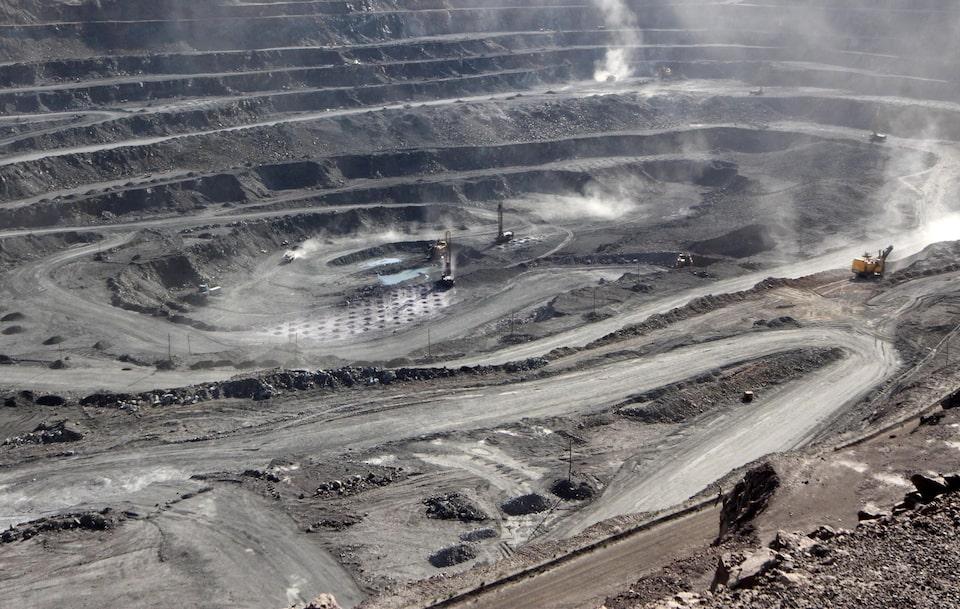
Automakers warn of rare-earth magnet shortage China controls over 90% of global magnet processing capacity China's export restrictions impact global auto production US officials frustrated with China's slow export license issuance WASHINGTON, May 30 (Reuters) - Global auto executives are sounding the alarm on an impending shortage of rare-earth magnets from China – used in everything from windshield-wiper motors to anti-lock braking sensors – that could force the closure of car factories within weeks. In a previously unreported May 9 letter to Trump administration officials, the head of the trade group representing General Motors (GM.N) , opens new tab, Toyota (7203.T) , opens new tab, Volkswagen (VOWG.DE) , opens new tab, Hyundai (011760.KS) , opens new tab and other major automakers raised urgent concerns. Sign up here. "Without reliable access to these elements and magnets, automotive suppliers will be unable to produce critical automotive components, including automatic transmissions, throttle bodies, alternators, various motors, sensors, seat belts, speakers, lights, motors, power steering, and cameras," the Alliance for Automotive Innovation wrote the Trump administration. The letter, which also was signed by MEMA, The Vehicle Suppliers Association, added that, without those essential automotive components, it would only be a matter of time before U.S. vehicle factories are disrupted. "In severe cases, this could include the need for reduced production volumes or even a shutdown of vehicle assembly lines," the groups said. Both Alliance CEO John Bozzella and MEMA CEO Bill Long told Reuters on Friday the situation was not resolved and remained a concern. They expressed gratitude for the Trump administration's high-level engagement to prevent disruption to U.S. auto production and the supply chain. Bozzella noted that the automotive issue was on the agenda during Treasury Secretary Scott Bessent and U.S. Trade Representative Jamieson Greer's talks with their Chinese counterparts in Geneva earlier this month. Greer told CNBC on Friday that China had agreed to lift restrictions on the exports of rare-earth magnets to U.S. companies and was not moving fast enough to grant access for key U.S. industries. "We haven't seen the flow of some of those critical minerals as they were supposed to be doing." China - which controls over 90% of global processing capacity for the magnets used in everything from automobiles and fighter jets to home appliances - imposed restrictions in early April requiring exporters to obtain licenses from Beijing. Rare-earth magnet exports from China halved in April as companies grappled with an opaque application process for permits that sometimes require hundreds of pages of documents. In a social-media post Friday, President Donald Trump accused China of violating terms of a deal reached this month to temporarily dial back tariffs and other trade restrictions. "China, perhaps not surprisingly to some, HAS TOTALLY VIOLATED ITS AGREEMENT WITH US," Trump said in a post on his Truth Social platform. China's embassy in Washington responded by saying it was the U.S. that was abusing export controls in the semiconductor sector. A U.S. official with knowledge of the talks told Reuters that only tariffs and Chinese non-tariff countermeasures were covered in Geneva talks, and that U.S. export controls were not part of the deal. The official also expressed frustration that Beijing appeared to be moving slowly on promises to issue rare-earth export licenses, which could kick start export control retaliation by Washington if automakers vulnerable to shortages of the minerals are forced to halt production. While a handful of licenses have been granted, including to some Volkswagen suppliers, Indian automakers say they still have received none and will have to stop production in early June. German auto parts maker Bosch said this week that its suppliers have been bogged down by China's more-rigorous procedures to receive export licenses. A Bosch spokesperson described the process as "complex and time-consuming, partly due to the need to collect and provide a lot of information." https://www.reuters.com/business/autos-transportation/china-magnet-pinch-threatens-car-production-automakers-warn-2025-05-30/
2025-05-30 20:24
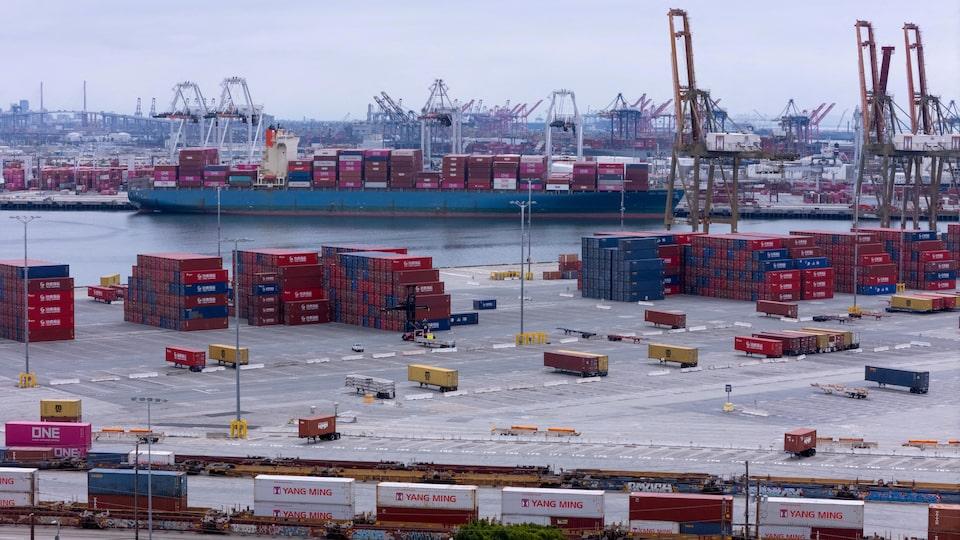
Nonfarm payrolls for May due on June 6 Fiscal legislation in focus in Washington Rulings on Trump's tariffs muddies trade backdrop NEW YORK, May 30 (Reuters) - Key U.S. economic data, developments with federal tax-and-spending legislation and twists and turns on trade all are poised to influence equities in the coming week, with the U.S. market closing in on record highs. The S&P 500 (.SPX) , opens new tab ended on Friday with a weekly gain and less than 4% from its February all-time high. The benchmark index rose about 6.2% in May, while the Nasdaq Composite (.IXIC) , opens new tab surged 9.6%, with both indexes tallying their biggest monthly increases since November 2023. Sign up here. Investors at the end of the week were grappling with implications from legal rulings involving efforts to block most of President Donald Trump's tariffs. Trump's trade war has whipsawed global markets for weeks on concerns about economic fallout. The coming week also brings a raft of economic and labor market data, headlined by the monthly U.S. employment report out on Friday. "Now that we're back up here not all that far from the record high, I think the hard data needs to hold in better than the market expects to really advance from here," said Scott Wren, senior global market strategist at the Wells Fargo Investment Institute. The employment report for May is expected to show an increase of 130,000 jobs, according to a Reuters poll of economists, which would be a step down from growth of 177,000 the prior month. Investors have been eager to learn how Trump's tariffs may be rippling through the economy, especially in the wake of his April 2 "Liberation Day" announcement of sweeping levies on imports. The May data represents a full month of "how businesses have been handling some of the tariff uncertainty and some of the pressures in the market," said Anthony Saglimbene, chief market strategist at Ameriprise Financial. Still, an overly strong employment report, such as growth of over 200,000 jobs, might be viewed warily by the market because it could delay interest rate cuts by the Federal Reserve, said Eric Kuby, chief investment officer at North Star Investment Management Corp. Investors have reduced bets in recent weeks on the amount of expected Fed easing this year, with about two rate cuts priced in by December, according to LSEG data. Minutes of their latest meeting released this week showed Fed officials acknowledged they could face "difficult tradeoffs" in coming months with rising inflation alongside rising unemployment. Fiscal legislation in Washington will also be in focus. The Senate will start considering a tax-and-spending bill passed earlier this month by the House of Representatives. Trump said this week he plans to negotiate aspects of the "big, beautiful" tax bill, a day after billionaire Elon Musk said the bill detracts from efforts to reduce the U.S. budget deficit. The bill, which will add an estimated $3.8 trillion to the federal government's $36.2 trillion in debt over the next decade, has focused attention on the impact of increasing deficits on the Treasury market. Rising bond yields have pressured stocks in recent weeks. The shifting tariff backdrop also appeared likely to influence asset prices. Equities rebounded in recent weeks after Trump eased his harshest tariffs, but the situation remains in flux as Washington negotiates with trading partners. On Thursday, for instance, stocks rose early the session after a U.S. trade court blocked many of Trump's tariffs, but gains faded during the session. Later, a federal appeals court reinstated the tariffs, further muddying the backdrop. "There's initial excitement and then the reality set in that this is just another step in this process and it really hasn't clarified very much," Kuby said. https://www.reuters.com/business/wall-st-week-ahead-jobs-data-tax-bill-trade-tap-rebounding-us-stocks-2025-05-30/

2025-05-30 20:14
'I'm sure that I'll speak to President Xi,' Trump says US official says China slowing critical minerals exports US trade chief says China not in compliance with Geneva deal Trump announces increase in steel tariffs at Pennsylvania rally WASHINGTON, May 30 (Reuters) - U.S. President Donald Trump on Friday accused China of violating a bilateral deal to roll back tariffs and announced a doubling of worldwide steel and aluminum tariffs to 50%, once again rattling international trade. Trump said China had violated an agreement with the U.S. to mutually roll back tariffs and trade restrictions for critical minerals and issued a new veiled threat to get tougher with Beijing. Sign up here. "China, perhaps not surprisingly to some, HAS TOTALLY VIOLATED ITS AGREEMENT WITH US. So much for being Mr. NICE GUY!," Trump said in a post on his Truth Social platform. Later, at a rally in Pennsylvania promoting an impending "partnership" between Japan's Nippon Steel (5401.T) , opens new tab and U.S. Steel (X.N) , opens new tab, he announced the U.S. would double steel tariffs from 25% to 50%, effective next week, which he said "will even further secure the steel industry in the United States." He subsequently announced in a Truth Social post that aluminum tariffs would also double to 50% on Wednesday. While China is the world's largest steel producer and exporter, very little is sent to the United States, as a 25% tariff imposed in 2018 shut most Chinese steel out of the market. China ranks third among aluminum suppliers. On overall trade with China, Trump said he made a "fast deal" in mid-May with Chinese officials for both countries to back away from triple-digit tariffs for 90 days. He said he did this to save China from a "devastating" situation, factory closings and civil unrest caused by his tariffs of up to 145% on Chinese imports. Trump did not specify how China had violated the agreement made in Geneva, Switzerland, or what action he would take against Beijing. Asked later on Friday in the Oval Office about the China deal, Trump said: "I'm sure that I'll speak to President Xi, and hopefully we'll work that out." RARE EARTHS LICENSES But a U.S. official told Reuters that it appeared China was moving slowly on promises to issue export licenses for rare earths minerals. The deal called for China to lift trade countermeasures that restrict its exports of the critical metals needed for U.S. semiconductor, electronics and defense production. "The Chinese are slow-rolling their compliance, which is completely unacceptable and it has to be addressed," U.S. Trade Representative Jamieson Greer told CNBC, without specifying how that would happen. Indeed, Reuters reported on Friday that global auto executives are sounding the alarm on an impending shortage of rare-earths magnets from China – used in everything from windshield-wiper motors to anti-lock braking sensors – that could force the closure of car factories within weeks. Liu Pengyu, a spokesperson for China's embassy in Washington, said China has maintained communications on trade matters with U.S. counterparts since the Geneva talks, but raised concerns about U.S. export controls. "China once again urges the U.S. to immediately correct its erroneous actions, cease discriminatory restrictions against China and jointly uphold the consensus reached at the high-level talks in Geneva," Liu said in a statement. Reuters reported earlier this week that the U.S. has ordered a broad swath of companies to stop shipping goods to China without a license and revoked some existing export licenses, according to three people familiar with the matter. Products affected include design software and chemicals for semiconductors, butane and ethane, machine tools and aviation equipment, these sources said. Spokespersons for the White House, the U.S. Treasury and the U.S. Trade Representative's Office did not respond to requests for comment. CHINA TALKS 'STALLED' On Thursday, Treasury Secretary Scott Bessent told Fox News Channel that U.S. trade talks with China were "a bit stalled" and that getting a deal over the finish line will likely need the direct involvement of Trump and Xi. The U.S.-China agreement two weeks ago to dial back triple-digit tariffs for 90 days prompted a massive relief rally in global stocks, and along with other pauses on Trump's import taxes, lowered the effective U.S. tariff rate to the mid-teens from around 25% in early April. It was less than 3% when Trump took office in January. The temporary truce between Washington and Beijing, however, had done nothing to address the underlying reasons for Trump's tariffs on Chinese goods, mainly longstanding U.S. complaints about China's state-dominated, export-driven economic model, leaving those issues for future talks. Major U.S. stock indexes ended little changed on Friday after Trump's complaint about China's compliance. Trump's social media post came two days after a reporter infuriated him by asking him about Wall Street's new term for bets that he will back off extreme tariff actions - the "TACO" trade, an acronym coined by a Financial Times columnist for "Trump Always Chickens Out." "I chicken out? Oh, I've never heard that. You mean because I reduced China from 145% that I set, down to 100 and then to another number?" Trump said, later adding: "It's called negotiation." Trump's tariff strategy also suffered a major setback on Wednesday when the U.S. Court of International Trade ruled that his broad global tariffs, including those on China, were invalid because he exceeded his authority under an emergency powers law used to back them. An appeals court has issued a temporary stay for the decision, allowing them to remain in place for now. https://www.reuters.com/world/china/trump-says-china-has-totally-violated-agreement-with-us-tariffs-2025-05-30/
2025-05-30 15:02
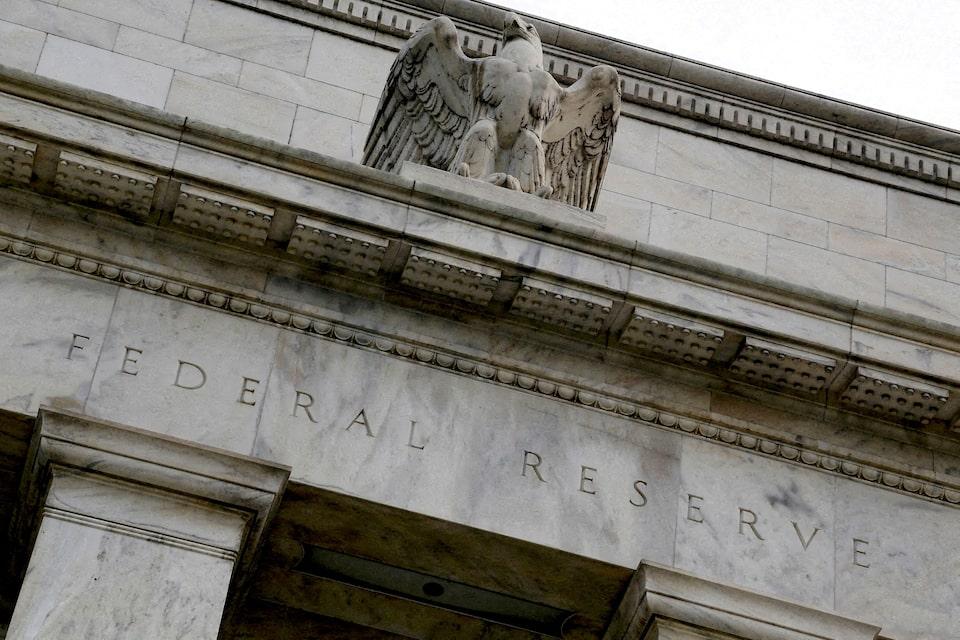
May 30 (Reuters) - Federal Reserve policymakers wary of cutting interest rates in the face of President Donald Trump's aggressive tariffs will likely stick to their wait-and-see stance amid fresh data Friday showing muted inflation last month and evidence of increased consumer caution. April's 2.1% year-over year increase in the Personal Consumption Expenditure price index, down from 2.3% in March, puts inflation within a stone's throw of the Fed's 2% target. Sign up here. But analysts don't see that trend continuing, with businesses expected to pass on to consumers at least some of their rising costs from higher import levies. Already goods prices are firming, the report showed. "The Fed will welcome the favorable inflation reading in this report, but they are likely to interpret it as the calm before the storm," said Olu Sonola, who heads U.S. economic research at Fitch Ratings. The central bank will continue to wait for the storm, unless consumer spending buckles and the unemployment rate rises rapidly, Sonula added. Consumer spending growth slowed to 0.2% last month, the Commerce Department also said on Friday, and the personal saving rate jumped to 4.9% from 4.3%. Analysts saw both as signs of renewed consumer caution amid uncertainty over tariff policy that continues to change on a near-daily basis. For the Fed, wrote III Capital Management's Karim Basta, there's "nothing to do but wait." SEPTEMBER RATE CUT? The Fed has kept short-term borrowing costs in the 4.25%-4.50% range since last December. Since their last meeting, in May, policymakers have repeatedly voiced concerns that tariffs could reverse progress on inflation. "As long as inflation is printing above target and there's some uncertainty about how quickly it can come back down to 2%, well, then inflation is going to be my focus because the labor market's in solid shape," San Francisco Fed President Mary Daly told Reuters late Thursday, adding that rates need to stay moderately restrictive to keep that pressure on prices. Dallas Fed President Lorie Logan late Thursday similarly said it could be "quite some time" before it's clear if Trump's policies pose bigger risks to employment or to inflation; for now, she said, the risks are in rough balance, leaving the Fed on hold. Traders after the data continued to bet that by September the Fed will begin cutting rates gradually, bringing the policy rate down to 3.75%-4.0% by year's end. https://www.reuters.com/business/traders-keep-bets-september-fed-rate-cut-us-inflation-cools-2025-05-30/
2025-05-30 14:19
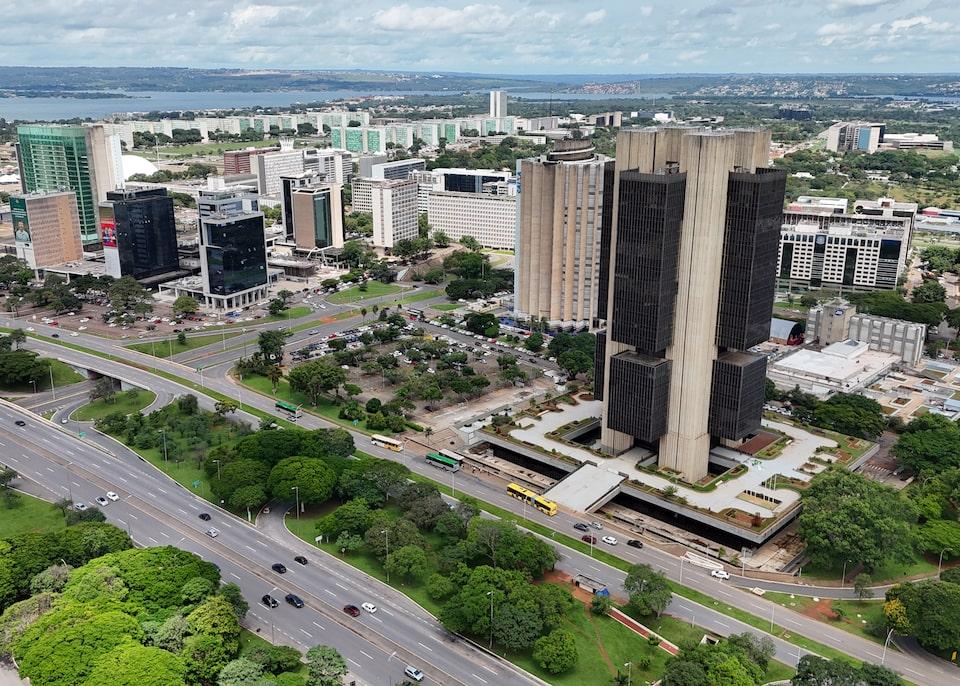
Brazil's GDP grows 1.4% in Q1 from Q4, as expected Growth, inflation robust despite interest rate hikes Economists start raising 2025 growth forecasts BRASILIA, May 30 (Reuters) - Brazil's economic growth surged in the first quarter despite climbing interest rates as fixed investments, household demand and strong farm output underpinned activity, spurring full-year growth forecasts and speculation about another rate hike. Gross domestic product in Latin America's largest economy rose 1.4% in the January-to-March period from the previous quarter, government statistics agency IBGE said on Friday, in line with the forecast in a Reuters poll of economists. Sign up here. That marked a sharp acceleration from a weaker than expected end to 2024. IBGE revised fourth-quarter growth down to 0.1% from a previously reported 0.2%. XP economist Rodolfo Margato said that beyond the expected boost from agriculture, data showed resilient domestic demand, supported by favorable trends in employment, income and credit. As a result, he said he expected to raise his 2025 GDP growth forecast from 2.3%. "We expect a new wave of upward revisions from the market. In our case, we were already more optimistic, but our view may now move closer to 2.5%," said Margato. William Jackson, chief emerging markets economist at Capital Economics, said Brazil's economy was on track to grow about 2.3% this year, up from his previous forecast of 1.8%. He said the robust growth could delay the end of interest rate increases by the central bank's rate-setting committee, known as Copom. "The strength of domestic demand shown in the expenditure breakdown suggests that Copom will still consider a final 25-basis-point hike in the cycle," he said. Policymakers earlier this month left the door open to further moves after delivering a 50-basis-point increase to curb inflation that has been running above the official 3% target. Their comments about keeping interest rates at a restrictive level for an extended period prompted many to bet that their tightening cycle had come to an end. SOYBEAN HARVEST Driving growth on the supply side, agriculture stood out with a 12.2% gain from the previous quarter, fueled by a bumper harvest of soybeans, Brazil's top farm export. Services, which make up roughly 70% of Brazil's economy, expanded 0.3% amid a tight labor market, while industrial output slipped 0.1%. On the demand side, investments measured by gross fixed capital formation stood out with a 3.1% rise from the prior quarter. Household consumption also contributed with 1.0% growth, supported by measures from leftist President Luiz Inacio Lula da Silva to boost disposable income, including a minimum wage hike. Government spending increased by 0.1%. The strong economic performance came despite the central bank's aggressive monetary tightening, which has raised the benchmark Selic interest rate by 425 basis points since September, to a nearly 20-year high of 14.75%. The government expects soaring interest rates to weigh more on economic activity in the second half of the year, projecting GDP growth to slow to 2.4% in 2025 from 3.4% last year. Brazil's GDP expanded 2.9% compared to the first quarter of 2024, below expectations of a 3.2% increase due to revisions for prior quarters. https://www.reuters.com/world/americas/brazilian-economy-grows-14-expected-first-quarter-2025-05-30/