2025-05-30 05:41
All major stock market indexes have had a strong month Crude and gold prices weaken Dollar index on course for fifth straight month of losses NEW YORK, May 30 (Reuters) - Global stocks finished down on Friday but notched a weekly gain and the biggest monthly increase since late 2023, despite markets having been roiled by uncertainty over the Trump administration's tariff policies. Sentiments were initially buoyed at the start of the week by signs of easing trade tensions between the U.S. and Europe, after President Donald Trump delayed planned tariffs on imports from the EU. Investor focus then shifted to earnings of artificial intelligence chipmaker Nvidia (NVDA.O) , opens new tab, which reported better-than-expected results mid-week. Sign up here. But markets were briefly shaken following an unexpected ruling by the U.S. Court of International Trade striking down Trump's so-called Liberation Day tariffs, triggering a court drama that saw an appellate court temporarily reinstate them. Trump said on Friday that China had violated an agreement with the U.S. to mutually roll back tariffs and trade restrictions for critical minerals, and issued a new veiled threat to get tougher with Beijing. "It's been quite a week," said Mark Malek, chief investment officer at Siebert.NXT. "Within four days we got a compressed version of what we've had for the entire month, which is the tug-of-war between forces that drove markets higher last year and the prior year - that being AI and technology growth stocks - and then this looming challenge we have with all these administration tariffs." On Wall Street, the benchmark S&P 500 and Nasdaq finished lower, dragged down by weaknesses in technology, energy and consumer discretionary stocks. The Dow ended higher after erasing early losses. All three indexes finished the week and the month higher, with the S&P 500 index and Nasdaq index registering their biggest monthly percentage gain since November 2023. The Dow Jones Industrial Average (.DJI) , opens new tab rose 0.13% to 42,270.07, the S&P 500 (.SPX) , opens new tab fell 0.01% to 5,911.69 and the Nasdaq Composite (.IXIC) , opens new tab fell 0.32% to 19,113.77. European shares (.STOXX) , opens new tab finished higher by 0.14%, notching a weekly gain and adding 4% for the month of May. MSCI's broadest index of Asia-Pacific shares outside Japan (.MIAPJ0000PUS) , opens new tab closed up 0.74% overnight, ending the week lower but gaining nearly 5% for the month - making it the biggest monthly gain since September 2024. MSCI's main world index (.MIWD00000PUS) , opens new tab ended down 0.07% to 879.63, but gained 1.32% for the week and 5.53% in May - the biggest monthly gain since November 2023. "We would have thought prior to this week that markets were becoming numb to this discussion of tariffs and a lot it has been factored in, but apparently that's not the case," Malek added. Data showed on Friday that U.S. consumers increased their spending marginally in April, and the closely watched Personal Consumption Expenditures Price Index rose 0.1% last month, in line with expectations. Trump and Fed Chair Jerome Powell had their first face-to-face meeting on Thursday. "Powell did not discuss his expectations for monetary policy except to stress that the path of policy will depend entirely on incoming economic information and what that means for the outlook," a Fed statement said afterwards. The yield on benchmark U.S. 10-year notes fell 2.6 basis points to 4.398%. The 30-year bond yield rose 0.2 basis points to 4.9254% after reversing earlier losses. The dollar was higher against major peers including the euro and on track for a monthly gain against the Japanese yen. The dollar weakened 0.15% to 143.95 against the yen , while the euro was down 0.12% at $1.135050. The dollar index , which measures the greenback against a basket of currencies including the yen and the euro, rose 0.14% to 99.394. It was on track for a fifth straight month of losses, weighed down by tariff uncertainty. Oil prices settled down, as investors weigh a potentially larger OPEC+ output hike for July. Brent crude futures settled down 0.39% at $63.90 a barrel. U.S. West Texas Intermediate crude finished down 0.25% at $60.79 a barrel. Gold prices slipped as the dollar edged higher. Spot gold fell 0.7% to $3,292.78 an ounce. U.S. gold futures settled 0.9% lower at $3,315.40. https://www.reuters.com/world/china/global-markets-wrapup-1-2025-05-30/
2025-05-30 05:29
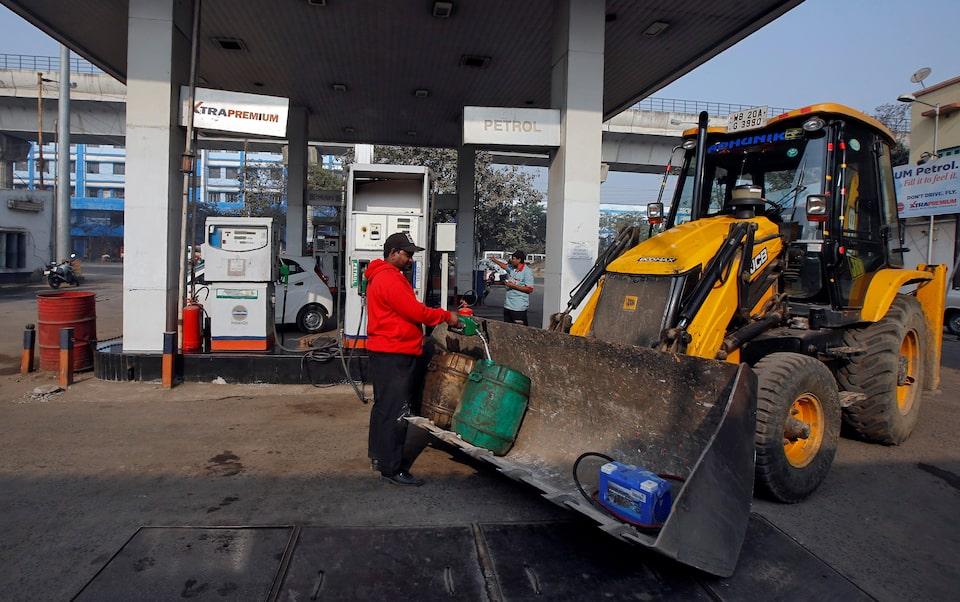
India diesel volumes to Southeast Asia to hit at least 600,000 t in May, data and sources say Asian markets under slight pressure as India exports head east Start of monsoon season in India may drive exports next month, sources say May 30 (Reuters) - India's diesel exports to Southeast Asia for May are set to hit the highest in at least four years, according to shiptrackers and three trade sources, as traders eyed higher profits in Asia while higher freight costs deterred shipments to Europe. Increased diesel from India, one of the largest suppliers in the region, is cooling spot premiums for the fuel in Asia and pressuring derivatives markets, while tightening the fuel's availability in Europe and supporting prices there. Sign up here. Shipments on the India-Southeast Asia route climbed to 600,000 metric tons (4.47 million barrels) or more this month, shiptracking data from LSEG, Kpler, Vortexa and two trade sources showed. Such levels were last seen at the end of 2021, Kpler data showed. Most volumes were destined for Singapore or Malaysia, the data showed. Meanwhile, Indian diesel bound for Europe in May was estimated at 500,000 tons, LSEG data showed. "The re-direction of Indian diesel barrels east has had a two-fold effect," said Sparta Commodities analyst James Noel-Beswick. "First, it has flooded the Singapore market, leading to a swift rebound in local inventories and applying downward pressure on diesel spreads since late April," he said. For Europe, the drop in Indian supplies has prompted June ICE gasoil prices to rise, he added. Asian cash premiums for 10-ppm sulphur diesel fell to seven-week lows of 20 cents per barrel early this week while refining margins have been struggling to hold above $16 per barrel, LSEG data showed. ARBITRAGE The average discounts for the east-west price spread for April and May were at $22 and $20 per ton, respectively, LSEG data showed, with traders saying such levels were slightly more profitable for sellers to sell east instead of west. Lower shipping costs also helped push more Indian supply to Southeast Asia, they added. Cost for chartering a medium-range vessel carrying 40,000 tons of diesel on the India-Northwest Europe route jumped to $2.35 million in the past week, equivalent to $59 per ton, up from $2.05 million last month, SSY Tanker data on LSEG Workspace showed. In comparison, shipping fees for a similarly-sized vessel on the India-Singapore route were less than $1 million, the data added. India's diesel production also rose in May after Reliance Industries restarted a crude unit at the Jamnagar refinery, leading to more exports, said Vortexa's head of APAC analysis Ivan Mathews. Next month, India will probably export more diesel as local demand is set to fall during the monsoon season, two Singapore-based trade sources said. One of them estimated that demand could drop by 500,000 tons or more. https://www.reuters.com/business/energy/indias-may-diesel-exports-se-asia-hit-multi-year-high-higher-margins-2025-05-30/
2025-05-30 05:17
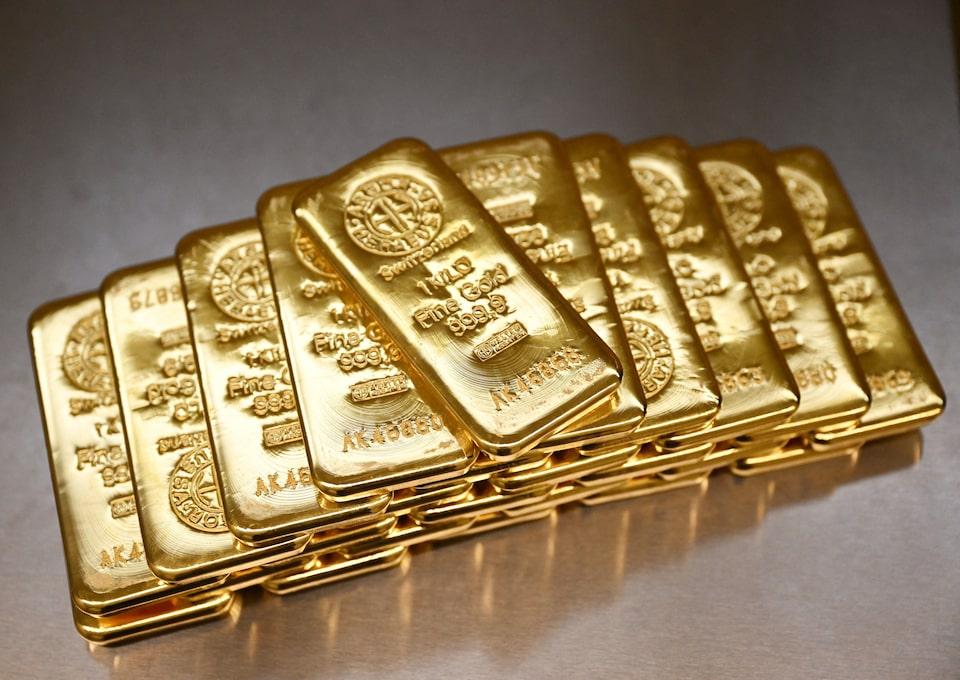
Germany has stored gold in New York since Cold War Lawmakers worry about Trump's reliability Any move could hurt relations with Fed FRANKFURT/BERLIN, May 30 (Reuters) - The safety of Germany's gold reserves held overseas and in New York in particular, until recently mainly a talking point for the country's far-right party and gold bugs, is becoming a matter of public debate with Donald Trump back in the White House. The Bundesbank, Germany's central bank, has the world's second largest stock of gold at 3,352 tonnes. One-third of it is stored at the Federal Reserve Bank of New York for reasons dating back to the Cold War and the monetary system created in the wake of World War Two. Sign up here. Those holdings have occasionally attracted scrutiny in the past, and the right-wing Alternative for Germany (AfD) has embraced calls for a return of the country's gold back home. U.S. President Donald Trump's confrontations with longstanding allies over trade and security, and his attacks on the Fed, have revived the issue in recent weeks and more mainstream voices have joined the debate. Germany's Taxpayers Federation sent letters this week to the Bundesbank and the Finance Ministry calling on them to repatriate the gold stored in the United States. "Trump wants to control the Fed, which would also mean controlling the German gold reserves in the U.S." Michael Jaeger, the Taxpayers Federation's vice-president, told Reuters. "It's our money, it should be brought back." Markus Ferber, an influential member of the European Parliament for Germany's ruling Christian Democrats, said the United States was "no longer the reliable partner it used to be." "Trump is erratic and one cannot rule out that someday he will come up with creative ideas how to treat foreign gold reserves," he told Reuters. "The Bundesbank’s policy for gold reserves has to reflect the new geopolitical realities." Public broadcasters ZDF and ARD have also recently carried reports asking how safe Germany's gold is in New York. The Bundesbank said the New York Fed remained "an important storage location" for its gold. "We have no doubt that in the New York Fed we have a trustworthy, reliable partner for the storage of our gold holdings," the central bank said in response to a Reuters enquiry. The German Finance Ministry referred Reuters queries on the matter to the central bank, while stressing the Bundesbank's independence. Any hint that Germany might be considering moving gold out of New York would be politically sensitive as it could be interpreted as lack of confidence in the Federal Reserve and its independence. The European Central Bank last week stressed its trust in the Fed as a reliable partner. But Trump's frequent criticism of Fed chair Jerome Powell, whose term ends in a year, has fuelled some concerns about the Fed's future independence and its long-standing commitments to its partners. Peter Boehringer, the architect of the original decade-old gold campaign and now an AfD lawmaker, said he felt vindicated that the topic of repatriating gold reserves has now become a matter discussed by mainstream media and other lawmakers. "When I started asking about the gold, I was dismissed as a conspiracy theorist," he said. "Today, after Trump, my concerns are shared widely." Germany accumulated most of its gold during its 1950s-1960s export boom. A key advantage of storing some of it in New York during the Cold War was to keep it at a safe distance from Russia in case of an invasion. The gold also cemented a military alliance with the United States, which still has dozens of military bases around Germany, including Europe's largest. With the Soviet Union long gone, the Bundesbank brought back 300 tonnes of gold from New York between 2014 and 2017, saying it wanted to "build confidence at home". But Russia's invasion of Ukraine, and the implicit threat it represents for the rest of Europe, was likely to complicate Germany's geopolitical calculus again. For Ferber, this underscored the need for greater diversification across several, and potentially new, locations. Today, Germany's gold reserves are held at the Bundesbank headquarters in Frankfurt, in New York, and at the Bank of England in London. "For gold reserves, diversification is key. Having all eggs in too few baskets is never advisable," Ferber said, without specifying where the gold should be brought. Fritz Guentzler, a spokesperson for the Christian Democrats in the German parliament, said he had no reason to mistrust the Fed but the Bundesbank should continue "regularly inspecting the stocks" of gold. The Bundesbank said it ran regular sample tests and had inspected 13% of stock in New York over the years. https://www.reuters.com/business/finance/trump-spurs-questions-about-safety-germanys-gold-new-york-2025-05-30/
2025-05-30 04:54
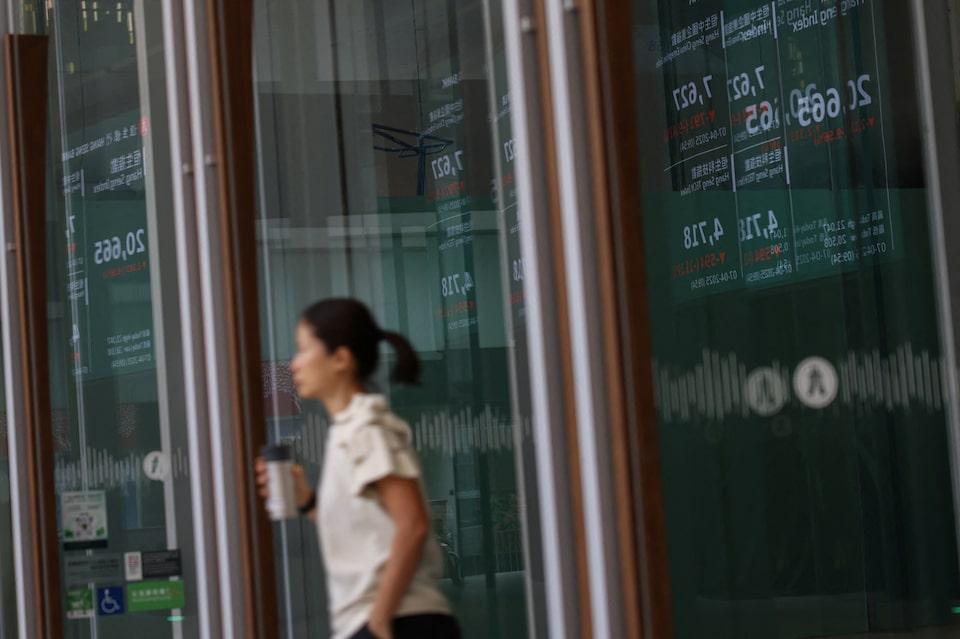
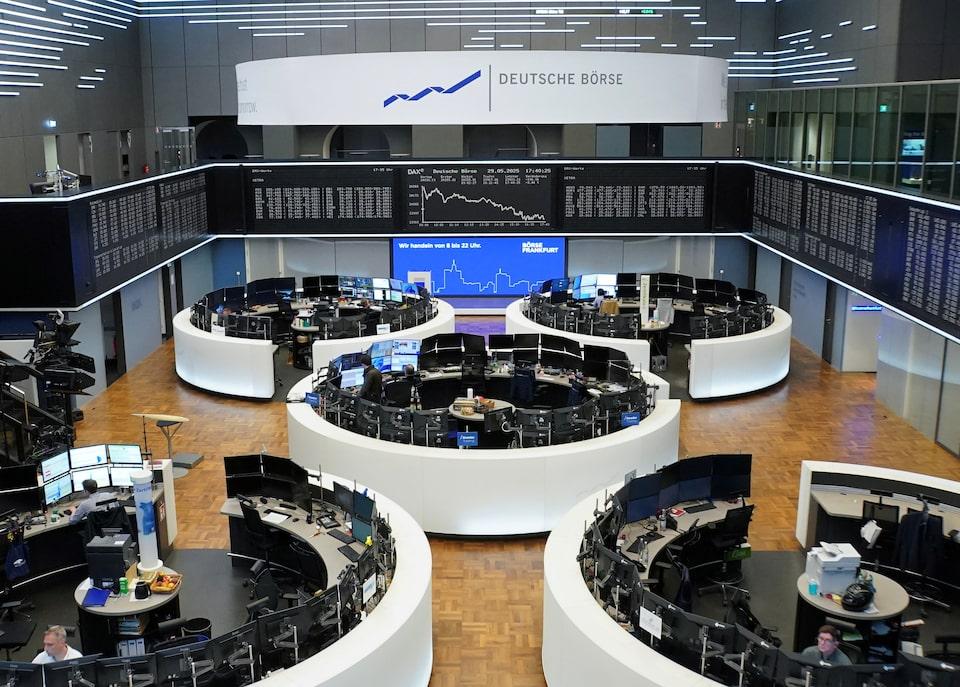
A look at the day ahead in European and global markets from Kevin Buckland President Donald Trump's tariffs are more on-again than off-again as we head into the end of a dramatic week of courtroom surprises, which initially had investors cheering but then left them with little more than an additional source of uncertainty. Sign up here. Looking around Asia in early trading, losses to Japan's Nikkei stand out. Stocks in Tokyo were hit by an additional whammy from renewed demand for the safe-haven yen, which undercuts the value of overseas revenues for the index's heavyweight exporters. The drop in Hong Kong's Hang Seng was also eye-catching, with both benchmarks essentially giving up all of the sizeable gains of the day before. When the little-known United States Court of International Trade on Wednesday unexpectedly blocked the bulk of Trump's aggressive levies, on the grounds that he had overstepped his authority, there was some inkling that the judiciary could provide a check on his often erratic policymaking. But a day later those tariffs were back, reinstated by an appeals court while it considers the case. That is by no means a foreshadowing of its eventual ruling, but Trump's team is already saying it has other avenues to keep the tariffs in effect. For businesses, consumers and central banks, it's just one more reason to sit on their hands, pushing out already delayed decisions on hiring, spending or cutting rates. For U.S. trade partners, though, the Trump administration assures us that good-faith negotiations continue undeterred. Treasury Secretary Scott Bessent pointed specifically to high-level talks he will have with a Japanese delegation in Washington later today. Despite Trump's optimism, deals have been hard to come by - a broad agreement with Britain is the only one so far. And Bessent acknowledged talks with China are "a bit stalled", adding they may require the direct involvement of Trump and Chinese President Xi Jinping. The courtroom drama around tariffs came just as tariff revenues were starting to pick up. Donald Schneider at Piper Sandler on social media platform X this week estimated them at an annualised pace of $255 billion, up from a norm of about $85 billion. That would be welcome news as the sweeping tax cuts and spending measures in Trump's "big, beautiful bill", which is about to go to the Senate, have been fanning worries about U.S. fiscal sustainability. One critic of the bill has been Elon Musk, and there were signs that what looked to be a quiet exit from his work at DOGE might carry some bad blood. But Trump has since announced a big sending off with a joint press conference at the Oval Office for later today, adding that although it'll be the Tesla and SpaceX CEO's last day on the government payroll, "he will always be with us". The air also seems less heavy between Trump and Fed Chair Jay Powell following a private meeting in the Oval Office on Thursday. While the president reiterated his feeling that the central bank is making a mistake by not lowering rates, the lack of any name-calling in social media posts afterwards may have come as a relief to markets that were roiled last month by Trump's public threats to fire the Fed chief. Key developments that could influence markets on Friday: -Germany consumer inflation data (May) -Bank of Italy Governor Panetta speaks in Rome -Fed speakers include San Francisco Fed President Daly, Dallas Fed President Logan, Atlanta Fed President Bostic and Chicago Fed President Goolsbee Trying to keep up with the latest tariff news? Our new daily news digest offers a rundown of the top market-moving headlines impacting global trade. Sign up for Tariff Watch here. https://www.reuters.com/world/europe/global-markets-view-europe-2025-05-30/
2025-05-30 03:58
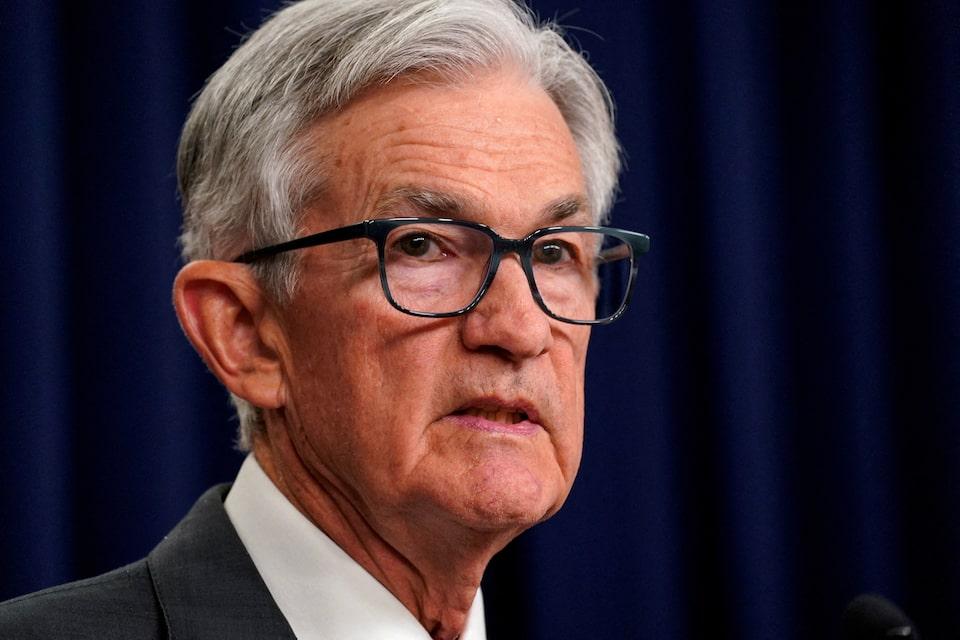
Trump told Powell it's a mistake not to lower rates, White House says Powell emphasized policy depends on economic data, Fed says The pair last met face to face in 2019, Powell's calendars show WASHINGTON, May 29 (Reuters) - U.S. President Donald Trump called Federal Reserve Chair Jerome Powell to the White House on Thursday for their first face-to-face meeting since he took office in January and told the central bank chief he was making a "mistake" by not lowering interest rates. Both the White House and Fed confirmed the two met at the president's invitation, renewing a fractious relationship in which Trump has repeatedly berated Powell for not cutting rates as the president desires. Sign up here. "Chair Powell did not discuss his expectations for monetary policy," the Fed said in a statement after the meeting, "except to stress that the path of policy will depend entirely on incoming economic information and what that means for the outlook." He told Trump that he and his colleagues at the Fed "will set monetary policy, as required by law, to support maximum employment and stable prices and will make those decisions based solely on careful, objective, and non-political analysis," the statement said. White House spokeswoman Karoline Leavitt said she and the president had seen the Fed's statement and that it was correct. However, she added, "the President did say that he believes the Fed chair is making a mistake by not lowering interest rates, which is putting us at an economic disadvantage to China and other countries." The Fed earlier this month left the policy rate in the 4.25%-4.50% range, where it has been since December, and policymakers have since signaled they may leave it there for another few months as they wait for more clarity on tariff policy. Policymakers are worried the tariffs and policy uncertainty could slow the economy, but even more so are concerned that they could lead to persistently higher inflation, minutes from the Fed's May meeting released on Wednesday show. Financial markets currently are pricing in a Fed interest-rate cut in September, with a second one to follow in December. Trump elevated Powell to the post of Fed Chair during his first term but quickly fell out with him over his interest-rate decisions. He has said he wants to see him gone from the central bank, though he has also said he has no intention of trying to fire Powell. But the possibility of a firing has unsettled financial markets that bank on an independent Fed's ability to do its job without political interference. Those fears were partly alleviated last week after a Supreme Court ruling, in a pair of cases testing Trump's ability to fire the leadership of other independent government agencies, signaled the central bank may be treated as a special case whose chair cannot be terminated at will. Powell last met with Trump in November 2019, during Trump's first term, in a 30-minute meeting also attended by then-Treasury Secretary Steven Mnuchin. It is Powell's first presidential visit in three years - the last one was with Joe Biden and Treasury Secretary Janet Yellen at the White House. Powell has said that such meetings are always at the request of the president and never the other way. https://www.reuters.com/world/us/feds-powell-meets-trump-white-house-fed-says-2025-05-29/
2025-05-30 03:38
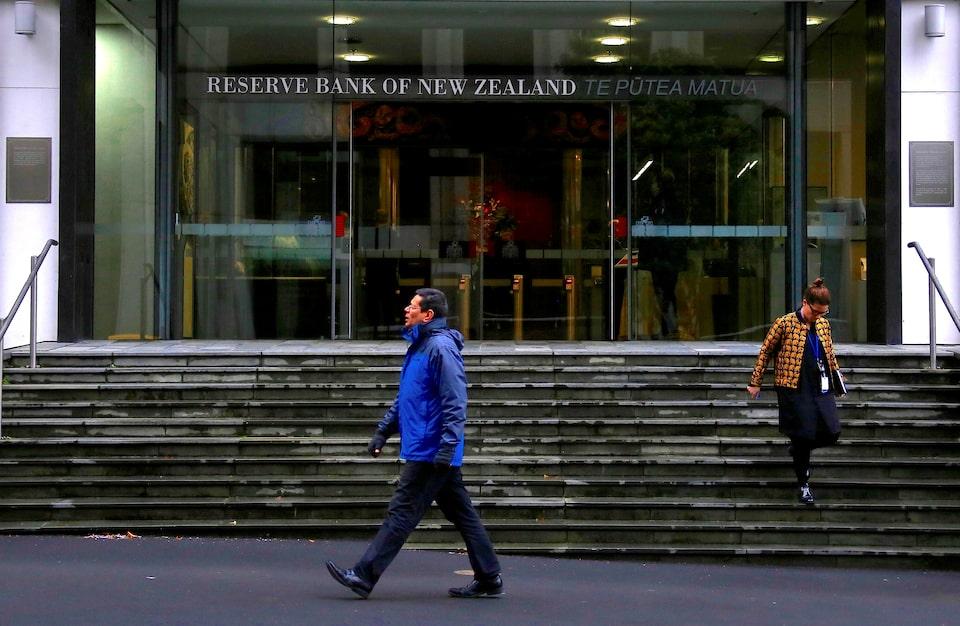
SYDNEY, May 30 (Reuters) - New Zealand's interest rates are in the 2.5%-3.5% neutral band, with past policy easing yet to flow through to the economy to make future moves more dependent on how the economy evolves, a senior central banker said on Friday. In an interview with Reuters, Reserve Bank of New Zealand Assistant Governor Karen Silk highlighted the enormous global trade uncertainties, but the central projection is for the economy to recover on the back of past easing, offsetting some trade risks. Sign up here. The RBNZ cut interest rates by 25 basis points to 3.25% on Wednesday but signaled it might be nearing the end of the easing cycle, having cut rates by a whopping 225 bps since August. When asked about why there is no need to go below the neutral rate, Silk said rate cuts would take time to flow through and the strong commodity prices are pointing to a buoyant export sector. "The track for (OCR) also indicates that whatever we do is going to be data-dependent, and then we will be looking to the data to help us to decide when or if we cut further from here." Silk said global central bankers cannot simply react to the first thing they see when asked about the latest court rulings on U.S. President Donald Trump's tariffs. "There isn't certainty to where these things land. But what we do know is that we do have heightened uncertainties." A global front-runner in withdrawing pandemic-era stimulus, the RBNZ lifted rates 525 basis points between October 2021 and September 2023 to curb inflation in the most aggressive tightening since 1999. The punishing borrowing costs took a heavy toll on demand and tipped the economy into recession last year. While the economy has emerged from the slump, growth remains weak and is being further hampered by a slowdown in the global economy and the government’s tight fiscal policy. https://www.reuters.com/world/asia-pacific/new-zealands-interest-rates-neutral-zone-data-decide-next-move-central-bank-2025-05-30/