2025-11-24 07:43
UK budget to test market confidence Black Friday, Alibaba earnings to gauge consumer health A G20 summit without the U.S. Nov 24 (Reuters) - Global markets head into another packed week where political leaders, policymakers and consumers take centre stage against a backdrop of nervy markets - with tech stocks and the likes of bitcoin coming under fire. G20 leaders gather in South Africa, Britain's finance minister delivers a highly anticipated budget, while Alibaba's earnings will offer a snapshot of Chinese consumer demand and U.S. retailers brace for Black Friday. Sign up here. Here's all you need to know about the coming week in markets by Dhara Ranasinghe and Amanda Cooper in London, Gregor Stuart Hunter in Singapore, Lewis Krauskopf in New York and Colleen Goko-Petzer in South Africa. 1/ SHOPPING SEASON Focus on U.S. consumer spending will come into view this week with Black Friday heralding the important holiday shopping season. Black Friday, the day after Thanksgiving that ushers in holiday sales, arrives as data have shown consumer sentiment slumping and inflation staying firm. Still, a solid few years for the U.S. stock market could be making particularly higher-income consumers feel wealthier and ready to shop. Tuesday's delayed release of September retail sales will also offer insight into consumer spending, which makes up more than two-thirds of U.S. economic activity. 2/ REEVES' WAIT IS OVER Pre-budget leaks and speculation are par for the course for UK finance ministers. Yet the build-up to Rachel Reeves' November 26 budget has been on another level entirely. Reeves must raise tens of billions of pounds in taxes to stay on track for her self-imposed fiscal rules. Reports a week ago that she had no plans to raise income tax took markets by surprise. Just days earlier investors had taken an unexpected speech by the finance minister as a sign of tax hikes coming. No doubt, Britain's Labour government is walking a tightrope as it tries to reassure bond markets that it can be trusted to be fiscally prudent while appeasing voters that manifesto pledges to not hike taxes will not be broken. Recent selling in bonds, sterling and bank shares shows markets on edge. The budget wait is almost over but UK market volatility is likely not. 3/ CHINA TECH RALLY FACES ALIBABA TEST Alibaba's earnings on Nov. 25 may reveal whether founder Jack Ma can deliver on his vow to "Make Alibaba Great Again" as he returns to favour in Beijing following a lengthy fall from grace. The stock, the largest component of Hong Kong's Hang Seng Tech index (.HSTECH) , opens new tab, has almost doubled this year as investors vie for a slice of the red-hot Chinese AI sector. But shares fell this month as the company faced allegations that it provides tech support for Chinese military operations against targets in the U.S., the FT reported. Alibaba has denied the accusations. Alibaba has since announced an aggressive push into consumer AI, but that market is increasingly crowded. Citi reckons it won't be easy for Alibaba's chatbot Qwen to easily replace the likes of ChatGPT. 4/ G20 MINUS ONE South Africa hosted the final G20 leaders' summit of its presidency before handing the baton to the U.S., as global economic growth slows, debt pressures mount, and poorer economies face severe climate-related impacts. The meeting proceeded without U.S. representation, as President Donald Trump had announced the world's largest economy would not take part. Pretoria intends to conclude its term by advancing priorities such as debt relief for struggling nations, fairer global trade regulations and improved climate financing for vulnerable countries. But the absence of the group's largest economy raises questions about the bloc's ability to resolve critical global challenges. 5/ TRACKING BITCOIN'S 'DEATH CROSS' Bitcoin , the apparent runaway market success story of the past two years, is in a funk. It has lost roughly a third in value since early October's record $126,223, as investors grow increasingly nervous of anything that has risen that much that quickly, like AI-related stocks. Even gold has been reined in by that same concern to some extent. The crypto market as a whole has lost over $1 trillion in value since bitcoin's all-time high, as capital has flooded out of anything from meme coins to exchange-traded funds. With little in the way of new fundamental catalysts, traders often latch on to technical charts to determine where a price should go next. Bitcoin is firmly below $90,000, and a so-called "death cross" has materialised on the charts this week - where the 50-day moving average crosses below the 200-day - often a harbinger of more losses ahead. https://www.reuters.com/business/take-five/global-markets-themes-graphic-2025-11-21/

2025-11-24 07:34
DAR ES SALAAM, Nov 24 (Reuters) - Tanzania will start construction of a new port in the east of the country in December, a senior government official said, ending a decade of delays due to government objections to the initial contract terms agreed with foreign developers. Bagamoyo port, a part of the large-scale special economic zone initiative involving industrial parks and rail and road links, is located about 75 km (47 miles) north of the commercial capital, Dar es Salaam. Sign up here. Gerson Msigwa, the chief government spokesperson, told reporters on Sunday that the port will have 28 berths but construction will start on 14 initially. Construction machinery was on the way, he said without giving further details, and the port will have a depth of up to 20 meters and be able to receive larger ships than any other port in the eastern Africa region. “The port will be able to handle ships with a capacity of up to 25,000 containers,” he said, without giving details of the value of the project nor the construction contractor. The East African nation signed a framework agreement with two developers, China Merchants Holdings International and Oman's State General Reserve Fund, in 2013 but implementation was delayed because the government said the terms were not favourable for the country. After taking office in 2021, President Samia Suluhu Hassan said they had started negotiations to revive the $10 billion project. https://www.reuters.com/world/africa/tanzania-start-constructing-new-port-december-official-says-2025-11-24/

2025-11-24 07:17
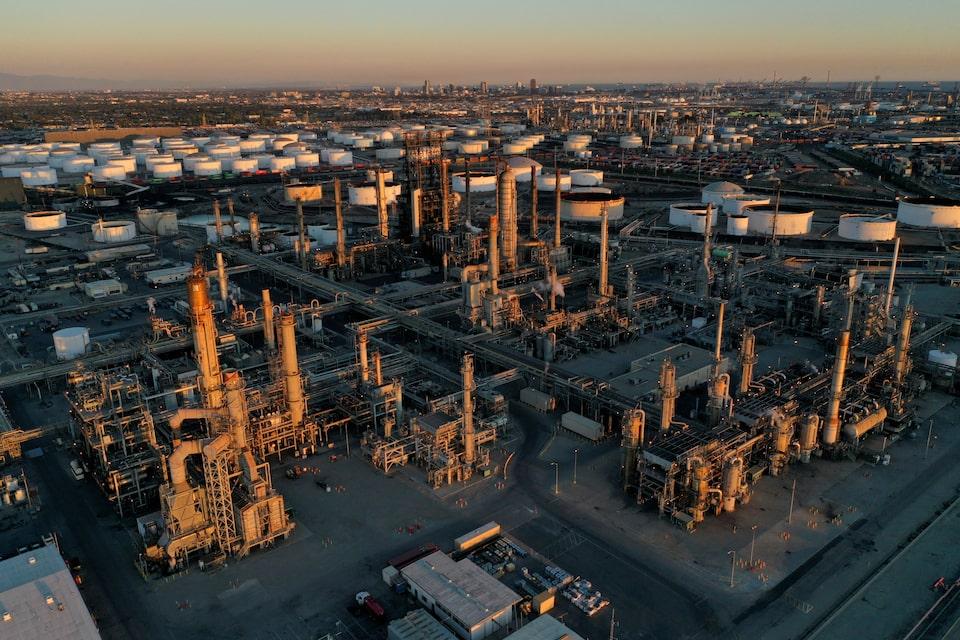
Crude oil prices erase almost all gains since October 22 US sanctions on Russia Diesel spreads remain elevated as conflict constrains global supplies EU ban on imports of fuels processed from Russian crude takes effect in January LONDON, Nov 24 (Reuters) - Oil prices eased on hopes for a U.S.-brokered Ukraine ceasefire, but diesel spreads remain stubbornly high as the war keeps global supplies squeezed with little sign of relief. Crude oil prices have dropped by around 1.2% since the November 20 announcement that the United States was brokering a ceasefire initiative to end the conflict that began with Russia’s full-scale invasion of Ukraine in 2022. Sign up here. The 28-point plan appears to have little chance of being accepted by Kyiv, as the proposal accepts most of Russia's key wartime demands. But U.S. President Donald Trump's backing of it remains significant, as it highlights how keen the White House is to hammer out a deal and get Moscow on board, whatever the cost. That, of course, calls into question the U.S. president’s appetite to enforce or ratchet up existing sanctions. Crude prices certainly suggest as much. They initially jumped after Trump on October 22 imposed sanctions on Russia's two top oil companies, Rosneft and Lukoil, but most of those gains have now disappeared. The sanctions took effect on November 21. Diesel is a different story, however. While benchmark European diesel prices have declined since news of the ceasefire discussions broke last week, prices remain around 8% above their October 22 levels. Moreover, diesel refining margins - the profit made from converting crude oil into fuel – have risen by 17% over that period to roughly $29 a barrel. DIVERGING SUPPLY OUTLOOKS This divergence has several causes. First, global diesel output is low, while the crude market is believed to be on the cusp of a huge glut, with the International Energy Agency forecasting crude supply to exceed demand by 4 million bpd next year. Diesel supply has taken a big hit in recent months. Russia is the world's second-largest diesel exporter after the United States. Ukraine's continued attacks on Russian refineries and export facilities have significantly curtailed Moscow’s fuels exports, with diesel shipments totalling just 669,000 bpd in October, only slightly higher than in September, when exports hit their lowest point since the Covid-19 pandemic. U.S. sanctions on Rosneft and Lukoil have further disrupted diesel supply. The two oil giants collectively exported so far this year around 270,000 bpd of diesel, roughly 37% of total Russian exports and 9% of global exports, according to Kpler. Sanctions will likely make Turkey and Brazil, the main buyers of Russian diesel, seek out other sources, increasing demand for the limited supply of non-sanctioned diesel. EUROPE TIGHTENS RUSSIAN BAN Perhaps more significant for diesel prices is the European Union's latest sanctions package against Russia that is set to take effect on January 21. These measures ban imports of fuels made from Russian crude into the EU, one of the world’s largest diesel markets. The Intercontinental Exchange (ICE), which operates the benchmark European diesel contract, said on November 18 that it will stop taking delivery of diesel that originates from refineries that processed Russian crude in the previous 60 days starting on January 16. These bans close a loophole that primarily benefited refiners in India and Turkey, which had been buying discounted Russian crude, processing it into diesel and then exporting it to Europe. The two countries accounted for 13% of Europe’s diesel imports of roughly 1.8 million bpd so far this year. Many large refiners have responded quickly. India's Reliance Industries, which accounts for the vast majority of India's diesel exports to Europe, said it had stopped importing Russian crude at its Jamnagar refining complex on November 20. While that may be too late to comply with the new ICE rules, the impact of the EU measures is clear. Indian diesel exports to the EU and Britain have plunged in November to 34,000 bpd, compared with an average of 136,000 bpd so far this year, according to Kpler. U.S. COMES OUT ON TOP The main beneficiaries of all these dislocations appear to be U.S. Gulf Coast refineries that are set to increase diesel exports to Europe. A key measure for U.S. refining profitability, the so called 3-2-1 crack spread, has gained 12% since October 22, according to LSEG data. To be sure, the current disruptions in the diesel market will gradually ease as markets recalibrate and new diesel routes are established. For example, discounted Russian diesel is likely to find a home in markets such as China. But, for now, the movements in the diesel market are sending an important signal. The chances of EU sanctions being fully lifted – something that would likely have a disproportionate impact on diesel versus crude prices – are low even if Trump does manage to engineer a resolution to this nearly four-year long conflict. Want to receive my column in your inbox every Monday and Thursday, along with additional energy insights and links to trending stories? Sign up for my Power Up newsletter here. Enjoying this column? Check out Reuters Open Interest (ROI), , opens new tabyour essential new source for global financial commentary. ROI delivers thought-provoking, data-driven analysis. Markets are moving faster than ever. ROI , opens new tab can help you keep up. Follow ROI on LinkedIn , opens new tab and X. , opens new tab https://www.reuters.com/markets/commodities/diesel-doesnt-share-crudes-optimism-about-ukraine-peace-plan-2025-11-24/
2025-11-24 06:51
PERTH, Nov 24 (Reuters) - Australia’s Fair Work Commission approved on Monday a union request to hold a ballot for workers to vote on striking at Woodside Energy’s (WDS.AX) , opens new tab Pluto LNG 2 project in a battle over pay at the facility. The commission ordered the ballot be held no later than December 4. If successful a strike could be held before the end of the year, slowing work at the facility where the company hopes to ship its first liquefied natural gas cargo in the second half of 2026. Sign up here. The Offshore Alliance, a group of the Maritime Union of Australia and the Australian Workers Union, said last week salary negotiations with contractor Bechtel had gone nowhere and its next move was to strike. Bechtel is the contractor building Pluto, which is an expansion of an existing facility in Western Australia’s Pilbara region. Bechtel had argued against allowing the ballot and industrial action, and has said the alliance should not be encroaching on more traditional onshore construction work. Three other unions have also made separate applications for a strike ballot for the same agreement, documents show. The commission has ordered their ballots also be held. Workers at Pluto 2 are currently receiving an hourly rate that is 30% less than workers doing the same job at the Wheatstone project, when factoring in changes in the consumer price index, the Offshore Alliance said in a statement. Wheatstone LNG is a separate project operated by Chevron (CVX.N) , opens new tab. The union group wants a 30% pay rise. Union sources told Reuters last week they expected push-back from the construction contractor. https://www.reuters.com/business/world-at-work/australian-labour-tribunal-approves-woodside-lng-project-strike-vote-2025-11-24/
2025-11-24 06:44
Delayed US retail sales report due on Tuesday Traders see 79% chance of US interest rate cut next month US and Ukraine continue talks to modify peace plan Nov 24 (Reuters) - Gold prices rose more than 1% on Monday, supported by growing expectations of a Federal Reserve interest rate cut next month and ahead of fresh U.S. economic data for further clues on the monetary policy. Spot gold gained 1.2% at $4,111.86 per ounce, by 01:43 p.m. EST (1843 GMT). U.S. gold futures for December delivery settled 0.4% higher at $4,094.2 per ounce. Sign up here. "The market is increasingly getting convinced that the U.S. Federal Reserve is on track to cut interest rates in December," said Bart Melek, head of commodity strategies at TD Securities. New York Fed President John Williams said on Friday that U.S. interest rates could fall "in the near term" without putting the Fed's inflation goal at risk, while helping guard against a slide in the job market. Bets of a rate cut next month stand at 79%, the CME FedWatch tool , opens new tab showed on Monday. Gold, a non-yielding asset, tends to do well in low-interest-rate environments, and during geopolitical and economic instability. "We're waiting for data and the expectation is that it may be somewhat weaker. Inflation probably not very elevated and that all points to gold doing fairly well," Melek added. Investors are looking out for key economic data that were delayed due to the government shutdown, including U.S. retail sales, jobless claims and producer price figures due later this week. Meanwhile, the U.S. and Ukraine continued talks on Monday to craft an acceptable plan to end Russia's war in Ukraine, after agreeing to revise an earlier U.S. proposal that many viewed as overly favorable to Moscow. "With the Fed debate taking more headlines and geopolitical swings, especially vis-à-vis Ukraine, (gold) is still likely to catch a bid but in our view, it remains range bound between $4,000 and $4,100," Rhona O'Connell, an analyst at StoneX, said in a note. Spot silver added 1.7% to $50.84 per ounce, platinum rose 2.3% to $1,545.91, while palladium gained 1.7% to $1,398.21. https://www.reuters.com/world/india/gold-dips-dollar-firms-investors-weigh-us-rate-cut-bets-2025-11-24/

2025-11-24 06:31
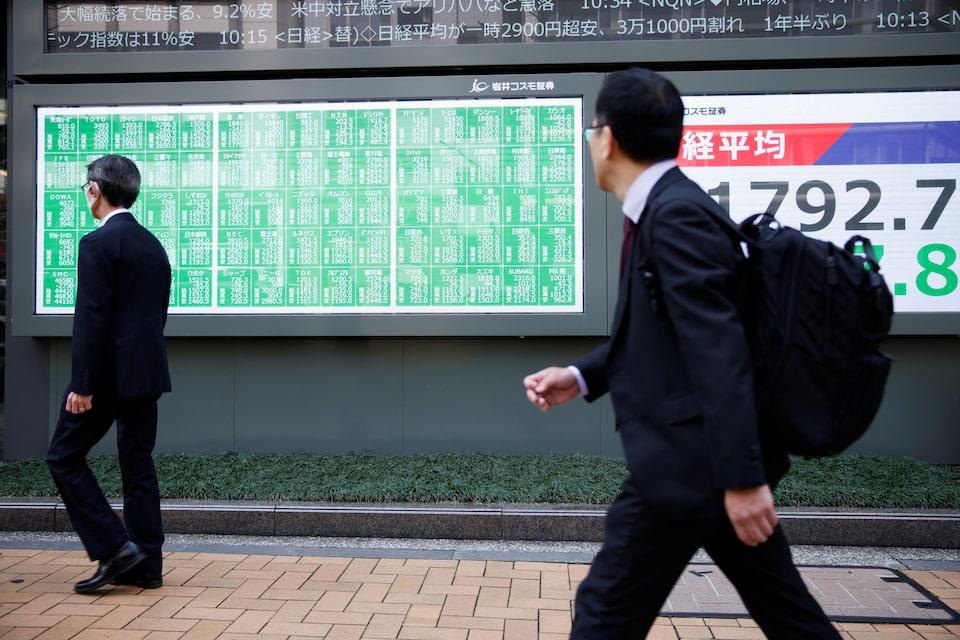
Markets price in greater than 80% chance of Fed rate cut Stocks rally while dollar slips Eyes on sliding yen for possible intervention NEW YORK, Nov 24 (Reuters) - Global stocks advanced for a second straight session on Monday as rising expectations for a December rate cut from the U.S. Federal Reserve helped to soothe recent concerns about stretched valuations in the AI space while longer-dated U.S. Treasury yields dipped. Stocks stumbled last week to their largest weekly percentage drop since early August on market pessimism over the chances of a cut to interest rates, the economic impact of the extended U.S. government shutdown and lingering concerns over high valuations for AI-related companies. Sign up here. But equities rallied at the end of the trading week after New York Fed President John Williams said interest rates can fall in the near term even as other policymakers insisted borrowing costs should remain steady for now. Williams' comments were echoed on Monday by Fed Governor Christopher Waller, who said that available data indicates that the U.S. job market remains weak enough to warrant another quarter-point cut to interest rates. "It's a market that probably got a bit oversold in the short term, and the level of pessimism was rising," said Brian Levitt, chief global market strategist for Invesco. "The economic data is just not robust, and the market is certainly not expecting a recession, but a weaker backdrop is supportive of a reduction in the fed funds rate." U.S. markets will be closed on Thursday for the Thanksgiving holiday. Markets are pricing in an 85.1% chance of a cut of 25 basis points at the December meeting, according to CME's FedWatch Tool , opens new tab, up from 42.4% a week ago. Expectations for a rate cut increased further during the session after San Francisco Federal Reserve Bank President Mary Daly told the Wall Street Journal she supports lowering interest rates at the central bank's meeting next month as she sees a deterioration in the job market. Goldman Sachs chief economist Jan Hatzius said in a note on Sunday that he expects another cut from the Fed in December, followed by two more moves in March and June of 2026 "that take the funds rate to 3-3.25%." On Wall Street, U.S. stocks closed higher, led by a surge of nearly 4% in the communication services sector (.SPLRCL) , opens new tab as Google parent Alphabet (GOOGL.O) , opens new tab jumped more than 6%. The Dow Jones Industrial Average (.DJI) , opens new tab rose 202.86 points, or 0.44%, to 46,448.27, the S&P 500 (.SPX) , opens new tab gained 102.09 points, or 1.55%, to 6,705.08 and the Nasdaq Composite (.IXIC) , opens new tab shot up 598.92 points, or 2.69%, to 22,872.01. The gains for the Nasdaq marked its biggest daily percentage rise since May 12. European equities closed higher on interest rate expectations while investors were also encouraged by signs of progress toward a peace deal between Ukraine and Russia. MSCI's gauge of stocks across the globe (.MIWD00000PUS) , opens new tab rose 11.57 points or 1.19% and was on track for the biggest daily percentage gain since November 10. The pan-European STOXX 600 (.STOXX) , opens new tab index, meanwhile, ended the session up 0.14% after gaining as much as 0.71%. U.S. retail sales and producer prices data will also be in focus this week as the release of government data resumes after the end of the extended government shutdown. In Britain, British finance minister Rachel Reeves' eagerly awaited budget is due on Wednesday. The U.S. and Ukraine were continuing work on a plan to end the war in Ukraine after agreeing to modify an earlier proposal that was viewed by Kyiv and its European allies as too favourable to Moscow. That weighed on oil prices because a deal could release more Russian oil supply through an easing of sanctions. U.S. Treasury yields were lower on the interest rate expectations. The yield on benchmark U.S. 10-year notes fell 2.7 basis points to 4.036%. A $69 billion auction in two-year notes was solid, with above-average demand of 2.68 times the notes on sale. In currencies, the dollar index , which measures the dollar against a basket of currencies, shed 0.07% to 100.18, with the euro up 0.1% at $1.1522. Sterling strengthened 0.11% to $1.3106. Markets were also watching for signs of possible Japanese intervention in the yen, which weakened 0.28% against the greenback to 156.82 per dollar. The Japanese currency is down 1.8% against the dollar this month. Takuji Aida, an adviser to Prime Minister Sanae Takaichi, said on Sunday that Japan can actively intervene in the currency market to mitigate the negative economic impact of a weak yen. U.S. crude rose 1.34% to settle at $58.84 a barrel and Brent settled at $63.37 per barrel, up 1.29% on the day due to the rising rate cut expectations and mounting doubts about whether Russia will obtain a peace deal with Ukraine. https://www.reuters.com/world/china/global-markets-pix-2025-11-24/