2025-05-29 04:56
NEW YORK, May 29 (Reuters) - Wall Street closed higher on Thursday, largely shrugging off a decision by a federal appeals court late Thursday reinstating President Donald Trump's tariffs. This came a day after a trade court blocked most of the U.S. president's tariffs going into effect. The S&P 500 (.SPX) , opens new tab ended up 0.4% higher on the day after the appeals court headline. The dollar, on the other hand, stayed lower against its safe-haven peers such as the yen and Swiss franc as investors braced for more trade uncertainty and volatility. Sign up here. COMMENTS: JIM CARROLL, PORTFOLIO MANAGER, BALLAST ROCK PRIVATE WEALTH, CHARLESTON, SOUTH CAROLINA "It's just impossible to decipher all of these shenanigans. You really either need to be a long-term investor and just turn off the television, or you have to be a very active trader. Anything in between, you're really setting yourself up for problems. We have tried to communicate to clients that this is an environment in which discipline is going to be tested. I don't know how you would make all of this something actionable for anyone in the markets, because as soon as you thought you knew something, something else pops up and the market runs in the opposite direction." ADAM SARHAN, CHIEF EXECUTIVE, 50 PARK INVESTMENTS, NEW YORK It's "a secondary thing even, though it's capturing the headlines right now. Investors are looking forward. Trump has already rolled back most of these tariffs anyway, so these court rulings are just headlines. Trump probably prepared an appeal before the ruling even came out. As far as I'm concerned, as long as the market doesn't tank on the news, it's just a secondary byproduct." MARK SPINDEL, CHIEF INVESTMENT OFFICER, POTOMAC RIVER CAPITAL LLC, WASHINGTON "I think markets are just going to continue to be caught in this pinball machine of court decisions, executive orders and judicial reviews. This is what happens when you don't follow a more sticky legislative process when developing policy. The result of using executive orders is that you're at the mercy of a court that is ruling on, circumscribing, or endorsing those orders. Markets are caught in the middle of all this, and the result is chaos and uncertainty." TIM GHRISKEY, SENIOR PORTFOLIO STRATEGIST, INGALLS & SNYDER, NEW YORK "The market has become numb to the tariff issue because the changes occur from multiple parties on a daily basis. Last night the U.S. Court of International Trade ruled the Trump doesn't have authority to implement reciprocal tariffs." "That ruling was appealed and the appeal was successful. Now we're back with Trump having authority. Every day there's new news. The time frames are short and there are a lot of countries currently in trade and tariff negotiations. Markets are waiting for an ultimate resolution, which will likely be somewhat favorable to the U.S. overall but they may not be successful everywhere." "Traders will react to news like this as quickly as they can hoping to gain a little advantage. But fortunes aren't made in the stock market by rapidly trading. They're made by investing in companies ... a daily move is just a drop in the bucket." "As we've seen, courts are ruling in opposite ways so its very, very hard to gain any advantage as a trader. And you have a President who makes totally opposite statements on successive days, either huge tariffs or the removal of tariffs." HELEN GIVEN, DIRECTOR OF TRADING, MONEX USA, WASHINGTON "FX markets have become increasingly headline-weary, and the developments over the last 24 hours are no exception. Traders have adopted an 'I'll believe it when I see it' approach to any announcements regarding tariffs, hence the very muted reaction from the U.S. dollar to the headline that Trump's tariffs are, for now, back on the table." "Importantly, the majority of the levies in question have already been paused and will continue to stay on hold until the early July end of Trump's 90-day pause, so traders are giving this court action until then to reach a conclusion and any reaction to further headlines is likely to continue to be smaller than some of the volatility we've seen since April 2nd, albeit in choppy trading." https://www.reuters.com/business/view-markets-cheer-court-ruling-block-trump-tariffs-2025-05-29/
2025-05-29 04:50
Long positions in T$ highest since Dec. 2020 Bullish bets on ringgit, peso and baht scaled up Analysts bullish on rupiah, first time since Oct. 2024 May 29 (Reuters) - Investors piled up bullish bets on Asian currencies, including the yuan, as easing U.S.-China tariff tensions, new trade deals and a growing unease with U.S. policies prompted them to pull out of dollar assets, a Reuters poll showed on Thursday. Investors sought long positions across the board, with those in the Taiwanese dollar and Philippine peso climbing to their highest since the end of 2020, according to the fortnightly poll of 10 respondents. Sign up here. All responses were collected before a U.S. trade court on Wednesday blocked President Donald Trump’s sweeping tariffs, ruling he overstepped his authority by imposing duties on countries with trade surpluses against the United States. Long bets on the Chinese yuan were the highest since October last year - a month before Donald Trump was re-elected as the President of the United States - buoyed by signs of renewed dialogue on trade between Washington and Beijing after months of posturing and threats. The yuan rose 1% this month. Trump’s tariff flip-flops and the mounting worries over a ballooning U.S. deficit have dented confidence in American assets, piling pressure on the dollar and driving investors toward Asian currencies. "Asian currencies are likely to stay firm against the U.S. dollar (USD) due to diversification outflows from USD assets into Asia, with investors being concerned over U.S. trade policy and its fiscal trajectory given proposed tax cuts", said Wei Liang Chang, market strategist at DBS Bank. Southeast Asian leaders have also reached an understanding that any bilateral agreements they might strike with the United States on trade tariffs would not harm the economies of fellow members. Parisha Saimbi, an FX strategist at BNP Paribas, said Asian currencies would remain somewhat supported, helped by the U.S.-China de-escalation and bilateral trade deals being reached. Meanwhile, the Taiwanese dollar has gained more than 6% in May to record its best ever monthly gain. Taiwan's president dismissed "false" claims of currency talks with Washington earlier in May, after the Taiwan dollar spiked on speculation the U.S. had pushed for its appreciation, fuelling market jitters over potential FX policy shifts. The South Korean won has also jumped more than 4% this month amid a broad dollar selloff, with Seoul officials confirming currency policy was on the table during recent talks with U.S. counterparts in Milan, fuelling speculation of joint FX moves. Bullish bets returned to the Indonesian rupiah for the first time since October 2024, as some investors looked past ongoing fiscal concerns and bet on policy direction stabilising. Elsewhere, bullish bets on the Malaysian ringgit and Thai baht rose to their strongest levels since October 2024. The Asian currency positioning poll is focused on what analysts and fund managers believe are the current market positions in nine Asian emerging market currencies: the Chinese yuan, South Korean won, Singapore dollar, Indonesian rupiah, Taiwan dollar, Indian rupee, Philippine peso, Malaysian ringgit and the Thai baht. The poll uses estimates of net long or short positions on a scale of minus 3 to plus 3. A score of plus 3 indicates the market is significantly long U.S. dollars. The figures include positions held through non-deliverable forwards (NDFs). The survey findings are provided below (positions in U.S. dollar versus each currency): https://www.reuters.com/world/asia-pacific/bullish-bets-surge-asian-currencies-us-china-thaw-trade-deals-rattle-dollar-2025-05-29/
2025-05-29 04:33
May 29 (Reuters) - A look at the day ahead in European and global markets from Wayne Cole Who knew the three judges at the rather obscure United States Court of International Trade had the power to spark a rally in global stock markets and shove the dollar higher against its safe-haven peers? Sign up here. Early in the Asian trading day, news broke the court had declared President Donald Trump's April 2 tariffs to be "invalid as contrary to law", sending risk assets surging. And this wasn't a narrow judgment. All three judges - one appointed by Trump, one by Obama and one by Reagan - agreed Trump had overstepped his authority by declaring an emergency to slap tariffs on the rest of the world. It's worth a read , opens new tab if you have the time. The White House quickly said it would appeal to the U.S. Court of Appeals for the Federal Circuit in Washington, and will surely go to the Supreme Court if needed. Higher courts are usually reluctant to overturn unanimous rulings like this one, so this could be an extended process. In the meantime, the tariffs are up in the air and any country negotiating with the White House on trade will be tempted to stall. The chance of quick "beautiful deals" is out the window. With Trump's ability to arbitrarily declare emergencies in doubt, investors are hoping policy-making will be a little less chaotic. S&P 500 futures jumped 1.6% while Nasdaq futures are up around 2%, having already got a boost from Nvidia earnings guidance that lifted its shares 4.4% after the bell. Most Asian markets and European stock futures are up 1% or more, while the dollar gained on the Swiss franc, euro and yen. Treasury yields are up just a little, and Fed fund futures have only slightly pared back expectations for rate cuts, given a lasting block of the April 2 tariffs has mixed implications. On the one hand it would brighten the economic outlook and greatly lessen the risk of recession, but it would also mute the coming inflationary pulse. And it was inflation that was very much on the minds of Fed officials in their last meeting. Oh, and in secondary news it seems Elon Musk is no longer on the government payroll. Key developments that could influence markets on Thursday: - US second reading on GDP, weekly jobless claims - Bank of England Gov Bailey speaks - Fed speakers include Bank of Richmond President Barkin, Fed Bank of Chicago head Goolsbee, Bank of San Francisco head May and Bank of Dallas head Logan. https://www.reuters.com/world/china/global-markets-view-europe-2025-05-29/
2025-05-29 04:10
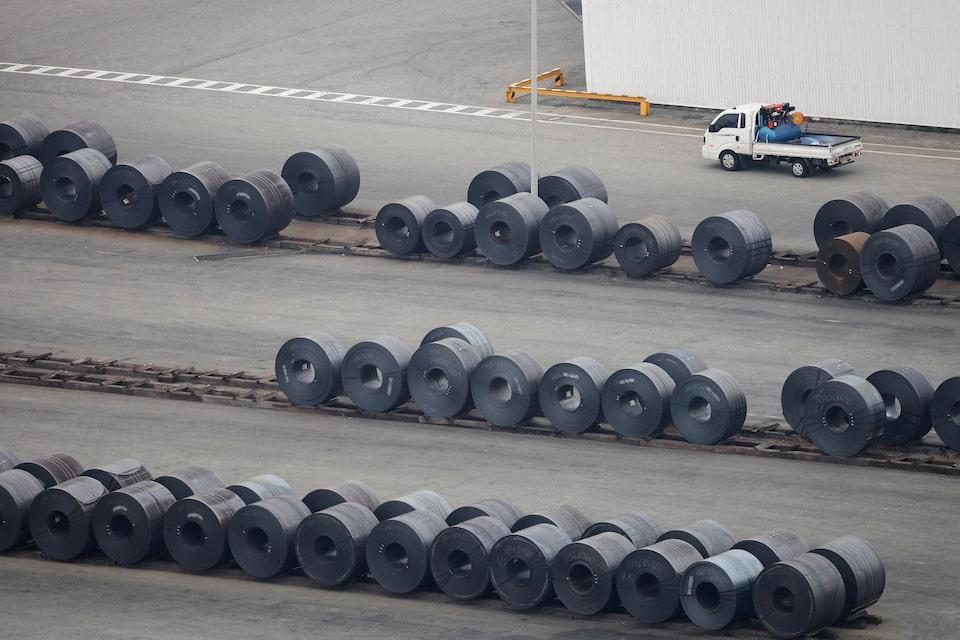
SINGAPORE, May 29 (Reuters) - There is a conundrum in plans to decarbonise the steel sector. It's entirely feasible with current technologies, but also wholly unlikely because of the massive cost of deploying them. Sign up here. The steel chain from iron ore mining through to finished products accounts for about 8% of global carbon emissions, and reducing this impact is often viewed as vital to combating climate change. If there was a consensus at the gathering of the iron ore and steel industry this week at the Singapore International Ferrous Week, it's that cutting emissions from steel-making is entirely possible. But what was also obvious is that while miners and steel makers are in the early stages of transitioning, the process will be slow and massively expensive. The major problem with this is nobody is sure who is going to pay. Australia's iron ore miners, who supply about two-thirds of China's imports, are capable of building a green iron supply chain, which would use solar and wind energy to create green hydrogen, which would then be used to beneficiate iron ore into direct reduced iron (DRI) and hot-briquetted iron (HBI). Using HBI cuts out about 80% of the emissions created in the entire steel-making process by eliminating the current practice of using coal to turn iron ore into pig, or crude, iron by removing oxygen and other impurities. But the iron ore miners won't invest the billions of dollars needed to build green iron plants unless China, which makes about half of the world's steel, and other major producers such as South Korea, Japan and India, commit to using the cleaner product. At the heart of the problem is cost. Using hydrogen to make green iron and an EAF to turn that into steel can reduce the emissions from around 1.8 metric tons of carbon to as low as 200 kilograms per ton of steel. While estimates of the cost vary, the consensus is that even a green steel supply chain built at scale would result in a near doubling of the cost of making a ton of steel compared with the coal-intensive current method of using a blast furnace and a basic oxygen furnace (BF-BOF). It's likely that steel mills will be unwilling to see their costs rise so dramatically, as it would be challenging to pass the higher prices fully on to consumers. The current iron ore and steel market dynamics illustrate the scale of the challenge. Chinese steel mills are struggling for profitability, and one way they try to cut costs is to increase the share of low-grade, and cheaper, iron ore in their production. This lowers the cost of the steel produced, but also raises the carbon intensity to about 2.2 tons per ton of steel produced, up from about 1.8 tons if high-grade iron ore is used in the BF-BOF process. In other words, green steel ambition is likely to be sacrificed on the altar of economics. GREENISH STEEL But it is possible to lower the carbon intensity of steel by going somewhat greener. Using natural gas to reduce the iron ore instead of coal could trim the amount of carbon to around 1.1 tons per ton of steel, and if the gas can be secured at a cheap enough price, this becomes a viable and economic option. Producing hydrogen using natural gas is often referred to as blue hydrogen, and using this fuel to beneficiate the iron ore means steel could be considered teal, one of the shades between blue and green. Brazil's Vale (VALE3.SA) , opens new tab is building what it calls mega-hubs in three Middle East countries with the aim of using cheap natural gas to produce DRI and HBI for export to steel mills in China. This product would also help steel producers comply with the European Union's planned Carbon Border Adjustment Mechanism, which is slated to be introduced next year, although it may be delayed. There are several points to note, firstly that while the 80 million tons of iron ore per annum that Vale is believed to be planning on processing in the Middle East sounds substantial, it's not even one month's worth of imports by China, which buys about three-quarters of global seaborne iron ore. Natural gas isn't a viable option for Australia's iron ore sector, as it is too expensive and the available supply in Western Australia, home to the bulk of iron ore mines, is already spoken for by the domestic sector and the liquefied natural gas producers. This means that teal steel will make a bit of difference, but not the step-change needed to decarbonise steel. That will require government legislation and regulation to incentivise or punish steel makers through measures such as subsidies or carbon taxes to the point where fully green steel becomes viable. Teal steel is an example of the cliché to not let perfect be the enemy of good. The views expressed here are those of the author, a columnist for Reuters. https://www.reuters.com/markets/commodities/green-steel-is-distant-expensive-teal-steel-is-coming-russell-2025-05-29/
2025-05-29 00:46
U.S. appeals court reinstate tariffs Wall Street stocks finish higher Dollar loses ground against safe havens Oil prices settle lower, gold rises NEW YORK, May 29 (Reuters) - Global stocks rose while the U.S. dollar weakened on Thursday as markets digested an ongoing court battle over President Donald Trump's so-called "Liberation Day" tariffs. The U.S. Court of International Trade issued a ruling late on Wednesday that Trump overstepped his authority by imposing across-the-board duties on imports from trading partners. Sign up here. The decision triggered a court battle that would likely weigh on markets, after the Trump administration swiftly appealed the ruling and an appeals court temporarily reinstated the tariffs. On Wall Street, all three indexes finished higher after losing ground in the previous session, indicating that markets largely view the decision in a positive light. Nvidia (.NVDA.O) , opens new tab ended up 3% after reporting earnings that beat expectations after markets closed on Wednesday. The Dow Jones Industrial Average (.DJI) , opens new tab rose 0.28% to 42,215.73, the S&P 500 (.SPX) , opens new tab rose 0.40% to 5,912.17 and the Nasdaq Composite (.IXIC) , opens new tab rose 0.39% to 19,175.87 Europe's STOXX 600 index (.STOXX) , opens new tab finished down 0.19%, after rising earlier in the session. MSCI's broadest index of Asia-Pacific shares outside Japan (.MIAPJ0000PUS) , opens new tab had closed up 0.77% overnight. MSCI's gauge of stocks across the globe (.MIWD00000PUS) , opens new tab rose 0.44% to 880.26. "I think markets are just going to continue to be caught in this pinball machine of court decisions, executive orders and judicial reviews," said Mark Spindel, chief investment officer at Potomac River Capital in Washington. "This is what happens when you don't follow a more sticky legislative process when developing policy. The result of using executive orders is that you're at the mercy of a court that is ruling on, circumscribing, or endorsing those orders. Markets are caught in the middle of all this, and the result is chaos and uncertainty.” The U.S. dollar had initially risen against safe-haven currencies following news of the federal court decision late on Wednesday, but it has since pared those gains and was down on the session. Data showed that labor market conditions continue to ease, as the number of Americans seeking unemployment benefits increased more than expected last week. The dollar weakened 0.48% to 144.13 against the Japanese yen and was down 0.51% to 0.823 against the Swiss franc . The euro was up 0.64% at $1.1364. The dollar index , which measures the greenback against a basket of currencies including the yen and the euro, fell 1.03% to 99.36. U.S. Treasury yields, which have been under pressure with investors unnerved by Trump's hefty tax and spend bill, initially rose on Thursday but retreated. The yield on benchmark U.S. 10-year notes fell 4.7 basis points to 4.432%. The 30-year bond yield fell 5.2 basis points to 4.9264%. Oil prices fell, retreating from earlier gains, with markets eyeing possible U.S. sanctions on Russian crude flows. Brent crude futures settled down 1.2% to $64.15 a barrel. U.S. West Texas Intermediate crude fell 1.5% to $60.94 a barrel. Gold prices rose in volatile trading partly aided by the softer jobs data. Spot gold rose 0.8% to $3,315.73 an ounce. U.S. gold futures were settled 0.6% higher at $3,343.90. https://www.reuters.com/world/china/global-markets-wrapup-1-2025-05-29/
2025-05-29 00:38
Tariff concerns weigh on US currency Jobless claims rise in latest week Fiscal issues remain in focus as Congress works on tax and spending bill NEW YORK, May 29 (Reuters) - The dollar fell on Thursday as investors prepared for U.S. President Donald Trump to battle a U.S. trade court ruling on Wednesday that blocked most of his proposed tariffs. A federal appeals court late on Thursday, however, reinstated Trump's levies on imports. The order from the United States Court of Appeals for the Federal Circuit in Washington provided no opinion or reasoning but directed the plaintiffs in the case to respond by June 5 and the administration by June 9. Sign up here. The greenback showed little reaction to the news. Senior Trump administration officials earlier downplayed the ruling's impact, expressing confidence it would be overturned on appeal and insisting other legal avenues are available in the interim. "Markets were quick to realize that the ruling was sort of narrow, meaning it was only focused on one aspect of the tariff plan here - emergency authorization," said Brad Bechtel, global head of FX at Jefferies in New York. "There were still plenty of other avenues for Trump." The dollar had rallied on the ruling. The U.S. currency has weakened on concerns that tariffs will slow the economy and reignite inflation, while the erratic implementation of Trump's policies is seen as denting the appeal of U.S. assets to foreign investors. "The deeper issue remains a persistent lack of clarity surrounding trade policy," said Uto Shinohara, senior investment strategist at Mesirow Currency Management in Chicago. The Federal Reserve has kept interest rates on hold on concerns about higher inflation as Fed officials wait to see how the trade policies will affect the U.S. economy. Trump, in a private meeting at the White House on Thursday, told Fed Chair Jerome Powell he was making a "mistake" by not lowering interest rates. "This is not likely to be the end of tariff policy, and in some respects, if the administration wins its appeal or opts for alternative legal paths to tariff implementation, they could aim for the tariff agenda as a whole to be more entrenched than it was previously," Goldman Sachs' forex analysts said in a report on Thursday. U.S. economic pessimism declined earlier this week after Trump on the weekend delayed a plan to impose 50% tariffs on European Union imports. The euro was last up 0.73% at $1.1374 after falling to $1.1209, the lowest since May 19. Against the Japanese yen , the dollar weakened 0.57% to 143.99. It earlier reached 146.28, the highest since May 15. The dollar fell 0.59% to 0.822 Swiss franc . The greenback also weakened on news that the number of Americans filing new applications for jobless benefits rose more than expected last week, and the unemployment rate appeared to have picked up in May, suggesting increasing layoffs as tariffs cloud the economic outlook. Investors are also watching the progress of a tax cut and spending bill that is working its way through the U.S. Congress and which is expected to add trillions in U.S. debt over the coming decade. Some Republicans have criticized it for not having enough spending cuts. Trump's budget chief said on Wednesday the White House intends to send Congress a package next week to formalize cuts made by billionaire Elon Musk's team targeting federal government spending. Longer-dated U.S. Treasury yields rose last week and demand for the Treasury's 20-year bond auction was soft due to rising concerns about the deteriorating U.S. fiscal outlook. The yen also weakened against the dollar earlier this week on reports that Japan will consider trimming issuance of super-long bonds in the wake of recent sharp yield increases in the country. https://www.reuters.com/world/africa/dollar-rallies-after-us-court-blocks-trumps-tariffs-2025-05-29/