2025-05-28 22:59
Sunnova no longer using Project Hestia loan guarantee Sunnova has $371 mln in bonds outstanding backed by cancelled guarantee, source says DOE Loan Programs Office faces uncertain future amid budget cuts WASHINGTON, May 28 (Reuters) - President Donald Trump's administration has canceled a partial loan guarantee of $2.92 billion that had been awarded to residential solar panel installer Sunnova Energy (NOVA.N) , opens new tab, the company said on Wednesday. A source familiar with the matter said the Department of Energy had "de-obligated" the loan guarantee, meaning the federal government is not responsible for the financing. Bloomberg News first reported the move. Sign up here. Sunnova, which is restructuring its debt and has warned that it may not be able to continue as a going concern, said in a regulatory filing in March that it did not intend to use the DOE facility, known as Project Hestia, for the foreseeable future. In April 2023, former President Joe Biden's administration announced the partial loan guarantee of up to $3 billion to back financing for about 100,000 rooftop solar installations, primarily for lower-income homeowners. At the time, the Energy Department billed the facility as the largest ever U.S. government commitment to solar power. But residential solar has struggled since then as higher interest rates have pushed up financing costs. Sunnova, one of the biggest U.S. residential solar companies, has sold $371 million in bonds that are backed by the Project Hestia loan guarantee, according to a source, but those notes are not included in the debt that the company is seeking to restructure. The program became less attractive to Sunnova because the company could market cheaper, leased systems to homeowners using tax credits created by former President Joe Biden's 2022 Inflation Reduction Act, a company source said. The credit for loans, which was Project Hestia's focus, is less lucrative. The Trump administration, which is pushing to maximize oil and gas production, has said it is reviewing financing from the Department of Energy's Loan Programs Office to companies involved in alternative energy. Under Biden, the office aimed to speed development of the clean energy sector, with loans to companies that struggled to obtain private financing. It faces an uncertain future with job cuts implemented by Elon Musk's so-called Department of Government Efficiency and reductions to the office outlined in the House budget bill. The loans office since 2009 has issued more than $35 billion in loans and loan guarantees and been paid back by companies, including Musk's Tesla. But it has also been a target for Republicans since 2011 over a $535 million loan to Solyndra, a failed solar company. The Department of Energy did not immediately respond to a request for comment. https://www.reuters.com/business/energy/trump-administration-cancels-sunnova-energy-3-billion-loan-bloomberg-news-2025-05-28/

2025-05-28 22:52
May 28 (Reuters) - Fertilizer producer Nutrien (NTR.TO) , opens new tab said on Wednesday it was planning a major terminal at a Pacific Northwest port and is currently exploring sites in the United States and Canada. "Nutrien is reviewing options to increase West Coast port capacity as part of our long-term strategy to strengthen supply chain resilience and support rising global demand for potash," the company said in a statement. Sign up here. The Canada-based company is seeking a deep-water port with rail infrastructure capable of handling bulk potash exports for fast-growing Indo-Pacific markets, including China, India and Japan. https://www.reuters.com/markets/commodities/canadas-nutrien-plans-major-pacific-northwest-terminal-boost-potash-exports-2025-05-28/

2025-05-28 21:58
CAIRO, May 28 (Reuters) - Libya's eastern-based government said on Wednesday it may announce a force majeure on oil fields and ports citing "repeated assaults on the National Oil Corporation (NOC)." The government in Benghazi is not internationally recognised, but most oilfields in the major oil producing country are under the control of eastern Libyan military leader Khalifa Haftar. Sign up here. The government said it may also temporarily relocate the national oil corporation's headquarters to one of the "safe cities such as Ras Lanuf and Brega, both of which are controlled by the eastern-based government. The NOC is currently located in Tripoli under the control of the internationally-recongized Government of National Unity (GNU). The NOC denied in an earlier statement that the corporation's headquarters was stormed deeming it as "completely false". It also emphasized it is operating normally “and continuing to perform its vital duties without interruption.” The acting head of NOC Hussain Safar said that “what happened was nothing more than a limited personal dispute that occurred in the reception area and was immediately contained by administrative security personnel, without any impact on the corporation's workflow or the safety of its employees.” GNU's media office posted video footage from inside the headquarters of the NOC showing “stable conditions and no signs of a storming or security disturbance.” Libya's oil output has been disrupted repeatedly in the chaotic decade since 2014 when the country divided between two rival authorities in the east and west following the NATO-backed uprising that toppled Muammar Gaddafi in 2011. In August, Libya lost more than half of its oil production, about 700,000 bpd, and exports were halted at several ports as a standoff between rival political factions over the central bank threatened to end four years of relative peace. The shutdowns lasted for over a month with production gradually resuming from early October. The North African country's crude oil production reached 1.3 million barrels per day in the last 24 hours, according to the NOC. https://www.reuters.com/business/energy/libyas-eastern-based-government-says-it-may-announce-force-majeure-oil-fields-2025-05-28/

2025-05-28 21:28
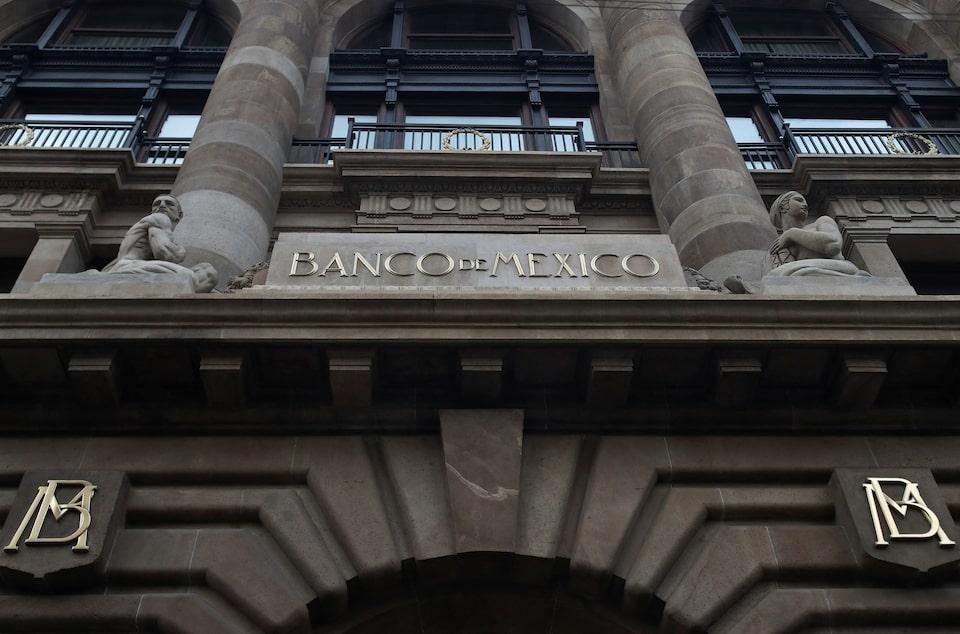
Banxico sees 2025 growth close to zero, halves 2026 forecast Economy experiencing "significant weakness," says report Bank sees U.S. trade policies fueling uncertainty, hindering investment Bank governor, deputy governor do not see a recession Core inflation seen slightly higher through rest of year MEXICO CITY, May 27 (Reuters) - The Bank of Mexico slashed its growth forecasts for Mexico's economy this year and next year, citing sluggish domestic activity and uncertainty related to U.S. trade policy, according to its quarterly report published on Wednesday. "The Mexican economy is undergoing a period of significant weakness and faces challenges," the report said. Sign up here. Banxico, as the central bank is known, estimated that Mexico's gross domestic product will grow just 0.1% this year, below its February estimate of 0.6%. The bank also cut its 2026 GDP growth forecast in half, forecasting 0.9% growth compared to its February estimate of 1.8%. Domestic activity is expected to be "sluggish" in coming months, the bank said, with domestic weakness exacerbated by "significant challenges stemming from the changes in U.S. trade policy." Despite the challenges facing Latin America's second-largest economy, some of the governors ruled out an imminent recession. "We are foreseeing a period of weakness for economic activity, but not a recession," Governor Victoria Rodriguez said during a presentation of Wednesday's report. "The economy is stagnant, and it appears it could remain stagnant for a while ... but we're not in a recession right now," said Deputy Governor Jonathan Heath. Banxico noted that Mexican exports have remained resilient in the face of U.S. tariffs, partly due to the preferential treatment under Mexico's trilateral trade deal with the U.S. and Canada. However, the bank flagged uncertainty about the full impact of Washington's tariffs, noting it expects tariffs to harm the U.S. economy, which would lead to lower external demand for Mexican goods. "Uncertainty alone hinders investment decisions and negatively affects the business environment," the report noted. Mexico's economy grew 0.2% in the first quarter from the previous quarter, allowing it to narrowly avoid a technical recession. Still, analysts have underscored the economy's underlying weakness, especially in manufacturing and services. Banxico cited the economy's weakness as a factor when it cut its benchmark interest rate earlier this month by 50 basis points to 8.5%. It was the third straight cut of that magnitude, and the bank said in its report that it expects the current inflationary environment will allow still further cuts. Inflation accelerated in early May to land outside the bank's target range, a trend that Heath described as concerning. Even so, the bank maintained prior estimates that headline inflation will average 3.3% in the fourth quarter before converging to its 3.0% target in the third quarter of 2026. The bank projected the core inflation index, which strips out volatile products, will rise higher than previously anticipated until the first quarter of 2026. It projected an average of 3.4% in the fourth quarter of this year, a percentage point higher than its prior forecast. https://www.reuters.com/world/americas/bank-mexico-lowers-2025-growth-forecast-bringing-it-close-zero-2025-05-28/
2025-05-28 21:14
ORLANDO, Florida, May 28 (Reuters) - TRADING DAY Making sense of the forces driving global markets Sign up here. By Jamie McGeever, Markets Columnist Hawkish Fed minutes A day of drift - stocks lower and bond yields higher - was the hallmark of global markets on Wednesday as investors, in the absence of major fresh news on tariffs or developments in long-dated bonds, waited for Nvidia's results after the U.S. close. In my column today I look at why the United States may follow Japan in looking to shorten the maturity of its debt profile, as investors turn increasingly reluctant to hold long-dated bonds. More on that below, but first, a roundup of the main market moves. If you have more time to read, here are a few articles I recommend to help you make sense of what happened in markets today. Today's Key Market Moves Investors shrug off Nvidia caution Nvidia on Wednesday was the last of the U.S. 'Magnificent Seven' tech giants to report earnings. It announced record quarterly revenue in the first quarter of fiscal year 2026 but warned that tighter U.S. curbs on exports of its AI chips to key semiconductor market China will hit second quarter revenue. Investors cheered the news though, sending shares up as much as 4% immediately after the release. The relationship between Nvidia's share price and its long-term revenue outlook has been tight, and both were near recent highs before Wednesday's results. Nvidia said on Wednesday it expects revenue this quarter of around $45 billion, almost $1 billion below analysts' average estimate. As Deutsche Bank's Jim Reid pointed out earlier on Wednesday, there is still a "significant growth runway" required to reach the current consensus for fiscal year 2030 of around $375 billion, underlining the volatile nature of the stock. Indeed, although U.S. 'Big Tech' has taken a back seat to trade wars, U.S. fiscal concerns and trouble at the long end of global bond markets as the main drivers of investor sentiment recently, Nvidia shares haven't stood still - since the market low on April 7, they have rebounded 50%, outperforming the Roundhill 'Magnificent Seven' ETF and broader Nasdaq. The 'Mag 7' shares account for almost a third of the entire S&P 500 market cap, less than the peak of 35% late last year but up from the April low and still an extraordinarily high concentration of wealth in so few stocks. Big Tech has been quiet lately, but that's unlikely to last. The other big focus for investors in the U.S. session was the minutes of the Federal Reserve's May 6-7 policy meeting. There is usually something for everyone in these releases, but if there is one indication of where policymakers are leaning amid the fog of tariff uncertainty it may be this: "inflation" was mentioned 85 times , opens new tab, while "employment" and "labor market" were mentioned 23 times and 16 times, respectively. Looking ahead to Thursday, investors in Asia will react to Nvidia's earnings and guidance from after the U.S. closing bell the day before. Other highlights should be an expected interest rate cut from the Bank of Korea, revised U.S. GDP figures, and a $44 billion sale of 7-year U.S. Treasury bonds. Pressure on U.S. to follow Japan in debt profile rethink In the face off between heavily indebted developed economies and increasingly wary investors, Japan has blinked first, announcing that it will reconsider its debt profile strategy amid plunging demand for long-dated bonds. The U.S. could soon follow. Japan has the second-longest debt maturity profile of the G7 nations, with an average of around 9 years. Decades of ultra-low policy rates allowed Tokyo to borrow huge amounts at very low cost across the Japanese Government Bond yield curve. But in recent weeks, 30- and 40-year yields have soared to record highs, as appetite for long-dated paper at JGB auctions has dried up, a one-two punch that has forced officials to consider reducing issuance of long-term bonds in favor of short-dated debt. Many of the debt pressures bearing down on Tokyo are also being felt in Washington. The U.S. no longer boasts a triple-A credit rating, following the downgrade from Moody's earlier this month, and the non-partisan Congressional Budget Office projects federal debt held by the public will rise to a record 118.5% of GDP over the next decade from 97.8% last year. Net interest payments will rise to 4.1% of GDP from 3.1%, it predicts. Finally, there is Trump's tax-cut bill, which is projected to lump $3.8 trillion onto the federal debt over the next decade, according to the CBO. All this is creating understandable unease among investors, and even though foreign demand at bill auctions has remained high, on average, demand at bond auctions is the lowest in years. The Treasury may be forced to grab a page out of Japan's recent playbook and shorten its maturity profile. WAM The U.S. has the shortest 'weighted average maturity' (WAM) of all G7 countries at 71.7 months, according to the Treasury. That's due to a mix of factors, including rising deficits, Fed holdings of longer-dated bonds, and high liquidity and demand at the short end of the curve. But this figure has rarely been higher on its own terms. While the WAM reached a record 75 months briefly in 2023 and was elevated during the post-pandemic period, it has otherwise rarely exceeded 70 months. Indeed, the average going back to 1980 is 61.3 months. Shifts in the Treasury's WAM over the past half century have largely been driven by the interest rate environment, economic and financial crises and investor preference. While today's mix of market, economic and geopolitical trends is unique, it doesn't point to strengthening investor demand for long-dated bonds. The decades before the pandemic – the period known as the 'Great Moderation' – were generally marked by falling interest rates, flattening yield curves, and weak inflation. That era is over, or at least that's the growing consensus among investors and policymakers. This largely reflects the belief that inflation pressures in the coming decades will be higher than those seen during the 'Great Moderation' – particularly given the move toward high tariffs and protectionism – meaning interest rates are likely to remain 'higher for longer'. At the same time, America's apparent move toward isolationism and increased political volatility is apt to make global investors consider reducing their elevated exposure to dollar-denominated assets. That could make it harder for the Treasury to borrow long term at acceptable rates. PRESSURE POINTS These are broad assumptions, of course, and there are many moving parts. A sharp economic slowdown or recession could flatten the yield curve and spark an increase in longer-term issuance. But the curve is currently steepening, and the U.S. 'term premium' - the risk premium investors demand for lending 'long' to Treasury instead of rolling over 'short' loans - is the highest in over a decade and rising. This creates two problems. First, the Treasury may prefer to borrow longer term but not if yields are prohibitively high. Second, even though the U.S. can borrow more cheaply at the short end when the curve is steepening, this increases the 'rollover risk', meaning the government becomes more vulnerable to sudden moves in interest rates. T-bills' 22% share of overall outstanding debt is already above the Treasury Borrowing Advisory Committee's recommended 15-20% share, but it's hard to see that coming down much any time soon. Morgan Stanley analysts earlier this month outlined a "thought experiment" whereby low demand for notes and bonds could see the share of bills approach 30% by 2027. Ultimately, Treasury supply will largely depend on investor demand. If primary dealers indicate a preference for shorter-dated bonds, the 'WAM' will probably fall. Japan won't be the only developed economy rethinking its onerous borrowing plans. What could move markets tomorrow? Opinions expressed are those of the author. They do not reflect the views of Reuters News, which, under the Trust Principles , opens new tab, is committed to integrity, independence, and freedom from bias. https://www.reuters.com/world/china/global-markets-trading-day-graphic-pix-2025-05-28/
2025-05-28 21:12
HOUSTON, May 28 (Reuters) - Chevron (CVX.N) , opens new tab shareholders voted against three stockholder proposals during the U.S. oil producer's annual meeting on Wednesday, including one calling for a report on the company's human rights practices, while larger rival Exxon Mobil (XOM.N) , opens new tab faced no investor resolutions for the first time in decades. There have been fewer resolutions on environmental, social and governance (ESG) matters this year than they did in 2024 and 2023 due to lack of investor appetite for such proposals. Lower-than-expected returns in renewable energy projects have also shifted shareholders' focus back to oil and gas. Sign up here. Chevron investors rejected a resolution that would have allowed holders of at least 10% of the company's common stock to call special meetings. They also voted down a proposal to produce a report about whether company investments in renewable energy could result in so-called stranded assets, or projects that lose value prematurely, according to preliminary voting results on Wednesday. Also on Wednesday, Exxon's annual meeting featured no qualifying shareholder resolutions for the first time since 1958. Exxon CEO Darren Woods said he attributed that to the company's performance that has outpaced competitors, and to Exxon's willingness to fight back against proposals he said were a detriment to the business. Investors approved all director nominees and executive compensation plans for both companies. https://www.reuters.com/sustainability/boards-policy-regulation/chevron-investors-reject-stockholder-proposals-human-rights-renewable-energy-2025-05-28/