2025-05-28 14:37
May 28 (Reuters) - Shein is working towards a listing in Hong Kong, as Chinese regulators did not approve the online fast-fashion retailer's proposed IPO in London, according to three sources with knowledge of the matter. Here's a timeline of the Singapore-headquarted company's attempts to go public and the various setbacks it has encountered. Sign up here. Shein had moved its headquarters from China to Singapore in 2022, while its supply chains and warehouses largely remain in China. JANUARY 2022 Shein revives plans to list in New York. Founder Chris Xu considers changing his citizenship to bypass proposed tougher rules for offshore IPOs in China, two sources told Reuters. It had first started preparing for a U.S. IPO about two years prior to this but shelved the plan partly due to unpredictable markets amid rising U.S.-China tensions, sources told Reuters. FEBRUARY 2022 Shein puts its U.S. listing plans on hold due to volatile capital markets amid Russia's attack on Ukraine, sources say. MARCH 2023 Shein was set to raise around $2 billion in a new funding round. The company was aiming for a U.S. listing in the second half of 2023, sources said. MAY 2023 A bipartisan group of two dozen U.S. representatives calls on the Securities and Exchange Commission to halt Shein's IPO, until it verifies that Shein is not using forced labor, according to a letter seen by Reuters. JUNE 2023 Shein makes moves to register with regulators for an IPO in New York, people familiar with the matter said. JULY 2023 Shein was working with at least three investment banks about a potential U.S. IPO and was in talks with the NYSE and Nasdaq, sources said. NOVEMBER 2023 Shein targets a valuation of as much as $90 billion for an eventual U.S. IPO, Bloomberg News reported. The fashion company confidentially files to go public in the United States, according to Reuters sources. U.S. lawmakers once again demand proof that Shein's $5 t-shirts and $10 sweaters were not being produced using forced labor. DECEMBER 2023 Shein held talks , opens new tab with the London Stock Exchange about the possibility of a public listing in the United Kingdom, Sky News reported, citing sources. JANUARY 2024 Shein seeks Beijing's nod to go public in the U.S. to comply with new listing rules for local firms, two sources told Reuters. FEBRUARY 2024 Republican Senator Marco Rubio , opens new tab asks the U.S. SEC to block Shein's New York listing bid unless the company makes additional disclosures about its business operations and "the serious risks of doing business" in China. Jeremy Hunt, British Finance Minister at the time, held talks with Shein's Executive Chairman Donald Tang, and the fast-fashion chain is keen to list in London, a UK government source told Reuters. MAY 2024 Shein steps up preparations for a London listing after its attempt to float itself in New York faced regulatory hurdles and pushback from U.S. lawmakers, sources said. Shein plans to update China's securities regulator on the change of the IPO venue and file with the LSE as soon as May 2024, said one of them. Senior British lawmakers, including the chairs of three parliamentary committees, questioned Shein's suitability for a London stock market listing and called for greater scrutiny of the Chinese-founded firm. JUNE 2024 Britain's Labour Party says it has met with Shein ahead of a potential London-listing. Shein confidentially files papers with Britain's markets regulator in early June, two sources said. UK-based human rights group Stop Uyghur Genocide launches a legal campaign to block Shein's potential London listing. JULY 2024 A new campaign backed by British retail consultant and television personality Mary Portas launches an online petition calling on the new Labour government to block Shein's London listing. OCTOBER 2024 Shein was set to hold informal investor meetings for its planned London IPO, sources said. DECEMBER 2024 Britain's financial regulator takes longer than usual to approve Shein's IPO. It is checking supply chain oversight and assessing legal risks after an advocacy group challenges the listing, sources report. Shein considers asking UK regulators to waive listing rules that require at least 10% of its shares to be sold to the public in its planned IPO, sources said. JANUARY 2025 Shein aims to list in London in the first half of the year, according to two sources with direct knowledge of the matter, assuming it gains regulatory approvals. Senior UK lawmaker flags concerns about Shein to LSE and regulator. Shein tells UK lawmakers it does not allow Chinese cotton in products sold in the U.S. FEBRUARY 2025 Shein is set to cut its valuation in a potential London IPO to around $50 billion, said three sources, nearly a quarter less than the company's 2023 fundraising value. Shein's London listing plans are likely to be postponed to the second half of this year after Donald Trump's move to close so-called "de minimis" rules, the Financial Times reported. Shein is under pressure to cut its valuation to about $30 billion ahead of its London listing, Bloomberg News reported. APRIL 2025 Shein secures approval from Britain's FCA for its planned London IPO, according to two sources. But also needs to secure approvals from Chinese regulators, notably the CSRC, for the London float, sources have said. MAY 2025 Shein drops Brunswick and FGS, the two communications firms supporting its push for a London IPO, a source familiar with the matter confirms, in the latest sign that the flotation is not going to plan. (SOURCES: Reuters stories, other media) https://www.reuters.com/business/finance/sheins-pursuit-an-ipo-new-york-london-hong-kong-2025-05-28/

2025-05-28 14:24
Commission set to approve Bulgaria adoption of euro for 2026 Bulgaria meets criteria, including inflation, budget gap limits Final euro conversion rate for Bulgarian lev to be set in July BRUSSELS, May 28 (Reuters) - The European Commission is likely to give Bulgaria the green light on June 4 to adopt the euro currency from the start of 2026, several euro zone officials said, making Bulgaria the 21st country to join the single currency area. The Commission will publish a "convergence report" next Wednesday on whether Bulgaria meets the criteria to adopt the euro, now used by 347 million Europeans in 20 countries. Sign up here. Three senior euro zone officials said they expected the Commission report to be positive for Bulgaria, which has been striving to switch its lev currency to the euro ever since it joined the European Union in 2007. Becoming a member of the euro zone, apart from using euro notes and coins, also means a seat at the European Central Bank's rate-setting Governing Council. The ECB will issue its own assessment on June 4 whether it thinks the country is ready, and if its central bank is independent. It is the Commission's view that is decisive, however. A positive recommendation from the EU executive arm would mean that EU finance ministers would endorse it and fix the conversion exchange rate for the Bulgarian lev into the euro in July, leaving the rest of the year for the country to technically prepare for the transition. MEETING THE CRITERIA For a positive recommendation, Bulgaria has to meet the inflation criterion, which says that the euro-candidate cannot have consumer inflation higher than 1.5 percentage points above the three best EU performers. In April, the best performers were France with 0.9%, Cyprus with 1.4% and Denmark with 1.5%, which put Bulgaria with its 2.8% just within the limit. The euro candidate country also cannot be under the EU's disciplinary budget procedure for running a deficit in excess of 3% of GDP. Bulgaria meets this criterion with a budget deficit of 3.0% in 2024 and 2.8% expected in 2025. The country's public debt of 24.1% of GDP in 2024 and 25.1% expected in 2025 is well below the maximum level of 60%, and its long-term interest rate on bonds is well within the 2 percentage point margin above the rate at which the three best inflation performers borrow. Finally, the euro candidate country has to prove it has a stable exchange rate by staying within a 15% margin on either side of a central parity rate in the Exchange Rate Mechanism II. Bulgaria has been running a currency board that fixed the lev to the euro at 1.95583 since the start of the euro currency in 1999. Bulgaria's euro adoption will come three years after the last euro zone expansion, when Croatia joined the single currency grouping at the start of 2023. The Commission will also look at whether Bulgaria's economy and markets are integrated with the rest of the EU, as well as the trends in the country's balance of payments. https://www.reuters.com/markets/europe/bulgaria-likely-get-eu-commission-go-ahead-adopt-euro-2026-officials-say-2025-05-28/
2025-05-28 14:21
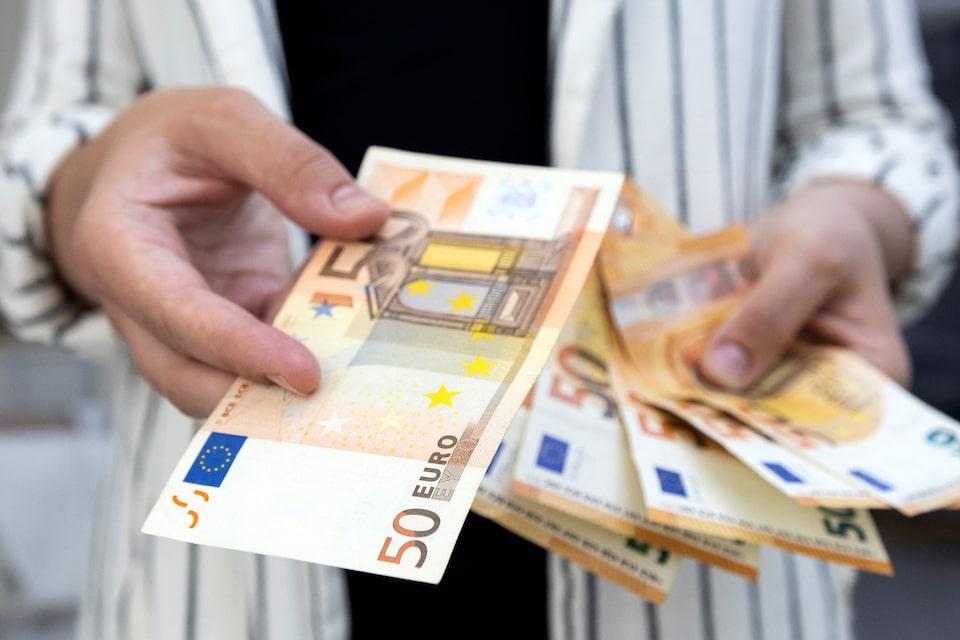
BRUSSELS, May 28 (Reuters) - The European Commission will decide on June 4 if Bulgaria can enter the euro zone and become the bloc's 21st member from 2026. European Union countries aspiring to adopt the single currency need to fulfil criteria in four areas: inflation, public finances, the exchange rate and long-term borrowing costs. Sign up here. INFLATION * Inflation in the candidate country needs to be close to that in the three best performing EU members for a period of one year before examination of the country's bid. The upper limit for inflation is calculated as the average of the three best performers, plus 1.5 percentage point. DEFICIT/DEBT * The candidate cannot be under the EU's excessive deficit procedure which is designed to discipline countries that run a budget deficit above the EU limit of 3% of GDP. EXCHANGE RATE * A candidate country's currency must remain stable within a corridor of +/- 15% around a central parity rate against the euro over two years, in what is called the Exchange Rate Mechanism (ERM-2). The currency can appreciate, but should not devalue in a significant way. LONG-TERM BORROWING COSTS * Yields on long-term government bonds issued by the candidate country should not be more than 2 percentage points above the average of the three European Union countries with the lowest inflation, which were used for setting the price stability criterion. https://www.reuters.com/markets/europe/criteria-adopt-euro-currency-2025-05-13/
2025-05-28 14:18
SAO PAULO, May 28 (Reuters) - Stocks of Brazilian steel companies fell on Wednesday after the government said it would renew for 12 months a system meant to protect the national steel industry, but that steelmakers have said is ineffective. WHY IT’S IMPORTANT The steel industry began criticizing the quota system almost as soon as it was set up last year, saying it failed to control the flow of imports, mainly from China. Sign up here. Under the system, as long as the import quota is not reached, steel products can enter the country if they pay import tax of between 9% and 16%. If the cap is exceeded, a 25% tariff applies, Brazilian government news outlet Agencia Brasil said. MARKET REACTION On the first day of trading following the announcement, CSN (CSNA3.SA) , opens new tab was down 4.4%, Usiminas (USIM5.SA) , opens new tab dropped 3.6% and Gerdau fell (GGBR4.SA) , opens new tab 1.2%. Brazil's benchmark stock index Bovespa fell only 0.5%. CONTEXT The system, which has been expanded to now include 23 steel products, was already criticized by the sector for being too broad. Tuesday's government announcement retained the exclusion - also criticized by the industry - from the quota and tariff system of imports from countries that have trade agreements or negotiated special conditions with Brazil. The steel sector has urged the government to renew the scheme with the inclusion of all steel products in the 25% tariff, as the European Union and the United States have done. BY THE NUMBERS Steel imports rose 27.5% year-on-year in the first four months of 2025, reaching 2.2 million metric tons, according to data from the country's steel mills association, Aco Brasil, which did not comment on the matter on Wednesday. https://www.reuters.com/markets/commodities/brazilian-steel-companies-shares-fall-after-government-renews-tariff-system-2025-05-28/

2025-05-28 12:56
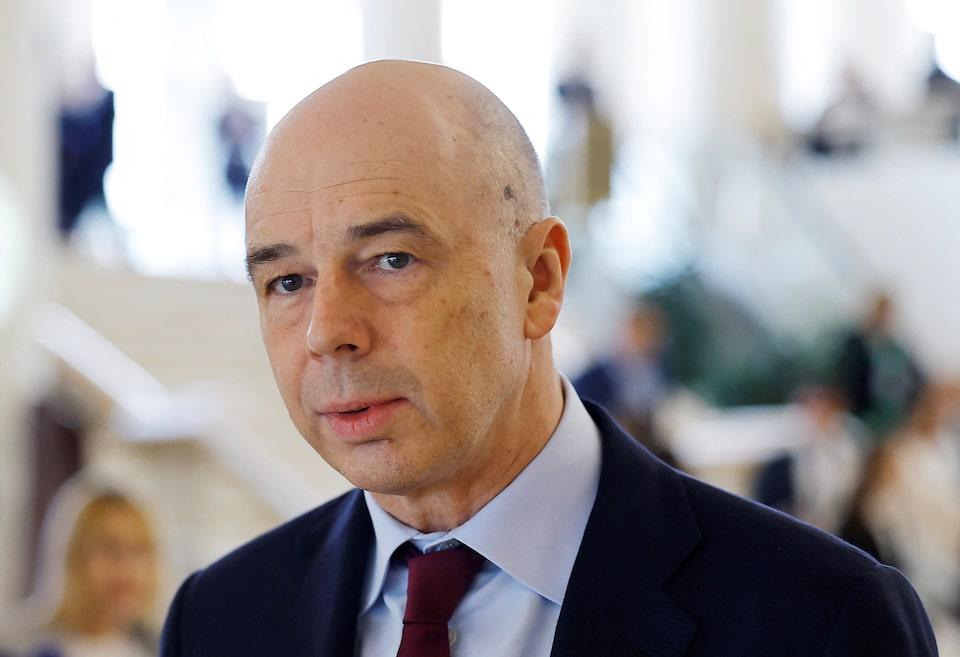
May 28 (Reuters) - Finance Minister Anton Siluanov said on Wednesday an adjustment to the $60 oil cut-off price for Russia's budget rule should be considered, marking a potential policy shift that could impact Moscow's ability to raise spending and build up cash reserves. Under the budget rule, the Finance Ministry sells foreign currency from its rainy-day National Wealth Fund to make up for any shortfall in revenue from oil and natural gas exports, or makes purchases in the event of a surplus. Sign up here. While Siluanov had previously spoken in favour of the cut-off price being changed, he recently ruled out an adjustment for the next three-year budget. Responding to a lawmaker's question about Russia's depleting reserves on Wednesday, he appeared to change tack once more, saying the issue would be discussed when formulating budget policy. "We need to think about whether, when preparing the new budget for the medium-term, we should look at the cut-off price level ... to what extent it corresponds today to levels that allow us to ensure not only the preservation of the National Wealth Fund, but also its replenishment," Siluanov said. Russia's fiscal buffers have dwindled since its February 2022 invasion of Ukraine, with Moscow dipping into the wealth fund to finance budget deficits and support state-owned companies. The fund's liquid assets stood at $40.4 billion on May 1, down from $112.7 billion before the invasion. High prices for oil, the cornerstone of Russia's export-focused economy, enable Russia to set funds aside, but with Brent futures having dropped to about $60 a barrel and Urals crude even lower, Moscow's finances are under pressure. A lower cut-off price would allow Russia to save more petrodollars, but that also implies reduced expenditure, which, as analysts have noted, may be hard to achieve with Moscow spending heavily on the war in Ukraine. https://www.reuters.com/business/energy/russian-finance-minister-returns-idea-adjusting-oil-price-budget-rule-2025-05-28/
2025-05-28 12:38
LONDON, May 28 (Reuters) - What matters in U.S. and global markets today By Mike Dolan , opens new tab, Editor-At-Large, Financial Industry and Financial Markets Sign up here. After weeks of trade and debt anxiety, the spotlight has shifted back to the artificial intelligence theme on Wednesday, as investors wait with rare trepidation for Nvidia's (NVDA.O) , opens new tab quarterly earnings. I'll dive into all of today's other market news and then explain the significance of the timing of ECB President Christine Lagarde's recent call for the euro to replace the dollar as the world's reserve currency. Today's Market Minute * Demand at an auction of 40-year Japanese government bonds on Wednesday fell to the lowest since July, during a selloff in super-long debt this month. * Oil prices settled 1% lower on Tuesday as investors worried about a supply glut after Iranian and U.S. delegations made progress in their talks and on expectations that OPEC+ will decide to increase output at a meeting this week. * President Vladimir Putin's conditions for ending the war in Ukraine include a demand that Western leaders pledge in writing to stop enlarging NATO eastwards and lift a chunk of sanctions on Russia, according to three Russian sources with knowledge of the negotiations. * If the United States is to significantly reduce or eliminate its trade deficit, the dollar will have to weaken a lot. How much is unclear, as history shows large dollar declines are rare and have unpredictable consequences for trade. Check out Reuters columnist Jamie McGeever's latest piece. * U.S. President Donald Trump's sweeping tax and spending bill calls for drastic cuts to clean energy tax credits that have been major drivers of the recent boom seen in utility-scale renewable power and battery capacity. In Reuters columnist Gavin Maguire's latest piece, he outlines the potential implications of this in six charts. Spotlight back on Nvidia The inevitable levelling off of Nvidia's explosive growth is already underway, but the chip designer also faces investor worries about AI overspend and questions about how much U.S. chip curbs on China will cost the company going forward. Nvidia's stock price - which is basically unchanged in 2025 to date - climbed anew on Tuesday along with the broad market rally. That was helped by reports that the company will launch a new chipset for China at significantly lower prices than the currently restricted H20 model. Meanwhile, the overall market mood improved considerably, with the S&P 500 (.SPX) , opens new tab jumping 2% on relief over temporarily defused U.S.-European trade tensions, a retreat in long-term government debt yields, and positive U.S. consumer confidence readings for May. However, there were mixed takes on the May household survey, capital goods orders data for last month was soft, and edginess in long bond markets is already coming back. So the main driver of the rally was likely the U.S.-EU trade news after Trump backed down from Friday's 50% tariff threat against the European Union, delaying its implementation until July 9. EU officials have asked leading European companies and CEOs for details of their U.S. investment plans, according to two sources familiar with the matter, as Brussels prepares to advance trade talks with Washington. Tensions on long-dated government debt resurfaced today, meantime, with another tepid sale of Japan's ultra long bonds, reinforcing speculation that Tokyo may be forced to trim sales of debt of such long maturities as fiscal worries grow. The Ministry of Finance sold about 500 billion yen ($3.46 billion) of 40-year bonds with a bid-to-cover ratio of 2.21, the lowest since a sale in July last year and well below the historical average of 3. That saw 30-year JGB borrowing rates jump back about 5 basis points from Tuesday close, drawing long-dated yields higher around the world. The yen strengthened slightly on the day. With its own home-grown fiscal concerns, the U.S. saw 30-year yields also back up about 5 bps to just under 5%. Some $70 billion of 5-year Treasury notes come under the hammer later. Meanwhile, investor attention has also turned to a Financial Times report that European Central Bank President Christine Lagarde considered stepping down before her term ends in 2027. The ECB responded by saying Lagarde was determined to complete her eight-year term. Elsewhere, the New Zealand dollar held firm even after the country's central bank cut its benchmark rate by 25 bps to 3.25% and flagged a slightly deeper easing cycle than it forecast three months ago. And Shein is working towards a listing in Hong Kong after the online fast-fashion retailer's proposed initial public offering in London failed to secure the green light from Chinese regulators. Now to today's column, where I look into this week's combative speech from ECB boss Lagarde on the status of the euro. Lagarde's euro 'battle cry' emphasizes EU cash need If the euro supplants the dollar as the world's main reserve currency, Europe might lose some currency competitiveness - but the related capital flows it's seeking more than compensate. European Central Bank President Christine Lagarde , opens new tab weighed in on the debate about the euro's global reserve status on Tuesday by reiterating the ECB's long-standing aim to boost the currency's wider use and position it as the logical alternative to the dollar. The euro has long been the clear second choice in reserve usage, both in the positive and negative sense. While its share of overall reserve coffers is still far behind the dollar's, the euro is way ahead of any other serious rivals to the greenback bar gold. But what was eye-catching about the very vocal ECB support for wider euro usage was the timing and thrust. Lagarde's statements come amid fresh doubts about the dollar's haven status, the U.S. economy's role in the world at large and America's fraying geopolitical alliances - as well as the Trump administration's perceived desire for a weaker, more competitive exchange rate. And Lagarde's speech clearly framed U.S. difficulty as Europe's opportunity. After noting that the dollar and U.S. financial markets had been effective global anchors for decades, she added that "when doubts emerge about the stability of the legal and institutional framework, the impact on currency use is undeniable." "These doubts have materialized in the form of highly unusual cross-asset correlations since April 2 this year, with the U.S. dollar and U.S. Treasuries experiencing sell-offs even as equities fell," the ECB chief explained, referring to market ructions after Trump's 'reciprocal tariff' gambit last month. "The EU has a legitimate reason to turn its commitment to predictable policymaking and the rule of law into a comparative advantage," Lagarde added, underscoring the need for political and internal capital market reforms in the EU that would enable the bloc to seize this opportunity. Clearest of all was her plea for joint debt issuance to boost the scale of 'safe' euro assets, a move that is still controversial within Europe due to persistent German pushback. "Economic logic tells us that public goods need to be jointly financed," she said, re-upping the ECB's preference for expanding the pool of jointly issued euro assets. And she also pointedly underlined the attraction of Europe's military rearmament to official investors who "seek geopolitical assurance in another form: they invest in the assets of regions that are reliable security partners and can honour alliances with hard power." WHATEVER IT TAKES The frank speaking caught everyone's attention. Rabobank strategist Jane Foley said the speech had a "battle cry" element to it. It's still anyone's guess what the outcome will be of the bilateral U.S.-EU trade talks come July's deadline and as a host of disagreements remain. Trump's jarring stop/start EU tariff announcements this past weekend make it difficult to sketch out a possible resolution, and many experts suspect Washington is intent on talking to individual countries to split the group. The tone of the ECB's stance suggests it's bracing for the risk of harsher standoffs ahead. What's more, Lagarde's statement comes as the euro's nominal broad exchange rate has soared to record highs, up almost 20% over the past decade. While that won't please many exporters in the bloc, it does suggest that the ECB - unlike the U.S. administration - is comfortable with its currency's structural strength and thus may be willing to ease policy accordingly. And that will help with the additional debt financing needed of Europe's ambitious new projects - most notably in defense, green energy and tech. On that financing need, central and private sector bankers tend to agree with former ECB chief Mario Draghi about the scale of what is needed, as outlined in his recommendations last summer. , opens new tab For example, BNP Paribas economist Laurent Quignon , opens new tab wrote on Tuesday about the total sums needed, as he made a pitch on what Europe can do this year to boost financing via changes to regulation, securitization and the banking union. Adding Draghi's call for annual energy and tech investments of up to 800 billion euros to an almost 200 billion euros of new defense spending and on top of ongoing commitments, he calculated an additional annual EU financing requirement of 1.5 trillion euros through 2028 and 1.4 trillion from then to 2030. That would be more than double the flows observed in the decade through 2024 - and about the same as the total amount of European money that has flowed into the U.S. equity market since 2012. Whatever the implications for exchange rate competitiveness, Europe now has a big bill to pay. Some 'exorbitant privilege' would help. Chart of the day 'Nvidia day' (NVDA.O) , opens new tab has become a moment of great excitement for markets in recent years, as the AI darling's stellar earnings and stock gains have typically impressed Wall Street. But investors are approaching today's announcement with caution. That's because Trump's administration, in a fresh effort to limit Beijing's access to cutting-edge technology, last month put export limits on Nvidia's H20 chip, a move the company said would result in $5.5 billion in charges. While the company is expected to report first-quarter revenue surged an annual 66.2% to $43.28 billion, analysts put the quarterly revenue hit ahead from the China chip curbs at anywhere from $3-$4.5 billion. Today's events to watch * Richmond Federal Reserve's May business surveys (10:00 AM EDT); Dallas Federal Reserve May service sector survey (10:30 AM EDT) * Federal Reserve releases minutes of last policy meeting; New York Fed President John Williams and Minneapolis Fed chief Neel Kashkari speak * U.S. Treasury sells $70 billion of 5-year notes, $28 billion of 2-year floating rate notes * U.S. corporate earnings: Nvidia, Agilent, Salesforce, Synopsys, Nordson Opinions expressed are those of the author. They do not reflect the views of Reuters News, which, under the Trust Principles , opens new tab, is committed to integrity, independence, and freedom from bias. https://www.reuters.com/business/finance/global-markets-view-usa-2025-05-28/