2025-05-28 12:22
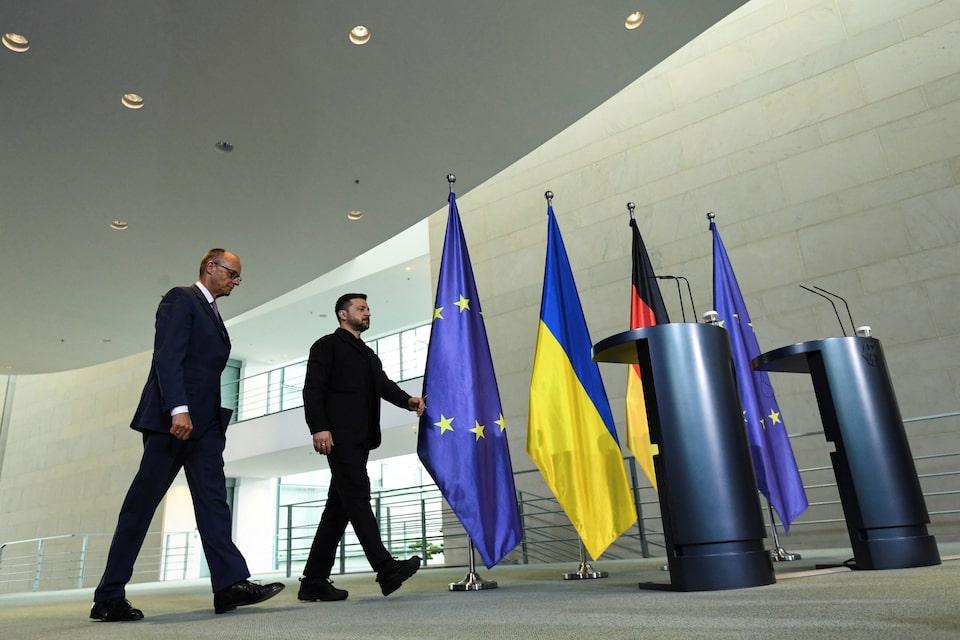
Putin wants written pledge to halt NATO expansion eastwards, sources say Russia also seeks lifting of sanctions and protection for Russian speakers in Ukraine Ukraine has insisted on NATO membership aspirations despite Russian demands MOSCOW, May 28 (Reuters) - President Vladimir Putin's conditions for ending the war in Ukraine include a demand that Western leaders pledge in writing to stop enlarging NATO eastwards and lift a chunk of sanctions on Russia, according to three Russian sources with knowledge of the negotiations. U.S. President Donald Trump has repeatedly said he wants to end the deadliest European conflict since World War Two and has shown increasing frustration with Putin in recent days, warning on Tuesday the Russian leader was "playing with fire" by refusing to engage in ceasefire talks with Kyiv as his forces made gains on the battlefield. Sign up here. After speaking to Trump for more than two hours last week, Putin said that he had agreed to work with Ukraine on a memorandum that would establish the contours of a peace accord, including the timing of a ceasefire. Russia says it is currently drafting its version of the memorandum and cannot estimate how long that will take. Kyiv and European governments have accused Moscow of stalling while its troops advance in eastern Ukraine. "Putin is ready to make peace but not at any price," said one senior Russian source with knowledge of top-level Kremlin thinking, who spoke on condition of anonymity. The three Russian sources said Putin wants a "written" pledge by major Western powers not to enlarge the U.S.-led NATO alliance eastwards - shorthand for formally ruling out membership to Ukraine, Georgia and Moldova and other former Soviet republics. Russia also wants Ukraine to be neutral, some Western sanctions lifted, a resolution of the issue of frozen Russian sovereign assets in the West, and protection for Russian speakers in Ukraine, the three sources said. The first source said that, if Putin realizes he is unable to reach a peace deal on his own terms, he will seek to show the Ukrainians and the Europeans by military victories that "peace tomorrow will be even more painful". The Kremlin did not respond to a request for comment on Reuters' reporting. Putin and Russian officials have repeatedly said any peace deal must address the "root causes" of the conflict - Russian shorthand for the issue of NATO enlargement and Western support for Ukraine. Kyiv has repeatedly said that Russia should not be granted veto power over its aspirations to join the NATO alliance. Ukraine says it needs the West to give it a strong security guarantee with teeth to deter any future Russian attack. President Volodymyr Zelenskiy's administration did not respond to a request for comment. NATO has also in the past said that it will not change its "open door" policy just because Moscow demands it. A spokesperson for the 32-member alliance did not respond to Reuters' questions. Putin ordered tens of thousands of troops into Ukraine in February 2022 after eight years of fighting in eastern Ukraine between Russian-backed separatists and Ukrainian troops. Russia currently controls just under one fifth of the country. Though Russian advances have accelerated over the past year, the war is costing both Russia and Ukraine dearly in terms of casualties and military spending. Reuters reported in January that Putin was growing concerned by the economic distortions in Russia's wartime economy, amid labour shortages and high interest rates imposed to curb inflation. The price of oil, the bedrock of Russia's economy, has declined steadily this year. Trump, who prides himself on having friendly relations with Putin and has expressed his belief the Russian leader wants peace, has warned that Washington could impose further sanctions if Moscow delays efforts to find a settlement. Trump suggesting on social media on Sunday that Putin had "gone absolutely CRAZY" by unleashing a massive aerial attack on Ukraine last week. The first source said that if Putin saw a tactical opportunity on the battlefield, he would push further into Ukraine - and that the Kremlin believed Russia could fight on for years no matter what sanctions and economic pain were imposed by the West. A second source said that Putin was now less inclined to compromise on territory and was sticking to his public stance that he wanted the entirety of four regions in eastern Ukraine claimed by Russia. "Putin has toughened his position," the second source said of the question of territory. NATO ENLARGEMENT As Trump and Putin joust in public over the outlook for peace in Ukraine, Reuters could not determine whether the intensification of the war and the toughening of positions heralds determination to reach a deal or the collapse of talks. In June last year, Putin set out his opening terms for an immediate end to the war: Ukraine must drop its NATO ambitions and withdraw all of its troops from the entirety of the territory of four Ukrainian regions claimed and mostly controlled by Russia. In addition to Crimea, which it annexed in 2014, Russia currently controls almost all of Luhansk, more than 70% of Donetsk, Zaporizhzhia and Kherson regions. It also occupies a sliver of the Kharkiv and Sumy regions, and is threatening Dnipropetrovsk. Former U.S. President Joe Biden, Western European leaders and Ukraine cast the invasion as an imperial-style land grab and have repeatedly vowed to defeat Russian forces. Putin casts the war as a watershed moment in Moscow's relations with the West which he says humiliated Russia after the Soviet Union fell in 1991 by enlarging NATO and encroaching on what he considers Moscow's sphere of influence. At the 2008 Bucharest summit, NATO leaders agreed that Ukraine and Georgia would one day become members. Ukraine in 2019 amended its constitution committing to the path of full membership of NATO and the European Union. Trump has said that previous U.S. support for Ukraine's NATO membership bid was a cause of the war, and has indicated that Ukraine will not get membership. The U.S. State Department did not respond to a request for comment for this story. Putin, who rose to the top Kremlin job in 1999, has repeatedly returned to the issue of NATO enlargement, including in his most detailed remarks about a possible peace in 2024. In 2021, just two months before the Russian invasion, Moscow proposed a draft agreement , opens new tab with NATO members that, under Article 6, would bind NATO to "refrain from any further enlargement of NATO, including the accession of Ukraine as well as other States." U.S. and NATO diplomats said at the time that Russia could not have a veto on expansion of the alliance. Russia wants a pledge on NATO in writing because Putin thinks Moscow was misled by the United States after the 1989 fall of the Berlin Wall when U.S. Secretary of State James Baker assured Soviet leader Mikhail Gorbachev in 1990 that NATO would not expand eastwards, two of the sources said. There was such a verbal promise, former Central Intelligence Agency Director Director William J. Burns said in his memoires, but it was never formalised - and it was made at a time when the collapse of the Soviet Union had not occurred. NATO, founded in 1949 to provide security against the Soviet Union, says it poses no challenge to Russia - though its 2022 assessment of peace and security in the Euro-Atlantic area identified Russia as the most "significant and direct threat" , opens new tab. Russia's invasion of Ukraine that year prompted Finland to join NATO in 2023, followed by Sweden in 2024. Western European leaders have repeatedly said that if Russia wins the Ukraine war, it could one day attack NATO itself - a step that would trigger a world war. Russia dismisses such claims as baseless scaremongering, but has also warned the war in Ukraine could escalate into a broader conflict. https://www.reuters.com/world/europe/putin-ukraine-peace-wants-pledge-halt-nato-enlargement-sources-say-2025-05-28/
2025-05-28 12:11
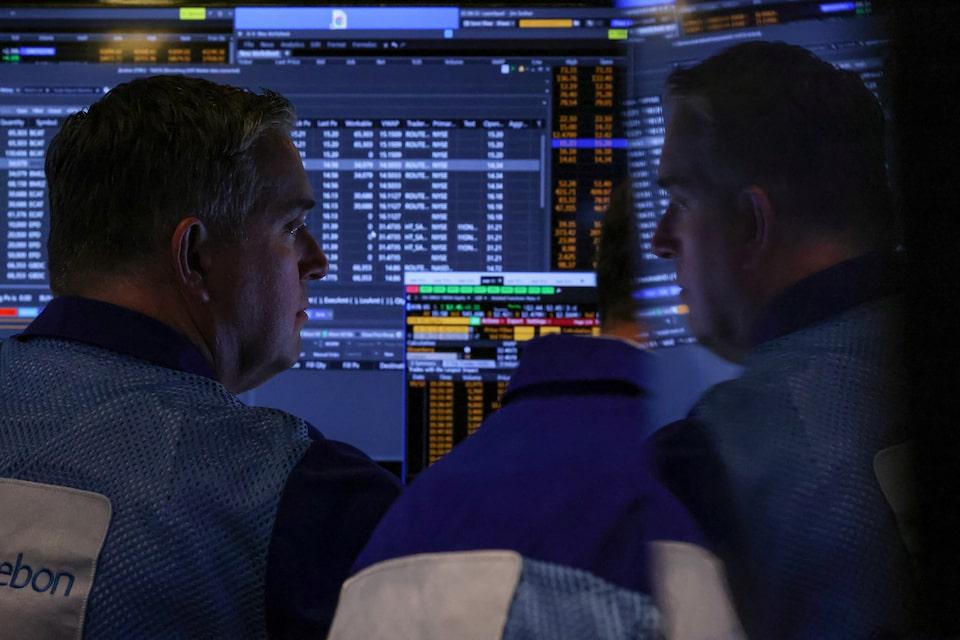
NEW YORK, May 28 (Reuters) - The S&P 500 will finish the year near current levels, according to a Reuters poll, after many strategists in recent months cut their 2025 forecast for the index over uncertainty surrounding U.S. President Donald Trump's tariffs. Based on the median forecast of 51 equity strategists, analysts, brokers and portfolio managers collected May 15-28, the year-end target for the benchmark S&P 500 (.SPX) , opens new tab is 5,900, down from 6,500 in a February poll by Reuters. The S&P 500 ended Tuesday at 5,921.54. Sign up here. The market will remain choppy, strategists said, while seven out of 14 respondents who answered a question on profit growth said S&P 500 earnings will be marginally higher in 2025 than in 2024 and two said significantly higher. Five said they would be marginally lower. Sameer Samana, head of global equities and real assets at Wells Fargo Investment Institute, said the firm lowered its year-end target to 6,000 recently from 6,500 set at the start of the year. "Clearly earnings will be impacted by what's going on with tariffs," he said. "Our belief is tariffs are a tax and some combination of U.S. consumers, U.S. companies along with international producers and companies will pay the taxes. In essence, that kind of wealth transfer comes out of earnings to a certain extent," he added. According to LSEG, S&P 500 earnings are expected to increase 8.4% in 2025 compared with 12.1% in 2024. But the 2025 estimate is down sharply from 14% growth estimated on January 1. Trade developments have whipsawed the stock market this year, especially after Trump's April 2 announcement of sweeping tariffs on imports globally. In his latest move, Trump on Sunday backed down from his threat of a 50% tariff against the European Union, delaying its implementation until July 9 to allow for negotiations between the White House and the 27-nation bloc. The move prompted Brussels to fast track preparations for trade talks. Following a Tuesday rally, the S&P 500 is up just 0.7% for the year. But strategists say the back-and-forth nature of tariff negotiations has made predicting what the index will do tough. "It's very difficult to forecast given the tariff uncertainty and the changing dynamics that seem to happen daily," said Anthony Saglimbene, chief market strategist at Ameriprise Financial in Troy, Michigan. "There's just a higher risk premium that has to be put on stocks, and that's going to be with us through the rest of this year." He said his firm's "base" target is 5,600 for the S&P 500 for this year, but a "6,000 to 5,600 range seems very reasonable based on the tariff environment not really causing a recession or deteriorating corporate profits too much." Some strategists have raised their S&P 500 forecasts recently. Last week, David Lefkowitz, head of U.S. equities at UBS Global Wealth Management, wrote that the firm was increasing its year-end target to 6,000 from 5,800 partly because of a "solid first-quarter earnings season". Concerns over the U.S. debt load have added to recent jitters and a "sell America" view by some investors. Moody's downgraded its U.S. credit rating on May 16, and the Republican-controlled U.S. House of Representatives passed Trump's sweeping tax-cut bill last week. The bill goes to the U.S. Senate next for review where investors worry spending cuts could be whittled down, growing the deficit. The S&P 500 posted gains exceeding 20% in both 2024 and 2023, helped by megacap technology stocks and optimism over the business potential of artificial intelligence. While the S&P 500 technology sector (.SPLRCT) , opens new tab remains down 1.7% so far for 2025, it has been bouncing back, and some investors still see it as a good bet going forward. "Technology will likely remain volatile, but any downturns we get in tech, investors should use that as a long-term buying opportunity," Saglimbene said, noting tech profit growth should hold up. Samana said Wells Fargo Investment Institute likes energy (.SPNY) , opens new tab, financials (.SPSY) , opens new tab and communication services (.SPLRCL) , opens new tab and noted the firm "took the opportunity in the middle of the pullback to upgrade tech." He is cautioning investors against consumer staples (.SPLRCS) , opens new tab and utilities (.SPLRCU) , opens new tab. At the same time, Eric Teal, chief investment officer for Comerica Wealth Management, expects the Dow to end the year at 48,000 and to outperform the S&P 500 this year "due to more industrial and attractively valued companies and less-concentrated technology exposure." The poll has the Dow Jones Industrial Average (.DJI) , opens new tab finishing this year at 43,708, down from 47,024 in the Reuters February poll. The index closed at 42,343.65 on Tuesday. (Other stories from the Reuters Q2 global stock markets poll package) https://www.reuters.com/world/us/with-trump-tariff-jitters-sp-500-finish-year-nearly-even-with-2024-2025-05-28/
2025-05-28 12:05
May 28 (Reuters) - GameStop (GME.N) , opens new tab has purchased bitcoin worth about $513 million, the company said on Wednesday as the ailing video game retailer looks to capitalize on the growing adoption of cryptocurrencies globally. GameStop said in a filing it acquired 4,710 bitcoins, although it did not disclose the period for the purchases. The world's largest cryptocurrency was trading down 0.7% at $108,903 by 7 a.m. ET. Sign up here. The purchases are GameStop's first bitcoin purchase since unveiling its plans in March to invest in the digital asset, adopting a strategy pioneered by Michael Saylor's Strategy (MSTR.O) , opens new tab, an enterprise software company and the largest corporate holder of bitcoin. Strategy's stock has seen significant gains alongside the rising price of bitcoin, attracting investors seeking exposure to the digital asset without directly investing in it. For GameStop, which was at the center of 2021's meme-stock frenzy, the move could boost investor interest at a time it is struggling to turn around its mainstay business of selling video games through brick-and-mortar stores in the digital age. Shares of the Dallas, Texas-based company were 4.4% higher in pre-market trading. The company had cash, cash equivalents and marketable securities of $4.78 billion as of Feb. 1. The announcement comes a day after Trump Media and Technology Group (DJT.O) , opens new tab, U.S. President Donald Trump's social media firm, said it would raise $2.5 billion to buy bitcoin. https://www.reuters.com/business/gamestop-buys-bitcoin-worth-513-million-crypto-push-2025-05-28/

2025-05-28 12:04
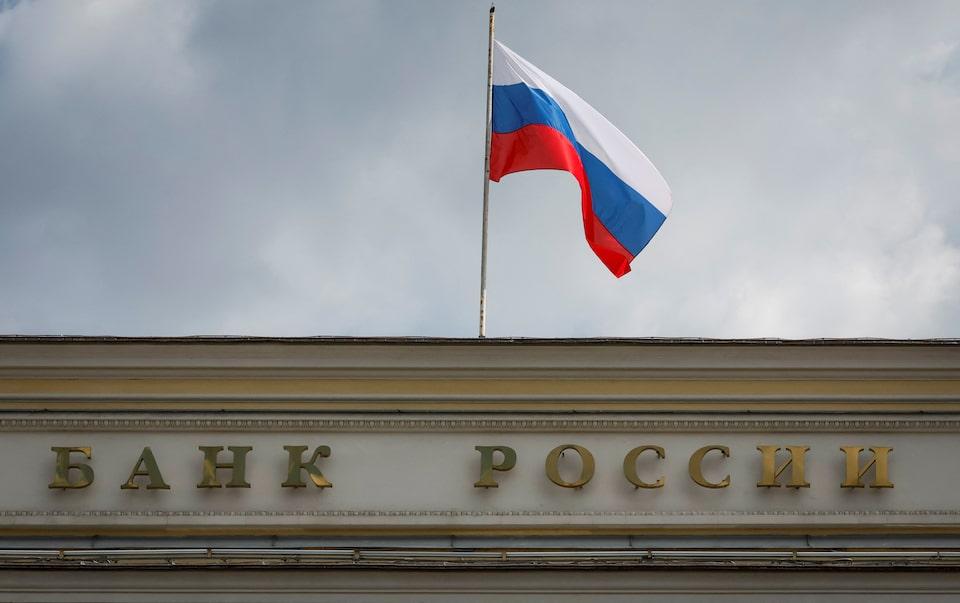
MOSCOW, May 28 (Reuters) - Russia's central bank defended its tight monetary policy in a report on Wednesday, saying high rates had contributed to a slowdown in lending and fostered signs of disinflation, but pointed to low oil prices as a key risk for the Russian economy. The central bank, battling stubbornly high inflation, has stood firm for months against growing pressure to ease borrowing costs, with critical companies cutting investment plans and the government bemoaning slowing economic growth. Sign up here. Economy Minister Maxim Reshetnikov on Monday said the cooling economy was facing "hypothermia" risks as he urged the central bank to take slowing inflation into account when it next meets to set interest rates on June 6. "Tight monetary policy is a temporary factor, necessary for a sustainable reduction in inflation," the bank, which has held its key interest rate at 21% since October, said in a financial stability review. Soaring military spending in the last two years has generated economic growth but fuelled inflation, causing overheating that the central bank has sought to cool with high rates. Russia's growth domestic product growth slowed to 1.4% in the first quarter, from 4.5% a quarter earlier. External conditions remain difficult, the bank said, pointing to risks from global market volatility, trade wars and the prospect of increased sanctions against Moscow. Further drops in prices for Russia's export goods, particularly oil, could become a "key risk" for Russia, the bank said. Price drops can reduce revenue for exporting companies and, in turn, the budget. However, financial stability risks overall are limited due to Russia's low debt and reserves accumulated during years of high oil prices, the bank said. The bank said increased credit restructuring by large and medium-sized Russian companies at the end of March was a temporary trend, expressing confidence that a majority of firms was resilient to interest rate risk. Nevertheless, banks must conduct regular stress tests of the stability of their corporate loan portfolios, the bank said. https://www.reuters.com/business/finance/russian-central-bank-warns-oil-price-risks-it-defends-high-rates-2025-05-28/
2025-05-28 12:00
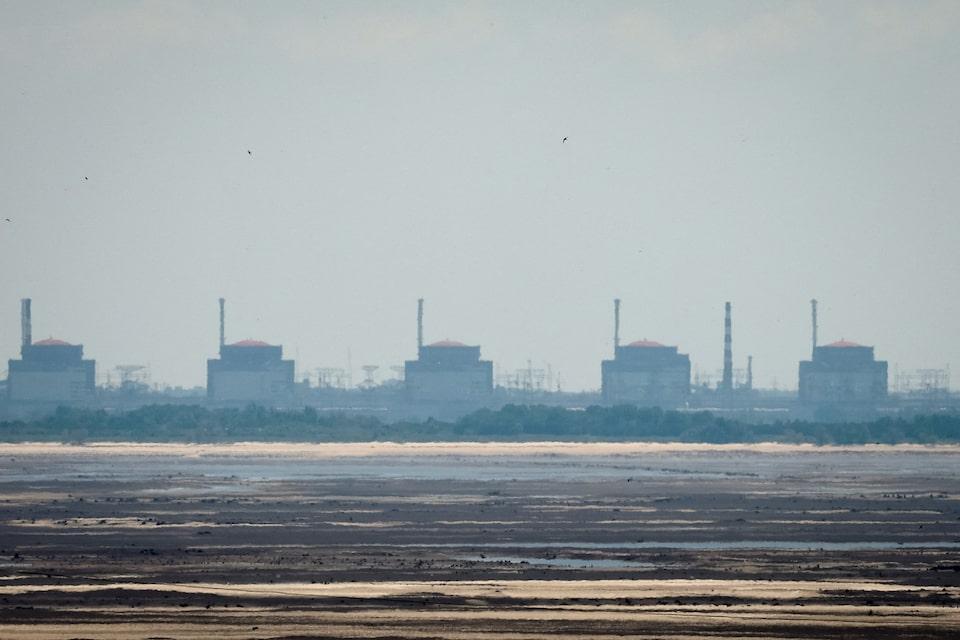
KYIV, May 28 (Reuters) - Ukraine has protested to the international atomic energy watchdog about reports that Russia is building power lines to connect the Zaporizhzhia nuclear plant to its own grid, a Ukrainian official said on Wednesday. Yuriy Vitrenko, Ukraine's representative to international bodies in Vienna, told Ukrainian news agency Ukrinform that Kyiv sees any attempt by Russia to connect the occupied plant to its grid as a gross violation of international law and Ukrainian sovereignty. Sign up here. On Tuesday, The New York times cited a new Greenpeace report which found that Russia had been building more than 50 miles (80 km) of power lines between the occupied Ukrainian cities of Mariupol and Berdyansk. Ukrainian officials have repeatedly stated that attempts to restart the plant could lead to a nuclear disaster, as Russian personnel are unfamiliar with the significantly upgraded equipment, are not trained to use it, and the condition of the plant itself is unknown. The lack of sufficient water volumes to cool the reactors after the Russian-held Kakhovka dam was blown up , opens new tab in June 2023, unleashing flooding, was an additional source of danger, they say. IAEA chief Rafael Grossi said the issue of restarting the plant would be discussed at meetings during his visits to Ukraine and possibly to Russia in the coming days. https://www.reuters.com/business/energy/ukraine-protests-iaea-over-russia-building-power-lines-zaporizhzhia-nuclear-2025-05-28/
2025-05-28 11:51
NEW DELHI, May 28 (Reuters) - India has raised the price at which it will buy the new-season common rice paddy variety from local farmers by 3%, the lowest increase in five years, as New Delhi struggles to manage overflowing granaries after last year's record harvest. India is the world's second-largest producer of rice and the biggest exporter in the world with a market share of more than 40%. Sign up here. For the common grade of rice paddy, the government has fixed the support, or guaranteed price at 2,369 rupees ($27.76) per 100 kg (220.46 lb), up from 2,300 rupees last year, Information and Broadcasting Minister Ashwini Vaishnaw said on Wednesday. Last year, India raised the rice paddy purchase price by 5.4%. The small rise in the support price will help exporters remain competitive in the world market against rivals such as Thailand and Vietnam, B.V. Krishna Rao, president of the Rice Exporters Association told Reuters. Every year authorities raise the support price of staples such as rice and wheat to build stockpiles to run the largest food welfare programme in the world, providing access to free grains for those most in need. But rice stocks, including unmilled rice paddy, in government warehouses totalled 59.5 million tons on May 1, more than four times a government target. The government is sitting on excess rice stocks and struggling to sell them, said a Mumbai-based dealer with a global trade house. "It doesn't want a big spike in production since that would mess things up. It's hoping farmers switch to other crops instead," the dealer said. Rice yields are affected by seasonal monsoon rainfall as rice is a water intensive crop. India's weather department has forecast above-average monsoon rainfall for the second straight year in 2025. India also raised the cotton purchase price by 8.3% to 7,710 rupees per 100 kg and the soybean price by 8.9% to 5,328 rupees per 100 kg. https://www.reuters.com/world/china/india-raises-purchase-price-rice-by-3-lowest-increase-five-years-2025-05-28/