2025-11-24 03:14
Heavy flooding kills 8 in Thailand Malaysia issues red alert for heavy rain, 15,000 in shelters Vietnam puts initial damage at $493 million after floods, landslides Thailand's Hat Yai sees most single-day rainfall in 300 years BANGKOK/KUALA LUMPUR, Nov 24 (Reuters) - Flooding from days of intense rain has killed at least eight people in southern Thailand and forced thousands into evacuation centres in neighbouring Malaysia, officials said on Monday, as authorities ramped up efforts to provide shelter and aid. Floodwater waist-high in some areas has impacted 10 provinces in southern Thailand and eight states in Malaysia, regions spanning hundreds of kilometres that were last year also hard hit by flooding from a seasonal monsoon that killed at least 12 people. Sign up here. Thailand's southern trading hub Hat Yai on Friday suffered its heaviest single-day rainfall in more than 300 years, according to the irrigation department, with weekend television footage showing people wading through brown water in the teeming rain in commercial areas where shops and parked motorcycles were engulfed by water. Some residents were seen pulling children along in plastic boxes turned into makeshift boats, while in the city's outskirts, parked trucks and buses formed long lines along the few dry roads available as other vehicles inched slowly through water. HUNDREDS OF VEHICLES AND BOATS DEPLOYED The eight deaths in Thailand were caused mainly by electrocution and other flood-related accidents, according to authorities. Thailand has mobilised hundreds of boats and high-clearance vehicles to deliver aid, the disaster agency said, with at least 700,000 households impacted since last week. Thai Prime Minister Anutin Charnvirakul ordered more water pumping machines to be deployed and said assistance must be adequate, comprehensive, and timely, according to a government statement. In neighbouring Malaysia, more than 15,000 people were in shelters, according to Social Welfare Department data, among 90 evacuation centres set up. No deaths have been reported so far in Malaysia. Its Deputy Prime Minister Ahmad Zahid Hamidi said civil defence teams were on standby and more than 90 land and water assets mobilised, including lorries, four-wheeled-drive vehicles and water-rescue equipment. "I pray and hope that this incident will not cause extensive damage and that all victims remain strong and patient," he said in an X post. CENTRAL VIETNAM FLOODS EASE AFTER KILLING 91 Water levels have started to recede in central Vietnam after weeklong flooding and landslides that killed 91 people and caused infrastructure damage that left 1.1 million households and businesses without power, the government said on Monday. Initial property damage was estimated at 13 trillion dong ($493 million), it said, adding that it has disbursed cash aid and 4,000 tons of rice to flood victims. More than 200,000 houses, 200,000 hectares (494,211 acres) of crops, and 1,157 hectares of fish farms were inundated in Vietnam. The floods submerged several coffee farms in the central highlands - an area highly prone to storms and flooding - hampering the harvest in the region. ($1 = 26,369.0000 dong) https://www.reuters.com/business/environment/malaysian-floods-affect-11000-people-across-seven-states-2025-11-24/

2025-11-24 01:59
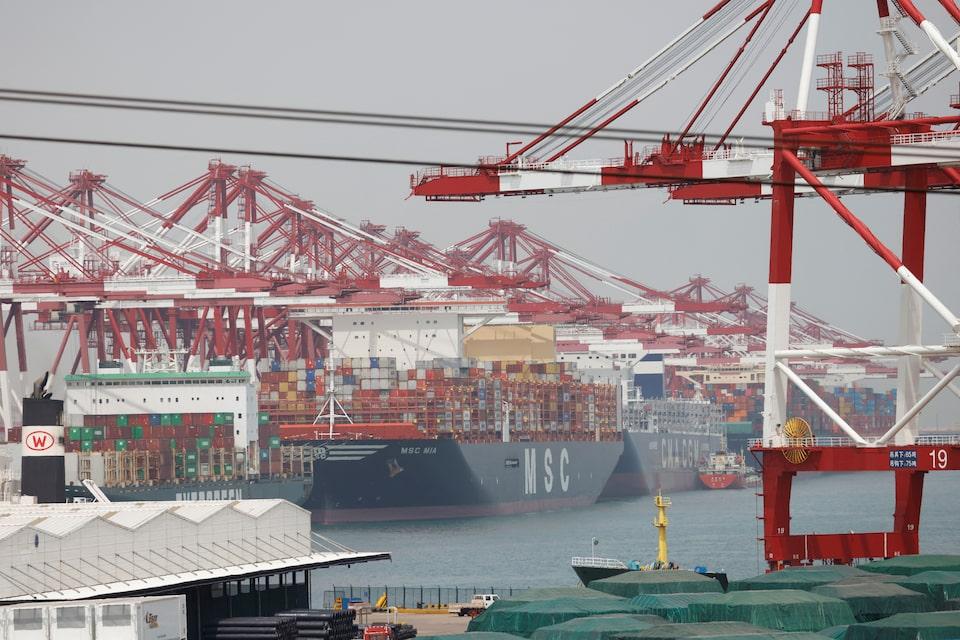
China's crude imports from Indonesia far exceed Indonesia's total oil exports this year Iranian barrels are being relabelled as Indonesian oil - traders and analyst Ship-to-ship transfers continue in Malaysian waters - analyst Nov 21 (Reuters) - China is importing unusually large quantities of crude oil from Indonesia, a trend traders say is a way to mask shipments of sanctioned Iranian crude trans-shipped in waters off Malaysia amid greater scrutiny of cargoes originating from Malaysia. Declaring Iranian oil as Malaysian has long been a tactic of traders selling to China, the largest buyer of the U.S.-sanctioned crude, market participants say. Sign up here. China has officially not imported Iranian crude since 2022, but its customs data regularly shows more Malaysia-sourced oil than the Southeast Asian country actually produces. China's crude imports from Indonesia have risen from less than 100,000 metric tons in 2024 to 9.81 million tons, or 235,570 barrels per day, for the year through October, according to Chinese customs data on Thursday. However, Indonesian customs data shows just 1.7 million tons of crude exported between January and September. Of that, it says that only about 25,000 tons went to China. Meanwhile, China's imports from Malaysia, the largest trans-shipment hub for Iranian oil, have almost halved since July from this year's peak in March at 8.5 million tons. Malaysia's Marine Department and the Chinese and Indonesian customs authorities did not respond to Reuters requests for comment. Indonesia has emerged as an alternate declared origin this year due to greater scrutiny from banks about oil labelled as Malaysian, according to two traders with knowledge of the matter who spoke on condition of anonymity. "Some banks are rejecting documentations showing Malaysia as origin," said one of the traders. "With US‑Indonesia deals for energy supply and plans for 17 modular refineries in Indonesia, Indonesia may become a softer source than Malaysia. However, this sourcing can be changed on paper frequently if monitoring and enforcement is further increased," said Pankaj Srivastava, a senior vice president at Rystad Energy. The shift is also being driven by Malaysia announcing in July that it would more tightly enforce rules targeting illegal ship-to-ship (STS) transfers, where oil is shifted between tankers at sea to obscure its origin, according to consultancy Energy Aspects and a third trader. However despite the shift in labelling, Iranian oil was still being transferred between ships off the coast of Malaysia, traders said. "Most of the STS transfers of Iranian crude destined for China still take place off the coast of Malaysia," said Jianan Sun, analyst with Energy Aspects. According to analytics group Kpler, in the first ten months of this year, China imported more than 57 million tons, or 1.37 million bpd, of Iranian-origin or suspected Iranian-origin crude, with over 51 million tons moved via STS. https://www.reuters.com/business/energy/surging-chinese-imports-indonesia-oil-point-to-rebranded-iranian-crude-traders-2025-11-21/
2025-11-24 01:32
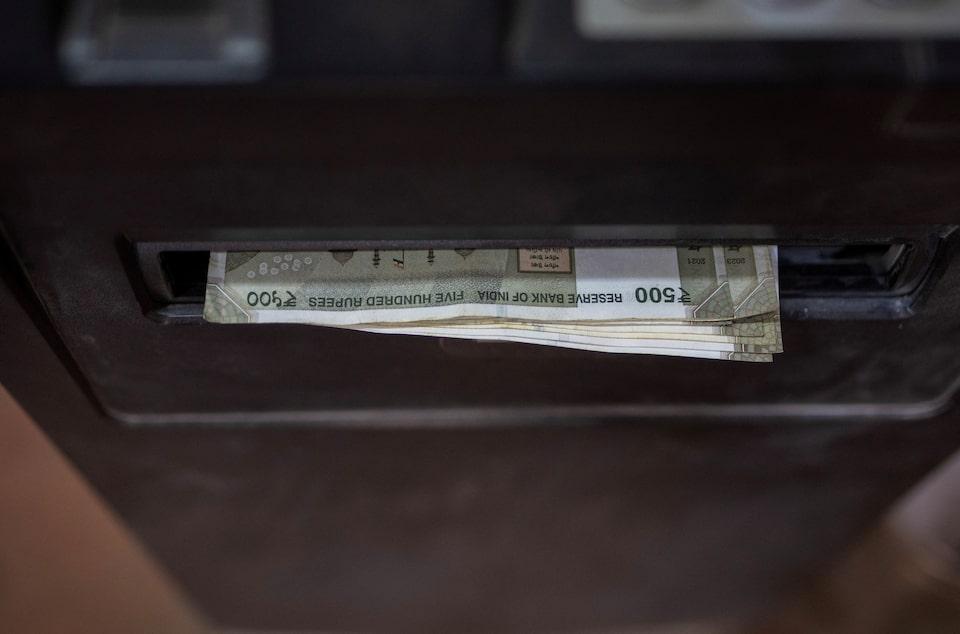
MUMBAI, Nov 24 (Reuters) - The Indian rupee is likely to face further depreciation pressure this week, with traders eyeing a move toward 90 per U.S. dollar in the absence of firm central bank intervention, while bond yields will track liquidity movements and local growth data. The rupee slumped to a record low of 89.49 per dollar on Friday, down 0.8% for the week. Sign up here. A bout of portfolio outflows, uncertainty over a U.S.-India trade deal, and a pullback in the central bank's defense of a key level sparked the slide in the rupee, traders said. The move "caught the market on the wrong side" and the pressure is expected to persist next week, a trader at a large private bank said. The rupee has declined 4.5% over 2025, consistently lagging its regional peers this year, even as India's economic fundamentals remain resilient and the stock market hovers near all-time peaks. A hit to trade and portfolio flows, sparked by U.S. tariffs, has exerted pressure on the rupee, traders and analysts said, noting that the conclusion of a trade deal could help the currency rebound. "Going forward, we expect the rupee to settle in a new 88.80-90.00 range. We have maintained that the rupee will deliberate in a gradual, staircase-like manner," said Abhishek Goenka, CEO at forex advisory firm IFA Global. The dollar index gained last week, even as markets reloaded wagers that the Federal Reserve would cut interest rates next month after dovish remarks from New York Fed President John Williams. In India, the 10-year benchmark 6.33% 2035 bond yield settled at 6.5665% on Friday. Traders expect the yield to stay between 6.52% and 6.60% this week, with the focus on the Reserve Bank of India's liquidity moves as well as growth data. The RBI net bought bonds worth 148.10 billion rupees ($1.65 billion) in the week ended November 14, after purchasing bonds worth 124.70 billion rupees in the previous week, its first such buy in almost six months. However, the purchases were frontloaded, leading to market speculation that the buying was just replacement demand instead of a yield signal. Meanwhile, the RBI's monetary policy decision is due on December 5 amid uncertainty over whether the central bank will cut rates or maintain the status quo. "We expect the RBI to deliver a 25-bp repo rate cut in the December policy. Based on our forecast of FY27 growth, inflation, and real rates, a simple Taylor Rule formula indicates that the terminal repo rate should fall to 5.25%," Deutsche Bank Chief India Economist Kaushik Das said. Deutsche Bank expects India's GDP to have grown 7.7% in the July-September quarter, largely in line with the 7.8% expansion in April-June. KEY EVENTS: India ** October fiscal deficit - November 28 , Friday (3:30 p.m. IST) ** October industrial output - November 28, Friday (4:00 p.m. IST) ** July-September GDP growth data - November 28, Friday (4:00 p.m. IST)(Reuters poll - 7.1%) U.S. ** October PPI manufacturing - November 25, Tuesday (7:00 p.m. IST) ** October retail sales - November 25, Tuesday (7:00 p.m. IST) ** November consumer confidence - November 25, Tuesday (8:30 p.m. IST) ** September durable goods - November 26, Wednesday (7:00 p.m. IST) ** Initial weekly jobless claims for week to November 17 - November 26, Wednesday (7:00 p.m. IST) ** September new homes sales units - November 26, Wednesday (8:30 p.m. IST) ($1 = 89.5800 Indian rupees) https://www.reuters.com/world/india/indian-rupee-risk-steeper-losses-bonds-react-liquidity-growth-data-2025-11-24/
2025-11-24 00:54
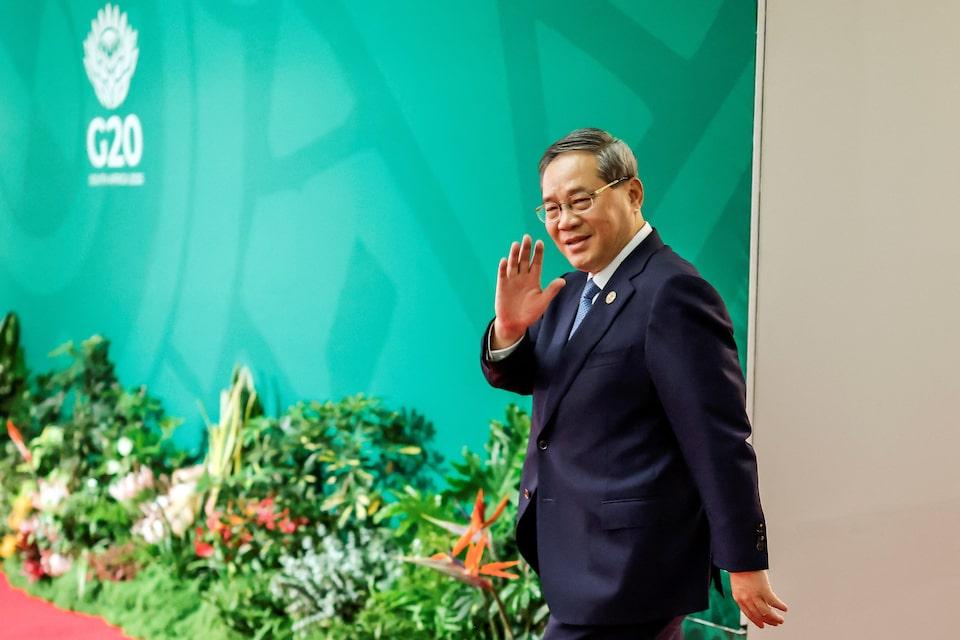
China's premier met German chancellor on G20 sidelines World's second- and third-largest economies seek closer ties Li Qiang proposed closer collaboration in strategic industries US President Trump's tariffs squeezing both economies BEIJING, Nov 24 (Reuters) - China pitched stronger ties in its highest‑level talks with Germany's new government as Beijing's top European trade partner seeks to smooth tensions over rare-earth curbs that have choked German production lines and prompted calls for de-risking. Beijing has staged an uncharacteristically swift turnaround in relations with Berlin since discord over Chinese export curbs on chips and rare earths resulted in German Foreign Minister Johann Wadephul cancelling an October trip to China. Sign up here. "China and Germany are important economic and trade partners," China's Premier Li Qiang told German Chancellor Friedrich Merz on the sidelines of the G20 summit on Sunday, state media reported. "Our two governments should work together to strengthen dialogue and communication to properly address their respective concerns," a Xinhua readout quoted China's second-ranking official as saying, before pitching closer cooperation in a series of strategic industries. A meeting between the two had appeared unlikely only months earlier, but with both countries embroiled in the fallout from the U.S.-China trade war and searching for ways to diversify from the world's top consumer market, those differences have been set aside. Merz is expected to visit China soon, where he should meet Chinese President Xi Jinping, while top diplomat Wadephul agreed with his Chinese counterpart Wang Yi earlier this month to reschedule his trip to the Chinese capital. Meanwhile, German Finance Minister Lars Klingbeil met with China's top economic official Vice Premier He Lifeng last week for talks that both countries said advanced efforts to move on from the trade tensions. TRADE TIES TRUMP TENSIONS For all the friction over Beijing's support for Russia and its actions in the Indo-Pacific, and Berlin's vocal criticism of China's human rights record and state-subsidised industrial policy, the two countries remain bound by a vast and mutually advantageous commercial relationship. China bought $95 billion worth of German goods last year, around 12% of which were cars, Chinese data shows, putting it among the $19 trillion economy's top 10 trading partners. Germany purchased $107 billion of Chinese goods, mostly chips and other electronic components. But Berlin stands out for China as an investment partner, having injected $6.6 billion in fresh capital in 2024, according to data from the Mercator Institute for China Studies, accounting for 45% of all foreign direct investment into China from the European Union and the United Kingdom. Li said he "hoped Germany would maintain a rational and pragmatic policy toward China, (and) eliminate interference and pressure," during their meeting in South Africa, which is hosting the first G20 summit on the continent. Germany is yet to publish a readout of the meeting. For Germany, China represents a practically irreplaceable auto market, and is responsible for almost a third of German automakers' sales. German chemicals and pharmaceuticals firms also have a large presence in the country, although they are facing increasing pressure from domestic competitors. "China is willing to work with Germany to seize future development opportunities ... in emerging fields such as new energy, smart manufacturing, biomedicine, hydrogen energy technology, and intelligent driving," Li said. https://www.reuters.com/world/china/chinas-premier-pitches-german-chancellor-closer-collaboration-strategic-2025-11-24/
2025-11-23 23:51
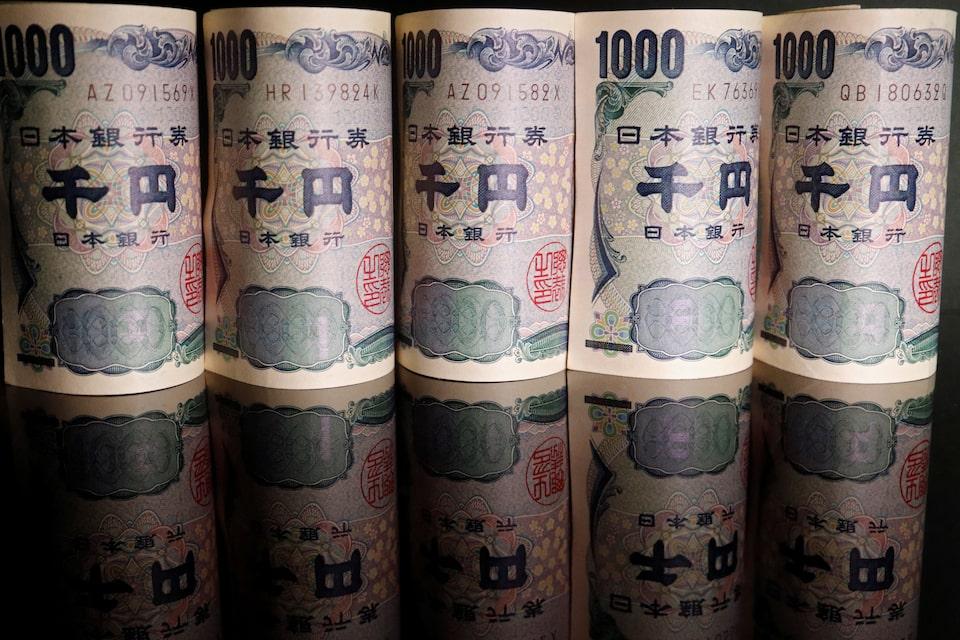
TOKYO, Nov 24 (Reuters) - Japan can actively intervene in the currency market to mitigate the negative economic impact of a weak yen, Takuji Aida, a private-sector member of a key government panel, said in a television programme on public broadcaster NHK on Sunday. "Japan has excessive foreign reserves, so it can become active in tapping them to conduct (yen-buying) intervention," said Aida, an adviser to Prime Minister Sanae Takaichi. Sign up here. "It can therefore be active in mitigating the side effect of a weak yen with intervention." Aida advocates stimulating the economy by keeping interest rates low and boosting spending even at the cost of ramping up debt issuance. In an interview with Reuters on October 9, Aida had said the yen's weakness benefits the economy and the hit to households from rising import costs can be offset by aggressive spending. While a weak yen boosts exports, it has become a headache for Japanese policymakers fretting about the inflationary impact such as pushing up import costs. The yen is down around 6% since Takaichi was elected leader of her party last month due to market concern that her administration could issue more debt to fund a big spending package, casting doubt on Japan's grip on finances. As the yen fell to 10-month lows against the dollar, Finance Minister Satsuki Katayama threatened last week to intervene, in a shift away from the administration's initially sanguine approach over the demerits of a weak currency. Aida, who is chief Japan economist at Credit Agricole, sits on Takaichi's advisory panel which reviews and implements the administration's growth strategy. https://www.reuters.com/world/asia-pacific/japan-can-actively-intervene-prop-up-yen-says-govt-panel-member-aida-2025-11-23/
2025-11-23 23:01
BHP move comes ahead of Anglo and Teck shareholders vote BHP says potential tie-up had strategic merit Shares of BHP rise 0.4%, Anglo's open 2% higher MELBOURNE/LONDON, Nov 24 (Reuters) - BHP (BHP.AX) , opens new tab on Monday abandoned a last-ditch effort to buy rival Anglo American (AAL.L) , opens new tab and bolster its dominance in copper, just two weeks before Anglo and Teck Resources' shareholders were set to vote on a $60 billion merger. BHP said it would no longer pursue a potential combination with Anglo after preliminary discussions with the board. It made the announcement in a release to Australia's securities exchange after news broke of the talks on Sunday. Sign up here. The world's biggest listed miner said it still believed a tie-up with Anglo would have delivered "strong strategic merits", but added it was confident in its own growth plans. A source close to the companies said BHP made its latest approach late last week, offering a deal consisting largely of shares and a small cash component. After Anglo rejected the proposal, both parties agreed to keep the details confidential. "It's a last throw of the dice for BHP," said portfolio manager Andy Forster at Argo Investments in Sydney, which holds BHP shares. "I'm a bit surprised that, given the relative performance that they thought they're in a position to come back and do another deal and extract value for shareholders." The failed approach underscores a broader trend in the mining sector, where major players have been pushing to consolidate amid rising demand for metals critical to the energy transition. Copper, in particular, has become a prime target as producers seek scale and efficiency in the face of tightening supply and the costly hunt for new deposits. Anglo's shares, which have rallied around 16% this year, opened 2% higher in London, before clawing back gains. BHP shares rose 0.4% on Monday. COPPER GIANT BHP saw Anglo as a way to shore up its dominance in copper. While it remains the world’s top producer, its lead is narrowing in the years ahead without significant new projects. Its decision to walk away comes ahead of votes by Teck (TECKb.TO) , opens new tab and Anglo shareholders set for December 9 to create Anglo Teck, a copper giant with big development projects in Chile and Peru. "A BHP bid for Anglo would have frustrated that deal, but with BHP now stepping away, it appears that the interloper risk for Anglo has materially reduced and the Anglo/Teck Resources deal is likely to go ahead, assuming approvals are received," said Berenberg analysts. Under UK securities rules, BHP's statement means it cannot make another bid for Anglo for six months. "There's probably a handful of times when assets like this are up for sale, so BHP may as well assess if the option is open. But it does look a little messy," said Kaan Peker, analyst with RBC Capital Markets. BHP'S ORGANIC GROWTH After Anglo rebuffed three approaches from BHP last year, the Melbourne-based miner pivoted to smaller projects, including in Argentina, where it said it saw better value. As recently as August, CEO Mike Henry dismissed the idea of another tilt at Anglo. "Frankly, in current markets, it's hard to see the right combination of the commodities that we like, the asset quality that we like, at a price where we can still unlock attractive value for BHP shareholders," he said on a results call. One investor said BHP's focus on capital discipline under former chairman Ken MacKenzie was the main reason the company did not pay more for Anglo, which had led to some internal reflection. The latest approach came under BHP's new chair, Ross McEwan. OTTAWA WANTS NATIONAL CHAMPIONS The Anglo Teck deal still needs approval under the Investment Canada Act. While the merged company will be headquartered in Canada, Ottawa wants Anglo American to redomicile - that is, change its country of incorporation - to Canada, a shift that Anglo CEO Duncan Wanblad has firmly ruled out. Anglo, which had no immediate comment, has worked hard to improve its share price since it rebuffed BHP's final $49 billion offer in May last year. It has unveiled a sweeping restructuring plan that Wanblad said would deliver stronger returns for shareholders, despite its failure to offload its Australian coal assets. https://www.reuters.com/sustainability/sustainable-finance-reporting/bhp-abandons-anglo-american-approach-says-own-growth-plan-compelling-2025-11-23/