2025-11-21 11:12
US Treasury chief says Beijing will buy 12 million tons of soy Beijing must reduce its reserves to make room for US beans Trump's trade war had prompted Beijing to shun US supplies CHICAGO, Nov 21 (Reuters) - The largest U.S. soybean sales to China in more than two years this week could be just the beginning of an accelerated buying program by Beijing after the world's top importer shunned U.S. supplies for months due to a trade war with Washington. Even if purchases fall short of the 12 million metric tons that U.S. Treasury Secretary Scott Bessent announced, the uptick in sales has buoyed crop prices. Sign up here. That triggered a flurry of sales by farmers who were holding their crop hoping for such an uptick. Some Chinese traders also cashed in after booking long positions when prices slumped, but any American farmers who sold their crop before the Chinese purchase deal was announced did not benefit. It remained unclear how quickly China would reach the target that U.S. officials said Beijing has agreed to. The confirmed purchases of nearly 1.6 million metric tons in three days sent U.S. prices sharply higher to a steep premium over shipments from rival exporter Brazil. That has made U.S. soybeans uncompetitive for other importers like Turkey and Vietnam. It also creates a problem for Beijing, which does not now need more beans after major purchases of South American crops. China must empty some of its national reserves to make space for the U.S. shipments. Bessent and Agriculture Secretary Brooke Rollins said China had agreed to buy 12 million tons by the end of this year after President Donald Trump met in October with Chinese President Xi Jinping in South Korea. Last week, Trump said the purchases would take place before spring. Beijing has not officially confirmed the volume commitment, but Bessent said the deal could be inked by late next week. In past years China has accounted for 50% to 60% of all U.S. soybean exports, so timing of the purchases is likely to steer soybean prices at least until an official agreement is signed. "Do I believe China will take 12 million metric tons? I do," said Dan Basse, president of consultancy AgResource Co. "Do I think China will take 12 million tons by the end of the year? Not a chance." The U.S. Department of Agriculture has confirmed 1.584 million tons in sales to China over three days this week, the largest single-week tally since early November 2023, according to USDA data. Traders and analysts said total sales may be closer to 2 million to 3 million tons after a minimal volume was sold ahead of the Trump-Xi summit with other recent purchases below the USDA's daily reporting threshold. CBOT soybean futures rallied to their highest point since June 2024 on news of the sales, and the benchmark price was up nearly 12% from mid-October ahead of the meeting in South Korea. This U.S. price rally coincided with a drop in costs for Brazilian soybeans, widening the U.S. premium to Brazil to around 50 cents per bushel for January shipments, or more than $1.1 million per 60,000-ton cargo. The premium for U.S. shipments in February was as high as $1.10 per bushel, according to traders. A surge in futures open interest during the rally suggested that Chinese importers were among those taking long positions in the market, betting prices would rise. The positions locked in lower prices before they booked physical sales. Futures have retreated as Chinese traders liquidated those long positions, traders said. "They have actually bought the futures a long time ago, likely when January beans were around $10 a bushel and prior to Xi meeting with Trump and announcing the trade deal. So they have been long the futures this entire time and are now announcing cash purchases, which means they are actually selling their long futures, which in turn is putting pressure against the January soybean futures," said Brian Hoops, analyst with Midwest Market Solutions. Timely data from the Commodity Futures Trading Commission showing trader positions in the futures market was not available due to the recent U.S. government shutdown, with a backlog of data , opens new tab to be released piecemeal over the next several weeks. U.S. farmers, who struggled with low prices for most of the summer and into the fall harvest, accelerated sales of their 2025 soybean harvest during the rally. Growers are estimated to have sold about 30% to 40% of their harvest so far, based on interviews with six farmers and analysts. These levels would be at or below normal sales in mid-November. "In some places, the basis is still pretty wide and maybe the farmer is still hoping that the rally may continue," said Tanner Ehmke, analyst with farm lender CoBank. The basis is the difference between futures prices and the local cash market price, reflecting supply and demand at a particular location. "There may be some apprehension about selling if farmers are expecting still an ad hoc payment," Ehmke said, referring to proposed farmer aid payments that have yet to be finalized. The Trump administration was expected to announce up to $15 billion in aid payments to farmers hurt by low prices and trade disputes, but the government shutdown delayed that plan. Details about the bailout package would be announced "soon," Agriculture Secretary Rollins said on Wednesday. After avoiding sales for much of the season due to low prices, Illinois farmer and commodities analyst Sherman Newlin booked some soybean sales as prices began rising. Those sales, booked before the market peaked this week, were below his cost of production. "We hated to sell, but it's cash flow. We've got a lot of stuff to pay for this time of year," he said. Spot cash soybean bids at Archer-Daniels-Midland's massive processing plant in Decatur, Illinois, a benchmark for the top soy producing state, were $11.23 per bushel on Thursday afternoon. That was at or above the average estimated break-even price for highly productive farmland in central Illinois from $10.87 to $11.23 per bushel, according to University of Illinois economists, and up from $10.42 per bushel a month ago. https://www.reuters.com/world/china/chinas-largest-us-soybean-buy-2-years-buoys-prices-triggers-sales-by-struggling-2025-11-21/

2025-11-21 11:09
Permian Basin starts to show economic strain as oil prices hover around $60 Trump's tariffs are pushing costs higher, eating into profitability Local businesses and employment suffer amid industry downturn MIDLAND, TEXAS, Nov 21 (Reuters) - At the heart of the U.S. shale industry in Texas, oil production is climbing. But you wouldn't know that if you talked to Mark Waters, who owns a store that sells tools and safety equipment to oil firms. His small business, Tie Specialties, in Odessa, Texas, saw a 25% drop in oilfield sales over the last four to six months. Shelves are stacked with hand tools like wrenches, augers for digging holes, shovels, and other power tools. Peg boards show off hard hats, gloves, and various colored overalls. Sign up here. "This is my sixth boom-bust. So I've been around it. I'd call it a slowdown, but everybody that I've talked to says the future is not very bright for the next couple of years," said Waters, 65. U.S. oil output has yet to register the full impact of the downturn. Waters and others who make their living around the oilfield are finding it more difficult to turn a profit as crude hovers around $60 a barrel, signaling bigger economic woes are on the way, Reuters interviews with 10 producers, service companies and residents around the Permian Basin show. The largest U.S. oilfield has weathered previous downturns, but President Donald Trump's policies have added to the slide in per-barrel profitability of U.S. producers, already stifled by rising output from producer group Organization of the Petroleum Exporting Countries and its allies, as well as the biggest wave of consolidation in a generation. CRACKS ARE STARTING TO SHOW Economies of oilfield-dependent towns such as Midland and Odessa in West Texas are starting to show cracks, with local business owners seeing lower footfalls and sales. Waters is now banking on demand for electrical equipment from the building boom strong in data centers to offset the hit on the oilfield services side. He also owns a generator repair business, which is seeing a bump in business as companies avoid spending on new equipment. Evidence of the downturn is starting to appear in Midland's skyline, as idled 100-foot rigs fill stockyards. Service firms are liquidating equipment. Top producers, including Chevron and ConocoPhillips, have laid off workers. Nationally, oil and gas production employment has dropped by 4,000 from January to July this year, the latest data from the U.S. Bureau of Labor Statistics showed. Roughly 370,000 Texans worked in oil and gas at the start of the year. While U.S. output touched a record 13.9 million barrels per day (bpd) this month, gains in the world's top producer are slowing. Improvements in efficiency and technology mean producers are eking more oil out of fewer wells. Some analysts expect output to drop this year or next, as a result of the spending cuts. Any output growth in the next couple of years will likely come from deepwater offshore fields rather than the shale patch. The Permian rig count, a proxy for future output, has fallen by 52 to 252 at the end of October from a year earlier, the steepest decline since 2020, when COVID-19 slashed demand, data from energy analytics firm Enverus showed. "We've had dialogue with the administration letting them know that oil prices in the low to mid $50s make returns increasingly difficult for investment. This will eventually make current production levels unsustainable," said Denzil West, CEO of Admiral Permian Resources, which produces about 25,000 bpd. THE ECONOMICS OF DRILLING ARE 'UPSIDE DOWN' Inflation and some of Trump's trade tariffs have raised production costs for oil, which means oil companies need even higher prices to make money than they did in previous industry cycles. Drilling and completing a shale well costs about $10 million to $12 million, said Kirk Edwards, president of Texas-based producer Latigo Petroleum, 5% to 10% higher than last year. “The economics are completely upside down from where they were just in January. It's more expensive to drill a well and you're getting 20% less for your oil,” Edwards said. Companies need oil around $70 to maintain and grow production, executives said, but for over half the days since Trump became president, prices have settled under $65 a barrel as OPEC and its allies ramp up output and as demand concerns persist. West Texas Intermediate crude, the main U.S. benchmark used to price Permian Basin oil, was trading under $60 a barrel on Thursday. It is forecast to average $51.26 in 2026, the U.S. Energy Information Administration said this month. Surge Energy, one of the largest private producers in the Midland basin, will keep drilling at current prices, but at a slower clip, said CEO Linhua Guan. The company, which has run three rigs since 2021, dropped one in July, cutting capex by high single digits. Efficiency gains in the Permian, the largest U.S. oilfield and the engine of U.S. shale production, are getting harder to come by. Acreage with the best drilling economics is thinning, pushing producers into more expensive areas. "Investment returns at $55 to $60 per barrel are not what they were at the same price five years ago because the best wells have been drilled," Admiral Permian's West said. The company will evaluate necessary drilling, but potentially defer completing the wells if prices are in the $50 range. Return of investor equity will be the priority over increased capital deployment, West said. 'MORE RIGS THAN WORK' The pain is also hitting the oilfield services sector. Last month, Superior Energy Auctioneers liquidated equipment from Cleveland Lease Services' contract well service division and Lone Star Directional Drilling. In one example, large trucks used to haul fracking trailers and equipment fetched about 30% less in August compared to April this year, a person familiar with the auction said. "There are more rigs than work,” said Terrel Hardin, president at King Well Service, which supplies workover rigs for maintaining existing production. About two to three of the company's rigs were in use this year, versus four to five last year, he said. “These prices don’t pay the bills, and then everyone pulls back,” Hardin said. Top service provider SLB (SLB.N) , opens new tab in October said it does not expect a significant near-term pickup in North American drilling. Rival Halliburton (HAL.N) , opens new tab said it would idle equipment and cut costs. Both laid off staff this year. UNEMPLOYMENT IN THE AREA TICKING HIGHER Midland's unemployment rate rose by 0.5 percentage points to 3.6% in August, according to the U.S. Bureau of Labor Statistics, a level last seen in mid-2022 as the industry was recovering from the COVID-19 pandemic's demand shock. “We got people coming in every day looking for a job,” Tie Specialties’ Waters said. Job losses are also starting to hit the local economy and small shops. Lines at D.S. Fabela's Restaurant, a Mexican joint in Odessa frequented by oilfield workers, are thinning as people are let go, said manager Dulce Solis. When Yogashri Pradhan was laid off from the industry for a third time, she decided to launch IronLady Energy Advisors to consult on production data and reservoir engineering. “We're seeing a lot more panic at $60 oil, and I think a lot of it has to do with the administration and the rhetoric of, oh, we could do it at cheaper prices,” said Pradhan, who was laid off by Chevron in June. https://www.reuters.com/business/energy/shale-rigs-idle-layoffs-rise-60-oil-tests-resilience-permian-2025-11-21/

2025-11-21 11:05
Holiday shopping season to give read on health of consumer Wavering stock market could weigh on shopping Delayed US retail sales report due on Tuesday NEW YORK, Nov 21 (Reuters) - With U.S. stocks in the midst of a grim month, investors will look in the coming week for signs of strength in the U.S. consumer with Black Friday putting the spotlight on the holiday shopping season. The rally in stocks has stalled in November, with the benchmark S&P 500 (.SPX) , opens new tab declining more than 4% so far during the month. Strong quarterly results from semiconductor giant Nvidia Corp (NVDA.O) , opens new tab failed on Thursday to calm markets, which have been rattled by concerns about elevated valuations and questions about returns on massive corporate investments in artificial intelligence infrastructure. Sign up here. Consumer spending, which accounts for more than two-thirds of U.S. economic activity, will now come under Wall Street's microscope. The trading week will be interrupted by the Thanksgiving holiday on Thursday, followed by Black Friday, known for ushering in discounts, then Cyber Monday and holiday shopping promotions heading into year end. Recent readings have shown a slump in consumer sentiment, while other data has been missing due to the government shutdown. This could make any signals about holiday spending more significant than usual. "From a sentiment standpoint, the early reads we get on Black Friday and Cyber Monday, due to the lack of data we have, will be important," said Chris Fasciano, chief market strategist at Commonwealth Financial Network. "The entirety of the holiday shopping period will be an important read for where we are with the consumer and what that means for the economy." While the S&P 500 remains up 11% year-to-date, it has declined just over 5% from its late October all-time high. The Cboe Volatility index (.VIX) , opens new tab on Thursday posted its highest closing level since April. Stock market performance could factor into how consumers spend over the holidays, particularly those with higher incomes who are more invested in equities. Despite the recent wobble, the S&P 500 has soared over 80% since its latest bull market began just over three years ago. "If you get a pullback there, a lot of the wealth in the upper income is in the stock market ... so it will be interesting to see if they spend like they have in the past," said Doug Beath, global equity strategist at the Wells Fargo Investment Institute. This month, the National Retail Federation said it expected U.S. holiday sales to surpass $1 trillion for the first time. Still, that November-December forecast equated to growth of between 3.7% and 4.2% from the year-earlier period, slower than the 4.3% growth in 2024. Household balance sheets are "in a very strong place," yet slowing employment growth could pressure holiday spending, said Michael Pearce, deputy chief U.S. economist at Oxford Economics. "The most important factor for consumer spending is the health of the labor market," Pearce said. Data from the delayed monthly employment report released on Thursday showed U.S. job growth accelerated in September. But the unemployment rate increased to a four-year high of 4.4%. Persistently firm inflation, with import tariffs contributing to higher prices, also could weigh on spending, Pearce said. Holiday shopping is critical for retailers. Walmart (WMT.N) , opens new tab on Thursday raised its annual forecasts in a signal of confidence heading into year end. Reports from other retailers during the week were mixed. Another read on the consumer will come with Tuesday's release of U.S. retail sales for September. That report has been delayed along with other government releases because of the 43-day federal shutdown that ended earlier this month. The influx of pent-up data in the coming weeks could further ramp up volatility for investors as they assess the economy's health and prospects that the Federal Reserve will cut interest rates at its December 9-10 meeting. Following the September jobs report, which will be the last monthly employment release before the next Fed meeting, Fed funds futures late on Thursday reflected a 67% chance the central bank would hold rates steady in December after quarter-point cuts in each of the prior two meetings. Morgan Stanley economists said on Thursday they no longer expected the Fed to ease in December but they project three cuts in 2026. "The policy rate path remains highly data-dependent," the Morgan Stanley economists said in a note. "In our view, a mixed report means the committee will want to see more data before taking another step." https://www.reuters.com/business/wall-st-week-ahead-black-friday-puts-focus-consumer-spending-rocky-markets-2025-11-21/
2025-11-21 10:56
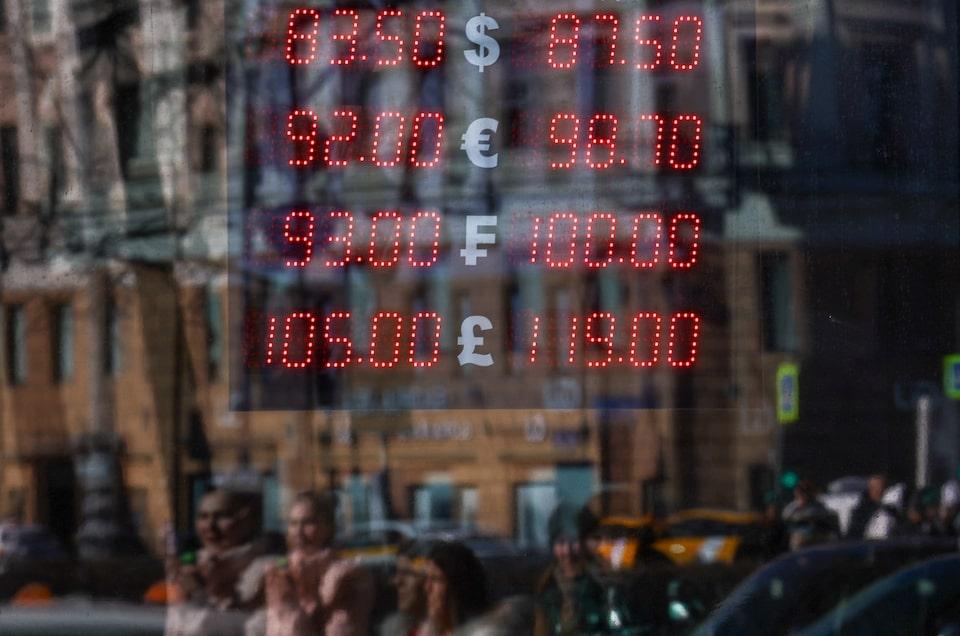
MOSCOW, Nov 21 (Reuters) - Here is a look at how U.S. sanctions on Russian oil firms Rosneft and Lukoil, which take effect at 1701 GMT on Friday, may affect the Russian foreign currency market. Ahead of the deadline, the rouble was strengthening on reports about a U.S.-drafted plan to end the war in Ukraine, which if implemented, could mean the sanctions are cancelled. Sign up here. WHAT HAS BEEN HAPPENING ON RUSSIA'S FOREX MARKET? The market was hit last year by sanctions on Russia's main operator, the Moscow Exchange (MOEX), in June and on Russia's third-largest bank, Gazprombank, in November. Sanctions on MOEX stopped all exchange trade in dollars and euros. China's yuan, which is still trading on MOEX, has become the dominant foreign currency. Western currencies are since then traded over the counter through domestic dollar accounts which have no correspondent accounts abroad. The central bank uses quotes from this trade to set its official exchange rates. The rouble weakened by 37% against the dollar in 2024, with sanctions and Ukraine's attack on Russia's Kursk region seen as the main factors. The rouble rallied by as much as 45% in the first half of 2025 due to the central bank's interest rate hikes and hopes for a peaceful settlement in Ukraine as U.S. President Donald Trump started talks with Russia. The rouble has remained stable in the second half of 2025 despite an overwhelming majority of analysts predicting that the currency is overvalued and is set to weaken, with its fair value seen closer to 100 roubles to a dollar. Economists attributed the rouble's surprise behaviour to slower-than-expected interest rate decreases, the central bank's forex interventions, sluggish imports due to an economic slowdown and the government's policy to promote import substitution. WHAT IS THE ROLE OF ROSNEFT AND LUKOIL ON THE FOREX MARKET? The new sanctions block all transactions with the two Russian firms. Lukoil has until December 13 to sell its international assets. A U.S. Treasury official said on Thursday that any company buying Russian oil will also be hit by U.S. sanctions. Oil companies and other exporters repatriate their foreign currency earnings, now mostly denominated in yuan, back to Russia, and convert them into roubles in order to pay taxes, salaries, and other domestic expenses. Analysts at Finam, a Russian financial services company, estimated that Rosneft and Lukoil accounted for up to 35% of domestic foreign currency sales. They predicted that overall sales could decline by 10% to 20% in early December. The central bank is another major player on the currency market, with traders estimating its share at 10%. The central bank has been a net seller of foreign currency, mostly yuan, throughout the year. Most Russian analysts expect some gradual weakening of the rouble after the sanctions deadline due to reduced forex sales and an expected reduction of the central bank's forex sales from the start of 2026. REACTION OF CHINA AND INDIA IS KEY The impact of sanctions will depend on the reaction of banks and companies in China and India, the main buyers of Russian oil, accounting for about 85% of all sales. The Treasury official said that Indian and Chinese refiners are conscious of the sanctions and risk-averse. The Treasury's Office of Foreign Assets Control said on November 17 that its analysis of the initial market impact showed they "are having their intended effect of dampening Russian revenues by lowering the price of Russian oil". Russian President Vladimir Putin said on October 23 that the new sanctions have a "serious nature" and may have "certain consequences", but added that they will not have a significant impact on Russia's economic well-being. Both China and India, Russia's partners in the BRICS group of major developing economies, have been cautious in their dealings with sanctioned Russian entities, fearing punishment from Western financial regulators. IMPACT ON BUDGET AND ECONOMY The Russian budget receives its revenues from taxes levied on oil production, not exports. Although a decline in exports' physical volume due to new sanctions will not result in a decline in budget revenues directly, the widening discount between the Russian and international blends of oil will affect budget revenues. Reuters calculations showed that the rouble price for Russian oil, used as the basis for tax calculation, was 24% lower in November than the estimates set in the budget, suggesting a further decline in revenues. In the first 10 months of this year, the budget's oil and gas revenues have fallen by 21% year-on-year. The amended budget for 2025 sees a decline in oil and gas revenues by the same percentage for the entire year. A weakening of the rouble would inflate the rouble-denominated budget revenues from oil and gas sales, making it an attractive measure to help balance the budget and offset the falling revenues. https://www.reuters.com/business/how-us-sanctions-russian-oil-majors-will-impact-rouble-economy-2025-11-21/
2025-11-21 10:44
J.P. Morgan, StanChart scrap December rate cut forecast Citigroup, Wells Fargo, Deutsche Bank say their 25 bp rate cut view a 'close call' Nov 21 (Reuters) - Global brokerages are split over whether the U.S. Federal Reserve will cut interest rates in December or hold them, following conflicting signals on job growth and unemployment earlier in the week. Data on Thursday showed non-farm payrolls increased by 119,000 jobs in September after a downwardly revised 4,000 drop in August. Economists polled by Reuters had forecast 50,000 jobs would be added. Sign up here. However, the unemployment rate increased to a four-year high of 4.4% in September. J.P. Morgan and Standard Chartered joined Morgan Stanley in withdrawing their forecasts for a 25-basis-point rate cut next month. On the other hand, Deutsche Bank, Citigroup, Wells Fargo and BNP Paribas reiterated their forecast of a 25 bps cut, but acknowledged the probability of the Fed keeping rates steady had risen significantly. The divide comes as some analysts argued the rise in the jobless rate supported the case for another interest rate cut next month. "A December cut is admittedly a close call, but we think the steady rise in the unemployment rate to 4.44% will be enough to encourage 'open minded' officials to support a cut," Citi said. Other brokerages said the better-than-expected job growth suggested the U.S. central bank should stay pat, especially since policymakers would not get another employment report before the December 9-10 meeting. "The absence of November labor data may make it harder for doves to insist on the need for a cut," Standard Chartered added. Traders are betting on a 67.1% chance for the Fed to keep rates steady in December, as per the CME FedWatch tool. Nomura and BofA Global Research retained their expectations of no rate cut in December. "A December cut is still not our base case, but it's a closer call now," BofA added. https://www.reuters.com/business/finance/jp-morgan-drops-december-rate-cut-forecast-strong-us-jobs-report-2025-11-21/

2025-11-21 10:42
KYIV, Nov 21 (Reuters) - Ukraine will sharply increase gas imports via the southern Transbalkan route linking it with Greece on Friday as it battles to replace supplies lost due to Russian attacks, import data from transit operators showed. Drone and missile assaults on infrastructure have deprived Kyiv of at least half of its own gas production in recent months, forcing it to import an additional 4 billion cubic metres of gas over the winter heating season to make up the difference. Sign up here. The operator data showed that Ukraine expected to import 2.28 million cubic metres of gas via the route on Friday versus 1.28 million on Thursday. It did not give figures beyond that. Ukraine resumed gas imports via the Transbalkan route - which crosses Moldova, Romania and Bulgaria - in early November following a sharp increase in Russian assaults. The same operator data showed that Ukraine planned to import about 23 mcm of gas from other sources on Friday, including nearly 10 mcm from Hungary, about 9 mcm from Poland and about 4.8 mcm from Slovakia - all broadly in line with volumes recorded since October. Ukraine mainly uses gas for heating homes and generating electricity. More than 400,000 customers were without electricity as of midday Thursday, and Russia carried out more strikes on energy facilities in the east of the country overnight into Friday, national power grid operator Ukrenergo said. Ukraine's nuclear energy sector has been rocked this month by a that has led to the dismissal of the country's energy and justice ministers. https://www.reuters.com/business/energy/ukraine-boosts-gas-imports-via-transbalkan-route-russian-strikes-intensify-2025-11-21/