2025-11-21 07:12
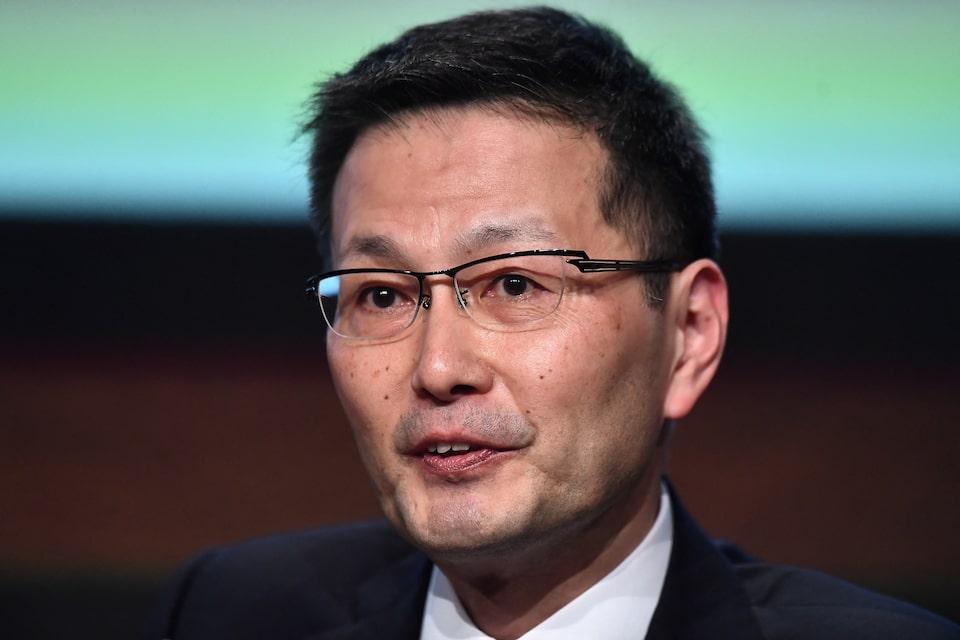
SYDNEY, Nov 21 (Reuters) - Binance Chief Executive Richard Teng said on Friday bitcoin's sharp drop in the past month was the result of investors deleveraging cryptocurrency holdings and risk aversion in line with that seen in most major asset classes. Bitcoin, the world's most valuable cryptocurrency, has fallen 21.2% in November, raising losses over the past three months to 23.2% as chances increase that it will end the year below $90,000. Sign up here. The fall comes after bitcoin hit an all-time peak above $126,000 in early October. "As with any asset class, there are always different cycles and volatility. What you're seeing is not only happening to crypto prices," Teng said at a media roundtable in Sydney on Friday. "At this point in time, there's a bit of risk (off) and deleveraging happening as well." Global markets sold off this week, with investors rattled by an AI-led valuation bubble and the possibility that it could burst. So far, better-than-expected earnings from Nvidia Corp (NVDA.O) , opens new tab have failed to quell those worries. Teng said despite the decline, bitcoin is trading at more than double its level in 2024, when institutions like BlackRock began launching crypto investments and products. "Over the past 1.5 years, the crypto sector has performed very, very well, so it's not unexpected that people do take profit," Teng said. "Any consolidation is actually healthy for the industry, for the industry to take a breather, find its feet." Teng declined to comment on whether Binance founder Changpeng Zhao would return to the exchange after he was pardoned by U.S. President Donald Trump in October. Zhao, a citizen of Canada who was born in China, paid a $50 million fine and served nearly four months in prison last year after pleading guilty to violating U.S. money laundering laws. Zhao was replaced by Teng in 2023 as chief executive. https://www.reuters.com/world/asia-pacific/binance-ceo-teng-says-bitcoin-volatility-line-with-most-asset-classes-2025-11-21/

2025-11-21 07:02
Investor hedging of dollar exposure has slowed, traders say Development supports case for dollar recovery BNY client data shows dollar hedging levels above average but far from extreme LONDON, Nov 21 (Reuters) - Just months after a U.S. tariff shock whacked the dollar, a rush by overseas investors to protect U.S. holdings from the sliding currency has slowed sharply - a vote of confidence that's helping the greenback recover from its worst rout in years. While analysts say investor hedging is higher than it has been historically, such activity has slowed from the period immediately after the April 2 "Liberation Day", when U.S. President Donald Trump announced sweeping trade tariffs. Sign up here. At that time, foreign investors holding U.S. assets were hit by tumbling stock and bond prices and a plummeting dollar. Nimble investors moved to hedge against a further dollar decline and the trend was expected to gain momentum. Instead, it has slowed, allowing the U.S. currency to stabilise. "The conversations we're having with clients now suggest that these (hedging) flows are less likely to come as imminently as the conversations we had back in May suggested they would," said David Leigh, Nomura's global head of FX and emerging markets. The dollar index , which tracks the greenback against other major currencies, has rallied nearly 4% since the end of June, when it was nursing losses of almost 11% after its biggest first-half dive since the early 1970s. Data on hedging is limited and analysts extrapolate from scarce public figures and numbers compiled by banks and custodians. Analysis of client positioning by BNY, one of the world's largest custodians, shows they were very long U.S. assets in early 2025, suggesting they didn't anticipate much additional dollar weakness and were happy to operate without much hedging. That changed in April and hedging is now higher than normal, although lower than in late 2023 when markets began to anticipate Federal Reserve rate cuts. "The dollar diversification story this year is more talked about than actioned upon," said Geoff Yu, BNY's senior market strategist. It varies by market too. A November National Australia Bank survey of Australian pension funds found "no material change in hedging behaviour towards U.S. equities". Danish central bank data, however, shows hedging by pension funds there has stabilised after increasing post-April. Columbia Threadneedle CIO William Davies said that the firm initially moved to protect its U.S. stock holdings against further dollar weakness but has since unwound some of its hedges, betting the currency won't decline further. NO SNOWBALL EFFECT Hedging itself causes currencies to move - adding protection against dollar downside to a previously unhedged position effectively involves selling the greenback, and vice versa. If combined with shifting interest rates, the effect can be dramatic - a dollar selloff can spark more hedging, sending it lower still. "People, earlier this year, were getting excited that this snowball effect would develop, though in the end it didn't really," said HSBC's Paul Mackel, global head of FX research. For next year, "it's something to keep an eye on, but it's not our baseline scenario". Still investor behaviour may be shifting. BlackRock estimates that 38% of flows into Europe, Middle East and Africa-listed U.S. equity exchange-traded products this year have been into those with FX hedges, a meaningful change from 2024 when 98% of flows were unhedged. COST, CORRELATIONS AND COMPLICATIONS Cost is also a factor, and depends on rate differentials and so varies by market. This may help explain some of the reluctance to hedge positions. Japanese investors pay around an annualised 3.7% to hedge against dollar weakness, estimates Van Luu, Russell Investments' global head of solutions strategy for fixed income and FX. This is a sizeable sum - if dollar/yen holds steady for a year, an investor is down 3.7% versus an unhedged peer. The equivalent cost for a euro-funded investor is around 2%. "I have a rule of thumb for euro investors, if the cost is around 1% they don't care much, but if it's 2% then it becomes a factor," Luu said. Asset correlations matter too. Traditionally the dollar strengthens when stocks fall, meaning overseas investors are effectively protected on their U.S. positions. That did not happen in April, contributing to the hedging rush. This month, the dollar held steady as stocks tumbled again. Change is also complicated for the many investors who aim to outperform a fixed benchmark if that benchmark is unhedged. Fidelity International recommends Europe-based investors move gradually towards hedging 50% of their dollar exposure, but Salman Ahmed, head of macro and strategic asset allocation, notes it is a "very involved" process which can require governance and benchmark changes. If interest rates move against the dollar and it starts to weaken again, and hedges become cheaper, pressure for change may build. "There's still lots of scope for dollar investments to be hedged, whether that comes to pass and how quickly is an open question," said Nomura's Leigh. "That's what the FX market's trying to get its head around." https://www.reuters.com/markets/wealth/much-anticipated-dollar-hedging-rush-slows-now-2025-11-21/
2025-11-21 06:50
DUBAI, Nov 21 (Reuters) - The United Arab Emirates said on Friday it will invest up to $50 billion in Canada under a framework that includes projects in artificial intelligence, energy, and mining sectors. The UAE has been looking to expand its energy investments abroad, especially through its recently launched firm XRG, the foreign investment arm of Abu Dhabi's oil major, ADNOC. Sign up here. Abu Dhabi is also investing heavily in AI, with plans to build one of the world's largest data center hubs in the country with U.S. technology. Emirati state-linked tech firm, G42, is driving the development of its AI industry. The signing of the framework came at the sidelines of a visit by Canada's Prime Minister Mark Carney to Abu Dhabi, the UAE investment ministry said in a statement. https://www.reuters.com/business/energy/uae-invest-up-50-billion-canada-industries-such-ai-energy-2025-11-21/

2025-11-21 06:49
Fed's William says central bank could cut rates in near term Traders see 74% chance of US interest rate cut in December Wall Street's main indexes gain Nov 21 (Reuters) - Gold prices held steady on Friday, after falling over 1% earlier in the session, as traders boosted bets on a December U.S. interest rate cut following dovish U.S. Federal Reserve comments. Spot gold was steady at $4,086.57 per ounce, as of 01:48 p.m. ET (18:48 GMT), after falling more than 1% earlier in the session. Bullion is set for a weekly gain of 0.1% so far. Sign up here. U.S. gold futures for December delivery settled 0.5% higher at $4,079.5 per ounce. New York Fed President John Williams on Friday said the U.S. central bank could still trim interest rates in the near term, without jeopardizing its inflation goal. The comments "are certainly supportive ... it did give the gold market bulls some friendly fodder early today," said Jim Wyckoff, senior analyst at Kitco Metals. Traders now see a 74% chance of a rate cut at the Fed's next meeting, compared to 40% earlier in the day. The delayed jobs report showed a mixed labor market picture, with nonfarm payrolls rising by 119,000 in October, well above forecasts for a 50,000 gain, while the unemployment rate climbed to a four-year high. Gold, a non-yielding asset, tends to do well in low-interest-rate environments. Meanwhile, other Fed members maintained a hawkish stance, with Dallas Federal Reserve President Lorie Logan calling for leaving the policy rate on hold "for a time." Traders are also keeping a close eye on U.S. stock markets as "if the stock market rallies stronger today, that's probably going to put downside pressure on gold because of the keener risk appetite in the marketplace," Wyckoff added. Wall Street's main indexes gained as traders boosted bets on an interest rate cut by the Fed next month following remarks from policymakers. Meanwhile, physical gold demand across major Asian markets remained weak this week, as volatility in rates deterred potential buyers from making purchases. Elsewhere, spot silver fell 0.4% to $50.39 per ounce, platinum rose 0.1% to $1,512.67, and palladium edged 0.2% up to $1,380. https://www.reuters.com/world/india/gold-subdued-strong-us-jobs-data-dents-rate-cut-hopes-2025-11-21/

2025-11-21 06:36
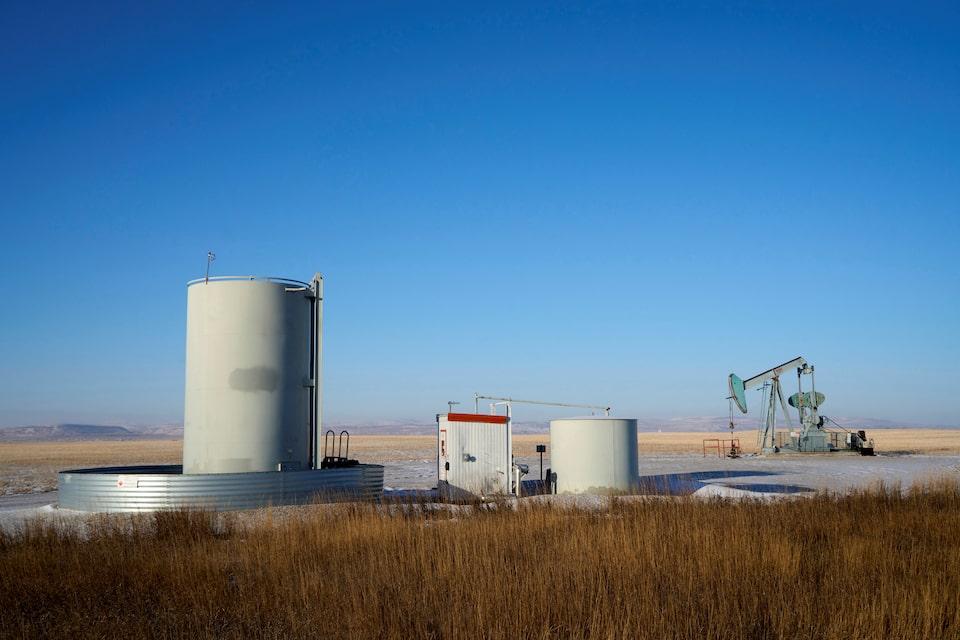
Russia-Ukraine peace deal could boost global crude supply Stronger dollar weighs on oil prices US sanctions on Lukoil and Rosneft to take effect on Friday NEW YORK, Nov 21 (Reuters) - Oil prices eased about 1% on Friday to settle at one-month lows as the U.S. pushed for a Russia-Ukraine peace deal that could boost global oil supplies, while uncertainty over U.S. interest rates curbed investors' risk appetite. Brent futures fell 82 cents, or 1.3%, to settle at $62.56 per barrel, while U.S. West Texas Intermediate (WTI) crude slid 94 cents, or 1.6%, to settle at $58.06. Sign up here. Both crude benchmarks were down about 3% for the week and at their lowest settlements since October 21. Market sentiment turned bearish as Washington pushed for a peace plan between Ukraine and Russia to end the three-year war, while sanctions on Russian oil producers Rosneft (ROSN.MM) , opens new tab and Lukoil (LKOH.MM) , opens new tab were set to take effect on Friday. Ukrainian President Volodymyr Zelenskiy warned on Friday that Ukraine risked losing its dignity and freedom — or Washington’s backing — over a Washington peace plan that , a proposal U.S. President Donald Trump said Kyiv should accept within a week. Russian President Vladimir Putin said on Friday that U.S. proposals for peace in Ukraine could be the basis of a resolution of the conflict but that if Kyiv turned down the plan then Russian forces would advance further. A peace deal could allow Russia to export more fuel. Russia was the second-biggest producer of crude oil in the world after the U.S. in 2024, according to U.S. federal energy data. "With the news of talks coming just as U.S. sanctions on Russia's two largest oil companies are due to take effect today, oil markets saw some relief on risks to Russian oil supply," said Jim Reid, a managing director at Deutsche Bank. However, a peace deal could be some way off. "An accord is far from certain," ANZ analysts said in a note to clients, adding that Kyiv has repeatedly dismissed Russia's demands as unacceptable. "The market is also becoming sceptical that the latest restrictions on Russian oil companies Rosneft and Lukoil will be effective," the analysts said. Lukoil has until December 13 to sell its huge international portfolio. A stronger U.S. dollar(.DXY) , opens new tab also weighed on oil prices. The greenback hit a six-month high versus a basket of other currencies, making dollar-priced oil more expensive for many global buyers. On U.S. interest rates, Dallas Fed President Lorie Logan called for leaving the policy rate on hold "for a time" while the central bank assesses how much of a brake the current level of borrowing costs is putting on the economy. Boston Fed President Susan Collins said policy was in the right place, suggesting she remains skeptical of the need to cut rates again at next month’s meeting. New York Fed President John Williams said the central bank can still cut interest rates "in the near term" without putting its inflation goal at risk. Lower interest rates could boost economic growth and oil demand. In other economic news, U.S. factory activity slowed to a four-month low in November as higher prices because of tariffs on imports restrained demand, leading to a piling up of unsold goods that could hinder growth in the overall economy. https://www.reuters.com/business/energy/oil-extends-decline-possible-russia-ukraine-peace-deal-2025-11-21/
2025-11-21 06:20
TOKYO, Nov 21 (Reuters) - Reflationist advisers of Japan's new prime minister Sanae Takaichi will speak on a panel hosted by Keidanren on December 17 on the new administration's strategy to strengthen the economy, the business lobby said on Friday. The event will be held a day before the Bank of Japan's two-day policy meeting on December 18 and 19, when the board may discuss raising still-low interest rates. Sign up here. The panelists include Etsuro Honda, a close economic adviser to Takaichi. Honda said in October the BOJ should be cautious about raising interest rates again. Former BOJ Deputy Governor Masazumi Wakatabe, who told Reuters it would be difficult for the central bank to hike rates this year, will also speak on the panel. Other speakers include private economist Toshihiro Nagahama, who, along with Wakatabe, called for big stimulus as members of a key government panel, as well as another reflationist-minded economist, Takuji Aida. The December 17 event will be held in Tokyo from 2 p.m. to 4 p.m. (0500-0700 GMT). Since taking office last month, Takaichi has vowed to reflate the economy with big spending backed by low interest rates. Her administration finalised a $135 billion stimulus package on Friday that will likely involve debt issuance. Market concern over Japan's expansionary fiscal policy and prospects of slow BOJ rate hikes have pushed the yen to 10-month lows against the dollar, triggering warnings from policymakers fretting about the inflationary impact of the weak currency. https://www.reuters.com/business/finance/japan-premiers-advisers-will-speak-business-event-before-boj-meeting-2025-11-21/