2025-11-21 05:26
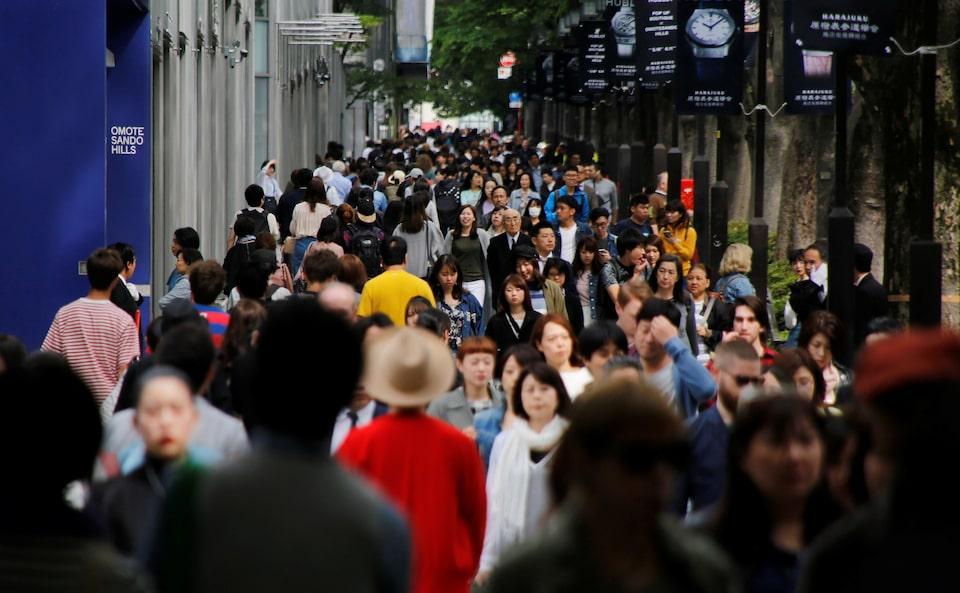
TOKYO, Nov 21 (Reuters) - Japanese Prime Minister Sanae Takaichi's cabinet approved a 21.3 trillion yen ($135.40 billion) economic stimulus package on Friday, marking the first major policy initiative under the new leader, who has pledged to pursue expansionary fiscal measures. The package includes general account outlays of 17.7 trillion yen, far exceeding the previous year's 13.9 trillion yen and representing the largest stimulus since the COVID pandemic. It will also include 2.7 trillion yen in tax cuts. Sign up here. Growing concerns about the nation's worsening fiscal position brought about by Takaichi's lavish stimulus package have sent the Japanese currency to 10-month lows and super-long government bond yields to record highs. Speaking to reporters, Takaichi stressed that the package fully takes into account fiscal sustainability. "As for funding, we will utilise higher-than-expected tax revenues and non-tax income, but any remaining shortfall will be covered by issuing additional government bonds," she said. "But the total amount of government bond issuance after the supplementary budget, combined with the initial budget, for this financial year is expected to be lower than last year's post-supplementary total of 42.1 trillion yen," Takaichi said. The size of additional government bond issuance to fund the stimulus package has still to be finalised, but is expected to be larger than the 6.69 trillion yen issued for last year's stimulus, sources familiar with the matter said. The cabinet plans to approve a supplementary budget to fund the package as early as November 28, aiming to secure parliamentary approval by the end of the year. ($1 = 157.3100 yen) https://www.reuters.com/world/asia-pacific/japans-cabinet-approves-lavish-135-stimulus-markets-fret-over-fiscal-policy-2025-11-21/
2025-11-21 04:54
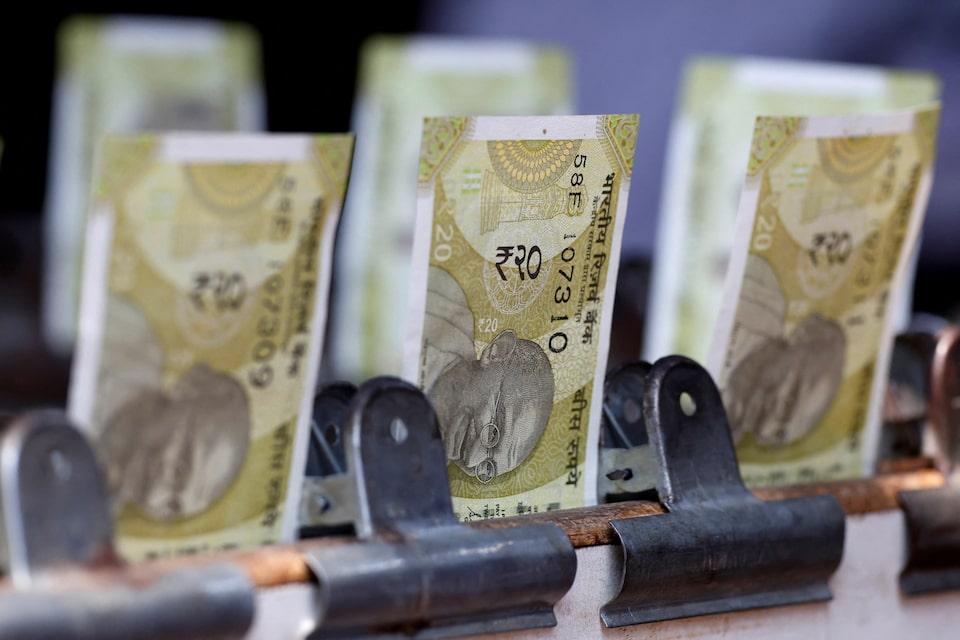
MUMBAI, Nov 21 (Reuters) - The Indian rupee firmed slightly on Friday, tracking mild gains across Asian currencies and aided by interbank dollar sales, with traders pointing to a pickup in exporter hedging. The rupee was last at 88.6350 per U.S. dollar as of 10:20 a.m. IST, compared with 88.7050 in the previous session. Sign up here. Regional currencies rose 0.1%–0.3%, while the dollar index held near 100.1 and was set for a weekly gain as markets dialled back expectations of an imminent U.S. Federal Reserve rate cut. Odds of a rate cut by the Fed next month have eased to about 35%, down from 50% a week earlier, per CME's FedWatch tool. Chicago Federal Reserve President Austan Goolsbee on Thursday said he is uneasy about cutting interest rates in the face of too-high inflation, remarks that signal a reluctance to support a reduction in borrowing costs next month. While a hawkish turn in Fed expectations is a pain point for the rupee, "spot (USD/INR) is just holding for one reason which is RBI," a trader at a Mumbai-based bank said, referring to the central bank's frequent interventions to cap rupee weakness near its record low of 88.80. The frequent dollar-selling interventions while limiting the currency's fall, have sucked up rupee liquidity from the local banking system. With ongoing FX intervention having impacted system liquidity, we expect the RBI to restart open market bond purchases, economists at Deutsche Bank said in a note. "Our liquidity calculation suggests that the RBI will potentially do OMO purchases of INR 1.5-2 trillion by end-March’26, and possibly more in FY27," the note said. The firm also expects the Indian central bank to cut rates by 25 basis points in December. https://www.reuters.com/world/asia-pacific/rupee-poised-muted-open-with-asia-fx-navigating-risk-off-lower-us-yields-2025-11-21/
2025-11-21 00:51
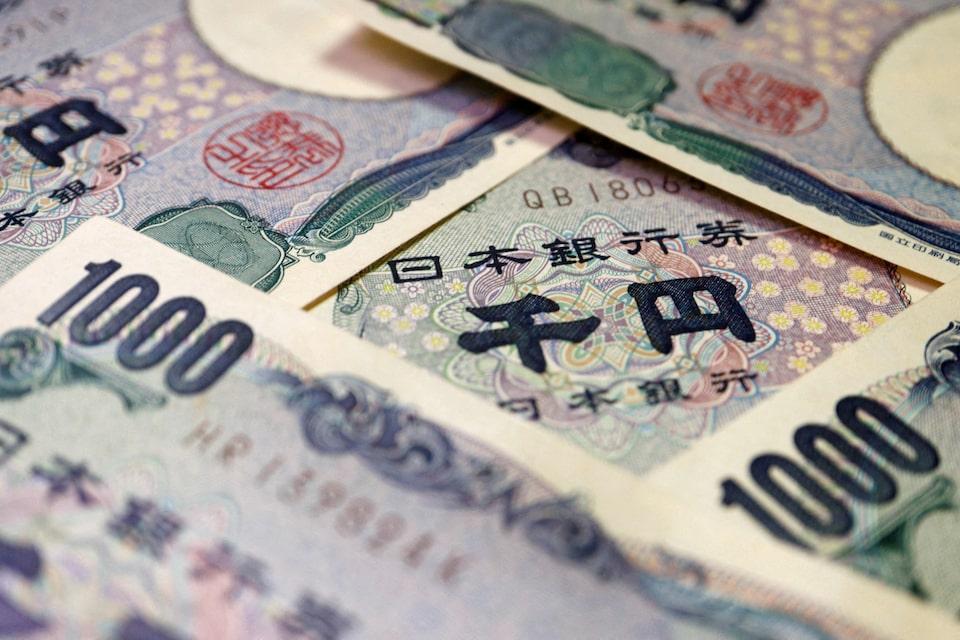
Tokyo ready to take action based on US-Japan finance agreement Finance minister says FX intervention a possibility Analysts see 160 yen per dollar as intervention threshold BOJ will debate 'feasibility, timing' of rate hike, Ueda says Remarks keep alive chance of BOJ rate hike in December TOKYO, Nov 21 (Reuters) - Japan on Friday escalated its warning of currency intervention and the central bank governor signalled the chance of a near-term interest rate hike, as authorities sought to combat unwelcome yen falls blamed for pushing up the cost of living. The yen is down around 6% since Prime Minister Sanae Takaichi was elected leader of her party on market concern her administration could issue more debt to fund a big spending package, casting doubt on Japan's grip on finances. Sign up here. The currency's fall has also been driven by market bets that Takaichi, known as an advocate of expansionary fiscal and monetary policy, could push back against a near-term rate hike. Finance Minister Satsuki Katayama said Japan sees intervention in the foreign exchange market as a possibility in dealing with excessively volatile and speculative moves in the yen, issuing the strongest warning to date against recent falls in the currency. Bank of Japan Governor Kazuo Ueda also said the central bank will debate the "feasibility and timing" of a rate hike in upcoming meetings, signalling the prospect of increasing still-low borrowing costs as soon as next month. The remarks highlight growing concern among policymakers about a persistently weak yen, which gives exports a boost but hurts households' cost of living through higher import prices. "We are alarmed by recent one-sided, sharp moves in the currency market," Katayama told a news conference on Friday, when asked about recent declines in the yen. "It is important for currency rates to move stably, reflecting fundamentals. We will take appropriate action as needed against excess volatility and disorderly market moves, including those in the long term," based on the U.S.-Japan agreement signed in September, he said. In that agreement, Japan's finance ministry and the U.S. Treasury Department reaffirmed their commitment to "market-determined" exchange rates, while agreeing that interventions should be reserved for combating excess volatility. When asked whether Japan's response could include currency intervention, Katayama said: "Yes, that's written in the September statement, so it's obviously so." The dollar fell 0.14% to 157.26 yen after Katayama's remarks, before bouncing back to around 157.50 yen in Asia on Friday. The remarks are an escalation from policymakers, who had been saying up until Thursday they were alarmed by one-sided, rapid moves in the yen and watching market developments with "a high sense of urgency". FOCUS ON BOJ DECEMBER MEETING Japan last intervened in the currency market in July 2024, when the yen fell to a 38-year low of around 161.96 to the dollar. Then, before directly stepping into the market, authorities warned of taking "decisive action". "Today's comments suggest there is still some distance before direct intervention," said Akira Moroga, chief market strategist at Aozora Bank. "Having said that, authorities are probably preparing to act any time. There could be intervention once the dollar rises near 160 yen," he said. Hirofumi Suzuki, chief currency strategist at SMBC, also saw 160 yen per dollar as the line-in-the-sand for intervention. "I think Japan's monetary authorities would not hesitate too much when it comes to intervening in the foreign exchange market to curb excessive volatility," Suzuki said. The weak yen was also a key trigger for BOJ action last year, when the central bank raised interest rates to 0.25% in July in tandem with the government's yen-buying intervention. While initially voicing displeasure over a near-term rate hike, Takaichi and her finance minister have recently nodded to the BOJ's gradual rate-hike plan as the yen ground down. Speaking in parliament on Friday, Ueda said the weak yen's boost to inflation has become bigger than in the past as firms are more actively hiking prices and wages. "We must be mindful that price rises, through such channels, could affect inflation expectations and underlying inflation," he said, suggesting the weak yen could feature prominently in the BOJ's next two-day policy meeting ending on December 19. While the BOJ has kept rates steady since hiking them to 0.5% in January, Ueda has dropped strong hints of action in December or January next year. https://www.reuters.com/world/asia-pacific/japan-signals-chance-currency-intervention-yen-rises-2025-11-21/
2025-11-21 00:50
Bets on Fed rate cut boost market after New York Fed President Williams' dovish comments All three major US stock indexes on course for weekly declines Cryptocurrencies pare losses after bitcoin touches multi-month lows Dollar softens against yen but still on track for weekly gain NEW YORK, Nov 21 (Reuters) - Wall Street stocks closed sharply higher on Friday as rising expectations of a December interest rate cut by the Federal Reserve offset concerns over lofty tech valuations. A broad rally started gathering momentum by late morning, pushing all three major U.S. stock indexes to substantial gains on the day. Sign up here. Benchmark Treasury yields fell, the dollar was steady and bitcoin pared its losses. The volatile session caps a tumultuous week in which U.S. and world stocks lost ground from last Friday's close. The Fed, deprived of official U.S. economic data during the recently ended government shutdown, at last got a fresh glimpse of the labor market on Thursday, which showed the unemployment rate unexpectedly ticking higher. As a result, financial markets are pricing in an increased likelihood of a third and final rate cut this year from the Fed. CME's FedWatch tool sets the odds at 73.3%, a significant bump from 39.1% on Thursday. Messaging from monetary policymakers is mixed. New York Fed President John Williams said the Fed could still cut rates in the near term, while Dallas Fed President Lorie Logan called for them to be left on hold while the central bank assesses the effect of current rates on the economy. "New York Fed President Williams' comments seem to have shifted the perception on that December rate cut potential," said Ross Mayfield, investment strategy analyst at Baird in Louisville, Kentucky. "Part of the reason for the move today is that Williams was seen as one of the hawkish leans, so the market could perceive it representing someone stepping over the line towards the dovish point of view." "Other than that, yesterday was a pretty broad and rough selling day into the close, so (the market was) primed for some bounce," Mayfield added. Solid earnings from artificial intelligence vanguards, notably chipmaker Nvidia (NVDA.O) , opens new tab, momentarily eased concerns that AI-related tech stocks, which powered the stock market's rally in recent months, are overpriced and could be due for a correction. The third-quarter earnings season is nearly wrapping up, with more than 94% of the companies in the S&P 500 having reported. Of those, 83% beat earnings estimates, according to LSEG data. The Dow Jones Industrial Average (.DJI) , opens new tab rose 493.30 points, or 1.08%, to 46,245.56, the S&P 500 (.SPX) , opens new tab rose 64.20 points, or 0.98%, to 6,602.96 and the Nasdaq Composite (.IXIC) , opens new tab rose 195.04 points, or 0.88%, to 22,273.08. European stocks ended lower, logging a weekly decline due to worries over stretched tech valuations, while defense shares slid on signs of progress toward ending Russia's war on Ukraine. MSCI's gauge of stocks across the globe (.MIWD00000PUS) , opens new tab rose 2.73 points, or 0.28%, to 971.26. The pan-European STOXX 600 (.STOXX) , opens new tab index fell 0.33%, while Europe's broad FTSEurofirst 300 index (.FTEU3) , opens new tab fell 7.27 points, or 0.32%. Emerging market stocks (.MSCIEF) , opens new tab fell 36.17 points, or 2.64%, to 1,335.37. MSCI's broadest index of Asia-Pacific shares outside Japan (.MIAPJ0000PUS) , opens new tab closed lower by 2.67%, at 685.82, while Japan's Nikkei (.N225) , opens new tab fell 1,198.06 points, or 2.40%, to 48,625.88. The dollar looked set to register a weekly gain but weakened against the yen, as Japanese officials stepped up their verbal intervention to stem the yen's decline. The dollar index , which measures the greenback against a basket of currencies including the yen and the euro, fell 0.01% to 100.15, with the euro down 0.09% at $1.1517. Against the Japanese yen , the dollar weakened 0.68% to 156.41. Cryptocurrencies sank to multi-month lows amid a broader flight from riskier assets. Bitcoin fell 2.93% to $84,661.00. Ethereum declined 4.64% to $2,744.76. U.S. Treasury yields dipped as Fed rate cut bets rose. The yield on benchmark U.S. 10-year notes fell 4.1 basis points to 4.063%, from 4.104% late on Thursday. The 30-year bond yield fell 1.7 basis points to 4.715% from 4.732% late on Thursday. The 2-year note yield, which typically moves in step with interest rate expectations for the Federal Reserve, fell 5.1 basis points to 3.508%, from 3.558% late on Thursday. Oil prices extended their decline for a third session, touching a one-month low as the U.S. pushed for a Russia-Ukraine peace deal. U.S. crude fell 1.59% to settle at $58.06 per barrel, while Brent settled at $62.56 per barrel, down 1.29% on the day. Spot gold fell 0.29% to $4,065.29 an ounce. U.S. gold futures fell 0.05% to $4,054.30 an ounce. https://www.reuters.com/world/china/global-markets-global-markets-2025-11-21/

2025-11-21 00:38
Yen recovers from nearly 10-month low, down more than 1% for the week Takaichi's cabinet approves 21.3 trillion yen stimulus package Fed rate cut bets pick up again after Williams comments Dollar on track for biggest weekly rise in six weeks NEW YORK, Nov 21 (Reuters) - The dollar weakened against the yen on Friday, after Japanese officials stepped up verbal intervention to stem the currency's decline, even as the greenback broadly was headed for its biggest weekly rise in six weeks. Against other major currencies, the U.S. unit was well-bid, with the dollar index , hitting its highest since late May. Sign up here. The yen popped higher after Japanese Finance Minister Satsuki Katayama said intervention was a possibility to deal with excessively volatile and speculative moves, leaving traders on alert for signs of yen buying from Tokyo. Meanwhile, remarks from New York Fed President John Williams on Friday, that the U.S. central bank can still cut interest rates "in the near term" without putting its inflation goal at risk, also helped to cap the dollar's strength. "That pretty much was the linchpin that moved the market," said Michael Boutros, senior technical strategist at StoneX. "He carries a lot of weight, obviously." In afternoon trading, the Japanese currency was up 0.63% at 156.549 per dollar. It hit a nearly 10-month low of 157.90 on Thursday and was still on track for a 1.2% loss for the week. John Velis, head of Americas macro strategy at BNY Markets, said the yen has been kept in check because intervention threats are losing some credibility. "And there is still this expectation of a decent shot of the Bank of Japan raising rates this year, if not early next year. So, that has kind of mitigated the yen's movement," Velis added. The currency, pressured by concerns over Japan's worsening fiscal position, has fallen around 6% since Prime Minister Sanae Takaichi was elected leader of her party on October 4. Takaichi's cabinet approved a 21.3 trillion yen ($135.4 billion) economic stimulus package on Friday. Tokyo spent 5.53 trillion yen, or nearly $37 billion, in July 2024 to intervene in the foreign exchange market to haul the yen away from 38-year lows. Against the euro, the yen was pinned near its lowest since the introduction of the single currency, although the euro was last down 0.83% at 180.01 yen. FED RATE CUT BETS PICK UP AGAIN In the broader market, the dollar was set for a weekly gain, and markets are now betting the Federal Reserve will cut rates again next month. The release of a delayed U.S. nonfarm payrolls report on Thursday painted a mixed picture of the labour market and did little to alter expectations about a Fed rate cut in December, as policymakers continue to navigate through an economic fog brought about by the U.S. government shutdown. Williams' comments boosted market expectations of a rate cut but some Fed policymakers diverged from his views. Boston Fed President Susan Collins said on Friday that monetary policy is in the right place amid a resilient economy, and the Dallas Fed's Lorie Logan called for holding rates "for a time" to assess how much of a brake the current level of borrowing costs is putting on the economy. Fed funds futures traders are now pricing in a 71% chance of a December cut, up from 39% on Thursday, according to the CME Group's FedWatch Tool. The euro fell 0.16% to $1.1511 and was on track for a 1% weekly decline. It held steady after preliminary PMI data showed euro zone business activity grew this month, even as manufacturing activity slipped into contractionary territory. Sterling was down 0.27% at $1.3105 as investors awaited Britain's budget, with data showing the economy struggled before next week's major test for the currency and bond market. The pound was set to lose 0.5% for the week. The dollar index, which measures the greenback against a basket of other major currencies, flirted with a 5-1/2-month peak and last stood at 100.19. In cryptocurrencies, bitcoin fell to a seven-month low and was last down 3.52% at $84,146.2. https://www.reuters.com/world/asia-pacific/dollar-set-weekly-gain-fed-cut-bets-recede-yen-intervention-eyed-2025-11-21/
2025-11-21 00:21
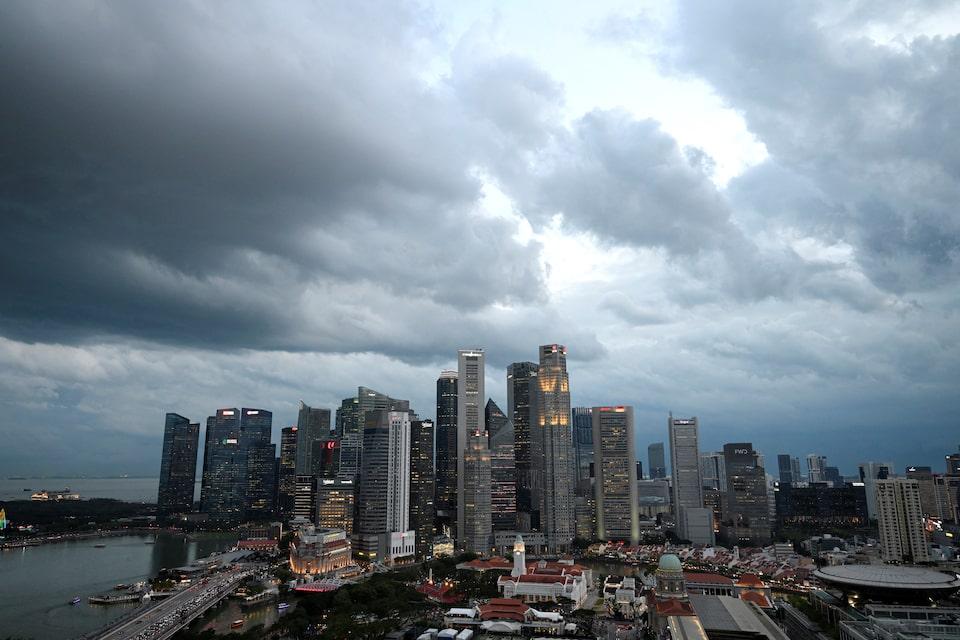
SINGAPORE, Nov 21 (Reuters) - Singapore on Friday upgraded its economic outlook for 2025 as third-quarter gross domestic product growth beat market expectations and initial estimates. GDP rose 4.2% in the third quarter from a year earlier, government data showed, faster than the 2.9% official advance estimate released last month and a median forecast of 4.0% in a Reuters poll of economists. Sign up here. On a quarter-on-quarter seasonally adjusted basis, GDP expanded 2.4% from the second quarter. The trade ministry raised its GDP growth forecast for 2025 to "around 4.0%" from a previous range of 1.5% to 2.5%. It forecast 2026 GDP growth at 1.0% to 3.0%. "Global economic conditions have turned out to be more resilient than expected," the ministry said in a statement. "In particular, GDP growth in most of Singapore’s key trading partners came in better than expected in the third quarter of 2025." In a separate statement, Enterprise Singapore said it had narrowed its 2025 non-oil domestic exports growth forecast to "around 2.5%", from growth of 1% to 3%, as it expected robust AI-related demand and high gold prices to provide some support to shipments in the fourth quarter. For 2026, it forecast non-oil exports to grow by 0% to 2%. At a review in October, the Monetary Authority of Singapore left monetary policy unchanged as growth in the city-state remained resilient despite challenges from U.S. import tariffs. Singapore's exports to the United States are subject to a 10% tariff. That is lower than the tariffs imposed on its Southeast Asian neighbours, but sectoral levies - including a 100% tariff on branded drugs - remain a significant concern. Broader sectoral tariffs could hurt demand for Singapore's exports, including semiconductors, consumer electronics and pharmaceutical goods. The central bank has said those three sectors account for about 40% of exports to the United States. In October, authorities said the implementation of the branded drugs tariff had been delayed to allow companies to negotiate possible exemptions with the U.S. administration. https://www.reuters.com/world/asia-pacific/singapore-says-q3-gdp-grows-42-yy-upgrades-2025-forecast-2025-11-21/