2025-11-20 22:19
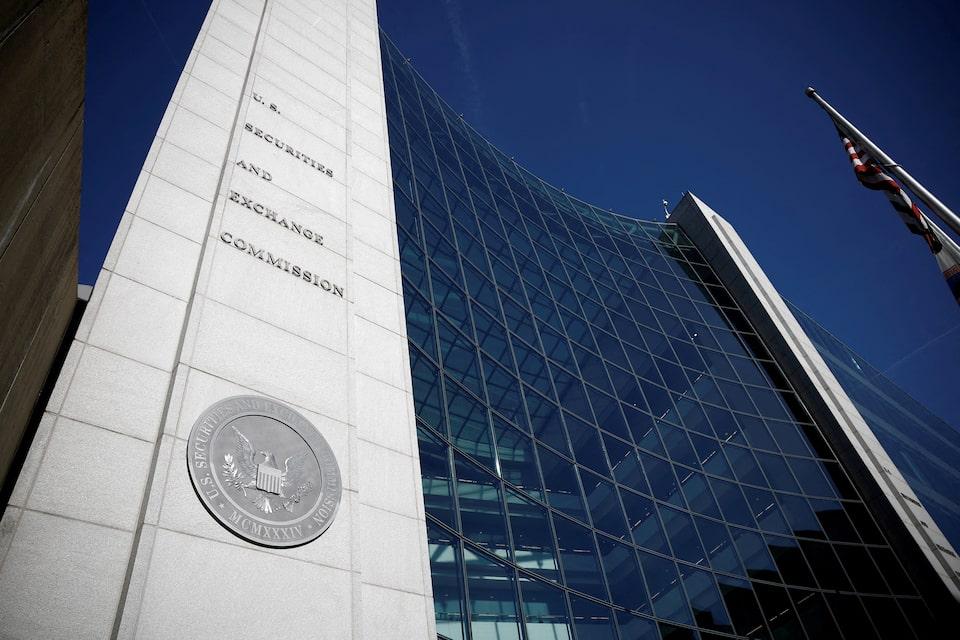
Nov 20 (Reuters) - The U.S. Securities and Exchange Commission on Thursday said it has dropped its closely watched litigation against SolarWinds Corp and its top security officer that was tied to a Russia-linked cyberattack involving the software firm. The landmark case, which SEC brought in late 2023, rattled the cybersecurity community and later faced scrutiny from a judge who dismissed many of the charges. The SEC had said SolarWinds and its chief information security officer had violated U.S. securities laws by concealing vulnerabilities in connection with the high-profile 2020 Sunburst cyber attack. Sign up here. The SEC, SolarWinds and CISO Timothy Brown filed a motion on Thursday to dismiss the case with prejudice, according to a joint stipulation posted on the agency's website. In July, the parties asked for a pause in court proceedings while they negotiated a resolution. A SolarWinds spokesperson said in a statement the firm is "clearly delighted" with the dismissal. "We hope this resolution eases the concerns many CISOs have voiced about this case and the potential chilling effect it threatened to impose on their work," the spokesperson said. https://www.reuters.com/legal/government/us-sec-dismisses-case-against-solarwinds-top-security-officer-2025-11-20/
2025-11-20 22:03
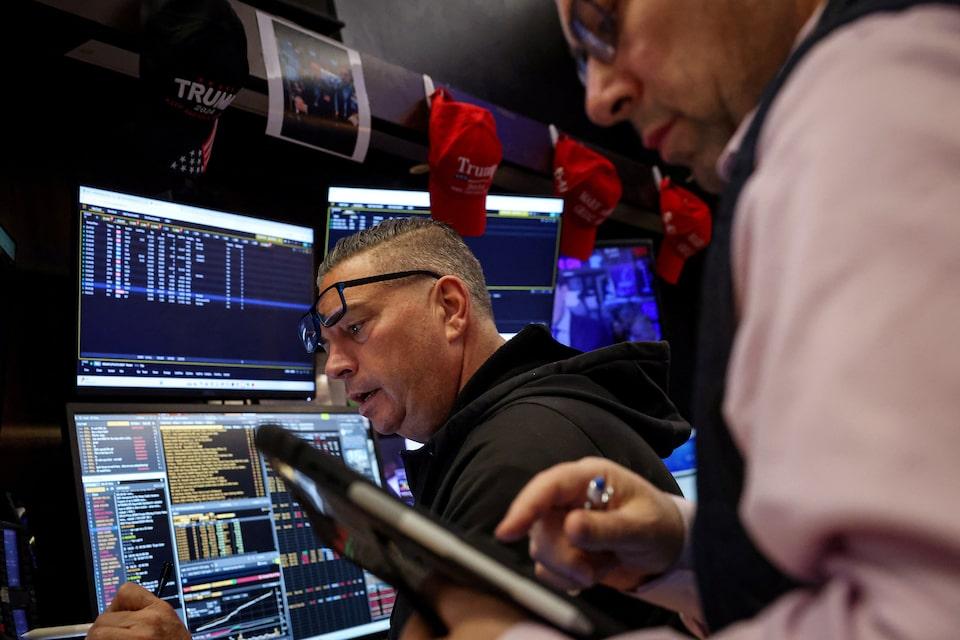
ORLANDO, Florida, Nov 20 (Reuters) - Wall Street experienced a wild rollercoaster ride on Thursday, opening sharply higher on another set of strong results from artificial intelligence giant Nvidia, only to end deep in the red as investors reassessed that optimism and mixed signals from the first U.S. jobs data since the government shutdown ended. In my column today I look at the warning signs that Nvidia's results flagged, which may deepen the skepticism around tech and AI that has emerged in recent weeks. It all goes back to whether the vast investment in AI infrastructure will ultimately turn a profit. Sign up here. If you have more time to read, here are a few articles I recommend to help you make sense of what happened in markets today. Today's Key Market Moves Today's Talking Points * Well, that didn't last long Wall Street's price swings on Thursday were historic. The S&P 500 opened up almost 2%, only to close 1.6% lower. Analysts note that the index rarely ends down as much as that after opening so strongly. April 2020, after the pandemic crash, and April this year, following the "Liberation Day" crash, are two recent examples. But in both these instances, the market was around 20% off its then-highs, so had plenty of room to recover. Now, the index is barely 5% off its October 29 peak, an indication there may be more downside potential. We could be at an inflection point - the S&P 500 and Nasdaq both closed right on their 100-day moving averages. * U.S. jobs fog gets thicker Everyone craved the release of U.S. economic indicators - especially the jobs numbers - to lift the data fog, but the September payrolls report on Thursday has only muddied the picture even more. The unemployment rate rose to a four-year high of 4.4%, but job growth was a strong 119,000, especially when the "breakeven" level is around 50,000 or less. On the other hand, the rolling pace of job growth recently is the lowest this century outside recessions. On top of that, October's payrolls will now be combined with November's data and released on December 16, after the Fed's next meeting. * Safe haven, where art thou? Given how choppy U.S. stock markets were on Thursday - a historic peak-to-trough swing and the highest VIX close since April - the lack of any real rally in the traditional "safe haven" assets is intriguing. Gold and the Swiss franc ended the day flat, the yen fell to new lows, while U.S. Treasuries rose in price but not by much - the ten-year yield only fell 3 basis points. Friday's session will be illuminating, as investors close out a bruising week and position for next week which will be marked by the U.S. Thanksgiving holiday and month-end positioning. Nvidia beat may yet stir fear on the Street Nvidia once again delivered a resounding earnings 'beat' on Wednesday, which may initially dampen some of the smoldering tech bubble fears. But, paradoxically, the $5 trillion company's latest figures actually highlight many of the AI concerns that have been roiling markets recently. On the surface, the headline numbers are astonishing. The chipmaker's revenue in the third quarter was a record $57 billion, up 62% from a year earlier, and net profit rose 65% on the year to a record $32 billion. Nvidia's forecasts are even more bullish, with revenue expected to rise to $65 billion in the fourth quarter, higher than analysts' average estimate of around $62 billion. Figures like that suggest the global artificial intelligence leader's cash-generating powers are as strong as ever. Nvidia's shares jumped 5% in extended trading after the market close on Wednesday, adding around $225 billion to the firm's market cap in a matter of minutes. "Blackwell sales are off the charts, and cloud GPUs are sold out," CEO Jensen Huang said, referring to two types of Nvidia chips. "AI is going everywhere, doing everything, all at once." That's pretty exuberant language for a press release. And considering the growing fears about AI capex indigestion, it may be bordering on irrationally exuberant. TOO MUCH INVESTMENT? The key issue is simple: the tens of billions of dollars of revenues Nvidia is raking in every quarter are tens of billions of dollars its customers are spending, with little indication of when – if ever – all this investment will be profitable. Huang repeated on Wednesday that Nvidia has $500 billion in bookings for its advanced chips through 2026. That's half a trillion dollars of AI hardware investment. What's more, four customers accounted for 61% of Nvidia's sales in the third quarter, up from 56% in the second. That suggests increased concentration risk for Nvidia as well as the chip buyers. These are big bets. The eventual productivity gains may be enough to make the outlay worth it. But we won't know for a while, and the bigger the spend, the higher that bar for profitability and the greater the risk that investors will grow impatient. Indeed, their patience already appears to be wearing thin. Bank of America's November fund manager survey shows respondents overwhelmingly believe the most crowded trade right now is 'long' Magnificent Seven shares, and the biggest tail risk is an AI bubble. FUND MANAGERS UNITE ON AI RISK Were Nvidia's results strong enough to sustain its initial 5% share price spike and stifle concerns about its customers' ability to continue pouring billions into AI? Looking at the past seven quarterly earnings reports, the average Nvidia share price move in the two days following the release has been a rise of 1.8%. Momentum is waning though. The biggest increase – a whopping 16% – was in February last year, and the average two-day move following the three releases this year has been a decline of almost 3%. Of course, those declines pale in comparison to the shares' stratospheric rise. Nvidia became a $4 trillion company in July, only to see its market cap jump another trillion dollars in a mere three months. But some high-profile shareholders have cashed out recently, with Japan's SoftBank and tech billionaire Peter Thiel's hedge fund ditching their Nvidia stakes during the third quarter. And the chipmaker's shares have slid more than 10% since peaking on October 29, helping to take some of the fizz out of the wider tech boom. Will Nvidia's latest results spark a sustainable 'buy the dip' rebound, or deepen those bubble concerns? We'll soon find out. What could move markets tomorrow? Want to receive Trading Day in your inbox every weekday morning? Sign up for my newsletter here. Opinions expressed are those of the author. They do not reflect the views of Reuters News, which, under the Trust Principles , opens new tab, is committed to integrity, independence, and freedom from bias. https://www.reuters.com/world/china/global-markets-trading-day-graphic-2025-11-20/
2025-11-20 21:50
Plan aligns with Trump's energy dominance-agenda, likely to conflict with California Governor Newsom Proposal replaces Biden-era schedule that had fewer sales Industry groups praise plan, conservationists criticize potential environmental impact Nov 20 (Reuters) - President Donald Trump's administration on Thursday unveiled a plan for a dramatic expansion of oil and gas drilling rights auctions in U.S. waters, including in California, where state officials strongly oppose energy development along its world-famous coastline. The Interior Department proposal is aligned with Trump's energy-dominance agenda to supercharge domestic fossil fuel production. It immediately set off a fresh conflict with California Governor Gavin Newsom, a Democrat who is among the president's harshest critics. Sign up here. The plan contemplates 21 sales off the coast of Alaska starting next year, seven in the Gulf of Mexico and six in the Pacific Ocean from northern to southern California. EASTERN GULF EYED FOR LEASING The proposal also opens the door to future leasing in the eastern portion of the Gulf of Mexico, which has long been protected from energy development because it is used for military testing and training. Florida officials have opposed changes to that policy. A schedule in the plan includes two potential lease sales there in 2029 and 2030, but also says the area was withdrawn from leasing consideration through 2032. The plan will allow the Interior Department to analyze the area for possible future leasing, according to the document. Oil and gas leases in federal waters accounted for 14% of U.S. oil production and 2% of domestic natural gas production in fiscal 2024, according to federal data. The vast majority of that output is from leases in the Gulf of Mexico. Production from leases in the Pacific accounts for just 0.1% of U.S. oil output, according to the Energy Information Administration. The United States has not auctioned drilling rights for areas in the Pacific Ocean since 1984. California has among the most ambitious climate change policies in the world, and a 1969 oil spill off the coast of Santa Barbara is credited with spawning landmark federal environmental policies. "Trump's idiotic plan endangers our coastal economy and communities and hurts the well-being of Californians. This reckless attempt to sell out our coastline to his Big Oil donors is dead in the water," Newsom said in a statement. PLAN WOULD REPLACE BIDEN-ERA SCHEDULE If finalized, the Trump plan would replace a schedule set by the administration of former President Joe Biden that included just three lease sales in the Gulf of Mexico. "By moving forward with the development of a robust, forward-thinking leasing plan, we are ensuring that America’s offshore industry stays strong, our workers stay employed, and our nation remains energy dominant for decades to come," Interior Secretary Doug Burgum said in a statement. Federal waters typically start 3 nautical miles off the coast and extend about 200 nautical miles. Oil and gas industry groups praised the plan. "We commend Secretary Burgum and the Department of the Interior for taking this important step to fix a leasing program that was wholly insufficient," National Ocean Industries Association President Erik Milito said in a statement. The Trump plan does not include any sales in the Atlantic Ocean. The Republican governor of South Carolina had asked for his state to be left out of the plan, as had the Democratic governor of North Carolina. Conservation groups derided the proposal, saying it prioritized oil and gas companies over the environment. "This draft plan is an oil spill nightmare!" Oceana campaign director Joseph Gordon said in a statement. "The last thing America needs now is a massive expansion of offshore drilling that could shut down our shores with catastrophic oil spills." https://www.reuters.com/business/energy/us-offshore-drilling-proposal-includes-auctions-off-california-coast-2025-11-20/

2025-11-20 21:37
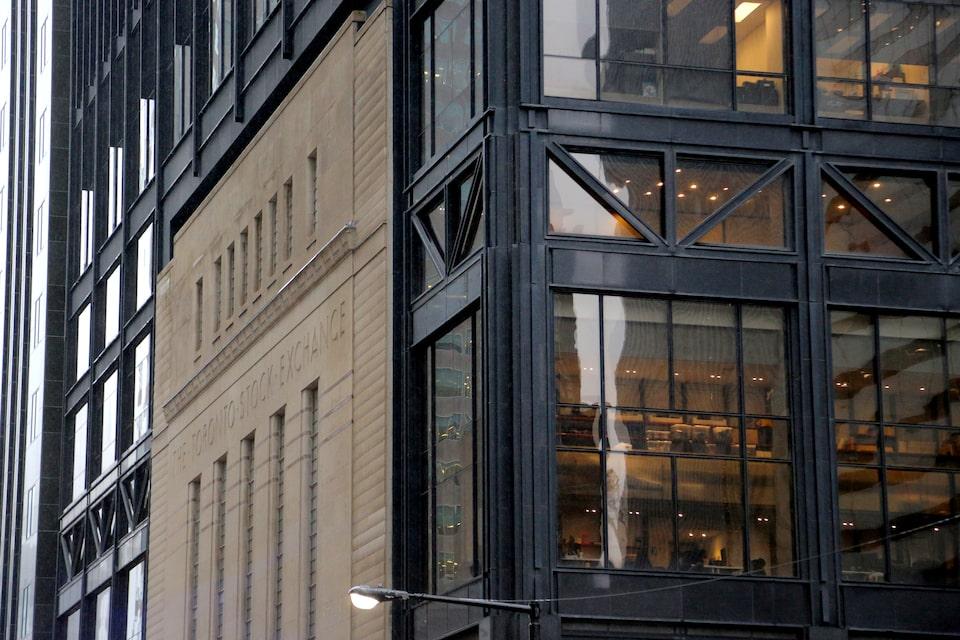
TSX ends down 1.2% at 29,906.55 Posts its lowest closing level since November 6 Materials group falls 4.5% as copper prices decline Technology ends 2.6% lower Nov 20 (Reuters) - Canada's main stock index fell to a two-week low on Thursday, weighed down by declines in the materials and technology sectors as Nvidia's earnings report failed to allay doubts that the surge in AI-related spending by companies will pay off. The S&P/TSX Composite Index (.GSPTSE) , opens new tab ended down 371.86 points, or 1.2%, at 29,906.55, its lowest closing level since November 6. Sign up here. Wall Street's main indexes also lost ground as early enthusiasm driven by Nvidia's earnings faded with investors questioning lofty valuations in the technology sector, while jobs data clouded the outlook for further U.S. interest rate cuts. U.S. employment growth accelerated in September, but the labor market remained sluggish and failed to keep pace with new job-seekers as employers dealt with fallout from import tariffs and integrated artificial intelligence into some positions. "There's been a lot of publicity about the billions and billions of dollars going into capital expenditures without any concrete evidence that there is going to be payback any time soon," said Michael Sprung, president at Sprung Investment Management. "If one assumes that gravy train is slowing down or will end ... then it's going to certainly affect both the need for materials and technology." The Toronto market's technology sector (.SPTTTK) , opens new tab fell 2.6%, with shares of electronics equipment firm Celestica Inc (CLS.TO) , opens new tab down 9.5%. The materials group, which includes metal mining shares, ended 4.5% lower, as gold and copper prices declined. Nine of the 10 major sectors ended lower. The exception was consumer staples, which added 0.9%. It was helped by a gain of 1.4% for the shares of food retail company Loblaw Companies Ltd (L.TO) , opens new tab. Altus Group Ltd was another bright spot. Shares of the real estate services company rose 5.4% as the company provided strategic updates at an Investor Day. https://www.reuters.com/business/tsx-rise-nvidia-pushes-bubble-fears-aside-2025-11-20/
2025-11-20 21:00
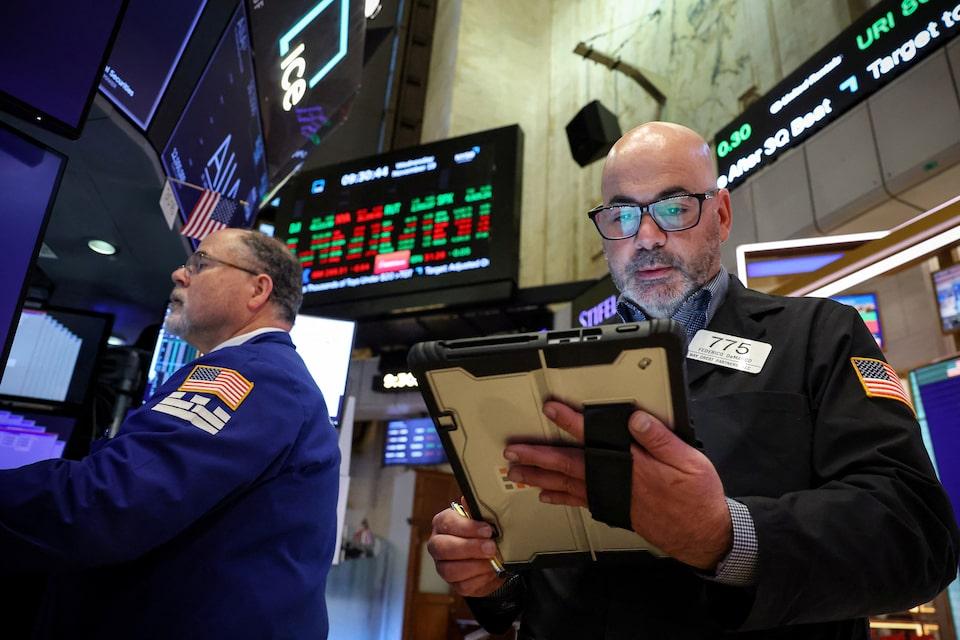
September NFP at +119,000 vs +50,000 estimate Walmart up after raising annual forecast Nvidia ends lower after reversal Indexes: Dow down 0.8%, S&P 500 down 1.6%, Nasdaq down 2.2% NEW YORK, Nov 20 (Reuters) - Wall Street stocks slid on Thursday in a sharp reversal from an early rally, as technology gains faded after a boost from Nvidia's earnings and U.S. jobs data muddied the labor market outlook. The Nasdaq registered its lowest close since September 11, while the S&P 500 had its lowest close since September 10. Meanwhile, Wall Street's fear gauge, the Cboe Volatility index (.VIX) , opens new tab, posted its highest close since April 24. Sign up here. Shares of Nvidia (NVDA.O) , opens new tab ended 3.2% lower after surging as much as 5% earlier in the day. Most chip-related companies also were negative, with an index of semiconductors (.SOX) , opens new tab falling 4.8%. Both the Nasdaq and Dow swung more than 1,000 points from their highs of the day to their lows. The Nasdaq's 4.9-percentage-point difference between the day's peak and low marked its biggest intraday swing since April 9, during the tariff mayhem. Investors have worried about lofty technology valuations amid concerns over steep artificial intelligence spending, with the Nasdaq now sharply off its October high. In addition, data showed the U.S. unemployment rate rose in September even as employers added more jobs than economists had expected. That has led to more uncertainty over whether the Federal Reserve will cut interest rates again in December. "I expected the market to be up today just based on the strength of Nvidia's earnings and the recent skepticism about AI investment. Nvidia's earnings obviously dispelled a bunch of those fears," said Jed Ellerbroek, portfolio manager at Argent Capital Management in St. Louis. While it is difficult to pinpoint a cause for the market's reversal, he said it could be a continuation of the defensive trades of the last two weeks. The consumer staples sector (.SPLRCS) , opens new tab, up 1.1% on the day, was the S&P 500's only gainer, while technology (.SPLRCT) , opens new tab, off 2.7%, was down the most. The Dow Jones Industrial Average (.DJI) , opens new tab fell 386.51 points, or 0.84%, to 45,752.26, the S&P 500 (.SPX) , opens new tab lost 103.40 points, or 1.56%, to 6,538.76 and the Nasdaq Composite (.IXIC) , opens new tab dropped 486.18 points, or 2.15%, to 22,078.05. Nvidia, the world's most valuable company, forecast sales above analysts' estimates for the fourth quarter and surpassed expectations for third-quarter revenue. In addition, Nvidia CEO Jensen Huang shrugged off concerns about AI on a call with analysts, saying, "We see something very different." The federal government is releasing delayed economic reports after reopening last week from a record 43-day shutdown. Thursday's labor report marks the last jobs report before the Fed's December meeting, with the U.S. Bureau of Labor Statistics set to skip its October report and instead combine nonfarm payrolls for that month with November's report. "The gates are wide open on this dam. This river of data is about to come flooding in. We're going to see exactly what we've been missing the last two months," said Jake Dollarhide, chief executive officer at Longbow Asset Management in Tulsa, Oklahoma. Fed Governor Lisa Cook said historically elevated prices in equities, corporate bonds, housing and leveraged loan markets may portend a large pullback in valuations. Among gainers, Walmart (WMT.N) , opens new tab advanced 6.5% after the retailer raised its annual forecast for the second time this year and set a December date to change its stock listing to the Nasdaq from the NYSE. Declining issues outnumbered advancers by a 3.25-to-1 ratio on the NYSE, where there were 93 new highs and 269 new lows. On the Nasdaq, 1,168 stocks rose and 3,585 fell as declining issues outnumbered advancers by a 3.07-to-1 ratio. Volume on U.S. exchanges was 21.45 billion shares, compared with the 19.94 billion average for the full session over the last 20 trading days. https://www.reuters.com/business/us-stock-futures-jump-nvidia-results-ease-ai-bubble-concerns-2025-11-20/
2025-11-20 20:50
BEIJING, Nov 20 (Reuters) - China's first coal-to-chemicals project integrating green hydrogen started commercial operations on Thursday, according to a report from state-run CCTV. Operated by major state-owned power producer Datang Group, the project is forecast to produce 70.59 billion cubic metres of hydrogen annually, station manager Cao Guoan told CCTV. Sign up here. He did not say how much the plant is currently producing or whether it would also generate other chemical derivatives. Coal chemicals plants typically convert coal into syngas - a mix of carbon monoxide and hydrogen - which can be further transformed into products including ammonia, methanol and olefins. The plant, in Inner Mongolia's Duolun, includes a 150-megawatt wind and solar plant that also sends its surplus electricity to the grid, according to the report. The plant was designated by the energy regulator as a national hydrogen demonstration project and "provides a replicable model for the green transformation of the coal chemicals industry," CCTV said. China is one of the few countries transforming coal into chemicals, oil and gas at large scale, a growing industry that is helping to reduce China's reliance on imports that could be cut off in a conflict. But growth in the emission-intensive sector is a key reason China is behind its 2025 carbon intensity target, spurring efforts to curb emissions. https://www.reuters.com/business/energy/chinas-first-coal-chemicals-project-with-green-hydrogen-starts-commercial-2025-11-20/