2025-11-19 14:43
Nov 19 (Reuters) - The U.S. Commerce Department's Census Bureau said on Wednesday it would publish both September retail sales and food services and durable goods orders reports next week. Both were delayed by the government shutdown. The monthly sales report for retail and food services will be issued on Tuesday, while the durable goods orders report is set for publication on Wednesday. The reports were initially due in October. Sign up here. The 43-day shutdown, the longest in history, halted the collection, processing and publishing of government-issued economic data, including the closely watched monthly employment and inflation reports. https://www.reuters.com/business/us-census-bureau-release-sept-retail-sales-durable-goods-orders-reports-next-2025-11-19/

2025-11-19 14:15
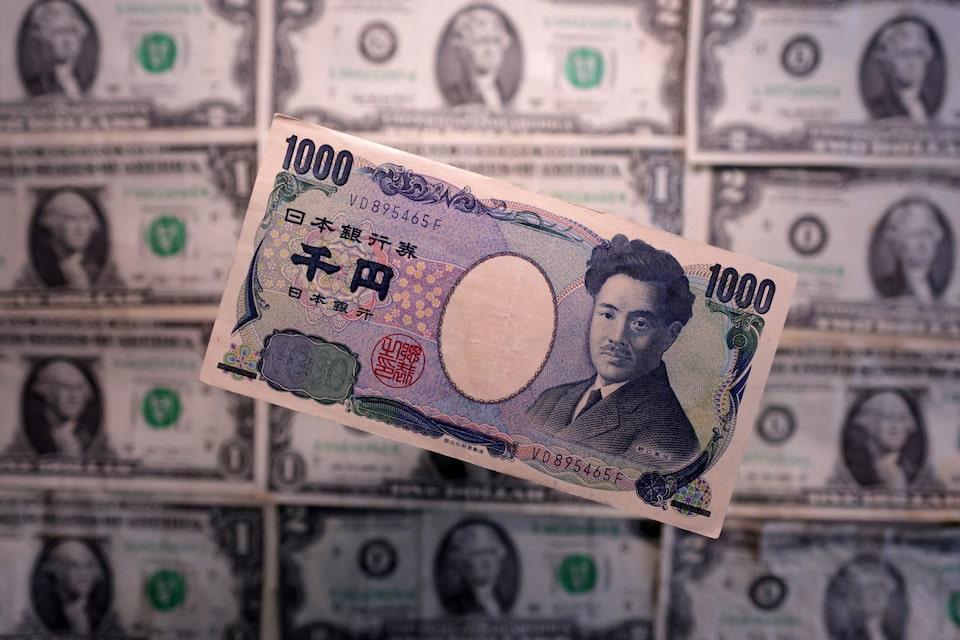
ORLANDO, Florida, Nov 19 (Reuters) - Conditions are ripe for a strong rally in the 'safe haven' Japanese yen, with a global stock market selloff sparking volatility across asset classes. But the Japanese currency is falling fast, calling into question its long-perceived role as a preferred hiding spot for spooked investors. The yen this week has tumbled to a 10-month low against the dollar and the weakest level ever against the euro. It has been, by far, the worst-performing G10 currency in recent months, raising the prospect of Japanese authorities intervening to lend it some support. Sign up here. Domestic issues are the key factor here. Japan's new Prime Minister Sanae Takaichi appears to be taking notes from the Donald Trump playbook: go large on fiscal stimulus and lean on the central bank to keep interest rates as low as possible, even if inflation is elevated. Unsurprisingly, investors are in no rush to pile into the yen despite the global market jitters. The yen's status as a major safe-haven currency, which it shares with the U.S. dollar and Swiss franc, is rooted in the large current account surpluses and ultra-low or zero interest rates that Japan ran for decades. These conditions gave rise to the yen carry trade. Japanese investors recycled the surpluses into higher-yielding assets overseas, making Japan the world's largest creditor nation for many years. At the end of June, Japan held a net $3.62 trillion in overseas stocks and bonds, according to the International Monetary Fund. In previous bouts of global market turbulence, repatriation of even a slender slice of that mountain of assets could deliver a quick, outsized boost to the yen. But that's not happening now. Perhaps the tremors roiling global markets aren't strong enough yet. Or, to cite that dreaded phrase, perhaps this time is different. CARRY THAT WEIGHT To put it bluntly, Japan's domestic policy stance is not yen-friendly at all. A ruling-party panel of lawmakers close to Takaichi has proposed a supplementary budget exceeding 25 trillion yen ($161 billion) to fund Takaichi's planned stimulus package. That's more than estimates floated recently and much larger than last year's $92 billion plan. Meanwhile, Takaichi has also indicated she would prefer the Bank of Japan not to raise interest rates. Markets have reacted accordingly. Japanese government bonds have tumbled, sending yields to historic highs, and the swaps market indicates that the probability of BOJ rate hikes in the coming months has fallen sharply. One might argue similar policy and political pressures are prevalent in the United States, and should therefore be pushing the dollar lower. That's fair, but these dynamics have been at play for months, so are surely priced in by now. Takaichi has been in power barely a month. "The 'safe haven' status is challenging when so many of the negative shocks are Japan-based," says Steven Englander, head of G10 FX strategy at Standard Chartered. "The yen is super-low yielding in real and nominal terms. It takes a lot to overcome that." FROM BOTH SIDES The BOJ's tightening process was already slow and gradual. It last raised its policy rate in January, doubling it to 0.5%, meaning Japan's real interest rates adjusted for inflation are still deeply negative. This is fertile ground for carry trades. Exchange rates are obviously two-sided, so it is a cruel twist for yen bulls that the BOJ could be slowing its tightening process just as the Federal Reserve seems to be doing the same with its easing plans. As the yen has been the worst-performing G10 currency in the second half of the year, the dollar has been the biggest gainer. A deeper rout in U.S. and global markets in the coming weeks could unwind some of these yen carry trades and restore the Japanese currency's safe-haven allure. On the other hand, with Japan's domestic policy mix being what it is, maybe that will be more of a challenge this time around. (The opinions expressed here are those of the author, a columnist for Reuters) Enjoying this column? Check out Reuters Open Interest (ROI), your essential source for global financial commentary. ROI delivers thought-provoking, data-driven analysis of everything from swap rates to soybeans. Markets are moving faster than ever. ROI can help you keep up. Follow ROI on LinkedIn , opens new tab and X , opens new tab. https://www.reuters.com/markets/currencies/japanese-yens-safe-haven-illusion-shatters-2025-11-19/
2025-11-19 14:12
MOSCOW, Nov 19 (Reuters) - The Russian central bank said on Wednesday that its sales and purchases of gold in the domestic market for the budget reserve, the National Wealth Fund (NWF), have been increasing in recent years due to the enhanced liquidity of gold , opens new tab. The central bank's assets in U.S. dollars, euros, and other major Western currencies have been frozen as part of Western sanctions imposed on Russia over its military actions in Ukraine. Sign up here. In 2023, Russia excluded the U.S. dollar, euro, and other Western currencies from the currency structure of its fiscal reserves, which are now held in China's yuan and gold, with target shares of 60% and 40%, respectively. "Yuan and gold are liquid assets of the NWF. The purchase or sale of liquid currency assets of the NWF for roubles entails the central bank conducting equivalent volume operations in the domestic market," the central bank stated. Due to the rally in global gold prices, the turnover of gold in the domestic market has grown, enabling the central bank to intensify its transactions in gold. The bank did not specify when it had increased the transaction volume. LIQUIDITY OF RUSSIA'S GOLD MARKET ALSO RISING The central bank cannot buy gold in international markets due to sanctions. Although Russia ranks as the world's second-largest gold producer after China, the low liquidity of the domestic market previously limited the central bank's ability to increase operations. "Since the liquidity of the domestic gold market has increased in recent years, the central bank conducts equivalent operations not only through the purchase and sale of yuan for roubles but also partially through the purchase and sale of gold," the central bank said. As of November 1, the liquid assets in the NWF, comprised of yuan and gold, amounted to $51.6 billion, or 1.9% of the projected gross domestic product (GDP). These assets could be used to cover the budget deficit. The NWF retains roubles from the state budget's excess oil revenues, while the central bank handles transactions in gold and foreign currency for the fund. It has been selling foreign exchange and gold on a net basis throughout 2025. The foreign currency and gold held on behalf of the NWF are accounted for as part of the central bank's gold and foreign exchange reserves, which stood at almost $720 billion, including the frozen assets, with the share of gold at over 41%. https://www.reuters.com/business/finance/russias-central-bank-says-its-operations-with-gold-are-increasing-2025-11-19/

2025-11-19 13:28
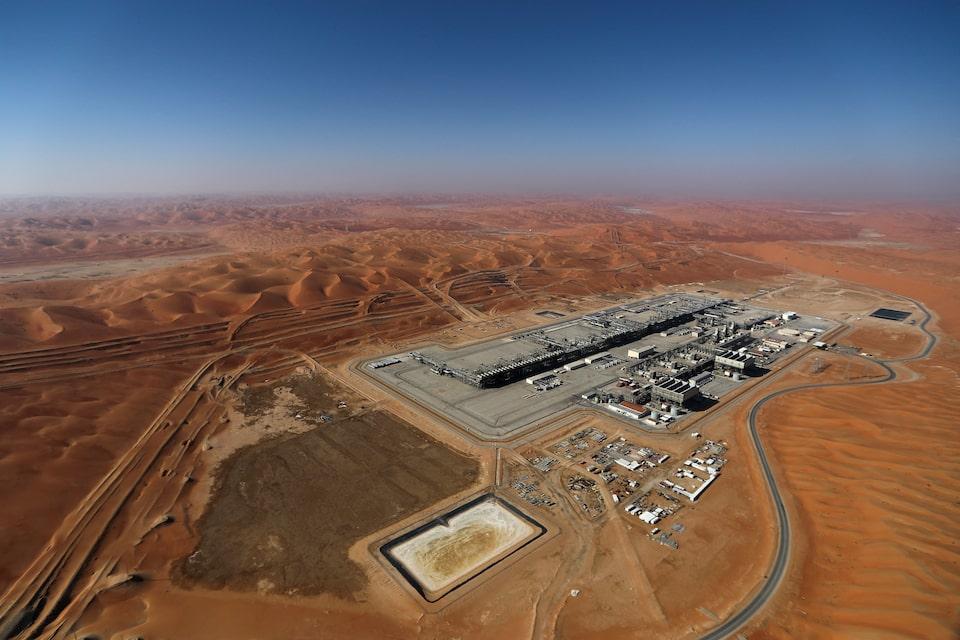
Nov 19 (Reuters) - Saudi Arabia's crude oil exports hit a seven-month high in September, data from the Joint Organizations Data Initiative (JODI) showed on Wednesday. Crude exports from the world's largest oil exporter increased to 6.460 million barrels per day (bpd), slightly higher than August's 6.407 million bpd, and their highest level since February. Sign up here. Saudi Arabia's crude output, meanwhile, touched a nearly two-and-a-half-year peak, of 9.966 million bpd in September, its highest since April 2023. Output in August stood at 9.722 million bpd. Saudi Arabia and other OPEC members submit monthly export figures to JODI, which publishes them on its platform. Refinery crude throughput in the kingdom rose to 2.940 million bpd in September, a 1.3% rise from August's 2.902 million bpd, JODI data revealed, while direct crude burning decreased by 122,000 bpd to 485,000 bpd. "OPEC+ Group of Eight decided to unwind their production cut in September, with Saudi Arabia increasing its production by 244,000 bpd, but with crude and refined product exports up by a fraction of it," said UBS analyst Giovanni Staunovo. "As inventory level was nearly unchanged, the difference must have been consumed domestically." OPEC+ has hiked its output targets by roughly 2.9 million barrels per day since April, equivalent to 2.7% of global supply, but agreed to pause increases in the first quarter of next year as the producers' group moderates plans to regain market share due to rising fears of a supply glut. OPEC+ pumped 43.02 million barrels per day in October, OPEC said last week, down 73,000 bpd from September. Expected demand for OPEC+ crude at 43.0 million bpd in 2026 implies that the world market will show a small surplus of 20,000 bpd if the wider group keeps pumping at October's rate, according to a Reuters calculation based on the report. The International Energy Agency (IEA) meanwhile said last week the market faces an even bigger surplus next year of as much as 4.09 million barrels per day. Saudi Arabia is expected to export at least 36 million barrels of crude oil to China in December. https://www.reuters.com/business/energy/saudi-arabia-crude-exports-rise-seven-month-high-september-2025-11-19/
2025-11-19 12:42
SEOUL, Nov 19 (Reuters) - A South Korean passenger ferry carrying 267 passengers and crew got stranded on Wednesday after running aground off the southwestern tip of the Korean peninsula, the coast guard said. Authorities were deploying all possible resources and carrying out a rescue operation, it said in a statement. Sign up here. The coast guard believed there were no casualties so far from the incident and the boat was not taking on water, the Yonhap News Agency reported. The 26,000-tonne ferry was travelling from Jeju Island to Mokpo, according to the coast guard. A coast guard official said the ferry had struck a rocky island near Jindo. The area is near the site of the sinking of the Sewol ferry in 2014 that killed more than 300 people, mostly school children heading for a school trip. https://www.reuters.com/world/asia-pacific/south-korean-ferry-with-260-passengers-hits-rocks-ytn-reports-2025-11-19/

2025-11-19 12:24
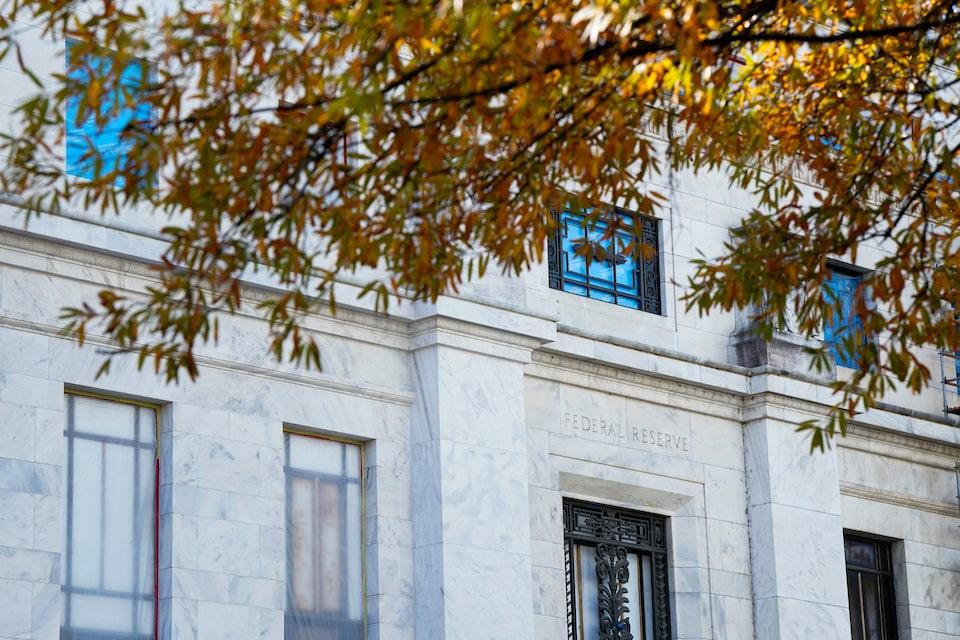
GC repo rate above Fed target range, signals scarce liquidity Bank reserves near critical level Fed funds rate rises, influenced by repo rate increases NEW YORK, Nov 19 (Reuters) - The cost of U.S. overnight funding in the repo market has stayed stubbornly high and is expected to remain elevated going into year-end despite recent Federal Reserve easing, adding another layer of stress to already fragile financial markets. A spike in repurchase or repo rates signals liquidity is scarce and raises funding costs across the financial system. Sign up here. The general collateral, or GC repo rate, which is the cost of borrowing short-term cash using Treasuries or other debt securities as collateral, opened at 4.05% on Tuesday, according to repo traders. That's five basis points higher than the upper end of the Fed's target range of 3.75%-4.00%. On October 31, the GC rate spiked to 4.25%, driven by the typical month-end surge in repo rates as banks step back from intermediation to manage their own higher balance sheet costs tied to reporting requirements. A similar surge is expected as the market approaches year-end. Overnight repo rates also have traded consistently above the Interest Rate on Reserve Balances (IORB) currently at 3.90% since mid-October, which suggest bank reserves are dipping into levels that could raise red flags. As of last week, reserves dropped to $2.8 trillion from $3.3 trillion a few months ago—just shy of the $2.7 trillion level Fed Governor Christopher Waller deems "ample" to prevent market disruptions. "We suspect that markets may be more vulnerable to overnight funding rate pressure than they were in 2019," said Joseph Abate, head of rates strategy at SMBC Nikko Securities, referring to September of that year when funding costs soared due to a large drop in bank reserves as corporations tried to meet a tax deadline and make payments for Treasury debt settlements. He cited large hedge funds' Treasury long positions in the cash market in so-called basis and relative value trades, with repo financing also growing sharply this year. In a basis trade, for instance, hedge funds would typically buy cash Treasuries and simultaneously hedge by selling futures to asset managers who will end up holding a long position on them. To finance that long position, hedge funds tap the repo market. Abate said hedge funds' long positions swelled by nearly $400 billion in the first six months of the year to $2.4 trillion. Their use of repo funding also increased by nearly $700 billion this year and is more than twice as large as in 2019, he added. TIGHTER OVERNIGHT LIQUIDITY Tighter overnight liquidity reflects several factors, including a surge in U.S. bill issuance by the Treasury to build its cash balance, and the impact of the record 43-day U.S. government shutdown that ended last week. The shutdown meant that the U.S. Treasury accumulated funds in its account at the Fed called the Treasury General Account (TGA), as government payments of salaries and other expenses were curtailed. At the same time, when new Treasuries are issued, investors such as dealers, banks and money market funds must pay cash to the U.S. Treasury on settlement day. This payment drains reserves from the private sector and moves them to the TGA. As available reserves decline it gets costlier to borrow cash in the repo market, pushing rates higher. "There's no doubt that with the government shutdown and the increase in the TGA and the fact that there are no balances left at the reverse repo facility, we are operating on the edge of what an ample reserve regime is," said Brij Khurana, portfolio manager at Wellington Management in Boston. Scott Skyrm, executive vice president at Curvature Securities, also pointed to the swelling U.S. budget deficit this year, which needs to be financed by new debt. "If we have $1.8 trillion in the budget deficit, that's an extra $100 billion of Treasuries coming into the market every month," said Skyrm. "Somebody has to pay for those and that's cash being used to finance those Treasuries." Still, the clearest sign of stress, analysts said, is the recent rise in the effective fed funds rate (EFFR) -- the interest banks charge each other for overnight loans to meet reserve requirements. Analysts attributed this to the pull higher from repo rates. The EFFR is currently at 3.88%, up from 3.86% touched on October 31 two days after the Fed cut interest rates by 25 basis points. Some market participants also warned repo pressures could trigger the unwinding of leveraged trades in riskier assets such as stocks and bitcoin, both of which have seen sharp selloffs in recent weeks. To be sure, the Fed has the ultimate backstop -- the Standing Repo Facility (SRF) -- which serves as a shock absorber for temporary market liquidity shortfalls, although there have been long-standing questions about its ability to fulfill that role. Fed officials have urged banks to use the Standing Repo Facility (SRF) without concern that borrowing from the central bank signals distress. Last week, New York Fed President John Williams met with major Wall Street banks to discuss SRF usage and gather feedback to ensure the tool remains effective in managing interest rates. https://www.reuters.com/business/finance/what-fed-cut-us-repo-rates-still-high-liquidity-tightens-into-year-end-2025-11-19/