2025-11-18 20:24
Jamaica seeking funds to rebuild after Hurricane Melissa Minister at COP30 calls islanders 'victims of the actions of others' Country needs grants and investments more than loans BELEM, Brazil, Nov 18 (Reuters) - Jamaica spent years building a pot of money to handle climate-fuelled disasters. It turned out to be enough to cover just 5% of the cost wrought by one storm. Hurricane Melissa has left the island nation with bills totalling $10 billion – only $500 million of which it can cover with climate-preparation reserves stockpiled to deal with disasters, Jamaican cabinet minister Matthew Samuda told Reuters. Sign up here. Jamaica is asking wealthy countries at the COP30 climate summit in Belem, Brazil, to urgently offer grants, investment and concessional finance. What it does not want are commercial-rate loans that saddle the country with more debt as it faces a future expected to deliver increasingly severe climate impacts such as heatwaves, droughts, rising seas and catastrophic storms. "We don't come as mendicants. We come as victims of the actions of others," Samuda said in an interview at the summit, referring to the fact Jamaica has done little to cause the planet-warming emissions that are driving climate change. He said Jamaica had spent three decades improving its financial health and inching closer to an investment grade credit rating. "To have quite a bit of that success wiped out in a single 24-hour period by a storm that was stronger, lasted longer, came at a time of year that is unusual and brought more rain than usual because of the actions of others, is a difficult pill to swallow." Negotiations at the COP30 summit aim to make progress in shoring up funding for developing countries to prepare for and adapt to the coming climate extremes. The U.N. estimates they will need at least $310 billion a year by 2035. "COP30 cannot end without an ambitious outcome (on adaptation)," said Ana Mulio Alvarez, policy advisor at climate think tank E3G. CATEGORY 5 STORM WREAKS HAVOC Melissa walloped Jamaica on October 28 as a powerful Category 5 hurricane, delivering an initial 17-foot storm surge along with severe winds and some 30 inches of rain that caused landslides and flooding. Scientists determined climate change had made the storm 30% stronger than it would have been without global warming - and six times more likely to hit when it did. Samuda described the impact as "seismic," with 192,000 buildings damaged and the country's key tourism and agriculture sectors hobbled. He said the storm should be given a new Category 6 designation. The economic damage was far greater than that caused by the COVID-19 pandemic, he said, when the island lost some 10% of its GDP. The pandemic "didn't wash away bridges, destroy roads, disrupt the water supply in the way that this particular incident has," Samuda said. Before Melissa hit, Jamaica had been building protection against such events, including through a catastrophe bond issued by the World Bank that disbursed $150 million and a parametric insurance scheme that helped to net another $90 million. These self-help measures garnered about $500 million before Melissa caused $10 billion in estimated damages, just under 30% of the country's economic output. "That leaves a $9.5 billion gap," Samuda said. (This story has been corrected to clarify that $9.5 billion refers to the finance gap, not the amount of financial help Jamaica is seeking, in the headline) https://www.reuters.com/sustainability/cop/jamaica-seeks-95-billion-financial-help-rebuild-after-melissa-2025-11-18/

2025-11-18 20:22
IAEA's 35-nation board is holding a quarterly meeting Recent report said verifying uranium stock 'long overdue' Agency has still not accessed sites bombed by Israel, US Draft calls on Iran to allow snap IAEA inspections Iran has warned of retaliation if resolution passes VIENNA, Nov 18 (Reuters) - Europe's top three powers and the U.S. have submitted a draft resolution to this week's meeting of the U.N. atomic watchdog's 35-nation Board of Governors demanding answers and access from Iran over its bombed nuclear sites and enriched uranium stock. Diplomats said the draft resolution submitted by France, Britain, Germany and the United States on Tuesday and seen by Reuters is highly likely to be passed as early as Wednesday. It follows a damning International Atomic Energy Agency report on Iran sent to member states last week. Sign up here. That report said Tehran has still not let inspectors into the nuclear sites Israel and the United States bombed in June and that accounting for the uranium stock is "long overdue". Iran has still not informed the IAEA of the status either of those sites or that stock, which includes material enriched to up to 60% purity, close to the roughly 90% that is weapons-grade. "Iran must ... provide the (International Atomic Energy) Agency without delay with precise information on nuclear material accountancy and safeguarded nuclear facilities in Iran, and grant the Agency all access it requires to verify this information," read the draft text. IRAN WARNS OF RETALIATION The draft resolution stops well short of finding Iran in breach of its obligations, as a resolution in June did just before Israel attacked, but Iran has warned that it will retaliate against any resolution targeting it. "Should this draft resolution be adopted, it will unavoidably and adversely affect the positive course of cooperation between Iran and the IAEA," Iran's mission to the IAEA said on X on Friday, calling the push for a resolution a "major mistake". Iran and the IAEA announced an agreement in September that was supposed to pave the way towards a full resumption of inspections and accounting of Iran's enriched uranium, but Tehran has since said it is void. Western diplomats had billed the draft resolution as mainly technical, giving fresh instructions to the IAEA to report on Iran's nuclear activities after a 10-year mandate from 2015, the year of a nuclear deal between Iran and major powers, expired. Yet it included not only language admonishing Iran for its poor cooperation and calling for a diplomatic solution - an apparent reference to possible talks with the U.S. - but also a demand that Iran implement the so-called Additional Protocol expanding IAEA powers. BROADER, MORE INTRUSIVE OVERSIGHT Implementing the Additional Protocol, which Iran signed in 2003 but never ratified, was a cornerstone of the 2015 deal, which lifted sanctions against Iran in exchange for tight restrictions on its nuclear activities. The Additional Protocol grants the IAEA broader and more intrusive oversight of a country's nuclear activities, such as the power to carry out snap inspections at undeclared locations. The 2015 deal unravelled after President Donald Trump pulled the United States out of it in 2018. Iran retaliated by abandoning the restrictions, including the Additional Protocol. "(The IAEA board) calls upon Iran to act strictly in accordance with the provisions of the Additional Protocol that it signed on 18 December 2003, and to fully implement this measure without delay," the draft said. It also requested the IAEA to provide additional details in its reports, such as where Iran's uranium stockpile is stored and its inventory of uranium-enriching centrifuges. The IAEA lost oversight of Iran's centrifuge stock when Iran stopped implementing the Additional Protocol in 2021. The IAEA currently only has the authority to monitor the centrifuges at Iran's declared enrichment facilities, which were destroyed or badly damaged in the Israeli and U.S. military attacks. https://www.reuters.com/world/middle-east/us-e3-draft-resolution-iaea-board-demands-swift-cooperation-iran-2025-11-18/
2025-11-18 20:10
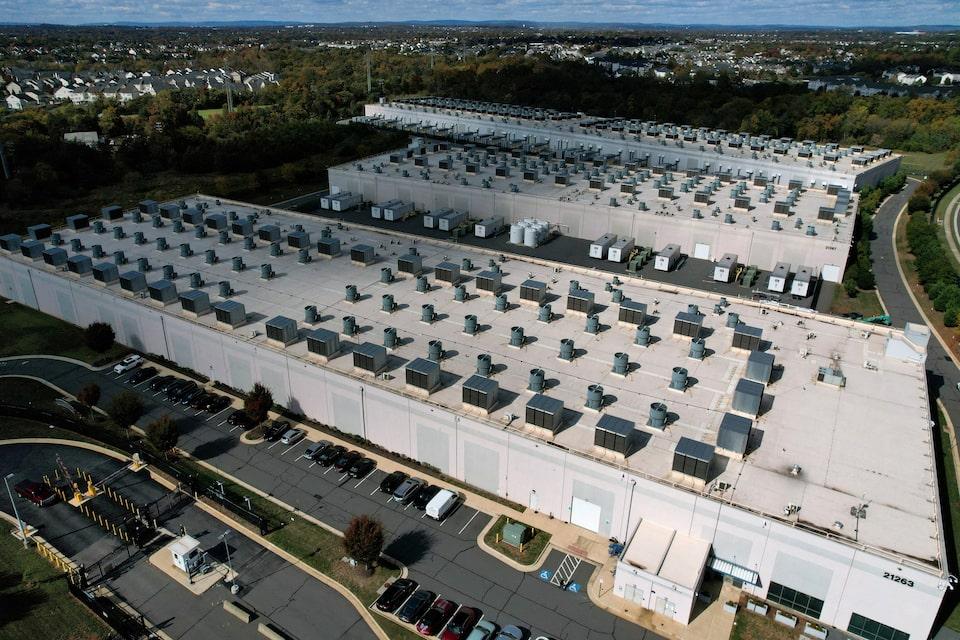
Nov 18 (Reuters) - Rising power demand driven by data centers is shrinking U.S. electricity supplies and increasing the risk of energy shortages if extreme winter weather strikes this year, the North American Electric Reliability Corporation said on Tuesday. The swift proliferation of data centers in the U.S., along with the electrification of buildings and transportation, is driving up electricity use across the country faster than new power supplies are added to the grid. That dwindling supply can raise the possibility of power shortfalls in extremely cold weather, when energy-intensive heating systems increase overall demand. Sign up here. After multiple years of flat or near-flat growth, peak demand has grown by about 20 gigawatts, or 2.5%, from last year, NERC officials said in their annual winter assessment of the reliability of the U.S. and Canada's power grids. New electricity net supplies added since last year were less than 10 gigawatts. "As a result, record-setting demand is anticipated for some areas and may strain the grid in areas with double-digit growth rates," NERC said. Areas including PJM, the U.S. Southeast, and parts of the U.S. West have the largest increase in peak demand forecasts, NERC said. The areas that NERC assesses, which include the U.S. and Canada, had adequate power supplies under normal expected winter weather for the three months ending in February, the regulator said. Prolonged and widespread severe frigid weather, however, raises the likelihood of supply shortages in areas including New England, the West, Texas and the Southeast, NERC said. Growth in power sources like wind and solar, which only produce energy when the wind blows and the sun shines, has added complexity to the grid and intensified reliability concerns in some areas, said NERC. Frigid temperatures can also freeze off natural gas power production and fuel sources, increasing risks. https://www.reuters.com/business/energy/us-data-center-demand-raising-power-risks-this-winter-regulator-says-2025-11-18/
2025-11-18 20:00
SANTIAGO, Nov 18 (Reuters) - Five tourists were killed in a powerful snowstorm in Chile's Torres del Paine National Park, in the southern region of Patagonia, authorities said on Tuesday, adding that four more who were reported missing had been found alive. Jose Antonio Ruiz, the presidential delegate for Chile's southern Magallanes region, said talks had begun with the representatives from the victims' countries of origin so their bodies could be repatriated. Sign up here. Two Germans, two Mexicans and one British national were killed, authorities said, adding the harsh weather was making it difficult to recover the bodies. "I extend my deepest condolences," President Gabriel Boric said on social media in a message to victims' families. "Know that you have the full support and collaboration of Chilean authorities and institutions during these difficult times." Guillermo Ruiz, presidential delegate for the province of Ultima Esperanza, told reporters the tourists became lost near the national park's Los Perros camp, reachable only by a four- to five-hour trek from the closest accessible point by vehicle. The area was struck by a snowstorm causing whiteout conditions with fierce wind speeds surpassing 193 kmh (120 mph), equivalent to a Category 3 hurricane. The Torres del Paine National Park, with its jutting mountain tops and subpolar forests, spans about 1,810 square kilometers (700 square miles) and hosts hundreds of thousands of visitors each year. https://www.reuters.com/sustainability/climate-energy/chile-rescuers-search-tourists-lost-patagonian-snowstorm-two-reported-dead-2025-11-18/

2025-11-18 19:41
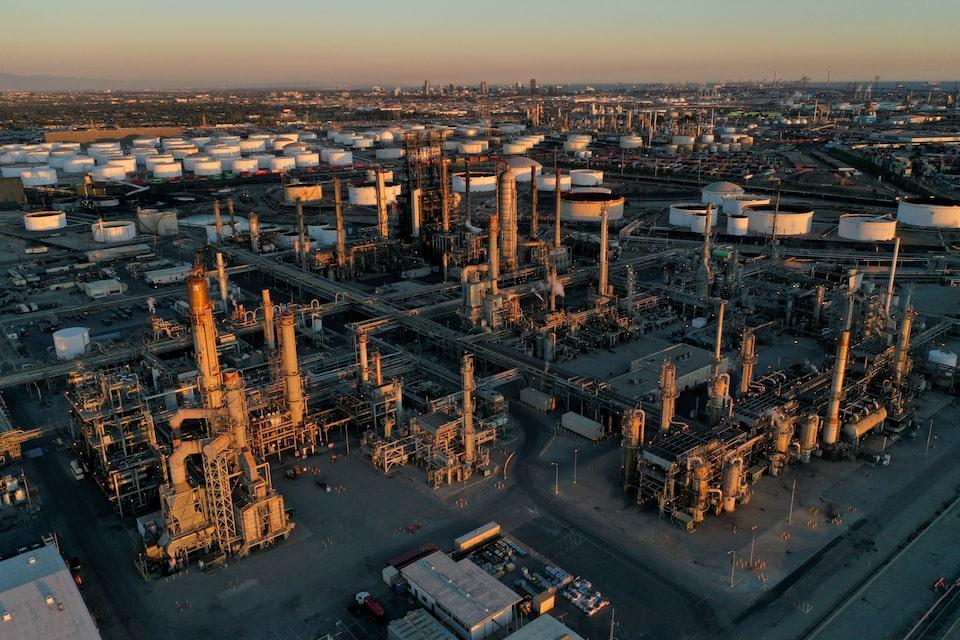
Pipeline projects aim to fill void from refinery closures Feasibility hinges on shipper commitments, analysts say Projects face competition from seaborne imports NEW YORK, Nov 18 (Reuters) - A race is on among energy companies to build a major fuel pipeline to the U.S. West Coast, a potentially lucrative prize as the planned closure of two California refineries threatens to send gasoline prices in the isolated market soaring. Motorists in West Coast states have long paid some of the country's highest fuel prices due to limited regional production and minimal connectivity to the Gulf Coast refining hub. There are no pipelines delivering fuel to California from across the Rocky Mountains and only a few pipelines deliver to the West Coast from the Gulf Coast, according to the Energy Information Administration. Sign up here. Phillips 66's Los Angeles plant began winding down operations in September and Valero Energy's Benicia refinery plans to close in April, threatening more price shocks for consumers but presenting an opportunity for pipeline operators. Three groups have outlined different proposals to fill the near 280,000 barrel-per-day supply void the closures create. These include refiner HF Sinclair, a unit of pipeline operator ONEOK (OKE.N) , opens new tab, and a partnership between refiner Phillips 66 (PSX.N) , opens new tab and midstream-focused Kinder Morgan (KMI.N) , opens new tab. However, the first to reach a final investment decision may be the only one to secure a potential multi-billion-dollar windfall because multiple pipelines to the West Coast would eat into each other's margins, which are already limited due to the availability of waterborne imports to California. "When you see multiple pipeline projects being proposed at the same time, typically only one of them gets done," said Skip York, chief energy strategist at Turner, Mason & Co. POLITICAL PRESSURE OPENS RARE WINDOW The planned refinery closures have put intense pressure on California Governor Gavin Newsom to stop fuel prices from surging, creating a rare window for the approval of a fossil fuel project in a state that has long vilified "Big Oil". "Given the backlash to refinery closures, it's hard to imagine much resistance to new projects," East Daley analyst Alec Gravelle said. Capacity commitments make up most of the financing required to build pipelines, so securing at least 70% of the proposed projects' capacity could decide which of them progresses, York said. That gives Western Gateway - the Phillips 66-Kinder Morgan project - and HF Sinclair's proposal an advantage, as the refiners themselves could guarantee some of the supply, Scotiabank analyst Paul Cheng said. None of the proponents have yet announced any capacity commitments. Phillips 66 declined to comment on competing West Coast pipeline proposals. The other proponents did not immediately respond to requests for comment. Proposals reusing existing lines also have a better chance of moving forward than new builds because regulatory approval may be easier, said Debnil Chowdhury, head of Americas and European refining at S&P Global Commodity Insights. Parts of Western Gateway and HF Sinclair's plan propose using existing lines. RIVAL REFINERS BET ON WATERBORNE FUELS While a new pipeline could provide some stability to regional gasoline prices, refining executives have questioned whether any will ultimately get built, pointing to California's access to waterborne fuels. "In terms of the pipelines that are rumored to come into the region, I would say that's a big if," said Rick Hessling, chief commercial officer for Marathon Petroleum, adding the timing and transportation cost of waterborne barrels trumped pipelines. Valero Energy, the second-largest independent refiner, is unlikely to commit to a long-term shipping arrangement with any of the three projects, Chief Operating Officer Gary Simmons said during an investor call last month. "We like the waterborne option because it allows you to source barrels from anywhere in the world and take advantage of international arbs that can be open," Simmons said, referring to price arbitrage opportunities. https://www.reuters.com/business/energy/california-refinery-closures-spark-pipeline-race-west-coast-2025-11-18/
2025-11-18 18:10
Dar Global wants to 'tokenize' up to 70% of Maldives hotel - CEO Dar Global talking to SEC about the matter, spokesperson says Saudi developer's CEO not concerned by any extra scrutiny LONDON, Nov 18 (Reuters) - Saudi luxury real estate developer Dar Global (DARD.L) , opens new tab hopes to fund much of its latest Trump hotel in the Maldives by selling blockchain-based crypto tokens to U.S. retail investors, its CEO told Reuters on Tuesday. London-listed Dar Global is one of The Trump Organization's main overseas partners, with seven projects under development including an 80-storey tower in Dubai, a golf resort in Qatar and hotels and high-end homes across Saudi Arabia and Oman. Sign up here. Developers typically tap institutional investors or wealthy family offices for the cash to fund large-scale projects, but Dar Global CEO Ziad El Chaar said in an interview in London that it hoped to fund up to 70% of its latest Trump International Hotel in the Maldives by selling tokens to retail investors. "We would like to ... tokenize 70% of that development fund to as many token holders as possible," said El Chaar, adding: "The biggest crypto market and the biggest amount of investors are in the U.S.". Dar Global is in discussions with U.S. regulator the Securities and Exchange Commission (SEC) on the matter and is exploring options in other unspecified countries, a spokesperson for the company told Reuters. The Trump Organization and the SEC did not immediately respond to requests for comment on the matter. El Chaar said he was not concerned about any additional scrutiny resulting from Dar Global's relationship with The Trump Organization. "Obviously, with the Trump brand, you have the politics involved, but from our side, this is not our domain," he added. https://www.reuters.com/world/middle-east/saudi-developer-wants-sell-trump-hotel-tokens-us-retail-investors-2025-11-18/


