2025-11-18 07:03
TotalEnergies acquires 50% in Czech energy company EPH's power business French company aims to grow power business while also increasing oil and gas Strategy contrasts with Shell and BP that scrapped most renewables plans LONDON, Nov 18 (Reuters) - France’s TotalEnergies (TTEF.PA) , opens new tab is betting big on power and renewables, positioning itself to ride the global electricity demand wave and offer investors a clear alternative to rivals doubling down on oil and gas. European oil companies' strategies have seesawed since 2022, when Russia's full-scale invasion of Ukraine and the related sanctions created an energy shock that made governments focus more on near-term energy security than the long-term energy transition. Sign up here. The changing landscape led Shell (SHEL.L) , opens new tab and BP (BP.L) , opens new tab to ditch plans to plough billions of dollars into renewables and instead refocus on their legacy operations, aligning with U.S. rivals Exxon Mobil (XOM.N) , opens new tab and Chevron (CVX.N) , opens new tab . At the same time, TotalEnergies CEO Patrick Pouyanne defied investor pressure and largely stuck to a strategy first outlined in 2020 that strikes a balance between growth in core oil and gas operations and diversification into power and renewables. That strategy was on full display on Monday when TotalEnergies announced the acquisition of a 50% stake in Czech energy company EPH's Western European power generation platform in a 5.1 billion euro ($5.92 billion) all-stock transaction. EPH, majority-owned by Czech billionaire Daniel Kretinsky, has more than 14 gigawatts of flexible capacity in operation or under construction, including gas-fired and biomass power plants and battery systems in Italy, France, the Netherlands and Britain. The deal more than doubles TotalEnergies' gas and biomass generation capacity to 13.5 GW, making it one of the largest producers in Europe. The company expects the deal to boost cashflow by $750 million per year over the next five years while also reducing annual capital expenditures by $1 billion to between $14 billion and $16 billion, as the French energy major will not need to invest in building new power capacity. POWER PLAY TotalEnergies aims to generate 100 to 120 terawatt hours of electricity globally by 2030, compared with 41 TWh in 2024, mainly by expanding solar and wind power. That equates to over 4% of the European Union's annual consumption. To be sure, TotalEnergies has slowed investments in renewables and power in recent years in the face of soaring oil and gas prices and weakening returns on solar and wind. The company in September said it will cut annual spending on its integrated power business by 20-40% to between $3 billion and $4 billion. And TotalEnergies' power business is still far smaller than its core oil and gas businesses, which accounted for around 88% of adjusted net income of $4.7 billion in the third quarter. But when it comes to growth rates, power takes the prize. While oil and gas production is expected to increase by 3% per year by 2030, TotalEnergies aims to grow its gross installed renewables power generation , opens new tab three-fold from current levels to 100 GW by the end of the decade. In Europe alone, following the EPH deal, TotalEnergies aims to grow gas and biomass generation by 40% between now and 2030 to 35 TWh and more than triple current renewables and batteries capacity over the same period to 20 GW and 7 GW, respectively. By comparison, Shell and BP have sold or spun off most of their renewable power generation assets in recent years. Shell had a mere 4 GW of net renewable generation by the end of September, compared with 19 GW for TotalEnergies. Exxon and Chevron have modest plans to invest in gas-fired power generation in the United States. Italian energy group Eni (ENI.MI) , opens new tab, like its French rival, has stuck to its energy transition strategy, though it took a unique path by spinning off its renewables and retail arm into a standalone business to attract external investment. The business, Plenitude, aims to almost triple its renewables generation capacity to 15 GW by 2030. ‘IT TAKES TIME’ Investors have so far responded coolly to TotalEnergies' strategy. Its shares have risen some 14% since 2020, compared with gains of 67% for Exxon, 29% for Chevron and 27% for Shell, while BP's shares lost 3% over the period. Pouyanne recently said he aims to increase TotalEnergies' power business “step by step” in order to keep pace with the expected growth in electricity consumption from electric vehicles and data centres. “The transition will happen, but it takes time,” Pouyanne told the Energy Intelligence Forum in October. TotalEnergies has never had the flashiest clean energy strategy – as it has always sought to continue growing its legacy oil and gas business even as it pivots to power and renewables. But that steady realism may be just what the energy transition needs. Want to receive my column in your inbox every Monday and Thursday, along with additional energy insights and links to trending stories? Sign up for my Power Up newsletter here. Enjoying this column? Check out Reuters Open Interest (ROI), , opens new tabyour essential new source for global financial commentary. ROI delivers thought-provoking, data-driven analysis. Markets are moving faster than ever. ROI , opens new tab can help you keep up. Follow ROI on LinkedIn , opens new tab and X. , opens new tab https://www.reuters.com/markets/commodities/totalenergies-power-play-teaches-big-oil-how-energy-transition-can-work-2025-11-18/
2025-11-18 07:01
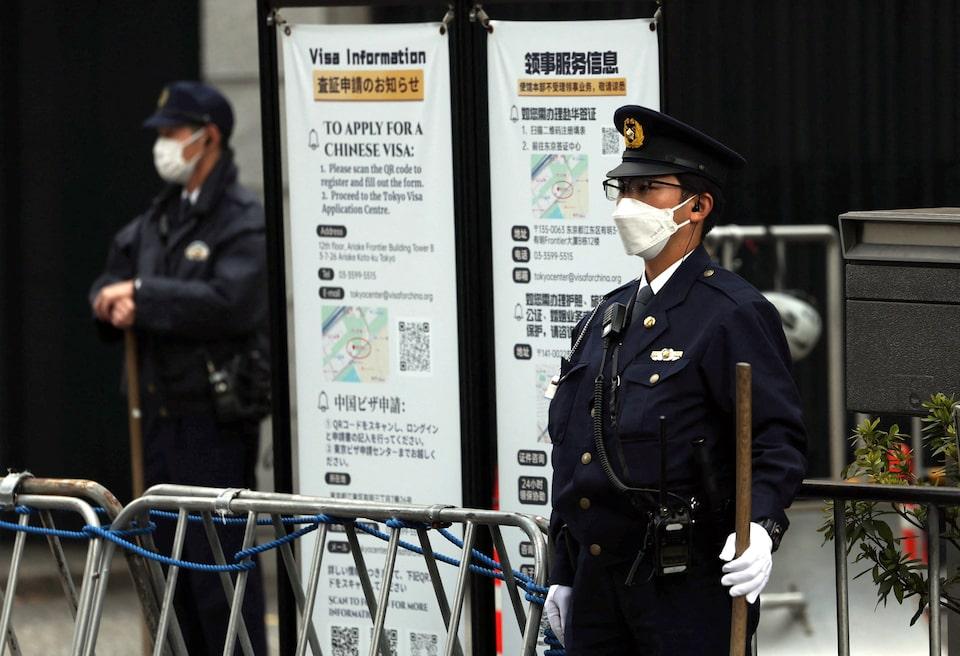
Japan advises citizens in China to avoid crowded areas, look out for 'suspicious people' Japanese film screenings in China suspended as rift intensifies Japan's business leaders call for diplomatic resolution BEIJING/TOKYO, Nov 18 (Reuters) - Japan has warned its citizens in China to step up safety precautions and avoid crowded places amid a deepening dispute between Asia's two largest economies over Japanese Prime Minister Sanae Takaichi's comments on Taiwan. The advisory issued by Japan's embassy in China came as a senior Japanese foreign ministry official travelled to Beijing to hold talks on Tuesday with his Chinese counterpart to try and tamp down tensions. Sign up here. China has urged its citizens not to travel to Japan, in what could deal a sizeable blow to Japan's economy given Chinese currently make up nearly a quarter of all tourists there, according to official data. Tourism-related stocks in Japan have plunged. MOST SERIOUS DIPLOMATIC CLASH IN YEARS Takaichi sparked the most serious diplomatic clash in years when she told Japanese lawmakers this month that a Chinese attack on Taiwan threatening Japan's survival could trigger a military response. In response, a Chinese diplomat in Japan posted a threatening comment aimed at Takaichi on social media. That drew a strong rebuke from Tokyo but has failed to stem a wave of vitriolic commentaries aimed at her in Chinese state media. "We have made judgments based on comprehensive consideration of the security situation in the country or region, as well as its political and social conditions," Kihara said on Tuesday about the safety notice. Noting the media coverage in China, the Japanese embassy there had on Monday reminded citizens to respect local customs and be careful in their interactions with Chinese people. It asked citizens to be aware of their surroundings when outside, advising them to not travel alone and urging extra caution when travelling with children. "If you see a person or group that looks even slightly suspicious, do not approach them and leave the area immediately," the embassy notice said. Film distributors have also suspended the screening of at least two Japanese films in China amid the deepening dispute between Tokyo and Beijing, in what Chinese state broadcaster CCTV said late Monday was a "prudent decision" that took into account souring domestic audience sentiment. Some Japanese films including the animated "Crayon Shin-chan the Movie: Super Hot! Scorching Kasukabe Dancers" and manga-turned-movie "Cells at Work!", originally slated for release in the coming weeks, will not begin screening in mainland China as scheduled, CCTV said, citing checks with film importers and distributors. EFFORTS TO EASE TENSIONS Beijing claims democratically governed Taiwan as its own and has not ruled out using force to take control of the island. Taiwan's government rejects Beijing's claims and says only its people can decide the island's future. Taiwan sits just over 110 km (68 miles) from Japanese territory and the waters around the island provide a vital sea route for trade that Tokyo depends on. Japan also hosts the largest contingent of U.S. military overseas. On Sunday, Chinese coast guard ships sailed through waters around a group of East China Sea islands controlled by Japan but claimed by China. Japan's coast guard said it drove the Chinese ships away. The U.S. does not formally recognise the islands, known as Senkaku in Tokyo and the Diaoyu in Beijing, as Japanese sovereign territory but since 2014 has said it would be obliged to defend them if attacked under the Japan-U.S. security treaty. "In case anyone was in doubt, the United States is fully committed to the defense of Japan, which includes the Senkaku Islands. And formations of Chinese coast guard ships won’t change that," U.S. ambassador to Japan George Glass said on X. This week's G20 summit in South Africa provided a potential forum to help ease tensions but China said its premier has no plans to meet Takaichi on the sidelines of the gathering. Kihara said nothing has been decided about bilateral meetings during G20, but that Japan remains open to conducting "various dialogues" with China. 'ON A KNIFE'S EDGE' As well as tourism, Japan is heavily dependent on China for supply of critical minerals for everything from electronics to cars. “If we rely too heavily on a country that resorts to economic coercion the moment something displeases it, that creates risks not only for supply chains but also for tourism," Japan's economic security minister Kimi Onoda told a press conference on Tuesday. "We need to recognise that it’s dangerous to be economically dependent on somewhere that poses such risks," she added, responding to a question about China's calls for its citizens to avoid travel to Japan. Japan's Trade Minister Ryosei Akazawa said on Tuesday there had been no particular changes in China's export control measures on rare earths and other materials as of yet. The heads of Japan's three business federations met with Takaichi late on Monday and urged dialogue to resolve the diplomatic tensions. "Political stability is a prerequisite for economic exchange," Yoshinobu Tsutsui, chairman of Japan's biggest business lobby Keidanren, told reporters after the meeting, according to media reports. Japan's refusal to retract its statements meant its de-escalatory efforts had failed to mollify Beijing, Cornell University's China foreign policy expert Allen Carlson said. "As a result, the two countries now stand on a knife’s edge." https://www.reuters.com/world/asia-pacific/china-suspends-japanese-film-releases-diplomatic-crisis-deepens-2025-11-18/
2025-11-18 06:57
JOHANNESBURG, Nov 18 (Reuters) - The South African rand was subdued in early trade on Tuesday, as a stronger dollar prompted investors to stay away from riskier assets, while local traders remained cautious ahead of key economic data due later this week. At 0639 GMT, the rand traded at 17.2125 against the dollar , about 0.3% weaker than its previous close. Sign up here. "The ZAR lost some ground overnight, with the gold price retreating to close to $4000 and also on the back of U.S. operators reducing their hopes of a U.S. cut next month," said Adam Phillips, treasury specialist at Umkhulu Treasury. Gold prices fell for a fourth consecutive session on Tuesday, weighed down by a firmer dollar and diminished prospects of a U.S. interest rate cut next month. Like other risk-sensitive currencies, the rand often takes cues from global drivers such as U.S. policy and economic data. Domestically focused traders await figures on October consumer inflation (ZACPI=ECI) , opens new tab and September retail sales (ZARET=ECI) , opens new tab, due on Wednesday, followed by the central bank's interest rate (ZAREPO=ECI) , opens new tab decision on Thursday for clues on the health of Africa's largest economy. Economists polled by Reuters expect the Monetary Policy Committee to cut its main lending rate by 25 basis points to 6.75%. South Africa's benchmark 2035 government bond was flat in early deals, with the yield at 8.63%. https://www.reuters.com/world/africa/south-african-rand-subdued-traders-cautious-ahead-key-local-data-2025-11-18/

2025-11-18 06:55
Fed needs to move slowly with further rate cuts, Jefferson says Focus shifts to US non-farm payrolls data due on Thursday Traders see 46% chance of US interest rate cut in December Nov 18 (Reuters) - Gold prices fell to their lowest levels in more than a week on Tuesday as fading bets on a Federal Reserve interest rate cut next month dented demand ahead of delayed U.S. economic data releases this week. Spot gold was down 0.1% at $4,039.71 per ounce as of 1213 GMT, after hitting its lowest since November 10 earlier in the session. Sign up here. U.S. gold futures for December delivery fell 0.9% to $4,039 per ounce. "Market participants are pricing out U.S. interest rate cuts following more hawkish comments from Fed officials," said UBS analyst Giovanni Staunovo. "I would expect gold prices to bottom out soon, as I still see the Fed cutting rates several times over the coming quarters, and central banks' diversification into gold remains strong." Markets have trimmed their bets for a rate cut next month to just over a 46% chance from 67% last week, the CME FedWatch tool showed. FEDWATCH The longest U.S. government shutdown, which ended last week, led to a halt of official economic data, leaving policymakers and traders flying blind ahead of next month's Fed policy meeting. Traders had hoped the resumption of official data would make the case for a December rate cut, but those hopes faded as more Fed officials last week signalled caution. Fed Vice Chair Philip Jefferson said on Monday that the central bank needed to "proceed slowly" on further rate cuts. Non-yielding gold tends to do well in a low interest-rate environment and during times of economic uncertainties. Investors will be looking to Wednesday's release of minutes from the Fed's last meeting and September non-farm payrolls due on Thursday for further cues. "We still see a longer-term favourable fundamental backdrop for gold. The U.S. economy continues to cool, U.S. interest rates are set to fall and the U.S. dollar should weaken as a result," said Julius Baer analyst Carsten Menke. Elsewhere, spot silver was steady at $50.2 per ounce, platinum was marginally up at $1,534.30, and palladium gained 0.7% to $1,402.73. https://www.reuters.com/world/india/gold-extends-fall-firm-dollar-easing-fed-rate-cut-bets-2025-11-18/

2025-11-18 06:53
AidData finds China's lending to wealthy countries focuses on critical infrastructure, minerals, high tech US received more than $200 billion for 2,500 projects Britain received $60 billion, EU $161 billion AidData says many Western-led financial institutions choose to collaborate with Chinese state-owned creditors HONG KONG, Nov 18 (Reuters) - The United States is the biggest recipient of China's lending activities globally, according to a study which tracked Beijing's credit activities and found it is increasingly lending to higher-income countries over developing countries. The report, published on Tuesday by AidData, a research lab at U.S. university William & Mary, said China's lending and grant giving totalled $2.2 trillion across 200 countries in every region of the world from 2000 to 2023. Sign up here. China has long been seen as a creditor to developing countries through its Belt and Road initiative, but is shifting toward lending to advanced economies — backing strategic infrastructure and high‑tech supply chains in areas such as semiconductors, artificial intelligence and clean energy. Beijing's portfolio size is two-to-four times larger than previous estimates suggest, AidData said, adding that China remains the world's largest official creditor. More than three-quarters of China's overseas lending operations now support projects and activities in upper-middle-income countries and high-income countries. "Much of the lending to wealthy countries is focused on critical infrastructure, critical minerals and the acquisition of high-tech assets like semiconductor companies," said lead author Brad Parks, AidData's executive director. The United States received the most official sector credit from China, more than $200 billion for nearly 2,500 projects and activities, the report said. Chinese state-owned entities are "active in every corner and sector of the U.S.", bankrolling the construction of LNG projects in Texas and Louisiana, data centres in Northern Virginia, terminals at New York's John F. Kennedy International Airport and Los Angeles International Airport, the Matterhorn Express Natural Gas pipeline and the Dakota Access Oil pipeline, AidData said. Beijing has financed the acquisition of high-tech companies, while Chinese state-owned creditors have provided credit facilities for many Fortune 500 companies including Amazon, AT&T, Verizon, Tesla, General Motors, Ford, Boeing and Disney, the report said. The share of lending to low and lower-middle income countries fell to 12% in 2023 from 88% in 2000. Beijing has also cut lending for infrastructure projects in the "Global South", under its Belt and Road Initiative. At the same time it has ramped up its share that supports middle-income and high-income countries to 76% in 2023 from 24% in 2000. The United Kingdom for instance received $60 billion, while the European Union got $161 billion. https://www.reuters.com/business/autos-transportation/us-is-biggest-recipient-chinese-loans-study-shows-2025-11-18/

2025-11-18 06:37
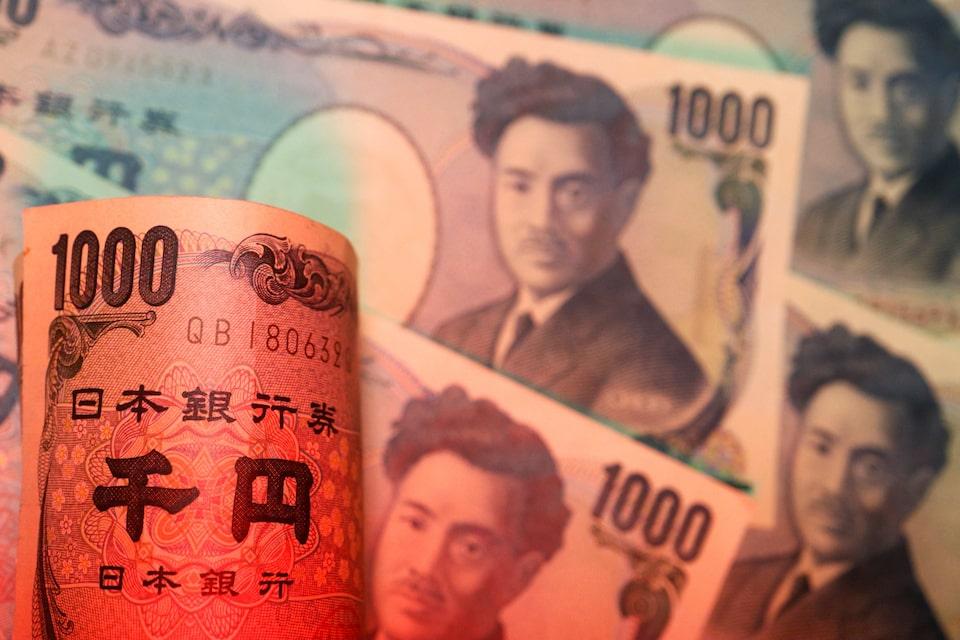
TOKYO, Nov 18 (Reuters) - Japanese authorities are facing renewed pressure to combat a decline in the yen, driven in part by market bets that dovish new premier Sanae Takaichi will pile pressure on the central bank to go slow in raising interest rates. A weak yen boosts exports but hurts households and retailers by inflating already rising import costs for fuel and food. The dollar has climbed about 5% against the yen since Takaichi won the ruling party's leadership race on October 4. It stood around 155 yen on Tuesday. Sign up here. Here are possible steps the government and the central bank could take: ESCALATE VERBAL INTERVENTION - HIGHLY LIKELY Authorities have recently said they are watching currency rates with a "high sense of urgency" as the yen has been making "one-sided, sharp" moves. Finance Minister Satsuki Katayama escalated that tone on Tuesday, saying authorities were "alarmed" over the yen's volatile moves. Last week, she acknowledged that the disadvantages of a weak yen may be more pronounced than its advantages. Analysts say that if the yen makes a sustained break below 155 per dollar and approaches the psychologically important 160 mark, authorities may warn they are ready to take "decisive action" against excessive moves - a sign yen-buying intervention could be nearing. AUTHORITIES SIGNAL CHANCE OF NEAR-TERM RATE HIKE - POSSIBLE After ending a decade-long, massive stimulus last year, the BOJ has raised interest rates twice, the last time to 0.5% in January. It has stood pat since then. The slow pace of policy normalisation has helped keep the yen on a downtrend. If the administration's worries about the demerits of a weak yen grow, Takaichi may signal a more conciliatory stance toward an increase in the BOJ's policy rate to 0.75%. BOJ officials could also lay the groundwork for a near-term rate hike through speeches. BOJ board member Junko Koeda will deliver one on November 20 and board member Asahi Noguchi on November 27. Governor Kazuo Ueda will deliver a speech on December 1. BOJ RAISES INTEREST RATES - POSSIBLE Ueda last month dropped unusually strong signals of a rate hike in December or January next year. While unsuccessful, two board members proposed raising rates in September and October, underscoring growing momentum for a near-term hike. The yen may get some respite if the BOJ meets market expectations and hikes rates either in December or January. But the rebound could prove short-lived if Ueda signals that any further rate increases could be slow to come. JAPAN INTERVENES IN CURRENCY MARKET - HIGHLY UNLIKELY Japan last intervened in the currency market in July 2024 when the yen fell to a 38-year low of around 161.96 to the dollar. The BOJ also raised interest rates to 0.25% that month, causing the yen to strengthen to around 150 per dollar. Such concerted action highlighted the concern then-premier Fumio Kishida had about a weak yen. Takaichi and her reflationist aides have been less vocal in their concern over the currency's slide. Though their approach could change if the yen slides to near 160, the hurdle for intervention could be higher. The weak yen is a reflection of Japan's deeply negative real interest rate, making it hard for Tokyo to make the case that the currency's falls are out of step with fundamentals. Getting Washington's blessing may also be tough as U.S. Treasury Secretary Scott Bessent has repeatedly signalled that rate hikes are the best way to prop up the yen. https://www.reuters.com/world/asia-pacific/japans-toolkit-combat-unwelcome-yen-declines-2025-11-18/