2025-11-18 06:34
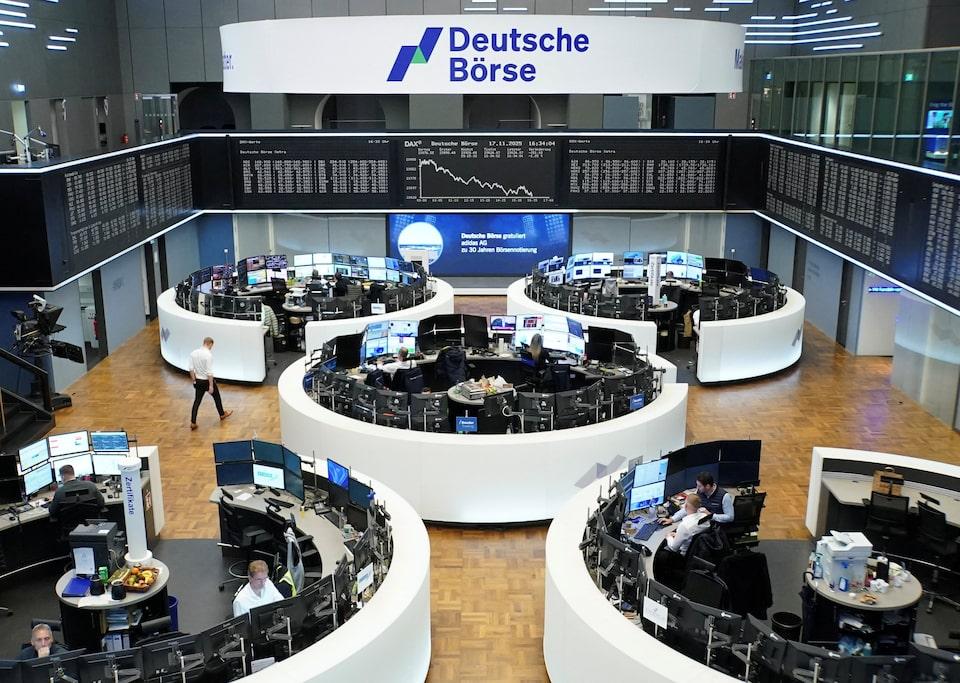
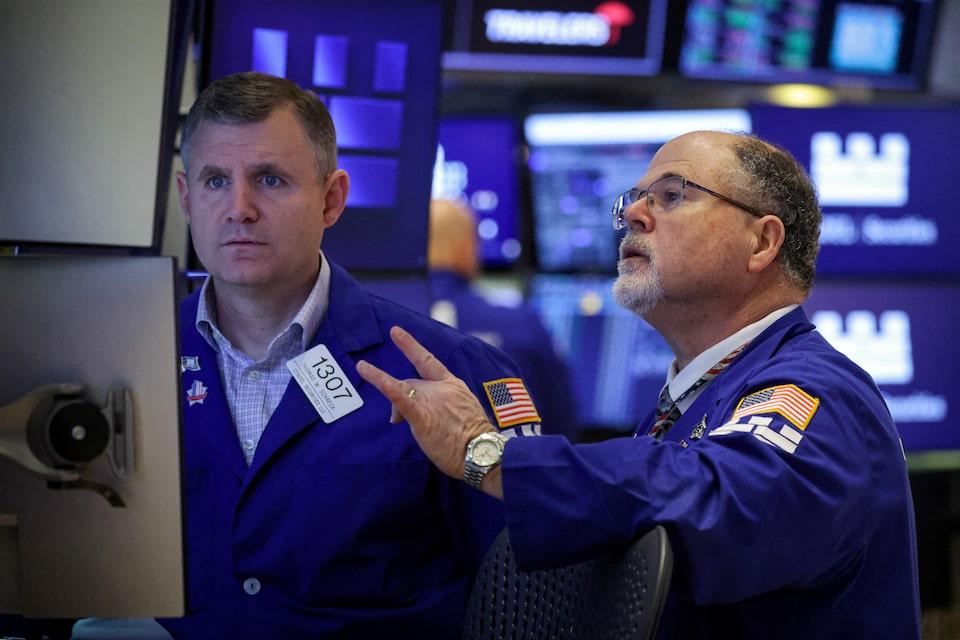
Nvidia earnings to test AI boom sustainability European STOXX closes at one-month low Home Depot forecasts steeper profit drop, raising consumer health concerns Gold reverses earlier losses NEW YORK, Nov 18 (Reuters) - Wall Street stocks closed sharply lower on Tuesday, extending a selloff prompted in part by the run-up to Nvidia earnings, which could test the artificial intelligence boom amid mounting valuation concerns. All three major U.S. stock indexes ended deep in negative territory, with crude, bitcoin and gold advancing and U.S. Treasury yields dipping as investor risk appetite soured. The S&P 500 and the Dow logged their fourth consecutive daily losses, during which the bellwether S&P 500 has fallen 3.4%. Sign up here. Chipmaker Nvidia's (NVDA.O) , opens new tab quarterly results, expected on Wednesday, will be scrutinized for signs that the AI juggernaut, which has provided the muscle for much of the stock market's recent rally, has staying power or whether the fervor surrounding the technology has created a bubble. In other earnings, home improvement retailer Home Depot (HD.N) , opens new tab forecast a steeper than expected drop in annual profit, raising concerns about the housing market and the health of the American consumer. "Investors are sensing that the tenor of the market has shifted," said Chuck Carlson, chief executive officer at Horizon Investment Services in Hammond, Indiana. "They don't necessarily want to be too bullish on tech in case Nvidia doesn't hit the ball out of the park." "We're getting toward the end of a pretty good year, especially if you were a tech investor, and now you're starting to see a bit of a pullback," Carlson added. "(Investors) want to make sure that they protect their gains." Official economic indicators that were unavailable during the longest government shutdown in U.S. history are being released, with the Commerce Department's August report of new orders for U.S. factory-made goods gaining 1.4% as expected. WORLDWIDE SELLOFF DEEPENS The Dow Jones Industrial Average (.DJI) , opens new tab fell 498.56 points, or 1.07%, to 46,091.68, the S&P 500 (.SPX) , opens new tab fell 55.08 points, or 0.83%, to 6,617.33 and the Nasdaq Composite (.IXIC) , opens new tab fell 275.23 points, or 1.21%, to 22,432.85. European shares closed at a one-month low, with German stocks hitting a near five-month low as risk appetite continued to sour due to worries over tech valuations and dimming hopes for a December rate cut from the U.S. Federal Reserve. MSCI's gauge of stocks across the globe (.MIWD00000PUS) , opens new tab fell 11.64 points, or 1.18%, to 976.17. The pan-European STOXX 600 (.STOXX) , opens new tab index fell 1.72%, while Europe's broad FTSEurofirst 300 index (.FTEU3) , opens new tab fell 39.04 points, or 1.71%. Emerging market stocks (.MSCIEF) , opens new tab fell 24.29 points, or 1.75%, to 1,363.56. MSCI's broadest index of Asia-Pacific shares outside Japan (.MIAPJ0000PUS) , opens new tab closed lower by 1.9%, to 701.18, while Japan's Nikkei (.N225) , opens new tab fell 1,620.93 points, or 3.22%, to 48,702.98. U.S. Treasury yields fell as falling stock markets bolstered safe-haven demand. The yield on benchmark U.S. 10-year notes fell 1.4 basis points to 4.119%, from 4.133% late on Monday. The 30-year bond yield rose 0.5 basis points to 4.7408% from 4.736% late on Monday. The 2-year note yield, which typically moves in step with interest rate expectations for the Federal Reserve, fell 3.5 basis points to 3.575%, from 3.61% late on Monday. DOLLAR STEADIES, CRYPTO REBOUNDS, GOLD GAINS The dollar held gains against the yen after reaching a fresh 9-1/2-month high, and edged up versus the euro as investors contended with jitters over Japan's fiscal policy and scoured data for signals on the Federal Reserve's next move. The dollar index , which measures the greenback against a basket of currencies including the yen and the euro, rose 0.05% to 99.60, with the euro down 0.09% at $1.1579. Against the Japanese yen , the dollar strengthened 0.18% to 155.52. Bitcoin reversed course, gaining 0.99% to $92,715.39 after dipping below $90,000, nearly 30% below its peak. Ethereum rose 3.69% to $3,116.25. Crude prices turned higher as investors assessed the impact of sanctions on Russian oil. U.S. crude gained 1.39% to settle at $60.74 per barrel, while Brent settled at $64.89 per barrel, up 1.07% on the day. Gold reversed its slide, turning losses to gains after touching a one-week low. Spot gold rose 0.64% to $4,070.25 an ounce. U.S. gold futures fell 0.12% to $4,063.40 an ounce. https://www.reuters.com/world/china/global-markets-global-markets-2025-11-18/
2025-11-18 06:30
Leading opposition figures in jail, exile or under charge Lawsuit would ban three opposition parties Ruling party says it is shielding Georgia from figures who would foment war TBILISI, Nov 18 (Reuters) - Just over a year ago, a diverse array of opposition coalitions jockeyed for votes in Georgia’s parliament, with four of them winning seats. Today, of their eight main leaders, all but one are in jail, in exile or facing criminal charges. The ruling party aims to ban the three main opposition groups outright. The slide into one-party rule has shocked many in the tiny South Caucasus country of 3.7 million. In the years following the collapse of the Soviet Union, Georgia appeared a burgeoning democracy, on the fast track to joining the EU and escaping Russia's orbit. Sign up here. But now it is further from the West than at almost any time in its post-Soviet history, according to an assessment from Brussels, which described its democratic institutions as hobbled and its courts under the thumb of the state. This month, the EU declared in a report that Georgia was now a candidate for membership "in name only". The EU ambassador in Tbilisi said Georgia was no longer on the trajectory to join the bloc at all. Senior veterans of Georgian politics and diplomacy who spoke to Reuters about the events of the past few months said it appears as though Georgia is close to a line, beyond which it will be hard for democracy to recover. "We are now five minutes away from one-party dictatorship," said Sergi Kapanadze, a former deputy foreign minister and deputy parliamentary speaker until 2020. 'DEMOCRATISATION MEANS AT SOME POINT YOU WILL LOSE POWER' Natalie Sabanadze, Tbilisi's ambassador to the EU until 2021, said that across decades of often caustic domestic political dispute, there had always been a political consensus that Georgia belongs in the West. That had now been lost. "They know that democratisation, which the EU demands, means accepting that at some point you will lose power," she said of the ruling Georgian Dream party. "They don't want that. And they are basically building a fully-fledged authoritarian regime." Georgian Dream says it is protecting the country from opposition figures who are trying to seize power and foment a catastrophic war with Russia. It is a fear that became palpable after Russia's invasion of Ukraine in 2022, which evoked memories among Georgians of Russian tanks rolling into the suburbs of Tbilisi in a humiliating defeat by Moscow in a brief war in 2008. "Georgia is an island of peace in a very difficult geopolitical region," said Nino Tsilosani, a ruling party lawmaker serving as deputy speaker in parliament. "What investors and what businesses need is stability." She accused jailed opposition politicians of trying to plot a coup, charges the opposition parties reject as fabricated to justify a crackdown. Opponents paint Georgian Dream's billionaire founder Bidzina Ivanishvili as the author of the authoritarian shift. Some accuse him of being in league with Russia, where he amassed his fortune in the 1990s. Gia Khukhashvili, who helped launch the party as Ivanishvili's top political advisor before breaking with him in 2013, said it was wrong to view his former boss as subservient to Moscow. Rather, Ivanishvili just sees a "coincidence of interests" between the countries, he said. "He understands that in this ocean of sharks, he needs an older brother. Who is the older brother? It can only be Russia," Khukhashvili said. ECONOMY TURNS TOWARDS RUSSIA, CHINA Located strategically on the Black Sea in a region criss-crossed by oil and gas pipelines, Georgia could, in theory, play a major role in the West's gambit to diversify energy and trade routes away from Russia. After emerging from ethnic conflict and economic collapse that accompanied the fall of the Soviet Union in the 1990s, Georgia experienced rapid growth spurred by investor-friendly policies that accompanied its political turn towards the West. That openness has now reversed swiftly, with foreign direct investment falling over the past two years to levels last seen in the early 2000s. Growth has held up, with a flood of Russian businesses and IT workers into Georgia since the start of war in Ukraine proving a boon to the economy. The World Bank forecasts Georgia's GDP to grow by 7% this year, after 9.4% last year. But construction of a deep-water port on the Black Sea - a potential key transit hub connecting Asia to Europe - has largely stalled since a Western-led consortium was booted from the project. A Chinese company has since won the contract but progress on building the port has been minimal. Meanwhile, Georgia now imports about 45% of its oil from Russia, up from just 8% in 2012, although Tbilisi and Moscow have no diplomatic relations. Ian Kelly, a former U.S. ambassador to Georgia, said the West could have done more to build links with Tbilisi. "We're blowing it," he said. "Georgia has opened the doors to Russia and China." SPEED CHESS In recent weeks, Georgian Dream has undertaken a flurry of measures that look to root out what remains of political dissent. An impending lawsuit at the Constitutional Court will ban the three main opposition parties, while new criminal charges against nine key opposition figures - including jailed former President Mikheil Saakashvili - look sure to keep any potential challengers behind bars for years. Lately, the crackdown has targeted figures close to the ruling party itself, with recent criminal charges levied even against senior government ministers and former top allies of Georgian Dream founder Ivanishvili. The authorities are moving so quickly that Kapanadze, the former deputy speaker, likened the situation to "speed chess", with the opposition trying to stave off checkmate while hoping the government makes tactical mistakes in its haste. Arrests at nightly anti-government protests outside the parliament keep political activists in states of fear, despair and resignation. Dozens are languishing in jail or have been fined for blocking the road. "Georgia has just disappeared, from not just the European table, but from the global stage," said Grigol Gegelia of the Lelo party, which is facing a ban. "We are losing our country." https://www.reuters.com/world/five-minutes-autocracy-how-georgia-u-turned-its-western-path-2025-11-18/

2025-11-18 06:19
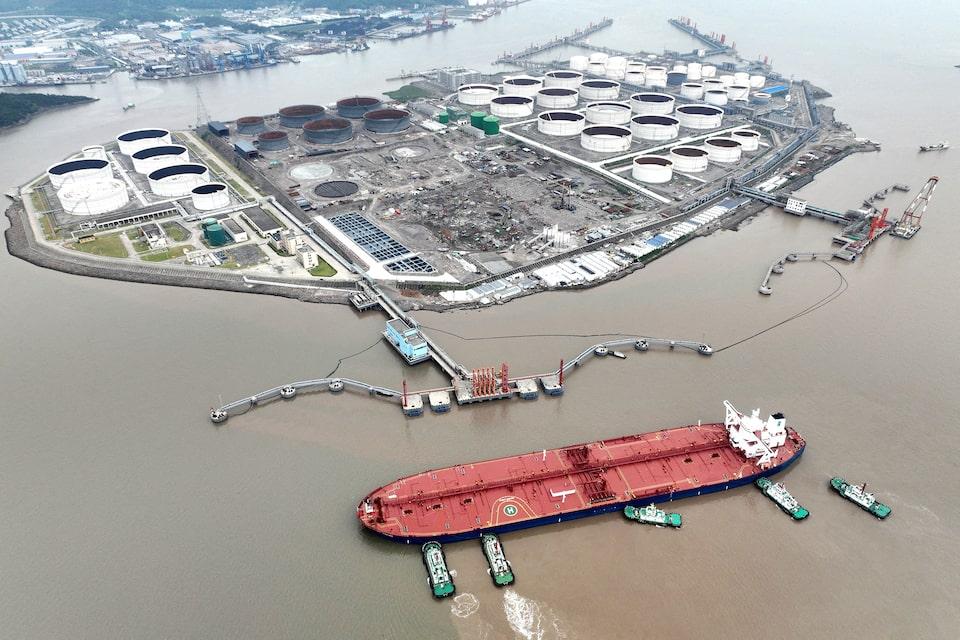
Reuters Open Interest (ROI) is your essential source for global financial commentary. LAUNCESTON, Australia, Nov 18 (Reuters) - China's flows of crude oil into storage likely lifted in October as robust imports and domestic output outweighed an increase in refinery processing. China's surplus of crude oil was about 690,000 barrels per day (bpd) in October, up from about 570,000 bpd in September, according to calculations based on official data. Sign up here. The rate at which China has been adding to inventories is increasingly being seen as a key factor in crude oil demand in the world's biggest importer, as well as adding a layer of uncertainty into price forecasts. China's refineries processed 14.94 million bpd in October, an increase of 6.4% from the same month last year, although down from the two-year high of 15.26 million bpd in September, according to data published on November 14 by the National Bureau of Statistics. Crude imports were 11.39 million bpd in October while domestic production was 4.24 million bpd, giving a combined total of 15.63 million bpd of oil available to refiners. Subtracting the refinery processing from the total crude available leaves 690,000 bpd that was available to be added to commercial or strategic storages. China does not disclose the volumes of crude flowing into or out of its strategic and commercial stockpiles, but an estimate can be made by deducting the amount of oil processed from the total crude available from imports and domestic output. It is worth noting that not all of the surplus crude was likely to have been added to storage, with some being processed in plants not captured by the official data. But even allowing for those gaps, it is clear that from March onwards, China was importing crude at a far higher rate than necessary to meet domestic fuel demand. For the first 10 months of the year, the surplus crude amounts to about 900,000 bpd, given that imports and domestic output combined are 15.65 million bpd, while refinery processing amounted to 14.75 million bpd. The surplus has been built up since March and came after refiners made a rare draw on inventories in January and February, when processing rates exceeded available crude by about 30,000 bpd. This was the first time since September 2023 that throughput exceeded the amount of crude from imports and domestic output. PRICE IMPACT The draw on inventories at the start of 2025 came amid rising oil prices, with benchmark Brent futures reaching their highest point so far this year of $82.63 a barrel on January 15, having risen steadily from levels around $70 in early December. Since then crude prices have trended lower, with occasional spikes higher due to geopolitical tensions such as the brief conflict between Israel and Iran in June. Brent ended at $64.20 a barrel on Monday, the mid-point of the $60-$70 range that has persisted since the start of August. While China's refiners and the authorities in Beijing don't talk publicly about their strategies for building inventories, it's clear that they tend to import more crude when they deem prices to be reasonable, and pull back when prices rise too high or too rapidly. This was in evidence in September, when the surplus crude dropped to 570,000 bpd after hitting 1.10 million bpd in August. Cargoes arriving in September would largely have been arranged at the time of the Israel-Iran conflict, when crude prices were elevated, with Brent spiking to a six-month high of $81.40 a barrel on June 23. With prices having eased since June, China's refiners have resumed buying excess crude. In effect, China's storage flows act as a floor and ceiling for the crude oil price, meaning that it's likely that China will absorb any global surplus that may eventuate as OPEC+ lifts output targets. Enjoying this column? Check out Reuters Open Interest (ROI), your essential new source for global financial commentary. ROI delivers thought-provoking, data-driven analysis of everything from swap rates to soybeans. Markets are moving faster than ever. ROI can help you keep up. Follow ROI on LinkedIn , opens new tab and X , opens new tab. The views expressed here are those of the author, a columnist for Reuters. https://www.reuters.com/markets/commodities/china-stockpiles-more-crude-october-oil-prices-moderate-2025-11-18/
2025-11-18 06:15
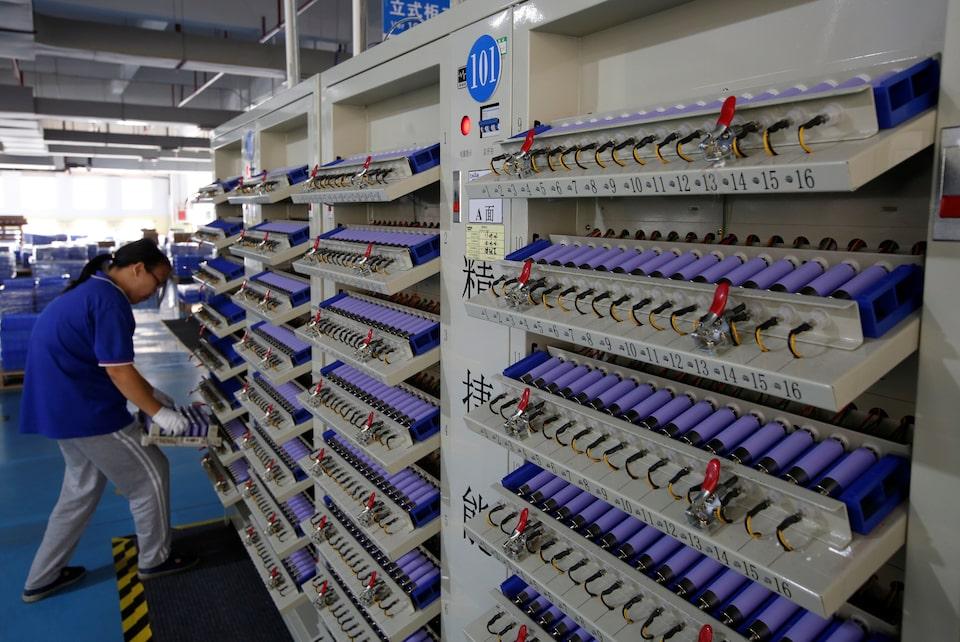
LITTLETON, Colorado, Nov 18 (Reuters) - China's exports of batteries and battery energy storage systems (BESS) have hit a record in 2025, soaring by 24% from the year before over the first nine months of the year. Batteries have been China's most lucrative clean energy technology export since mid-2022, and so far this year have generated roughly $60 billion in export receipts for the country, data from energy think tank Ember shows. Sign up here. That compares to battery earnings of just under $48 billion over the same period in 2024, and exceeds China's year-to-date export earnings from electric vehicles, grid components, renewable energy infrastructure and cooling equipment. China is the global leader in battery technology manufacturing and exports, and is benefiting from a worldwide boom in demand for batteries used in EVs and power networks. Below is a breakdown of the top markets for China's battery exports, which look set to undergo further steep growth into most major markets heading into 2026. WIDE SPAN Twenty-three different nations have bought $500 million or more of China-made batteries so far in 2025, which underscores both the unrivalled reach of China's manufacturers and how lucrative the battery export segment has become. Germany is the top overall market for China's batteries so far in 2025, with $10.5 billion in sales recorded just through September. Large battery customers include Germany's top car makers such as Volkswagen and BMW (BMWG.DE) , opens new tab as well as grid operators and utilities that are building out the country's BESS network. The United States is the next largest market for China's batteries ($9.3 billion so far this year), followed by Vietnam ($3.6 billion). Germany has also posted the largest annual rise in purchases of China's batteries this year, with receipts up by $2.5 billion compared to the same months in 2024. The Netherlands, Australia and India also posted steep year-over-year rises in imports, with each country spending over $1 billion more so far in 2025 compared to last year. RAPID GROWTH Regionally, Europe is the top destination for China's battery exports, and has accounted for 42% of all China battery exports so far in 2025. Asia is the next largest market, with a 26% share so far in 2025, followed by North America (with a 17% share). However, the Middle East and Latin America have been the fastest growing regions so far in 2025, posting 107% and 99% increases, respectively, compared to the year before. Battery exports to Saudi Arabia - by far the Middle East's largest battery buyer - are up nearly fourfold compared to 2024, while Latin America's top buyer Chile has posted a 320% rise in imports compared to 2024. Oceania - driven mainly by Australia - and Africa - driven mainly by Nigeria, South Africa, the Democratic Republic of Congo and Egypt - have also posted steep expansions so far in 2025. CRITICAL MASS Outside of the top markets noted above, China's battery exporters have enjoyed rapid growth into a swath of other countries that look set to remain robust targets for battery sellers. Countries such as Spain, United Arab Emirates, Pakistan, Mexico and The Philippines all have ambitious goals for both solar power generation and electric vehicle sales, which are heavily dependent on batteries. And as each of those countries have already spent over $200 million on Chinese battery imports in 2025, it is clear that China has established extensive distribution and service networks there to ensure further sales potential. Greece, Egypt, Italy, Indonesia and Cambodia are other notable fast-growing markets that have each seen sales surpass $100 million already this year and look primed to remain promising destinations for EV and energy battery system growth. One of the few countries to register a drop in China battery imports this year is the United States, which is embroiled in a trade war with China, has cut federal support for EVs, and has ambitions to develop its own battery industry. All told, however, 114 different countries or territories have purchased $10 million or more of Chinese batteries so far in 2025, which has endowed China with a valuable sales and distribution outlet for its world-leading battery sector. That means that even if pockets of rival battery production emerge in the coming years, China will likely remain the primary vendor for EV and BESS batteries for years to come. The opinions expressed here are those of the author, a columnist for Reuters. Enjoying this column? Check out Reuters Open Interest (ROI), your essential new source for global financial commentary. ROI delivers thought-provoking, data-driven analysis of everything from swap rates to soybeans. Markets are moving faster than ever. ROI can help you keep up. Follow ROI on LinkedIn , opens new tab and X , opens new tab. https://www.reuters.com/markets/commodities/bess-boom-chinas-battery-exports-charge-new-highs-2025-11-18/
2025-11-18 06:05
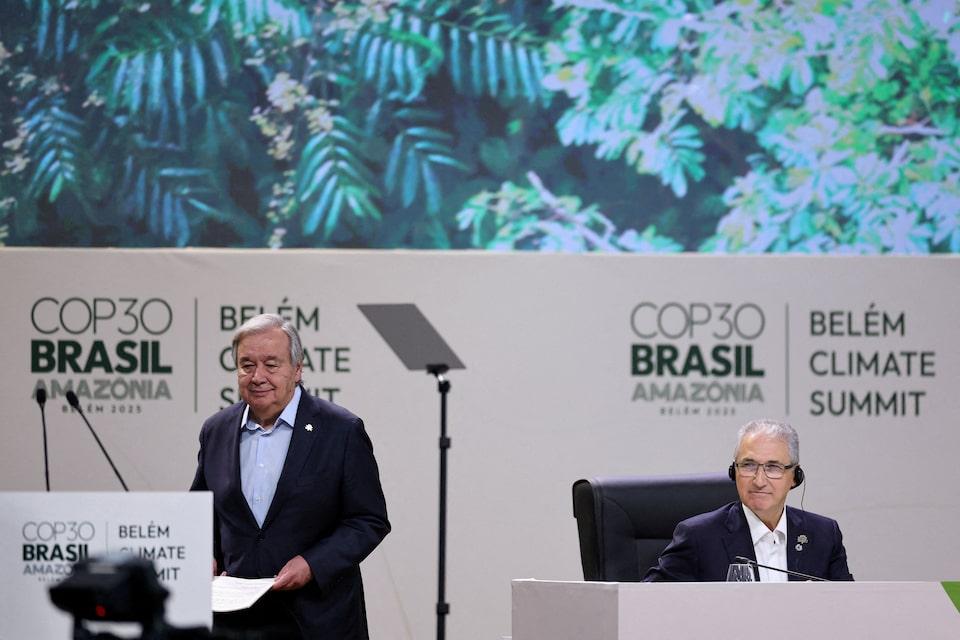
COP30 aims to start new era of fewer pledges, more action UN group considers how COPs can do this over next decade Consensus model seen as barrier to ambitious climate action Brazil proposes UN-backed council to check countries keep promises BELEM, Brazil, Nov 18 (Reuters) - An existential question hangs over this year's COP30 summit in Brazil: what are the annual U.N. climate negotiations really for? More than 30 years of talks on global action to tackle climate change have led to progress, including surging renewable energy expansion and scaled-up climate funds - but not enough. Emissions keep building. Temperatures are still rising. Sign up here. That has sparked increasing calls for reform of the Conference of the Parties summits, particularly as the world's climate negotiations were designed to agree global goals and review their progress, but not to step in to speed up efforts on the ground. Reuters interviewed more than 30 experts on the subject, including diplomats, former U.N. negotiators, government ministers, activists, investors and development bank executives from both wealthy and developing countries. Many described the U.N.-led process as needing an upgrade to become fit for the task ahead: turning years of COP pledges into action in the real world. "We need to turn away from jamborees around negotiations, into really focused efforts to accelerate implementation," one European negotiator said. "This is probably the last of the old COPs and the beginning of the new." But even those that agree the COPs need a revamp disagree on what that should look like. Those wary of reform say it could not happen at a worse time. With anti-climate politics taking hold in the United States and some others watering down green policies, they fear an overhaul could backfire and lead to something worse. "In a time in which the climate debate is so vulnerable, to open a reform process could mean that we could be captured by the climate denialists," former Peru Environment Minister Manuel Pulgar Vidal said. The U.N. is among those seeking a change. U.N. climate secretariat head Simon Stiell has set up a group of 15 former world leaders, diplomats, ministers, business and Indigenous representatives to advise on how to make COPs fit for the next decade. The group will submit its recommendations in the coming weeks, two members told Reuters. Stiell told Reuters the COP process had delivered real progress, noting that countries' latest climate pledges would cut global emissions 12% from 2019 levels by 2035, marking the first steady decline. "But in this new era, we must evolve and improve in order to accelerate... But we must also be clear about who can change what," he said. One member of the advisory group, climate scientist Johan Rockstroem, said "nothing was off the table" as they debated options from allowing majority-vote decisions to restructuring the annual summit's format. "In the end, what matters is to start delivering against the agreements," Rockstroem told Reuters. CONSENSUS CHALLENGES For those seeking change, one central frustration is the COP requirement for decisions to be made by full consensus of the nearly 200 countries involved, a model that has often allowed more ambitious efforts to be blocked. A deal at Glasgow's COP26 in 2021 to "phase out" global coal use was watered down , opens new tab to "phase down" after a last-minute objection from India. One solution would be to shift to a majority-vote model. But that shift would need a full consensus to happen, underlining that the biggest hurdle to major changes to global climate negotiations is that all countries must approve them. Some governments have floated ideas like holding the COP every other year, or siphoning off parts into smaller action-focused gatherings, diplomats told Reuters. Avinash Persaud, special advisor to the Inter-American Development Bank's president, cautioned against reducing the frequency of summits. "I fear that if you have a COP every two years, you will lose some of that momentum," he said. Tens of thousands of delegates swarming the summits - including big business contingents - have made some recent COPs resemble a trade show more than climate policy negotiations. While some cheer this approach for connecting governments with the banks and companies needed to make climate pledges happen, others want a downsizing. "There are people that literally just benefit from going to COP to COP, from cocktail to cocktail, from side event to side event, while the world keeps burning," said Panama's COP negotiator Juan Carlos Monterrey. BIG PROMISES, BROKEN WORDS A leaked U.N. document seen by Reuters shows an internal U.N. taskforce this year proposed folding the U.N. climate body into another department and asked "whether COP in current form should be discontinued." While the proposal is considered unlikely, it was seen by some diplomats as a warning to "get your act together," one European country's U.N. climate negotiator told Reuters. That includes slimming down unwieldy agendas and time spent on technical bureaucracy. "The system is not working. We are literally drowning in paperwork," Panama's Monterrey told Reuters. Activists also have criticized fossil fuel proponents serving as COP host countries, and urged countries to block summit delegates with conflicts of interest, such as oil company executives seeking to expand fossil fuel use. Acknowledging frustration over the slow pace of progress, host Brazil has asked COP30 parties to eschew new pledges this year and instead work on how to deliver old promises. Brazil has proposed creating a U.N.-backed council to visit and check that countries are following through on their COP pledges. Governments inside the COP30 negotiations are also wrestling with how to evolve global climate diplomacy. For the first time, countries are considering a final COP deal that would set the intention for the world's climate diplomacy to "transition from negotiations to implementation", according to a note published by Brazil's COP30 president on Sunday. https://www.reuters.com/sustainability/cop/clamour-change-inside-worlds-cop30-climate-negotiations-2025-11-18/
2025-11-18 05:33
A look at the day ahead in European and global markets from Rae Wee It was another sea of red in Asia markets on Tuesday, with the sombre mood set to extend into Europe, as investors braced for earnings from artificial intelligence darling Nvidia (NVDA.O) , opens new tab and a long-awaited U.S. jobs report later this week. Sign up here. Market sentiment heading into the releases has been fragile, with the bar high for Nvidia to deliver a set of results that will knock the lights out and justify the massive spending companies are pouring into all things AI. With its AI chips, the semiconductor giant has been a bellwether for the theme that has lifted shares of an array of technology names as well as other companies involved in the vast infrastructure expansion to support AI use. But the sector continues to be jolted by fears of a bubble, drawing comparisons with the 1990s dotcom boom and bust. The latest sign of unease came after a regulatory filing showed tech billionaire Peter Thiel's hedge fund sold off its entire stake in Nvidia. Just last week, Japan's SoftBank Group (9984.T) , opens new tab said it had sold all the 32.1 million Nvidia shares it held in October to bankroll CEO Masayoshi Son's sweeping AI push. Elsewhere, the focus is on Japan, where Prime Minister Sanae Takaichi is set to meet Bank of Japan Governor Kazuo Ueda later in the day. Traders have been on alert to the threat of intervention from Japanese authorities as the yen keeps sliding to multi-month lows and past 155 per dollar, close to the levels that prompted a currency intervention last year. Japanese Finance Minister Satsuki Katayama said on Tuesday she was "alarmed" by the "one-sided, rapid moves" in the foreign exchange market. But their jawboning efforts this time are struggling for traction, undermined by Takaichi's promotion of advocates of big fiscal and monetary stimulus to key posts. Japan is considering spending around 17 trillion yen ($110 billion) in Takaichi's first stimulus package, the Nikkei newspaper reported on Saturday. Super-long Japanese government bonds (JGBs) have been hammered this week as concerns deepen over the country's increasingly expansionary fiscal stance, with the yield on the 20-year JGB rising to its highest since July 1999 on Tuesday. Key developments that could influence markets on Tuesday: - Fed's Barr, Barkin, Logan speak - U.S. factory orders (August) https://www.reuters.com/world/china/global-markets-view-europe-2025-11-18/