2025-11-18 05:31
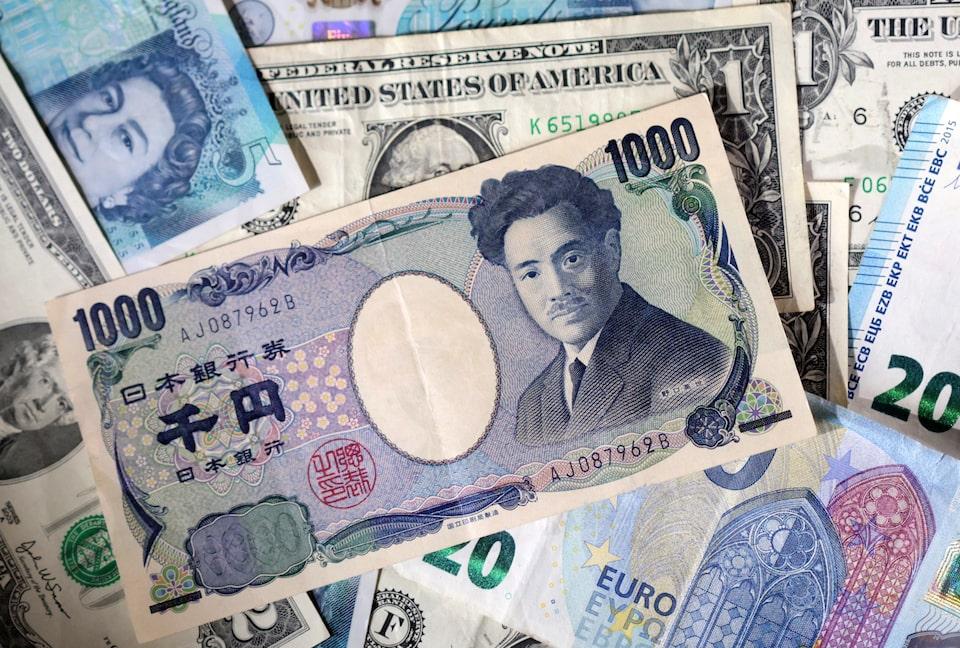
Dollar hits 9-1/2-month high vs. yen Japan’s Finance Minister Katayama says he is 'alarmed' by forex moves Markets focus on US jobs data despite being backward-looking The markets see December rate cut as a toss-up Nov 18 (Reuters) - The dollar held modest gains against the yen after touching a fresh 9-1/2-month high on Tuesday, and edged up versus the euro as investors worried about Japan’s fiscal stance and awaited U.S. data for signals on the Federal Reserve’s next move. Data from the Cleveland Fed showed that 39,000 Americans were given advance notice of layoffs last month, and a report from ADP Research showed that employers cut 2,500 jobs a week on average during the four weeks ending November 1. Sign up here. This comes as investors remain concerned about a weakening U.S. economy, and expectations for interest-rate cuts recede. "It’s been all about the missing data. I don’t envy the Fed at all. They’re stuck," said Michael Boutros, senior technical strategist at StoneX. "Looking at the market on paper, there is really no justification for a rate cut at this point." DOLLAR INDEX EDGES HIGHER The dollar index , a measure of the U.S. currency against major rivals, was last up 0.02% at 99.55, after snapping a four-day losing streak on Monday. The yen weakened 0.2% to 155.58 per dollar. In New York trading, it hit 155.73, its lowest level since February 3. While Bank of Japan Governor Kazuo Ueda has signalled the chance of raising interest rates as soon as next month, Prime Minister Sanae Takaichi has voiced displeasure over the idea and urged the BoJ to cooperate with government efforts to reflate the economy. Barclays advised staying long on the U.S. dollar against the yen, saying Takaichi’s Abenomics-style policies are likely to keep pressure on the Japanese currency. "Japan has added a tumultuous element because this new prime minister seems to be more aggressive and wants to do more spending," said Juan Perez, director of trading, Monex USA. "So, that takes away a safe-haven in the world of finance, which is Japan. Now they are a little bit more wild, they’re a little bit more volatile." INTERVENTION RISK Analysts also flagged a growing risk of foreign-exchange intervention, which could slow the dollar’s climb, though they noted that recent verbal warnings from authorities do not point to imminent action. Japanese Finance Minister Satsuki Katayama on Tuesday expressed concern over recent foreign exchange movements. Japan must compile a stimulus of around 23 trillion yen, Goushi Kataoka, a private-sector member of a key government panel, told Reuters on Monday. The yield curve for Japanese government bonds steepened further on concerns about the size of Takaichi's stimulus package, with 20-year yields reaching a 26-year high. Investors are looking towards the September U.S. jobs report expected on Thursday for clues on possible Fed action. "Lately, you've been hearing comments that labor markets may be weaker than the data is showing. That’s what the market is trying to interpret," said Boutros. "The question is, does that supersede the persistent inflation that we’re seeing?" Fed Governor Christopher Waller continued to build the case for further rate cuts amid a broad policy dispute at the U.S. central bank, while Fed Vice Chair Philip Jefferson said the U.S. central bank needs to "proceed slowly". Richmond Fed President Thomas Barkin said on Tuesday he hopes the coming data and ongoing community interviews will help clarify where the economy is heading. Money markets are pricing in the chance of a 25-bp rate cut next month at around 51%, according to the CME Group FedWatch tool, down from around 60% last week. U.S. President Donald Trump on Tuesday said he was talking with potential replacements for Federal Reserve Chair Jerome Powell - whose term ends in May - and had some unexpected candidates. The euro was down 0.07% at $1.1584, while the safe-haven Swiss franc was last trading at 0.7990 against the dollar. In cryptocurrencies, bitcoin gained 1.50% to $93,178.93 while ethereum rose 4.7% to $3,148.57. https://www.reuters.com/world/asia-pacific/yen-defensive-dollar-firms-traders-dial-back-fed-rate-cut-bets-2025-11-18/
2025-11-18 04:55
Bitcoin down nearly 30% from peak Mood is turning quickly, traders say $1.2 trillion wiped off value of crypto since October 7 SINGAPORE/LONDON, Nov 18 (Reuters) - Bitcoin was trading slightly higher on Tuesday after hitting a seven-month low below $90,000, finding buyers in a market where some investors have been reluctant to embrace risk. The risk-sensitive cryptocurrency has lost all this year's gains and is now around 26% below a peak above $126,000 in October. It was last up nearly 1.9% at $93,532, after slipping as low as $89,286.75. Sign up here. "Overall, downside fears are justified in the short term and the path of least resistance remains lower for now," Jean-David Pequignot, chief commercial officer at Deribit, a Coinbase (COIN.O) , opens new tab company, wrote in an email note. "But extreme setups like this have rewarded the bold in crypto's past." About $1.2 trillion has been wiped off the total market value of all cryptocurrencies in the past six weeks, according to market tracker CoinGecko. Market participants said a combination of doubts around future U.S. interest rate cuts and the risk-averse mood in broader markets, which have wobbled after a long rally, was dragging down crypto. 'CONFIDENCE CAN ERODE WITH REMARKABLE SPEED' "The cascading selloff is amplified by listed companies and institutions exiting their positions after piling in during the rally, compounding contagion risks across the market," said Joshua Chu, co-chair of the Hong Kong Web3 Association. "When support thins and macro uncertainty rises, confidence can erode with remarkable speed." The bitcoin market has also been rattled in recent days by major outflows from U.S. spot bitcoin ETFs, said several market participants. Since Oct. 10, when equity markets plunged on fears over U.S.-China tariff tensions, $3.7 billion has exited U.S. spot bitcoin ETFs, $2.3 billion of which flowed out in November, according to data from Morningstar. Speculators who had put money into crypto in the hopes of supportive U.S. regulation have started to pull back, driving outflows from those ETFs and similar instruments in recent weeks, said Joseph Edwards at Enigma Securities. "The sell pressure here isn't extraordinary, but it's coming at a relative weak point on the buy side ... a lot of retail buyers were stung during the flash crash last month," he said, referring to an October crash in which there were $19 billion in liquidations across leveraged positions. Crypto stockpilers such as Strategy (MSTR.O) , opens new tab, miners such as Marathon Holdings (MARA.O) , opens new tab, and exchange Coinbase had slid with the souring mood, although they also rebounded in afternoon trading in line with bitcoin. There has been a boom in public crypto treasury companies this year, with small companies in unrelated sectors becoming crypto-proxies by announcing plans to buy and hold cryptocurrencies on their balance sheets. But Standard Chartered Bank has estimated that a drop below $90,000 for bitcoin could leave half of these companies' bitcoin holdings "underwater" - a term which typically refers to holding assets worth less than what was paid for them. Listed companies collectively hold 4% of all the bitcoin in circulation, and 3.1% of the ether, Standard Chartered said. The biggest corporate holder, bitcoin treasury company Strategy, has been adding to its stockpile. Founder Michael Saylor said the firm acquired 8,178 bitcoin on Monday. As of Sunday, Strategy held 649,870 tokens at roughly $74,433 per bitcoin, Saylor said on X. Cryptocurrency ether has also been under pressure for months and has lost nearly 40% of its value from an August peak above $4,955. https://www.reuters.com/business/bitcoin-drops-below-90000-sign-souring-mood-2025-11-18/

2025-11-18 04:29
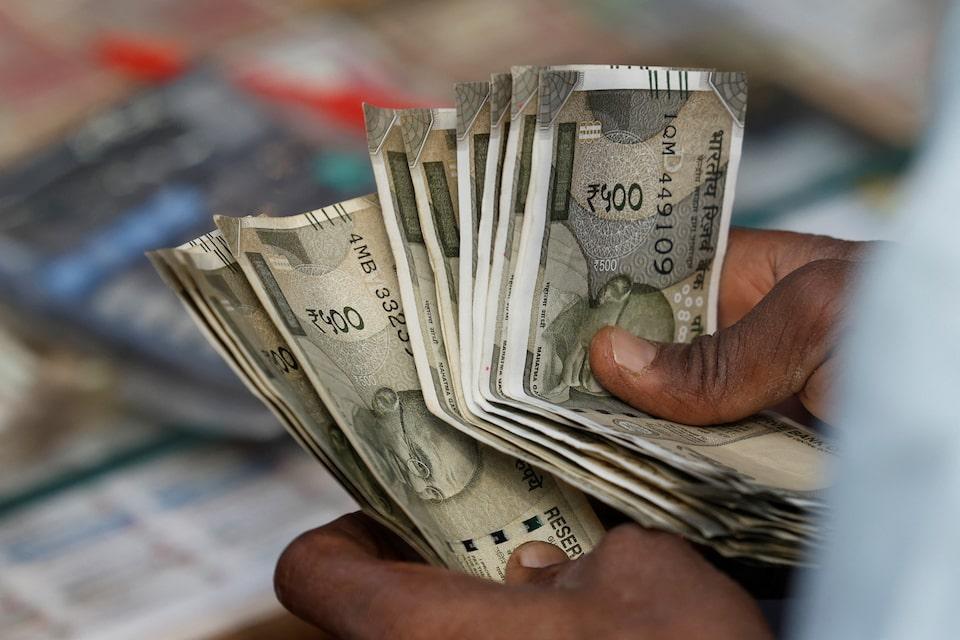
MUMBAI, Nov 18 (Reuters) - The Indian rupee ended flat on Tuesday as modest portfolio inflows and intermittent dollar sales from state-run banks helped cushion the impact from weak global equities and regional currencies. The rupee closed at 88.6050 against the U.S. dollar, nearly unchanged from its close at 88.63 in the previous session. Sign up here. Asian currencies were down between 0.1% and 0.4% while MSCI's gauge of regional stocks (.MIAP00000PUS) , opens new tab fell over 2%, tracking an extended selloff on Wall Street overnight as investors turned cautious ahead of a key earnings report and a deluge of U.S. economic data. Futures indicated that U.S. stocks were set to open modestly lower. India's benchmark equity indexes, the BSE Sensex (.BSESN) , opens new tab and Nifty 50 (.NSEI) , opens new tab ended the day a tad lower but fared better than their regional counterparts. The rupee was influenced by both portfolio inflows and outflows, alongside state-run banks' intermittent dollar sales, which limited the currency's decline, traders said. Unless the Reserve Bank of India steps away from defending the 88.80 level or there is a breakthrough in U.S.-India trade negotiations, expect rupee to hover in a 88.40-88.80 range, a trader at a Mumbai-based bank said. Sluggish exports to the U.S. drove India's merchandise trade deficit to a record high last month. "At this run rate, the current account deficit could more than double in FY26; eventually, rupee depreciation may act as an automatic stabiliser," economists at HSBC said in a note. The rupee has declined about 1% since tariffs of up to 50% on Indian exports came into effect. Meanwhile, the dollar index was steady at 99.5 as investors awaited U.S. data for signals on the Federal Reserve’s next move. Odds of a Fed rate cut next month have slipped to a little under 50% currently, down from near 67% a week earlier. https://www.reuters.com/world/india/rupee-poised-hold-firm-despite-softer-risk-tone-dollar-strength-2025-11-18/
2025-11-18 02:38
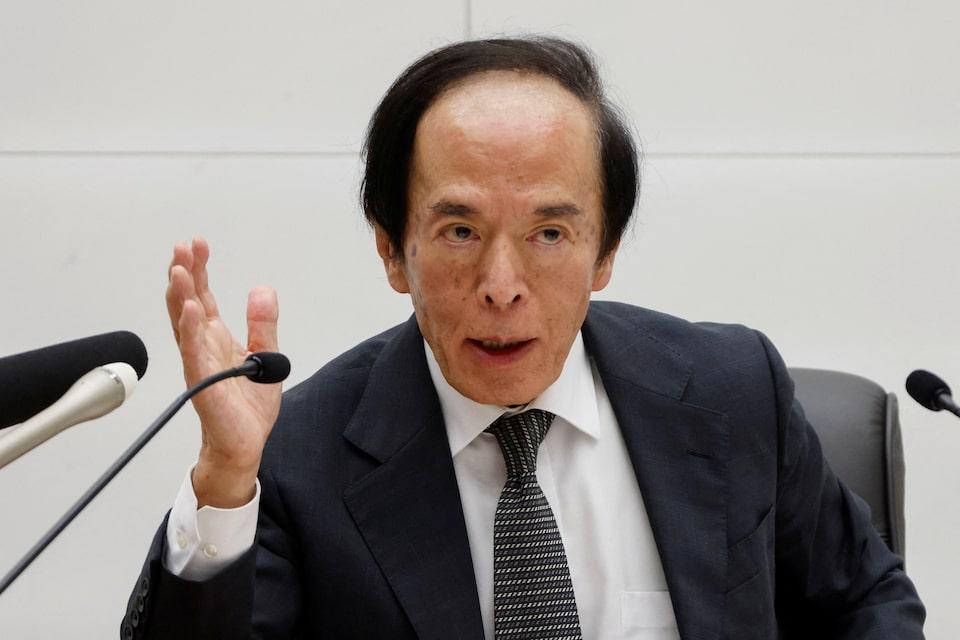
Ueda says had 'candid, good' talks with PM on monetary policy Ueda discussed FX with Takaichi Finance minister voices alarm over volatile yen moves PM Takaichi has voiced displeasure over BOJ rate-hike plan TOKYO, Nov 18 (Reuters) - Bank of Japan Governor Kazuo Ueda said on Tuesday he told Prime Minister Sanae Takaichi the central bank was gradually adjusting the degree of monetary support to guide inflation smoothly towards its 2% target. "We had candid, good talks on economic, price, financial developments as well as on monetary policy," Ueda told reporters after his first bilateral meeting with Takaichi since she took office last month. Sign up here. Ueda said the two discussed currency moves, adding that it was desirable for exchange rates to move stably reflecting economic fundamentals. The meeting has been closely watched for hints on how soon the central bank will resume its rate-hike cycle. It came in the wake of the yen's slide to a nine-month low that drew alarm from Japan's finance minister over volatile currency moves. While Ueda has signaled the chance of raising interest rates as soon as next month, Takaichi has voiced displeasure over the idea and urged the BOJ to cooperate with government efforts to reflate the economy. The BOJ ended a decade-long, massive stimulus last year and raised rates to 0.5% in January. It has kept rates steady since then to scrutinise the economic impact of higher U.S. tariffs. Market bets the dovish prime minister will deliver big spending and pressure the central bank to go slow in raising rates have prodded investors to sell yen and Japanese government bonds. The BOJ chief typically holds a bilateral meeting after the inauguration of a new prime minister. The two also meet about once every quarter to discuss economic and price developments. Known as a proponent of expansionary fiscal and monetary policy, Takaichi has called on the BOJ to communicate closely with the government and tread cautiously in hiking rates. The remarks have heightened market attention on their meeting, and whether Takaichi would acquiesce to the BOJ's plan to raise still-low borrowing costs. With inflation exceeding its 2% target for well over three years, many market participants expect the BOJ to raise rates to 0.75% from 0.5% either in December or January. Ueda dropped unusually hawkish hints last month of a rate hike. But Takaichi's policy adviser warned against a near-term rate hike after data on Monday showed Japan's economy contracted in the third quarter on soft consumption and exports. https://www.reuters.com/world/asia-pacific/boj-chief-hold-first-bilateral-meeting-with-pm-takaichi-2025-11-18/
2025-11-18 00:49
TOKYO, Nov 18 (Reuters) - Japan's Trade Minister Ryosei Akazawa said on Tuesday there are currently no particular changes in China's export control measures on rare earths and other materials. Akazawa's remarks come as Japan seeks to ease tensions with China amid an escalating dispute over Taiwan. Sign up here. https://www.reuters.com/world/asia-pacific/japan-trade-minister-says-no-particular-change-china-rare-earth-export-controls-2025-11-18/

2025-11-18 00:29
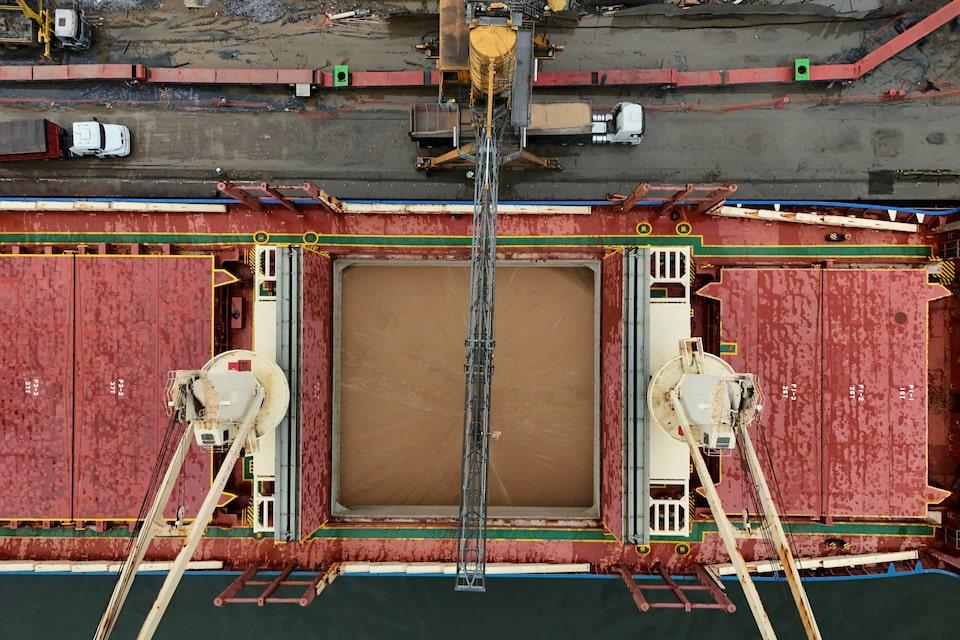
CHICAGO, Nov 17 (Reuters) - China's state-owned grain trader COFCO bought at least 14 cargoes of U.S. soybeans on Monday, or at least 840,000 metric tons, for shipment in December and January, two traders with knowledge of the deals told Reuters. The purchases were China's largest since at least January and the most significant since a trade summit between U.S. President Donald Trump and Chinese President Xi Jinping in South Korea last month. Sign up here. Eight of the vessels were for shipment in December and January from U.S. Gulf Coast terminals, while the rest were for shipment in January from Pacific Northwest ports, one trader said. A second trader estimated around 75% of the sales were for Gulf shipment, with the remainder from the PNW. The sales total may ultimately be larger if more deals are finalized, traders said. The White House said China had agreed to buy 12 million metric tons of U.S. soybeans this year, but only a small volume of sales had occurred before Monday. China imported nearly 27 million tons of U.S. soy last year, according to U.S. government data. Trump said on Friday sales would be on track by the spring. "It is good to see the hard work of our U.S. trade negotiators and their Chinese counterparts turning into business for U.S. soy farmers and exporters. We look forward to this continuing as trade lanes are restored," said Jim Sutter, chief executive officer of the U.S. Soybean Export Council. China had largely shunned U.S. soybeans this season due to a heated trade war with Washington, sourcing supplies from export rivals Brazil and Argentina instead. The absence of their top customer dragged U.S. soy prices to near multi-year lows this summer and heaped strain on a farm economy already struggling from rising costs for inputs like fuel, fertilizer and seeds. Farmers and trade groups have been working to open new markets for U.S. soy, but those efforts to replace Chinese demand have been difficult. U.S. soybean futures on the Chicago Board of Trade rallied nearly 3% on Monday to a 17-month high on the China trade optimism. Cash premiums for soybeans delivered to Gulf Coast and PNW terminals in the coming months and loaded for export jumped by 10 cents a bushel or more, traders said. https://www.reuters.com/world/asia-pacific/china-buys-least-14-cargoes-us-soybeans-dec-jan-shipment-traders-say-2025-11-17/