2025-11-17 23:19
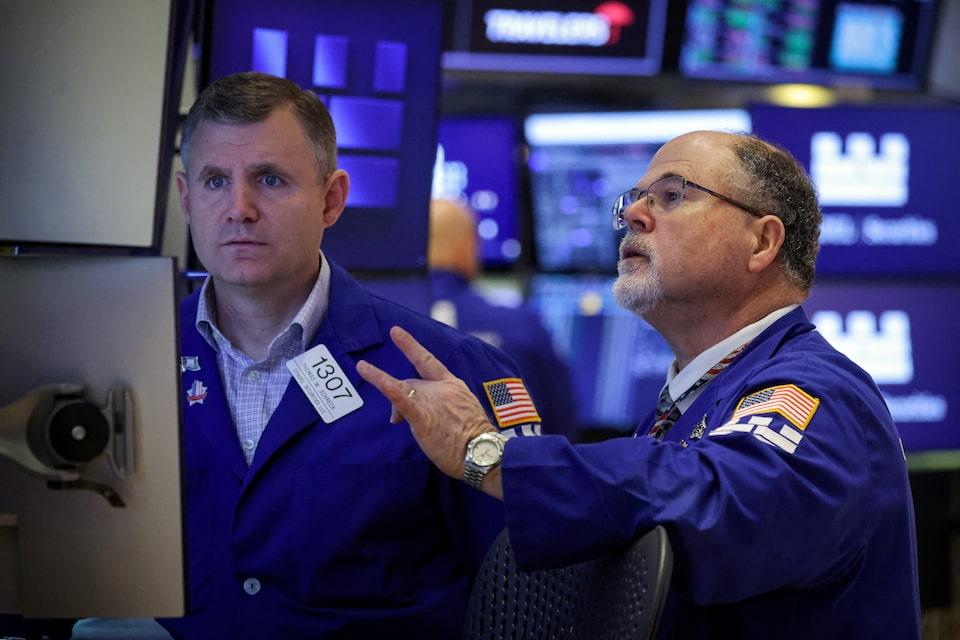
September jobs report expected on Thursday Dell drops after downgrade Nvidia results due on Wednesday Indexes: Dow down 1.2%, S&P 500 down 0.9%, Nasdaq down 0.8% NEW YORK, Nov 17 (Reuters) - U.S. stocks ended sharply lower on Monday, with the S&P 500 and the Nasdaq closing below a key technical indicator for the first time since late April as investors braced for quarterly results from retailers and chip giant Nvidia and awaited a long-delayed U.S. jobs report this week. Losses accelerated in afternoon trading as all three main indexes traded below their 50-day moving averages. This closely followed moving average is seen as a proxy for the intermediate-term trend. The Dow closed below its 50-day moving average for the first time since October 10. Sign up here. Results this week from major retailers Walmart (WMT.N) , opens new tab, Home Depot (HD.N) , opens new tab and Target (TGT.N) , opens new tab will round out the quarterly earnings season. Shares of Home Depot, due to report on Tuesday before the bell, ended 1.2% lower. Investors eagerly awaited the September jobs report, which is due to be released on Thursday after the long U.S. government shutdown ended last week. Investors are waiting for two big things: "a look at the consumer ... and Nvidia's earnings," said Adam Sarhan, chief executive of 50 Park Investments in New York, noting that "you have a consumer that is potentially getting weaker, not stronger." Also, he said, the market is consolidating after strong gains this year. The S&P 500 remains up 13.4% for the year to date. Nvidia (NVDA.O) , opens new tab, the world's largest company by market value, which is at the heart of Wall Street's artificial intelligence trade, is due to report after the bell on Wednesday. Its shares fell 1.9% on Monday and were the biggest drag on the Nasdaq and S&P 500. Stocks have been pressured this month by concerns that AI exuberance has driven up valuations to expensive levels. The Dow Jones Industrial Average (.DJI) , opens new tab fell 557.24 points, or 1.18%, to 46,590.24, the S&P 500 (.SPX) , opens new tab lost 61.70 points, or 0.92%, to 6,672.41 and the Nasdaq Composite (.IXIC) , opens new tab lost 192.51 points, or 0.84%, to 22,708.08. It was the first time the S&P 500 and Nasdaq closed below their 50-day moving averages since April 30. Among the day's gainers, Google parent Alphabet (GOOGL.O) , opens new tab rose 3.1% after Berkshire Hathaway (BRKa.N) , opens new tab revealed a stake of $4.3 billion in the company. Berkshire also further reduced its stake in Apple (AAPL.O) , opens new tab, whose shares ended 1.8% lower on Monday. Among other declining shares, Dell Technologies (DELL.N) , opens new tab dropped 8.4% and Hewlett Packard Enterprise (HPE.N) , opens new tab fell 7%, both after Morgan Stanley ratings downgrades. Investors also digested views on the outlook for stocks next year. Brokerage Morgan Stanley expects U.S. stocks to outperform peers next year and prefers global equities over credit and government bonds. Declining issues outnumbered advancers by a 4.03-to-1 ratio on the NYSE. There were 90 new highs and 248 new lows on the NYSE. On the Nasdaq, 1,168 stocks rose and 3,577 fell as declining issues outnumbered advancers by a 3.06-to-1 ratio. Volume on U.S. exchanges was 19.06 billion shares, compared with the roughly 20 billion average for the full session over the last 20 trading days. https://www.reuters.com/business/us-stock-futures-rise-markets-await-nvidia-earnings-government-data-2025-11-17/
2025-11-17 22:59
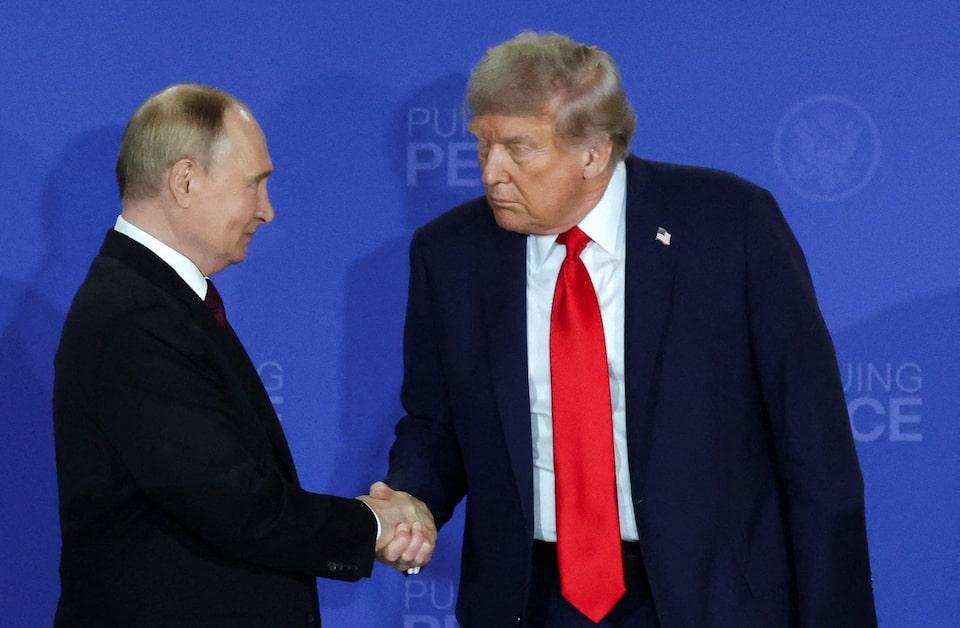
WASHINGTON, Nov 17 (Reuters) - President Donald Trump is willing to sign legislation to impose sanctions on Russia as long as he retains ultimate decision-making authority over any such measures, a senior White House official said on Monday. Trump told reporters late on Sunday that it was "OK with me" that Republicans were working on legislation to impose sanctions on countries doing business with Russia over Moscow's failure to negotiate a peace deal with Ukraine. Sign up here. Trump said lawmakers may take his suggestion to add Iran to the sanctions measure. Senator Lindsey Graham and U.S. Representative Brian Fitzpatrick, both Republicans, sponsored the legislation to impose sanctions on countries doing business with Russia, including buyers of its energy exports. Trump's comments on Sunday could clear the way for the legislation to move forward in Congress. Leaders in the Senate and House of Representatives have held off bringing the legislation to a vote as Trump has preferred instead to impose tariffs on goods imported from India, the world's second-leading buyer of Russian oil after China. Asked if Trump was now ready to back the legislation, the official said, "He would sign it. He signaled that last night." But the White House will insist on specific language ensuring that Trump retains control over the sanctions, the official said. "It's always been important to the White House and the president that there's a carve-out in the sanctions package that ensures the president has the ultimate decision-making authority on the sanctions," the official said. "So as long as that is included, I think the president would entertain signing the bill." The official said the White House was continuing to work on negotiations with Russia on ending the war. "We're definitely still working it. It just hasn't been the center of the news because we have so much going on." https://www.reuters.com/world/us/trump-would-back-russia-sanctions-bill-if-he-retains-final-authority-white-house-2025-11-17/
2025-11-17 22:29
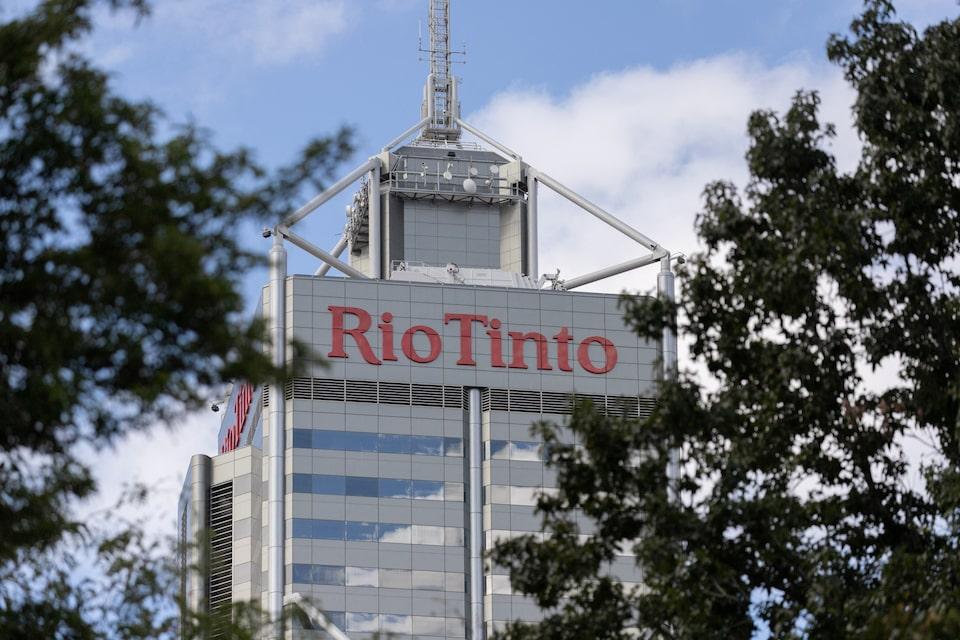
Nov 18 (Reuters) - Australia's Rio Tinto (RIO.AX) , opens new tab said on Tuesday it will cut output at its Yarwun alumina refinery in Queensland by 40% from October next year to extend the plant's life to 2035 and allow time for modernization plans. The decision comes as Yarwun's tailings facility, used to store waste from mining, is expected to approach full capacity by 2031 under current production rates. Sign up here. The company had explored options for a second tailings facility, but the investment required was "substantial and not currently economically viable," it said. Around 180 roles will be affected by the scale-back, Rio Tinto said, adding that it is actively working to relocate or reassign impacted employees. The refinery currently employs about 725 people, according to the company. The production cut will reduce annual alumina output by about 1.2 million metric tonnes, the company said, but added that customer requirements will not be impacted. The company reported 7.3 million tonnes of alumina output in the year 2024. Rio Tinto's bauxite mines and aluminium smelters will continue to operate at full capacity, it added. https://www.reuters.com/world/asia-pacific/rio-tinto-cut-yarwun-alumina-output-by-40-oct-2026-extend-plant-life-2025-11-17/
2025-11-17 22:03
ORLANDO, Florida, Nov 17 (Reuters) - Worries over the health of the U.S. consumer helped push Wall Street deep into the red on Monday, as investors also braced for Nvidia's earnings and the resumption of key U.S. economic data releases later in the week. More on that below. In my column today I look at how the deflationary pressures that have clouded China's economy for years could have global ripples. If so, it will provide some crumbs of comfort for policymakers in Washington. Sign up here. If you have more time to read, here are a few articles I recommend to help you make sense of what happened in markets today. Today's Key Market Moves Today's Talking Points * Volatility makes belated return The VIX "fear index" of implied volatility on the S&P 500 posted its highest close in a month on Monday, and third-highest since May. One-month implied vol in euro/dollar, the world's most traded currency pair, also rose to its highest level in a month. A sense of unease is rippling across markets, and with hopes of another Fed rate cut in December fading, now seems as good a time as any for investors to take profit on highly profitable trades this year - long stocks, short dollars among them. * Crypto crumble? On a related note, such is the volatile nature of cryptocurrencies, a near-30% fall in bitcoin in just six weeks may not be all that remarkable. After all, bitcoin had a similar slump earlier this year before powering to new highs in the "everything rally" from the post-Liberation Day low in April. But the current slide into a bear market is notable. If you think bitcoin is a reasonable proxy for wider market sentiment, risk appetite and speculative activity, investors are drawing in their horns ahead of year-end. The next few weeks could be bumpy. * GDP slump fuels Japan stimulus debate Figures on Monday showed that Japan's economy shrank in the three months to September, its first decline in six quarters. The good news, however, was the 1.8% contraction was not as deep as the 2.5% fall economists had expected. The data will stoke the already-crackling debate around economic stimulus. One government official is now calling for a fiscal package worth nearly $150 billion, and Bank of Japan governor Kazuo Ueda is warning against keeping monetary policy too loose. All the while, the yen is back below 155 per dollar into potential intervention territory. China could give the U.S. a disinflationary hand As policymakers in the United States fret about getting inflation back down to target, they may inadvertently get a helping hand from an unlikely source. The U.S.'s main economic rival China is struggling to slay the specter of deflation. It's a domestic battle officials in Beijing are nowhere near winning, despite some glimmers of hope in recent official data. China's annual consumer inflation was marginally positive in October, but producer prices fell year on year for the 37th consecutive month. What's more, fixed asset investment last month plunged 1.8% - excluding the pandemic shutdown, the biggest fall since comparable records began 30 years ago - and the 10-year bond yield is stuck at a lowly 1.8%. Neither points to an economy on the verge of a reflationary expansion. Domestic disinflation has been a feature of the world's second-largest economy for the better part of three years. These pressures have become entrenched, most notably in housing. But many other industries, including autos and green technologies, have also been blighted by overcapacity, intense competition and margin-wrecking price cuts. So much so, Beijing has responded with an "anti-involution" campaign to get companies and local authorities to stop the rot, reverse course, and generate sustainable inflation. But there are doubts around Beijing's commitment to this. Many economists say the steer from the ruling Communist Party's five-year planning meeting, or "plenum", last month shows that authorities continue to prioritize preserving manufacturing strength over boosting domestic consumption. With domestic demand still so sluggish, Chinese firms are responding with a familiar tactic: selling abroad, even if it means cutting prices to maintain market share. Exports are soaring, and China is flooding some of its key trading partners with cheap goods. Brad Setser, senior fellow at the Council on Foreign Relations in Washington, says China's surplus in manufactured goods easily exceeds $2 trillion. That's around 10.5% of the country's GDP, and more than 2% of world GDP, "a surplus that far exceeds the combined surpluses of Germany and Japan at their peaks." Importantly, China is increasingly exporting to other Asian markets. Torsten Slok, chief economist at Apollo Global Management, says Chinese exports to Asia this year are up $150 billion, double the $75 billion drop off in exports to the U.S. So, despite the ongoing trade war, the world is still awash with Chinese goods. CHINA'S NEW EXPORT BOOM But this surge is different from China's previous export boom. Back in the early 2000s, China was the factory to the world, flooding the global economy with cheap goods from T-shirts to TVs. The deflationary supply shock was strong, and consumers in the U.S., Europe and other large markets took full advantage. Today, China is much further up the production value chain, and its competitors are no longer low-cost emerging economies, but advanced manufacturing nations like Japan and Germany. China now makes and sells autos, electric vehicles, solar panels and other high-quality goods. As CFR's Setser notes, China currently exports well over 6 million cars, about a tenth of the global auto market outside of China, and these exports are expected to reach 8 million next year. No wonder Germany and Japan are nervous. "China is doubling down on its export led growth model. The difference is now we're talking about more capital and intermediary goods," says Innes McFee, chief global economist at Oxford Economics. DISINFLATION NATION Will this new supply shock from China be enough to help cap or even push down global prices? Perhaps. McFee's colleagues at Oxford Economics estimate that a broad 10% fall in Chinese export prices would push down producer prices in the U.S. by 0.1-0.2%, and by around 0.6% in Southeast Asia. Chinese domestic industry disinflation of 10% would increase those hits to 0.3% and 1.6%, respectively, they estimate. That's a meaningful impact. China's latest domestic signals suggest disinflation in the country could be a force for some time. While this weak price environment may continue to worry policymakers in Beijing, it could, at the margins, offer some comfort to those in Washington. What could move markets tomorrow? Want to receive Trading Day in your inbox every weekday morning? Sign up for my newsletter here. Opinions expressed are those of the author. They do not reflect the views of Reuters News, which, under the Trust Principles , opens new tab, is committed to integrity, independence, and freedom from bias. https://www.reuters.com/world/china/global-markets-trading-day-graphic-2025-11-17/
2025-11-17 21:40
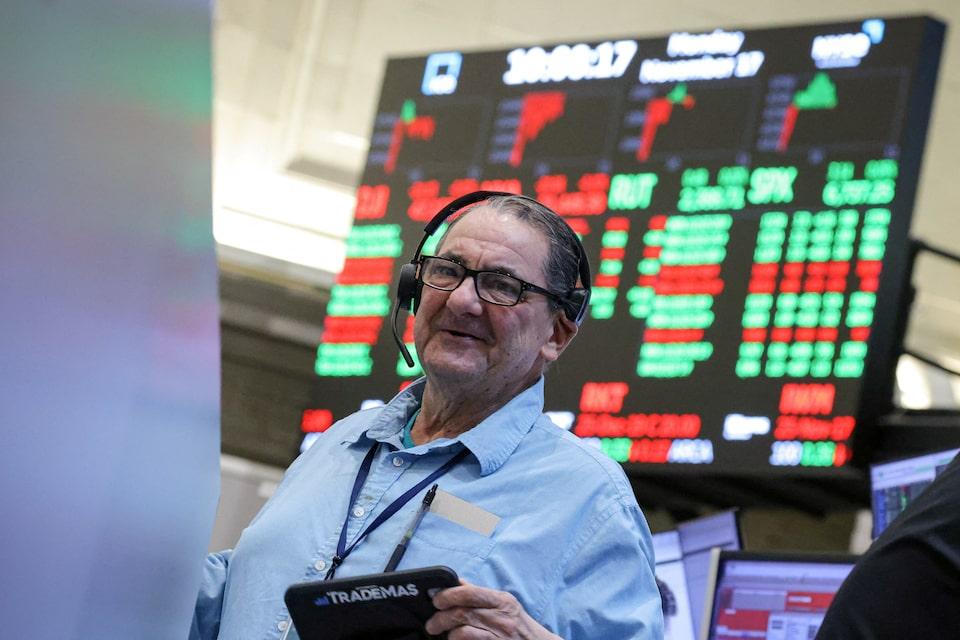
TSX ends down 0.8% at 30,076.21 Posts its lowest closing level since November 7 Tech sector loses 2.1% Materials ends 1.4% lower as gold falls TORONTO, Nov 17 (Reuters) - Canada's main stock index fell to a 10-day low on Monday as worries about the sustainability of the spending boom around artificial intelligence offset an easing of domestic inflation pressures. The S&P/TSX composite index (.GSPTSE) , opens new tab ended down 250.25 points, or 0.8%, at 30,076.21, its lowest closing level since November 7. Sign up here. Wall Street also posted steep declines. "It's obviously tech-related, AI spend-related. That's what's driving the bus to the downside," said Allan Small, senior investment adviser of the Allan Small Financial Group with iA Private Wealth. "The things that we were really bullish on is now being called into question." Nvidia, the world's largest company by market value, which is at the heart of Wall Street's artificial intelligence trade, is due to report after the bell on Wednesday. The technology sector fell 2.1%, with shares of Lightspeed Commerce Inc (LSPD.TO) , opens new tab down 4.9%. The materials group, which includes metal-mining shares, ended 1.4% lower as the price of gold fell on reduced expectations of a U.S. interest rate cut next month. Canada's annual inflation rate eased to 2.2% in October from 2.4% in September as gasoline prices dropped. Analysts had forecast inflation at 2.1%. "The modest upside surprise to headline inflation in October was largely due to one-off factors," said Stephen Brown, deputy chief North America economist at Capital Economics. "That lends some support to our view that the Bank of Canada will eventually feel comfortable in cutting interest rates further." Three of 10 major sectors ended higher, including consumer staples, which added 0.8%. https://www.reuters.com/world/americas/tsx-futures-flat-ahead-canadas-inflation-data-2025-11-17/
2025-11-17 21:34
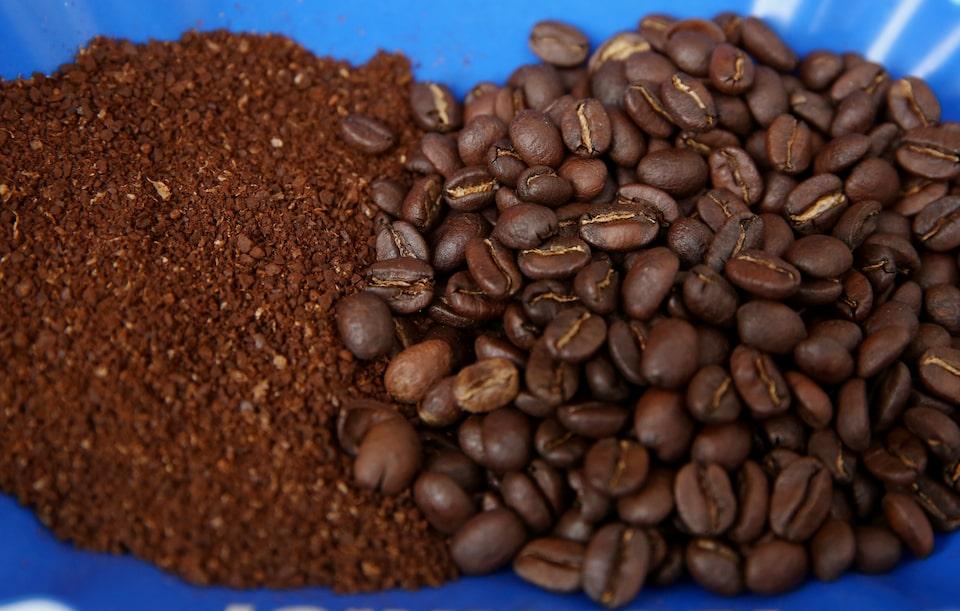
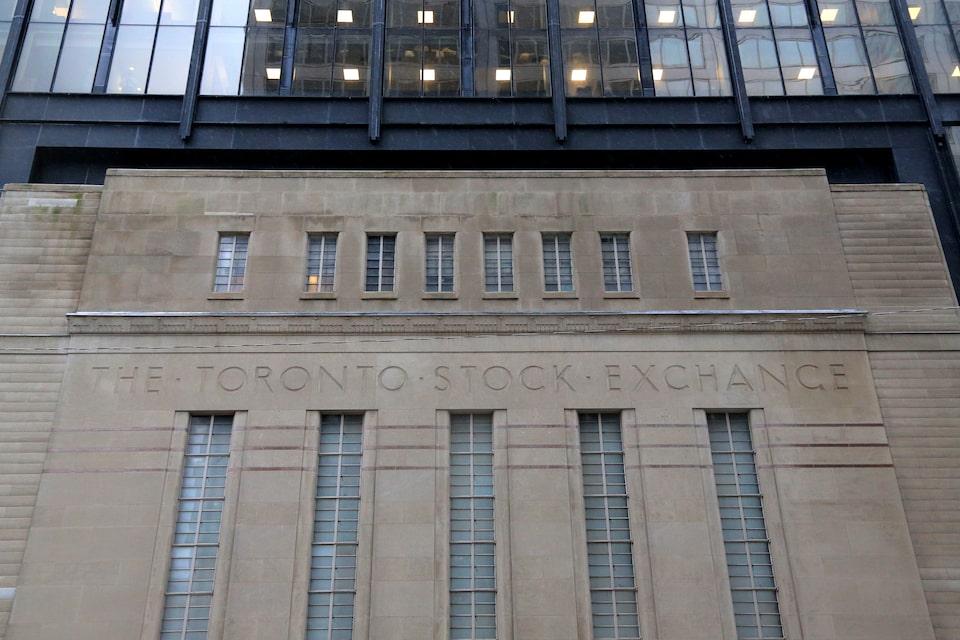
LIMA, Nov 17 (Reuters) - Peru's Foreign Trade and Tourism Minister Teresa Mera said on Monday that a new U.S. tariff exemption includes more than 100 products from the Andean country's agricultural export basket that were worth about $1.2 billion last year. U.S. President Donald Trump last week rolled back tariffs on more than 200 food products, including such staples as coffee, beef, bananas and orange juice, in the face of growing angst among American consumers about the high cost of groceries. Sign up here. In a ministry statement, Mera said the exempt products totaled about $1.2 billion in exports last year, representing 24% of Peru's shipments to the U.S. market. However, blueberries, Peru's top export to the U.S. was not included in the new tariff exemption. Peruvian exports to the United States have risen this year, with sales reaching around $6.7 billion between January and September, an 8.2% increase from a year earlier, according to Commerce Ministry data. https://www.reuters.com/world/americas/peru-says-new-us-tariff-exemption-includes-about-100-agricultural-export-2025-11-17/