2025-11-17 22:03
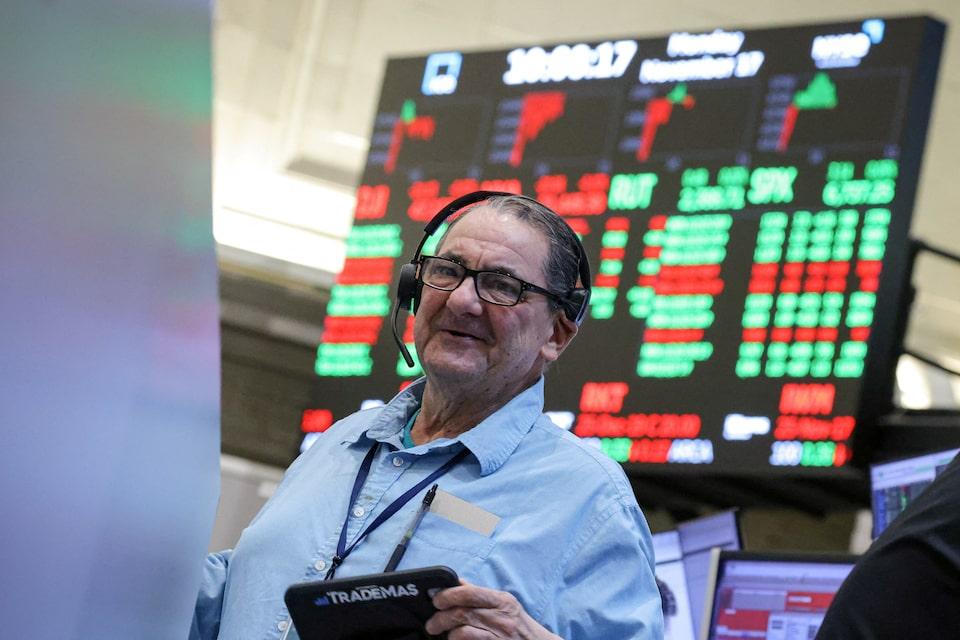
ORLANDO, Florida, Nov 17 (Reuters) - Worries over the health of the U.S. consumer helped push Wall Street deep into the red on Monday, as investors also braced for Nvidia's earnings and the resumption of key U.S. economic data releases later in the week. More on that below. In my column today I look at how the deflationary pressures that have clouded China's economy for years could have global ripples. If so, it will provide some crumbs of comfort for policymakers in Washington. Sign up here. If you have more time to read, here are a few articles I recommend to help you make sense of what happened in markets today. Today's Key Market Moves Today's Talking Points * Volatility makes belated return The VIX "fear index" of implied volatility on the S&P 500 posted its highest close in a month on Monday, and third-highest since May. One-month implied vol in euro/dollar, the world's most traded currency pair, also rose to its highest level in a month. A sense of unease is rippling across markets, and with hopes of another Fed rate cut in December fading, now seems as good a time as any for investors to take profit on highly profitable trades this year - long stocks, short dollars among them. * Crypto crumble? On a related note, such is the volatile nature of cryptocurrencies, a near-30% fall in bitcoin in just six weeks may not be all that remarkable. After all, bitcoin had a similar slump earlier this year before powering to new highs in the "everything rally" from the post-Liberation Day low in April. But the current slide into a bear market is notable. If you think bitcoin is a reasonable proxy for wider market sentiment, risk appetite and speculative activity, investors are drawing in their horns ahead of year-end. The next few weeks could be bumpy. * GDP slump fuels Japan stimulus debate Figures on Monday showed that Japan's economy shrank in the three months to September, its first decline in six quarters. The good news, however, was the 1.8% contraction was not as deep as the 2.5% fall economists had expected. The data will stoke the already-crackling debate around economic stimulus. One government official is now calling for a fiscal package worth nearly $150 billion, and Bank of Japan governor Kazuo Ueda is warning against keeping monetary policy too loose. All the while, the yen is back below 155 per dollar into potential intervention territory. China could give the U.S. a disinflationary hand As policymakers in the United States fret about getting inflation back down to target, they may inadvertently get a helping hand from an unlikely source. The U.S.'s main economic rival China is struggling to slay the specter of deflation. It's a domestic battle officials in Beijing are nowhere near winning, despite some glimmers of hope in recent official data. China's annual consumer inflation was marginally positive in October, but producer prices fell year on year for the 37th consecutive month. What's more, fixed asset investment last month plunged 1.8% - excluding the pandemic shutdown, the biggest fall since comparable records began 30 years ago - and the 10-year bond yield is stuck at a lowly 1.8%. Neither points to an economy on the verge of a reflationary expansion. Domestic disinflation has been a feature of the world's second-largest economy for the better part of three years. These pressures have become entrenched, most notably in housing. But many other industries, including autos and green technologies, have also been blighted by overcapacity, intense competition and margin-wrecking price cuts. So much so, Beijing has responded with an "anti-involution" campaign to get companies and local authorities to stop the rot, reverse course, and generate sustainable inflation. But there are doubts around Beijing's commitment to this. Many economists say the steer from the ruling Communist Party's five-year planning meeting, or "plenum", last month shows that authorities continue to prioritize preserving manufacturing strength over boosting domestic consumption. With domestic demand still so sluggish, Chinese firms are responding with a familiar tactic: selling abroad, even if it means cutting prices to maintain market share. Exports are soaring, and China is flooding some of its key trading partners with cheap goods. Brad Setser, senior fellow at the Council on Foreign Relations in Washington, says China's surplus in manufactured goods easily exceeds $2 trillion. That's around 10.5% of the country's GDP, and more than 2% of world GDP, "a surplus that far exceeds the combined surpluses of Germany and Japan at their peaks." Importantly, China is increasingly exporting to other Asian markets. Torsten Slok, chief economist at Apollo Global Management, says Chinese exports to Asia this year are up $150 billion, double the $75 billion drop off in exports to the U.S. So, despite the ongoing trade war, the world is still awash with Chinese goods. CHINA'S NEW EXPORT BOOM But this surge is different from China's previous export boom. Back in the early 2000s, China was the factory to the world, flooding the global economy with cheap goods from T-shirts to TVs. The deflationary supply shock was strong, and consumers in the U.S., Europe and other large markets took full advantage. Today, China is much further up the production value chain, and its competitors are no longer low-cost emerging economies, but advanced manufacturing nations like Japan and Germany. China now makes and sells autos, electric vehicles, solar panels and other high-quality goods. As CFR's Setser notes, China currently exports well over 6 million cars, about a tenth of the global auto market outside of China, and these exports are expected to reach 8 million next year. No wonder Germany and Japan are nervous. "China is doubling down on its export led growth model. The difference is now we're talking about more capital and intermediary goods," says Innes McFee, chief global economist at Oxford Economics. DISINFLATION NATION Will this new supply shock from China be enough to help cap or even push down global prices? Perhaps. McFee's colleagues at Oxford Economics estimate that a broad 10% fall in Chinese export prices would push down producer prices in the U.S. by 0.1-0.2%, and by around 0.6% in Southeast Asia. Chinese domestic industry disinflation of 10% would increase those hits to 0.3% and 1.6%, respectively, they estimate. That's a meaningful impact. China's latest domestic signals suggest disinflation in the country could be a force for some time. While this weak price environment may continue to worry policymakers in Beijing, it could, at the margins, offer some comfort to those in Washington. What could move markets tomorrow? Want to receive Trading Day in your inbox every weekday morning? Sign up for my newsletter here. Opinions expressed are those of the author. They do not reflect the views of Reuters News, which, under the Trust Principles , opens new tab, is committed to integrity, independence, and freedom from bias. https://www.reuters.com/world/china/global-markets-trading-day-graphic-2025-11-17/
2025-11-17 21:40
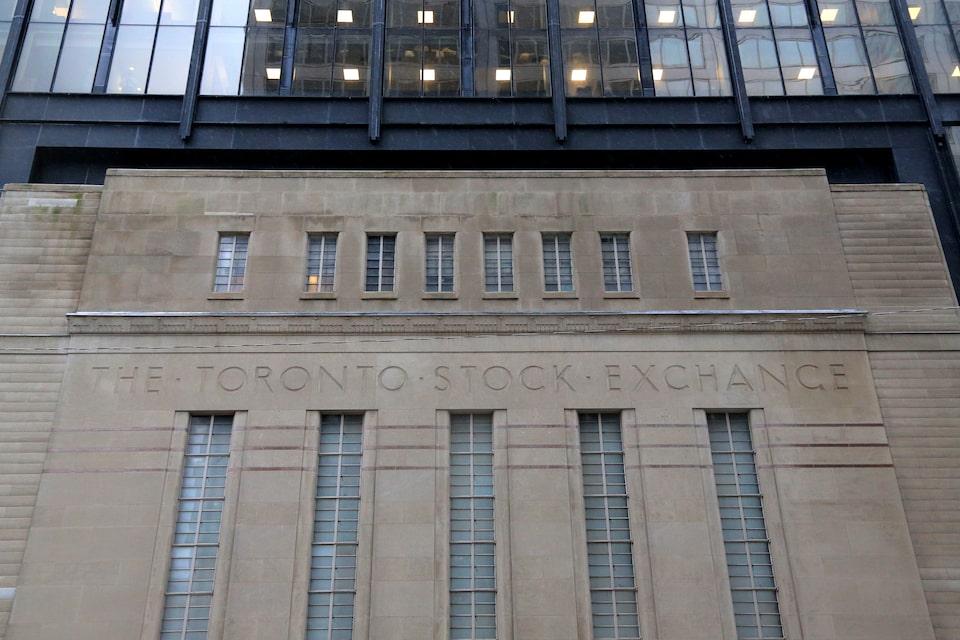
TSX ends down 0.8% at 30,076.21 Posts its lowest closing level since November 7 Tech sector loses 2.1% Materials ends 1.4% lower as gold falls TORONTO, Nov 17 (Reuters) - Canada's main stock index fell to a 10-day low on Monday as worries about the sustainability of the spending boom around artificial intelligence offset an easing of domestic inflation pressures. The S&P/TSX composite index (.GSPTSE) , opens new tab ended down 250.25 points, or 0.8%, at 30,076.21, its lowest closing level since November 7. Sign up here. Wall Street also posted steep declines. "It's obviously tech-related, AI spend-related. That's what's driving the bus to the downside," said Allan Small, senior investment adviser of the Allan Small Financial Group with iA Private Wealth. "The things that we were really bullish on is now being called into question." Nvidia, the world's largest company by market value, which is at the heart of Wall Street's artificial intelligence trade, is due to report after the bell on Wednesday. The technology sector fell 2.1%, with shares of Lightspeed Commerce Inc (LSPD.TO) , opens new tab down 4.9%. The materials group, which includes metal-mining shares, ended 1.4% lower as the price of gold fell on reduced expectations of a U.S. interest rate cut next month. Canada's annual inflation rate eased to 2.2% in October from 2.4% in September as gasoline prices dropped. Analysts had forecast inflation at 2.1%. "The modest upside surprise to headline inflation in October was largely due to one-off factors," said Stephen Brown, deputy chief North America economist at Capital Economics. "That lends some support to our view that the Bank of Canada will eventually feel comfortable in cutting interest rates further." Three of 10 major sectors ended higher, including consumer staples, which added 0.8%. https://www.reuters.com/world/americas/tsx-futures-flat-ahead-canadas-inflation-data-2025-11-17/
2025-11-17 21:34
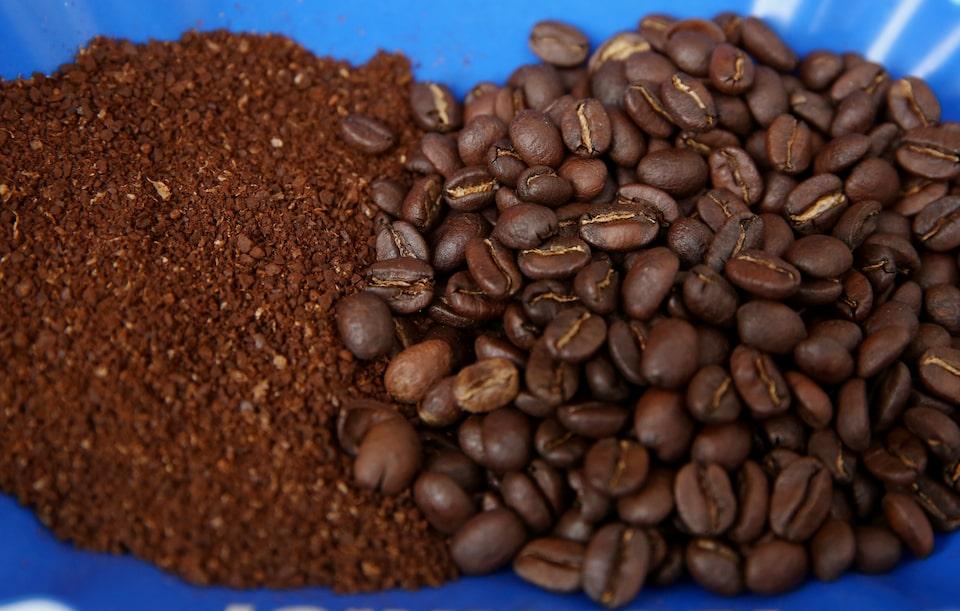
LIMA, Nov 17 (Reuters) - Peru's Foreign Trade and Tourism Minister Teresa Mera said on Monday that a new U.S. tariff exemption includes more than 100 products from the Andean country's agricultural export basket that were worth about $1.2 billion last year. U.S. President Donald Trump last week rolled back tariffs on more than 200 food products, including such staples as coffee, beef, bananas and orange juice, in the face of growing angst among American consumers about the high cost of groceries. Sign up here. In a ministry statement, Mera said the exempt products totaled about $1.2 billion in exports last year, representing 24% of Peru's shipments to the U.S. market. However, blueberries, Peru's top export to the U.S. was not included in the new tariff exemption. Peruvian exports to the United States have risen this year, with sales reaching around $6.7 billion between January and September, an 8.2% increase from a year earlier, according to Commerce Ministry data. https://www.reuters.com/world/americas/peru-says-new-us-tariff-exemption-includes-about-100-agricultural-export-2025-11-17/
2025-11-17 21:28
Chevron exploring options to buy assets where it overlaps with Lukoil Interest follows US Treasury clearance for companies to talk to Lukoil Chevron and Lukoil overlap in Kazakhstan oilfields, Nigeria offshore licenses NEW YORK/LONDON, Nov 17 (Reuters) - U.S. oil major Chevron (CVX.N) , opens new tab is studying options to buy global assets of sanctioned Russian oil firm Lukoil (LKOH.MM) , opens new tab, five sources familiar with the process told Reuters on Monday. The U.S. Treasury gave clearance last week to potential buyers to talk to Lukoil about foreign assets. Chevron would join Carlyle and other firms in the race for the Lukoil portfolio worth at least $20 billion. Sign up here. The United States last month imposed sanctions on Russia's two biggest oil companies, Lukoil (LKOH.MM) , opens new tab and Rosneft (ROSN.MM) , opens new tab, as part of efforts by President Donald Trump's administration to force Moscow into peace talks with Ukraine. Chevron is exploring options to buy assets of Lukoil where the companies overlap rather than the entire portfolio, the five sources said. They asked not to be named as they are not allowed to speak to media. Chevron's interest has not been previously reported. Chevron said that it complies with laws and regulations applicable to its business and does not comment on commercial matters. Lukoil extracts about 2% of global oil output at home and abroad, and has said it is seeking buyers for its international assets, which produce 0.5% of global oil and are estimated to be worth about $22 billion, based on 2024 filings. OTHER SUITORS U.S. private equity giant Carlyle is among those exploring options to buy Lukoil's foreign assets, sources told Reuters last week. Lukoil has three refineries in Europe, stakes in oilfields in Kazakhstan, Uzbekistan, Iraq, Mexico, Ghana, Egypt and Nigeria, and hundreds of retail fuel stations around the world, including in the United States. Lukoil has 13.5% in the Karachaganak field and 5% in the Tengiz field in Kazakhstan, which also have Chevron, Exxon Mobil (XOM.N) , opens new tab, Eni (ENI.MI) , opens new tab and Shell (SHEL.L) , opens new tab among their shareholders. The fields are the main source of crude for the CPC pipeline carrying more than 1.6 million barrels per day of crude, or 1.5% of global oil demand, to global markets via Russia. Lukoil also has a stake in the Nigerian offshore license OML-140, which Chevron operates. Finland-based petrol station chain Teboil, which is fully owned by Lukoil, said on Monday it expects its ownership to change as part of the Russian major's efforts to sell international assets. Lukoil also operates the West Qurna 2 project in Iraq, where Exxon had long been the operator of the neighboring West Qurna 1 project before exiting last year. Iraq's government is discussing seeking a six-month sanctions waiver from the U.S. Treasury for Lukoil to have more time to sell its stake in West Qurna 2, three Iraqi energy officials told Reuters on Monday. Iraq has ruled out the state buying Lukoil's stake in the project. https://www.reuters.com/business/energy/chevron-joins-race-explore-potential-purchase-lukoil-assets-sources-say-2025-11-17/
2025-11-17 21:19
FRANKFURT, Nov 17 (Reuters) - Activist fund Enkraft has urged Germany's ABO Energy to ensure all shareholders can benefit from a sales process started by the renewable firm, a letter to management showed, concerned smaller investors could lose out in case of a change of control. In late September, ABO Energy (AB9.DE) , opens new tab said it had mandated private bank Metzler to advise it on a deal that could see the firm's founders -- whose families jointly hold 52% -- cede control to an outside investor. Sign up here. While German takeover law stipulates that suitors must make a full takeover bid once they cross the 30% ownership threshold those rules do not apply to the less regulated open market, in which ABO Energy is listed. A spokesperson for ABO Energy, which is currently valued at around 315 million euros ($365 million), said management would seek to achieve a transaction that is equally fair for all shareholders. Enkraft, which owns more than 4% of ABO Energy, said management was still obliged to treat all shareholders fairly in the sales process and give them the same opportunity to sell their stock if a bidder emerges. In a letter dated November 5 that was seen by Reuters, Enkraft said management was required to act in the interest of all shareholders if it was "involved in preparing the acquisition, for example by providing non-public information as part of due diligence or by directly appointing an advisory bank for the benefit of a few shareholders". Enkraft has repeatedly criticised the firm for strategic decisions - most notably a recent change in its legal form that it said had hurt its access to capital markets. ($1 = 0.8623 euros) https://www.reuters.com/sustainability/climate-energy/activist-fund-enkraft-urges-abo-energy-draw-up-fair-ma-process-letter-shows-2025-11-17/
2025-11-17 21:11
Environmental group accused Tyson of misleading consumers Tyson had claimed net-zero greenhouse gas emissions by 2050 Company says it made no admission of wrongdoing CHICAGO, Nov 17 (Reuters) - Tyson Foods (TSN.N) , opens new tab has agreed to stop saying it will reach net-zero greenhouse gas emissions by 2050 and marketing beef as climate friendly to settle a lawsuit that accused the U.S. meat company of misleading consumers with the claims, the nonprofit Environmental Working Group said on Monday. Companies have faced a string of cases over allegations of "greenwashing," in which they try to present an environmentally responsible image to the public. Sign up here. Examples of misleading advertising cited in the Environmental Working Group's lawsuit included a Tyson brand called Brazen Beef. The company had said this was the first beef product to receive U.S. Department of Agriculture approval for a "climate-friendly" claim by showing a 10% reduction in greenhouse gas emissions during the production process, compared to other beef. The 2024 lawsuit alleged that Tyson gave consumers the misleading impression that available Tyson beef products were "climate-smart" and had not presented a rigorous plan for reaching its net-zero goals. Tyson will not repeat the claims or introduce new ones for five years unless they are verified by a mutually agreed upon expert, according to a settlement agreement , opens new tab provided by Environmental Working Group. "This settlement reinforces the principle that consumers deserve honesty and accountability from the corporations shaping our food system," said Caroline Leary, the group's general counsel and chief operating officer. "The decision to settle was made solely to avoid the expense and distraction of ongoing litigation and does not represent any admission of wrongdoing by Tyson Foods," a company spokesperson said. The agreement said Tyson denied the group's allegations and also said the company invested more than $65 million to reduce greenhouse gas emissions relating to its beef products. This month, New York state Attorney General Letitia James said meatpacker JBS USA agreed , opens new tab to pay $1.1 million to settle allegations it misled the public with a pledge to achieve net zero emissions by 2040. In October, a French court said oil major TotalEnergies (TTEF.PA) , opens new tab misled consumers in a 2021 ad campaign claiming it could become carbon neutral by 2050. https://www.reuters.com/sustainability/cop/tyson-foods-halt-carbon-emissions-claims-environmental-group-says-2025-11-17/