2025-11-17 11:52
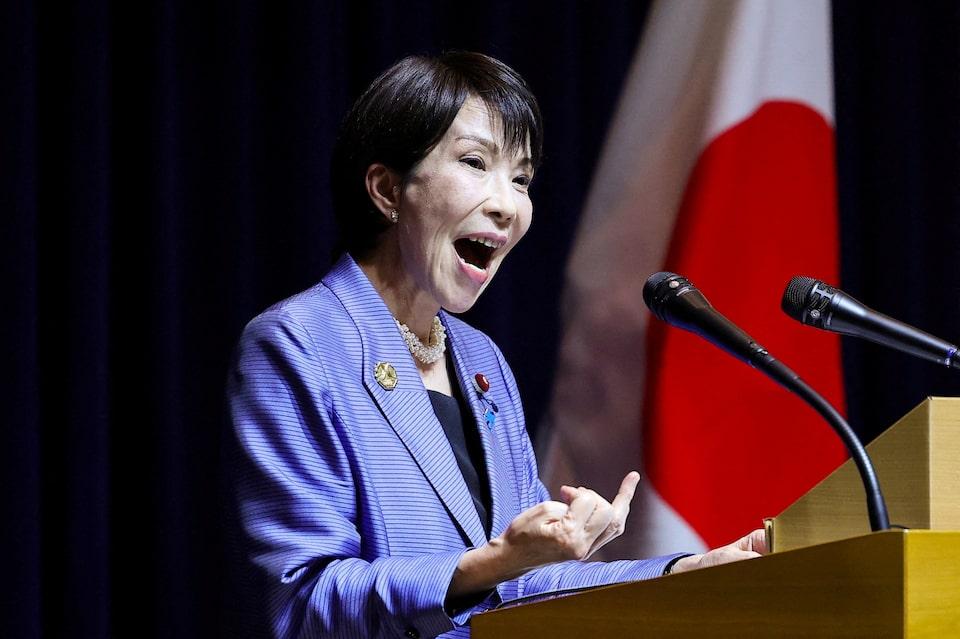
TOKYO, Nov 17 (Reuters) - Japanese Prime Minister Sanae Takaichi will meet Bank of Japan Governor Kazuo Ueda on Tuesday at 3:30 p.m. (0630 GMT), the Prime Minister's Office said in a bulletin on Monday. It will mark Takaichi's first formal meeting with the central bank chief since she was inaugurated as Japan's prime minister last month. Sign up here. After the meeting with Ueda, Takaichi would attend a government tax commission meeting from 4:15 p.m. (0715 GMT) on Tuesday, according to the bulletin. A proponent of expansionary fiscal and monetary policy, Takaichi has filled seats in key government panels with advocates of big spending backed by low interest rates - policies that work to depreciate the yen's value. While Ueda signalled the chance of an interest rate hike as soon as next month, Takaichi and her finance minister, Satsuki Katayama, made clear their displeasure over the prospect of a near-term rate hike, saying Japan had yet to see inflation durably achieve the BOJ's target. https://www.reuters.com/world/asia-pacific/japan-pm-takaichi-meet-boj-governor-ueda-tuesday-pm-office-says-2025-11-17/
2025-11-17 11:45
Nov 17 - What matters in U.S. and global markets today By Mike Dolan , opens new tab, Editor-at-Large, Finance and Markets Sign up here. Wall Street looks set to firm up on Monday after last week's tech sector wobble, with Nvidia earnings due on Wednesday and official U.S. government data returning against doused Federal Reserve easing speculation. Awaiting results from chip giant Nvidia, the world's most valuable company, market jitters over stretched valuations of AI-related stocks seem to have calmed. After Friday's sharp intraday bounce, Nasdaq futures are up about 0.6% ahead of today's bell. However, digital token Bitcoin, which has been behaving in line with tech stock sentiment of late, continued to fall over the weekend and hit its lowest since April - nursing its largest weekly fall since March and down 26% from last month's peak at its low. Reports of widespread hedging of AI equity positions by buying credit default swaps in indebted tech names such as Oracle and CoreWeave have drawn attention to emerging leverage in the tech boom and nervousness among equity bulls. Chip stocks got a lift in Asia earlier, however, as South Korea's Samsung and SK Hynix both jumped after reports Samsung Electronics had raised prices of certain memory chips - now in short supply due to the global race to build AI data centres - by as much as 60% compared to September. The macro fixation of the week will be the return of U.S. economic data, with September's payrolls report on Thursday expected to be firm but likely too far out of date now to affect market or policy considerations looking forward. The New York Fed's November manufacturing survey out later today may give a more up-to-date glimpse of activity. As it stands, Fed hawks on Friday continued to push back against another interest rate cut this year and money markets now only put a 40% chance of another reduction next month. A quarter point Fed cut is now not fully priced until March. A number of the Fed's top brass speak again on Monday. There was also attention on how the Fed is managing recent money market tightness, something that has pushed it to end its balance sheet runoff from December. New York Fed President John Williams met with Wall Street banks last Wednesday to discuss a key short-term lending facility, a New York Fed spokesperson told Reuters on Friday after reports of the meeting circulated. "President Williams convened the New York Fed's primary trading counterparties to continue engagement on the purpose of the standing repo facility as a tool of monetary policy implementation and to solicit feedback that ensures it remains effective for rate control," the spokesperson said. U.S. Treasury yields backed off highs, after the 30-year bond yield hit its highest in over a month earlier. The dollar was slightly firmer, with Japan's yen edging lower after GDP there contracted in the third quarter for the first time in six quarters - even though by less than forecast. U.S. tariff hits were mainly responsible for the downturn. Elsewhere, stocks were more mixed to start the week. Asia shares were mostly lower - with the exception of a near 2% rally in South Korea's KOSPI index on the higher chip stocks there. European stocks were down about 0.5%. In politics, attention was on President Donald Trump's decision to urge fellow Republicans in Congress to vote for the release of files related to the late convicted sex offender Jeffrey Epstein, reversing his earlier resistance to the move. Japan, meantime, moved to tamp down an escalating row with China over Taiwan that has prompted Beijing to urge citizens to halt travel to its East Asian neighbour. In today's column, I take a look at how the euro - rather than the dollar or even the yen - appeared to gain as U.S. tech giants wobbled yet again last week and why that may be. Today's Market Minute Chart of the day The world's best-known digital token Bitcoin dropped to its lowest since April on Monday, after it continued to fall over the weekend despite a bounce in wobbling tech shares on Friday. At its low at about $93,000 earlier, it was some 26% below the record peak set early last month and technically in a "bear market". Today's events to watch (all times EDT) * New York Federal Reserve's November manufacturing survey (0830), U.S. August construction spending (1000), and Canada October consumer price inflation (0830). * Federal Reserve Vice Chair Philip Jefferson, Fed Board Governor Christopher Waller, New York Fed President John Williams and Minneapolis Fed boss Neel Kashkari all speak; European Central Bank Vice-President Luis de Guindos, ECB chief economist Philip Lane and ECB board member Piero Cipollone all speak. Want to receive the Morning Bid in your inbox every weekday morning? Sign up for the newsletter here. You can find ROI on the Reuters website , opens new tab, and you can follow us on LinkedIn , opens new tab and X. , opens new tab Opinions expressed are those of the author. They do not reflect the views of Reuters News, which, under the Trust Principles , opens new tab, is committed to integrity, independence, and freedom from bias. https://www.reuters.com/business/finance/global-markets-view-usa-2025-11-17/

2025-11-17 11:43
Chile peso firms, local stocks rise over 3% Runoff on December 14 set to pitch governing coalition's Jara versus far-right candidate Kast Analysts expect results could pave way for more market friendly initiatives LONDON/NEW YORK, Nov 17 (Reuters) - (This Nov. 17 story has been corrected to fix the spelling of Nicolas Jaquier's last name in paragraph 9) Chile's peso and stocks strengthened, while bond yields ticked lower, as analysts viewed the first-round vote in Chile's presidential election as potentially paving the way for more market-friendly initiatives under a right-wing government. Sign up here. Following the vote on Sunday, far-right candidate Jose Antonio Kast is favoured to clinch victory in the December 14 runoff after lagging closely behind governing coalition candidate Jeannette Jara. No clear majority emerged in the Senate or Congress, but Kast is expected to eventually be able to pass some reforms with broad appeal. The combined vote share of all right-leaning candidates surpassed 50%, making it likely that Kast would consolidate votes in the second round, positioning him for a decisive victory, said Thierry Larose, portfolio manager at Vontobel. "This outcome is seen as moderately bullish for Chilean assets," Larose said in emailed comments. "A likely Kast presidency, combined with a right-leaning but fragmented Congress, is expected to support local assets such as Chilean bonds and the peso." Chilean stocks rose, with the local benchmark (.SPIPSA) , opens new tab up 3.1%, mirroring the move in Chilean stocks traded in U.S. exchanges (.BKCL) , opens new tab. The U.S.-traded shares of SQM jumped 9%. The election results could accelerate the reform process that has already begun in Chile, according to Morgan Stanley analysts. "Deregulation, pension reform and capital markets reform are key for the Chilean investment narrative," they said, noting that much of the positive news is already priced in. MSCI's Chile equity benchmark added over 4% to take its year-to-date gains above 50%. (.MICL00000PUS) , opens new tab Chile's peso strengthened as much as 1.7% on Monday but ended up just 0.2%, taking its year-to-date gains against the dollar to 7.6%. The currency could have room to run as it has underperformed regional peers from Brazil to Colombia or Mexico, whose currencies have strengthened 14% or more since the start of the year. "This is a very constructive scenario for Chile going forward," said Nicolas Jaquier, EM fixed income portfolio manager at Ninety One, via email. "We think the electoral result will trigger a boost to business sentiment with the country well positioned to capitalise on the record pipeline of investment projects in the mining sector and the implementation of some key reforms." Law-and-order issues and immigration have dominated Chile's electoral agenda, marking a sea change from the wave of left-wing optimism and hopes of drafting a new constitution that brought current President Gabriel Boric to power. Boric is not allowed to run for immediate reelection. The runoff pits two ideological extremes against each other. An eventual win for Kast would put in place an administration further to the right than any other since the Pinochet dictatorship. "For markets, a Kast victory offers the prospects of fiscal consolidation and a renewed focus on attracting much-needed investments and boosting Chile's lacklustre growth," said Nafez Zouk, EM sovereign debt analyst at Aviva Investors. "Markets should find comfort in the fact that the political landscape should permit a move towards more centrist macro policy-making, with the debate amongst the candidates having been about how much, not whether, to consolidate fiscal accounts." https://www.reuters.com/world/americas/chile-vote-sets-stage-cautious-market-rally-strong-far-right-showing-2025-11-17/

2025-11-17 11:33
PARIS, Nov 17 (Reuters) - French utility EDF will need to invest more than 100 billion euros ($116 billion) between 2014 and 2035 to extend the lifetime of its fleet of 57 nuclear reactors by up to 60 years, the French Court of Auditors said in a report on Monday. EDF will have to balance these costs with the expenses of building an additional six next generation (EPR2) reactors, which are expected to have a final cost estimate by the end of the year with a final investment decision expected in the second half of 2026. Sign up here. The renovations are expected to be positive for the French electricity system and should prove profitable for EDF if production forecasts are met, the court said. The renovation costs are also expected to remain competitive compared to the EPR2 construction programme, it added, which is seen as a way to replace some of the reactors that will not meet the requirements needed for an extension. EDF declined to comment. EDF expects to produce between 350 and 370 terawatt hours of electricity in 2026 and 2027, which is higher than recent years following a heavy maintenance programme in 2022. New CEO Bernard Fontana has previously said he wants to get the fleet back to producing 400 TWh by 2030. France's nuclear fleet accounts for about 70% of power production in the country and has helped push the nation's power prices below that of neighbours like Germany and Britain that rely heavily on gas-fired power plants. ($1 = 0.8619 euros) https://www.reuters.com/business/energy/edf-fleet-upkeep-will-cost-over-100-billion-euros-by-2035-court-auditors-says-2025-11-17/
2025-11-17 11:18
Nov 17 (Reuters) - Air India said on Monday it will resume New Delhi-China flights starting February 2026, nearly six years after suspension, as recent diplomatic steps are seen as cautiously reopening bilateral links. The carrier was also planning to launch a Mumbai–Shanghai route later next year, subject to regulatory approvals, it said. Sign up here. "The reinstatement of Air India’s services to Shanghai follows recent India-China diplomatic agreements that restored the air links paused in early 2020," Air India said in a statement. China's Guangzhou Baiyun International Airport (600004.SS) , opens new tab last month announced flights between the two nations were set to resume. Indian Prime Minister Narendra Modi visited China earlier this year, for the first time in seven years, to attend a meeting of the Shanghai Cooperation Organisation regional security bloc. Modi and Chinese President Xi Jinping agreed that India and China were development partners, not rivals, and discussed ways to strengthen trade ties amid global tariff uncertainty. Last month, budget airline IndiGo (INGL.NS) , opens new tab resumed flights from Kolkata to Guangzhou. https://www.reuters.com/world/china/air-india-resume-flights-china-after-nearly-six-years-2025-11-17/

2025-11-17 11:11
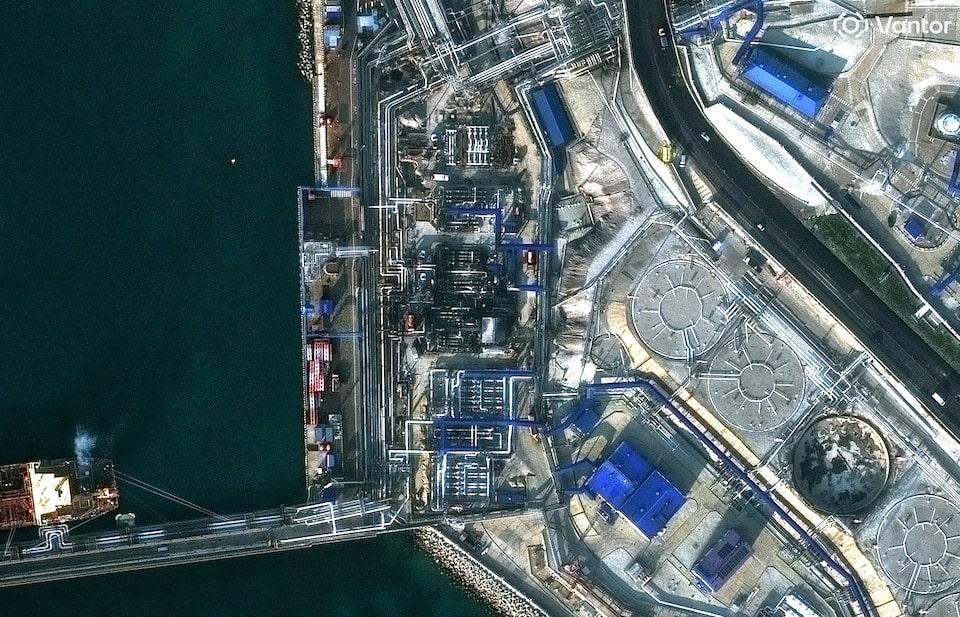
LONDON, Nov 17 (Reuters) - Ukraine struck Russia's port of Novorossiysk last week, forcing it to suspend oil exports. The Neptune missile it used is one of several long-range weapons Ukraine has developed since the 2022 invasion. Here is an overview of some of these new Ukrainian armaments based on statements from Kyiv. Sign up here. LONG NEPTUNE Ukraine says its domestically produced "Long Neptune" is a ground-launched land-attack cruise missile with a range of up to 1,000 km (621 miles). It was developed from the shorter-range Neptune anti-ship missile that existed before the invasion. President Volodymyr Zelenskiy announced its increased range in March. The military said on Friday it had been used to hit Novorossiysk, Russia's largest Black Sea export hub. Ukraine says it is producing more of the missiles. FLAMINGO The Flamingo, also known as the FP-5, is a new ground-launched land-attack cruise missile that Zelenskiy says has a range of 3,000 km (1,864 miles). He has talked it up as Ukraine's most successful missile and said it should enter mass production by year-end. It is made by Fire Point, a private Ukrainian defence company. Zelenskiy said in October that the Flamingo had been used on Russian targets but did not elaborate. LYUTYI The long-range propeller-powered Lyutyi one-way attack drone has been a workhorse of Ukraine's deep strikes on energy infrastructure in Russia this year. The drone, produced by aircraft manufacturer Antonov, can fly more than 1,000 km. FP-1 The FP-1 long-range one-way attack drone made by Fire Point has also been widely used to conduct deep strikes on targets in Russia and also has a range of more than 1,000 km. PALIANYTSIA The first combat use of the Palianytsia "drone missile" was announced by Zelenskiy in August 2024. The president said in October that the weapon, which is named after a type of Ukrainian bread, had hit Russian ammunition depots in dozens of cases. Ukraine's Militarnyi defence news outlet said it has a range of 650 km (404 miles) and a turbojet engine that allows it to fly at 900 km per hour, much faster than a normal drone. RUTA The Ruta is another "drone missile" that Zelenskiy has said he expects to enter mass production by year-end. He said in October it had been used for the first time to strike a maritime platform at a range of more than 250 km (155 miles). PEKLO The Peklo, Ukrainian for "hell", is another "drone missile". Zelenskiy said in December 2024 that a first batch of the weapons had been supplied to the Ukrainian military. Ukraine's Defence Express outlet estimates the range at around 700 km (435 miles). BARS The Bars, Ukrainian for "leopard", is a newer drone missile whose existence was revealed in April 2025. The Ukrainian military said last week that it was used by Ukraine to attack Russian targets. https://www.reuters.com/business/aerospace-defense/long-range-weapons-ukraine-has-developed-since-russias-2022-invasion-2025-11-17/