2025-11-14 04:28
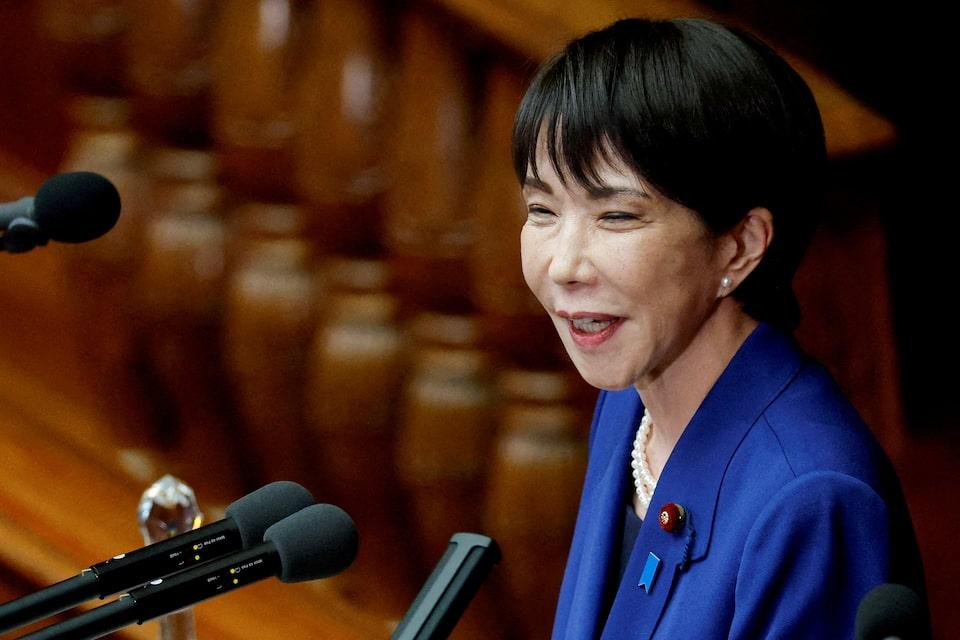
Reflationist aides of Takaichi see weak yen as positive Finance minister's verbal warnings fail to halt yen slide Premier signals displeasure over near-term BOJ rate hike Hurdle for yen-buying intervention seen high TOKYO, Nov 14 (Reuters) - As Japanese authorities once again battle a slide in the yen, their efforts this time are struggling for traction, undermined by new prime minister Sanae Takaichi's promotion of advocates of big fiscal and monetary stimulus to key posts. While Tokyo officials this week warned against sharp downward moves in the currency, maintaining the jawboning of previous administrations, their voices are increasingly competing with calls by new policy advisers preaching the benefits of a weak yen. Sign up here. A proponent of expansionary fiscal and monetary policy, Takaichi filled seats in key government panels with advocates of big spending backed by low interest rates - policies that work to depreciate the yen's value. For one, Takuji Aida, an economist who joined a panel on the government's growth strategy, stressed the benefits of a weak yen such as easing the blow to manufacturers from U.S. tariffs. The reflationists' sanguine view on the weak yen contrasts with the concerns of previous administrations, who primarily focused on cost of living pressures caused by the currency's impact on imported inflation. "The Takaichi administration hasn't escalated its warning, which suggests it is tolerating a weak yen," said Masafumi Yamamoto, chief currency strategist at Mizuho Securities. "Given the administration doesn't seem to prioritise combatting a weak yen, it would take a slide below 155 per dollar for it to escalate verbal warnings and a fall below 160 to contemplate direct intervention in the market," he said. To be sure, Finance Minister Satsuki Katayama warned on Wednesday that authorities were vigilant to "one-sided, sharp moves" in the exchange-rate market, adding the negative aspects of a weak yen have become more pronounced than the positives. But the remarks failed to prop up the yen as they were short of more direct threats of currency intervention, such as that authorities were ready to take "decisive action." Underscoring a lack of consensus within the administration, economic revitalisation minister, Minoru Kiuchi, said last month the weak yen had benefits to growth. On Tuesday, he said the boost to import costs from a weak yen was fading. Such views have also helped fuel market expectations the Bank of Japan will be forced to go slow in raising interest rates, pushing the yen to a record low against the euro and a nine-month trough versus the U.S. dollar. The dollar has risen about 5% against the yen since Takaichi won the ruling party's leadership race on October 4. It stood around 154.50 yen on Friday, after breaking a key milestone of 155 earlier this week. INTERVENTION HURDLE HIGH Japan last intervened in the currency market in July 2024 when the yen fell to a 38-year low of around 161.96 to the dollar. The BOJ also raised interest rates to 0.25% that month, causing the yen to strengthen to around 150 per dollar. Such concerted action highlighted the concern then-premier Fumio Kishida had about a weak yen. By contrast, Takaichi and her reflationist aides are fans of "Abenomics," a mix of big spending and bold monetary easing deployed in 2013. The policies helped reverse sharp yen rises blamed for prolonging deflation and economic stagnation. Now, a weak yen has become a pain point for an economy that relies heavily on fuel and food imports. Yen declines have kept inflation above the BOJ's 2% target for well over three years, causing grumblings from households hit by rising living costs. Mindful of broadening inflationary pressures, BOJ Governor Kazuo Ueda signaled the chance of a hike as soon as next month. But Takaichi and her finance minister both made clear their displeasure over a near-term rate hike, saying Japan has yet to see inflation durably achieve the BOJ's target. Almost a year since its last rate hike in January, investors have taken comfort in selling yen on prospects the BOJ is unlikely to hike steadily at a set pace. "There's a higher chance than initially thought that Takaichi's administration would favour reflationary policies," said Ryutaro Kono, chief Japan economist at BNP Paribas. "Given the administration's policy stance as suggested by the recent personnel appointments, it's hard to project the BOJ accelerating its pace of rate hikes," said Kono, who now expects the bank to hike twice next year instead of three times. If BOJ rate hikes were put on hold, the only remaining tool to counter yen falls would be currency intervention. But getting consent from Washington may be tough as U.S. Treasury Secretary Scott Bessent has repeatedly signaled that rate hikes are the best way to prop up the yen. Former BOJ official Toru Sasaki expects Japan to hold off intervening unless the yen falls below 165 to the dollar. "Conducting yen-buying intervention at a time Japan's real interest rates remain deeply negative would be wasting foreign reserves." https://www.reuters.com/world/asia-pacific/japans-fight-with-yen-bears-dulled-by-takaichis-doves-2025-11-14/
2025-11-14 01:01
BOGOTA, Nov 13 (Reuters) - Colombia's state-run energy company Ecopetrol ECO.CN , opens new tab expects to execute about $6.3 billion in investments in 2025, equivalent to 90% of its target, executives from the company told Reuters in an interview on Thursday, adding it could close the year with five additional exploratory wells drilled. The company earlier on Thursday reported a 30% year-on-year drop in net profit in the third quarter, to 2.56 trillion pesos ($689 million), citing weaker sales volumes and lower crude prices. Its production slipped 0.4% to 751,500 barrels of oil equivalent per day compared with the same period in 2024. Sign up here. The company has already met its goal of drilling ten exploratory wells in 2025, but sees the chance to drill five more, hydrocarbons vice president Rafael Guzman said. “We expect to complete the three wells that were being drilled at the end of the quarter, finish them by year-end and we have options to drill a couple more,” Guzman said. Investment will nearly reach the company's target, chief financial officer Camilo Barco said. “For this year we had an approximate budget of $6.3 billion, with flexibility of $500 million,” he said. “That investment plan is 72% complete and we expect to reach about 90% execution by year-end.” “There may be some level of under-execution, which we estimate could be around 5%,” Barco added. The company expects to end 2025 with cash of between 12 trillion and 14 trillion pesos. Ecopetrol is set to announce a partner to help it up production at one of its fields before year-end, vice president of strategy Julian Fernando Lemos said. “As part of our strategy to increase activity in fields where we believe – and are sure – there is potential to keep operating and producing crude, we aim to bring in partners under a structure similar to the one we used last year with Parex,” Lemos said. The company is limited by confidentiality agreements, he added, but “what we seek is to attract investment in fields and areas where Ecopetrol does not necessarily focus its investment today, but where we believe there is potential for recovery, higher output and reserve additions." https://www.reuters.com/business/energy/colombias-ecopetrol-expects-execute-about-63-billion-investments-2025-drill-five-2025-11-14/

2025-11-14 00:45
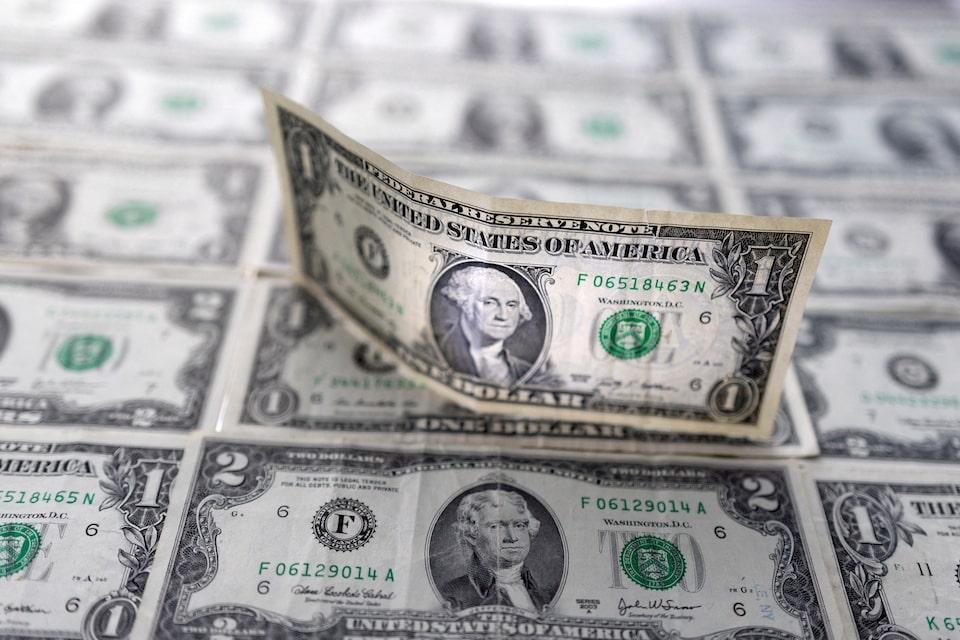
Fed officials cautious on further easing due to inflation concerns US data return expected to increase market volatility Pound falls after UK tax policy shift NEW YORK, Nov 14 (Reuters) - The dollar gained on the euro and was roughly flat against the yen on Friday as stocks recovered from a sharp selloff and traders weighed whether the Federal Reserve is likely to cut rates in December. A flood of data that was delayed during the federal government shutdown is pending release starting next week. Sign up here. Risk sentiment has been dented by concerns about lofty stock valuations and Fed policy, but the S&P 500 and Nasdaq Composite stock indexes rebounded on Friday. The greenback had weakened on Thursday even as stocks dropped and Treasury yields climbed. More Fed officials have signalled caution over further easing, citing worries about inflation. Fed funds futures are pricing in only a 41% chance of a 25-basis-point cut in December. RETURN OF DATA SEEN BOOSTING VOLATILITY Markets are "disjointed because of the lack of data and the people reacting to the Fed speakers," said Lou Brien, strategist at DRW Trading in Chicago. The return of U.S. data is likely to increase market volatility, which has ebbed in recent weeks in its absence. The Commerce Department's Bureau of Economic Analysis said on Friday it was working to update its schedule of economic data releases affected by the recently ended government shutdown. Bank of America foreign exchange strategists Adarsh Sinha and Claudio Piron note that volatility has also declined as interest rate differential volatility reached fresh lows, which was driven by some central banks, including the European Central Bank, approaching the end of their easing cycles. Now, "we expect rate differential (and therefore FX) volatility to rise as US data releases resume, not to mention the considerable uncertainty around the rate paths of the (Bank of England) and (Bank of Japan)," they said. The dollar index , which measures the greenback against a basket of currencies including the yen and the euro, rose 0.07% to 99.31, with the euro down 0.12% at $1.1617. Against the Japanese yen , the dollar weakened 0.02% to 154.52. The pound tumbled against both the dollar and the euro after media reports, including from Reuters, that British Prime Minister Keir Starmer and Finance Minister Rachel Reeves have abandoned plans to raise income tax rates, marking a sharp shift just weeks ahead of the November 26 budget. The British currency was last down 0.24% at $1.3158. The euro hit its highest rate to the pound since April 2023. , Against the Swiss franc , the dollar strengthened 0.15% to 0.794. It earlier weakened to a one-month low of 0.7876 as traders rushed into the safe haven Swiss currency. The Swiss government also said on Friday that the United States will slash its tariffs on goods from Switzerland to 15% from a crippling 39% under a new framework trade agreement. In cryptocurrencies, bitcoin fell 3.41% to $95,433, the lowest since May. https://www.reuters.com/world/asia-pacific/dollar-slumps-worries-what-clearing-us-data-fog-might-show-2025-11-14/
2025-11-14 00:43
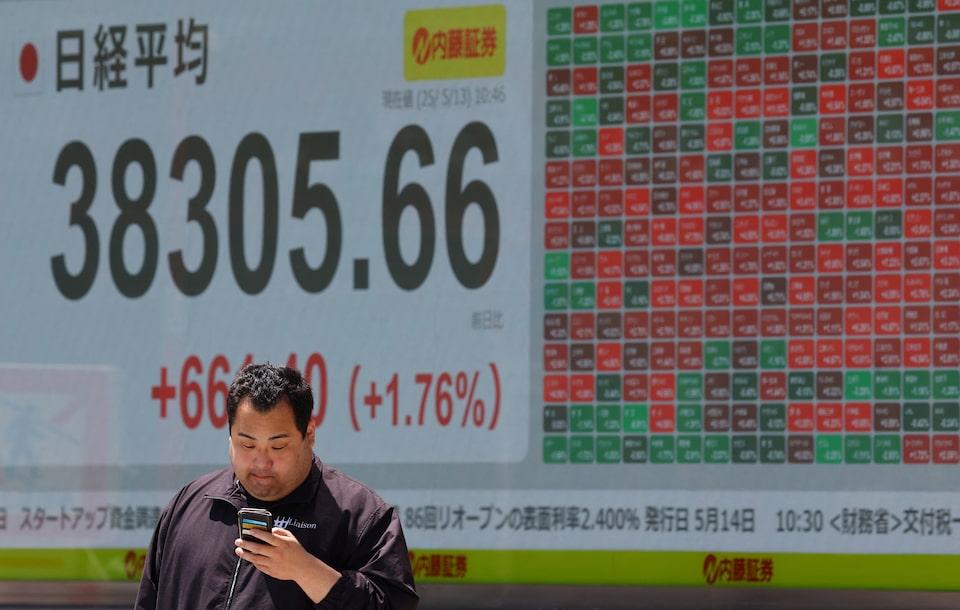
After overseas sell-off, Nasdaq closes lightly higher Investor bets decline for Fed rate cut next month US Treasury yields turn higher, dollar edges up UK markets whipped around by budget talk NEW YORK/LONDON, Nov 14 (Reuters) - MSCI's global equities gauge lost ground on Friday and Wall Street had a muted end to the week while U.S. Treasury yields climbed after hawkish Federal Reserve officials trounced on hopes for a December interest rate cut. After opening lower the S&P 500 recouped most of its losses with some help from bargain hunters after blue-chip bourses from Tokyo to Paris had closed sharply lower while fresh concern about Britain's upcoming budget had added to pain in UK markets. Sign up here. Citing inflation worries and signs of relative stability in the labor market after two U.S. rate cuts this year, a growing number of Fed policymakers have signaled reticence on further easing. On Friday morning, Kansas City Federal Reserve President Jeffrey Schmid pointed to concerns that "too hot" inflation goes well beyond the narrow effects of tariffs alone, suggesting a potential dissent in December if policymakers opted to cut rates. In the afternoon, Dallas Federal Reserve President Lorie Logan signaled opposition to a December rate cut after she already opposed the Fed's October cut on concerns inflation is too high. After 43 days without official data due to a record-long U.S. government shutdown, traders reacted to the central bankers' comments by pricing in a roughly 46% chance of a quarter-point cut next month, down from 66.9% last week, according to CME Group's FedWatch , opens new tab tool. Still, the techology-focussed Nasdaq clawed its way back from losses to close slightly higher as investors set aside some of their jitters about high valuations in technology stocks. "The rest of the world was weak because they were following the lead of the U.S market on Thursday," said Andrew Slimmon, senior portfolio manager at Morgan Stanley Investment Management but he noted that Wall Street was supported by "a bid in stocks that have led the decline in the last few days." "People are conditioned to buy the dip. It has been a great strategy. And you're at a time in the year when the winners keep winning. That's why the stocks that are working today have been the winners since the low in April," he said. For example, AI chip leader Nvidia (NVDA.O) , opens new tab finished up 1.8% while the smaller cap S&P 600 technology index (.SPSMCT) , opens new tab shook off earlier losses to close up 0.3%. Likely adding to skittishness was the week ahead's packed schedule, which includes quarterly earnings from Nvidia and big retailers, which will shed light on the health of the consumer and AI demand. “There are so many cross currents out there in the market that it can be hard to determine which way things are headed Is the U.S. economy strong or weak? The answer is, both. Is inflation heading higher or lower? Are valuations high or low?" said Viktor Shvets, head of global desk strategy at Macquarie Capital. On Wall Street the Dow Jones Industrial Average (.DJI) , opens new tab fell 309.74 points, or 0.65%, to 47,147.48, but showed a 0.3% gain for the week. The S&P 500 (.SPX) , opens new tab fell 3.38 points, or 0.05%, to 6,734.11 for a 0.1% weekly gain and the Nasdaq Composite (.IXIC) , opens new tab rose 30.23 points, or 0.13%, to 22,900.59, leaving it with a roughly 0.5% loss for the week. MSCI's gauge of stocks across the globe (.MIWD00000PUS) , opens new tab was down 4.37 points, or 0.44%, to 995.79, which would leave it with a roughly 0.4% gain for the week. Earlier the pan-European STOXX 600 (.STOXX) , opens new tab index and Europe's broad FTSEurofirst 300 index (.FTEU3) , opens new tab had both closed down about 1%. Before Wall Street had opened, MSCI's broadest gauge of Asian shares outside of Japan (.MIAPJ0000PUS) , opens new tab had closed down 1.5%. U.S. Treasury yields turned higher after falling earlier in the day. The yield on benchmark U.S. 10-year notes rose 3.5 basis points to 4.146%, from 4.111% late on Thursday. The 2-year note yield, which typically moves in step with interest rate expectations for the Federal Reserve, rose 1.9 basis points to 3.608%, from 3.589% late on Thursday. In currencies, the dollar gained on the euro and was roughly flat against the yen as stocks recovered somewhat and traders weighed the Fed's next moves. The dollar index , which measures the greenback against a basket of currencies including the yen and the euro, rose 0.02% to 99.26, with the euro down 0.08% at $1.1622. The Japanese yen strengthened 0.02% against the greenback to 154.55 per dollar. Sterling weakened 0.14% to $1.3171 after a Finance Minister Rachel Reeves s to raise income tax rates in the upcoming budget, raising questions on plans for balancing public finances. In cryptocurrencies, bitcoin fell 3.93% to $94,920.96. Ethereum declined 0.49% to $3,164.35. Oil prices settled up more than $1 on supply fears after the Black Sea port of Novorossiisk halted oil exports following a Ukrainian drone attack on an oil depot in the major Russian energy hub. U.S. crude settled up 2.39%, or $1.40 at $60.09 a barrel and Brent settled at $64.39 per barrel, up 2.19% or $1.38 on the day. Gold prices lost ground after the Fed officials' hawkish remarks. Spot gold fell 2.12% to $4,082.76 an ounce. U.S. gold futures fell 2.4% to $4,086.50 an ounce. https://www.reuters.com/world/china/global-markets-global-markets-2025-11-14/
2025-11-14 00:30
ORLANDO, Florida, Nov 13 (Reuters) - The United States and Japan are both employing a novel inflation-fighting tool: fiscal stimulus. U.S. President Donald Trump and Japan's Prime Minister Sanae Takaichi are looking to placate angry electorates squeezed by cost-of-living issues. But offering lavish fiscal giveaways to cool inflation is a bit like trying to bring a breaking fire under control by dousing it with gasoline. Sign up here. Earlier this month, Trump's Republican Party suffered key gubernatorial and mayoral election defeats, where concerns about the high cost of living played a major role. The White House appears to have heard the electorate loud and clear. The president now seems set on sending a $2,000 check to most U.S. households, a 'tariff dividend' funded via money raised by the cranked-up duties on U.S. imports. "It's in discussion," Treasury Secretary Scott Bessent said on Wednesday. But wait, weren't the hundreds of billions of dollars of tariff revenues meant to help cut the budget deficit? Evidently, that's no longer the priority, something that became clear earlier this year when Trump pushed through his 'One Big Beautiful Bill Act'. The package is jammed full of tax cuts that are expected to add $2.4 trillion to the federal budget deficit over the next decade, according to the non-partisan Congressional Budget Office. The Trump administration's key priority is clearly growth, meaning it will run the economy hot, even if the price for that is above-target inflation. While White House officials have never said this publicly, they appear to accept that having inflation closer to 3% than the Fed's 2% target may be worth it to prop up nominal growth. FISCAL HOUSE DISORDER It looks like Japan's new prime minister is taking a similar approach. Rising living costs in Japan were a key factor behind the ruling Liberal Democratic Party's historic election defeat in the summer that led to Takaichi's surprise sweep to power last month. But instead of seeking to tighten policy to stamp out inflation, Takaichi, like Trump, is advocating loosening the fiscal taps. Her newly-formed government is preparing an economic stimulus package that will likely exceed last year's $92 billion package. One of its three main aims is to mitigate the impact of rising prices. She is also filling key government economic panels with advocates of expansionary fiscal policy, and this week indicated that she is willing to water down long-term commitments to getting the country's fiscal house in order. Meanwhile, both Takaichi and Trump have made it clear to their respective central banks that they would like to keep monetary policy on the stimulative side too – something many rate-setters might disagree with. In other words, both leaders appear to be intent on countering the effects of inflation with actions that could very well make inflation worse. INFLATION DOOM LOOP Of course, fiscal stimulus can be a powerful and useful tool, especially when directed towards lower-income consumers who will almost always spend the cash they get. Both the 2007-09 Global Financial Crisis and the pandemic in 2020 showed that fiscal largesse is essential during times of crisis when the economy is in a liquidity trap, demand has collapsed, and deflation is the dragon to be slayed. But neither the U.S. nor Japan is facing anything approaching economic catastrophe. At an aggregate level, growth in both countries is on the soft side but steady, unemployment is historically low, and inflation is a full percentage point or more above target. It is also unclear how much this fiscal splurge will boost growth. There is no universally agreed measure of the 'fiscal multiplier', how much economic growth is increased by additional government spending or tax cuts. But economists do agree that it is higher in recessions than in expansions, when debt-to-GDP ratios are on the small side, and when monetary policy is less "activist", as a San Francisco Fed paper from 2020 put it. In short, in an environment completely different from the ones present in both countries today. Populist fiscal splurges may be politically appealing to Washington and Tokyo right now, but in the context of bringing down inflation it is an unorthodox approach that could make that struggle harder. (The opinions expressed here are those of the author, a columnist for Reuters) Enjoying this column? Check out Reuters Open Interest (ROI), your essential source for global financial commentary. ROI delivers thought-provoking, data-driven analysis of everything from swap rates to soybeans. Markets are moving faster than ever. ROI can help you keep up. Follow ROI on LinkedIn , opens new tab and X , opens new tab. https://www.reuters.com/markets/us-japan-share-unorthodox-anti-inflation-tool-fiscal-stimulus-2025-11-13/

2025-11-13 23:46
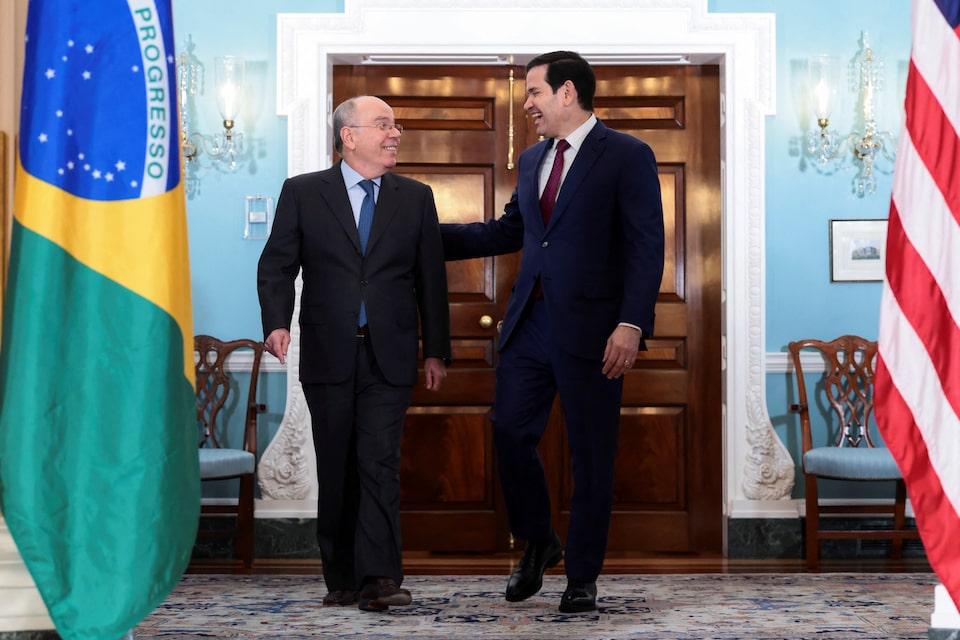
SAO PAULO, Nov 13 (Reuters) - The United States is analyzing the negotiation proposal sent by Brazil regarding tariffs and a response is expected soon, the Brazilian foreign minister said on Thursday, citing the U.S. Secretary of State Marco Rubio who he had met earlier in the day. "The Secretary of State said that they are analyzing the bilateral issues with Brazil with all due attention and time, that they want to resolve them quickly, and that an answer will come very soon, tomorrow or next week," Foreign Minister Mauro Vieira told reporters in Washington after meeting Rubio. Sign up here. The details of the proposal have not been disclosed. The U.S. increased tariffs on its imports of Brazilian goods to 50% from 10% in August. https://www.reuters.com/world/americas/brazil-expects-us-answer-proposal-regarding-tariffs-possibly-soon-friday-2025-11-13/