2025-11-13 11:20
From Egypt to Kazakhstan buyers express interest in assets Lukoil has until November 21 to complete any transaction US could freeze funds from sales Nov 12 (Reuters) - From Egypt to Kazakhstan, the foreign assets of Russian oil major Lukoil (LKOH.MM) , opens new tab are attracting potential bidders as time runs out to clear deals before U.S. authorities enforce sanctions. The U.S. has hit Lukoil with sanctions as part of its effort to bring the Kremlin to peace talks over Ukraine, and has already blocked Lukoil's attempt to sell foreign assets to trader Gunvor ahead of the November 21 sanctions deadline. Sign up here. The sanctions have also already disrupted Lukoil's operations in Iraq, at pump stations in Finland and a refinery in Bulgaria. As its empire creaks, governments and partners are hoping to snap up its foreign assets on the cheap. Lukoil didn't reply to requests for comment. BIDDERS CIRCLE Kazakhstan's state firm KazMunayGas is studying a bid for Lukoil's assets in the country, said two sources familiar with the matter. Lukoil has a stake in Karachaganak, one of the world's largest gas and condensate fields, with Eni (ENI.MI) , opens new tab, Shell (SHEL.L) , opens new tab, Chevron (CVX.N) , opens new tab and KazMunayGas (KMGZ.KZ) , opens new tab. Any new partnership will be decided by the project's participants, taking into account the sanctions, Kazakhstan's energy ministry said in a statement. Shell is interested in Lukoil's deepwater blocks in Ghana and Nigeria, two other sources said. Shell declined to comment. In Egypt, Lukoil has indicated to the government its possible plans to sell out, a fifth source familiar with the situation said. Lukoil holds three concessions in Egypt. Egypt's petroleum ministry didn't respond to a request for comment. The government of Moldova has started talks to nationalise Lukoil’s infrastructure at Chisinau airport, the airport’s director Serdgiu Spoiala said on Tuesday. Bulgaria is preparing to seize Lukoil’s Burgas refinery. Azerbaijan's state firm Socar and Cengiz Holding of Turkey jointly bid for the refinery before the sanctions. Cengiz aims to proceed with the deal, Turkish media reported this week. Cengiz didn't immediately respond to a request for comment. LUKOIL'S OPTIONS Lukoil faces difficult choices, said Sergey Vakulenko, a senior fellow at the Carnegie Russia Eurasia Center and former head of strategy at Russian oil firm Gazprom Neft. If the company sells its assets, the proceeds could be frozen by the U.S. Treasury, he said. But delaying action would likely mean state takeovers of some assets or their freezing, said Vakulenko, and Igor Yushkov from the Financial University of the Russian government. "There's really no point for Lukoil to rush," said Yushkov. "If some assets are frozen, they're frozen. Just wait until the conflict in Ukraine ends, and then maybe sanctions will be eased. That's the lesser evil, probably." Lukoil may try to emulate the strategy of Russian oil firm Rosneft, which saw Germany put its three refineries under a trusteeship in 2022. The plants are now controlled by Berlin but Rosneft still owns them. "Either you sell it yourself and hope you'll get the proceeds, or you try to retain ownership," Vakulenko said. https://www.reuters.com/business/energy/lukoils-foreign-assets-attract-rush-buyers-2025-11-12/
2025-11-13 11:15
WHAT: USDA to release first US, global crop estimates since September WHEN: Friday, November 14, 12 noon EST (1700 GMT) Lack of USDA data on crop size feeds wide range of analyst estimates Late-season dryness, crop disease likely hurt US production, analysts say Export demand uncertain as China's soybean purchase agreement remains unconfirmed CHICAGO, Nov 13 (Reuters) - A crop data blackout during the longest-ever U.S. government shutdown has led to the widest range of analyst estimates in a decade for corn and soybean yields, as an information vacuum at harvest time and during critical trade negotiations distorted the market for the country's two most valuable crops. The U.S. government reopened on Thursday after the 43-day shutdown. On Friday, the U.S. Department of Agriculture is set to release a hotly anticipated crop report, including the government's first estimates of the two feed crops since mid-September, before the harvest had taken shape. In the absence of last month's world agriculture supply and demand estimates report, traders have relied on disparate bits of data to take positions. Sign up here. Buyers and analysts have examined harvest estimates from private forecasters, media reports about export sales, local cash market prices, and social media posts showing overflowing grain bins in some parts of the country and ample storage space in others. None of this, however, gives as definitive a picture as the USDA report. "It's at harvest, when we are trying to figure out the true size of the crops. It's the worst time to be without that information because it robs the market of essential production data," said Scott Irwin, a University of Illinois agricultural economist. Analysts' highest and lowest corn crop estimates reflect a difference of 389 million bushels of production, more than Michigan's entire crop last year. Their soybean estimates reflect a difference of opinion equal to 184 million bushels, half of Indiana's crop in 2024. The government's crucial export sales data was suspended for weeks, fueling uncertainty about crop demand during the busiest period of the year for shipments, leaving markets reliant on rumors of trade negotiation breakthroughs or the threats of new tariffs. On October 30, Treasury Secretary Scott Bessent said China had agreed to purchase 12 million tons by December. The main U.S. soybean buyer has shunned U.S. supplies during President Donald Trump's trade war. Beijing has not yet confirmed a deal and trade sources told Reuters that China has booked rival South American supplies in recent days with only minimal purchases from the U.S. Markets remain on edge, raising stakes for farmers and traders ahead of Friday's USDA report. Pre-report estimates gathered from analysts and brokers showed exceptionally varied opinions. Estimates for average 2025 U.S. corn yields ranged from 181.7 to 186.0 bushels per acre -- all below USDA's September estimate of 186.7. Estimates for U.S. soybean stocks remaining ahead of the next harvest were between 187 million and 494 million bushels, a spread nearly three times as wide as normal. In September, USDA projected the largest corn and soybean yields on record and the largest harvested area for corn since the Great Depression. But in the absence of updated government data, analyst consensus has been building that the two crops' harvest will come in smaller than projected. Analysts with farm lender CoBank warned of an acute crop storage shortage, but grain piles never materialized in many areas. In October, buyers in some locations began bidding up the cash price for crops, reinforcing ideas that the harvest had fallen short. The USDA's last supply-demand report was released on September 12, as the U.S. corn and soy harvests were just beginning. Both are now nearly complete, according to private analysts regularly polled by Reuters during the shutdown. Aside from anecdotal farmer reports, it was unclear how badly late-season dryness and crop disease impacted national production. The USDA told Reuters that its staff collected crop field samples despite the shutdown. Lance Honig, an official with the USDA's National Agricultural Statistics Service, said the statistical methodology for estimating national yields had not changed and the agency was "collecting the necessary survey and administrative data to support the forecasts." EXPORT UNCERTAINTY The USDA also suspended crop export sales reporting during the shutdown, although it was still gathering the data, according to its shutdown plan. The USDA released data missed in the first week of the shutdown on Thursday and set a schedule for the weekly reports that were suspended in the weeks that followed to be published through the end of the year. The agency is also due to release a compiled a list of large daily sales reported by exporters during the shutdown on Friday. The blackout coincided with trade negotiations with China, which accounts for 50% to 60% of all U.S. soybean exports. The U.S. ships about two-thirds of the oilseed, its most valuable farm export, between October and January. Buyers other than China have booked U.S. soybean shipments during the shutdown. But without weekly government confirmation of sales, estimates of demand have varied significantly. Analysts surveyed by Reuters during the data blackout estimated net soybean sales of between 3 million and 102 million tons over six weeks. Sales as of the end of October may be down 50% from a year ago at the lowest since 2007, or down merely 25% at the lowest since the last U.S.-China trade war in 2019. https://www.reuters.com/world/us/usda-data-blackout-fuels-uncertainty-ahead-upcoming-crop-report-2025-11-13/

2025-11-13 11:12
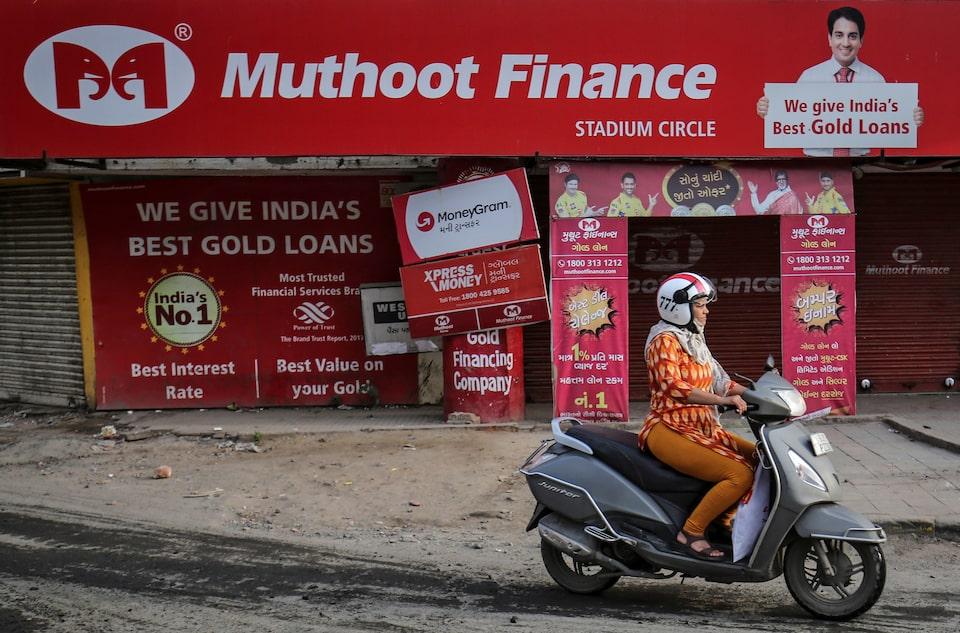
Nov 13 (Reuters) - Indian gold loan financier Muthoot Finance (MUTT.NS) , opens new tab on Thursday reported an 87.5% jump in second-quarter profit on strong loan demand amid soaring prices of the precious metal, and raised its gold loan growth outlook for the year. The firm's standalone profit for the July to September quarter rose to 23.45 billion rupees ($266.80 million) from 12.51 billion rupees a year earlier. Sign up here. Gold prices hit a series of record highs during the quarter, lifting the value of gold holdings and benefiting financiers in the sector. The rally boosted collateral values, allowing borrowers to secure bigger loans. Tighter credit conditions in the unsecured lending market also pushed more borrowers toward gold loans as an alternative source of funds, supporting growth in the segment. The company's standalone loan assets under management rose 47% year-on-year to 1.32 trillion rupees at the end of September. The firm raised its fiscal 2026 gold loan growth guidance to 30%-35% from 15%, Managing Director George Alexander Muthoot said. "Favorable regulatory changes by the RBI (Reserve Bank of India) for gold loan sector, higher gold prices and tighter norms for unsecured credit are expected to boost gold loan demand," he said. Its interest income rose 55% to 63.04 billion rupees. Asset quality improved, with gross stage three loans - or loans overdue for more than 90 days - as percentage of total loans dropping to 2.25% at the end of September from 2.58% three months earlier. The company's shares ended 2% higher on the day. They have risen 59% so far in 2025. ($1 = 87.8950 Indian rupees) https://www.reuters.com/world/india/indias-muthoot-finance-quarterly-profit-jumps-strong-loan-demand-2025-11-13/
2025-11-13 11:12
TORONTO, Nov 13 (Reuters) - Canada's main stock index posted its biggest decline in seven months on Thursday, with technology shares leading broad-based declines as the market pulled back from a record high. The S&P/TSX composite index (.GSPTSE) , opens new tab ended down 573.94 points, or 1.9%, at 30,253.64, after posting a record high closing level on Wednesday. Sign up here. "I think the fact that stocks are retreating from record highs has to do with renewed concerns about elevated valuations and Fed policy," said Angelo Kourkafas, a senior global investment strategist at Edward Jones. Wall Street also ended sharply lower, with steep losses in Nvidia and other AI heavyweights, as investors scaled back expectations of Federal Reserve interest rate cuts due to inflation worries and divisions among central bankers about the U.S. economy's health. The Toronto market's technology sector (.SPTTTK) , opens new tab fell 5.6%, with shares of electronic equipment firm Celestica Inc (CLS.TO) , opens new tab down 12.3%. Shares of Northland Power Inc (NPI.TO) , opens new tab posted an even steeper decline, losing 27.2%, after the renewable electricity firm missed quarterly earnings estimates. The utilities sector (.GSPTTUT) , opens new tab was down 1.5%. Materials (.GSPTTMT) , opens new tab, which includes metal mining shares, ended 2.1% lower as the price of gold fell. "It's a sector that has been momentum driven and a lot of that is unwinding today," Kourkafas said. Heavily weighted financials (.SPTTFS) , opens new tab dropped 1.6%, with shares of Brookfield Corp (BN.TO) , opens new tab falling 6.5% after the global investment firm reported quarterly results. Manulife Financial (MFC.TO) , opens new tab beat analysts' quarterly profit estimates, boosted by strong business in Asia and Canada. Its shares rose 0.1% to notch another record closing high. Linamar Corp (LNR.TO) , opens new tab was another bright spot, with its shares adding 5.3% after the auto parts maker beat third-quarter sales estimates. https://www.reuters.com/business/tsx-futures-steady-after-record-close-gold-climbs-2025-11-13/

2025-11-13 08:33
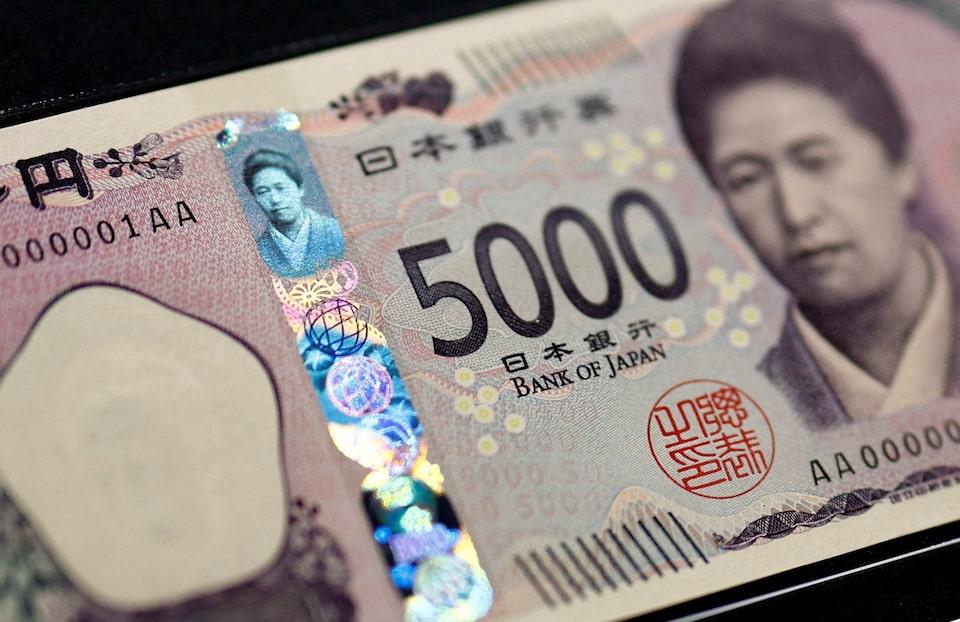
Yen at nine-month lows, defying expectations of a rebound Cautious BOJ, expectations of greater fiscal largesse in Japan heap pressure on currency Traders increasingly lay bets on further yen weakness in near-term SINGAPORE, Nov 13 (Reuters) - Investors laid a record wager on Japan's yen rising to take advantage of a long-overdue economic revival that coincided with expectations for a U.S. slowdown. Instead, what's unfolded is a cautionary tale of the Trump era. Sign up here. The yen is struggling at nine-month lows and speculators are back-pedalling from their biggest bet on the currency in records stretching back almost four decades. They have been wrong-footed by a U.S. economy surprisingly resilient to trade shocks, where policymakers have cooled on further interest rate cuts, and by a new government in Japan that has shown preference for the central bank to keep a lid on rate rises. The unravelling of such a popular bet underscores just how thoroughly markets have defied expectations over the first eleven months of U.S. President Donald Trump's second term in office. It also shows how stubbornly weak Japan's currency is proving and, for investors, it has been an expensive misstep, since holding yen – which yields hardly anything – means foregoing income available in other investments. "There was a lot of expected interest rate convergence between the U.S. and Japan, and that's probably not playing out as smoothly or as expected," said Bart Wakabayashi, branch manager at State Street in Tokyo where investors have dialled bullish yen bets all the way back to neutral over the past seven months. The yen drew hints at official intervention from Japan when it hit a nine-month low of 155.05 to the dollar this week and many in the market think sideways or lower will be the next move for a currency that has been on the back foot for nearly five years. "We are on the sidelines now...but more inclined towards a weaker yen camp," said Vaibhav Loomba, head of FX and rates at financial services firm Klay Group in Singapore. "This is a market for lack of conviction trades." THE TAKAICHI-TRUMP FACTOR Much of the yen's weakness can be linked to the Bank of Japan's caution in raising rates, which has in part been a response to the uncertainty unleashed by U.S. tariffs. More recently, Sanae Takaichi, who assumed office as prime minister in late October, has thrown some political pressure into the mix as she prefers to keep interest rates low while her administration ramps up spending to boost growth. "While her room for manoeuvre is very limited, the direction of travel is definitely less yen positive," said James Athey, a fixed income portfolio manager at Marlborough in London. "Meanwhile the BOJ continues to shoegaze, paralysed by fear and historical precedent." Japan has wrestled with deflation for decades and made its first interest rate hike in 17 years in 2024, but has moved the policy rate only to 0.5% lest the economic revival be snuffed out. Markets are now simultaneously dialling back bets on both U.S. interest rate cuts and Japanese interest rate hikes in the future, leaving a gap of more than 300 basis points between policy rates and the Japanese currency vulnerable to further losses. "We are actually thinking that dollar/yen can further go higher," said Chandresh Jain, emerging market Asia rates and FX strategist at BNP Paribas, who is using options to bet the yen can weaken past 155 per dollar in the next few weeks. CARRY ON The U.S. government shutdown had halted the collection of public positioning data since September so it's not clear if the market has flipped to a net short yen position, but that's the direction of travel. The most recently available figures, from late September, showed longs had more than halved since hitting a record in April. Options pricing also suggests that Jain's position is becoming more popular. The three-month dollar/yen implied volatility , a measure of the cost of options contracts, has fallen to its lowest in over a year, reflecting low demand for protection against yen strength. "Speculative yen short positioning does not appear large at this stage, and we see room for short positions to build from here," said Hirofumi Suzuki, chief FX strategist at SMBC. To be sure, Japanese rates do seem to be heading higher and U.S. rates lower, a fundamental shift that has a few brave investors keeping faith in the yen. But with broader financial markets in an expansive mood and volatility low, it's "really time for many investors to focus on carry," according to Yujiro Goto, head of FX strategy for Japan at Nomura, a strategy of profiting from interest rate gaps. That means selling yen. "Our year-end forecast (for dollar/yen) remains at 155 but the risk of an overshoot to 160 in 4Q25 has risen," said Shusuke Yamada, Bank of America's FX and rates strategist. https://www.reuters.com/world/asia-pacific/how-yen-tripped-up-investorsagain-2025-11-13/
2025-11-13 07:31
Australia's bid to host COP31 seen boosting green energy leadership Climate change top priority for Australia's Pacific neighbours Turkey wants focus on financing poorer countries' climate efforts Germany to host if Australia-Turkey impasse persists CANBERRA/BELEM, Brazil, Nov 13 (Reuters) - Australia risks undermining efforts to establish itself as a leader in the green energy transition and letting down its vulnerable Pacific island neighbours if its bid to host next year's biggest climate summit fails, diplomats and analysts say. Australia was long considered the front-runner to hold the COP31 conference, aiming to bolster its ambitions to become "a renewable energy superpower" and highlight issues faced by Pacific island nations which it plans to co-host the conference with. Sign up here. However, Turkey doubled down on a rival bid, saying it wants a summit that more directly tackles financing for developing countries’ climate efforts while showcasing its own progress toward a 2053 net-zero emissions target. That has led to an attention-sapping impasse that must be overcome at this year's COP30 meeting currently underway in Belem, Brazil. The annual COP – or Conference of the Parties - is the world's main forum for driving climate action. The host matters because they set the agenda and lead the diplomacy needed to reach global agreements, while drumming up investment for new green initiatives. Australia is pivoting away from coal and gas power to renewables and is seeking investment in critical minerals, green steel and transition technologies such as batteries. "Hosting COP is absolutely crucial for Australia’s economic future," said Wesley Morgan, a climate academic at the University of New South Wales. "We are a major commodities and fossil fuel exporter. If we stick our heads in the sand and pretend there is no transition, we will lose out. Without COP we would lose out on investment, jobs and economic growth." COPs have grown over the years from diplomatic gatherings into vast trade shows where host countries can promote economic prospects. "There is a clear and compelling case for investment attractiveness for hosting COP in Australia," said Emma Herd, a partner at EY's Net Zero Centre. "We have the opportunities and need the capital. COP provides the platform to showcase those opportunities." PLIGHT OF PACIFIC NATIONS For Australia, there is also the diplomatic goal of improving relations with island nations that are strategically located in the Pacific and are also being courted by China. "This is a remarkable geopolitical opportunity for our country," Chris Bowen, Australia's climate change and energy minister told reporters last week. "The climate is the number one, two, three, four and five issue for Pacific Islands." Advocacy by Pacific nations was central to the world agreeing in 2015 at COP21 in Paris to limit global warming to 1.5 degrees Celsius, and many supporters of Australia's bid think a Pacific COP would drive more ambitious action. "The big opportunity of the COP is this is the most profound opportunity we’ve ever had to demonstrate that we are the partner of choice for the Pacific," said a former climate diplomat in Australia, who declined to be identified. Former New Zealand Prime Minister Jacinda Ardern, a special envoy for Oceania at COP30, said Pacific leaders are still working hard to host the conference. "The slogan from the Pacific is '1.5 to stay alive'. It's literally that proximate for the Pacific," she told Reuters in Belem. "The Pacific were critical in achieving the aspiration and the target and the goal of 1.5 but now they're critical to its maintenance." GERMANY WOULD HOST IF NO AGREEMENT Protracted struggles over hosting are uncommon, with a venue usually settled 18-24 months in advance. Indeed, Ethiopia was confirmed this week as venue for COP32 in 2027. UN rules require unanimity among the 28-strong group of countries whose turn it is to host COP31. If neither Australia nor Turkey compromises, hosting duties would default to Bonn in Germany, which houses the UN's climate headquarters. "We would have to (host)," the state secretary in Germany's environment ministry, Jochen Flasbarth, told reporters in Belem. "But we do not want to." In Belem, the pavilions of Australia and Turkey are in prime position and side-by-side. But the two nations have struggled to connect. Australia assumed Turkey wasn't a serious bidder for COP31 given strong support for Australia's bid and could be coaxed into withdrawing, said David Dutton, who until September was Australia's assistant secretary of climate diplomacy. Some observers thought Turkey would drop its bid if Prime Minister Anthony Albanese's government won re-election against a climate change-sceptic opposition earlier this year, but Turkey instead upped its efforts. Turkey dropped a previous bid to host COP26 and has said it doesn't want to withdraw again. The country's expectation about hosting was entrenched after it signed onto the Paris climate accord and thinks its odds have improved, a Turkish diplomatic source said in Belem. Albanese wrote to Turkish President Tayyip Erdogan in recent weeks seeking to break the impasse, and said on Thursday that Erdogan had written back and was "maintaining his position". Turkish officials did not respond to repeated requests for comment on the negotiations. Turkey has said it would prioritise financing of poorer countries' efforts to meet climate goals and says its Mediterranean location would reduce emissions from flights bringing delegates to the conference. One potential compromise is for Australia and Turkey to split hosting duties, with Turkey reportedly keen to host the global leaders’ summit, according to Dutton, now director of research at the Lowy Institute, an Australian think tank. The uncertainty has prevented Australian officials from switching attention to organising next year’s conference, he said. "All the effort has been around the bid and not so much about what you're actually going to do to sustain climate momentum." https://www.reuters.com/sustainability/cop/australias-green-energy-push-pacific-ties-face-setback-cop31-impasse-2025-11-13/