2025-11-13 07:18
OSLO, Nov 13 (Reuters) - Norwegian oil and gas companies have increased their projected investments for 2026 compared to estimates made three months ago, a quarterly statistics office survey of industry players showed on Thursday. Norway produces about 2% of global oil and became Europe's largest supplier of natural gas after Russia's invasion of Ukraine in February 2022. Sign up here. The country's biggest business sector expects to invest a record 275 billion Norwegian crowns ($27.38 billion) in 2025, in line with estimates from August and up 7.3% from last year. Still, investments remain on course for a decline in 2026 from a peak this year, Statistics Norway said. Preliminary estimates for oil and gas investments next year 2026 were seen at 248.6 billion crowns, compared to a previous estimate of 229.4 billion crowns in August. Record high investments this year are driven by projects that had been approved by oil companies in 2022, supported by temporary tax incentives. With ongoing projects reaching their investment peak, and few new having been approved since 2022, the overall oil investments are set to decline. https://www.reuters.com/business/energy/norway-oil-companies-raise-2026-investment-outlook-survey-shows-2025-11-13/

2025-11-13 07:05
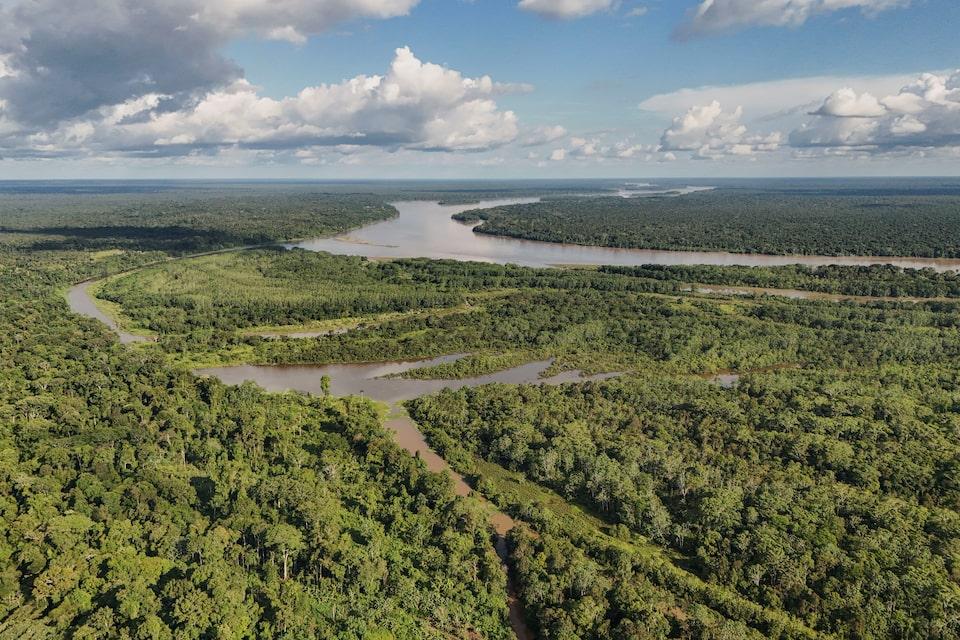
Indigenous groups oppose oil extraction due to pollution concerns Petroperu plans to revive Amazon oil output amid financial struggles ONP pipeline faces resistance due to history of leaks SANTA ROSA, Peru, Nov 13 (Reuters) - Near a remote bend of the Patoyacu River in Peru's northern Amazon, Wilmer Macusi stood atop a rusty pipeline cutting through the jungle, swirling a branch in the pool of stagnant water surrounding it. “They say this is clean,” said Macusi, a 25-year-old Indigenous Urarina leader, pointing to the spot where an oil spill occurred in early 2023. “But if you move the water, oil still comes out.” Sign up here. Black droplets bubbled to the surface as plastic barriers meant to contain the spill drooped into the water. The pipeline links a nearby oilfield, Block 8, to the larger government-owned North Peruvian Pipeline (ONP). Macusi's community of Santa Rosa lies a short walk away. Peru’s northern Amazon holds hundreds of millions of barrels of crude, according to government data. But Indigenous groups say oil extraction over the past half-century brought pollution, not progress, and are opposed to a fresh wave of development. The region once pumped more than half of Peru's oil, peaking at about 200,000 barrels a day in the 1980s before environmental liabilities and community opposition drove production below 40,000 bpd. Key blocks went dormant in 2020. Now, the region's modest reserves are again central to state oil firm Petroperu's plans. The company has spent $6.5 billion upgrading its Talara refinery into a 95,000-bpd complex aimed at producing high-grade fuels for export. Heavily indebted with a CCC+ junk credit rating from ratings agency Fitch, Petroperu wants to revive Amazon oil output to supply Talara. The state firm estimated last month that proven and probable reserves in the region were worth $20.9 billion, which Petroperu said could deliver $3.1 billion in tax revenues for local governments and communities. While the amount of oil at stake is relatively small, the plans have fueled tensions over past spills, stoking Indigenous opposition at a time Brazil, Ecuador and Guyana are trying to expand their Amazon oil frontiers. Frustration about climate action and forest protection boiled over at the COP30 climate summit this week, when dozens of Indigenous protesters forced their way into the venue and clashed with security guards. Petroperu is also planning to import oil to the refinery by linking the 1,100-km ONP to neighboring Ecuador, which aims to boost production in its own Amazon region as part of a $47 billion oil expansion plan. Hailed as an engineering marvel when it was built in the 1970s, the ONP has since become a lightning rod for leaks, protests and sabotage. Indigenous groups in both countries are resisting the pipeline link-up. The government is weighing options for how best to run the pipeline, including through a joint venture or outsourcing its management. OBSTACLES TO REVIVAL Petroperu failed to attract an international partner to run its largest oilfield, Block 192, which produced more than 100,000 bpd at its peak but has recently been the focus of Indigenous protests demanding remediation for damage to the forest, soil and waterways. Petroperu's former chairman Alejandro Narvaez, who was fired last month, estimated Block 192 could produce at least 20,000 bpd with investment and overall Amazon production could hit 100,000 bpd. The state oil firm selected domestic firm Upland Oil & Gas to operate the block, but Peru's state oil regulator disqualified Upland last month on the grounds it did not demonstrate financial capacity. Upland disputes the decision and has asked for a review. Petroperu also partnered with Upland to revive production at the smaller Block 8, which produced 5,000 bpd last month. Upland's CEO Jorge Rivera, son of one of Peru's early oil prospectors, told Reuters that Upland has offered Indigenous communities training, jobs and funding. "We've dedicated ourselves to understanding the complexities behind operating these fields,” he said. Rivera visited Santa Rosa in March, gifting a Starlink terminal and requesting a report on the community's needs. The community's main demand was the cleanup of the nearby spill, but questions remain over who bears responsibility. Though the operator is responsible for the 108-km stretch of pipeline that runs through Block 8 connecting it to the ONP, Upland's contract exempts it from liability for past pollution. The previous operator, an Argentine subsidiary named Pluspetrol Norte, was fined a record number of times by Peru's environmental regulator OEFA before it filed for liquidation and left the area in late 2020. Eight Indigenous federations and non-governmental organizations filed a complaint to the OECD's Dutch National Contact Point, a mechanism to implement OECD guidelines for businesses, which concluded in September that Pluspetrol had violated Indigenous communities' rights in Peru's Amazon and urged the company to address the environmental damage. In a response to Reuters, Pluspetrol said it already had complied with environmental and human rights regulations and that the NCP statement was "without merit" for not reflecting the "breadth and complexity of the evidence presented and the extent of actions taken by the company." ONP SPILLS Decades of scientific research have found high levels of lead, mercury, cadmium and arsenic in wildlife and Indigenous people living near Peru's oilfields. Estimated cleanup costs for Block 192 alone stand at $1.5 billion. OEFA registered over 560 environmental infractions including oil spills and others from the ONP or other oil infrastructure in Blocks 192 and 8 from 2011 through September 2025. Petroperu has said any damage is "temporary and reversible" and blamed unspecified "economic and rural-domestic activities" by local communities as the main driver of water pollution. In late 2023, Peru's prosecutor's office said it had broken up a network of businessmen, local Indigenous leaders and a Petroperu employee that it said was orchestrating oil spills to secure lucrative cleanup contracts. In an interview with Reuters before his dismissal, Narvaez said Petroperu had prioritized cleaning up spills under the regulator's supervision. The government of Peru's interim President Jose Jeri, who took power last month, replaced Narvaez with Petroperu board vice president Fidel Moreno and said it will soon replace Petroperu's entire board of directors. Moreno did not reply to an interview request. Macusi said communities had yet to access a fund from Upland promising 2.5% of oil sales. Meanwhile, meetings with the oil regulator, Perupetro, to discuss funding for community projects have been delayed. After an oil spill from the Block 8 connector pipeline in 2022, Urarina communities held a strike, taking over oil facilities, fields and blockading a river to demand a better state response. Macusi, who as a teen worked hauling buckets of spilled oil, says communities are ready to take action again. "If the promised benefits don't come soon, we'll take measures," he said. https://www.reuters.com/sustainability/cop/can-peru-reboot-its-amazon-oil-pollution-fallout-local-opposition-loom-2025-11-13/
2025-11-13 06:58
Chevron makes modest spending cuts of $1 bln per year US company plans to grow production by 2% to 3% per year It's also investing heavily in exploration, a long-term activity LONDON, Nov 13 (Reuters) - When warnings abound about an imminent collapse in oil prices, one would not expect the CEO of a major oil company to boast that he has never been more confident. Yet that was precisely the message conveyed in Chevron's (CVX.N) , opens new tab updated strategy, unveiled by CEO Mike Wirth on Wednesday. He shrugged off concerns about oversupply in the near term and exuded confidence in the sector’s long-term outlook, brushing aside doubts that hovered over the industry only a few years ago as momentum built for the transition away from fossil fuels toward low-carbon energy. Sign up here. It appears that U.S. President Donald Trump's strong support of the fossil fuel industry and his "energy dominance" agenda have provided Chevron - like its Big Oil peers - with a meaningful tailwind. “Never in my career have I seen a higher confidence outlook," Wirth told investors. "The best is yet to come." Such confidence is striking when the U.S. Energy Information Administration expects oil prices to average $55 a barrel next year, down from $69 this year. NEAR-TERM RETRENCHMENT What a company says is one thing, though. What it does is far more important. Oil and gas companies' spending plans are a strong gauge for their near- and long-term risk appetite as many energy projects such as offshore oilfields or liquefied natural gas (LNG) plants require billions of dollars and years to develop, and many more years to generate returns. It is therefore notable that Chevron is paring back its capital expenditures by $1 billion from previous guidance to a range of $18 billion to $21 billion per year into 2030. The U.S.’s second-largest oil company also appears to be retrenching - albeit modestly - in the face of significant uncertainty over the supply and demand balance in the global oil market. The International Energy Agency is currently forecasting a huge oversupply next year of 4 million barrels per day, around 4% of global supply, which, if accurate, could cause oil prices to crater. Chevron’s minor pullback, however, suggests its thinking may be more aligned with OPEC analysts, who expect supply to roughly match demand next year, or others who believe any oversupply will be modest and short-lived. LONG-TERM BOOM Further out, Chevron’s actions seem to more closely match its messaging, as the company is clearly betting on continued growth in oil demand and a race to offset shrinking supplies. Chevron plans to grow oil and gas production by 2% to 3% per year through 2030. It currently produces around 4 million barrels of oil equivalent per day. "There is need for significant investment to close the oil supply gap, equivalent to five Saudi Arabias" over the next decade, Wirth said. Crucially, Chevron noted it plans to keep production in the U.S. Permian shale basin stable at 1 million bpd through 2040 while also reducing investment to around $3.5 billion per year from $4.5 billion to $5 billion currently. Chevron argues that improved drilling techniques will enable it to maintain production without having to drill new wells at the current pace - a fairly bold forecast given standard practices for shale oil drilling, also known as fracking. Chevron is not the only big shale producer to indicate that it can profitably sustain and even grow shale production for many more years. Both ExxonMobil (XOM.N) , opens new tab and ConocoPhillips (COP.N) , opens new tab suggest they can do the same, another indication of the industry’s growing confidence. EXPLORATION BET What perhaps best highlights Chevron's long-term bullishness is its increasing investments in oil and gas exploration. This high-risk, high-reward business requires heavy investment, and it often takes over a decade or more to move from first drilling to the start of production. In recent months, Chevron expanded its exploration activity in several basins including Namibia, Egypt and South America. The company plans to increase its annual exploration budget by 50% over the next few years. What’s more, it poached TotalEnergies’ (TTEF.PA) , opens new tab exploration chief, Kevin McLachlan, in October to lead its exploration programme. Does this mean we should expect a repeat of the start of this century, when huge, almost unimpeded investments in new oil and gas resources led to massive overspending and poor returns? Probably not, as Big Oil companies are now hyper-focused on profitability and have instituted cost-saving practices that can allow them to generate profit even if oil prices hit $50 or below. Chevron aims to reduce structural costs by $3 billion to $4 billion by the end of 2026, including by laying off over 15% of its global workforce. This spending discipline should enable Chevron and its peers to continue investing with greater confidence through peaks and troughs in the market over the coming years. That, in turn, also indicates that the market is apt to remain well supplied for the foreseeable future. What is missing from all of this is a serious consideration of the energy transition. It is perhaps fitting that Chevron’s strategy update came on the day the IEA published a new long-term outlook that suggests oil demand may continue rising into 2050, having previously suggested it would begin to plateau in 2030. This may be music to Big Oil’s ears, but if the energy transition picks up steam again - as many expect it will - Chevron and the rest of the industry could be in for a harsh reality check. Want to receive my column in your inbox every Monday and Thursday, along with additional energy insights and links to trending stories? Sign up for my Power Up newsletter here. Enjoying this column? Check out Reuters Open Interest (ROI) , opens new tab, your essential new source for global financial commentary. ROI delivers thought-provoking, data-driven analysis. Markets are moving faster than ever. ROI , opens new tab can help you keep up. Follow ROI on LinkedIn , opens new tab and X. , opens new tab https://www.reuters.com/markets/commodities/confident-chevron-brushes-off-oversupply-energy-transition-fears-2025-11-13/
2025-11-13 06:56
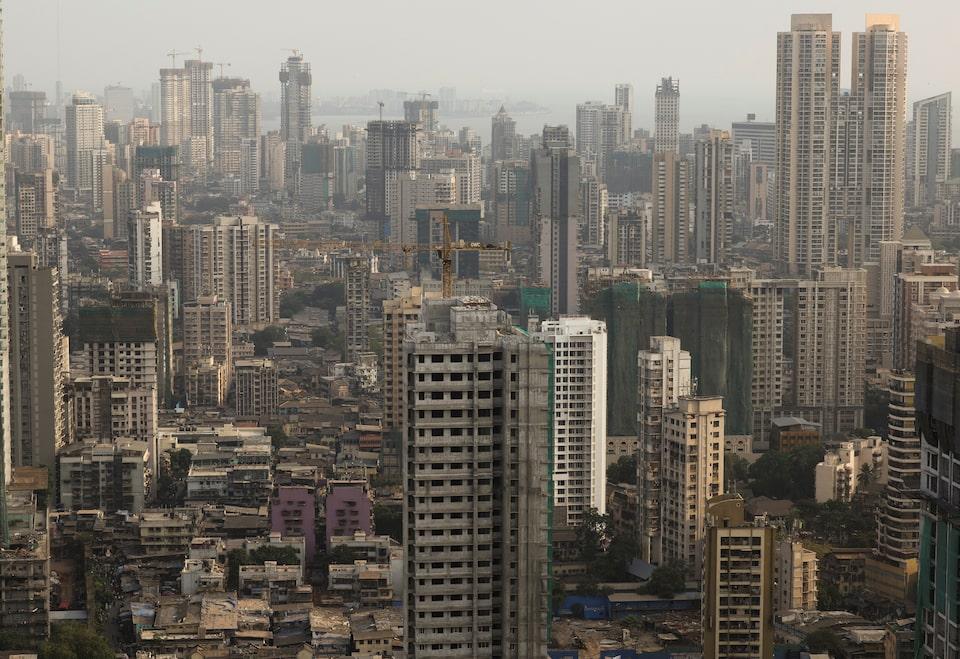
NEW DELHI, Nov 13 (Reuters) - Moody's Ratings expects India's economy to grow at 6.5% through 2027, the ratings agency said in a statement dated Wednesday. "India's economic growth is supported by robust infrastructure spending and solid consumption, although the private sector remains cautious about business capital spending," the agency added. Sign up here. https://www.reuters.com/world/india/moodys-expects-indias-economy-grow-65-through-2027-2025-11-13/
2025-11-13 06:56
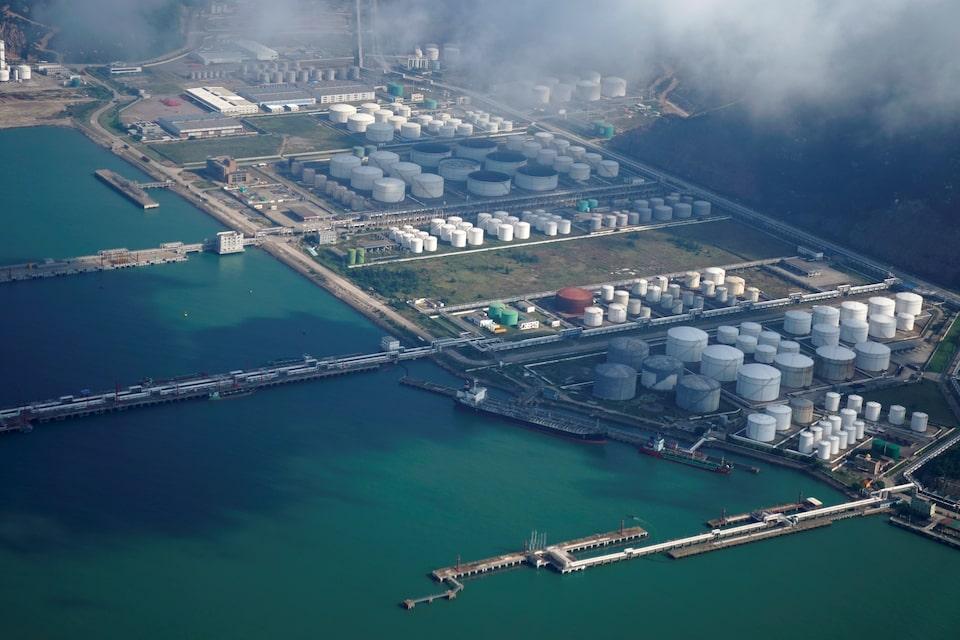
EIA shows much larger-than-expected rise in weekly US crude stocks OPEC report implies oil supply will slightly exceed demand in 2026 IEA says oil, natural gas demand to grow through 2050 HOUSTON, Nov 13 (Reuters) - Oil prices held largely steady on Thursday after declining around 4% in the previous session as investors weighed concerns about global oversupply with looming sanctions against Russia's Lukoil. Brent crude futures rose 30 cents, or 0.5%, to $63.01 a barrel. U.S. West Texas Intermediate crude increased 20 cents, or 0.3%, to $58.69 a barrel, after a decline of 4.2% on Wednesday. Sign up here. "There should be considerable support to oil prices around $60/bbl, especially given there could be short-term disruption to Russian export flows once stricter sanctions kick in," said Suvro Sarkar, DBS Bank's energy sector team lead. The U.S. has hit Lukoil with sanctions as part of its efforts to bring the Kremlin to peace talks over Ukraine. The sanctions prohibit transactions with the Russian company after November 21. Price gains were held back as a report from the Energy Information Administration showed a larger-than-expected rise in U.S. crude stocks, while gasoline and distillate inventories fell less than expected last week. Crude inventories rose by 6.4 million barrels to 427.6 million barrels in the week ended November 7, the EIA said, compared with analysts' expectations in a Reuters poll for a 1.96-million-barrel rise. The American Petroleum Institute said on Wednesday that U.S. crude stockpiles rose by 1.3 million barrels in the week ended November 7, according to market sources. Prices fell more than $2 a barrel on Wednesday after an Organization of the Petroleum Exporting Countries report which implied global oil supplies would slightly exceed demand in 2026, according to a Reuters calculation based on the report, a further shift from the group's earlier projections of a deficit. "Recent (price) weakness seems to be driven by OPEC’s revision of supply-demand balance in 2026 in its monthly report, which confirms the group is now acknowledging the possibility of a supply glut in 2026, in contrast to its more bullish stance all along," DBS's Sarkar said. OPEC's report implied a supply surplus next year if OPEC+ output remains at October's level, according to a Reuters calculation, after OPEC+ production increases and higher supply from other producers. OPEC+ groups the OPEC members and allies like Russia. The International Energy Agency raised its global oil supply growth forecasts for this year and next in its monthly oil market report on Thursday, signaling a bigger surplus in 2026. The U.S. EIA also said in its Short-Term Energy Outlook on Wednesday that U.S. oil production is expected to set a larger record this year than previously forecast. Global oil inventories will grow through 2026 as production increases faster than demand for petroleum fuels, adding to pressure on oil prices, the EIA added. The U.S. government is due to lumber back to life on Thursday after the longest shutdown in U.S. history snarled air traffic, cut food assistance to low-income Americans and forced more than 1 million workers to go unpaid for more than a month. "The return of the government is going to help support demand in the near term. We should be looking for better demand from those returning to work, holiday travel expectations back on track and of course, holiday shopping season ready to kick off," said Carl Larry, a manager of sales for trading and risk at Enverus. https://www.reuters.com/business/energy/oil-extends-losses-us-inventory-build-opec-forecast-shift-2025-11-13/
2025-11-13 06:48
Tests will also be carried out on trains, ships, machinery Government pledges transparent review of B50 implementation Considering exemption for non-public service sectors amid supply concerns NUSA DUA, Indonesia, Nov 13 (Reuters) - Indonesia will start road testing vehicles using biodiesel with palm oil content of 50% in early December as the government considers whether to implement the "B50" mandate only in certain sectors, energy ministry official Eniya Listiani Dewi said on Thursday. The government aims to introduce the B50 standard in the second half of next year, raising palm oil content from 40% this year in an effort to reduce its reliance on imported fuel. Sign up here. The tests will also be carried out on train engines, ships, mining equipment and generators, she said on the sidelines of an industry conference held on the resort island of Bali. Eniya said the government will carefully review all aspects of B50 implementation, including technical issues, pricing and the availability of supply for the palm oil-based fuel, and will be transparent about its findings. The government is considering whether to only implement B50 in so-called public service obligation sectors (PSO) such as public transport as well as some logistics facilities, due to concerns about Indonesia's limited biodiesel production capacity. "We had discussions on the possibility of increasing the blending to 50% for the PSO and reducing it for non-PSO sectors - we'll examine that," Eniya said. "The challenge is in the upstream sector. We can't implement simultaneously at 50%," she added. https://www.reuters.com/sustainability/climate-energy/indonesia-start-road-tests-b50-biodiesel-next-month-considering-selective-2025-11-13/